

On paper, time is supposed to be brutally simple: sixty seconds in a minute, twenty-four hours in a day, the same for you, me, and a satellite orbiting Earth. Yet anyone who has watched a childhood summer stretch on forever, or felt a year vanish in what feels like a month, knows that this neat definition crumbles the moment it hits human experience. Neuroscientists, physicists, and psychologists are now converging on a striking conclusion: time is not a single thing we pass through, but a construct our brains and the universe co-create. From Einstein’s relativity to quantum physics to dopamine spikes in your cortex, the story of why time feels so slippery is turning into one of the most surprising scientific detective tales of our era – and it is rewriting what we thought we knew about aging, memory, and even free will.
The Hidden Clues: When a Minute Is Not a Minute
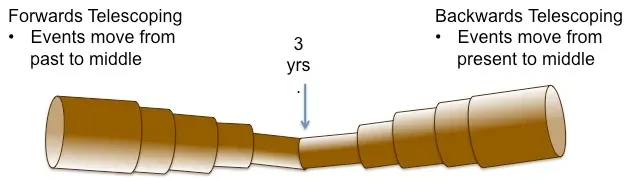
Think about the last time you waited for test results, a delayed flight, or a late-night message you really cared about – the clock seemed to grind to a halt. Then compare that to the way a vacation, a concert, or a deep conversation with a friend seemed to evaporate almost as soon as it began. The raw seconds on the clock did not change, but your mind experienced them at wildly different speeds. Psychologists call this “subjective time,” and they have quietly been mapping how it melts and stretches in response to emotion, attention, and expectation. It turns out your brain is less like a stopwatch and more like an unreliable narrator, dramatizing moments that matter and compressing the rest into background noise.
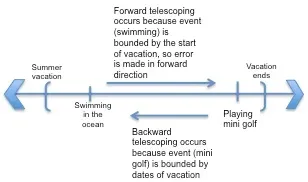
In controlled experiments, people routinely misjudge short time intervals, especially when they are stressed, afraid, or highly stimulated. A jump scare in a horror movie can make a few seconds feel drawn-out, as if reality momentarily switched to slow motion. Boredom, on the other hand, has its own strange twist: during the dull task itself time can feel painfully slow, yet in hindsight that same span feels almost empty, as if it barely existed. These hidden clues in our everyday lives hint at something profound – our experience of time is not a direct readout of the world; it is a brain-built story that can be edited on the fly.
From Einstein to Everyday Life: How Relativity Sneaks Into Your Day
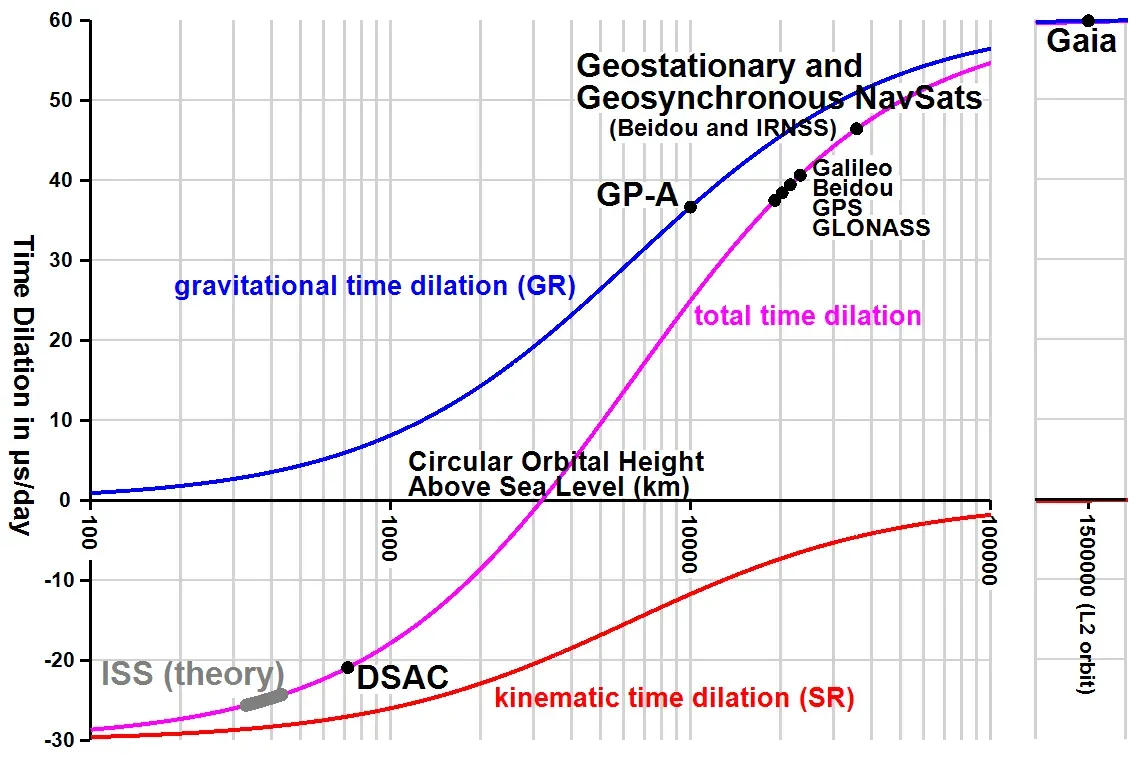
Physics has long warned us that clock time is not absolute, and relativity makes that more than a philosophical slogan. According to Einstein’s theory, time passes at different rates depending on how fast you are moving and how strong the gravity is where you are. That is not just science fiction: engineers actually have to correct for relativistic time differences in the satellites that power your GPS, because the clocks on those fast-moving, high-altitude machines tick slightly differently from clocks on the ground. Without those tiny corrections, your navigation app would drift off target by miles in a matter of days.
What is wild is how this cosmic-level weirdness quietly infiltrates the human-scale world. The differences in time flow between your head and your feet are real, though unimaginably tiny, because your feet are slightly closer to Earth’s gravity well than your brain. Atomic clocks on airplanes, mountaintops, and in deep mines have verified that the rate at which time passes can change with altitude and speed. You will never “feel” these shifts directly, but they form a strange backdrop to your life: even if you and a twin lived almost identical lives, tiny relativistic effects would mean your ages would not be perfectly matched if one of you flew far more often or lived at higher elevation. Time, even before psychology touches it, is already warped.
Inside the Brain’s Clockwork: How Neurons Build Your Private Timeline
Zoom from the cosmic down to the neural, and the story gets even stranger. There is no single “master clock” in the brain; instead, multiple regions work together to track durations ranging from milliseconds to years. Circuits in areas like the basal ganglia and cerebellum help you tap your fingers in rhythm or catch a ball, while the prefrontal cortex and hippocampus weave events into a coherent narrative of past, present, and imagined future. Time is reconstructed from patterns of neural activity, not delivered to you in a raw, untouched state. When those patterns shift – as they do under stress, drugs, disease, or intense focus – your sense of duration shifts with them.
Chemicals like dopamine and norepinephrine modulate these internal clocks, which is one reason why fear can make an instant feel long and why stimulant drugs can make hours feel compressed. Disorders such as Parkinson’s disease, schizophrenia, and ADHD are often accompanied by altered time perception, suggesting that when timing networks go out of tune, so does the sense of self moving through time. Even simple experiments, where volunteers are asked to estimate intervals while distracted versus focused, show that attention acts like a volume knob on time: the more you attend to it, the louder and slower it seems. In a very literal way, your brain is composing the tempo of your life.
Memory, Novelty, and Aging: Why Childhood Summers Last Forever

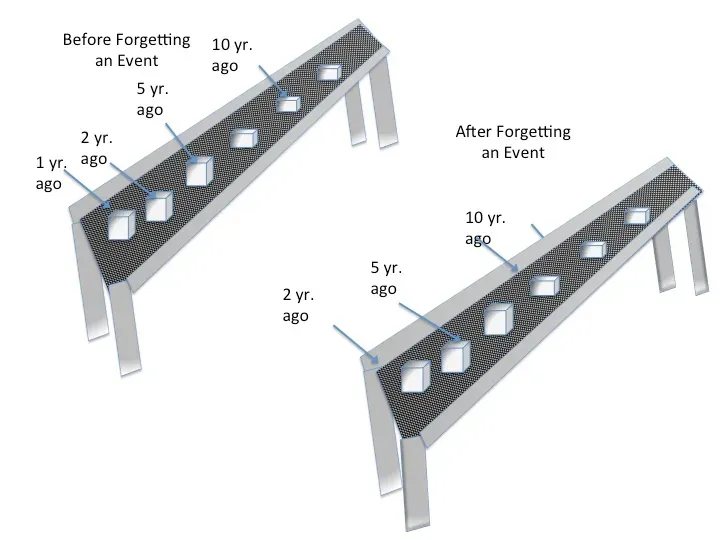
One of the most haunting questions people ask is why time seems to speed up as we age. The physics has not changed, but the density of our memories has. Childhood is packed with “firsts”: first day of school, first trip to the ocean, first heartbreak. These novel experiences carve deep, detailed memory traces, so when you look back, those years feel huge and spacious, as if your brain recorded them in slow motion. In adulthood, routines settle in, commutes blur together, and days can stack up in memory like nearly identical pages in a book.
Researchers studying memory and time perception argue that the more novelty and emotional intensity a period contains, the longer it feels in retrospect. That is why a year spent learning a new language or moving to a new city often feels richer and “longer” in memory than a year of unchanging routine. The paradox is that in the moment, novel or demanding experiences can feel fast because they fully absorb your attention, but they later expand when you replay them in your mind. Many people notice that during the pandemic years, for example, time sometimes felt both frozen and blurred, a mix of high stress and repetitive days that scrambled our internal calendars. The brain’s timekeeping, it turns out, is inseparable from the stories we store about our lives.
Quantum Weirdness: Does Time Itself Break Down at Tiny Scales?
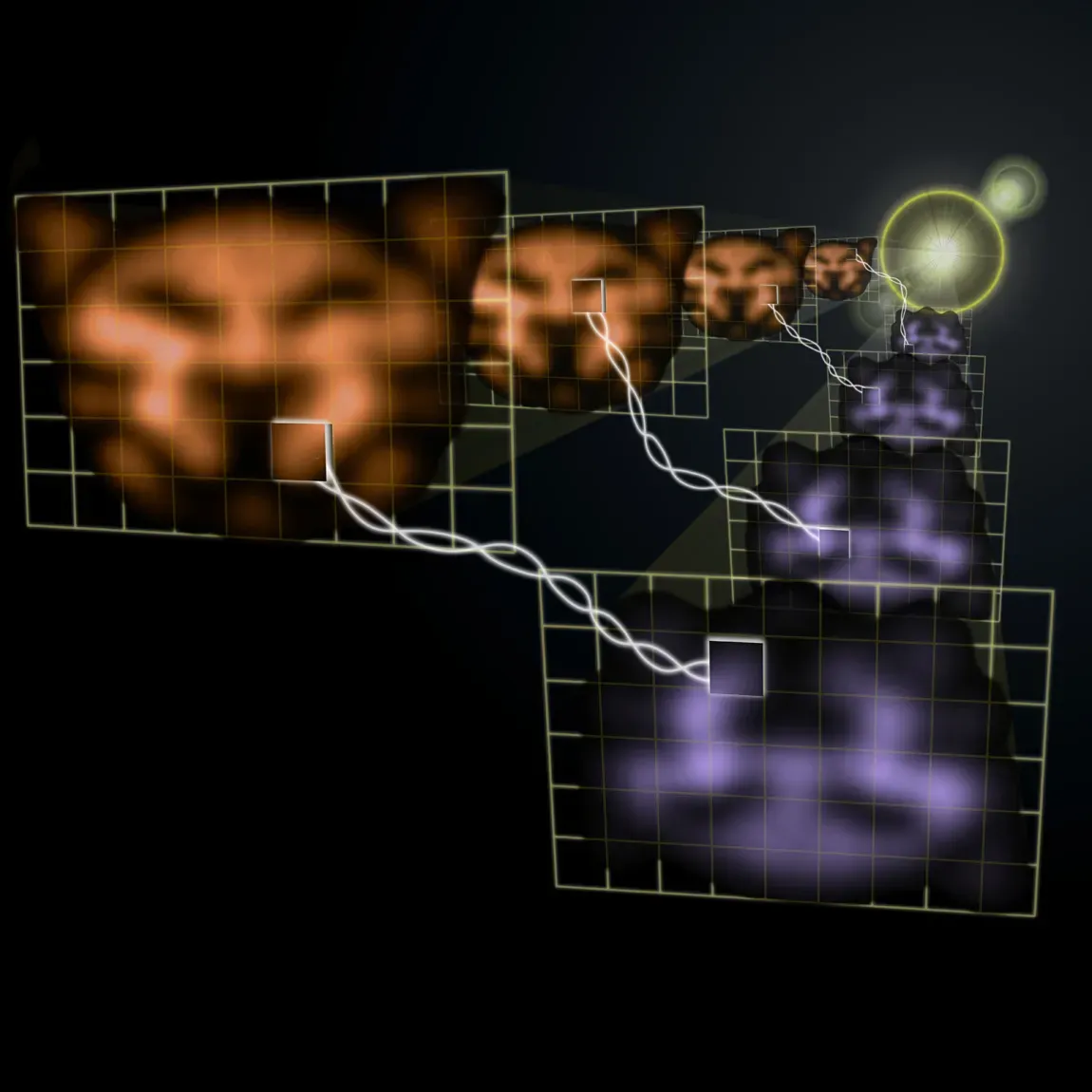
Once you dip below the level of atoms into the quantum world, our everyday idea of time starts to wobble. Quantum mechanics describes particles that can exist in multiple states at once, entangled across distances so that measuring one instantly changes the description of another. At this scale, the neat flow of time from past to future becomes less obvious, and some equations that describe fundamental physics do not even single out a preferred direction of time. Certain interpretations of quantum theory suggest that what we call the “present” may be a kind of negotiated outcome between different possible histories.
Physicists are still arguing fiercely about how to connect this quantum strangeness to the familiar ticking of clocks and the aging of bodies. Some approaches in quantum gravity attempt to build time as an emergent property, something that arises from deeper, more abstract relationships rather than existing as a basic ingredient of the universe. Others look at how entanglement and decoherence might explain why we experience a one-way “arrow” of time, even though many fundamental laws are time-symmetric. For non-physicists, the key point is not that we should throw out our calendars, but that at the deepest levels we know, time may be less like a river we float down and more like a pattern that appears when many tiny events line up. And that means our subjective feeling of time might be tapping into only one layer of a much stranger structure.
Why It Matters: From Mental Health to Justice Systems
It might be tempting to treat subjective time as a quirky illusion with no real consequences, but that would be a mistake. How we experience time shapes everything from mental health to economic decisions to criminal sentencing. People with depression often describe time as heavy, slow, and empty, while those in manic or highly anxious states can feel like events are racing by in an uncontrollable blur. Therapists are increasingly paying attention to distorted time perception as both a symptom and potential lever for treatment, using techniques like mindfulness and structured routines to recalibrate patients’ internal clocks. If time feels unbearable, life itself can start to feel unbearable too.
On a societal level, our sense of time influences policies and systems we usually think of as objective. The length of a prison sentence, for example, is measured in calendar years, but the psychological impact of those years varies enormously depending on conditions and age. Someone serving five years in a violent, overstimulating environment may experience that interval very differently from someone serving the same amount of time in safer, more structured conditions. Economists have also shown that people who “discount the future” more heavily – treating future rewards as far less valuable than immediate ones – are more prone to risky financial decisions or unhealthy habits. Understanding the physics and neuroscience of time perception is not just academic; it feeds into how we design fairer, more humane systems.
Everyday Time Hacks: How to Stretch and Slow Your Life (A Little)
Once you realize your brain is actively constructing your sense of time, you can start to nudge that construction process. No, you cannot stop the Earth’s rotation, but you can change how full and rich your days feel. Introducing deliberate novelty – trying a new route to work, learning a skill, traveling to unfamiliar places – gives your memory more to latch onto, which can make weeks and months feel more substantial in hindsight. Paying focused attention, rather than multitasking through everything, can deepen your engagement with moments that matter and reduce the sense that life is slipping away unseen. It is like switching your inner camera from low-resolution snapshots to vivid, high-definition footage.
Stress management is just as important, because chronic stress can distort time into a mix of dread and blur. Short, regular breaks, breathing exercises, and even simple walks can help reset the hyper-alert, compressed feeling many people carry through their workdays. People who practice meditation often report that individual moments feel more spacious, as if someone slightly turned down the speed of the conveyor belt of experience. None of this changes the absolute number of minutes you get, but it can change the quality of how you inhabit them. In a world that constantly pushes us to hurry, reclaiming even a small sense of agency over time can feel quietly revolutionary.
The Future Landscape: Time Tech, Brain Interfaces, and Ethical Questions
As neuroscience, physics, and computing continue to collide, scientists are starting to imagine technologies that might deliberately tweak our experience of time. Brain-computer interfaces are already being tested for restoring movement and communication, but in principle similar tools could be used to modulate timing circuits, helping people with disorders where time perception goes badly wrong. Virtual reality labs are experimenting with environments that subtly alter users’ sense of duration, compressing or stretching perceived time to make training more efficient or therapy more effective. If a painful treatment could be made to feel subjectively shorter, or a cherished experience longer, would that be worth pursuing?
There are also more unsettling possibilities. Employers or militaries might someday be tempted by tools that make long, demanding shifts feel shorter, raising thorny questions about consent and exploitation. Apps and media are already playing with our time budgets, fragmenting attention into ever-smaller slices while years seem to evaporate. At a broader scale, physics experiments probing quantum gravity and the nature of time could reshape our deepest metaphors about life and death, influencing philosophies, religions, and cultural norms. The frontier of time research is not just about better clocks; it is about who gets to shape the tempo of human experience in the decades ahead.
Call to Action: Paying Attention to the Time You Actually Live In
For most of us, the most powerful step is not to wait for a gadget that fixes time, but to become more conscious of the one we already carry around in our heads. You can start by noticing when your days feel like they are racing by, and asking whether routine, distraction, or stress is flattening them. Deliberately adding pockets of novelty, focus, and rest can make your personal timeline feel less like a blur and more like a story you are actively shaping. Supporting mental health research, basic physics, and neuroscience – whether by staying informed, backing public funding, or engaging with science communication – helps push forward the work that is uncovering how time really works at every scale. In a very real sense, understanding time is another way of understanding what it means to be alive at all.
Suhail Ahmed is a passionate digital professional and nature enthusiast with over 8 years of experience in content strategy, SEO, web development, and digital operations. Alongside his freelance journey, Suhail actively contributes to nature and wildlife platforms like Discover Wildlife, where he channels his curiosity for the planet into engaging, educational storytelling.
With a strong background in managing digital ecosystems — from ecommerce stores and WordPress websites to social media and automation — Suhail merges technical precision with creative insight. His content reflects a rare balance: SEO-friendly yet deeply human, data-informed yet emotionally resonant.
Driven by a love for discovery and storytelling, Suhail believes in using digital platforms to amplify causes that matter — especially those protecting Earth’s biodiversity and inspiring sustainable living. Whether he’s managing online projects or crafting wildlife content, his goal remains the same: to inform, inspire, and leave a positive digital footprint.