You’re standing at a cosmic crossroads right now, whether you realize it or not. The universe as we knew it just a few years ago has been quietly dismantled and rebuilt, discovery by discovery, image by image. The questions we ask aren’t the same anymore. The answers we get are stranger, bolder, and frankly more unsettling than anyone predicted.
Here’s the thing: most people don’t notice revolutions when they’re happening. They notice the aftermath. But right now, astrophysics is in the thick of it. From black holes defying logic to galaxies that should never exist appearing in the deepest reaches of time, we’re watching the foundations of cosmology crack under the weight of new evidence. So let’s dive in.
The James Webb Space Telescope Spots the Universe’s Earliest Galaxies
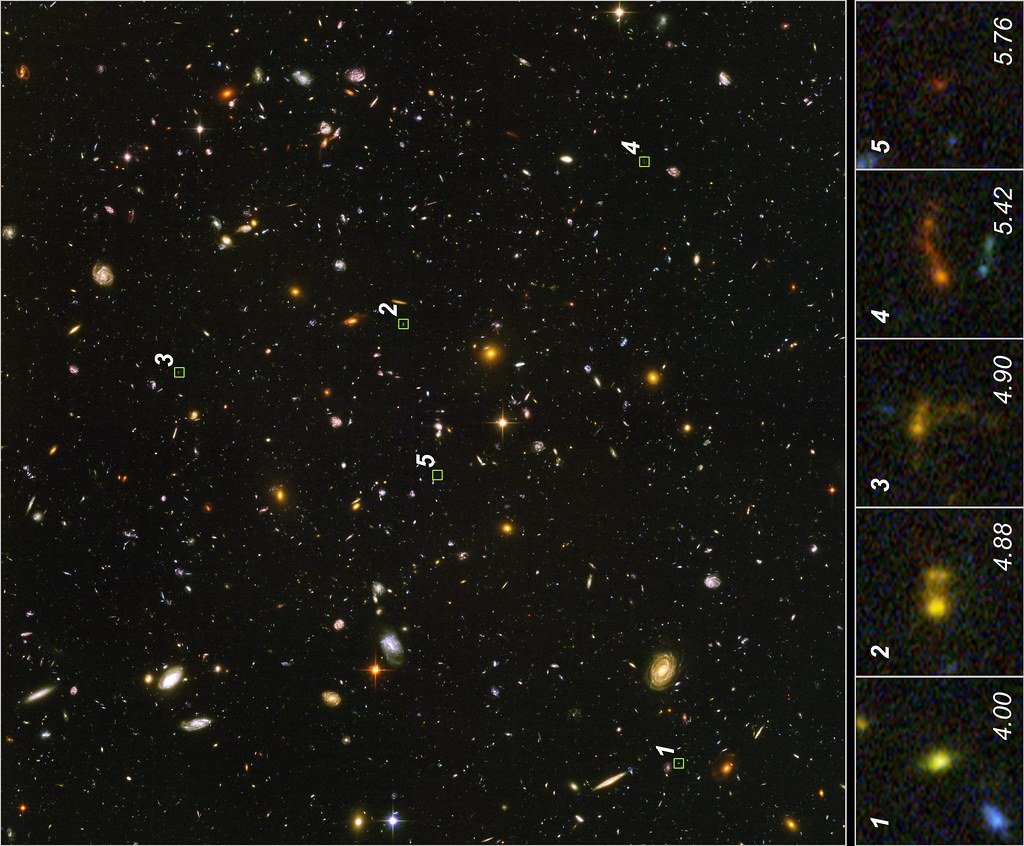
You might’ve heard about JWST breaking records, but the galaxy designated MoM z14 takes things to another level entirely. This so-called “mother of all early galaxies” existed just 280 million years after the Big Bang, which scientists have dubbed a cosmic miracle. Think about that for a second. Sharks on Earth have existed longer than the time separating MoM z14 from the universe’s birth.
The galaxy JADES-GS-z14-0 is unexpectedly bright and chemically complex for an object from this primordial era. Why does that matter? Because the early universe wasn’t supposed to be this developed, this quickly. The Mid-Infrared Instrument revealed something extraordinary: significant amounts of oxygen, indicating complex chemical processes were already well underway. This forces astrophysicists to rethink how fast stars formed and galaxies evolved after the Big Bang.
Population III Stars May Have Finally Been Detected
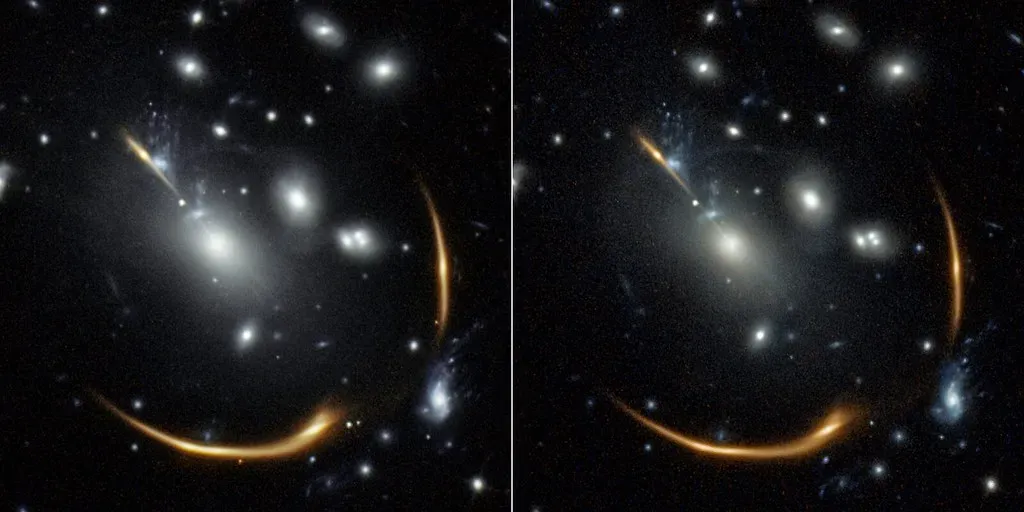
Let’s be real, finding the universe’s first stars has been like chasing ghosts. These so-called Population III stars arose shortly after the big bang and formed from the primordial hydrogen and helium that then pervaded the universe, shining brilliantly but briefly before ending their lives in explosive supernovas. Until recently, we’d never seen them.
Using the James Webb Space Telescope and a phenomenon first predicted by Albert Einstein, scientists spotted the early stars in a distant cluster through gravitational lensing. The spectra suggested the stars are very large, each on the order of 100 solar masses. Honestly, if confirmed, this marks humanity’s first glimpse of the cosmic architects that forged every element heavier than helium in your body right now.
Gravitational Waves Confirm Hawking’s Black Hole Area Theorem
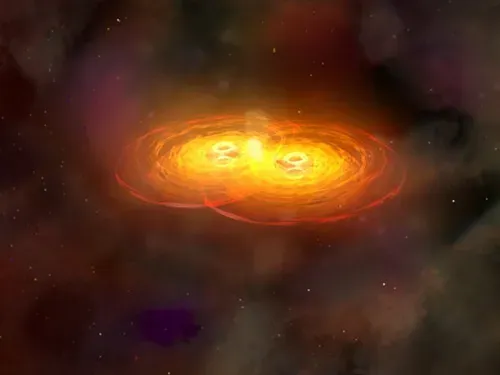
On Sept. 14, 2015, the twin detectors of LIGO made the first-ever direct detection of gravitational waves, and now a decade later, researchers have heard the clearest evidence for a theorem proposed by Stephen Hawking in 1971 that merging black holes must grow their collective surface areas. This isn’t just confirming old theory, it’s watching the universe obey laws we predicted but couldn’t prove.
The detection, called GW250114, was exceptional. The clearest black hole merger signal yet, recorded by LIGO in January 2025, offers new insights into these mysterious cosmic giants. The team could hear two black holes growing as they merged into one, with initial black holes having a total surface area of 240,000 square kilometers while the final area was about 400,000 square kilometers. That’s physics happening in real time, billions of light years away, and we heard it.
Record-Breaking Black Hole Merger Challenges Formation Theories
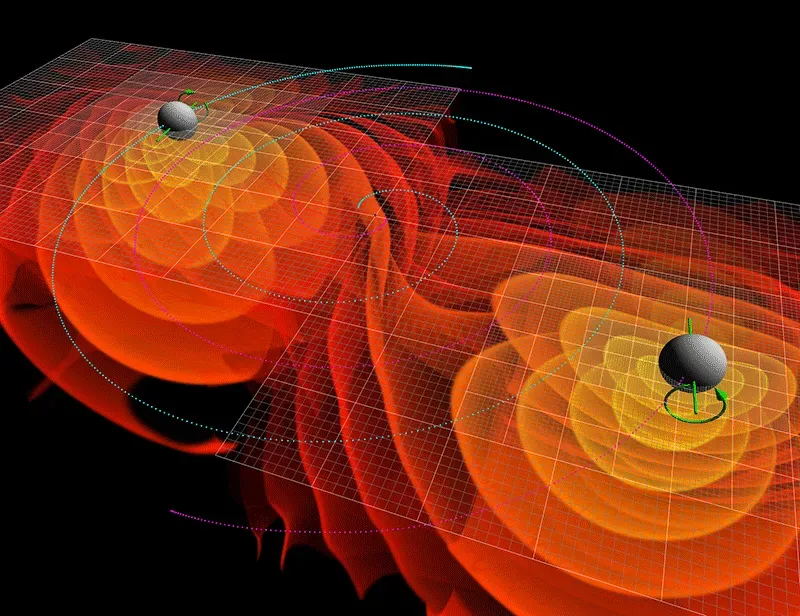
Here’s where things get weird. An international team of scientists recently detected the largest black hole merger ever measured, resulting in a combined black hole 225 times our sun’s mass. The mass alone sets records, but it’s what scientists found inside those numbers that raises eyebrows.
The two original black holes seemingly had masses near or in a range largely forbidden by current astrophysical models, challenging assumptions scientists have made. How did they get there? The merger suggests there may be ways for such black holes to form other than through stars collapsing at the end of their lifespans, with one leading possibility being the black holes may have gobbled up material through previous mergers. In other words, black holes might grow through cosmic cannibalism more than we realized.
Dark Matter Detection Through Gamma Rays From the Galactic Center
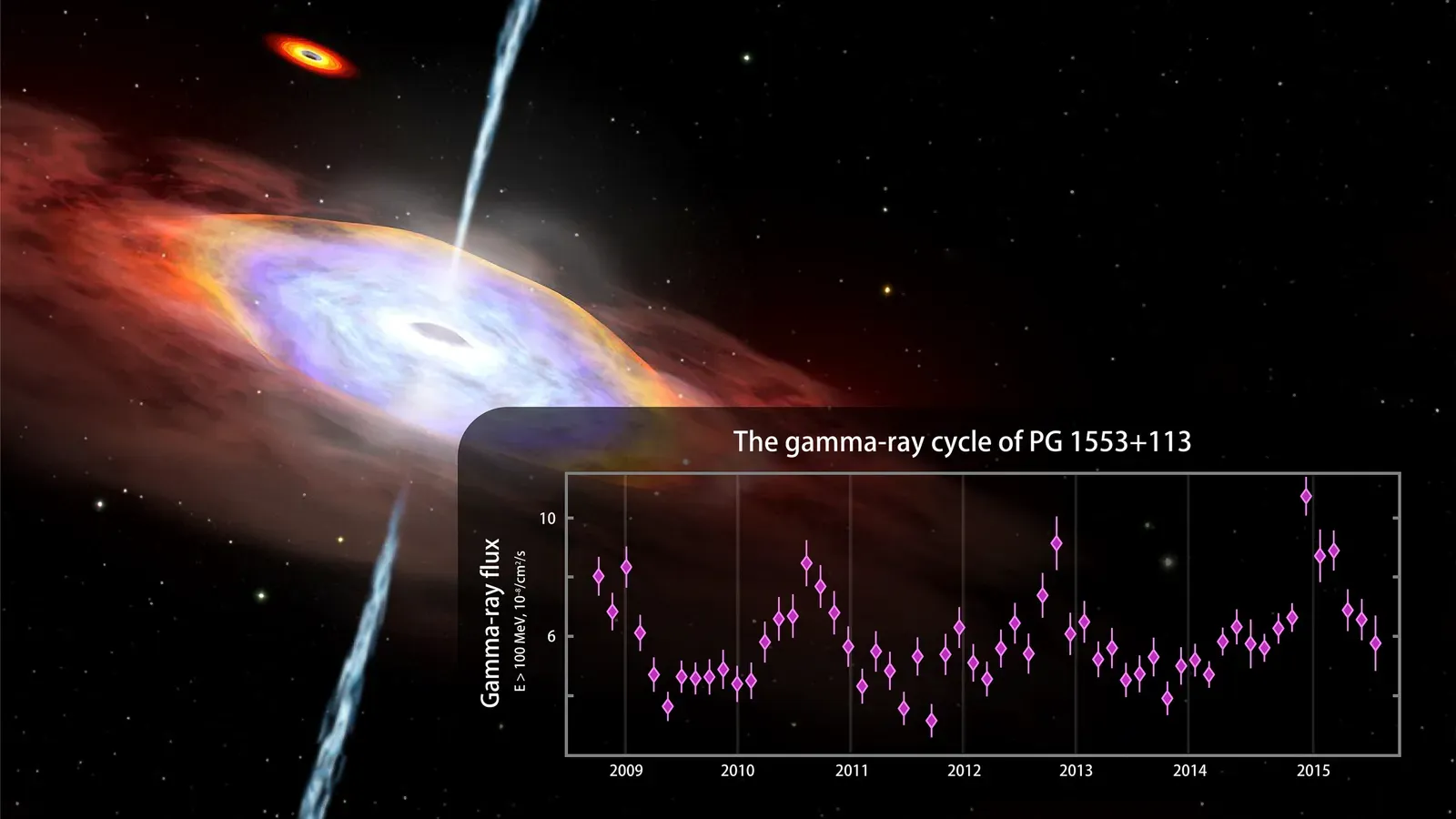
Astronomers have detected a high-energy gamma ray signal that fits the expected footprint of dark matter particles, which could represent humanity’s first direct observational evidence of this long-hidden cosmic material. I know it sounds crazy, but after searching for roughly a century, we might finally be seeing the invisible scaffolding holding galaxies together.
Using new data from the Fermi Gamma-ray Space Telescope, Professor Tomonori Totani believes he has identified the predicted gamma ray signal associated with dark matter particle annihilation. The measured gamma ray energy spectrum closely matches model predictions for the annihilation of hypothetical WIMPs with masses roughly 500 times that of a proton. Still, this needs confirmation from other researchers and additional observations from dwarf galaxies, but the potential here is enormous.
Gravitational Waves Used to Map Dark Matter Distribution
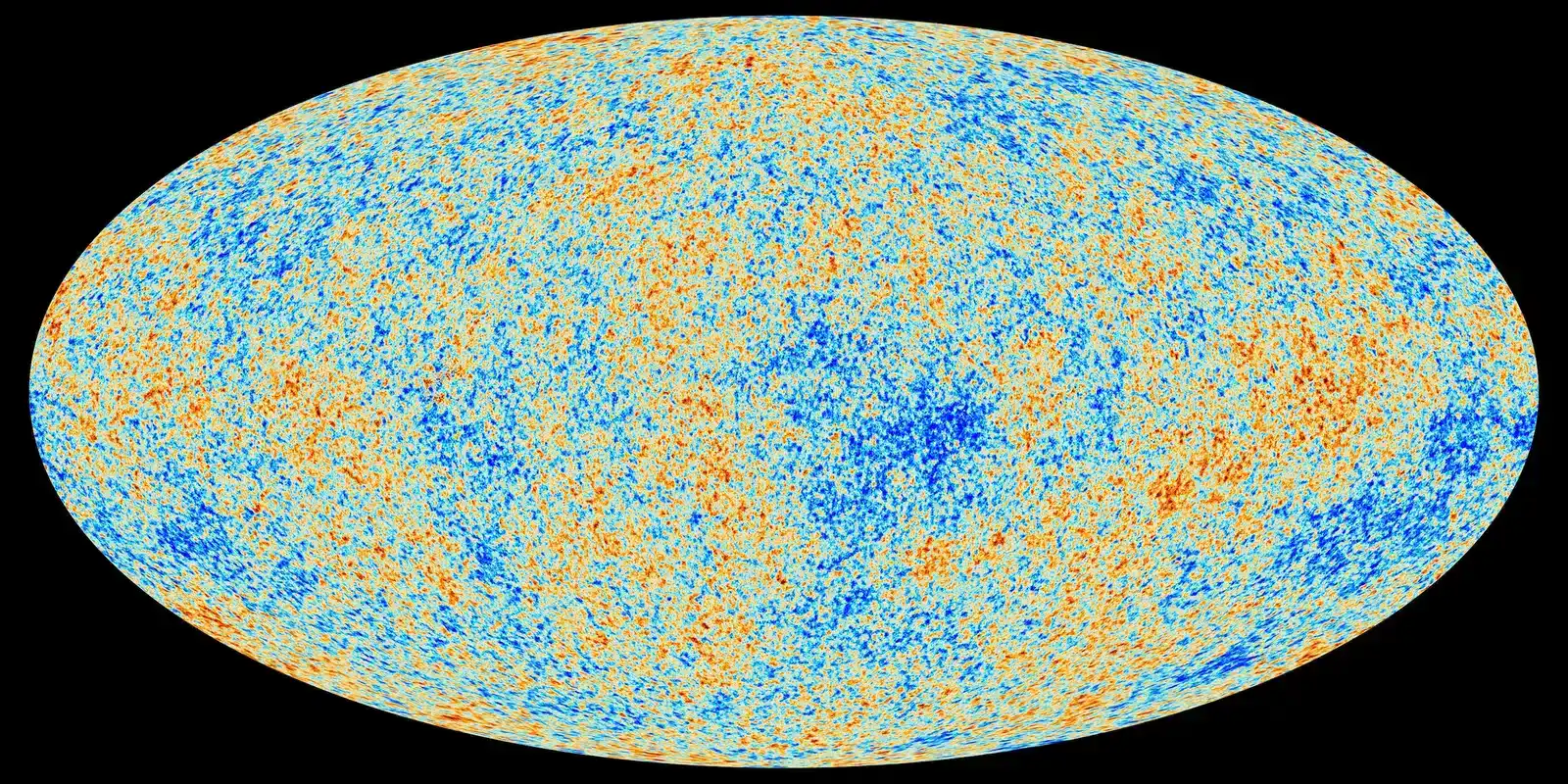
A new study shows how gravitational waves from black holes can be used to reveal the presence of dark matter and help determine its properties, using a new model based on Einstein’s theory of general relativity. It’s hard to say for sure, but this technique could revolutionize how we study invisible matter.
The work focuses on extreme mass-ratio inspirals where a relatively small compact object orbits and slowly spirals into a much more massive black hole, and future space missions such as LISA planned for launch in 2035 are expected to record these signals for months or even years. If modeled accurately, these cosmic fingerprints can reveal how matter, especially dark matter, is distributed in the immediate surroundings of massive black holes.
Early Dark Energy Could Solve Multiple Cosmological Puzzles
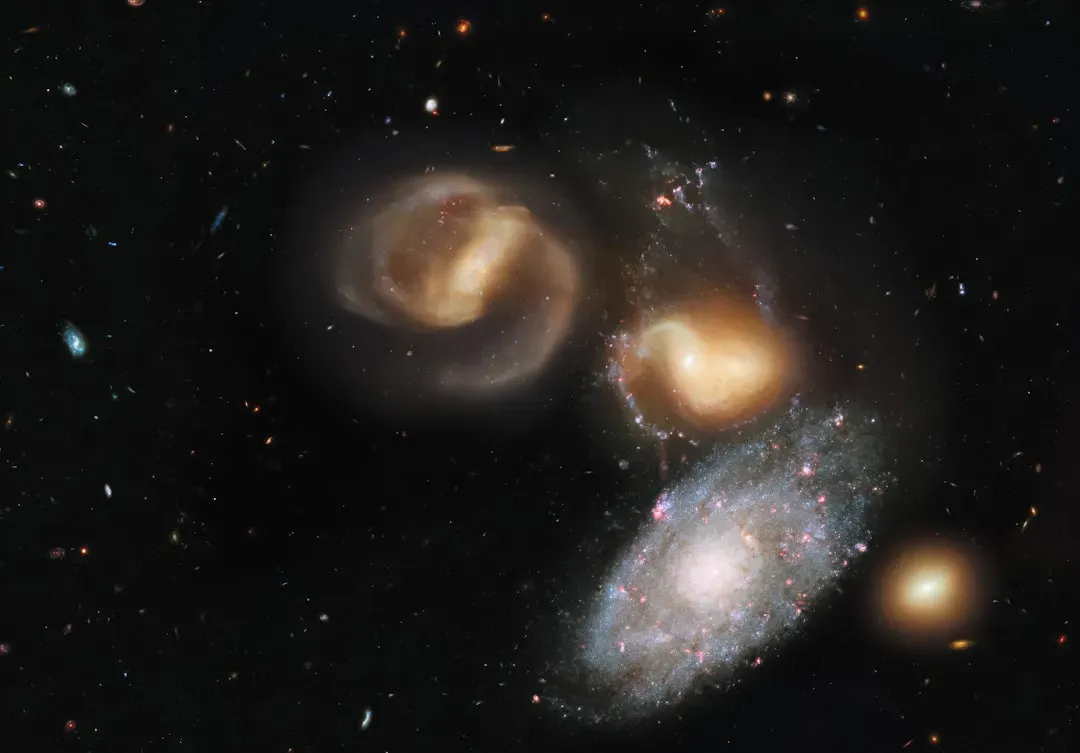
MIT researchers found that early dark energy could explain the baffling number of bright galaxies astronomers have observed in the early universe, and when they incorporated a dark energy component only in the universe’s first few hundred million years, the number of galaxies that arose from the primordial environment bloomed to fit observations.
This is elegant because it potentially resolves two major headaches at once. The physicists considered how early dark energy might affect early structure by focusing on dark matter halos, regions where gravity happens to be stronger and where matter begins to accumulate, which are believed to be the invisible skeleton of the universe where galaxies form. The universe’s expansion rate in its infancy might have been fundamentally different than we thought.
Exoplanets in Habitable Zones Getting Closer and More Earth-Like
An international team has confirmed the discovery of a super-Earth orbiting in the habitable zone of a nearby Sun-like star, originally detected by Oxford scientist Dr Michael Cretignier. The planet, HD 20794 d, sits just 20 light years away.
Its orbit places it within the habitable zone of the system, meaning it is at the right distance from its star to sustain liquid water on its surface. HD 20794 d will provide an invaluable test case for upcoming space projects designed to detect signs of life, including the Extremely Large Telescope, Habitable Worlds Observatory, and LIFE, which will observe the atmosphere of nearby Earth-like planets for tell-tale biosignatures. The hunt is getting more precise.
TRAPPIST-1 System Reveals Complex Atmospheric Possibilities
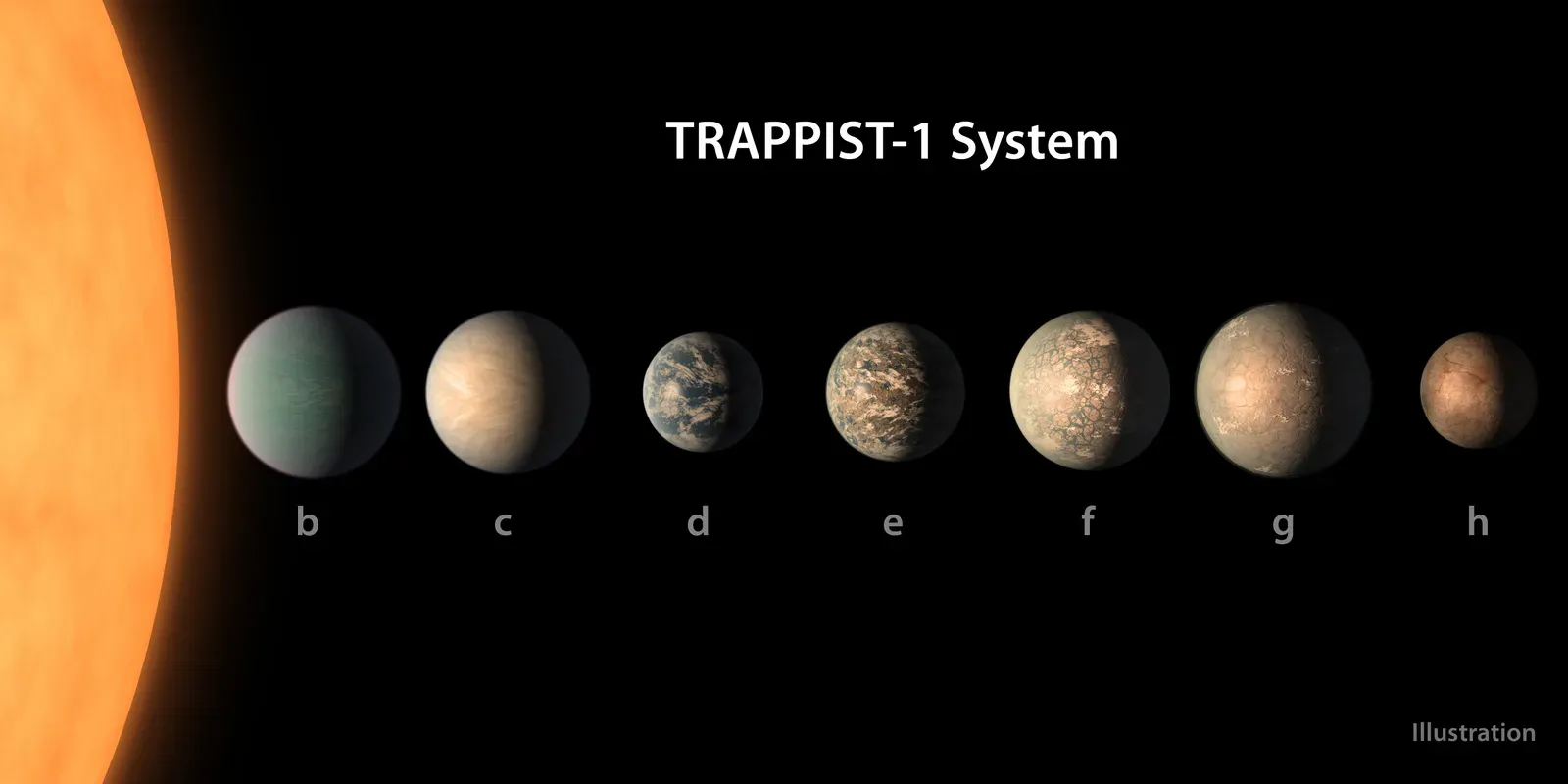
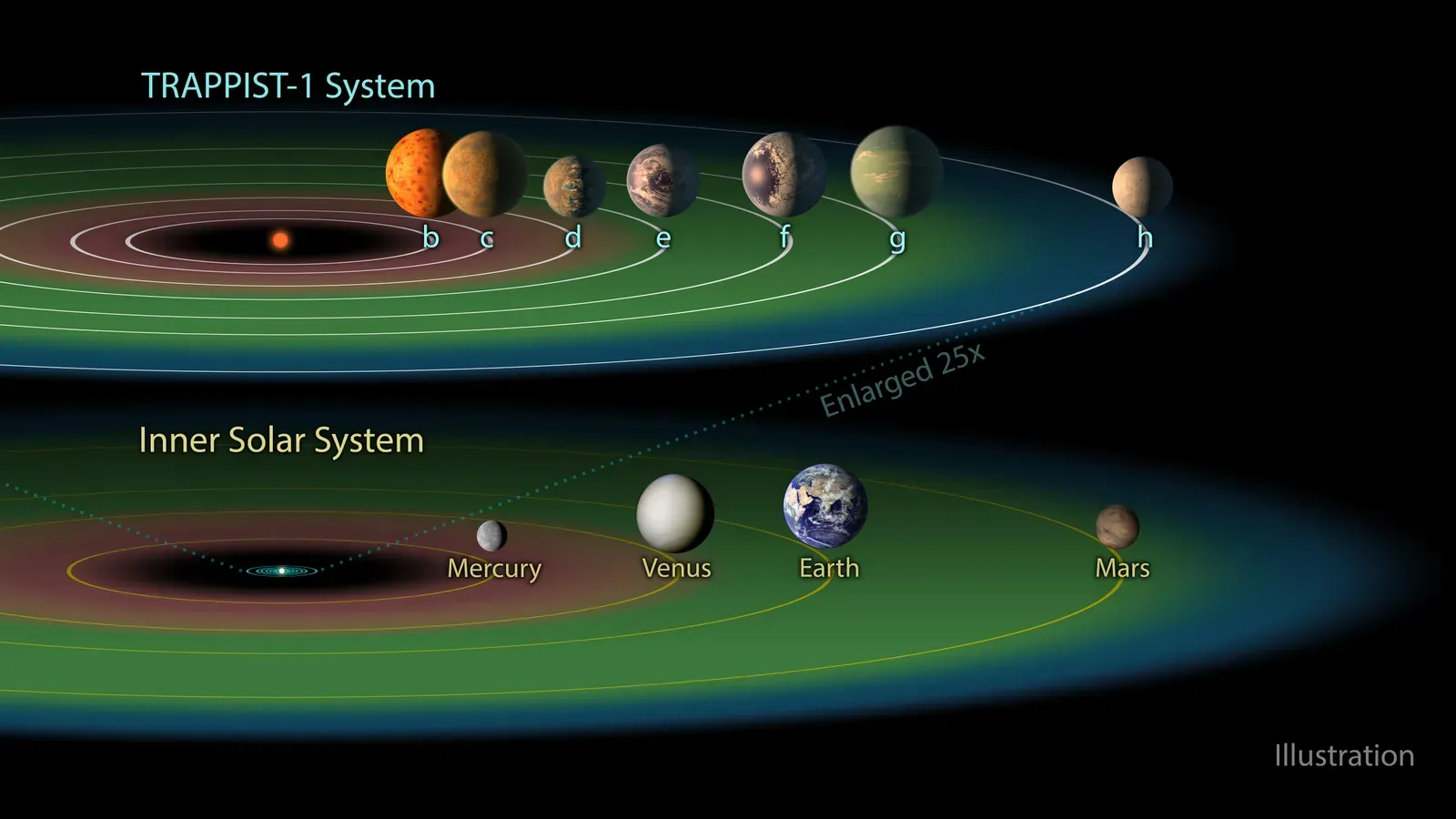
Orbiting the star TRAPPIST-1 are the most Earth-sized planets ever discovered in the habitable zone of a single star, with this planetary system made up of seven worlds. One of those worlds has scientists particularly excited.
TRAPPIST-1e is thought to be the most likely to support life as we know it. The basic thesis is this: If it has an atmosphere, it’s habitable. Initial James Webb observations show tentative signs of methane, but current data cannot confirm the presence of an atmosphere, and stellar activity from the host M dwarf complicates interpretation. We’re close to answering whether these worlds could harbor life.
Supermassive Black Holes Discovered in Infant Galaxies
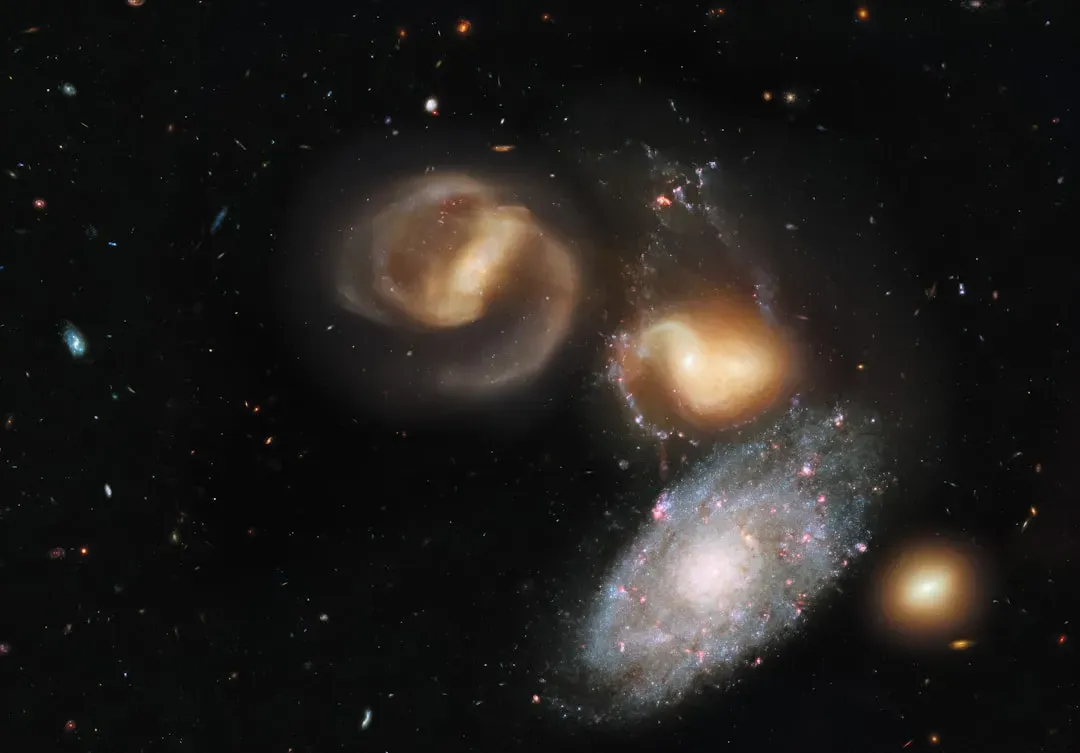
As JWST began gathering data in 2022, it revealed a surprising discovery: numerous compact, red-hued galaxies dubbed little red dots observed at epochs corresponding to roughly 500 million to 1.5 billion years after the Big Bang, which seem to indicate galaxies, black holes or both evolved earlier and with greater masses or densities than astrophysicists expected.
In one object called QSO1, the black hole’s mass is about twice that of the surrounding gas and stars, whereas Sagittarius A* at the center of the Milky Way has a mass that is only a tiny fraction of the total mass of the galaxy. That ratio shouldn’t exist so early. It violates everything we know about galaxy formation. These findings suggest black holes and galaxies grew up together in ways we’re only beginning to understand.
So what do you think about it? Are we witnessing the biggest shift in cosmology since Einstein, or are these just growing pains as our instruments get sharper? Either way, the universe is stranger than we imagined, and honestly, that’s the most exciting part.
Hi, I’m Andrew, and I come from India. Experienced content specialist with a passion for writing. My forte includes health and wellness, Travel, Animals, and Nature. A nature nomad, I am obsessed with mountains and love high-altitude trekking. I have been on several Himalayan treks in India including the Everest Base Camp in Nepal, a profound experience.