You glance at your watch, check the calendar, plan your evening. Everything in your life revolves around the passage of time. It’s hard to imagine anything more fundamental to reality than the steady march from past to present to future. Yet according to some of the most fascinating theories in modern physics, time as you know it may not actually exist at all.
That’s not just philosophical speculation. Cutting-edge research in quantum mechanics and gravity suggests something that sounds almost impossible: the flow of time could be an illusion, a trick your mind plays to make sense of the universe. Let’s dive in and explore why physicists are seriously questioning one of the most basic features of existence.
When Einstein’s Masterpiece Clashes with Quantum Reality
Here’s the thing about modern physics. For the past century or so, we have explained the universe with two wildly successful physical theories: general relativity and quantum mechanics. Think of them as two different languages for describing reality, and each one works brilliantly in its own domain.
General relativity describes larger objects, such as our bodies, stars and galaxies, and time is interwoven with space and can be warped and dilated at high speeds or in the presence of gravity. Meanwhile, in quantum mechanics, our best theory of the microscopic world, time is a fixed phenomenon, an inexorable, unidirectional flow from the past to the present. The problem? These two descriptions of time are fundamentally incompatible. Both theories work extremely well in their own right, but the two are thought to conflict with one another, and scientists generally agree both theories need to be replaced with a new, more general theory.
Loop Quantum Gravity: The Theory That Erases Time
Physicists have spent decades trying to merge quantum mechanics with general relativity into something called quantum gravity. In the 1980s and 1990s, many physicists became dissatisfied with string theory and came up with a range of new mathematical approaches to quantum gravity. One of the most intriguing is loop quantum gravity.
Loop quantum gravity proposes that the fabric of space and time is made of a network of extremely small discrete chunks, or “loops”. Imagine zooming down to the tiniest possible scale, far smaller than atoms. According to this theory, spacetime itself isn’t smooth like you’d expect but grainy, made of tiny building blocks. The wild part? One of the remarkable aspects of loop quantum gravity is that it appears to eliminate time entirely.
Loop quantum gravity is not alone in abolishing time: a number of other approaches also seem to remove time as a fundamental aspect of reality. It’s starting to look like the quest for quantum gravity might require us to rethink everything we thought we knew about time.
The Wheeler-DeWitt Equation and the Timeless Universe
If loop quantum gravity sounds radical, there’s another famous equation that makes the same bizarre claim. The Wheeler-DeWitt equation famously omits time when describing quantum gravity. Named after physicists John Wheeler and Bryce DeWitt, this equation attempts to describe the quantum state of the entire universe.
What makes it so strange is this: instead of describing how the universe evolves, the equation focuses on correlations between different parts of a whole. There’s no time variable ticking away in the background. Time becomes something that emerges when observers carve out local “clocks” from the timeless fabric.
What they were attempting to describe is the quantum state of the entire Universe, independent of time, and many physicists have suggested this means that time might just be an illusion. Honestly, it’s hard to wrap your head around that idea. How can a universe without time produce the experience of watching seconds tick by?
Time As Quantum Entanglement: The Page-Wootters Mechanism
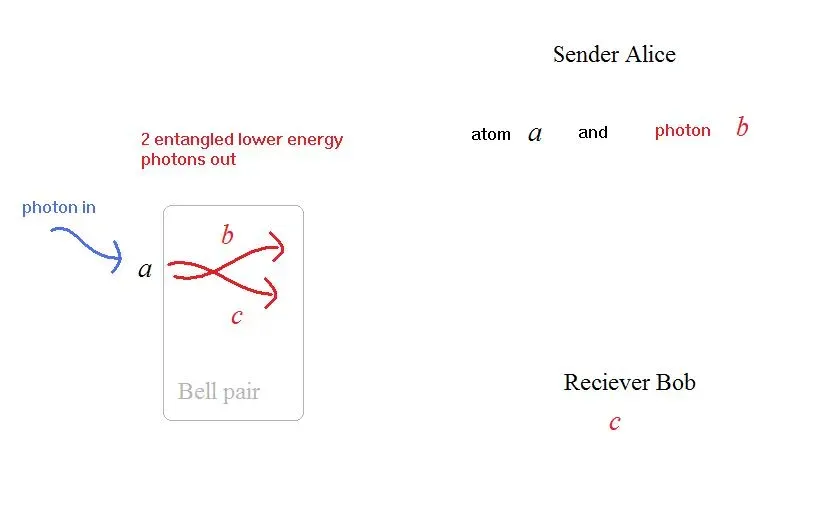
So if time doesn’t fundamentally exist, where does our experience of it come from? One fascinating answer comes from research on quantum entanglement. The Page and Wootters mechanism, first proposed in 1983, suggests that time emerges for one object through its quantum entanglement with another acting as a clock.
Think of entanglement as a weird quantum connection between particles. Work by Don Page and William Wootters suggests that the universe appears to evolve for observers on the inside because of energy entanglement between an evolving system and a clock system, both within the universe, and in this way the overall system can remain timeless while parts experience time via entanglement.
Time may not be a fundamental element of the universe but rather an illusion emerging from quantum entanglement. Physicists actually tested this idea experimentally. In 2013, at the Istituto Nazionale di Ricerca Metrologica in Turin, Italy, researchers performed the first experimental test of Page and Wootters’ ideas and confirmed for photons that time is an emergent phenomenon for internal observers of a quantum system but is absent for external observers. Let that sink in for a moment.
Carlo Rovelli’s Radical Perspective on Time
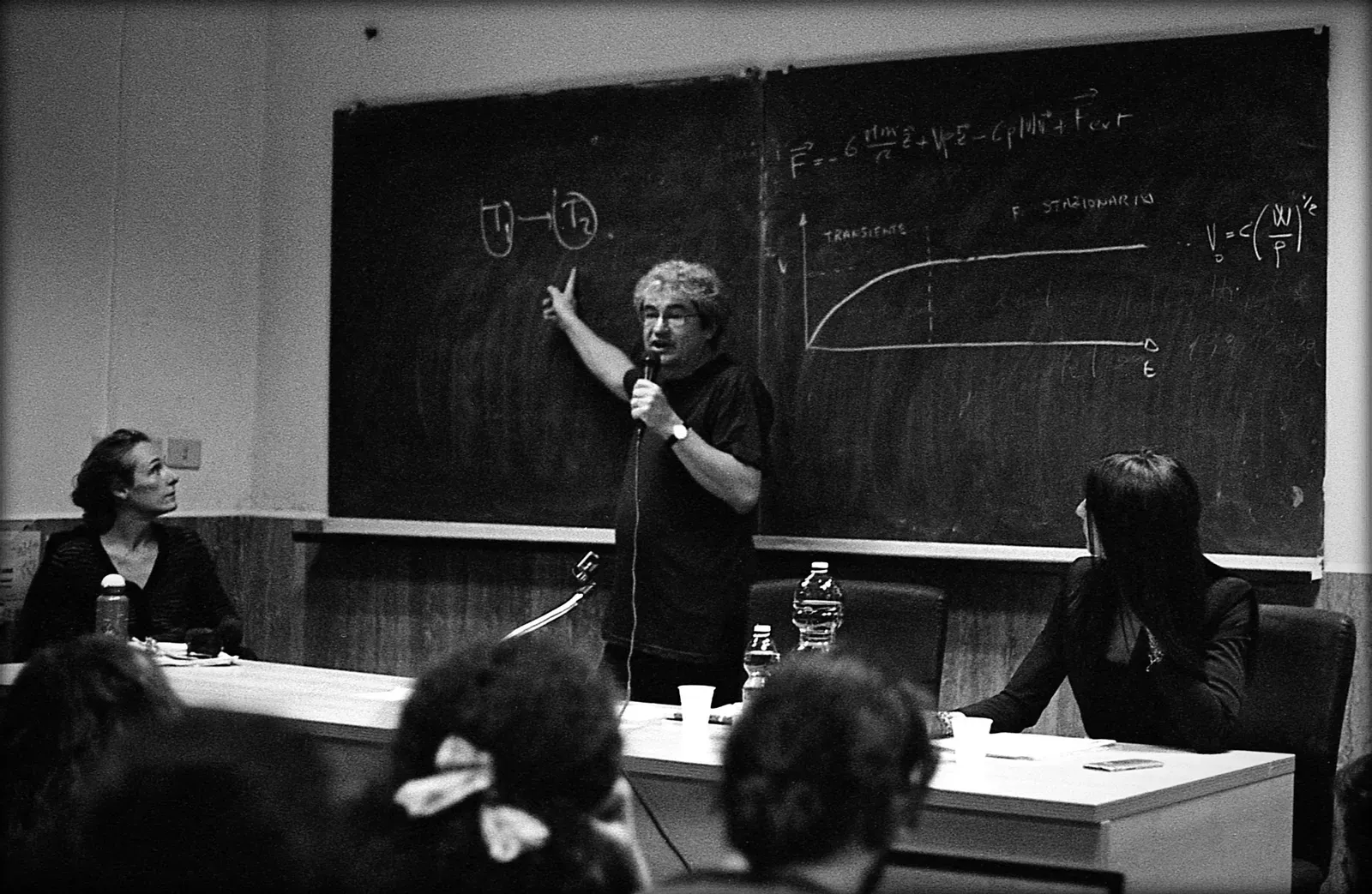
Italian theoretical physicist Carlo Rovelli has become one of the most prominent voices arguing that time doesn’t exist. As Rovelli tells us, “There is no time variable in the fundamental equations that describe the world”. He’s not just making a mathematical point; he’s suggesting something profound about reality itself.
Time, Rovelli contends, is merely a perspective, rather than a universal truth, a point of view that humans share as a result of our biology and evolution, our place on Earth, and the planet’s place in the universe. At the quantum level, durations are so short that they can’t be divided and there is no such thing as time.
Even more strikingly, the universe is made up of countless events, and even what might seem like a thing, a stone, say, is really an event taking place at a rate we can’t register. It’s a bit like how a movie is made of individual frames, yet we perceive continuous motion. Reality itself might work similarly, with our minds stitching together snapshots into the flowing narrative of time.
Entropy and the Arrow of Time

Let’s be real: if time doesn’t exist, why does it feel so one-directional? You remember yesterday but not tomorrow. Eggs break but don’t un-break. Coffee cools down but never spontaneously heats up. Despite the insistence that time might be illusory, we still sense an arrow pointing from the past to the future, as we watch eggs break rather than un-break, and we see coffee and milk mix rather than un-mix.
The answer lies in entropy. Time relates to entropy, which is a measure of disorder or randomness in a system, and according to the second law of thermodynamics, entropy in an isolated system always tends to increase over time. This gives time its apparent direction.
Some propose that what we call the “flow of time” emerges from correlations among physical objects. Your memories, the arrangement of atoms around you, everything forms a consistent story that points in one direction. That consistency creates the illusion of time’s arrow, even if the underlying physics is fundamentally timeless.
What Does This Mean for Causation and Reality?
You might wonder: if time is an illusion, does that mean cause and effect don’t exist? Here’s where things get interesting. While physics might eliminate time, it seems to leave causation intact: the sense in which one thing can bring about another, and perhaps what physics is telling us is that causation and not time is the basic feature of our universe.
Theories of physics don’t include any tables, chairs, or people, and yet we still accept that tables, chairs and people exist because we assume that such things exist at a higher level than the level described by physics. Time could work the same way. Maybe time, like tables, emerges from something more fundamental.
Still, while we have a pretty good sense of how a table might be made out of fundamental particles, we have no idea how time might be “made out of” something more fundamental, and so unless we can come up with a good account of how time emerges, it is not clear we can simply assume time exists. That’s the challenge physicists are wrestling with right now.
The Future of Time Research and What It Means for You
So what’s next? Physicists are working on ways to test these ideas more rigorously. Despite finding the Page and Wootters mechanism a fascinating idea for the quantum origins of time, some physicists have expressed caution, noting it has yet to produce anything testable, and no one knows if anything new or fruitful will come out of this picture, such as modifications to quantum physics and general relativity, and corresponding experimental tests.
If the concept of time as an emergent property proves correct, it could lead to breakthroughs in quantum gravity and even reshape our understanding of reality, however, until experiments confirm these ideas, time’s true nature remains one of physics’ greatest mysteries.
The idea that time might not exist challenges everything. Your watch keeps ticking. You age. Seasons change. Yet beneath it all, the most fundamental description of reality may contain no time whatsoever. What you experience as the flow of time could be something your consciousness constructs, a useful fiction that helps you navigate a timeless quantum universe. Whether this sounds terrifying or liberating probably depends on your perspective.
Conclusion
The possibility that time doesn’t exist fundamentally represents one of the most extraordinary proposals in modern physics. From loop quantum gravity to the Wheeler-DeWitt equation, from quantum entanglement to Carlo Rovelli’s perspective, multiple lines of research point toward the same startling conclusion: time as we experience it may be an emergent illusion rather than a fundamental feature of reality.
The research isn’t just abstract mathematics. Experiments have begun testing whether time truly emerges from quantum entanglement. Physicists are developing new theories that eliminate time from their equations while still explaining everything we observe. The implications stretch far beyond physics, touching on consciousness, causation, and the very nature of existence itself.
What’s remarkable is how these ideas can coexist with your everyday experience. Even if time isn’t fundamental, your life continues unfolding moment by moment. The practical reality you navigate remains unchanged, even as the underlying truth becomes stranger than anyone imagined. So what do you think about the possibility that time is an illusion? Does it change how you view your own existence, or does it simply make you appreciate the mystery of reality even more?
Hi, I’m Andrew, and I come from India. Experienced content specialist with a passion for writing. My forte includes health and wellness, Travel, Animals, and Nature. A nature nomad, I am obsessed with mountains and love high-altitude trekking. I have been on several Himalayan treks in India including the Everest Base Camp in Nepal, a profound experience.