You probably see the ocean and think of waves crashing on a beach, right? Maybe you picture a calm blue horizon stretching endlessly. It’s hard to imagine something so vast and quiet could be doing the heavy lifting when it comes to keeping our planet livable. Yet beneath that surface, massive rivers of water are constantly moving, carrying heat, nutrients, and energy around the entire globe. These aren’t just regular currents. We’re talking about colossal conveyor belts that shape weather patterns, regulate temperatures, and even influence how much carbon dioxide stays in our atmosphere. So let’s dive in and see what’s really happening below the waves and why you should care about it.
The Ocean’s Hidden Conveyor Belt System
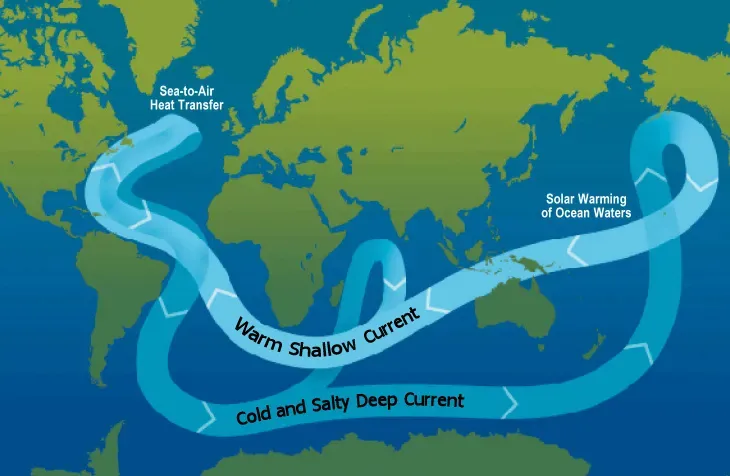
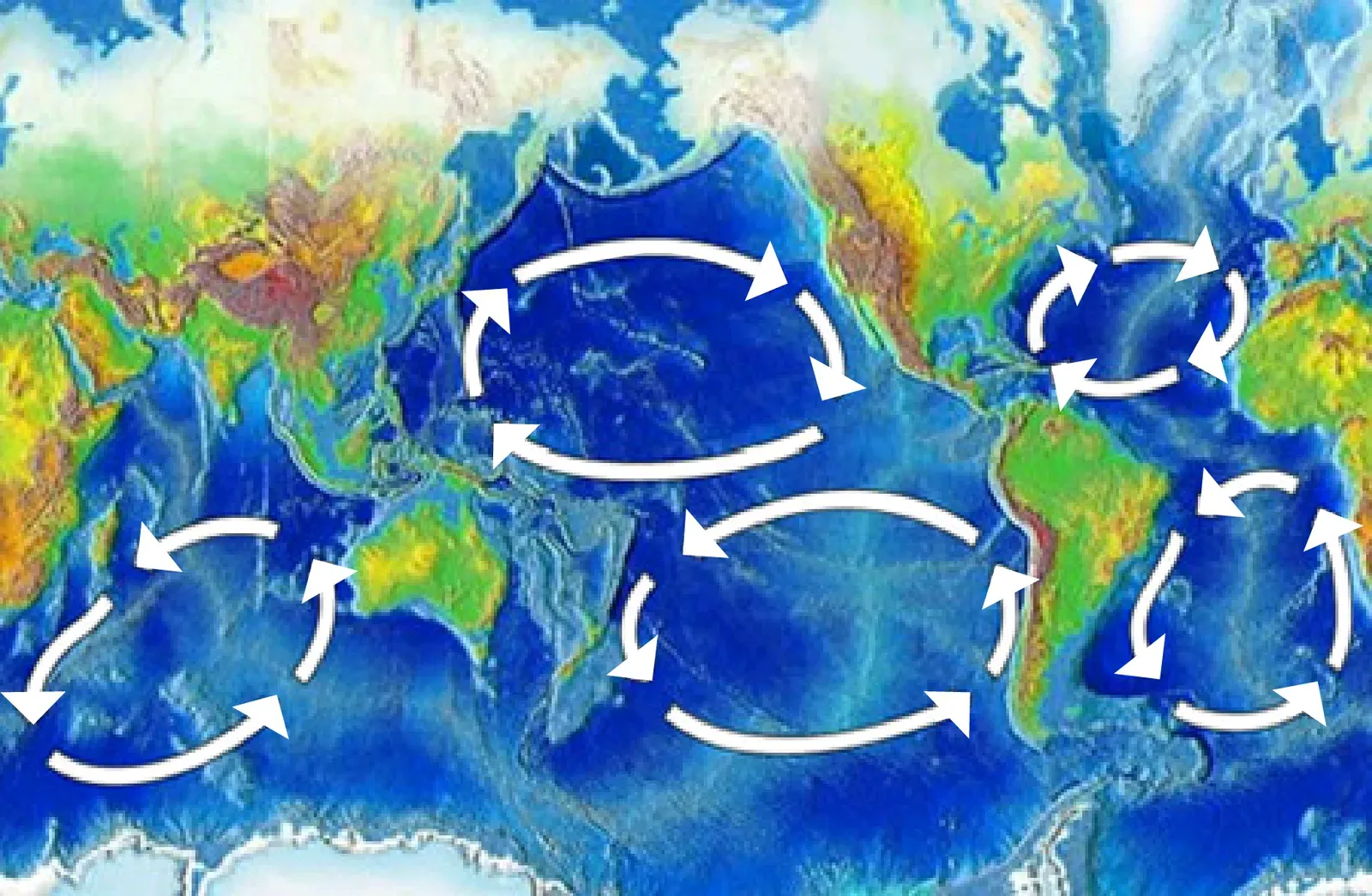
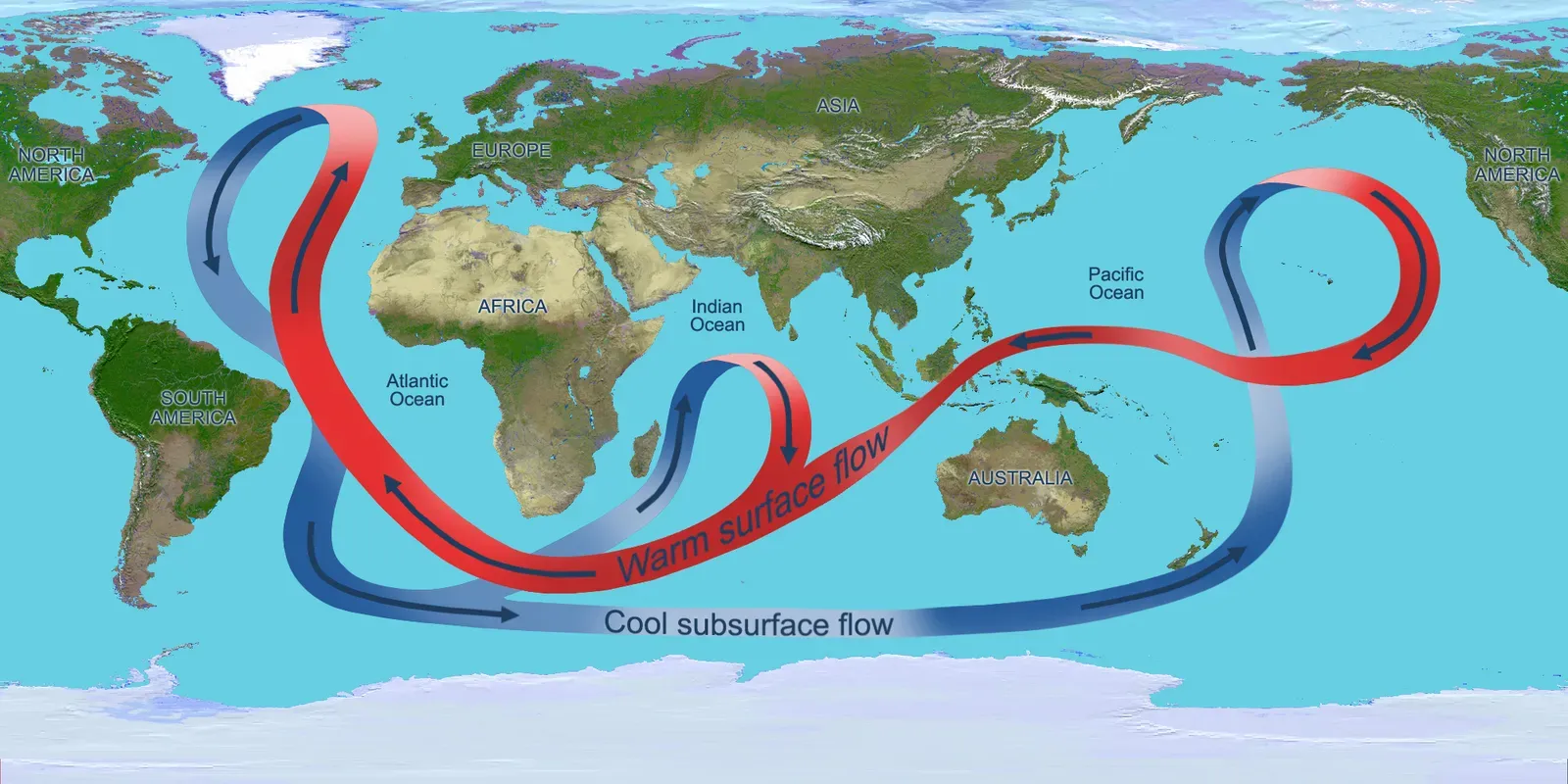
The global ocean conveyor belt is a constantly moving system of deep-ocean circulation driven by temperature and salinity. Think of it like a planetary-scale circulation pattern that never stops. Large-scale surface ocean currents are driven by global wind systems that are fueled by energy from the sun, and these currents transfer heat from the tropics to the polar regions, influencing local and global climate.
It is estimated that it can take 1,000 years for a parcel of water to complete the journey along the global conveyor belt. That’s right, roughly a millennium for water to make one full trip around the planet. The system works because cold, dense water sinks near the poles while warm, lighter water rises and flows along the surface, creating this endless loop that connects every ocean basin.
How Temperature and Salt Drive Deep Currents
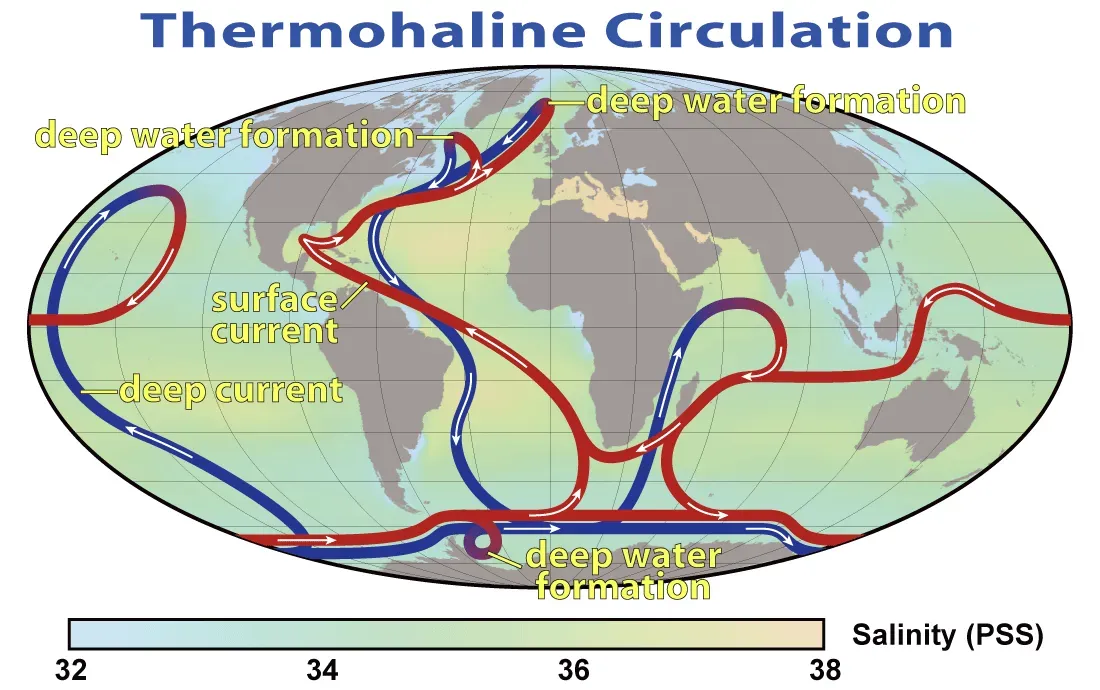
Here’s where things get interesting. Differences in water density, resulting from the variability of water temperature (thermo) and salinity (haline), also cause ocean currents through a process known as thermohaline circulation. Cold water is naturally denser than warm water. Salty water is denser than fresh water. When you combine cold temperatures with high salt content, you get water so heavy it literally plunges to the ocean floor.
In the Earth’s polar regions ocean water gets very cold, forming sea ice. As a consequence, the surrounding seawater gets saltier because when sea ice forms, the salt is left behind. As the seawater gets saltier, its density increases, and it starts to sink. This sinking action creates a powerful underwater current that pushes existing deep water southward. The process keeps going, year after year, century after century.
The Atlantic’s Role in Europe’s Mild Climate
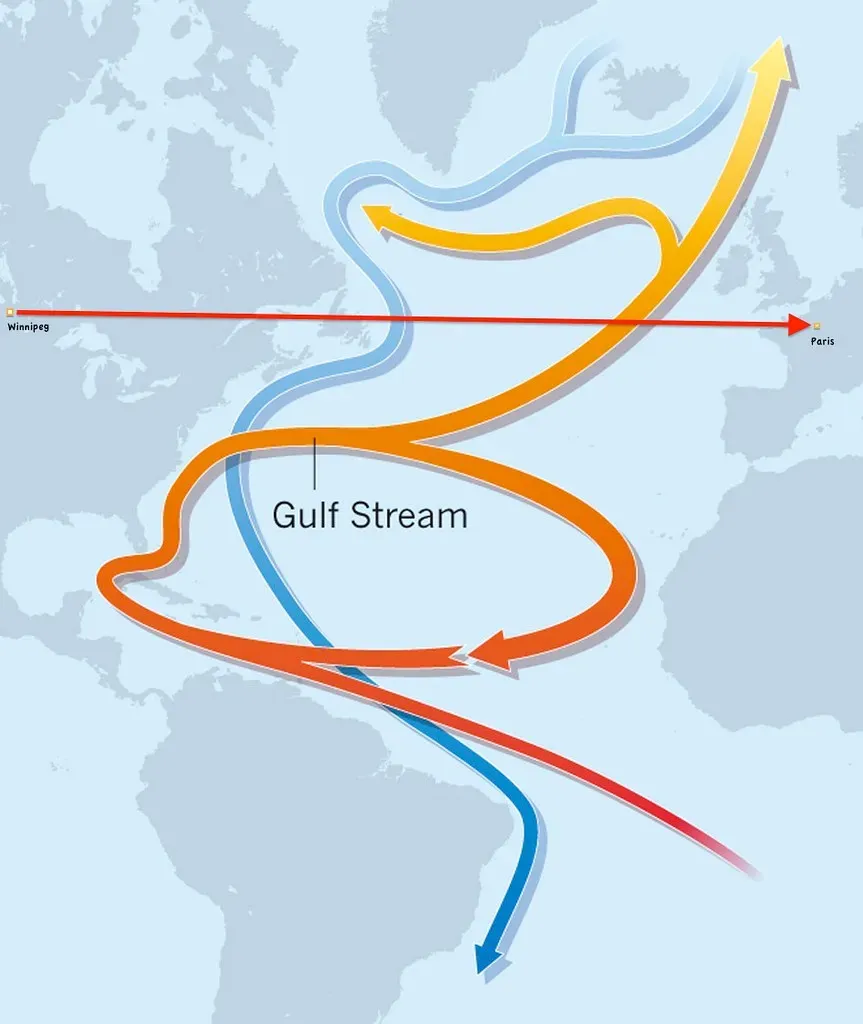
The warm Gulf Stream originating in the tropical Caribbean carries about 150 times more water than the Amazon River and moves along the U.S. East Coast across the Atlantic Ocean towards Europe. The heat from the Gulf Stream keeps much of Northern Europe significantly warmer than other places equally as far north. Without this massive heat delivery system, cities like London and Oslo would be far colder, probably more like the frigid conditions found at similar latitudes in Canada.
The Atlantic Meridional Overturning Circulation, which includes the Gulf Stream, is basically Europe’s climate lifeline. The AMOC carries up to 25% of the total heat toward the northern hemisphere and plays an important role in the climate around northwest Europe. It’s not magic. It’s physics and geography working together on an enormous scale to redistribute warmth across the planet.
When Ocean Currents Weaken or Shift
Let’s be real: scientists are worried. Research examining changes in the ocean south of Greenland during the last 150 years found that the inflow of freshwater has been disrupting the subpolar gyre, which distributes ocean heat, since the 1950s. Freshwater from melting ice sheets dilutes the salty ocean water, making it less dense and less likely to sink. This disrupts the whole circulation system.
A weakening or shutdown of the subpolar gyre and related currents would weaken the northward transport of ocean heat from the tropics to higher latitudes. The tropics would experience more extreme heat on land and even worse ocean heatwaves than those already killing billions of marine organisms. Meanwhile, parts of the North Atlantic could actually cool down even as the rest of the world warms up. Talk about climate chaos.
There would likely be regional cooling in the North Atlantic and more extremes in Europe: hotter summers, colder winters and worse flooding and droughts, as well as shifts in global precipitation.
The Antarctic Circumpolar Current’s Planetary Power
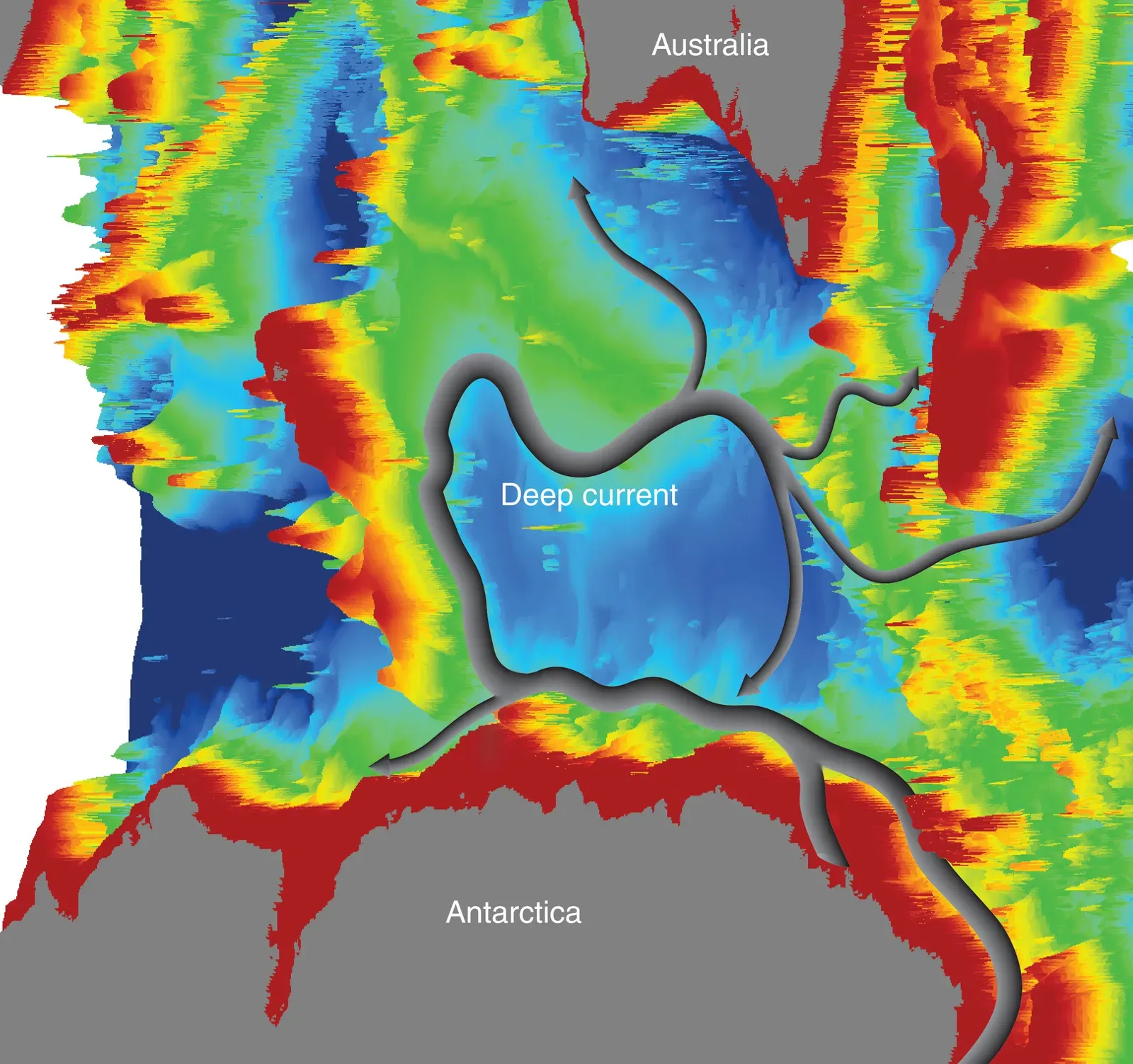
Down south, there’s another giant at work. The Antarctic Circumpolar Current merges the waters of the Atlantic, Indian, and Pacific Oceans and carries up to 150 times the volume of water flowing in all of the world’s rivers. It circles Antarctica in a clockwise loop, connecting all three major ocean basins and playing a critical role in global heat distribution.
The Antarctic Circumpolar Current strongly influences regional and global climate as well as underwater biodiversity. This current doesn’t just move water. It mixes nutrients, helps regulate carbon dioxide levels, and supports entire marine ecosystems. Recent studies show it’s been shifting position and changing speed during past warm periods, which has implications for ice sheet stability and sea levels.
Researchers found that southern migration of the westerly winds and the Antarctic Circumpolar Current towards the pole during periods of past global warming increased the amount of natural carbon released to the atmosphere by the Southern Ocean. Human-induced climate change has brought about a similar process, which is underway today.
Carbon, Nutrients, and Marine Life Connections
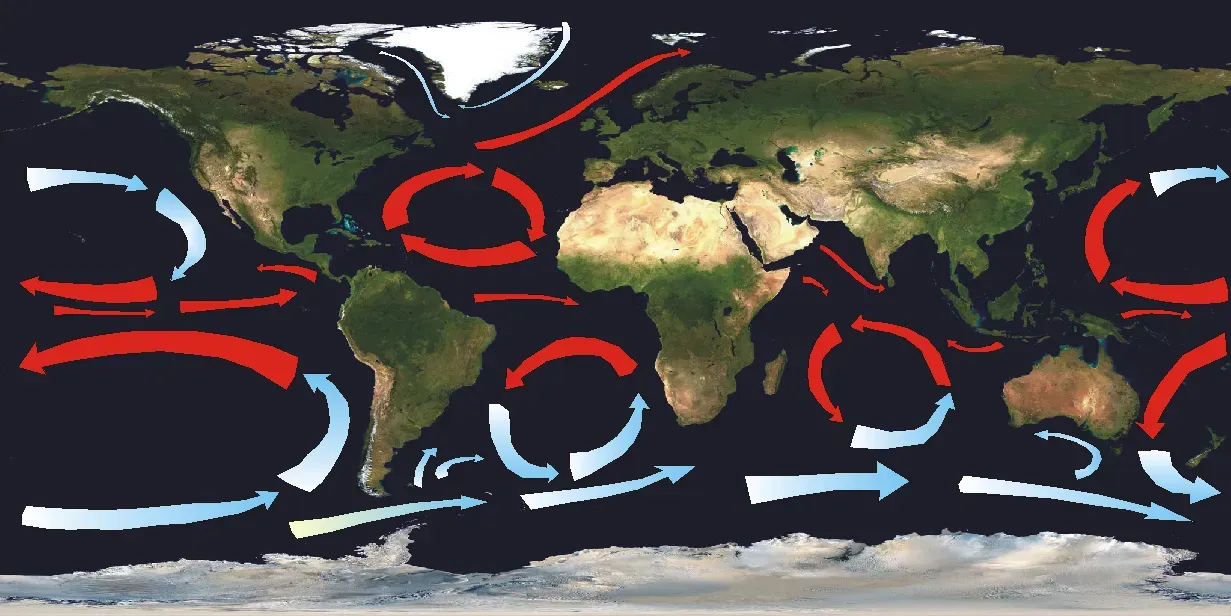
Ocean currents don’t just transport heat. They’re also moving massive amounts of carbon and nutrients around. The global set of ocean currents is a critical part of Earth’s climate system as well as the ocean nutrient and carbon dioxide cycles. When deep water rises to the surface in certain regions, it brings nutrients that have been sitting on the ocean floor for centuries. These nutrients fuel the growth of phytoplankton, the base of the entire marine food web.
The Southern Ocean plays a central role in the global uptake of heat and carbon, with approximately 40% of annual global CO2 emissions absorbed by the world’s oceans entering through this region. That’s nearly half of all the carbon dioxide the ocean absorbs each year, flowing through one region. If circulation patterns change, the ocean’s ability to soak up our emissions could be severely compromised, leaving more greenhouse gases in the atmosphere.
Early Warning Signs Scientists Are Watching
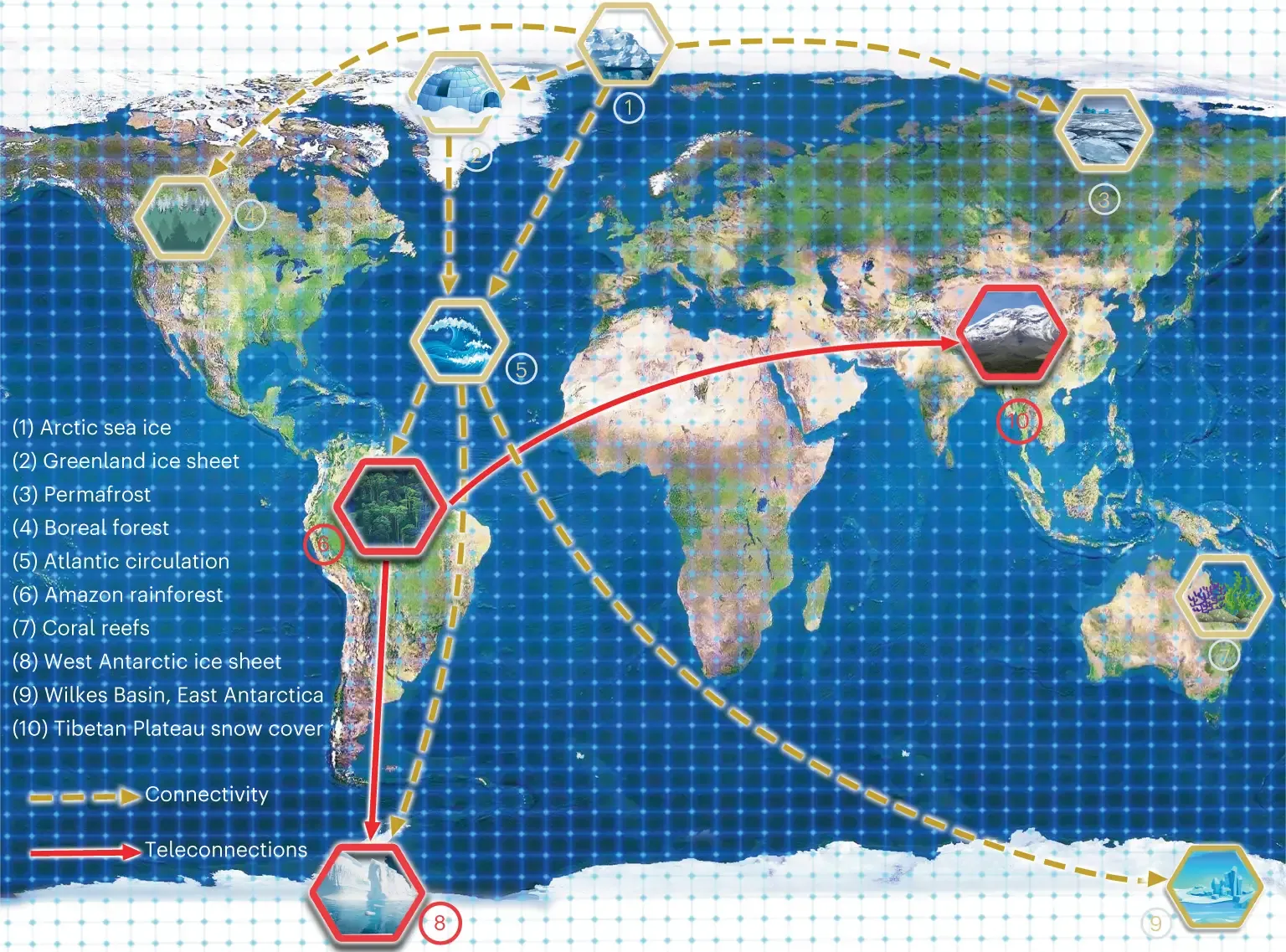
Climate researchers aren’t sitting idle. Several recent research projects focus on identifying early warning signs of climate tipping points, which are basically irreversible changes to Earth’s systems such as ocean currents, glaciers, coral reefs or forests. Trying to find early warning signs is crucial because once major tipping points are breached, it’s too late to take action.
One telltale sign is the so-called “cold blob” in the North Atlantic. The cold blob corresponds to about 15% weakening of the AMOC. While the rest of the ocean is warming, this one patch keeps getting colder, suggesting that the heat-carrying currents are already slowing down.
The current cold blob is already affecting weather. A cold subpolar North Atlantic correlates with summer heat in Europe. The cooling of the sea surface influences the air pressure distribution in a way that encourages an influx of warm air from the south into Europe.
What Happens if Major Currents Collapse
Here’s the thing: nobody wants to find out what a full collapse would look like. A 2024 study showed that the impacts of a full-scale shutdown of the heat-carrying currents in the North Atlantic could unleash climate chaos in the Northern Hemisphere. We’re talking about extreme temperature swings, disrupted rainfall patterns, faster sea level rise along coastlines, and ecosystems pushed beyond their limits.
Scientists project that the Atlantic Meridional Overturning Circulation is very likely to weaken over the 21st century for all considered scenarios (high confidence), however an abrupt collapse is not expected before 2100 (medium confidence). If such a low probability event were to occur, it would very likely cause abrupt shifts in regional weather patterns and water cycle, such as a southward shift in the tropical rain belt, and large impacts on ecosystems and human activities.
The economic costs alone could be staggering. The weakening of the Atlantic Meridional Overturning Circulation could lead to long-term economic costs of several trillion euros by 2100. This weakening reduces the ocean’s ability to absorb CO₂, leaving more in the atmosphere and accelerating global warming. The resulting increase in extreme weather events and the social cost of carbon could outweigh any cooling benefits previously anticipated.
The Global Impact You Can’t Ignore
Everything’s connected. When one part of the ocean circulation system changes, it doesn’t stay local. The water in these circuits transport energy as heat and mass as dissolved solids and gases around the globe. Consequently, the state of the circulation greatly impacts the climate of Earth. A slowdown in one area might mean hotter oceans elsewhere, changed monsoon patterns in Asia, or accelerated ice melt in Antarctica.
Under a slower ocean circulation scenario, the ocean will become less able to absorb excess heat and carbon dioxide generated by human activities, so it will build up in the atmosphere instead. Ongoing slowing or halting of ocean circulation could result in severe disruptions of the climate, including more frequent and severe storms, floods and droughts, leading to global food insecurity, as well as oxygen depletion in the ocean, which could cause the collapse of entire marine ecosystems.
Looking Forward With Caution and Hope
There’s no sugarcoating it: the science is clear that ocean currents are changing and those changes could reshape life as we know it. Recent research has refined our understanding, though uncertainties remain about timing and severity. The AMOC will undoubtedly be weakened by climate change very soon or maybe even started weakening in the years after 2017. Since the current has been stable up to 2017, an entire collapse is less likely in the near future. However, the AMOC will decline substantially and the consequences will be extremely grave.
The good news is that scientists are getting better at monitoring these systems. The bad news is that what they’re seeing isn’t encouraging. Still, understanding the problem is the first step toward addressing it. Cutting greenhouse gas emissions, protecting polar ice, and reducing the stress we place on ocean ecosystems all matter.
Giant ocean currents have been silently shaping our climate for millions of years. They’ve kept continents habitable, regulated global temperatures, and sustained countless species. Now they’re sending us a warning signal. Whether we listen and act could determine what kind of world future generations inherit. What do you think about it? Does knowing this change how you see the ocean’s role in our lives?