
Quantum entanglement used to live in the same mental drawer as teleportation and time travel: fun to imagine, but surely not part of our everyday reality. Yet over the past two decades, this once‑esoteric idea has marched out of chalkboard arguments and into real devices, satellites, and even early-stage networks on Earth. Physicists are not just talking about spooky connections anymore; they are building machines that rely on them. That shift raises an uncomfortable question: if our technology now depends on entanglement, what does that say about how the universe really works? The more we test it, the more we find that reality is stranger, more nonlocal, and more robustly quantum than most of us were ever taught in school.
The “Spooky” Link That Refuses to Break

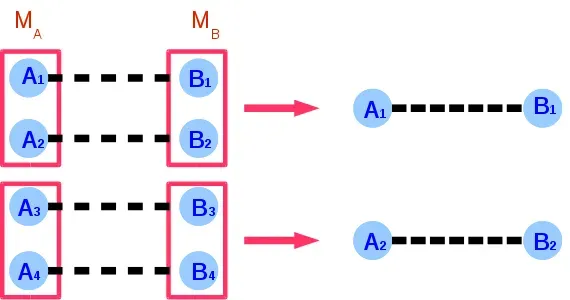
Imagine rolling two dice on opposite sides of the planet and finding that whenever one shows a six, the other instantly does too, every single time, no matter how you try to shake things up. That is roughly the emotional flavor of quantum entanglement, except the dice are particles like photons or electrons, and the “roll” is a measurement of some property such as polarization or spin. Decades ago, even Einstein doubted that such a connection could be real, dismissing it as an incomplete description of deeper hidden variables waiting in the wings. The bet in physics for most of the twentieth century was that some unseen mechanism would eventually tame this weirdness and restore a more intuitive picture of cause and effect. What actually happened was the opposite: the more carefully we tested entanglement, the more stubborn and undeniable it became.
In meticulously controlled experiments, researchers now create entangled particles, send them far apart, and then check whether their measured properties still correlate in ways classical physics says they should not. Time after time, the answer is yes: the correlations persist, and they obey precise mathematical limits known as Bell inequalities that simply cannot be faked by ordinary local mechanisms. Crucially, these tests have been repeated with ever more sophisticated designs that close off potential loopholes – such as stray communication between detectors or biased sampling of data – and entanglement keeps passing. Like a suspect grilled from every angle who never cracks, its story has only grown more convincing.
Bell’s Inequality: The Cosmic Lie Detector
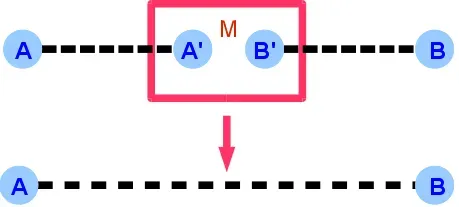
If entanglement sounds like mystical hand‑waving, Bell’s inequality is the part where it stops being philosophy and turns into a hard‑edged experiment. The inequality is essentially a mathematical line in the sand: if the world is governed by hidden local causes – things that travel no faster than light and carry pre‑set instructions – then certain statistical patterns in measurement outcomes can never be crossed. When physicists measure entangled particles and find results that break those limits, they are not merely surprised; they are forced to admit that one of their cherished assumptions about reality has to go. Either influences are not purely local, or measurement outcomes are not fixed in any simple pre‑existing way.
In the last decade, research teams in Europe, the United States, and China have carried out so‑called loophole‑free Bell tests using entangled photons, electrons trapped in diamonds, and other quantum systems. These experiments are designed like a forensic investigation: measurement settings are chosen on the fly by random number generators, detectors are spaced far enough apart that no signal traveling at light speed could coordinate them in time, and data is analyzed with brutal statistical rigor. The verdict has been remarkably consistent: the observed correlations violate Bell’s inequality, reaffirming that entanglement cannot be explained by any theory that clings to ordinary locality and realism at the same time. It is as if the universe has taken a polygraph test about its deepest workings and calmly failed in exactly the way quantum theory predicts.
From Lab Curiosity to Working Hardware
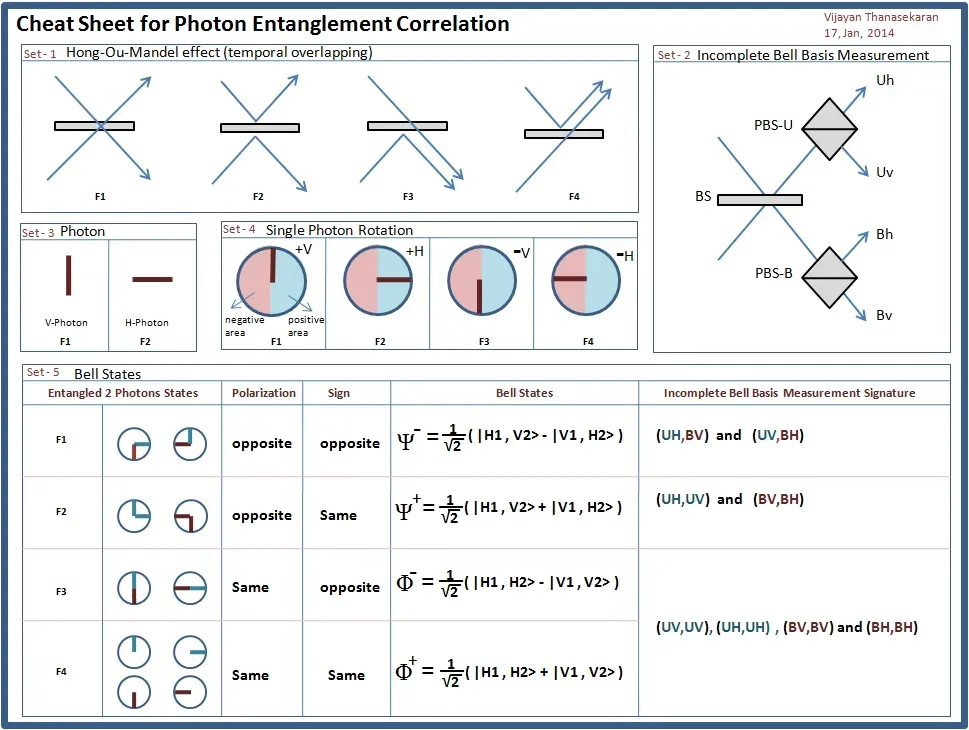
For a long time, entanglement was an elegant party trick for physicists: spectacular in talks, but seemingly detached from real‑world utility. That changed once researchers realized that entangled states can be treated as a kind of currency for information processing. In quantum key distribution, for example, pairs of entangled photons are sent to two users who want to share a secret encryption key. Because any eavesdropper trying to intercept or measure the photons would inevitably disturb the quantum correlations, the legitimate users can spot tampering by checking a subset of their shared data. What used to be a philosophical puzzle has become the security backbone of experimental communication systems.
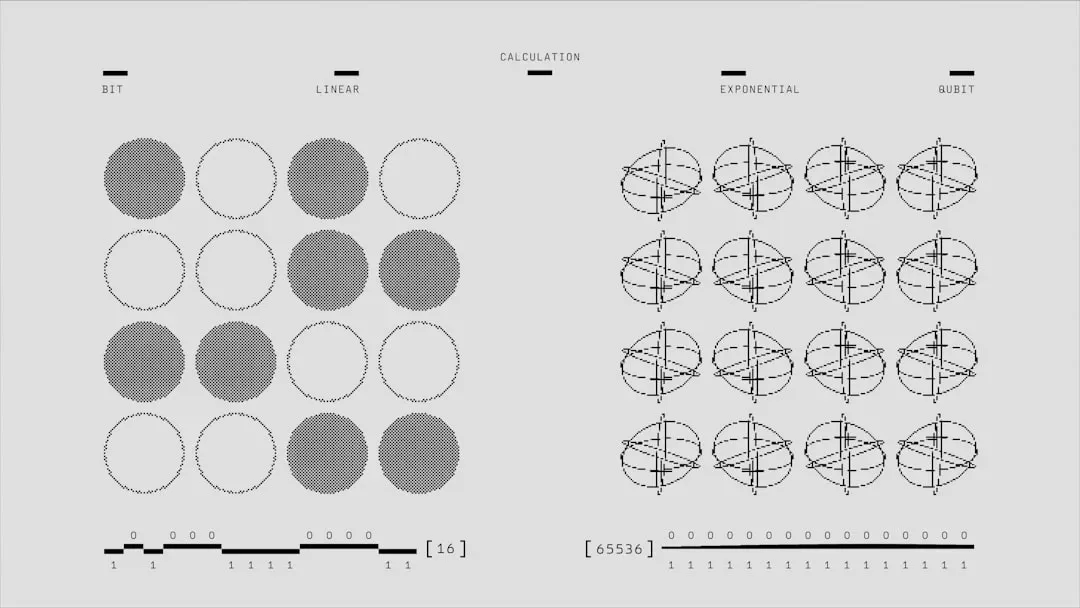
Beyond cryptography, entanglement underpins the logic of quantum computers, which use qubits that can be entangled to encode and manipulate information in ways no classical bit string can match. Whenever you hear that a quantum processor has executed an algorithm beyond the reach of traditional machines, entanglement is doing the heavy lifting behind the scenes, knitting together qubits so that their states cannot be described independently. Experimental devices in industry and national labs now routinely create entangled states involving dozens, and in some cases hundreds, of qubits, even though maintaining their fragile coherence remains a major engineering challenge. The practical message is clear: if you try to build powerful quantum technology without embracing entanglement, you are turning up to a marathon with your shoelaces tied together.
Why It Matters: Smashing the Old Picture of Reality
Entanglement matters because it forces a showdown between the comfortable story most of us grew up with and the stranger script the universe actually seems to follow. In the traditional view, objects carry their properties with them like luggage – color, spin, position – regardless of whether anyone looks. Measurements simply reveal what is already there, and influences propagate locally from place to place like ripples in a pond. Entanglement says that, at least in some situations, this picture fails. Instead, the outcomes of measurements on entangled particles are intertwined in a way that defies any model built purely on local, pre‑assigned instructions.
That does not mean faster‑than‑light communication is suddenly on the table; entanglement cannot be used to send a controllable message instantaneously from one place to another. But it does mean that the universe is less like a neatly labeled warehouse of properties and more like a script whose lines are only fully written when measurements happen, sometimes across vast distances. On a practical level, this pushes scientists to rethink everything from how information is defined to what it means to talk about causality in quantum systems. On a more human level, it undermines our intuition that the world is fundamentally built from separate, self‑contained pieces. Entanglement is a reminder that, at the deepest scales we can probe, relationships can be just as real as the things they connect.
Everyday Reality vs. Quantum Reality
It is tempting to keep quantum strangeness safely quarantined in the microscopic world of atoms and photons, far from our coffee cups and car keys. But modern experiments suggest that the boundary between the quantum and everyday worlds is fuzzier than that simple story implies. Researchers have created entangled states involving surprisingly massive objects, like tiny mechanical drums made of billions of atoms, whose vibrations become correlated in quantum‑weird ways. Others have entangled collections of many atoms in cold gases and solid‑state systems, then used those states to make ultra‑precise measurements of time and magnetic fields.
While we do not see our laptops spontaneously jumping into entangled superpositions, the devices we carry are increasingly dependent on components and materials whose behavior is best understood in quantum terms. The synchronization of GPS satellites, the operation of advanced sensors, and the emerging generation of quantum‑enhanced imaging techniques all rely on controlling and exploiting delicate quantum effects. The growing consensus among researchers is that entanglement is not a rare curiosity locked in high‑energy physics labs, but a resource that can be coaxed into appearing in systems much closer to our daily experience. The main reason it seems absent from ordinary life is that entanglement is incredibly sensitive to environmental noise, which tends to wash it out long before we notice.
Building a Quantum Internet from Spooky Links

One of the boldest bets on the reality of entanglement is the push to build a quantum internet – a global network that distributes entangled states the way today’s internet moves data packets. In such a network, distant nodes could share entanglement and use it as the backbone for tasks like unhackable communication, ultra‑precise clock synchronization, or distributed quantum computing. To get there, scientists are developing quantum repeaters that store and extend entanglement over long distances, along with satellites that can distribute entangled photons from orbit to ground stations. Early demonstrations have already linked cities using fiber‑optic cables and beamed entangled photons across hundreds of kilometers through the atmosphere.
The idea may sound abstract, but it comes with concrete milestones and engineering headaches. Entangled signals weaken and decohere as they travel through real‑world media, so the challenge is to preserve fragile quantum correlations across the noisy infrastructure of Earth. This has led to hybrid strategies that combine space‑based links with ground‑based fibers and quantum memories that can temporarily hold entanglement until it is needed. The vision is that, a few decades from now, quantum networks could quietly underpin financial systems, power grids, scientific collaborations, and secure government communication. If that future arrives, the word “entanglement” may feel less like a philosophical puzzle and more like the plumbing of the digital world.
The Future Landscape: Bigger Tests, Deeper Questions
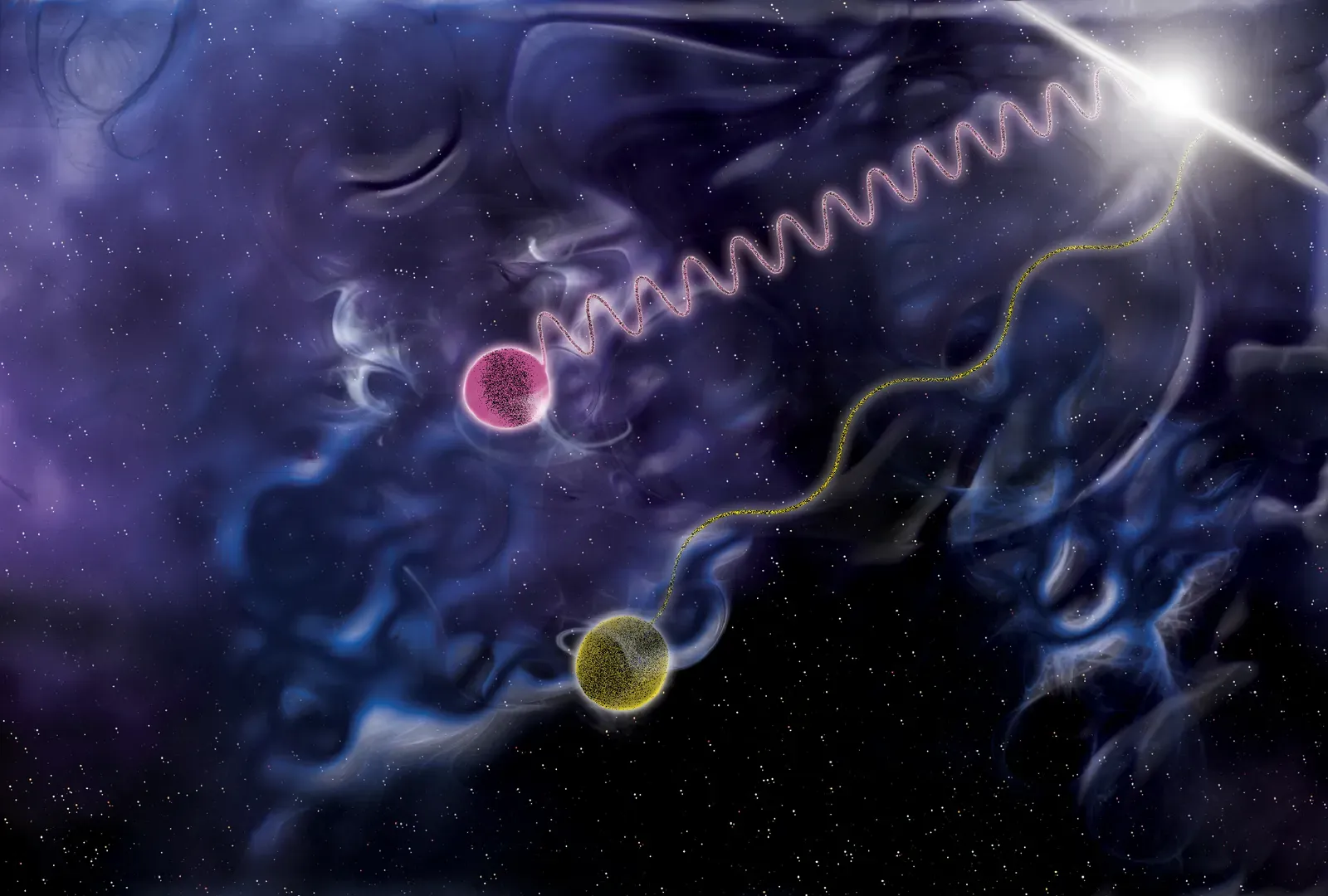
Looking ahead, researchers are not just trying to use entanglement; they are also stretching it into new regimes to probe how far this strange connection can go. Some teams are exploring whether increasingly large and complex objects can be placed into entangled states without losing coherence to the environment. Others are asking whether entanglement can be used as a tool to test aspects of gravity, for example by examining how quantum systems behave in curved spacetime or in the presence of massive bodies. These experiments sit at the frontier between quantum theory and general relativity, two of physics’ most successful but conceptually mismatched frameworks.
At the same time, theorists are uncovering surprising links between entanglement and the fabric of spacetime itself, proposing that the geometry of the universe might in some sense emerge from the pattern of quantum correlations. While these ideas are still being worked out and tested, they suggest that entanglement is not just another weird effect, but a potential key to unifying our understanding of nature. On the technological side, the roadmap includes more robust quantum processors, longer‑range quantum communication, and sensors that use entangled states to reach measurement limits classical physics cannot touch. The open question is not whether entanglement is real, but how deeply it shapes the rules we live by at every scale.
How You Can Engage with the Quantum Revolution
For something as abstract as quantum entanglement, it is surprisingly easy to feel connected to what is happening right now. One straightforward step is simply to follow reliable science coverage and research institution updates about quantum technologies, instead of letting the topic drift into the realm of science fiction. Many universities and labs share accessible explainers, animations, and public lectures that peel back the jargon without dumbing down the ideas. Getting familiar with basic concepts like qubits, superposition, and entanglement turns headlines about quantum breakthroughs from mysterious noise into meaningful stories.
If you want to go a little further, there are citizen‑science and open‑source projects that let you run simple experiments on real quantum hardware through online interfaces, no lab coat required. You can also support educational programs that bring modern physics into schools, so the next generation is not stuck with a picture of reality that quantum experiments have already left behind. Even conversations matter: when entanglement comes up at dinner or on social media, you can push back gently against myths and explain that, yes, it is strange, and yes, it is very much real. In a world where quantum technologies are set to shape communication, security, and computing, staying curious is not just a hobby – it is a way of keeping a say in how that future unfolds.
Suhail Ahmed is a passionate digital professional and nature enthusiast with over 8 years of experience in content strategy, SEO, web development, and digital operations. Alongside his freelance journey, Suhail actively contributes to nature and wildlife platforms like Discover Wildlife, where he channels his curiosity for the planet into engaging, educational storytelling.
With a strong background in managing digital ecosystems — from ecommerce stores and WordPress websites to social media and automation — Suhail merges technical precision with creative insight. His content reflects a rare balance: SEO-friendly yet deeply human, data-informed yet emotionally resonant.
Driven by a love for discovery and storytelling, Suhail believes in using digital platforms to amplify causes that matter — especially those protecting Earth’s biodiversity and inspiring sustainable living. Whether he’s managing online projects or crafting wildlife content, his goal remains the same: to inform, inspire, and leave a positive digital footprint.