Ever wondered what happens when you slam particles together at nearly the speed of light? You’re not alone. Deep beneath the border of France and Switzerland, a massive machine has been doing exactly that since 2008, and what scientists have found inside this colossal tunnel is rewriting our understanding of reality itself.
isn’t just a fancy piece of equipment. It’s humanity’s most ambitious attempt to peer into the fundamental fabric of the universe, recreating conditions that haven’t existed since moments after the Big Bang. Think about it: you’re living in a time when physicists can actually test theories that were once pure speculation. So let’s dive in and see what this incredible machine has revealed.
The Higgs Boson: The Particle That Gives Everything Mass
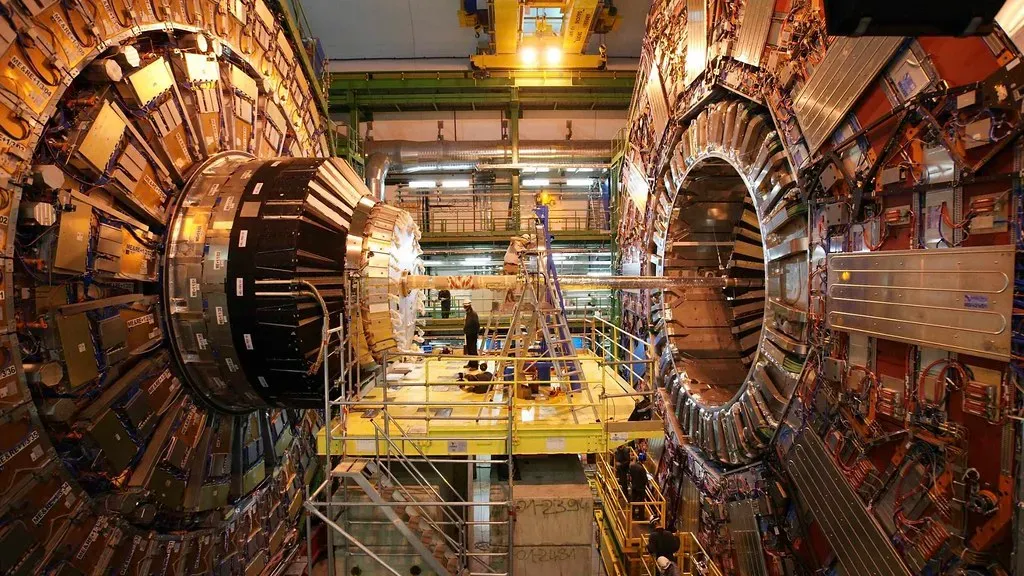
You might have heard about the Higgs boson discovery in 2012, but do you truly grasp how mind-blowing this really is? For nearly fifty years, physicists suspected there was an invisible field permeating all of space, giving particles their mass. Without it, you, your coffee cup, and everything else would be zipping around at light speed.
The challenge was enormous because the Higgs boson only appears in about one in a billion LHC collisions. Imagine searching for a specific grain of sand in all the beaches of California. On July 4, 2012, the ATLAS and CMS collaborations announced the discovery of a new particle to a packed auditorium at CERN.
Particles gained their mass from a fundamental field associated with the Higgs boson, which means this discovery explains why stars, planets, and ultimately you exist. The universe could have been a very different place, filled with massless particles shooting around forever. Instead, thanks to the Higgs field, matter clumped together to form galaxies, stars, and eventually life itself.
Peter Higgs and François Englert were awarded the 2013 Nobel Prize in Physics for their Higgs field theory. Honestly, you can’t overstate this achievement. It completed the Standard Model of particle physics, confirming a prediction that shaped decades of research.
Quark-Gluon Plasma: Recreating the Universe’s First Moments
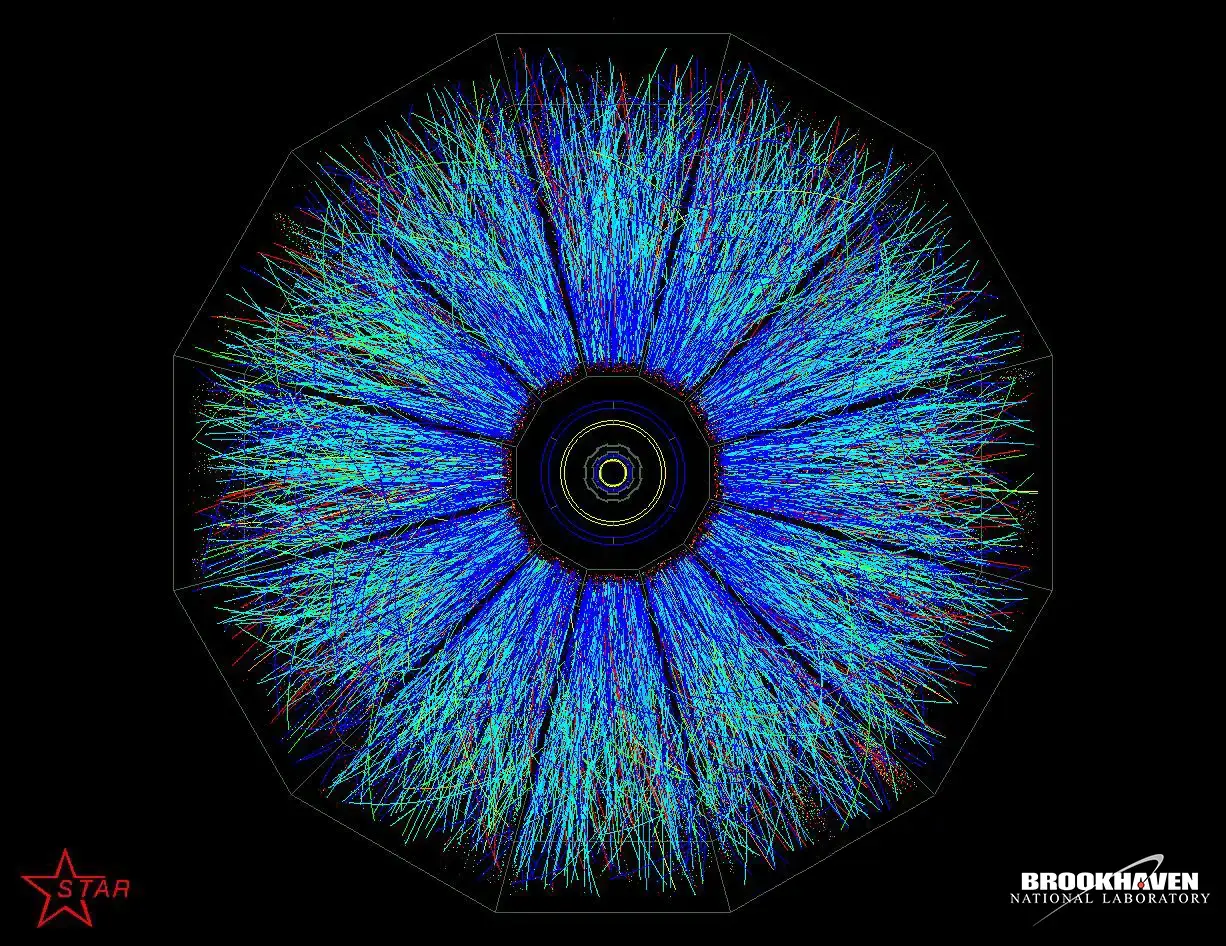
Here’s where things get really wild. For a few millionths of a second after the Big Bang, the universe was filled with an astonishingly hot, dense soup where quarks and gluons were bound only weakly, free to move on their own in a quark-gluon plasma. You’re essentially looking at what the universe was like before protons and neutrons even existed.
The LHC’s first run discoveries included the first creation of a quark-gluon plasma, achieved by smashing lead ions together at incredible energies. When these collisions happen, the temperatures reach trillions of degrees, hot enough to melt protons and neutrons into their constituent quarks and gluons.
What’s fascinating is how this plasma behaves. An early discovery was that the quark-gluon plasma behaves more like a perfect fluid with small viscosity than like a gas. Think of it as the ultimate cosmic soup, flowing with almost no friction. This property tells you something profound about the strong force that holds atomic nuclei together.
It is speculated that the universe was in a QGP state around one millionth of a second after the Big Bang. By recreating this primordial matter in the lab, you’re literally touching the conditions of the infant universe. It’s hard to say for sure, but studying this plasma might help unlock mysteries about how our current universe formed from that initial chaotic state.
Pentaquarks: Quarks Playing by New Rules
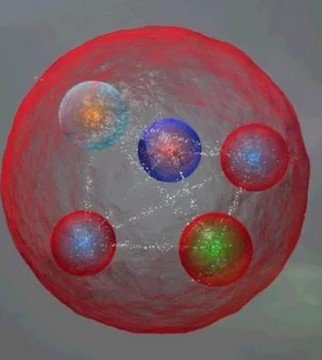
You probably learned in school that protons and neutrons are made of three quarks. Well, nature had more tricks up its sleeve. On 13 July 2015, the LHCb collaboration at CERN reported results consistent with pentaquark states, exotic particles made of four quarks and one antiquark bound together.
Let’s be real: physicists had been searching for pentaquarks for over fifty years. Murray Gell-Mann and George Zweig proposed the quark model in their 1964 papers and mentioned the possibility of exotic hadrons such as pentaquarks, but it took 50 years to demonstrate their existence experimentally. The LHC finally delivered the goods.
The first pentaquark found to contain a strange quark was made up of a charm quark and a charm antiquark and an up, a down and a strange quark, with a whopping statistical significance of 15 standard deviations. That’s like being more certain than winning the lottery five times in a row. Scientists don’t use the word “discovery” lightly.
Why should you care? These particles represent a way to aggregate quarks in a pattern that has never been observed before in over fifty years of experimental searches, and studying their properties may allow us to understand better how ordinary matter is constituted. Pentaquarks aren’t just curiosities. They’re windows into understanding the strong force, one of nature’s fundamental forces, in unprecedented detail.
Exotic Hadrons: Building a New Particle Zoo
Beyond pentaquarks, the LHC has been churning out exotic particles like a cosmic assembly line. The LHCb collaboration has observed three never-before-seen particles: a new kind of pentaquark and the first-ever pair of tetraquarks. Tetraquarks are particles made of four quarks, another arrangement that defies the conventional three-quark or quark-antiquark rules.
Over the past 10 years, the LHC experiments have found more than 50 new particles called hadrons, which number 59 in total. That’s not a typo. Nearly sixty new particles discovered by one machine. We’re witnessing a period of discovery similar to the 1950s, when a particle zoo of hadrons started being discovered and ultimately led to the quark model of conventional hadrons in the 1960s, creating particle zoo 2.0.
Each of these discoveries helps you understand how quarks can combine in unexpected ways. While some theoretical models describe exotic hadrons as single units of tightly bound quarks, other models envisage them as pairs of standard hadrons loosely bound in a molecule-like structure, and only time and more studies will tell if these particles are one, the other or both.
The implications stretch beyond particle physics. These exotic particles might have existed in the early universe and could even be present in neutron stars, those incredibly dense stellar remnants. By studying them now, you’re gaining insights into environments so extreme they exist nowhere else in the observable cosmos except inside colliders and dying stars.
Precision Measurements: Testing Reality’s Fine Print
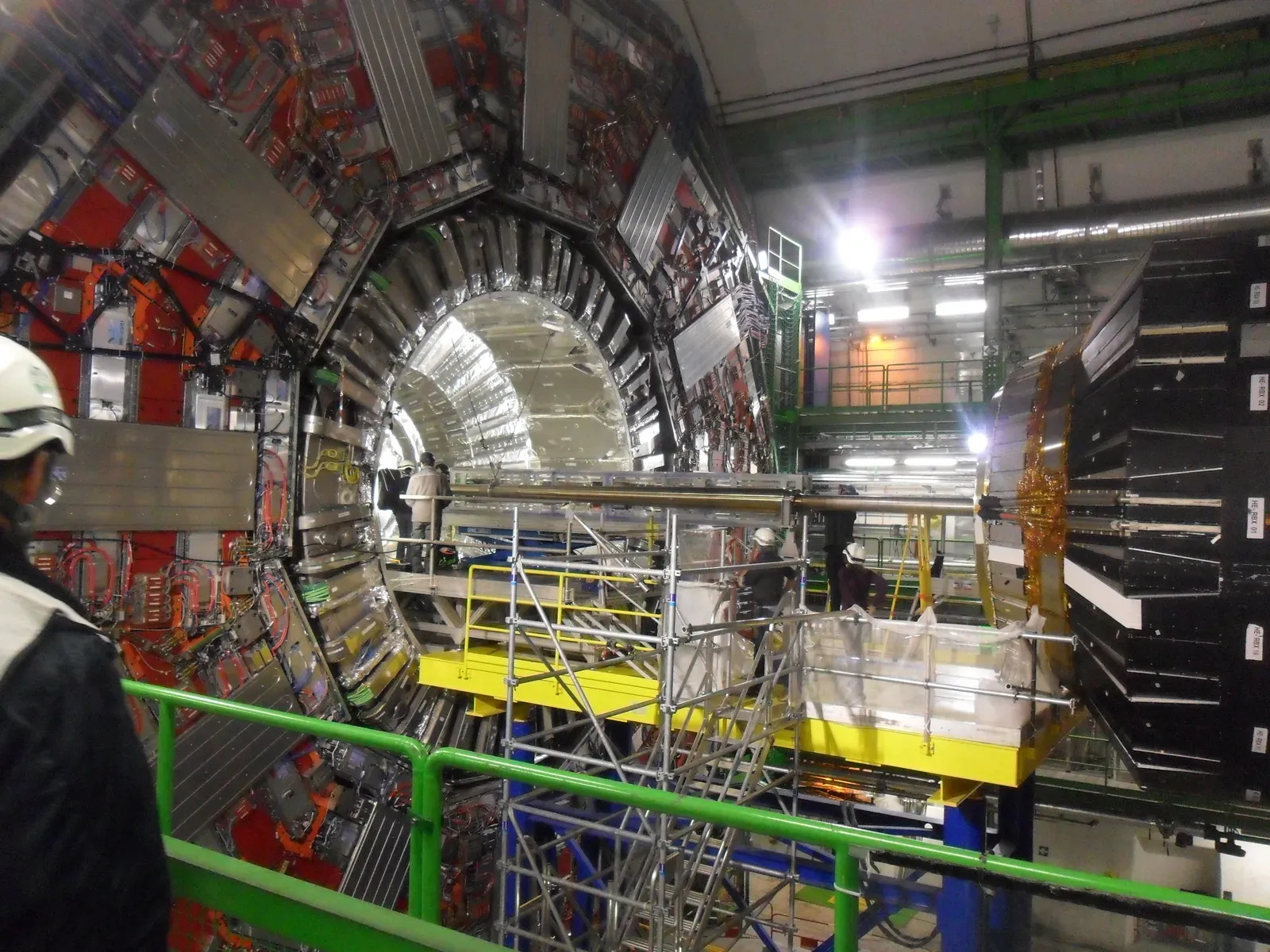
Sometimes the most exciting discoveries aren’t flashy new particles but subtle deviations from what we expect. The LHC excels at making incredibly precise measurements of known particles, searching for tiny hints that something beyond the Standard Model might be lurking.
The first observations of the very rare decay of the Bs meson into two muons challenged the validity of existing models of supersymmetry. This might sound technical, but here’s what it means: physicists had theories predicting certain particles should decay in specific ways. When measurements showed reality behaving differently, even by small amounts, entire theoretical frameworks had to be reconsidered.
ATLAS and CMS teamed up to find the first evidence of the rare process in which the Higgs boson decays into a Z boson and a photon, a collaborative effort that resulted in the first evidence with a statistical significance of 3.4 standard deviations. You might wonder why scientists get excited about “evidence” rather than “discovery.” It’s because they’re methodical, building confidence through repeated observations.
These precision measurements work like a stress test for our theories. A short-lived cousin of protons and neutrons, the beauty-lambda baryon, decays at a different rate than its antimatter counterpart, an effect called charge-parity violation, which refers to particles of opposite charge behaving differently. This asymmetry between matter and antimatter might help explain why our universe is made of matter rather than having annihilated itself in a matter-antimatter collision right after the Big Bang.
Think of it this way: every measurement refines your picture of reality. Even when you don’t find the dramatic new particles you’re hoping for, these precision studies are slowly closing in on where new physics must be hiding.
Conclusion
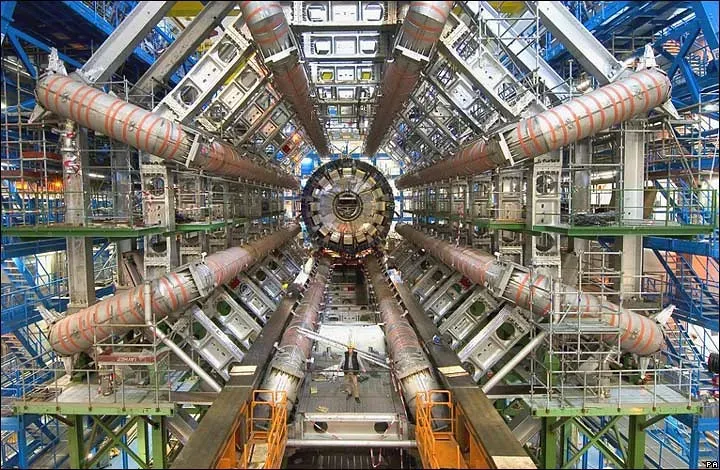
has fundamentally changed how you understand the universe. From confirming the Higgs boson to recreating the primordial soup of the early cosmos, from discovering exotic particles that shouldn’t exist to making measurements precise enough to test the limits of known physics, the LHC represents one of humanity’s greatest scientific achievements.
What makes these discoveries truly life-changing isn’t just the technical brilliance involved. It’s that they answer questions humans have asked for millennia: What are we made of? How did the universe begin? What are the fundamental rules governing reality? You’re living in an era where these ancient questions are finally getting concrete, testable answers.
The journey is far from over. With upgrades planned and new experiments on the horizon, who knows what the LHC will reveal next? What do you think lies beyond the Standard Model? The universe has surprised us before, and it will undoubtedly surprise us again.
Hi, I’m Andrew, and I come from India. Experienced content specialist with a passion for writing. My forte includes health and wellness, Travel, Animals, and Nature. A nature nomad, I am obsessed with mountains and love high-altitude trekking. I have been on several Himalayan treks in India including the Everest Base Camp in Nepal, a profound experience.