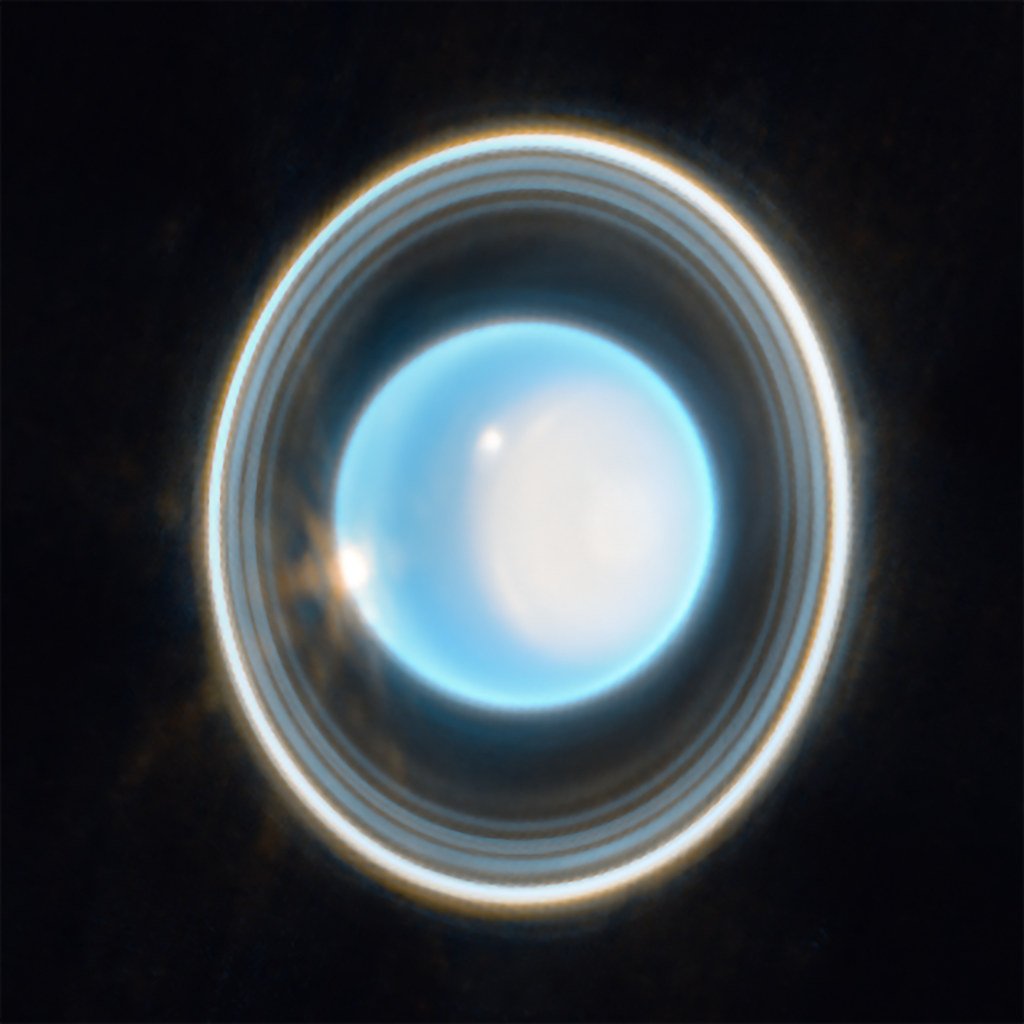

Space has always been humanity’s greatest mystery playground. You look up at the night sky and wonder what secrets lie beyond our tiny blue marble. Our solar system alone contains enough bizarre phenomena to keep scientists scratching their heads for centuries. From planets spinning the wrong way to storms shaped like giant hexagons, the cosmic neighborhood we call home refuses to play by the rules we’ve written. Some of these mysteries have been puzzling researchers since we first pointed telescopes toward the heavens, while others emerged only when sophisticated spacecraft beamed back images that challenged everything we thought we knew.
Let’s be real, space is weird. The more we discover, the more questions pile up.
Venus Rotates Backwards and Nobody Knows Why
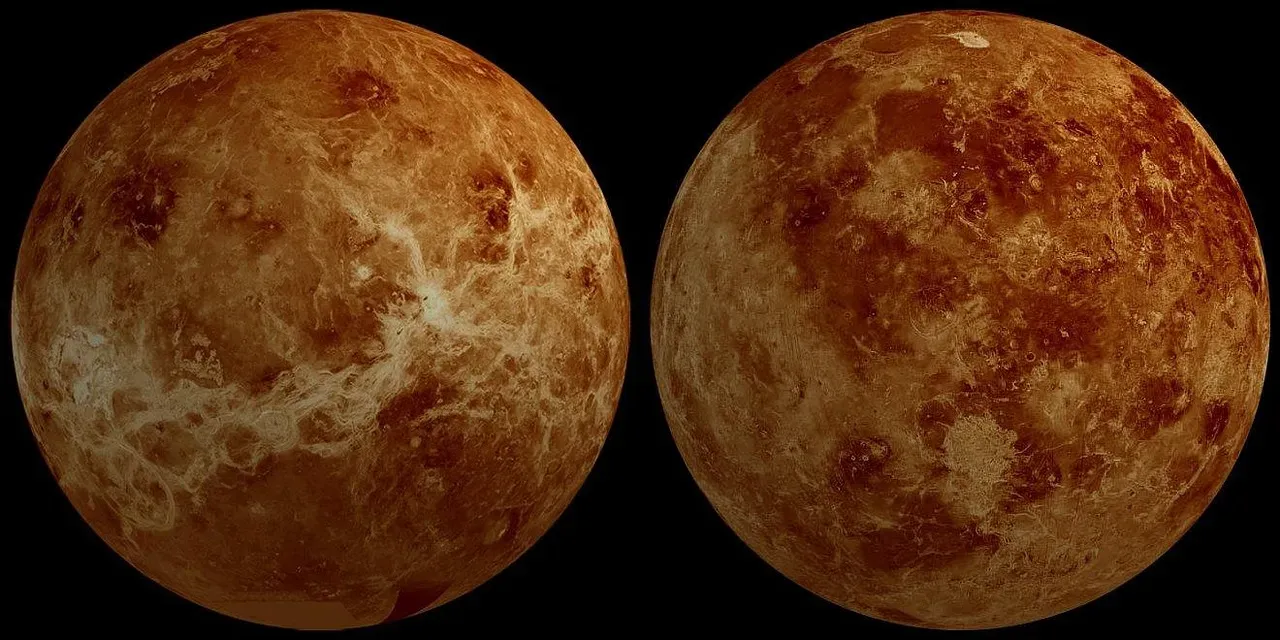
Venus rotates incredibly slowly in the opposite direction from most other planets, with a day lasting longer than its year. This retrograde rotation baffles planetary scientists because it goes against the fundamental spin direction established when our solar system formed. One hypothesis suggests a massive collision with a large celestial object during the early solar system’s formation could have reversed Venus’s spin over billions of years.
Several theories exist but none are accepted by the entire scientific community, including that Venus was struck by a large body, its spin axis flipped like a gyroscope, or the spin slowed and then reversed due to the Sun’s gravity combined with its dense atmosphere and friction between core and mantle. Some researchers even propose that Mercury might have once been a moon of Venus before escaping, dragging Venus’s rotation backward through tidal forces. Venus is close enough to the Sun to experience significant gravitational tidal dissipation, and has a thick enough atmosphere to create thermally driven atmospheric tides that create retrograde torque, with its present slow retrograde rotation being an approximate equilibrium between gravitational tides trying to tidally lock Venus to the Sun and atmospheric tides trying to spin Venus in a retrograde direction.
Saturn’s Hexagonal Storm That Makes No Sense
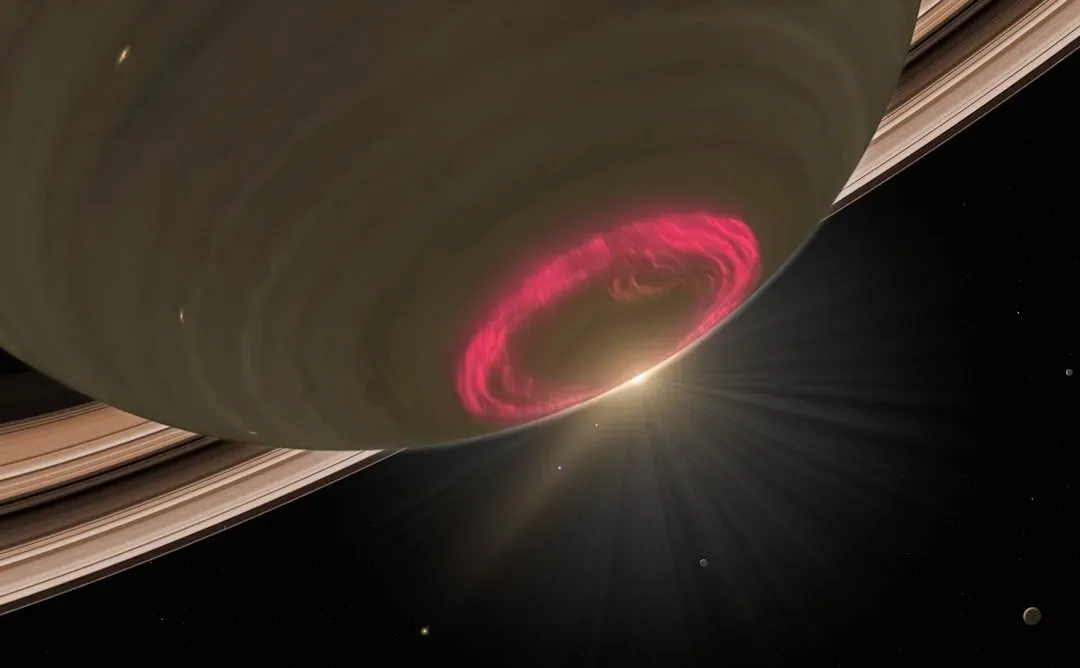
Saturn’s hexagon is a persistent approximately hexagonal cloud pattern around the planet’s north pole located at about 78°N, with sides about 14,500 km long, which is longer than the diameter of Earth, and may be a jet stream made of atmospheric gases moving at 320 km/h. Picture a storm system so precise it forms six perfect sides spanning a distance wider than our entire planet. Nothing else like it exists anywhere in the known universe.
NASA’s Cassini spacecraft unraveled many mysteries about Saturn during its 13 years orbiting the planet, but one of the most visually interesting mysteries was the unusual spinning hexagon at the planet’s north pole, with scientists noting all planets with atmospheres probably have a vortex of some kind, but Saturn is the only planet with one shaped like a hexagon. The beads appear above the swirling hexagonal jet stream at the gas giant’s north pole, and what they noticed instead were dark, bead-like features separated by vast distances yet possibly interconnected, with astronomers stating “These features were completely unexpected and, at present, are completely unexplained.” Computer simulations showed that deep thermal convection can unexpectedly give rise to atmospheric flows that create large polar cyclones and a high-latitude eastward jet pattern, and when these mix at the top it forms the unexpected shape, with the storms forming deep within the planet making the hexagon furious and persistent.
Uranus Got Knocked Completely Sideways
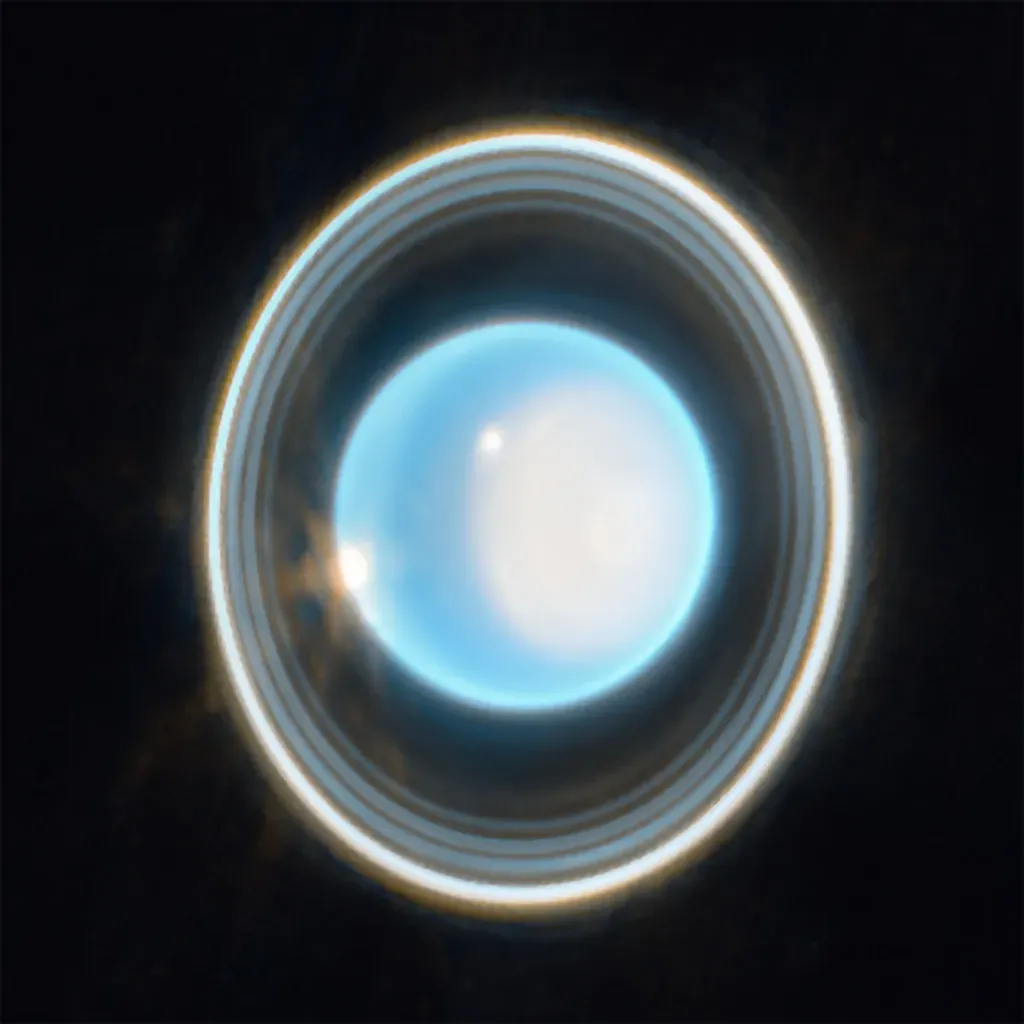
Uranus is the only planet whose equator is nearly at a right angle to its orbit, with a tilt of 97.77 degrees, which may be the result of a collision with an Earth-sized object long ago, causing Uranus to have the most extreme seasons in the solar system. Imagine a planet lying on its side like a rolling ball, with each pole experiencing 42 years of continuous sunlight followed by 42 years of darkness. That’s Uranus for you.
The traditional explanation blamed one massive cosmic collision early in the planet’s formation. A new theory argues a massive moon fell into orbit around the planet and gravitationally destabilized it, with computer models calculating that over time, the moon would have tilted Uranus to an angle of 80 degrees. At this point, the planet-moon pair would have entered a chaotic gravitational dance, pulling Uranus even further sideways and ending with the moon crashing into the planet, vanishing from history and freezing Uranus at its current 98-degree angle. The tilted planet Uranus was likely knocked onto its side by a series of impacts rather than by a single knockout blow, with researchers finding a series of at least two smaller collisions can explain the moons’ motions much better than a single giant impact. Honestly, both scenarios sound like something out of cosmic pinball gone horribly wrong.
Miranda’s Frankenstein Surface
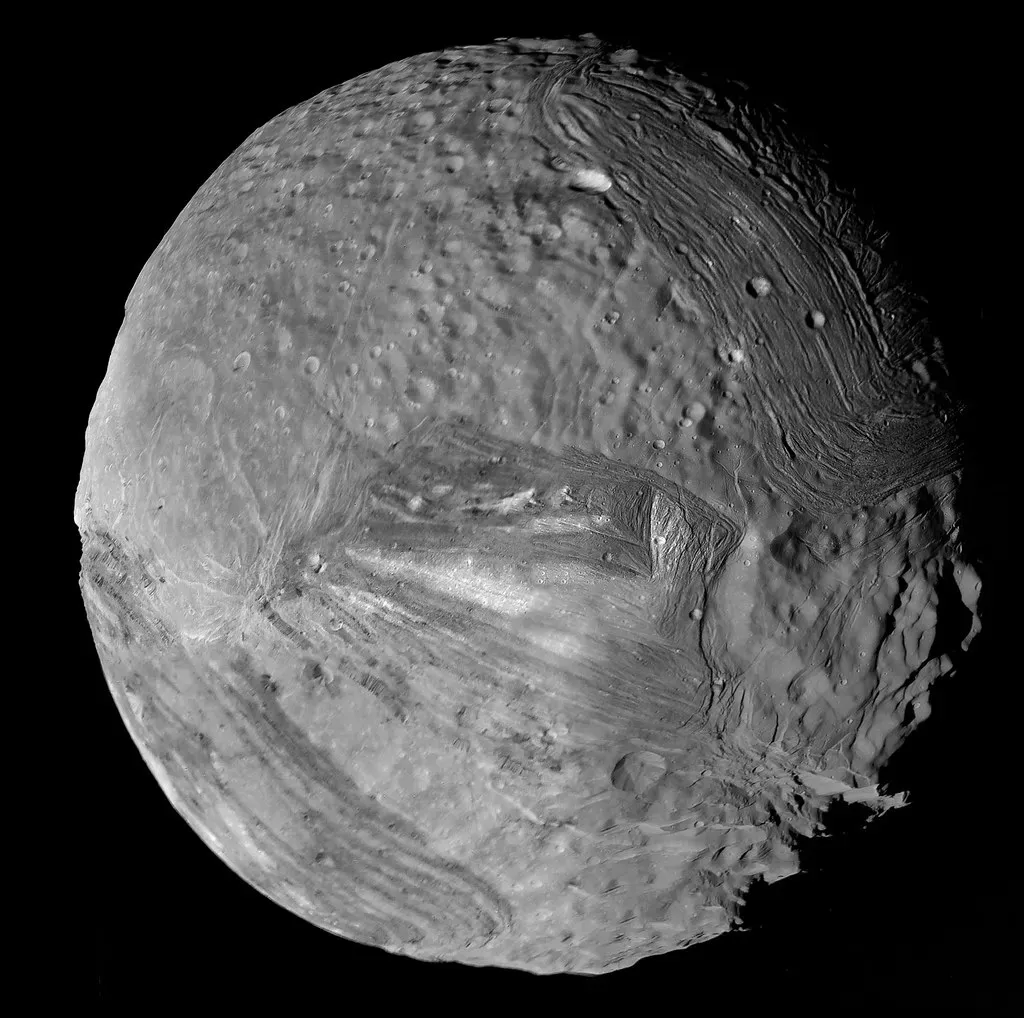
Miranda, one of the most unusual moons in the solar system, is the smallest and innermost of Uranus’ five major moons, with only up-close images from NASA’s Voyager 2 spacecraft when it flew by the moon in 1986, and it was clear that the moon held many mysteries. However, at one-seventh the size of Earth’s moon, Miranda is too small to have been tectonically active, so how do we explain all these features?
One belief is that Miranda’s orbit was more oval in the past, resulting in tidal flexing that deforms the moon and warms its interior through friction, while another theory is that Miranda was shattered by a massive impact, and the pieces reassembled into the current bizarre shape. Scientists thought maybe the moon got blown apart and randomly reassembled itself like cosmic Lego blocks. Later analysis revealed something even weirder: the moon’s surface shows a mishmash of different terrains that shouldn’t exist together. Deep canyons sit alongside smooth plains, and ancient cratered regions border young geological formations. It’s as if someone took pieces from different moons and stitched them together.
Enceladus Shoots Geysers Into Space
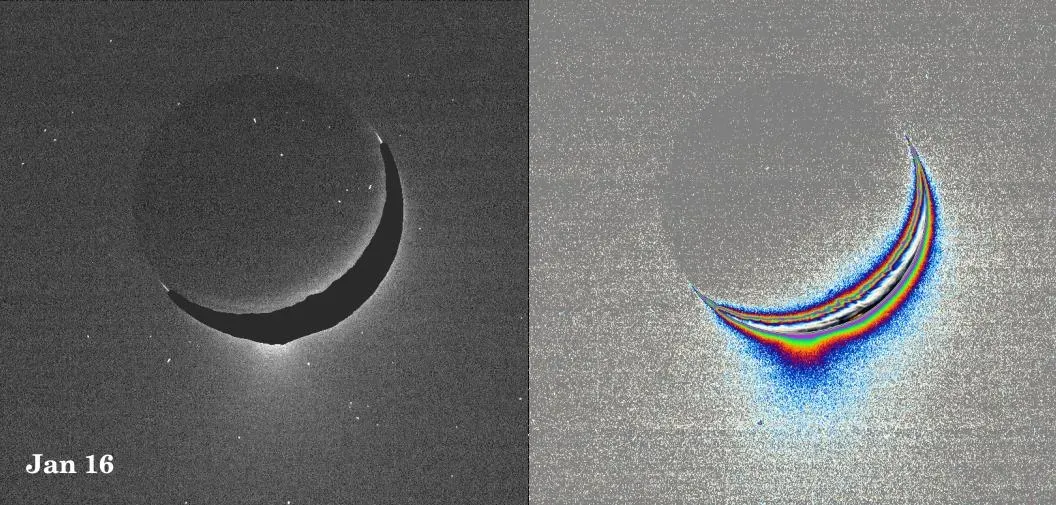
In 2005, an instrument on NASA’s Cassini spacecraft detected something unusual about Saturn’s moon Enceladus, as the moon previously thought to be cold and dead seemed to have an atmosphere, though it was unclear what was forming this atmosphere, until Cassini made a close pass collecting data suggesting it wasn’t an atmosphere they were detecting, but a plume spraying from the moon’s warm south pole. Here’s the thing: small frozen moons aren’t supposed to be geologically active. Yet Enceladus defies expectations.
Enceladus, one of Saturn’s moons, has long been a candidate for harboring life due to its subsurface ocean, and in 2024, the Cassini spacecraft’s final data revealed intriguing new evidence suggesting that the water plume ejected from Enceladus’ geysers contains organic compounds more complex than previously thought, intensifying the moon’s potential as a candidate for life. The moon continuously erupts massive water plumes through cracks near its south pole, suggesting a liquid ocean exists beneath its frozen shell. Scientists still don’t fully understand what heat source keeps that ocean liquid or why the geysers maintain such consistent activity. It’s hard to say for sure, but this tiny moon might harbor one of the best chances for finding extraterrestrial life in our solar system.
Titan’s Mysterious Dense Atmosphere
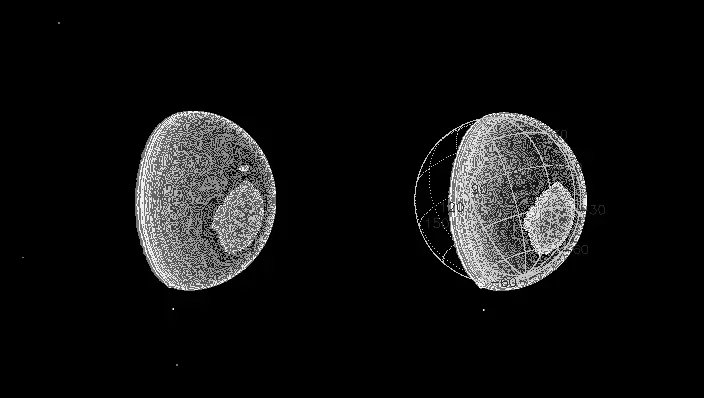
Titan, the largest of Saturn’s 62 moons, is the only natural satellite in our Solar System known to have a dense atmosphere, and we don’t know why, as typically small bodies like moons don’t have the gravity to hold onto an atmosphere which would escape into space, though Titan is 80% more massive than Earth’s Moon with a diameter 50% larger.
While Titan doesn’t have a magnetosphere of its own, the moon spends 95 percent of its time inside Saturn’s magnetic field, but even if we could explain why Titan hasn’t lost its atmosphere, we don’t know how it acquired such a dense atmosphere to begin with. Most moons are airless rocks, yet Titan boasts an atmosphere denser than Earth’s on a per-surface-area basis. Even weirder, Titan’s atmosphere consists primarily of nitrogen, just like Earth’s, making them the only two bodies in the solar system with this characteristic. Scientists can’t explain how a moon managed to capture and retain such a thick gaseous envelope, especially one so chemically similar to our own.
Io’s Misplaced Volcanoes
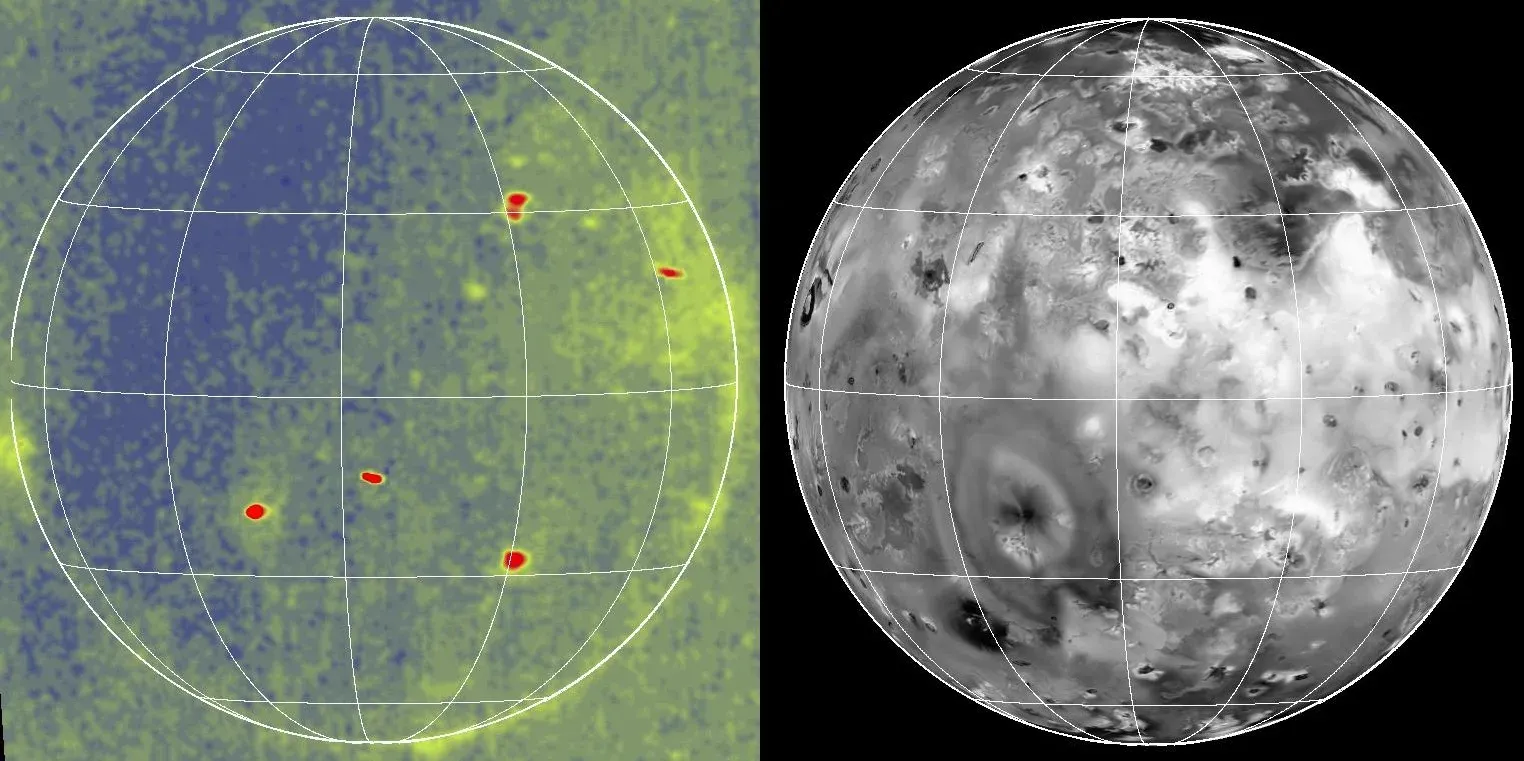
Jupiter’s moon Io, the fourth-largest in the Solar System, has over 400 active volcanoes, making it more geologically active than any other moon or planet known to us, with tidal forces once again responsible for this. You’d think we’d understand where volcanism occurs, right? Turns out, not on Io.
Scientists have models of Io’s internal heat profile showing where the moon’s hottest underground spots are, and they don’t match up with the location of the volcanoes, with the majority of the moon’s volcanic activity offset a full 30 to 60 degrees relative to where the models predict it should be. One possibility is that Io is spinning faster than we believed, but a more sobering one is that the current internal heat models are wrong because we’re missing some key information, with the missing puzzle piece possibly being a hypothetical magma ocean below the surface. Let’s be real, when your best models completely fail to predict where volcanoes appear, something fundamental is wrong with our understanding.
Europa’s Mysterious Crack Patterns
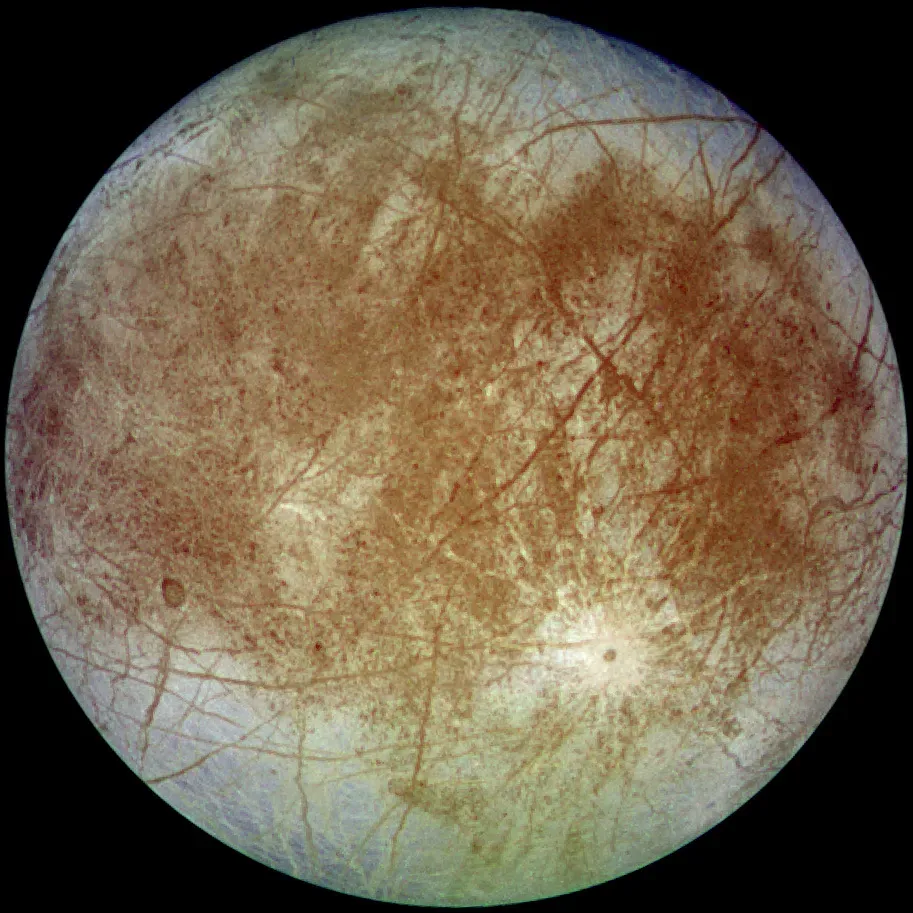
Jupiter’s fourth largest moon Europa is famous for being covered in water ice and for the possibility of the liquid ocean that may lie beneath it, but beyond that, its surface is scarred with intersecting lines – cracks and dark streaks that span the entire globe and can reach 20 km in width. The moon’s surface looks like shattered glass, with reddish-brown streaks crisscrossing the ice in chaotic patterns.
Scientists believe these cracks form as the subsurface ocean flexes Europa’s icy shell through tidal forces from Jupiter. The question is why the cracks follow such specific patterns and what causes their distinctive coloration. Some researchers think the reddish material could be salts from the ocean below, while others suggest radiation processing of surface materials. The patterns themselves seem to shift and change over time, suggesting the ice shell is surprisingly dynamic. Whatever’s happening beneath that frozen surface, it’s creating one of the most visually striking and scientifically puzzling landscapes in the solar system.
Iapetus’s Equatorial Ridge
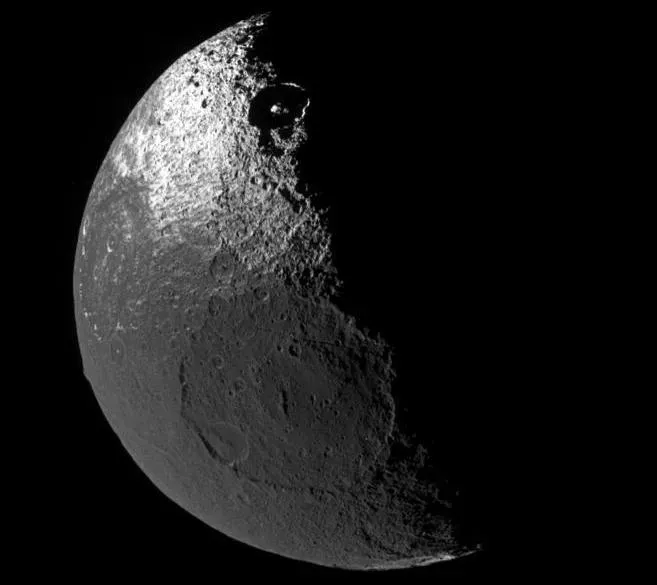
The origin of the chain of high mountains that closely follows the equator of Saturn’s moon Iapetus remains unknown, with questions whether the mountains are the remnant of hot and fast-rotating young Iapetus, or whether the mountains are the result of material that over time collected upon the surface. Picture a walnut-shaped moon with a mountain range running perfectly along its equator, standing roughly 20 kilometers high in places.
The ridge is so prominent it makes Iapetus look like two hemispheres were welded together with a massive seam. Some scientists speculate it formed when Iapetus was spinning much faster and the equatorial bulge solidified. Others suggest it’s accumulated debris from a ring system that collapsed onto the surface. Still others propose it resulted from volcanic activity along tectonic weak points. None of these explanations fully accounts for the ridge’s incredible height, perfect placement, or the fact that nothing similar exists on any other moon. Honestly, it looks more like something artificially constructed than a natural formation, though we know that’s not the case.
‘Oumuamua’s Unexplained Acceleration
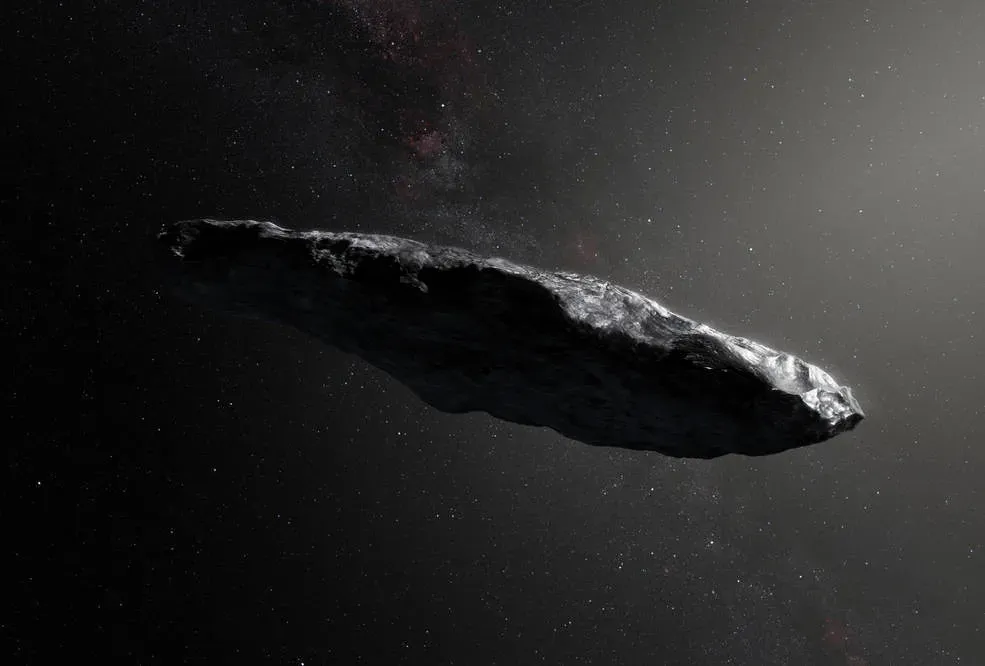
In 2017, the world of astronomy was captivated by the arrival of ‘Oumuamua, the first interstellar object ever detected passing through our solar system, with its unconventional shape and erratic movement challenging accepted scientific models. The object, named after the Hawaiian word for “scout,” quickly gained attention due to its highly elongated shape estimated to be roughly 400 meters long and only a few dozen meters wide, with this unusual aspect ratio rarely seen among asteroids or comets within our solar system.
The unexplained acceleration led to a range of hypotheses, including the possibility that ‘Oumuamua could be an artificial object, possibly a probe or spacecraft from another star system, with this idea proposing that the object’s movement might be due to a solar sail. However, most astronomers remain skeptical of the artificial object hypothesis, arguing that natural explanations such as outgassing of ice or the effects of interstellar dust could also account for the acceleration. I know it sounds crazy, but when an object behaves in ways that defy our physics models, every possibility gets examined. The object tumbled through our solar system and disappeared back into interstellar space before we could study it properly, leaving behind more questions than answers.
Mysterious Bright Spots on Ceres
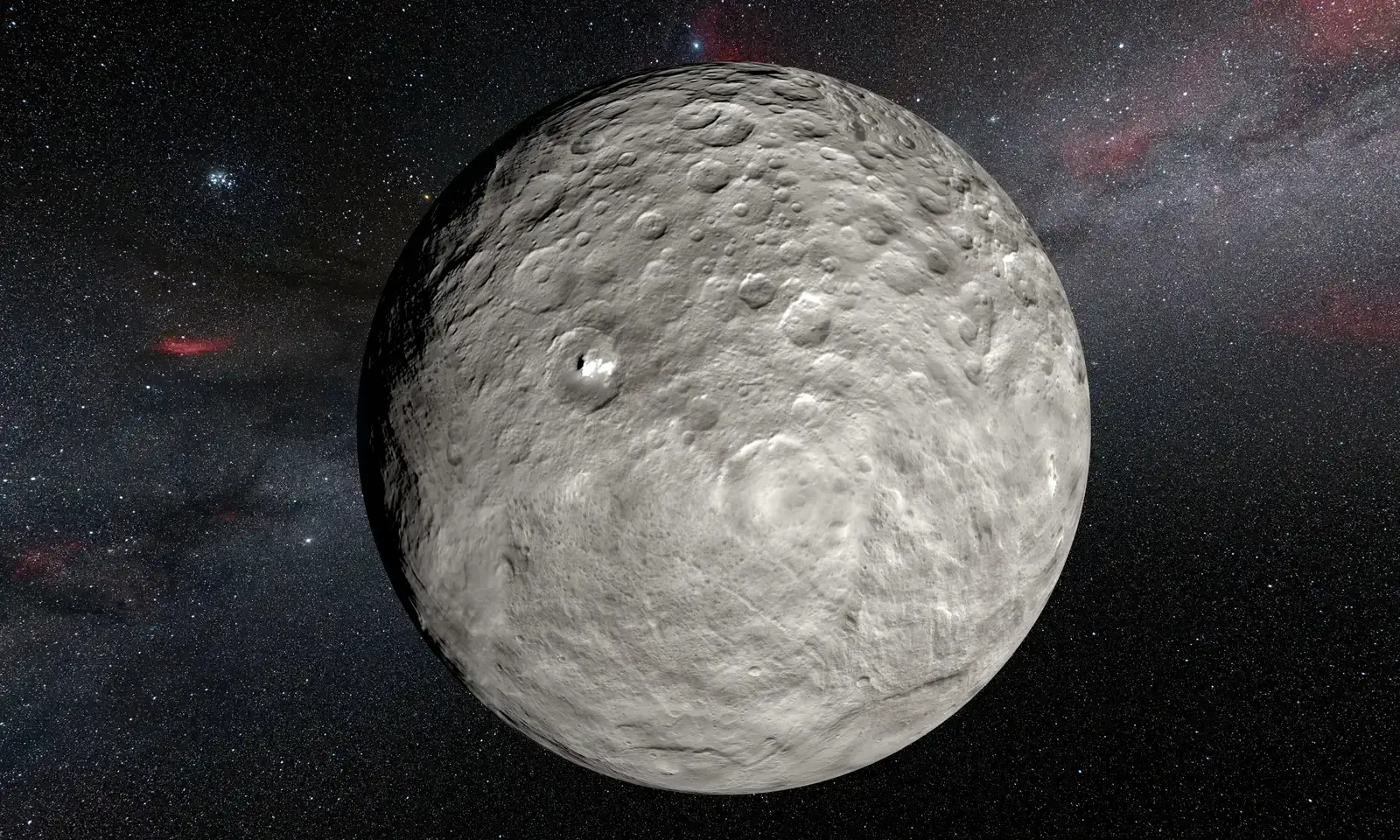
The Dawn spacecraft was approaching Ceres, a previously unexplored world in the asteroid belt between Mars and Jupiter, and as the spacecraft captured images of the cratered and icy world, scientists watched in awe as they saw a spattering of ghostly bright spots emanating from the surface with the brightest one in the middle of a crater seeming to stare back at them like a glowing eyeball.
The bright material reflects significantly more sunlight than the surrounding dark surface. Scientists initially wondered if they were viewing exposed water ice, volcanic deposits, or even salt deposits from a subsurface ocean. Further investigation revealed the spots consist primarily of sodium carbonate, suggesting briny water once reached the surface. The mystery deepens when you consider how a small dwarf planet maintains enough internal heat to drive such geological activity. Ceres should be a dead, frozen rock, yet it shows signs of relatively recent geological processes that scientists struggle to explain with current planetary formation models.
Hyperion’s Static Electricity and Sponge-Like Surface
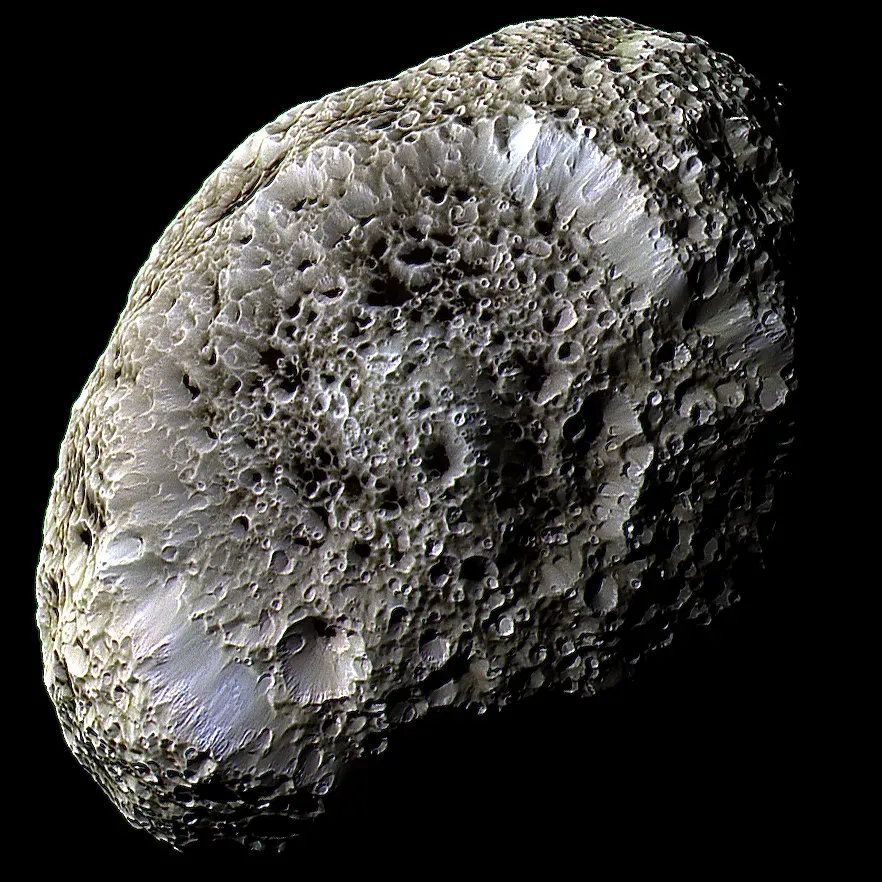
The title of weirdest moon in the solar system could go to many celestial objects like Jupiter’s overly volcanic Io or Neptune’s geyser-spewing Triton, but one of the strangest looking is Saturn’s Hyperion, a pumice-stone-like irregular rock pockmarked with numerous craters, with NASA’s Cassini spacecraft finding that Hyperion was charged with a particle beam of static electricity flowing out into space.
Hyperion doesn’t even rotate regularly like normal moons. Instead, it tumbles chaotically through space, with its rotation period and orientation changing unpredictably. The moon’s incredibly low density suggests it’s mostly empty space inside, like cosmic Swiss cheese. The strange craters don’t look like typical impact craters either – they’re deep, with steep walls and flat floors covered in dark material. The static electricity phenomenon adds another layer of weirdness. Cassini detected electrons streaming off the moon’s surface when it passed through Saturn’s magnetosphere. Scientists think the moon’s porous, dust-covered surface somehow generates and discharges static electricity, but the exact mechanism remains unclear. What do you think about it? Did any of these mysteries surprise you as much as they surprised the scientists who discovered them?
Jan loves Wildlife and Animals and is one of the founders of Animals Around The Globe. He holds an MSc in Finance & Economics and is a passionate PADI Open Water Diver. His favorite animals are Mountain Gorillas, Tigers, and Great White Sharks. He lived in South Africa, Germany, the USA, Ireland, Italy, China, and Australia. Before AATG, Jan worked for Google, Axel Springer, BMW and others.