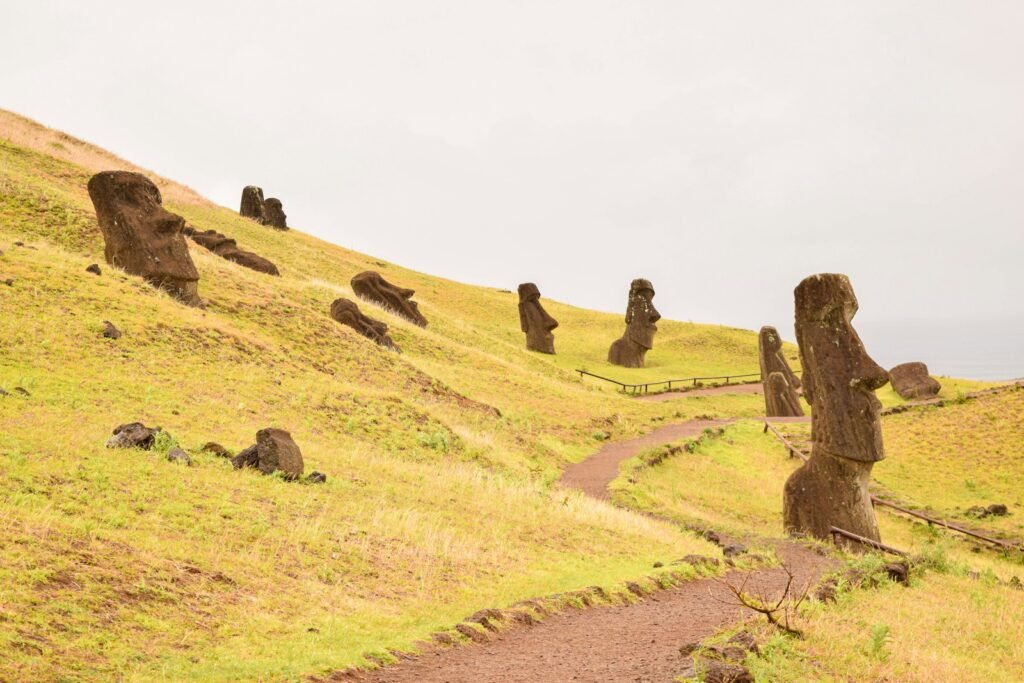

On a remote volcanic speck in the South Pacific, nearly a thousand giant stone faces stare inland, as if guarding a secret no one was meant to crack. For more than two centuries, explorers, archaeologists, and engineers have argued over a deceptively simple question: how did the people of Rapa Nui move the towering moai from quarry to coast without wheels, draft animals, or metal tools? The mystery has inspired everything from alien fantasies to bleak collapse narratives, but recent research points to something much more human and far more interesting. By blending field experiments, geochemical analysis, and Indigenous knowledge, scientists are piecing together a story of ingenuity rather than impossibility. The result is not a single “Eureka” moment, but a shifting picture of how real people, with limited resources and remarkable creativity, reshaped their island in stone.
The Hidden Clues in Stone and Landscape
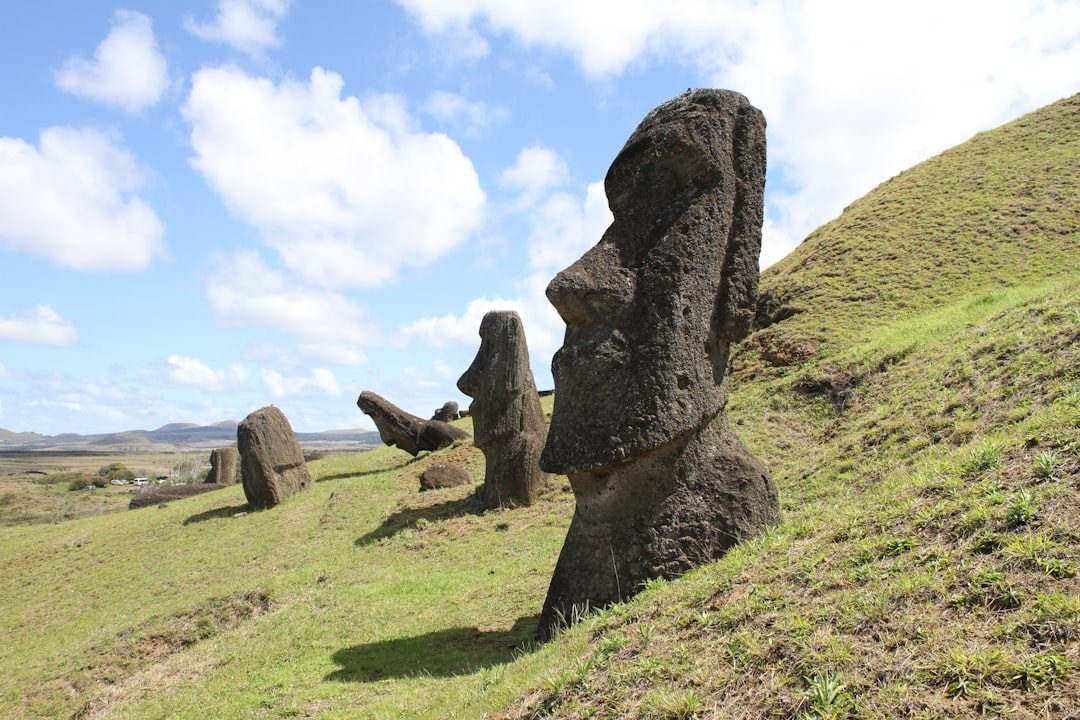
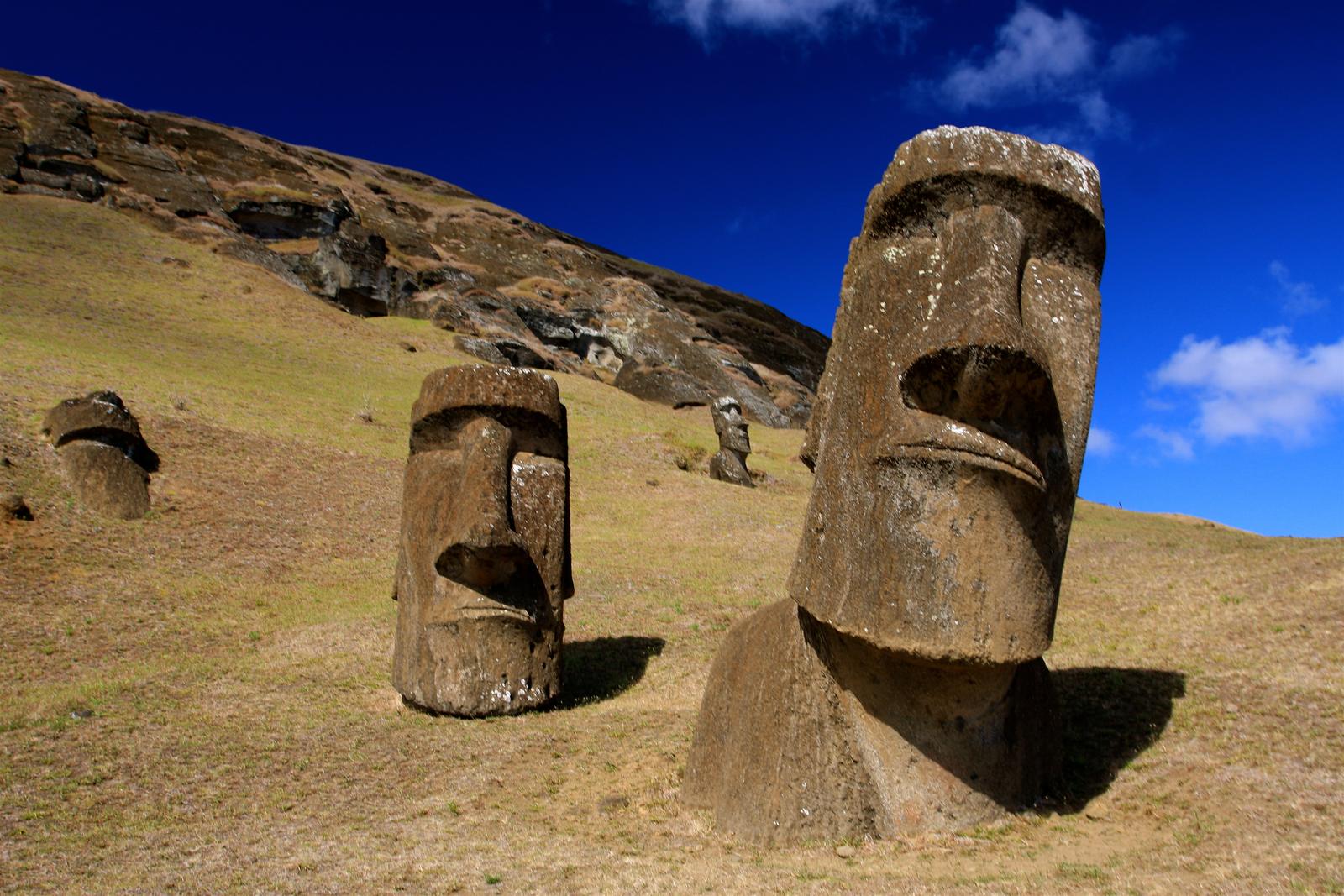
One of the most surprising clues about how the moai were moved is carved directly into their bodies. Many statues left in the main quarry at Rano Raraku have an unusual forward-leaning center of gravity, like a refrigerator tilted slightly onto its edge, which engineers recognized as ideal for rocking. That posture is no accident; it suggests the statues were designed not just to stand, but to walk in a controlled wobble along prepared paths. Archaeologists mapping the island have traced roads that curve gently around hills and follow contours rather than cutting straight, hinting that routes were tailored to these delicate, upright journeys.
Along these pathways, researchers have found broken moai abandoned mid-transit, frozen as if caught stepping between destinations. Their positions and damage patterns are consistent with statues being hauled upright instead of dragged flat on sledges. The roads themselves are often bordered by low stone alignments that might have acted as guides or stabilizing edges, reducing the chance of a multi-ton figure toppling. When you look at the island through that lens, the moai are no longer static relics but snapshots from a long, hazardous commute. The landscape becomes less like a museum and more like a time-lapse of an engineering project in progress.
From Oral Traditions to “Walking” Experiments
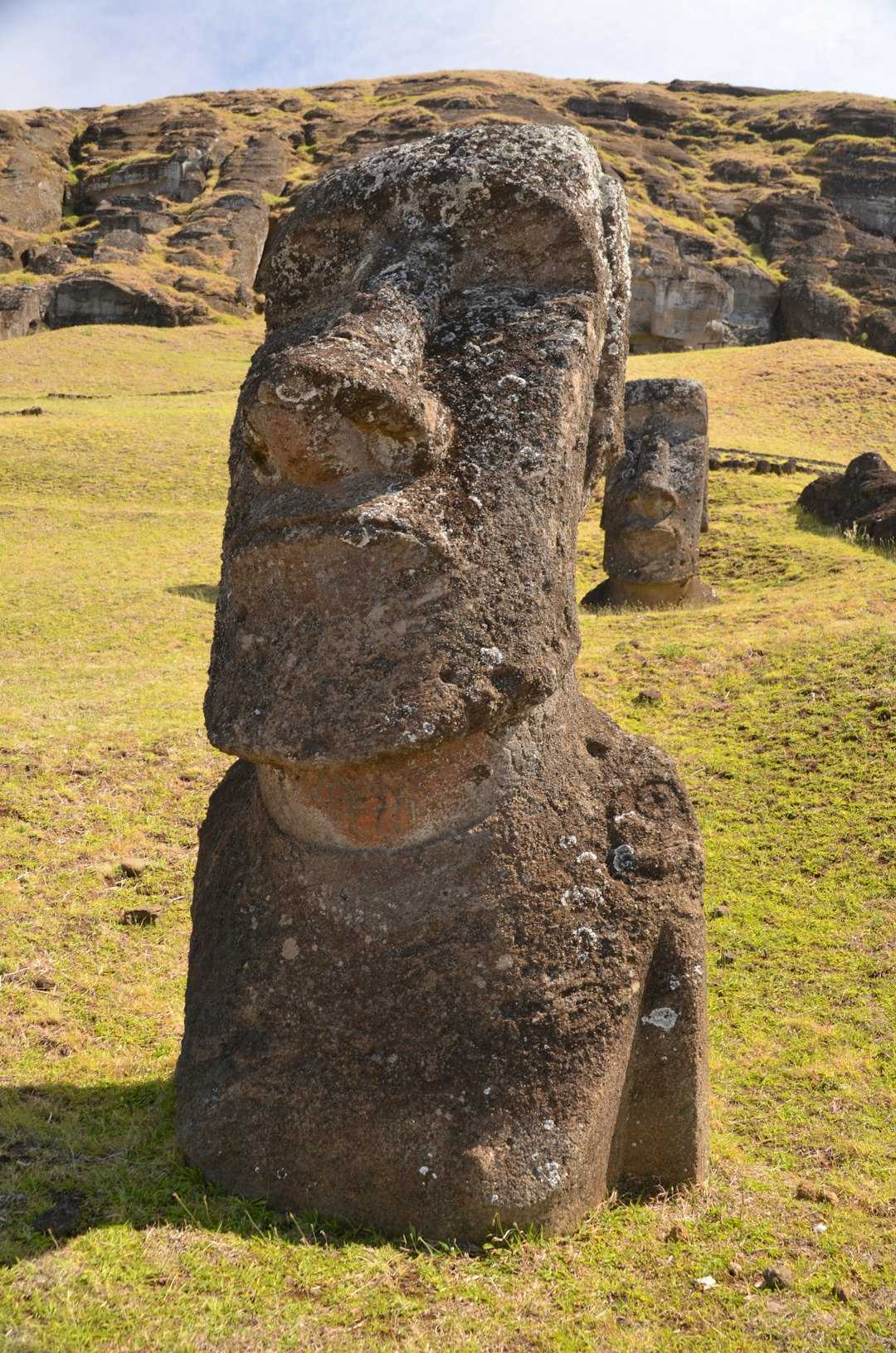
Long before engineers tested ideas with ropes and replicas, Rapa Nui elders had already been telling a simpler story: the statues walked. To early European visitors, that sounded mystical or metaphorical, and it was often dismissed as legend rather than logistics. But in the last decade or so, teams of archaeologists and engineers have taken that phrase literally, building full-scale replicas and trying to move them upright using only human muscle and gravity. In several dramatic experiments, groups of people, working in coordinated teams with ropes on either side, managed to rock a replica moai forward, step by step, across the ground.
Those field tests revealed a choreography that feels oddly like moving a heavy wardrobe with friends: pull a little on one side, then the other, letting the object pivot and advance. The statue’s tapered base, curved belly, and slope of the back all helped maintain balance during the rocking motion. With practice, teams could move a multi-ton replica dozens of meters in a controlled, if nerve-wracking, “walk.” These experiments do not prove that every moai moved this way, but they show that the combination of Rapa Nui oral history and modern physics is not only plausible, it is elegant. The line between myth and method suddenly looks much thinner.
Ancient Tools, Modern Science
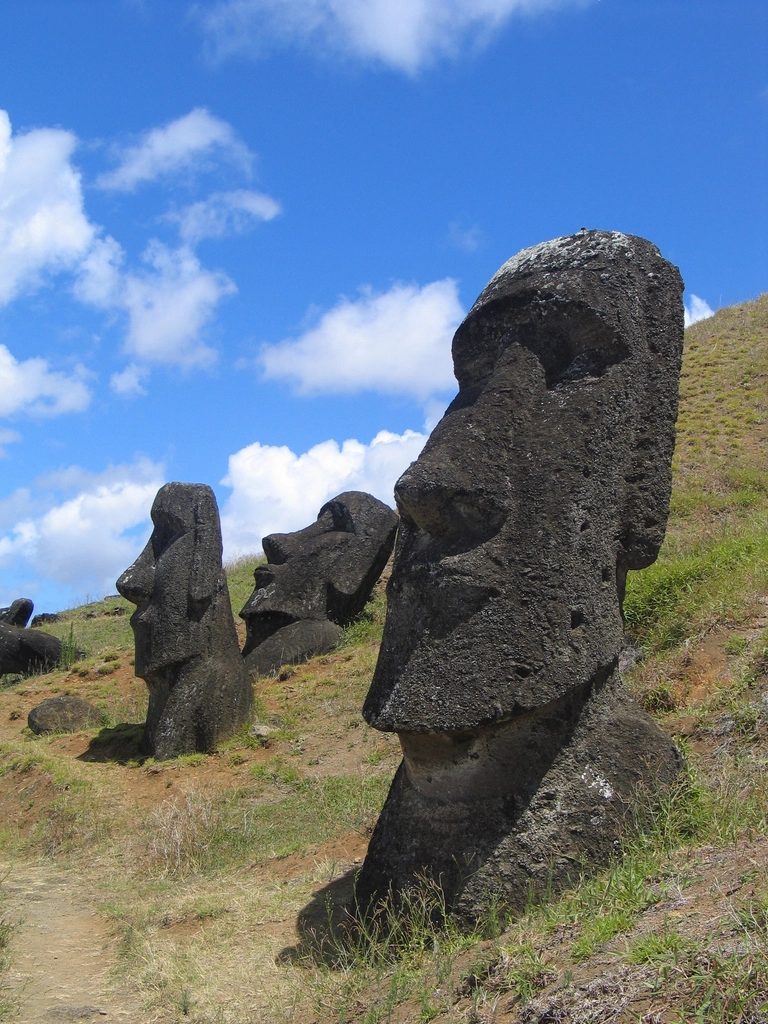
To understand how the moai moved, scientists first had to pin down where they came from and what they were made of. Most statues were carved from tuff, a relatively soft volcanic rock, at the Rano Raraku quarry that still yawns open like an abandoned workshop, with half-finished figures lying on its slopes. Geologists have used microscopic analysis and chemical signatures to match moai fragments to specific outcrops, confirming that some statues traveled many kilometers across the island. That journey, over uneven ground, would have pushed the limits of any transport method that relied on sliders, rollers, or sheer dragging on wooden sledges.
Engineering models simulate different transport scenarios by calculating friction, torque, and force requirements, then comparing those values to realistic human labor capacities. Computer simulations show that dragging a prone statue would have required massive amounts of timber and manpower, and likely caused more breakage than the archaeological record shows. By contrast, upright rocking uses less horizontal force and exploits gravity, turning the statue’s own weight into both risk and advantage. Modern motion-capture systems, drones, and 3D scans of roads and statues now allow researchers to model these movements in silico before testing them in the field. The moai have become not just artifacts, but data-rich proxies in a living engineering problem.
Competing Theories and Why They Persist
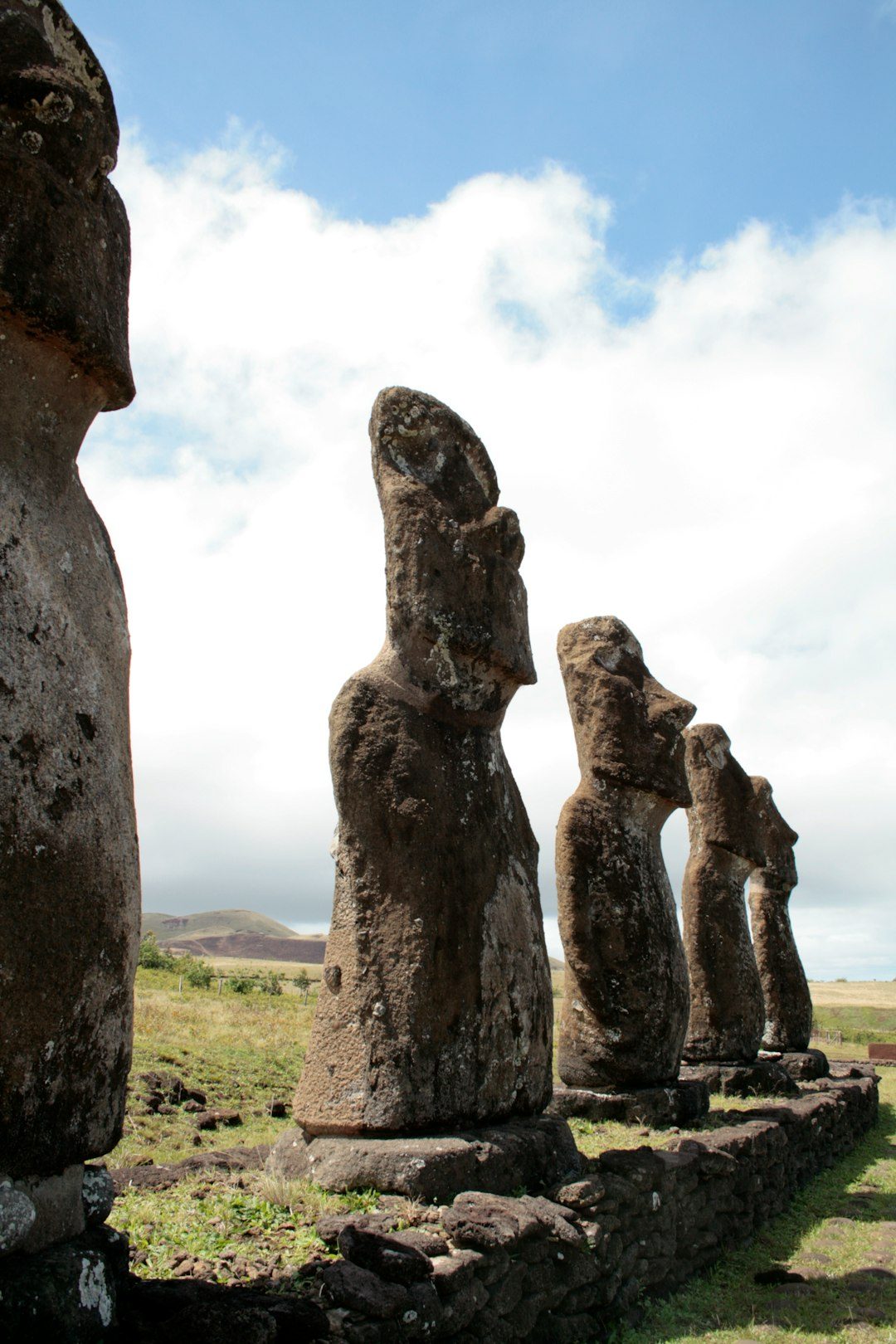
Despite the growing support for the “walking” hypothesis, other theories are still very much alive, and they say as much about us as they do about the past. Earlier researchers imagined moai lying flat on wooden sleds and being hauled by ropes over log rollers, a method inspired by how people in many parts of the world moved heavy stone blocks. This vision fitted neatly with popular ideas about deforestation and societal collapse, feeding the story that the people of Rapa Nui destroyed their own environment in the process of honoring their ancestors. It sounded tragic and dramatic, which made it hard to let go, even when newer evidence suggested a more nuanced reality.
Some fringe ideas, like alien intervention or lost high technologies, persist in popular culture because they tap into a desire to see the ancient world as impossibly exotic. The real story, where people experiment, adapt, and sometimes fail, can seem less cinematic at first glance. Yet the balancing act of an upright statue, moved inch by inch with ropes, timing, and shouted commands, is arguably more impressive than any fantasy. Ongoing debates among archaeologists focus on details: how many workers were needed, how long an average move took, and whether different clans used different techniques. As long as those questions remain open, multiple models will compete for attention, which is exactly how science is supposed to work.
Why This Mystery Matters Today
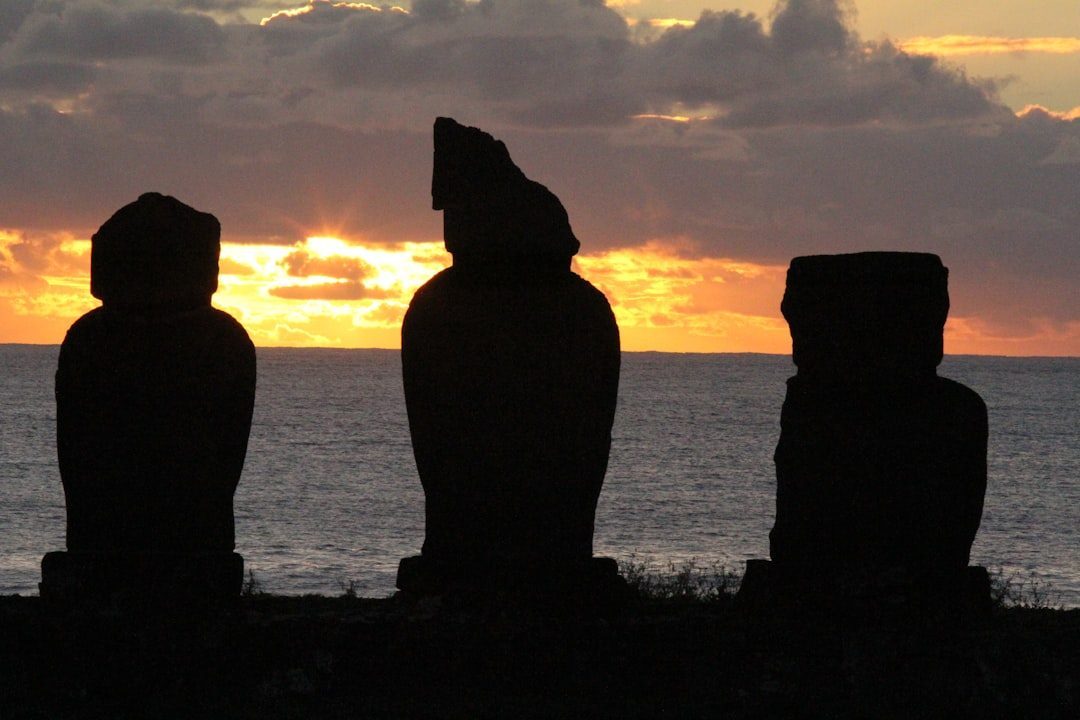
It might be tempting to treat the moai as a charming puzzle from a distant past, but the way we interpret their movement has real consequences for how we see human history. Earlier collapse narratives painted Rapa Nui as a warning about overuse of resources, describing an isolated population that cut down its forests and spiraled into chaos. Newer research, however, suggests a more resilient society that managed agriculture, stonework, and long-distance statue transport for generations under tough conditions. That shift from catastrophe story to resilience story changes how we think about Indigenous ingenuity and adaptation.
The moai also sit at the crossroads of science and respect for living communities. How we talk about “solving” the mystery affects how we value Rapa Nui knowledge, which kept memories of walking statues alive long after the last moai was raised. This puzzle shows that advanced problem solving does not require wheels, metal, or modern machines, just coordination, creativity, and a deep understanding of materials and terrain. In a time when people everywhere are searching for examples of sustainable engineering, these stone giants offer a powerful reminder that innovation has always been a human habit. The mystery, in other words, is not just about stones; it is about what we choose to believe humans are capable of.
A Global Obsession with Ancient Engineering
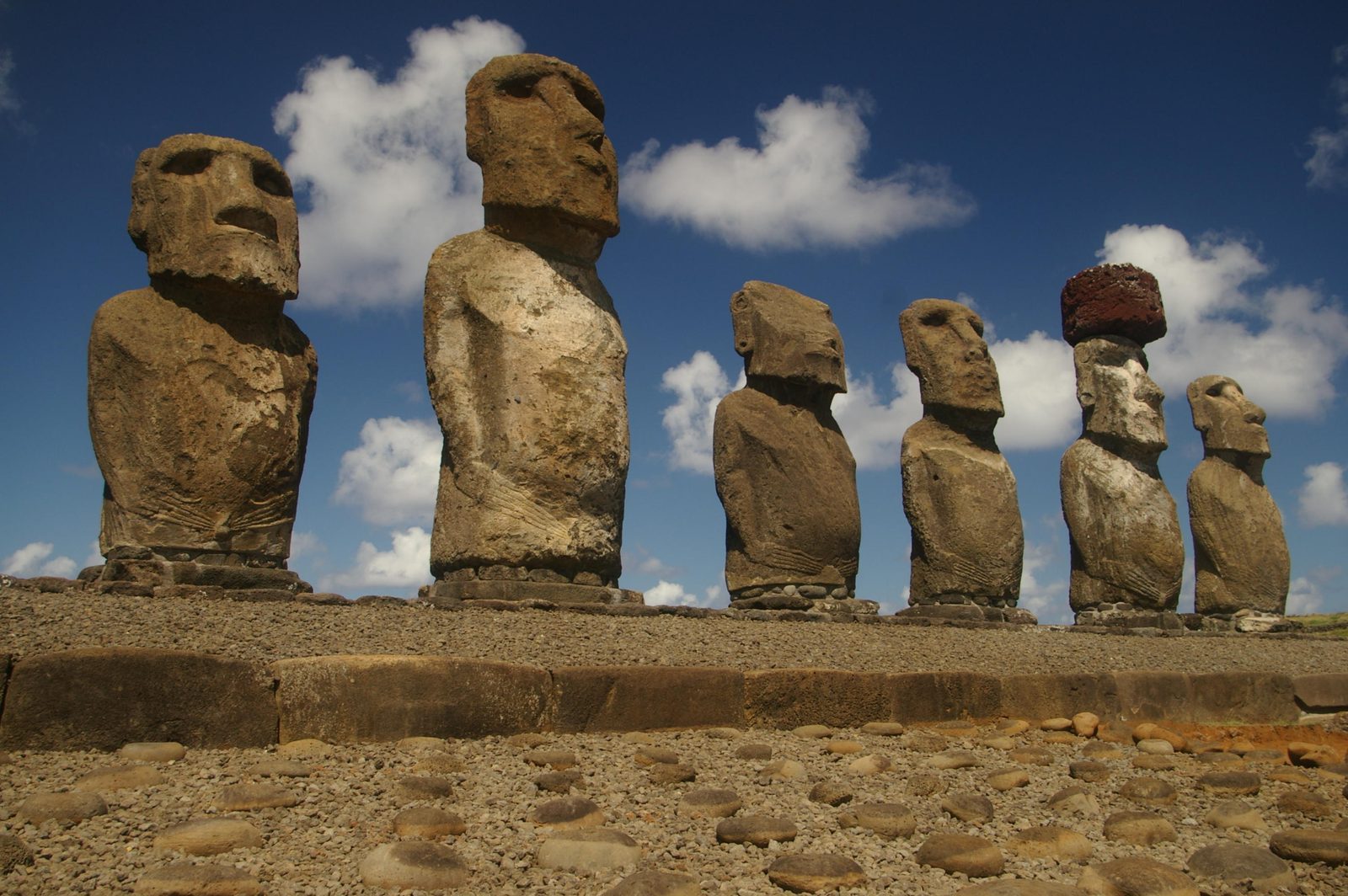
The fascination with how the moai moved is part of a wider global curiosity about ancient construction feats. From the pyramids of Egypt to the stone circles of Europe and the terrace systems of the Andes, people everywhere have left behind projects that stretch modern assumptions about “primitive” technology. Easter Island, because of its isolation and the moai’s almost theatrical appearance, has become a kind of laboratory for testing ideas about how far human cooperation can go without engines or industrial materials. Tourists, engineers, and even game designers draw inspiration from these statues when imagining what communities can achieve under constraint.
In science communication, the moai often appear in lists of “unsolved mysteries,” but that framing can be misleading. Many aspects of their creation and movement are now supported by converging lines of evidence, even if every detail is not nailed down. What remains open are the finer points of logistics, cost, and sequence, which are harder to reconstruct than general principles. Still, the global appeal of the moai helps drive funding, fieldwork, and new collaborations between Rapa Nui residents and visiting scientists. The world’s obsession, when handled respectfully, becomes a resource that can support both research and local stewardship of heritage sites.
The Future Landscape of Moai Research
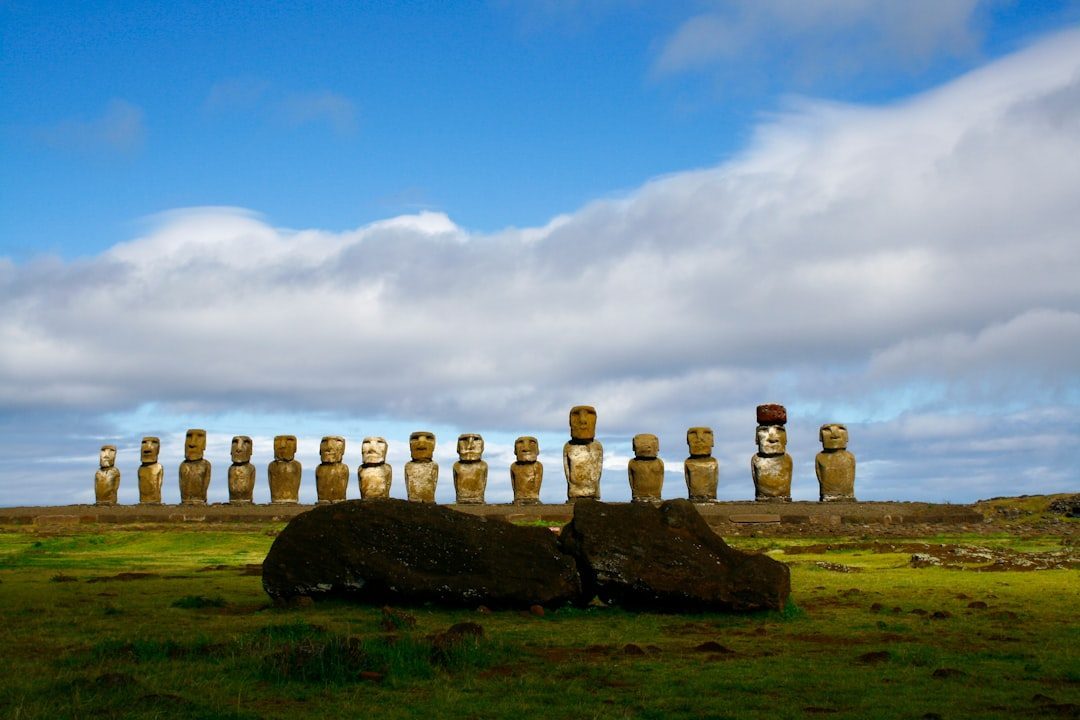
Looking ahead, the next wave of moai research is likely to be less about spectacular single experiments and more about integrating many streams of data. High-resolution 3D mapping of the entire island, including subtle road depressions and quarry scars, can reveal transportation networks in greater detail than any paper map. Ground-penetrating radar and soil chemistry studies can pick up traces of repeated traffic or temporary infrastructure like post holes for support poles. At the same time, advances in materials science may improve estimates of how the tuff weathers and fractures under stress, refining models of which transport routes would have been safest.
Another emerging frontier is collaborative research that treats Rapa Nui oral traditions as crucial data, not as background color. Projects that involve local communities in designing experiments, choosing sites, and interpreting results are already reshaping research questions. There is also a growing push to use immersive technologies, such as virtual reality reconstructions, to simulate moai movements in ways that can be explored by both scientists and the public. These tools could help test large-scale scenarios that would be impractical or risky to attempt physically. As climate change and tourism put new pressures on the island, the challenge will be to balance investigation with protection, ensuring that learning how the moai moved does not contribute to their erosion or damage.
How You Can Engage with Easter Island’s Living Mystery
For most of us, the closest we will get to a moai is through a screen or a museum exhibit, but there are still meaningful ways to be part of this evolving story. One simple step is to seek out resources created or endorsed by Rapa Nui organizations, which help center local voices in the global conversation. When supporting documentaries, books, or online content about the island, it helps to favor projects that avoid sensational claims and instead highlight evidence-based research and community collaboration. If a trip to Easter Island is on your bucket list, choosing operators that follow conservation guidelines and respect restricted zones can reduce the footprint of your curiosity.
Even from home, you can follow ongoing research projects through university pages, museum updates, and science journalism outlets that report on new findings. Small actions, like sharing articles that correct myths about societal collapse or alien builders, can gradually shift public understanding toward a more respectful and accurate view. Supporting broader initiatives that protect coastal heritage sites, threatened by rising seas and erosion, indirectly benefits the moai as well. In the end, engaging with this mystery is less about “solving” it and more about recognizing the ingenuity behind these stone faces and choosing to treat that legacy with care.
Suhail Ahmed is a passionate digital professional and nature enthusiast with over 8 years of experience in content strategy, SEO, web development, and digital operations. Alongside his freelance journey, Suhail actively contributes to nature and wildlife platforms like Discover Wildlife, where he channels his curiosity for the planet into engaging, educational storytelling.
With a strong background in managing digital ecosystems — from ecommerce stores and WordPress websites to social media and automation — Suhail merges technical precision with creative insight. His content reflects a rare balance: SEO-friendly yet deeply human, data-informed yet emotionally resonant.
Driven by a love for discovery and storytelling, Suhail believes in using digital platforms to amplify causes that matter — especially those protecting Earth’s biodiversity and inspiring sustainable living. Whether he’s managing online projects or crafting wildlife content, his goal remains the same: to inform, inspire, and leave a positive digital footprint.