

Have you ever had that nagging sensation in your stomach right before something important happened? Maybe you felt uneasy about a decision without any logical reason, or perhaps you sensed danger seconds before it actually appeared. You’ve probably dismissed these moments as simple coincidence or anxiety. What if those feelings weren’t just random at all?
Recent research suggests something far stranger: your brain might actually be reaching forward in time, accessing information that hasn’t technically happened yet. It sounds like the plot of a science fiction novel, right? Yet scientists are now taking this possibility seriously, backed by experiments that challenge everything we thought we knew about consciousness and linear time.
1. Your Brain Reacts Before Events Actually Happen
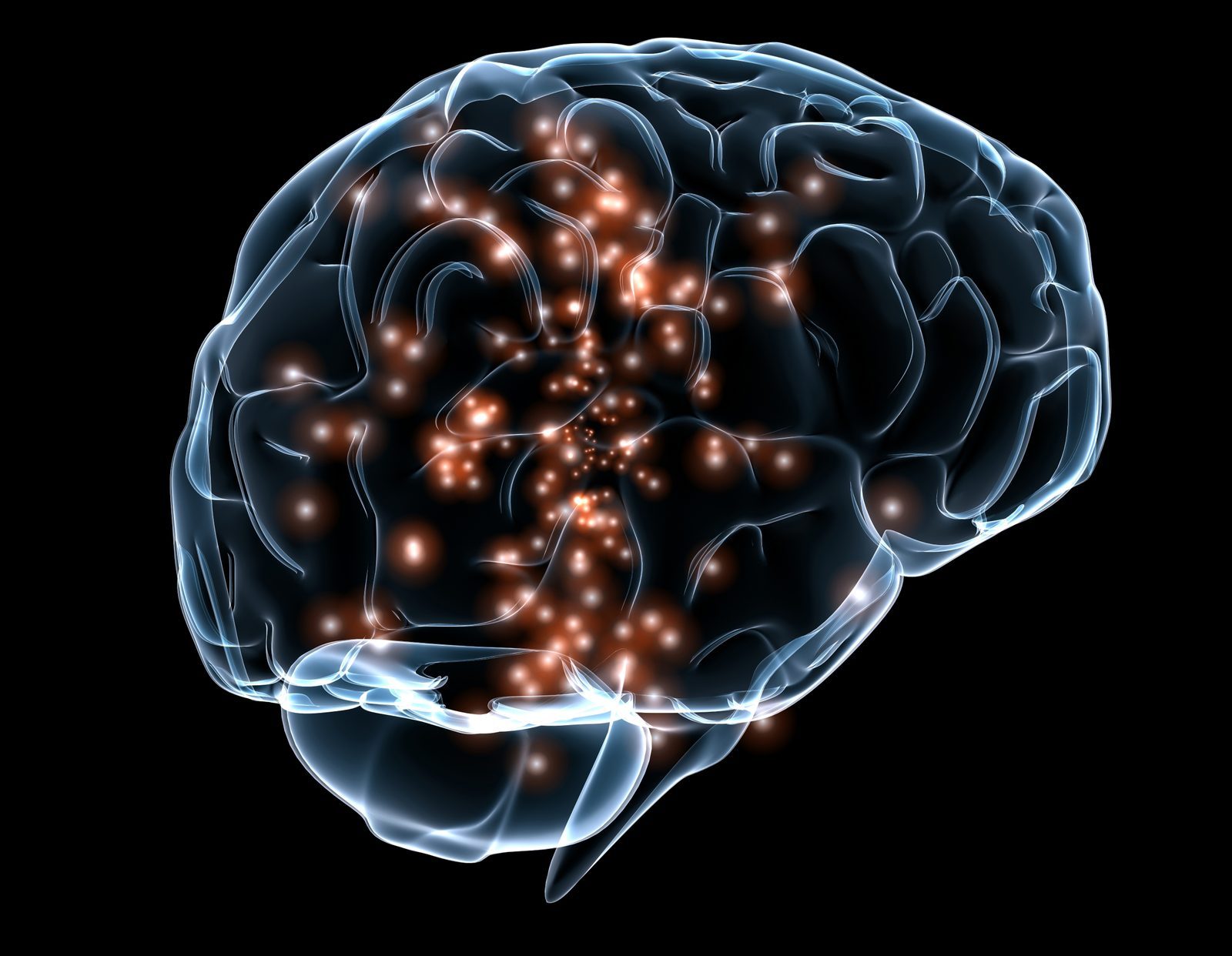
Parapsychologist Dean Radin conducted experiments in the mid-1990s where he hypothesized that if consciousness transcended time, reactions to a stimulus would occur before the stimulus actually appeared. His findings were genuinely unsettling. When subjects predicted a positive image, they reacted very little, but they showed a spike in brain activity when they expected to see a negative image.
The really fascinating part? Brain activity often spiked before the negative images appeared, even though participants had no way of knowing what was coming, as if their awareness had jumped ahead of time. This wasn’t a one-off fluke either. Since then, researchers have replicated his study successfully nearly three dozen times, which makes it harder to dismiss as experimental error.
2. Quantum Entanglement Could Connect Your Brain Across Time
Here’s where things get really weird. Some experts think the reason we see things before they happen is because our brain is entangled with itself in the future, beyond not just space, but also time. Einstein famously called quantum entanglement spooky action at a distance.
Radin explains that if your brain can be entangled with itself in the future, in the present you’d be feeling something like a memory that is going to happen in the future. Think about that for a second. Your future self might be sending signals backward through quantum connections, creating what we perceive as gut feelings or intuition. Mossbridge suggests that precognition might be memories from the future, bleeding backward through quantum entanglement, so your gut feelings about what’s going to happen might literally be your future self, remembering.
3. The Adaptive Unconscious Offers a Competing Explanation
Not everyone’s convinced we’re time travelers, though. There’s a more grounded theory that still gives our brains credit for being extraordinary prediction machines. The adaptive unconscious is a very powerful mechanism that operates just below the conscious mind as a high-speed cognition that allows humans to process information and make quick and efficient judgments.
This is a part of our brain that recognizes patterns in our surroundings based on our own experiences from the past without the slow and deliberate work of the conscious mind that analyses everything. Honestly, this makes sense too. Our brains are constantly soaking up patterns from the environment, noticing tiny details we don’t consciously register. This could be why it appears as memories of the future, or as a gut feeling, because of how fast and sometimes shocking it is.
4. Your Gut Literally Talks to Your Brain
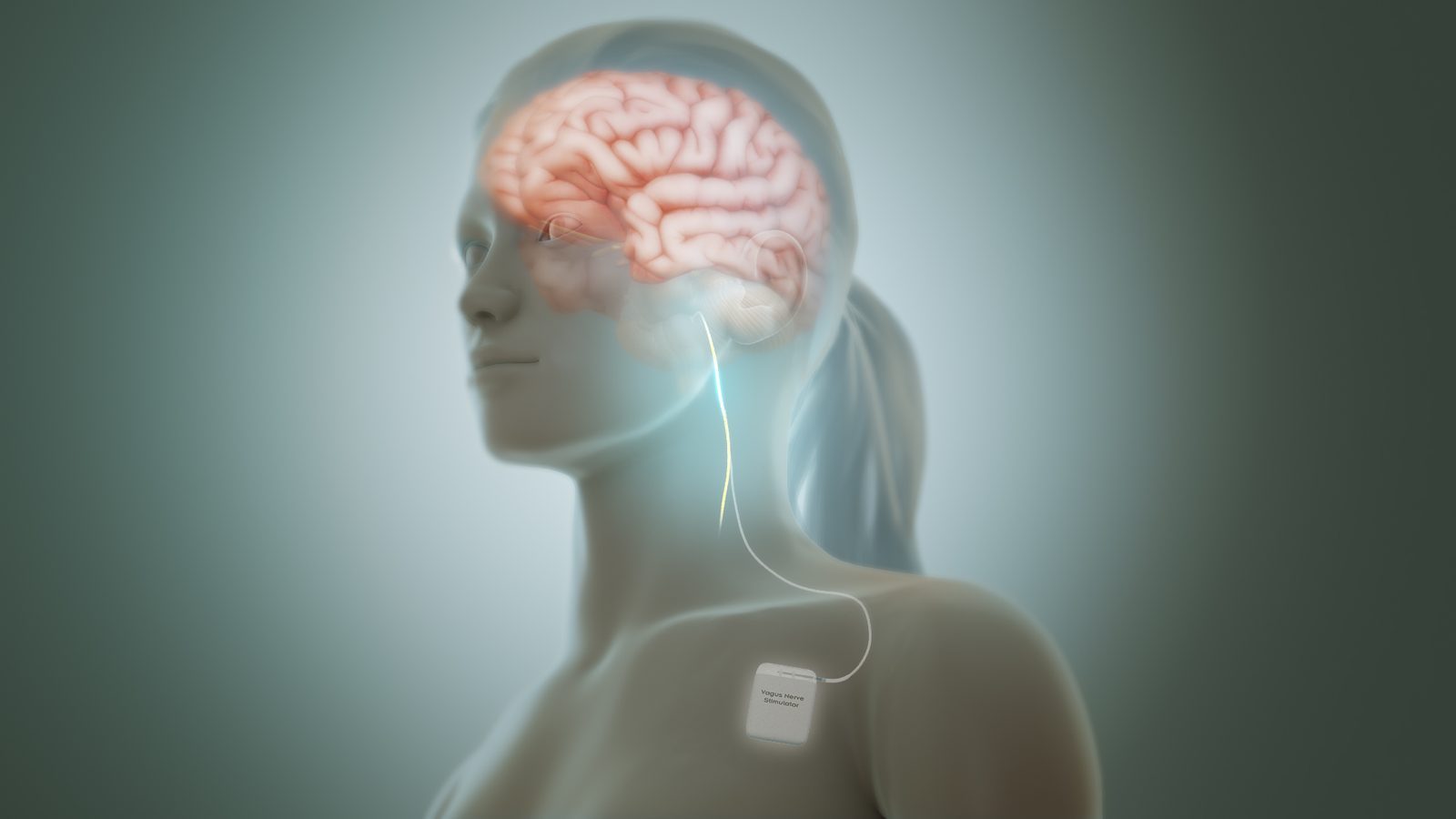
Let’s be real here: when we say gut feeling, we’re not just speaking metaphorically. The gut contains the largest number of neurons outside the brain of any structure in the body, more than 100 million neurons line the human digestive tract, which make up what is known as the enteric nervous system. Some scientists actually call this your second brain.
The gut-brain connection is a key part of how the brain forms a picture of the rest of the body, a phenomenon known as interoception. Signals from your body are constantly being sensed and integrated by the brain in a process termed interoception, where a racing heart or rapid breathing might contribute to feelings of anxiety, and signals from our gut might make us more likely to snack on a sweet. The gut communicates with your brain through the vagus nerve, creating a direct highway for information exchange that influences everything from mood to decision-making.
5. Time Might Not Be What We Think It Is

Radin, the chief scientist at the Institute of Noetic Sciences, says our consciousness is likely beyond the linear perception of time that humans have and actually behaves in a much stranger way. This challenges one of our most fundamental assumptions about reality. If time isn’t linear, as many physicists now believe, then what we call the future may already exist in some form, allowing certain people to access fragments of it.
It’s hard to wrap your head around, I know. We experience time as a straight line from past to present to future. As Radin puts it, time may not even be part of our physical reality, suggesting there’s something probably associated with our consciousness that is different from our everyday experience of time. If this is true, our entire understanding of cause and effect needs a serious rethink.
6. Your Brain Creates Memories for the Future
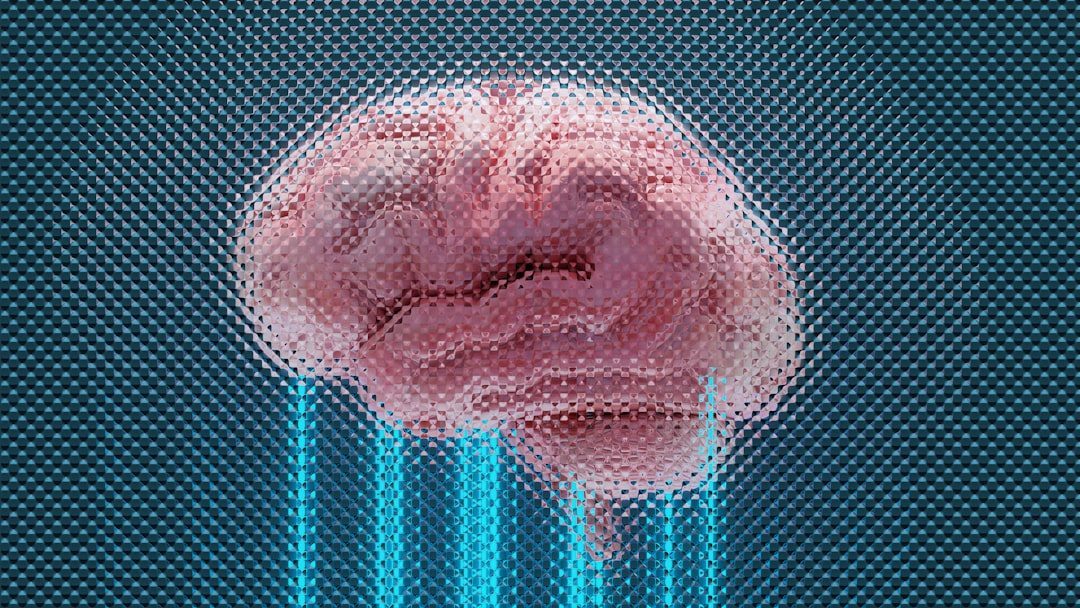
More elaborate long-term predictions or simulations of the future can be based on recombinations of past events and concrete episodes contained within individuals’ episodic memory and used for creating memories for the future. Your brain isn’t just a recorder of what already happened. It is proposed that the human brain is proactive in that it continuously generates predictions that anticipate the relevant future, where analogies are derived from elementary information extracted rapidly from input to link that input with representations in memory.
This predictive mechanism is fundamental to how you navigate the world. In recent years, a more elaborate view according to which prediction or anticipation represents a fundamental principle of brain functioning which is at the core of cognition has gained traction. Think of your brain as constantly running simulations of possible futures, using everything it knows from the past to make educated guesses about what comes next.
7. The Statistical Evidence Is Mounting
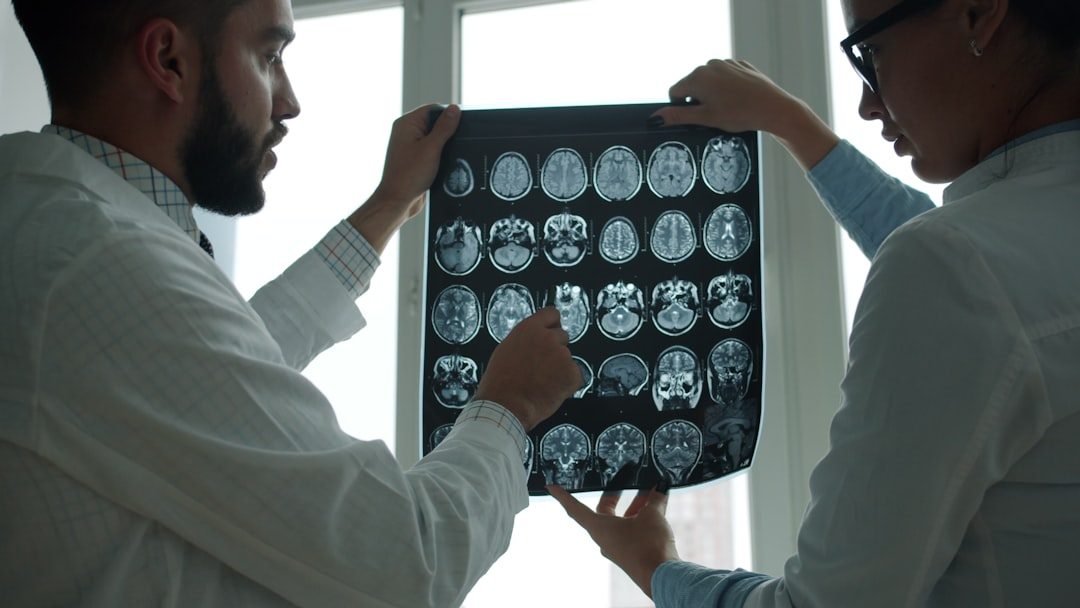
Many studies suggest there’s statistical evidence to back up precognition’s existence. The CIA declassified its pre-sentiment research in 1995, and statisticians confirmed the effect was statistically reliable. Let that sink in for a moment. The intelligence community was researching this seriously enough to classify it.
Mossbridge explains that statistically, on average, people unconsciously can get information about future events, and there are certain people who are really good at consciously getting information about future events. The science isn’t settled, obviously. While experiments like Radin’s are intriguing, they need replication and broader validation before being accepted as fact. Still, the accumulating data makes it increasingly difficult to dismiss entirely.
8. Animal Engineers Show Us Nature’s Predictive Genius

Animals display remarkable abilities to predict and prepare for future events through their construction behaviors. Bees are incredibly industrious insects with unparalleled building ability, and mathematician Thomas Hales wrote a proof showing that bee hives are the most efficient structures in nature, with regular hexagons providing the least-perimeter way to enclose infinitely many unit areas. These tiny creatures solved an advanced mathematical problem millions of years before humans discovered it.
Beavers are known as ecosystem engineers because of the effects of their dams on streams and biodiversity, as they are essential for the environment because of the ways in which they can create, repair, maintain, alter, and even destroy the habitat of other species. This behavior involves selecting suitable materials and strategically placing them to achieve structural stability and functionality, showing problem-solving behavior that transcends simple survival tactics and reflects foresight and environmental manipulation. Just like your brain anticipates future needs, these animal architects build structures preparing for circumstances that haven’t yet occurred.
Conclusion

Research suggests psychic abilities like precognition are real and statistically proven, forcing experts to rethink our understanding of time and consciousness. Whether your gut feelings are quantum messages from your future self or lightning-fast pattern recognition by your adaptive unconscious, one thing’s clear: they’re far more than superstition.
If this work holds up under continued scrutiny, trusting your gut feelings might be less superstition than evolutionary advantage, your consciousness occasionally catching glimpses of what’s coming down the timeline. The next time that inexplicable sensation tells you something’s about to happen, you might want to pay attention. Your brain could be showing you skills that science is only beginning to understand. What’s your take on this? Have you ever experienced a gut feeling that turned out to be eerily accurate?