
Look up at the night sky and it feels calm, almost frozen, like a picture painted in darkness and light. But behind that stillness is something wilder: the cosmos is constantly stretching, curving, and vibrating under the invisible pull of gravity. For more than a century, physicists have been rewriting our understanding of what space and time even are, turning them from a passive backdrop into a restless, dynamic fabric. The idea that mass can literally bend this fabric sounds like science fiction, yet it quietly governs everything from your falling coffee cup to the dance of galaxies. And the more closely we look, the more this strange vision of reality becomes not just a theory, but the only way the universe makes sense at all.
The Hidden Clues in the Starlight
One of the most dramatic clues that spacetime is flexible came not from exotic black holes, but from a simple question: why does starlight bend as it passes near the Sun? For centuries, astronomers believed gravity was just a pull between masses, like an invisible rope tugging on planets and apples alike. But in 1919, during a total solar eclipse, teams of astronomers measured distant star positions before and during the eclipse and saw something astonishing: the starlight had shifted, as if space itself had been warped. This bending was almost exactly what Albert Einstein’s new theory of general relativity had predicted, and it was roughly twice what older Newtonian gravity would allow. Overnight, gravity went from being a force acting within space to a sign that space and time themselves were curving.
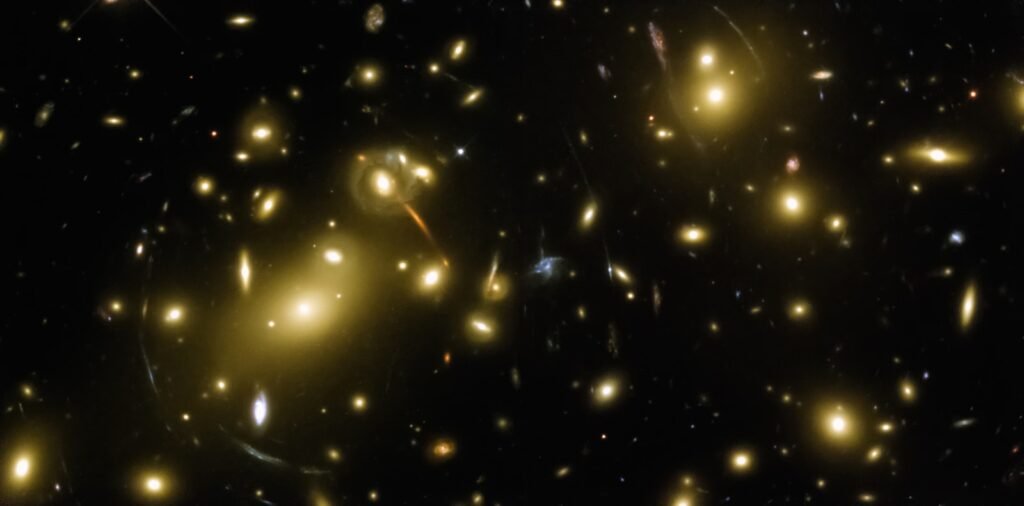
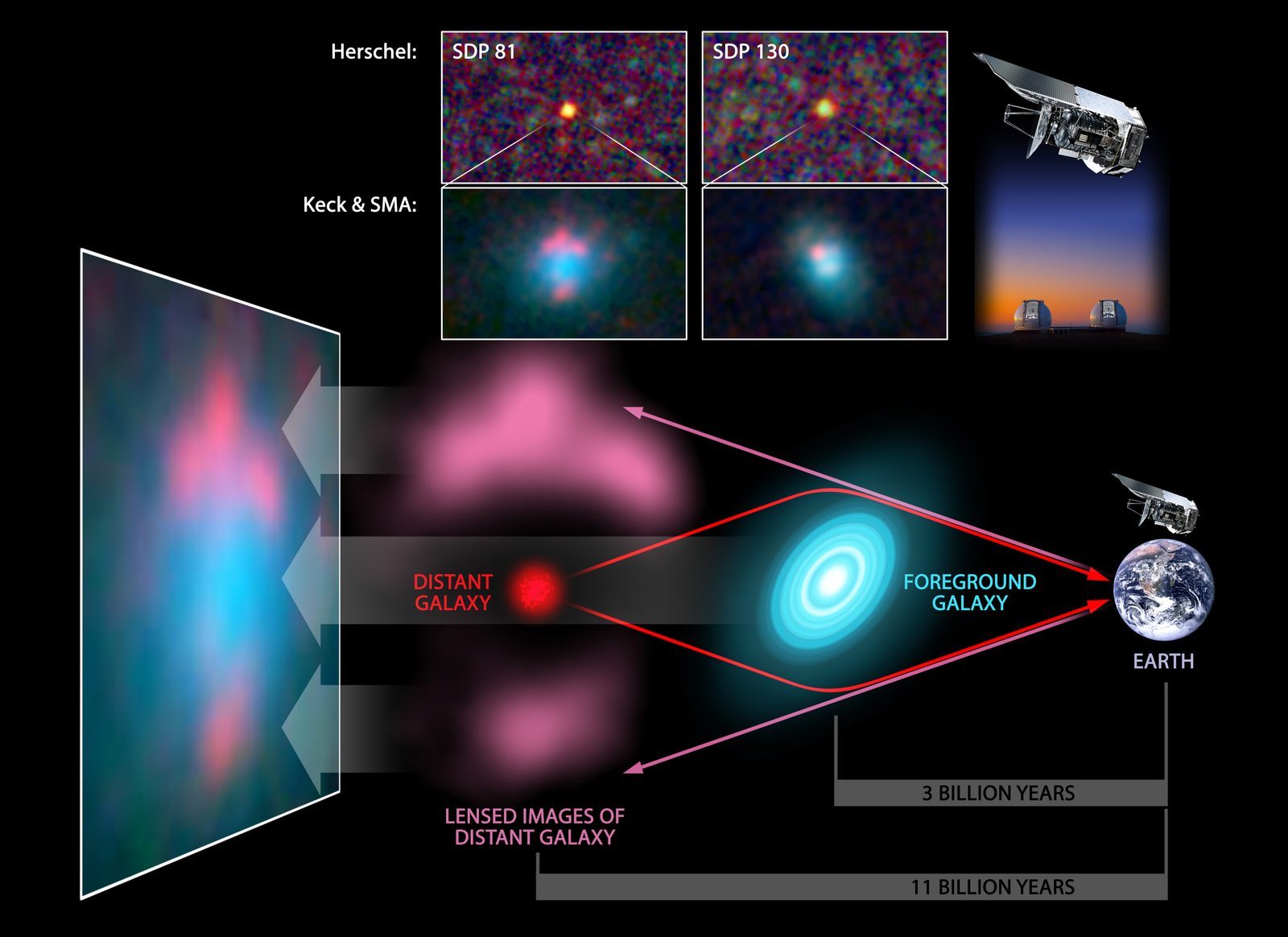
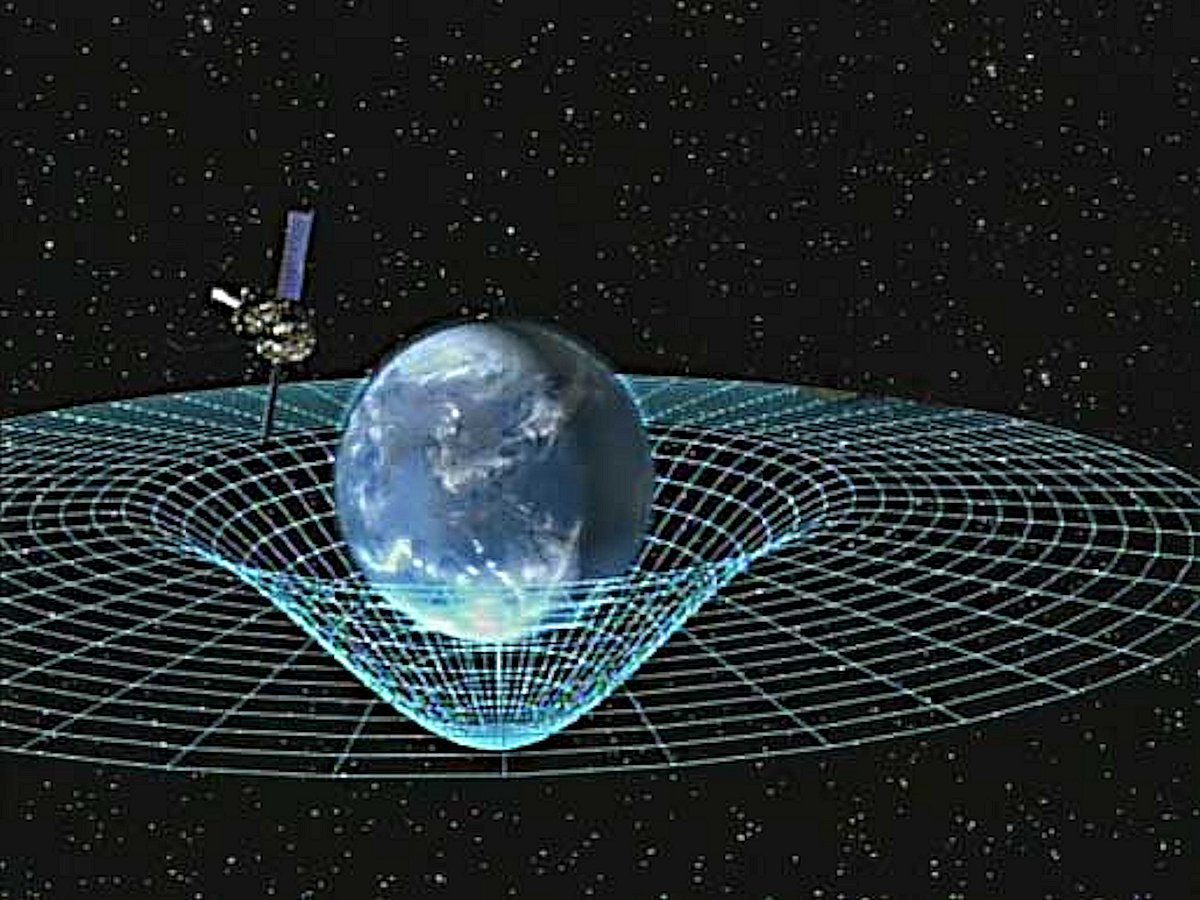
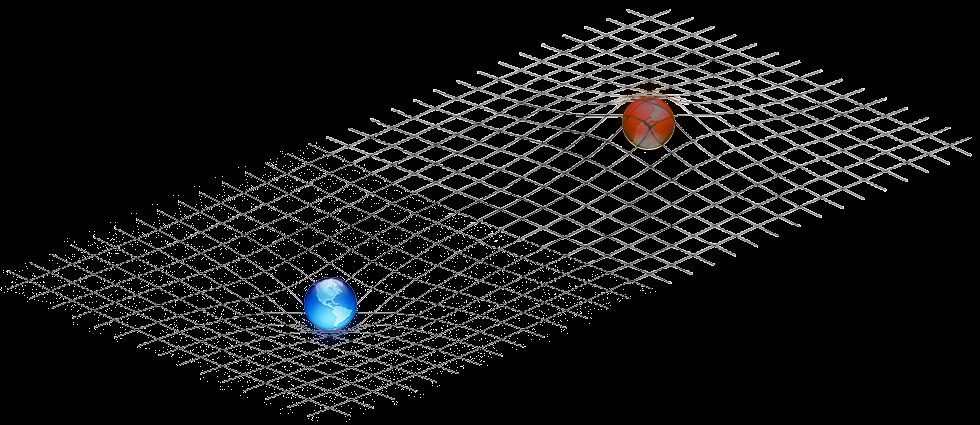
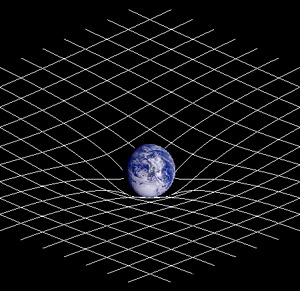
That idea is still deeply counterintuitive, because our everyday experience insists that space is empty and unchanging, like a stage where the action happens but never participates. Think of spacetime instead as a stretchy trampoline; if you place a heavy bowling ball in the center, the fabric dips, and smaller marbles roll inward not because they are pulled, but because they are following the curved surface. Light behaves the same way on the grandest scales, tracing out the shortest paths through a warped geometry even though it has no mass. When astronomers today see distant galaxies smeared, magnified, or even split into multiple arcs by an intervening cluster of galaxies, they call it gravitational lensing – but at its core, it is simply the fabric of spacetime revealing that it can be bent.
From Newton’s Invisible Force to Einstein’s Curved Geometry
For a very long time, Isaac Newton’s picture of gravity reigned supreme: two masses attract each other with a force, weaker with distance, stronger with size. It worked beautifully for predicting planetary motions and sending spacecraft across the solar system, so there was little reason to suspect anything deeper was going on. But there were small puzzles, like the slightly off-kilter orbit of Mercury, whose motion near the Sun never quite matched Newton’s predictions. Instead of dismissing those discrepancies, Einstein reframed the entire problem.
His proposal was radical: mass and energy tell spacetime how to curve, and that curvature tells matter and light how to move. In that picture, Earth orbits the Sun not because it is constantly being pulled inward, but because it is following a straightest-possible path through a dimple in spacetime created by the Sun’s mass. Where Newton imagined gravity as a mysterious force acting at a distance, general relativity treats it as geometry – like driving across a hilly landscape instead of on a flat highway. This new view not only fixed Mercury’s misbehavior, it made new predictions about black holes, gravitational waves, and the expansion of the universe that would take decades to fully confirm.
Ripples in Reality: When Spacetime Itself Rings
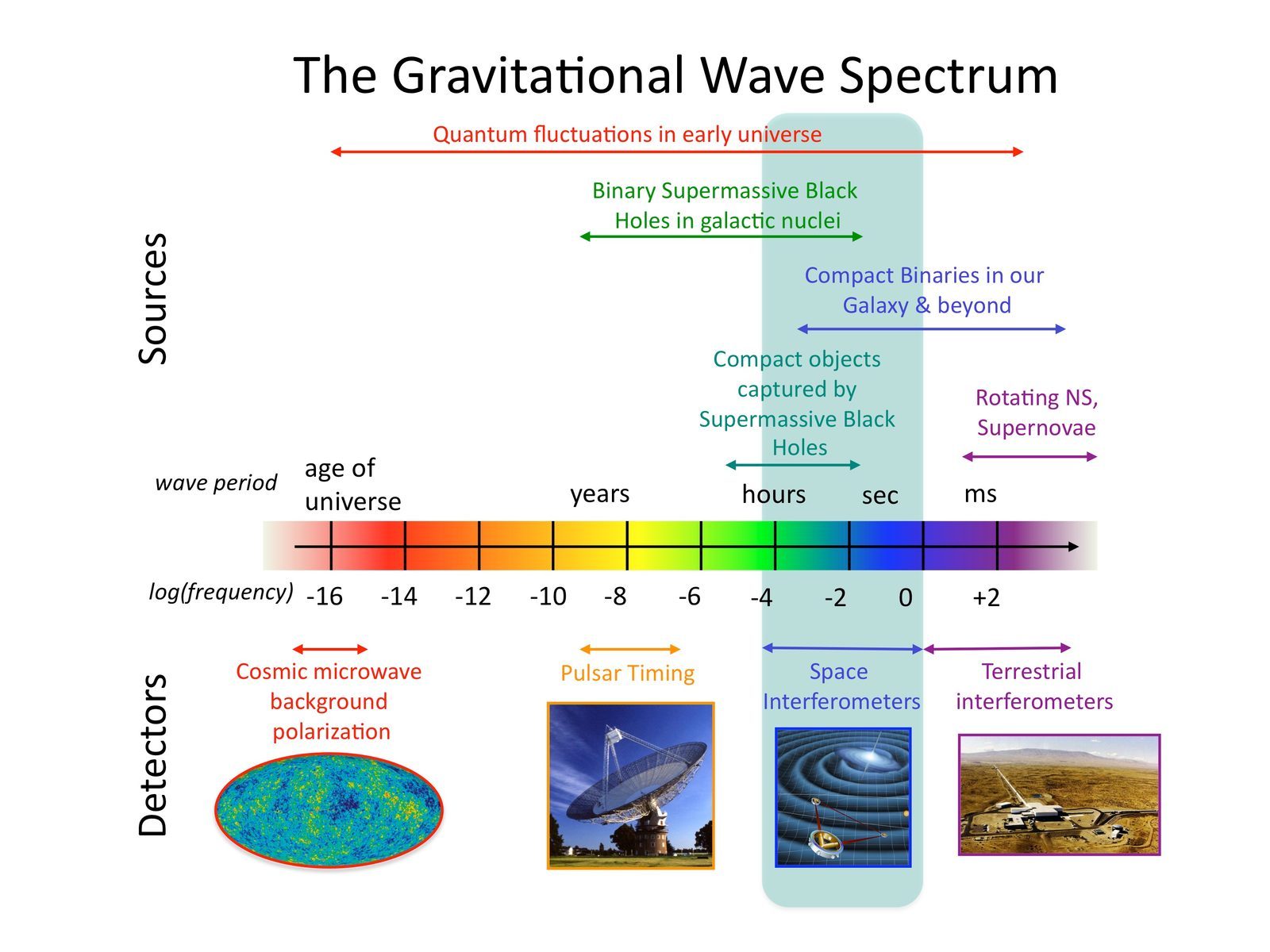
If spacetime is truly a fabric, it should not just bend; it should ripple. For decades, gravitational waves were treated as a subtle, almost philosophical prediction, thought to be too faint ever to measure directly. That changed in 2015, when the LIGO observatories in the United States first heard the tiny stretching and squeezing of spacetime as two black holes collided more than a billion light-years away. The signal was minuscule, compressing and expanding a four-kilometer laser beam by a distance smaller than a fraction of a proton’s width, yet it carried the energy of several Suns converted directly into gravitational waves in a fraction of a second.
Since then, observatories have detected dozens of such events, turning gravitational wave astronomy into a real, rapidly growing field rather than a speculative dream. These ripples are not just curiosities; they let us listen to violent cosmic mergers that would otherwise be hidden in darkness. For the first time, we are sensing the universe not only with light but with the vibrations of spacetime itself. It is as if an orchestra that had played in silence for billions of years finally turned the volume up just enough for us to catch the bass line.
Everyday Gravity, Extraordinary Geometry
It is tempting to think of curved spacetime as something that matters only for black holes, neutron stars, and distant galaxies, but it quietly shapes everyday life in ways most of us never notice. Your phone, for instance, relies on GPS satellites that orbit higher above Earth, where gravity is slightly weaker and time runs a tiny bit faster than it does on the ground. Engineers have to correct for these general relativistic effects; without those corrections, your navigation would drift by several kilometers each day. The same geometry that bends starlight also keeps your maps accurate.
Even the flow of time you experience on a mountain hike is, in principle, slightly different from what someone feels at sea level. Sensitive atomic clocks have shown that time ticks a little faster the farther you are from Earth’s center, because you are climbing out of its gravitational well. The differences are minuscule at human scales, but they prove that time is not universal and absolute; it is intimately connected to the distribution of mass and energy around you. Once you learn that, ordinary actions – dropping your keys, jumping off a step, or watching a satellite streak overhead – start to look like small negotiations with the geometry of the universe.
The Hidden Clues in Colliding Galaxies
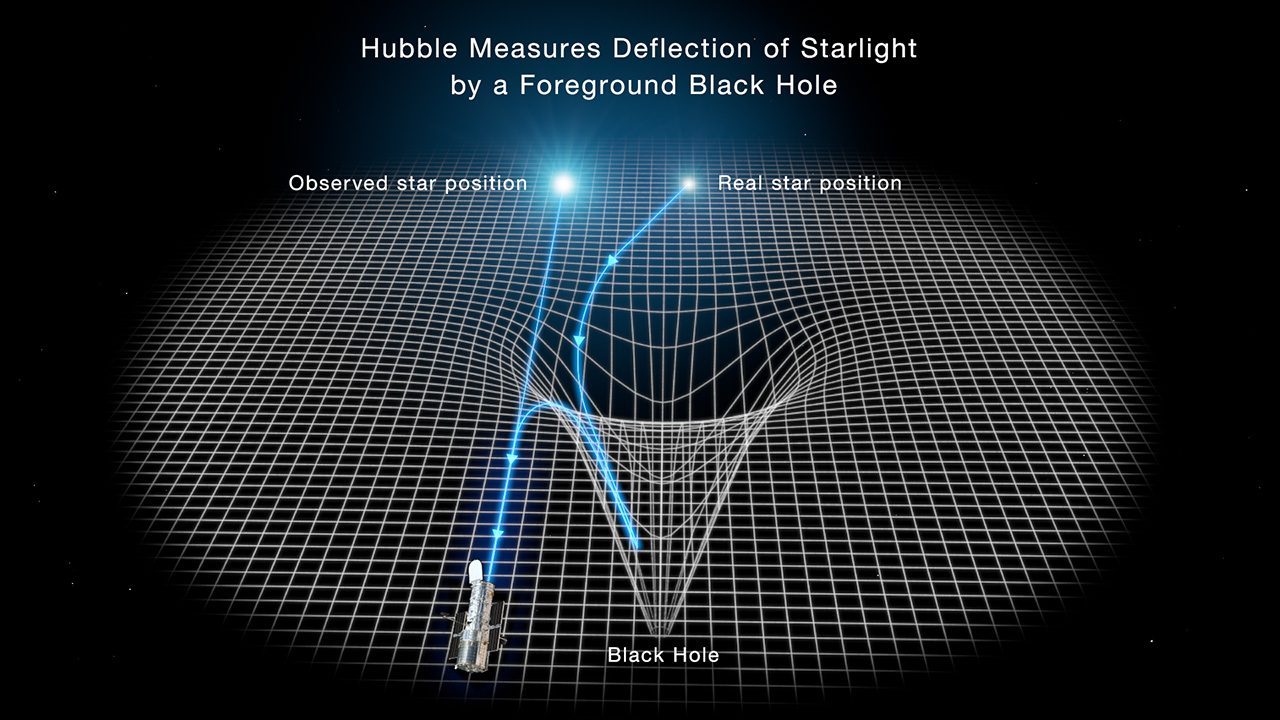
On the largest scales, curved spacetime becomes a tool for uncovering things we cannot see directly, like the elusive dark matter that seems to dominate the mass of the universe. When galaxy clusters collide, light from more distant galaxies passing through them gets distorted into arcs and rings, a strong form of gravitational lensing. By carefully mapping these distortions, astronomers can reconstruct how spacetime is curved in that region, and from that, where the mass must be. Time and again, the lensing maps show that most of the mass does not line up with the visible galaxies and hot gas, hinting at an invisible component that barely interacts with light.
That means spacetime is not just bent by the matter we can see; it is also shaped by something we only know exists because of its gravitational fingerprint. In a way, general relativity has turned the universe into a giant detective story, where warps in spacetime serve as clues pointing to hidden actors. The same technique allows astronomers to weigh distant galaxies and probe the distribution of matter across cosmic history. Instead of simply cataloging what is bright, we are now tracing the invisible scaffolding that holds the cosmos together.
Why It Matters: Gravity as the Architect of the Cosmos
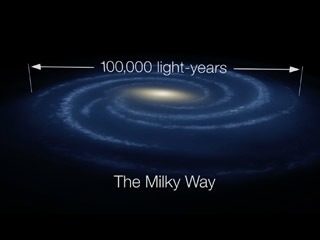
Understanding how gravity bends spacetime is not just an abstract intellectual victory; it changes how we see our place in the universe. Gravity is the architect that turns a nearly uniform early cosmos into a rich structure of stars, planets, and galaxies. Slight ripples in the density of the early universe, magnified by gravity over billions of years, become the web-like network of galaxy clusters we map today. Without curved spacetime, there would be no stable orbits, no long-lived stars, and very likely no life to ponder any of this.
This matters for technology and for philosophy in equal measure. On one side, precise models of spacetime curvature allow satellites to navigate, spacecraft to slingshot around planets, and observatories to squeeze out every last bit of accuracy from their instruments. On the other, they force us to let go of comforting, simple ideas like an absolute time shared by everyone, everywhere. The realization that even time depends on where you are and how fast you move is unsettling, but it also makes our little corner of reality feel connected to the deepest workings of the cosmos.
The Future Landscape: Mapping and Manipulating Spacetime
In the coming decades, scientists hope to map the curvature of spacetime across the universe with unprecedented precision. Next-generation gravitational wave observatories, both on Earth and in space, aim to detect fainter ripples from merging neutron stars, spinning white dwarfs, and perhaps even signals from the early universe itself. Space telescopes designed to study dark energy and dark matter will use weak gravitational lensing – subtle shape distortions of millions of galaxies – to chart how spacetime has evolved over cosmic history. Together, these efforts sketch a future where we have a three-dimensional, time-dependent atlas of how the universe is bent.
There are also bolder questions at the frontier. Can we reconcile general relativity, which governs the large-scale curvature of spacetime, with quantum mechanics, which rules the microscopic world? Ideas like quantum gravity, string theory, and loop quantum gravity are attempts to stitch these domains together, but none has yet achieved a clear experimental victory. For now, curved spacetime remains our best guide to how the universe operates on big scales, while quantum theory owns the very small. Somewhere in between, many physicists suspect, lies a deeper picture of reality that we are only just beginning to glimpse.
How You Can Engage With a Curved Universe
You do not need a PhD or a telescope in your backyard to engage with the idea that gravity bends the fabric of spacetime. One simple step is to pay closer attention to the tools you already use, like GPS, and recognize that they work only because engineers account for relativistic effects. Another is to follow missions and discoveries from observatories that probe gravity, such as gravitational wave detectors and space telescopes, through public outreach sites, news stories, and open data visualizations. Even watching a well-crafted animation or simulation of spacetime curvature can shift the way you picture everyday phenomena like orbits and free fall.
If you want to go a bit deeper, you can support science institutions and nonprofits that fund basic physics research, attend public lectures at local universities or planetariums, or participate in citizen science projects that help classify gravitational lensing images. Sharing clear explanations of these concepts with friends, classmates, or family members – especially kids – helps keep curiosity alive and normalizes the idea that the universe is stranger, and more beautiful, than our first intuitions suggest. The next time you feel your feet anchored to the ground, it might be worth pausing to remember that you are not simply being pulled down; you are following the curve of a vast, invisible geometry that extends from your shoes all the way out to the edge of the observable universe.
Suhail Ahmed is a passionate digital professional and nature enthusiast with over 8 years of experience in content strategy, SEO, web development, and digital operations. Alongside his freelance journey, Suhail actively contributes to nature and wildlife platforms like Discover Wildlife, where he channels his curiosity for the planet into engaging, educational storytelling.
With a strong background in managing digital ecosystems — from ecommerce stores and WordPress websites to social media and automation — Suhail merges technical precision with creative insight. His content reflects a rare balance: SEO-friendly yet deeply human, data-informed yet emotionally resonant.
Driven by a love for discovery and storytelling, Suhail believes in using digital platforms to amplify causes that matter — especially those protecting Earth’s biodiversity and inspiring sustainable living. Whether he’s managing online projects or crafting wildlife content, his goal remains the same: to inform, inspire, and leave a positive digital footprint.