

Have you ever stopped to think about what keeps us safe from the relentless bombardment of cosmic radiation? The answer lies in something you can’t see, touch, or hear, yet it wraps around our entire planet like an invisible shield. Earth’s magnetic field is constantly moving, shifting in ways that are both subtle and profound. Right now, something fascinating and a little unsettling is happening deep beneath your feet.
Scientists around the globe are monitoring changes in Earth’s magnetic field with unprecedented precision, and what they’re discovering is nothing short of remarkable. From magnetic poles that seem to have a mind of their own to weak spots expanding over vast regions of the planet, our magnetic shield is proving to be far more dynamic than anyone imagined. Let’s be real, most of us don’t think about magnetism unless we’re playing with fridge magnets or using a compass, yet these shifts have real implications for technology, navigation, and our understanding of the planet itself.
What Makes Earth’s Magnetic Field So Important
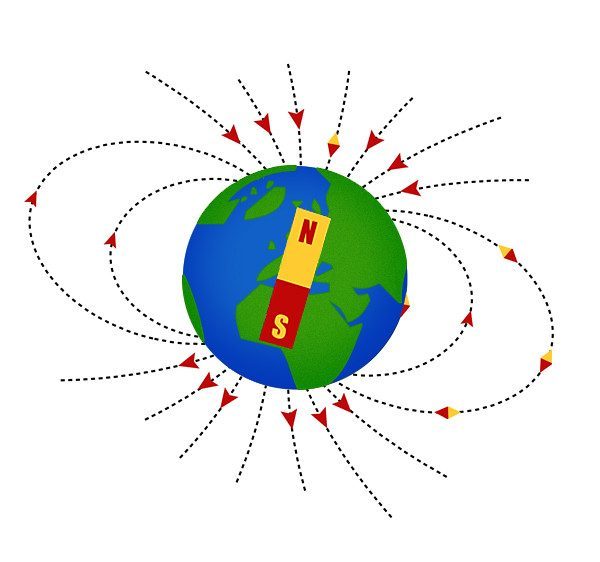
You might not realize it, but Earth’s magnetic field is literally the reason you’re alive. Deep inside the planet, roughly 1,800 miles below the surface, a churning ocean of molten iron and nickel generates this protective force. Earth’s magnetic field is vital to life on our planet and is a complex and dynamic force that protects us from cosmic radiation and charged particles from the Sun. Think of it like a giant bicycle dynamo spinning endlessly, converting motion into magnetic energy that radiates outward into space.
This magnetic shield deflects most of the dangerous particles that stream from the sun in what scientists call the solar wind. Without it, these charged particles would strip away our atmosphere over time, leaving Earth as barren as Mars. The field also creates those stunning auroras we see near the poles, where some particles sneak through and collide with our atmosphere. Every time you use GPS navigation or rely on satellite communications, you’re depending on this magnetic bubble to keep those systems functioning properly.
The North Magnetic Pole Is Racing Toward Siberia
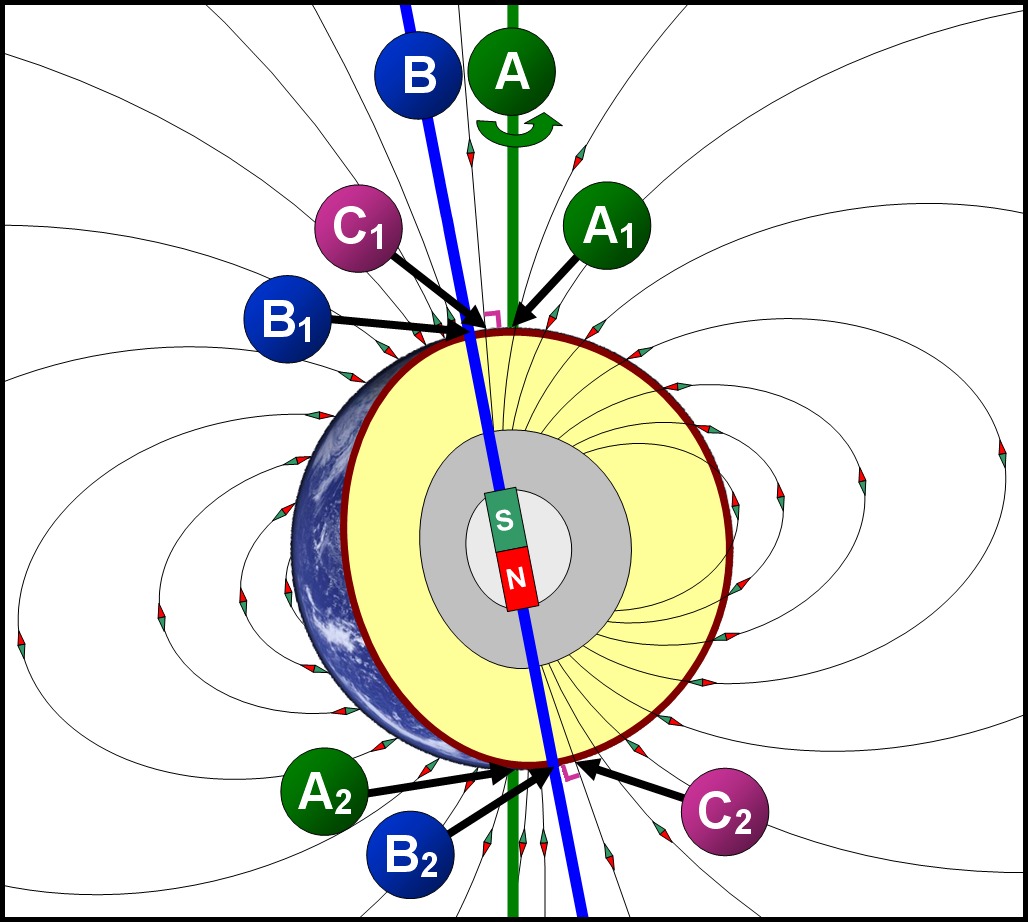
Here’s where things get interesting. The magnetic north pole’s position is determined by Earth’s magnetic field, which is in constant motion, and over the past few decades its movement has been unprecedented. When explorer James Clark Ross first pinpointed the magnetic north pole back in 1831, it sat comfortably in Canada’s Arctic region. Fast forward to today, and that pole has been on quite a journey.
Over the past century, its movement from Canada toward Russia has accelerated, increasing from about 6 miles per year to a peak of 31 miles annually by the 2000s. That’s faster than many people drive through their neighborhood. Yet in the past five years, something unexpected happened. The rate of movement has slowed significantly to about 22 miles per year, the biggest deceleration in speed we’ve ever seen. Scientists didn’t see this dramatic slowdown coming, and they can’t fully explain why it’s happening.
The behavior is so unusual that researchers had to update the World Magnetic Model ahead of schedule in 2019. This model is crucial because it’s what your smartphone and every airplane uses to figure out which way is north. Some researchers believe that changes in the strength of the magnetic field near Canada and Siberia could be influencing the shift, with Canada’s field weakening while Siberia’s grows stronger, essentially tugging the pole in that direction.
A Growing Weak Spot Over the South Atlantic
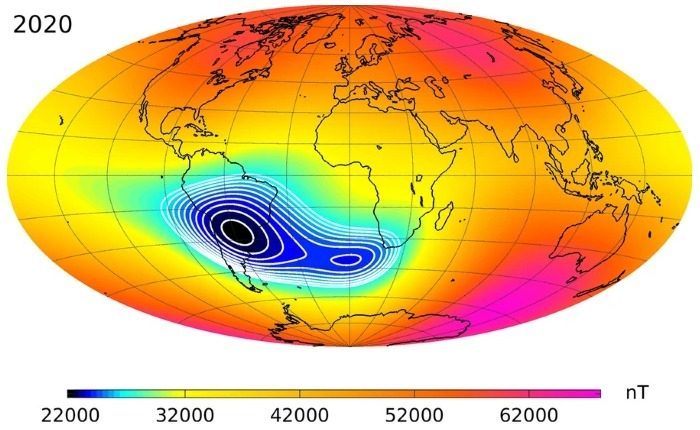
While the north pole grabs headlines, something equally dramatic is unfolding over the South Atlantic Ocean. There’s a massive weak spot in Earth’s magnetic field between South America and Africa, and it’s been expanding at an alarming rate. Using 11 years of magnetic field measurements from the European Space Agency’s Swarm satellite constellation, scientists have discovered that the weak region has expanded by an area nearly half the size of continental Europe since 2014.
Scientists call this region the South Atlantic Anomaly, and it was first noticed way back in the 19th century. In this area, the magnetic field dips down closer to Earth’s surface, creating a kind of vulnerability. The South Atlantic Anomaly is of particular interest for space safety, as satellites passing over the region are faced with higher doses of incoming radiation, which can lead to malfunctions or damage to critical hardware, and even blackouts. The International Space Station regularly shuts down non-essential systems when passing through this zone.
What’s particularly puzzling is how this anomaly behaves. While the South Atlantic Anomaly expanded steadily between 2014 and 2025, a region of the Atlantic Ocean southwest of Africa has experienced an even faster weakening of Earth’s magnetic field since 2020. It’s not just growing uniformly but changing in different ways depending on location, almost as if it has a mind of its own.
What’s Causing These Mysterious Changes
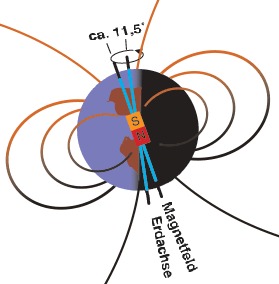
To understand what’s driving these shifts, you need to look nearly 2,000 miles beneath your feet. Earth’s magnetic field is generated in its outer core, a layer of liquid iron located 2,890 to 5,000 km beneath the surface, where the movement of this electrically conductive iron through an existing weak magnetic field produces electric currents. The process is incredibly complex and chaotic, like trying to predict the exact swirl patterns in a pot of boiling water.
Scientists believe that strange patterns called reverse flux patches are partly responsible for the South Atlantic Anomaly. This behavior is linked to strange patterns in the magnetic field at the boundary between Earth’s liquid outer core and its rocky mantle, and beneath the South Atlantic Anomaly we see unexpected areas where the magnetic field, instead of coming out of the core, goes back into the core. It’s like the field lines are flowing in reverse, weakening the shield where this happens.
Researchers believe two massive blobs of molten iron in Earth’s outer core may have spurred the runaway pole. These blobs, located beneath Canada and Siberia, seem to be engaged in a kind of geomagnetic tug of war. When one blob strengthens, it pulls the magnetic pole in its direction. The Canadian blob has been weakening while the Siberian one intensifies, explaining the northward dash of the magnetic pole.
How Scientists Track These Invisible Changes

You might wonder how scientists can possibly monitor something so deep inside Earth that we can’t directly observe. The answer lies in space. Swarm, an Earth Explorer mission developed under ESA’s Earth Observation programme, comprises a constellation of three identical satellites that precisely measure the magnetic signals that stem from Earth’s core, mantle, crust and oceans, as well as from the ionosphere and magnetosphere. These satellites orbit at different altitudes and positions, creating a three-dimensional picture of the magnetic field.
Every five years, researchers update the World Magnetic Model with fresh data about where magnetic north actually is and where it’s heading. The World Magnetic Model 2025 provides more precise navigational data for all military and civilian planes, ships, submarines, and GPS units. The latest version, released in late 2024, includes improvements that help account for the unpredictable nature of these changes.
The monitoring has revealed surprising asymmetries across the globe. Since Swarm has been in orbit the magnetic field over Siberia has strengthened while it has weakened over Canada, with the Canadian strong field region shrinking by an area almost the size of India, while the Siberian region has grown by an area comparable to the size of Greenland. These aren’t small changes.
Could We Be Heading Toward a Magnetic Reversal

Let’s address the question that might be on your mind. Could these changes signal that Earth’s magnetic poles are about to flip completely? It’s happened before, many times throughout Earth’s history. The last one occurred 780,000 years ago, and paleomagnetic records show that reversals have occurred hundreds of times over the past 160 million years.
Earth’s magnetic field has behaved even more dramatically in the past, with the magnetosphere weakening so much that its polarity reversed, flipping the magnetic north and south poles, and the change can last for tens of thousands of years, and scientists have estimated that this polar flip, which can take thousands of years to complete, happens about once every million years. The time between flips varies wildly, though, from several thousand years to as much as 50 million years.
The good news is that scientists don’t think we’re on the brink of a full reversal. We know from paleomagnetic records that Earth’s magnetic field has weakened many times in the past, displaying weak field regions like the South Atlantic Anomaly, without reversing. Still, the possibility can’t be completely ruled out. We know from paleomagnetic records that the intensity of the magnetic field decreases by as much as ninety percent at the Earth’s surface during a reversal, but those same records also show that the field intensity can vary significantly without resulting in a reversal.
What This Means for Technology and Daily Life

For most people going about their daily routines, these magnetic shifts remain invisible. However, the impacts on technology are very real. Airlines and shipping companies constantly adjust their navigation systems to account for the moving magnetic poles. For industries reliant on magnetic fields, such as aviation, shipping and navigation, this movement is no small matter, as GPS systems, planes and military equipment track the magnetic field and rely on accurate models of magnetic north to function properly.
Satellites face perhaps the biggest challenge. When spacecraft pass through the South Atlantic Anomaly, they encounter a barrage of charged particles that can damage electronics or corrupt data. Spacecraft that enter the South Atlantic weak spot during their orbits of our planet could now be exposed to more radiation, which could cause more malfunctions, damage, or even blackouts. Satellite operators often power down sensitive instruments when traversing this region, a workaround that becomes more necessary as the anomaly expands.
Looking ahead, scientists emphasize the importance of continued monitoring. The magnetic field’s behavior remains fundamentally unpredictable, driven by turbulent processes thousands of miles beneath us. While the current changes don’t pose immediate dangers to life on Earth’s surface, they serve as a reminder that we live on a dynamic, ever-changing planet where the ground beneath our feet is anything but static.
Conclusion

Earth’s magnetic field is one of those planetary features we take for granted until we realize how crucial it really is. The shifts happening right now offer scientists a rare window into the workings of our planet’s deep interior. From a magnetic pole sprinting across the Arctic to a growing weak spot over the Atlantic, these changes underscore just how alive and dynamic our planet remains. The magnetic field has protected life on Earth for billions of years, through countless reversals and fluctuations, and it will continue to do so even as it evolves in ways we’re only beginning to understand.
What’s certain is that researchers will keep watching closely, improving their models and refining their predictions. The next major update to the World Magnetic Model isn’t expected until 2030, assuming the field behaves predictably until then. As we navigate an increasingly technology-dependent world, understanding these invisible forces becomes more important than ever. What do you think about our planet’s shifting magnetic shield? Tell us in the comments.
Hi, I’m Andrew, and I come from India. Experienced content specialist with a passion for writing. My forte includes health and wellness, Travel, Animals, and Nature. A nature nomad, I am obsessed with mountains and love high-altitude trekking. I have been on several Himalayan treks in India including the Everest Base Camp in Nepal, a profound experience.