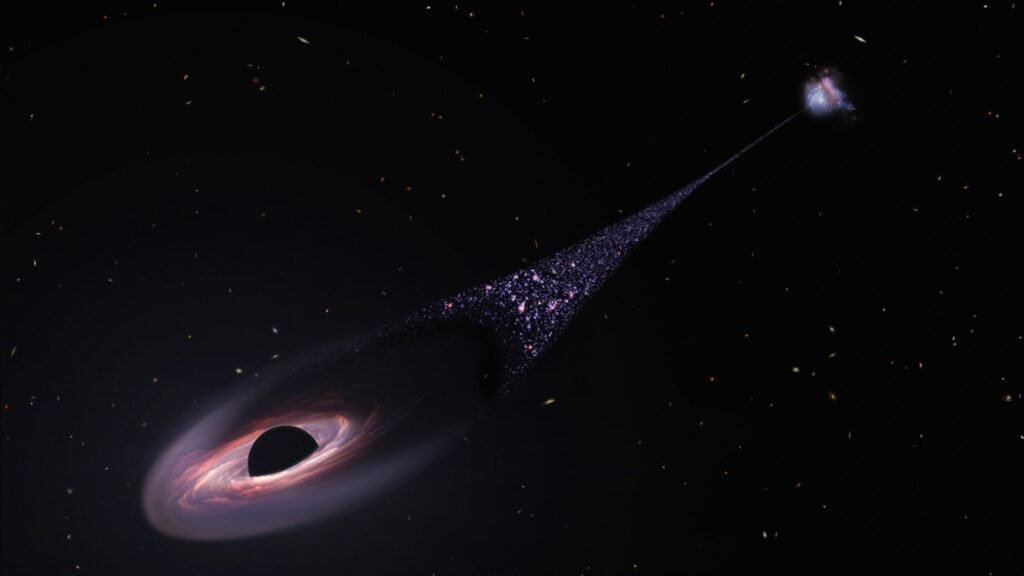

Stand outside on a clear night, and the sky looks like it goes on forever. For most of human history, that feeling was all we had: a gut-level sense that the cosmos is boundless. Now, powerful telescopes and sharp mathematical tools are forcing a tougher question: is the universe truly infinite, or just unimaginably large but ultimately finite? The answer is turning out to be far stranger, and far less settled, than many people realize. As astrophysicists map the afterglow of the Big Bang and simulate entire universes inside supercomputers, they’re finding clues that point in conflicting directions. The mystery is no longer just poetic; it’s becoming a precise, testable question at the frontier of modern cosmology.
The Hidden Clues In The Afterglow Of The Big Bang
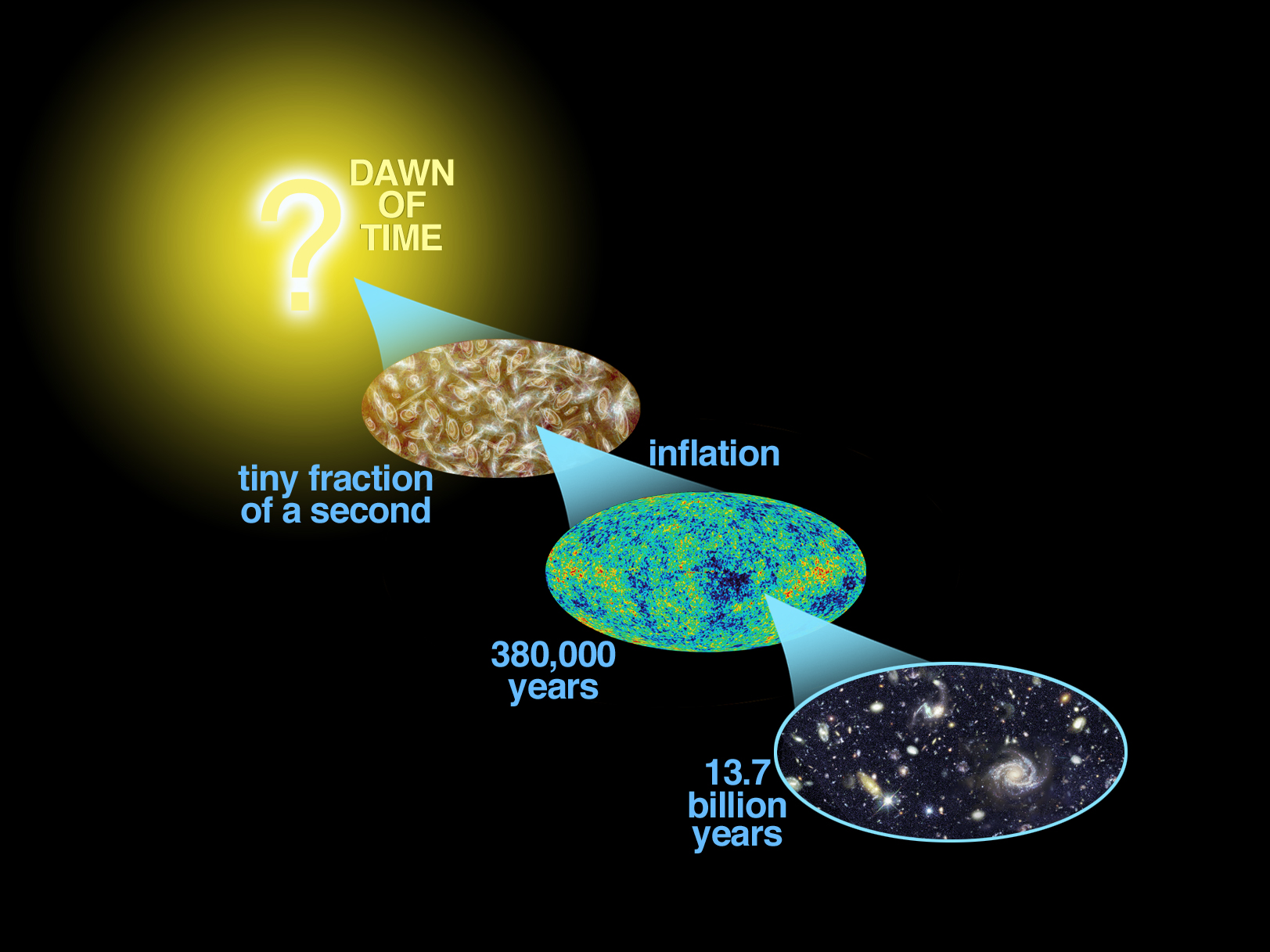
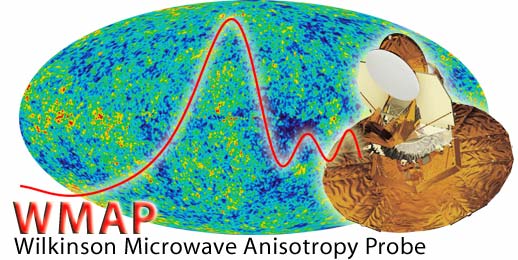
The most important evidence about the size and shape of the universe comes from something that looks deceptively simple: a faint, uniform microwave glow filling the sky. This glow, called the cosmic microwave background, is the cooled‑down afterglow of the Big Bang, and satellites like WMAP and Planck have mapped tiny temperature ripples in it with exquisite detail. Those ripples act like a fossilized fingerprint of the early universe, encoding information about how space is curved on the largest scales. When researchers compare the observed pattern to theoretical models, they find that space looks incredibly close to perfectly flat, rather than obviously curved like a sphere or like a saddle.
In basic geometry terms, a flat universe often hints at one that could be infinite, stretching outward without ever looping back on itself. But the data are not a smoking gun; they show that if the universe is curved, the radius of that curvature is simply much bigger than the region we can see. Complicating things further, some subtle anomalies in the microwave background, such as a large “cold spot” and low‑power fluctuations on the largest scales, have sparked debates about whether we might be missing part of the story. Are these just statistical flukes in a vast cosmos, or faint signatures of a universe that’s finite in a strange, wraparound way? For now, the afterglow is whispering more than it is shouting.
From Ancient Skies To Precision Cosmology
For early skywatchers in Babylon, Greece, India, and across the world, the question of infinity was philosophical long before it was scientific. Some ancient thinkers imagined a nested, finite cosmos surrounded by a realm of the gods, while others were already toying with the idea that stars might stretch on without end. Without instruments, the debate was mostly about logic and metaphors, not measurements. The night sky felt infinite, but so did the ocean to a sailor who had never reached another shore.
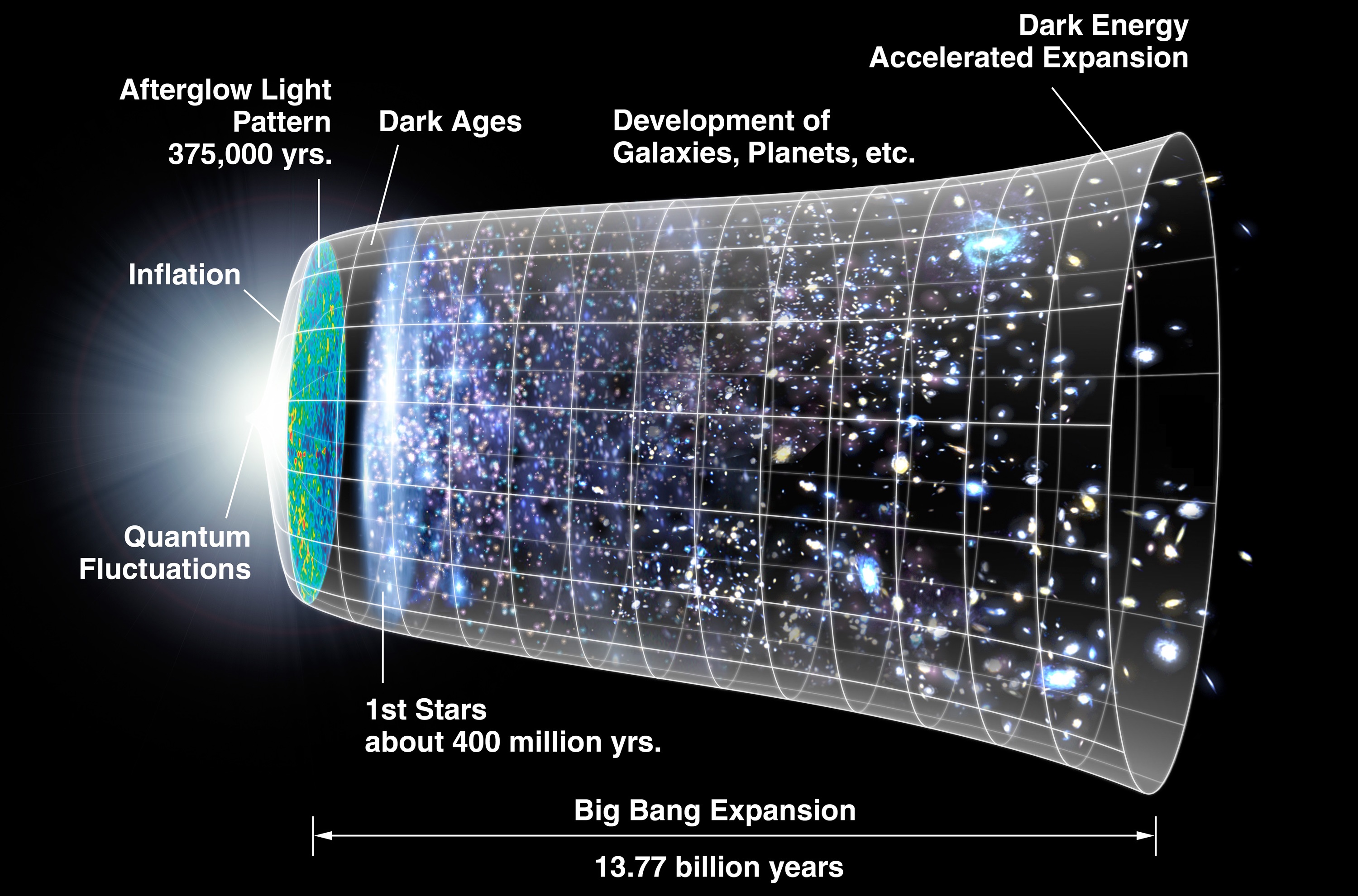
The turning point came when telescopes began to resolve the Milky Way into individual stars and then, later, revealed that many faint smudges were distant galaxies. In the twentieth century, Edwin Hubble’s discovery that galaxies are rushing away from us showed that the universe itself is expanding, like a rising loaf of raisin bread where every raisin sees all the others moving away. That expansion instantly changed how scientists thought about finiteness: a universe could start in a Big Bang and still be infinite from the beginning, or it could be finite but unbounded, like the surface of a balloon. Modern cosmology has become a kind of forensic investigation, combining ancient questions with new evidence to reconstruct a story we can no longer directly witness.
Cosmic Geometry: Flat, Closed, Or Something Stranger?
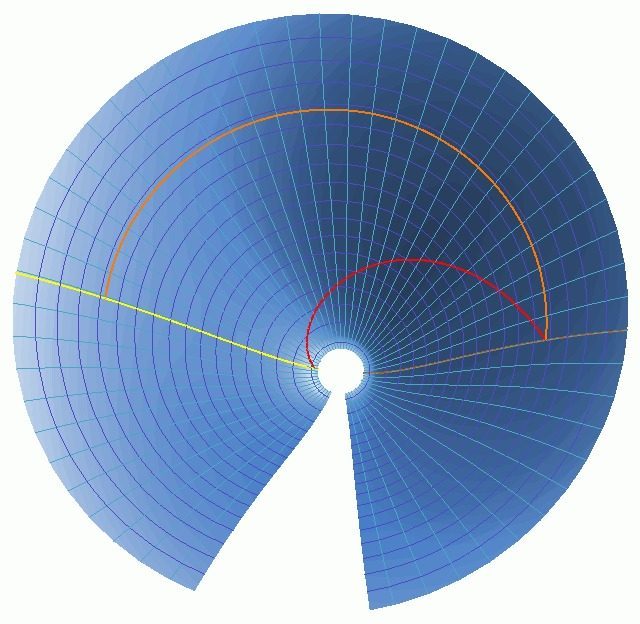
When cosmologists talk about whether the universe is infinite, they often rephrase the question into something more technical: what is the geometry of space on the largest scales? There are three broad possibilities. Space could be positively curved, like the surface of a sphere; negatively curved, like a saddle; or flat, obeying the familiar rules you learned in school. Each of these geometries has a different implication for whether space loops back on itself or stretches endlessly.
Current measurements of the cosmic microwave background and galaxy surveys suggest that the observable universe is incredibly close to flat. That nudges the conversation toward an infinite cosmos, but it does not seal the deal. A universe can be globally finite and still appear locally flat over the patch we can observe, in the same way Earth feels flat when you are standing in a field. On top of that, there are weird possibilities inspired by topology, where space might be shaped like a three‑dimensional doughnut or other exotic form that repeats if you travel far enough. If that is the case, the universe could be finite in volume yet have no obvious edge, and with clever searches for repeated patterns in galaxy distributions or microwave background features, scientists are trying to catch it looping back on itself.
Infinity, Inflation, And The Multiverse Question
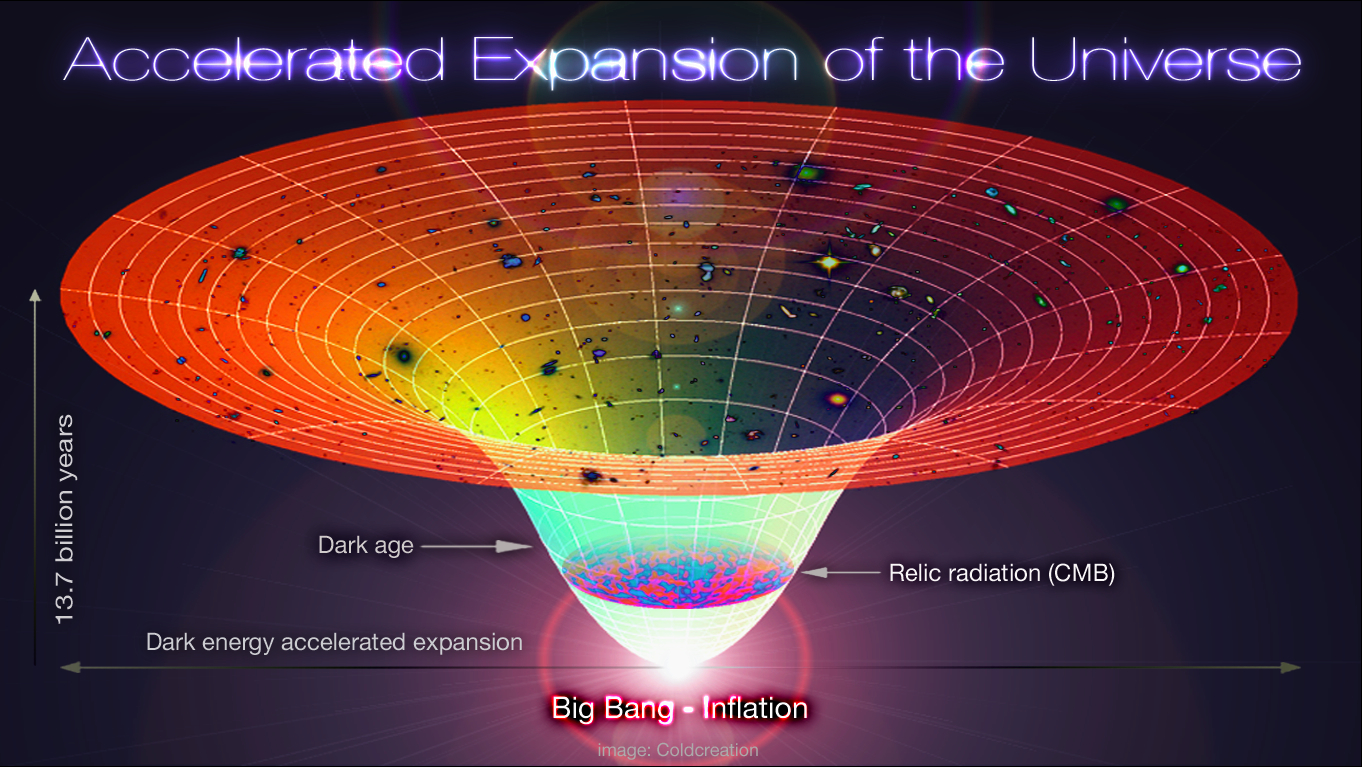
Any modern discussion of an infinite universe runs straight into one of the most ambitious ideas in cosmology: cosmic inflation. According to inflation theory, in the earliest fraction of a second after the Big Bang, space expanded faster than light, blowing up a quantum‑sized region into something astronomically huge. In many versions of this theory, that rapid expansion never completely ends; it keeps going in distant regions, spawning a vast, possibly infinite “multiverse” of bubble universes with different properties. In that picture, what we call the universe is just one patch in a much bigger, constantly branching reality.
Here’s the twist: inflation does a great job explaining why our observable universe looks so flat and uniform, but it also makes infinity almost unavoidable. That has divided cosmologists. Some embrace a truly infinite multiverse, where every physically possible configuration of matter might occur somewhere, making our existence one lottery ticket among unimaginably many. Others are deeply uneasy with infinities, because they make it hard to define probabilities or even to say what is “typical.” This is where the conversation stops sounding like clean textbook science and starts to resemble a late‑night debate among experts who are still very much in the middle of figuring it out.
The Human Scale: Why It Matters If The Universe Has An Edge
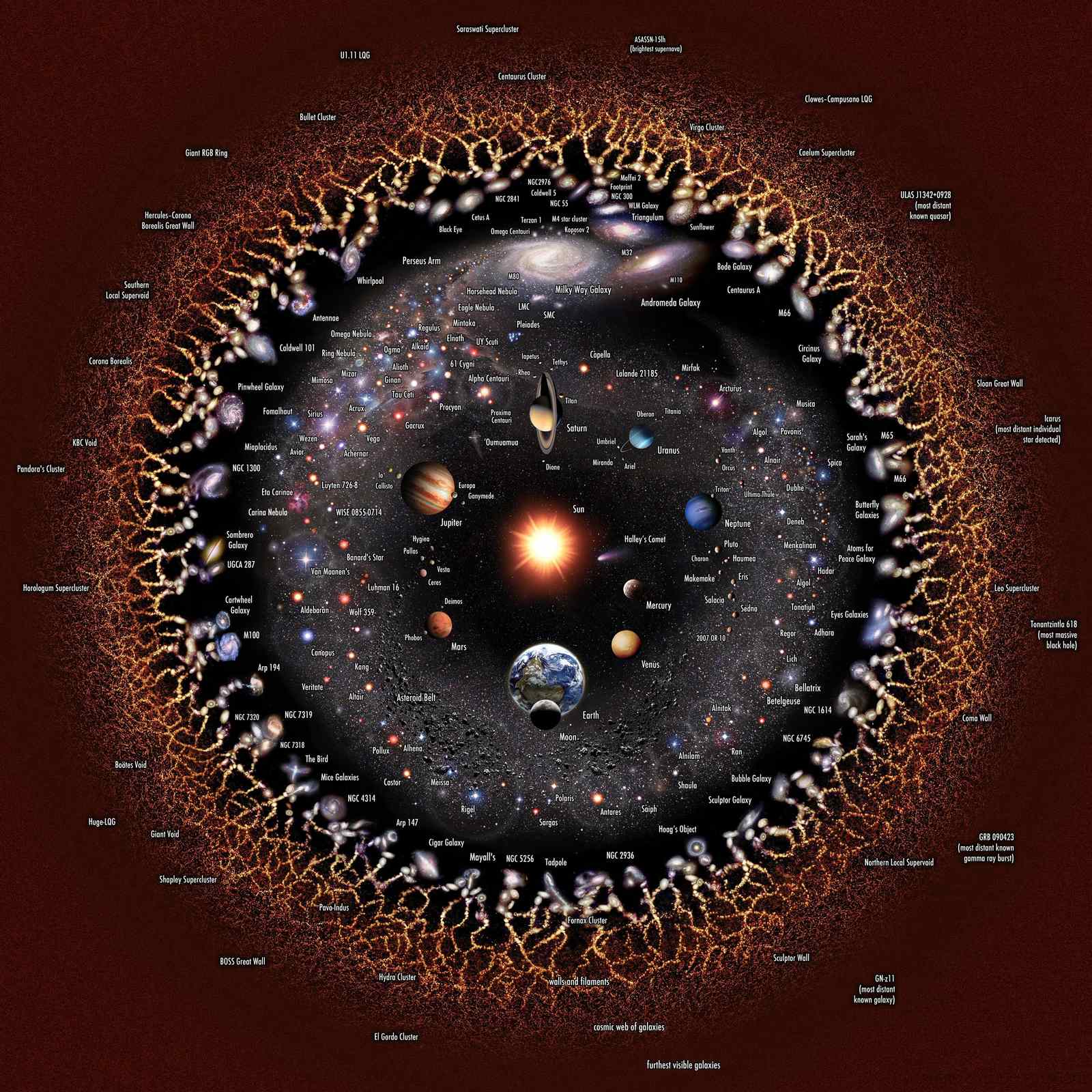
It might seem like pure abstraction to argue about infinity when most of us are just trying to get through the week, but this question quietly shapes how we see ourselves. If the universe is finite, with a specific size and total amount of matter and energy, then every galaxy and every life‑bearing planet is part of a countable whole. There is a definite, if enormous, cosmic inventory, and we live in a particular, unique chapter of that story. If the universe is infinite, on the other hand, then almost anything allowed by physics may happen not just once but over and over, in far‑flung regions we will never reach.
That raises dizzying possibilities. In some interpretations, an infinite universe could contain countless regions where stars, planets, and maybe even life emerge in ways eerily similar to ours. That does not mean there are perfect replicas of you reading this sentence elsewhere, but it does invite uncomfortable questions about uniqueness and meaning. Personally, I find that rather than shrinking us, this perspective highlights how improbable and fragile our own corner of the cosmos is. Whether the universe is finite or infinite, the thin film of conditions that allows conscious beings to ask these questions remains astronomically rare, and that alone makes our perspective precious.
Reading The Sky: How Observations Keep Shifting The Debate

Every few years, a new generation of telescopes sharpens or scrambles what we think we know about cosmic size. Precision observations of distant supernovae, for example, revealed that the universe’s expansion is speeding up, driven by a mysterious “dark energy” that seems to permeate space. That discovery forced cosmologists to revisit their models of the universe’s fate: will expansion continue forever, will it slow and reverse, or will it asymptotically coast? Each scenario plays differently with the idea of whether the observable part of the universe will keep growing or freeze at some horizon we can never see beyond.
Meanwhile, giant surveys like the Sloan Digital Sky Survey and newer instruments are mapping the three‑dimensional distribution of galaxies across billions of light‑years. These maps show how matter clumps into filaments and voids, and how those patterns evolve with time, providing another test of cosmic geometry. A roughly flat, possibly infinite universe leaves a specific imprint on how structure grows at large scales. So far, the data mostly line up with a flat, expanding cosmos dominated by dark energy, but the uncertainties leave just enough wiggle room for alternative shapes. For scientists, that wiggle room is not a bug; it is the space where new physics might be hiding.
Beyond Today’s Horizon: The Future Landscape Of Cosmic Cartography
In the coming decades, a fleet of new observatories will push this debate much further. Space missions dedicated to mapping dark energy, along with massive ground‑based telescopes, will trace the expansion history of the universe with far greater precision. As measurements tighten, they will either lock in the picture of a nearly flat, indefinitely expanding universe or expose small deviations that hint at a deeper geometry. Even a tiny departure from flatness, measured carefully, could spell the difference between an infinite cosmos and one that eventually wraps around.
On the more speculative side, advances in quantum gravity and high‑energy physics may reveal whether inflation is truly eternal or just a one‑off event in our own cosmic patch. If future particle experiments or gravitational‑wave observatories pick up signatures of exotic early‑universe physics, they could narrow down the zoo of possible inflation models. There is also the wild but testable idea of searching for collisions between our universe and other “bubbles” in the microwave background data, like faint bruises left from ancient contacts. Most cosmologists would bet against finding such scars, but the fact that we can even outline how to look for them shows how the question of infinity is moving from mythology into measurement.
How You Can Engage With An Infinite (Or Not) Universe
Most of us will never write equations about cosmic curvature, but that does not mean we’re locked out of this conversation. The simplest way to engage is to stay curious and support the tools that extend our cosmic reach. Public funding decisions, philanthropic gifts, and even clicks and shares all shape which big science projects get built and which stories reach a wider audience. When you follow missions that map the early universe, or new telescopes that catch the faintest galaxies, you are part of the social machinery that decides how seriously we pursue these questions.
On a more personal level, you can bring the scale of the universe into everyday life by stargazing, visiting planetariums and science museums, and talking with kids about what it means to live on a small planet in a possibly boundless cosmos. Small actions matter: attending public lectures, supporting science journalism, or joining citizen‑science projects that classify galaxies all help turn abstract cosmology into a shared human endeavor. Whether the universe is finite or infinite, our time to explore it is limited, and that constraint makes every bit of engagement feel urgent rather than abstract. In the end, maybe the best response to an almost incomprehensible cosmos is simple: keep looking up, keep asking questions, and keep insisting that the biggest mysteries are worth our attention.
Suhail Ahmed is a passionate digital professional and nature enthusiast with over 8 years of experience in content strategy, SEO, web development, and digital operations. Alongside his freelance journey, Suhail actively contributes to nature and wildlife platforms like Discover Wildlife, where he channels his curiosity for the planet into engaging, educational storytelling.
With a strong background in managing digital ecosystems — from ecommerce stores and WordPress websites to social media and automation — Suhail merges technical precision with creative insight. His content reflects a rare balance: SEO-friendly yet deeply human, data-informed yet emotionally resonant.
Driven by a love for discovery and storytelling, Suhail believes in using digital platforms to amplify causes that matter — especially those protecting Earth’s biodiversity and inspiring sustainable living. Whether he’s managing online projects or crafting wildlife content, his goal remains the same: to inform, inspire, and leave a positive digital footprint.