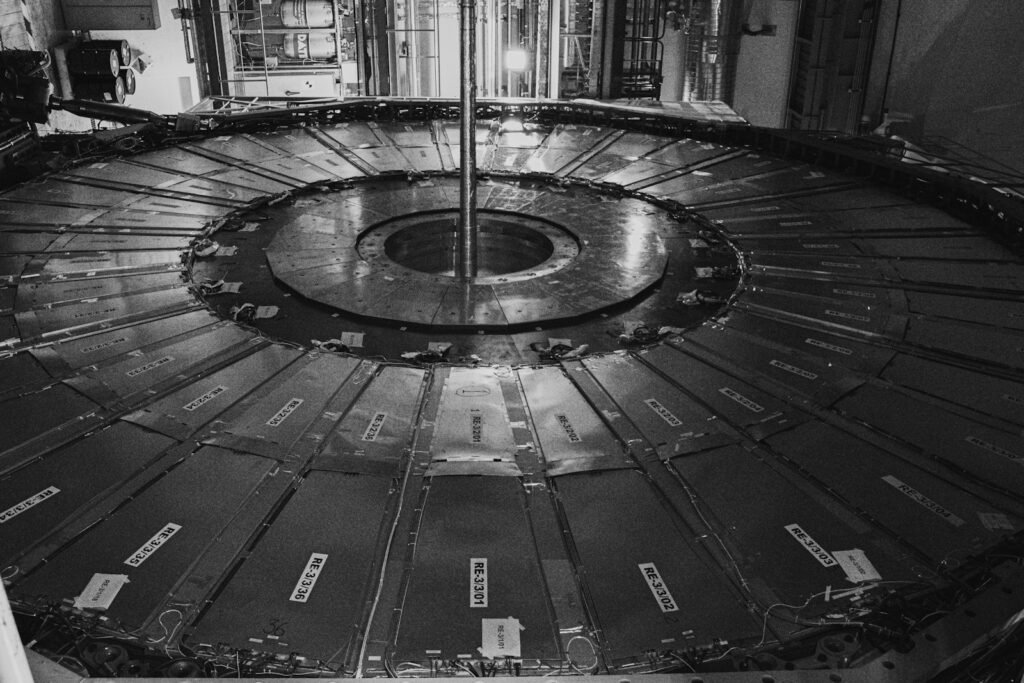

Walk outside on a clear night, look up, and you’re seeing only a thin slice of reality – or at least that’s what a growing number of physicists suspect. For more than a century, we’ve treated space as a three-dimensional stage with time as a fourth, but some of today’s boldest theories say that picture is radically incomplete. Hidden just beyond our perception could be extra dimensions curled up, stretched out, or encoded in the strange behavior of gravity and quantum fields. What sounds like science fiction is shaping serious experiments, from particle colliders to gravitational-wave observatories. The mystery now is no longer whether extra dimensions are a wild idea, but whether we are finally building the tools to catch them in the act.
The hidden clues
One of the strangest clues that something is missing from our picture of the universe comes from gravity itself. Compared with the other forces of nature – electromagnetism and the nuclear forces – gravity is absurdly weak; a simple fridge magnet can overpower the entire pull of Earth on a paperclip. Some theorists have argued that gravity may feel weak because it leaks into dimensions we can’t see, diluting its punch in our familiar three. If that’s true, the very fact that you can lift your keys off the table might be an everyday hint of hidden geometry.
Cosmic structures add to the puzzle in more subtle ways. Galaxies rotate so fast that, with only visible matter, they ought to fly apart, yet they hold together in vast spirals that stretch across space. We usually blame this on dark matter, but some models suggest that what we call “dark” could instead be a sign that gravity behaves differently at large scales – possibly due to extra dimensions changing how space curves. In this view, the universe might be like an old house with secret rooms: the walls look solid, but the layout makes more sense once you know the hidden doors are there.
From flatland to string theory
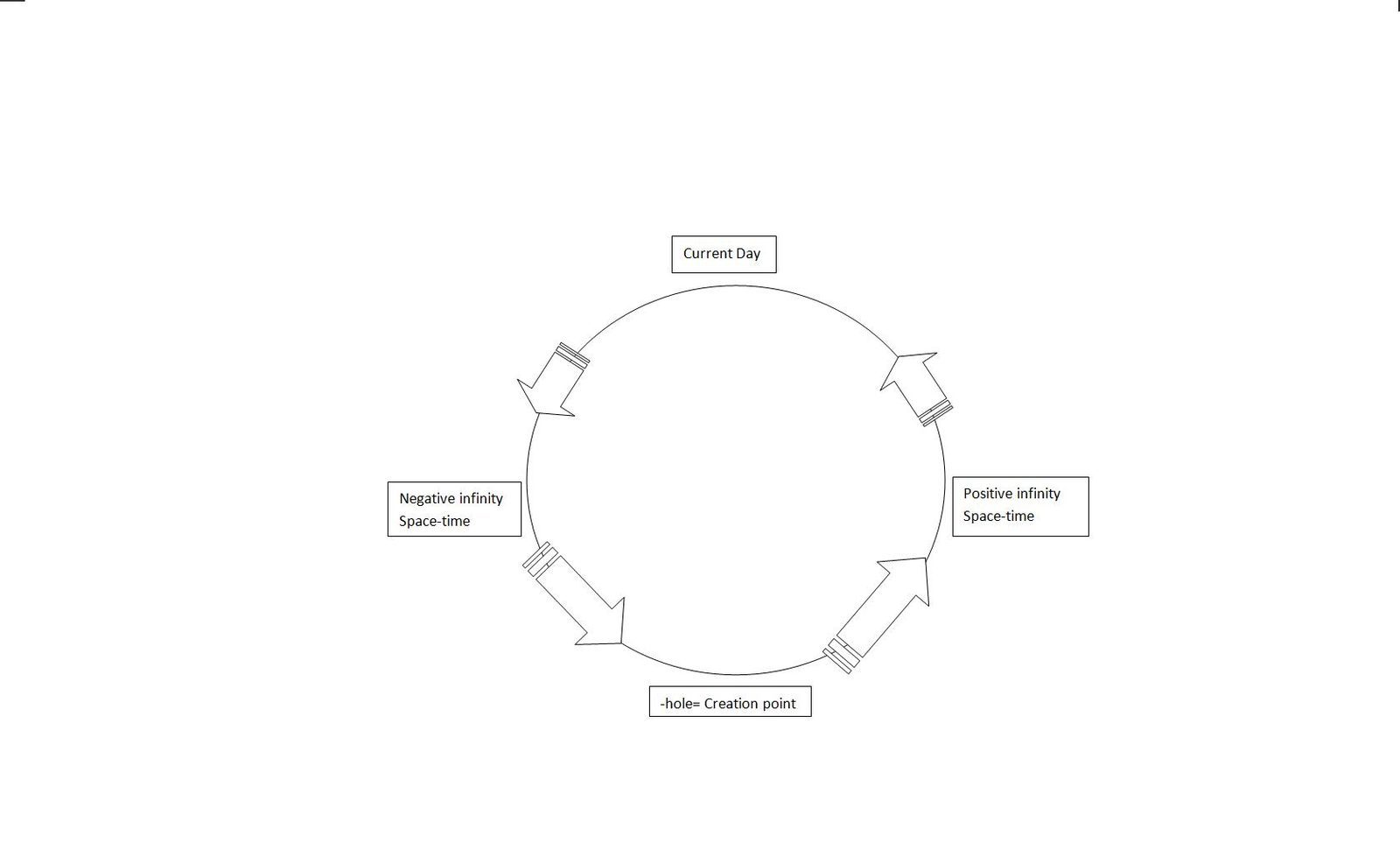
The leap from three dimensions to more is easier to imagine if you start with a simpler world. Picture a two-dimensional being living on a sheet of paper; to them, “up” does not exist, yet we can place objects just above the page, completely out of their reach. Early popularizers compared our universe to such a “Flatland,” suggesting that higher dimensions could be as real to the cosmos as height is to us, even if our senses are blind to them. This metaphor has become a powerful storytelling tool for scientists trying to explain why extra dimensions are not just mathematical tricks.
Modern physics pushed the idea much further with string theory and related frameworks. Instead of point-like particles, string theory says the basic building blocks of reality are tiny vibrating strings, whose different resonances produce different particles. For that math to work without tearing itself apart, the theory naturally calls for more than four dimensions – ten or eleven, depending on the version. In many models, those extra dimensions are compactified, curled up into shapes far smaller than an atom, like microscopic origami folded so tightly we can never step inside. The shapes of those curled dimensions would, in principle, determine the kinds of particles and forces we observe, turning geometry into something like the DNA of the universe.
Laboratories at the edge of reality
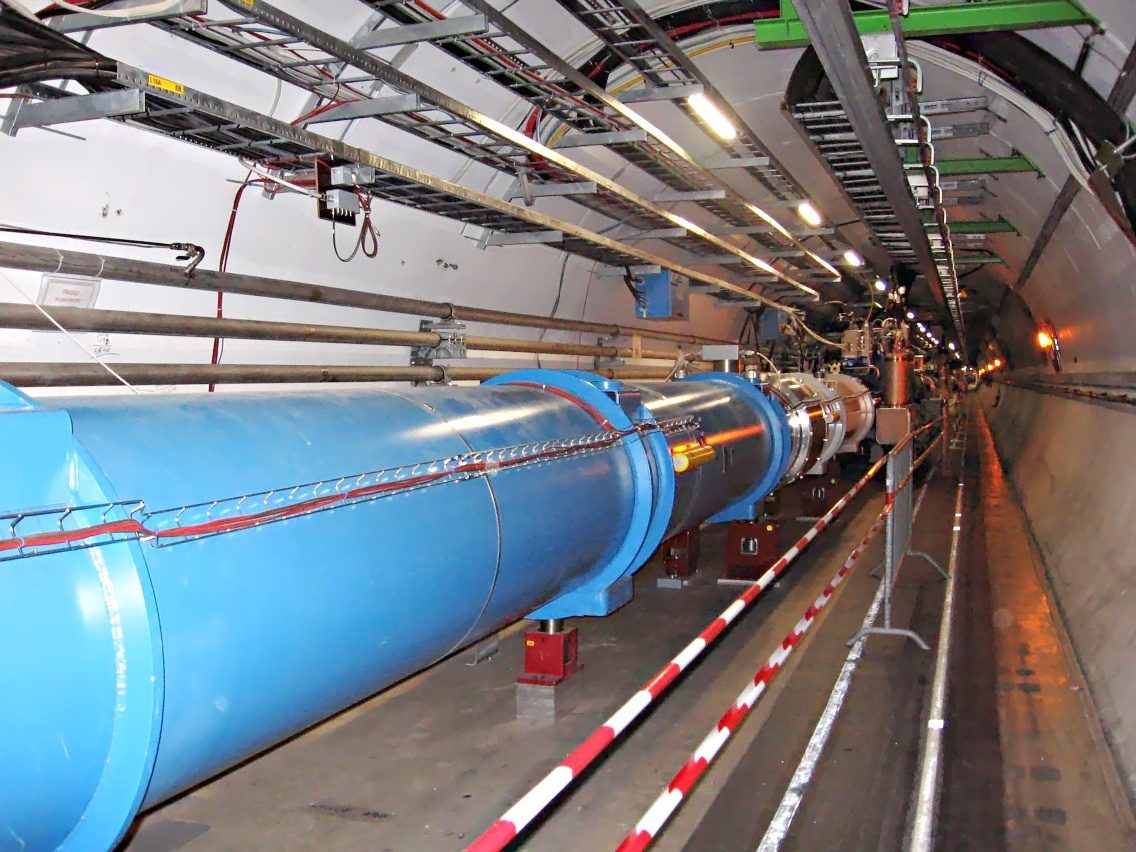
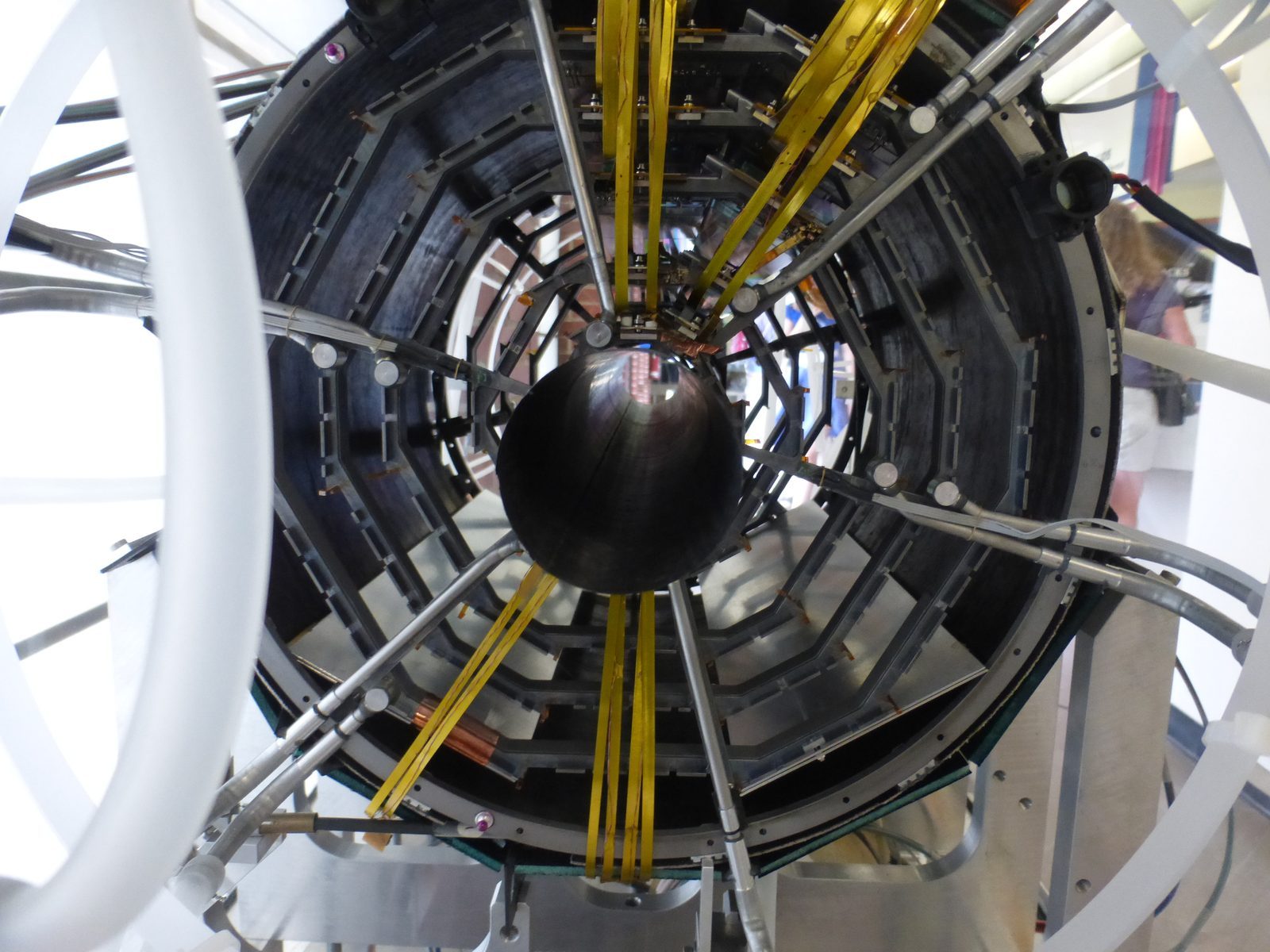
As elegant as these theories sound, they only matter if we can test them, and that’s where the story gets gritty and experimental. Particle physicists have been hunting for signs of extra dimensions at facilities like the Large Hadron Collider, smashing protons together at enormous energies to see whether something vanishes into higher-dimensional space. One key signature would be missing energy – collisions where the math says something should be there, but it simply isn’t, as if energy has slipped through a crack in reality. So far, no clear smoking gun has emerged, but the data has sharply narrowed down which extra-dimensional models are still viable.
Other experiments look to gravity on the smallest scales. Precision tabletop setups measure how tiny test masses attract each other at millimeter or even sub-millimeter distances, searching for deviations from the familiar inverse-square law. If gravity unexpectedly strengthens or weakens at these scales, it might hint that the field lines are spreading into extra dimensions or bouncing off hidden branes – hypersurfaces that our universe could be “stuck” to. Even gravitational-wave detectors, originally built to catch black holes colliding, are being scrutinized for subtle echoes or distortions that higher dimensions might imprint on spacetime ripples. The universe has effectively become a multi-instrument observatory for signs that reality has more directions than we thought.
Cosmic fingerprints in the sky
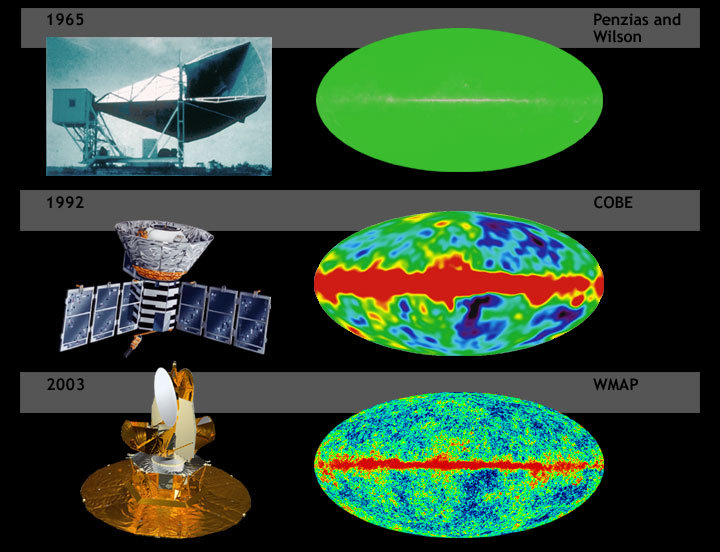
The early universe, hot and dense just after the Big Bang, may have been especially sensitive to hidden dimensions. During that chaotic period, tiny fluctuations in density were stretched across space, leaving patterns we now map as temperature variations in the cosmic microwave background – the faint afterglow of the Big Bang. Some theories predict that extra dimensions would subtly tweak how those fluctuations grew, changing the distribution of hot and cold spots on the sky or the way structures like galaxy clusters formed. Cosmologists carefully compare high-precision satellite data with these predictions, looking for whispers of higher-dimensional physics frozen into the oldest light we can see.
Dark energy, the mysterious driver of cosmic acceleration, is another place where extra dimensions sneak into the conversation. Instead of invoking an unknown energy component filling space, some models suggest that the accelerating expansion could be a geometric effect of our universe bending within a higher-dimensional bulk. In that picture, what we interpret as a cosmic push might really be the curvature of a larger space we can’t directly access, much like the path on a rolling hill looks curved to someone who can’t see the full landscape. These ideas are still under heavy debate, but they show how extra dimensions are not just exotic add-ons – they might reshape our most basic stories about how the cosmos grows and evolves.
Why it matters
It’s fair to ask why anyone should care whether the universe has more dimensions than we can see, beyond sheer coolness. The honest answer is that extra dimensions might help stitch together two of the most successful yet incompatible theories in science: general relativity, which explains gravity and the large-scale cosmos, and quantum mechanics, which rules the subatomic world. For decades, physicists have struggled to unify these into a single coherent framework without contradictions. Extra dimensions offer a way to give different forces room to live in a shared geometry, potentially resolving long-standing tensions about black holes, singularities, and the fabric of spacetime itself.
There’s also a humbling philosophical punch here. If we confirm that hidden dimensions are real, it would rank alongside the Copernican revolution and the discovery that galaxies beyond the Milky Way exist. We’d learn that our basic intuition about space – left-right, forward-back, up-down – is only a tiny part of the full story, like mistaking a coastline for the whole continent. That shift in perspective tends to ripple outward, influencing how we think about everything from consciousness to technology. Even if the practical applications are decades or centuries away, the act of expanding our mental map of reality changes what we believe is possible.
Competing visions of hidden space
Extra dimensions are not a single, unified idea; they are more like a crowded marketplace of competing visions. Some models, often inspired by string theory, imagine all extra dimensions as tightly curled and microscopic, forever beyond direct exploration. Others, known as braneworld scenarios, suggest that while ordinary matter is confined to a three-dimensional surface, gravity can wander more freely into a larger bulk, giving rise to unusual behavior at cosmic scales. In a few of the most radical proposals, one or more extra dimensions could even be large, but warped in such a way that we do not notice them in everyday life.
These differing visions matter because they predict different signatures. One might show up as slight modifications to Newton’s law at short distances, another as extra heavy particles produced in high-energy collisions, and yet another as deviations in gravitational waves from colliding black holes. The lack of clear evidence so far has pushed theorists to refine or abandon some of the more optimistic models, while newer approaches try to connect extra dimensions more tightly to observable cosmology. Like rival maps of an unmapped island, these theories are being tested piece by piece as our instruments grow sharper. The landscape of ideas is messy, but that’s often what real scientific progress looks like up close.
The future landscape of discovery
The coming decades could be decisive for the fate of extra-dimensional physics, for better or worse. Next-generation particle colliders proposed in Europe and Asia aim to reach higher energies and much cleaner data than today’s machines, offering fresh chances to spot missing energy, new resonances, or tiny deviations from the Standard Model that point to extra directions in space. At the same time, more sensitive gravitational-wave detectors and space-based observatories are planned to listen to the universe in frequencies we’ve never tapped before. Each new instrument is another way of asking spacetime whether it has hidden folds or corners.
On the theoretical side, researchers are also rethinking how to be less wishful and more predictive. There’s growing pressure for models that make sharp, testable claims instead of sprawling “anything goes” landscapes with countless possible hidden shapes. Cross-disciplinary work is emerging, where cosmologists, particle physicists, and condensed matter experts borrow ideas from each other – like using exotic materials in the lab to simulate higher-dimensional physics. The most sobering possibility is that extra dimensions exist but are forever beyond our reach; the most exciting is that a single weird anomaly in future data will force everyone back to the drawing board. Either way, the search itself is reshaping the frontier of fundamental physics.
How readers can engage with the search
Even if you’re not running a particle collider in your backyard, there are surprisingly concrete ways to connect with this hunt for hidden dimensions. Publicly funded observatories, space missions, and collider projects all depend on political will, which in turn depends on citizens who understand why basic research matters and say so to their representatives. Many labs and agencies now share open data, educational tools, and outreach programs that let students, educators, and curious adults explore real cosmic and particle datasets. Getting involved can be as simple as attending public lectures at a nearby university, joining online citizen science projects, or supporting science-focused nonprofits.
There’s also a quieter, cultural dimension to engagement. Choosing books, films, and classrooms that treat big ideas in physics with respect rather than as mere special effects helps create a society that’s more comfortable with uncertainty and complexity. Parents and teachers can normalize questions like “What if space has more directions than we feel?” in the same breath as asking why the sky is blue. And on a personal level, letting these questions stretch your imagination – without needing immediate answers – is a way of participating in the long human tradition of wondering what lies beyond the visible. If the universe really does have extra dimensions hiding in plain sight, the first step toward finding them is a willingness to look past the obvious.
Suhail Ahmed is a passionate digital professional and nature enthusiast with over 8 years of experience in content strategy, SEO, web development, and digital operations. Alongside his freelance journey, Suhail actively contributes to nature and wildlife platforms like Discover Wildlife, where he channels his curiosity for the planet into engaging, educational storytelling.
With a strong background in managing digital ecosystems — from ecommerce stores and WordPress websites to social media and automation — Suhail merges technical precision with creative insight. His content reflects a rare balance: SEO-friendly yet deeply human, data-informed yet emotionally resonant.
Driven by a love for discovery and storytelling, Suhail believes in using digital platforms to amplify causes that matter — especially those protecting Earth’s biodiversity and inspiring sustainable living. Whether he’s managing online projects or crafting wildlife content, his goal remains the same: to inform, inspire, and leave a positive digital footprint.