

Throughout history, ancient civilizations have left behind breathtaking monuments and sophisticated technologies that continue to baffle modern engineers. When you examine the surviving remnants of humanity’s earliest innovations, you’ll discover that our ancestors possessed remarkable ingenuity and technical expertise that often rivals today’s achievements. These remarkable inventions weren’t just crude prototypes of modern tools; they were sophisticated solutions to complex problems that demonstrate a deep understanding of physics, mathematics, and engineering principles.
From mechanical computers that predicted astronomical events to concrete that heals itself, ancient engineers created marvels that challenge our assumptions about technological progress. Their creations reveal not just technical skill, but profound creativity and problem-solving abilities that helped shape the foundations of civilization. Let’s explore eight extraordinary inventions that showcase the brilliant minds behind humanity’s earliest engineering achievements.
The Antikythera Mechanism: The World’s First Computer
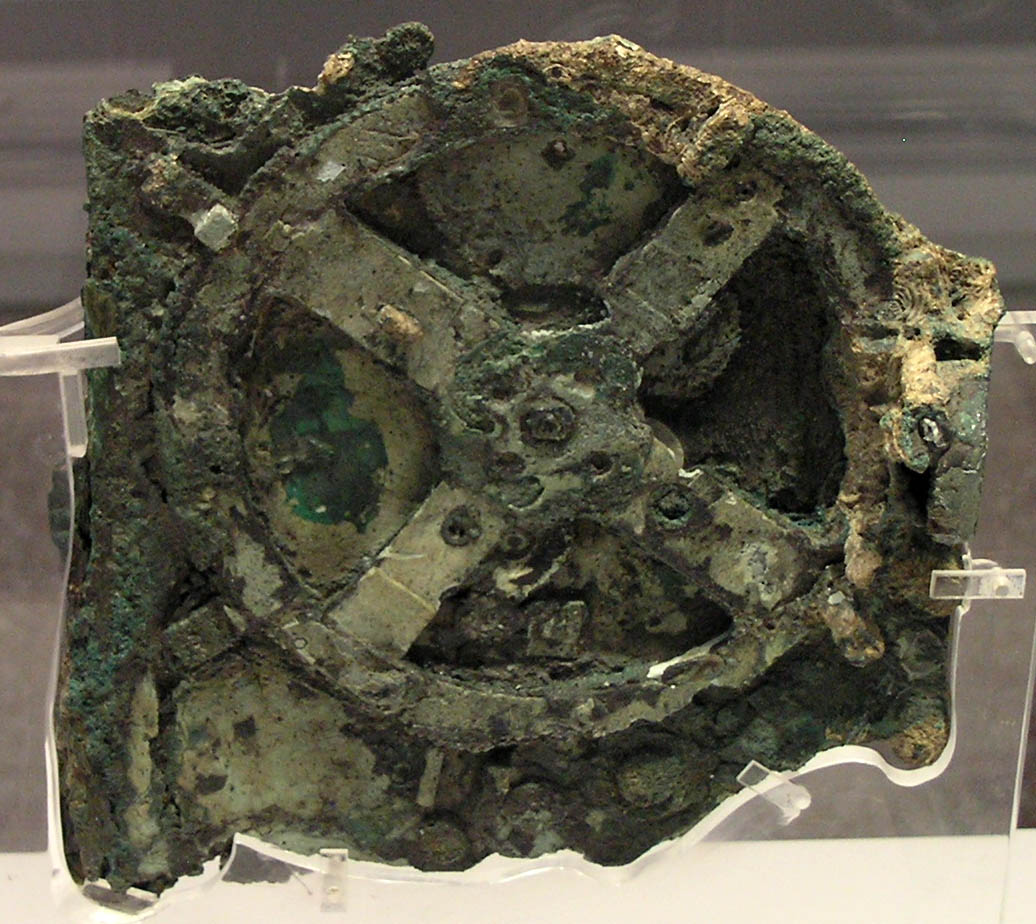
The Antikythera mechanism is an ancient Greek hand-powered orrery (model of the Solar System). It is the oldest known example of an analogue computer. Dated to the late 2nd century/early 1st century BCE (roughly 205-60 BCE), this bronze marvel was discovered in 1901 in a shipwreck off the Greek island that gives it its name.
This ancient Greek device predicted astronomical events with incredible precision using a complex system of at least 30 gears. Discovered in a shipwreck, it could track the movements of planets, predict eclipses, and even account for the irregular orbit of the moon. The Antikythera mechanism had the first known set of scientific dials or scales and was the most complex mechanism until medieval clocks 1,000 years later.
The device wasn’t simply a curiosity for wealthy intellectuals. This thing was sort of shoebox-sized with display dials, and there was some kind of a knob or a crank on the side which you would turn, and turning it would represent going forward or backward in time. The back side of the mechanism showed cycles of measuring time, like a calendar, and the cycle of the Olympic games and the other big Greek game competitions. And on the front side there was this kind of planetarium display that simulated the movements of the sun, the moon, and the five planets that people knew before telescopes, serving practical purposes for agriculture, navigation, and religious ceremonies.
Roman Self-Healing Concrete: Engineering That Improves With Age

The ancient Romans were masters of engineering, constructing vast networks of roads, aqueducts, ports, and massive buildings, whose remains have survived for two millennia. Their secret weapon was a revolutionary concrete formula that modern scientists are still working to understand fully. Those still-functional marvels rely on a unique construction material: pozzolanic concrete, a spectacularly durable mix that gave Roman structures their incredible strength. Even today, one of their masterpieces – the Pantheon in Rome, still intact and nearly 2,000 years old – holds the record for the world’s largest dome of unreinforced concrete.
What made Roman concrete extraordinary wasn’t just its durability, but its ability to literally heal itself. According to Masic’s research, “these lime clasts were actually reservoirs of calcium that helped fill in cracks, making the concrete self-healing” Recent MIT research revealed that Roman concrete was likely made by mixing the quicklime directly with pozzolana and water at extremely high temperatures – a process the team dubbed ‘hot mixing’ that results in the lime clasts.
The team conducted crack tests on pozzolanic concrete – created using both ancient and modern quicklime recipes – and on a control concrete without quicklime. Sure enough, the cracked quicklime concrete healed within two weeks, but the control concrete remained cracked. This self-repair capability explains why Roman seawalls and harbors have withstood two thousand years of ocean battering while modern concrete structures deteriorate within decades.
The Ancient Egyptian Pyramid Construction System

The pyramids of Giza represent one of humanity’s most audacious engineering projects, requiring solutions to challenges that would test modern construction teams. Ancient Egypt is renowned for its architectural marvels, especially the pyramids. The Egyptians mastered the art of building with stone, creating structures that have stood for thousands of years. Their understanding of geometry was crucial for these complex projects.
The Great Pyramid originally stood at roughly 481 feet tall and required the precise placement of over two million stone blocks, some weighing up to 15 tons. Ancient engineers developed sophisticated systems for quarrying, transporting, and lifting these massive stones without cranes or modern machinery.
Egyptian engineers created ingenious solutions for every aspect of construction. They used copper tools hardened with arsenic, employed wooden levers and ramps for moving blocks, and developed mathematical principles for ensuring perfect alignment with cardinal directions. The precision is so remarkable that the base of the Great Pyramid deviates from a perfect square by less than two centimeters.
Ancient Chinese Seismoscope: The World’s First Earthquake Detector

What many don’t realize is that this process began nearly 2,000 years ago, with the invention of the first seismoscope in 132 AD by a Chinese astronomer, mathematician, engineer and inventor called Zhang (‘Chang’) Heng. This bronze device could detect earthquakes occurring hundreds of miles away, long before the tremors reached the instrument’s location.
Zhang’s seismoscope was a giant bronze vessel, resembling a samovar almost 6 feet (1.8 m) in diameter. Eight dragons snaked face-down along the outside of the barrel, marking the primary compass directions. In each dragon’s mouth was a small bronze ball. Beneath the dragons sat eight bronze toads, with their broad mouths gaping to receive the balls.
A fundamental addition to our list of ancient and amazing inventions, the device was remarkably accurate in detecting earthquakes from afar and did not rely on shaking or movement in the location where the device was situated. When seismic waves from distant earthquakes reached the instrument, an internal pendulum mechanism would trigger the appropriate dragon to drop its bronze ball into the corresponding toad’s mouth, indicating the direction of the earthquake’s source. This ingenious system provided early warning of seismic activity across the vast Chinese empire.
The Mesopotamian Wheel and Axle Revolution
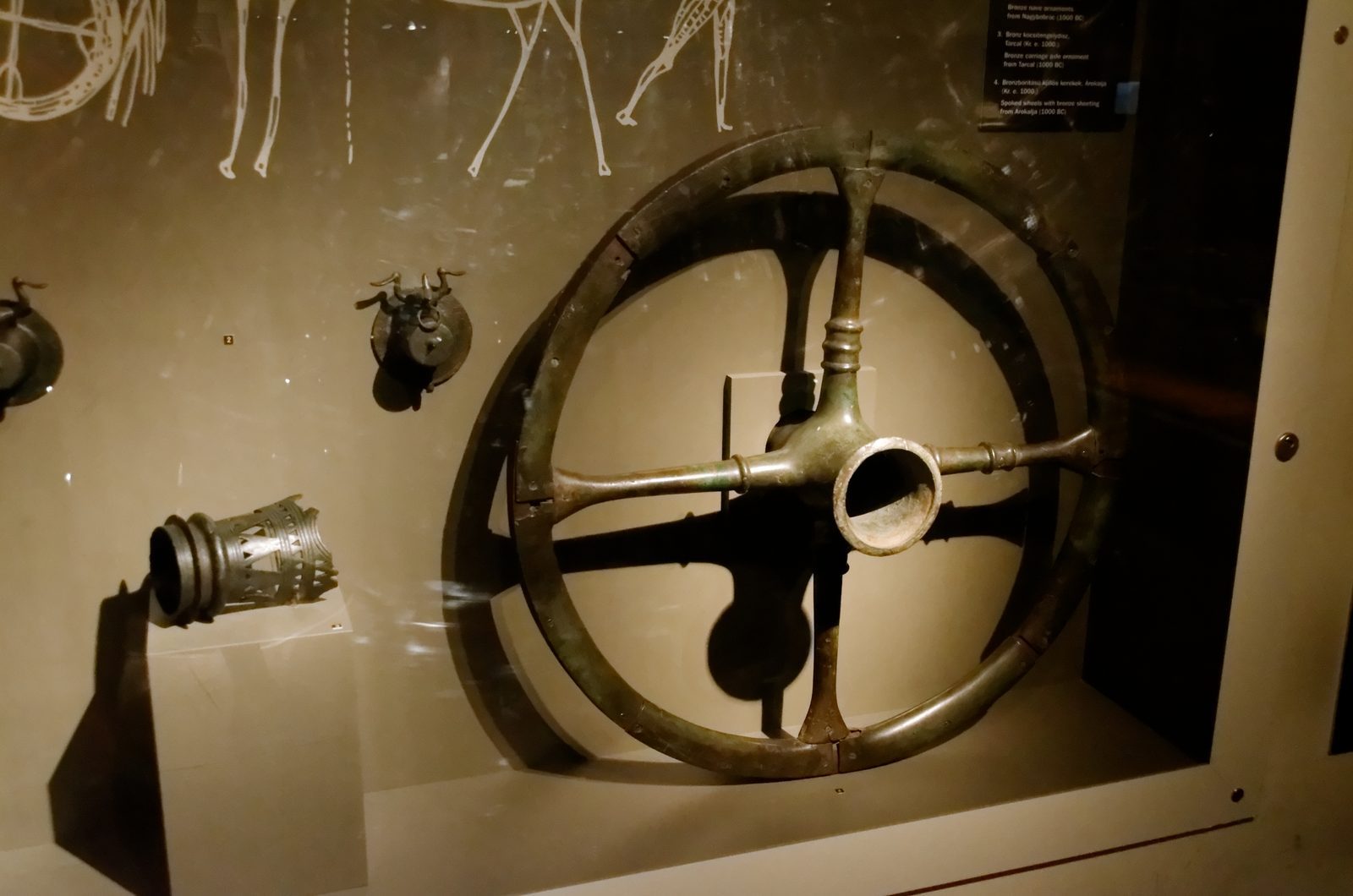
Around 3500 B.C.E., the Mesopotamians invented the wheel, but mainly for pottery-making. It took about three centuries before the first wheel was attached to a chariot, and it could only improve after that. However, the truly revolutionary innovation wasn’t the wheel itself, but the wheel-and-axle system that transformed transportation forever.
The wheel was only one part of another life-changing invention: the wheel-and-axle. In other words, properly attaching a wheel to a non-moving platform so the two could work together. This seemingly simple concept required sophisticated understanding of mechanics, materials science, and manufacturing techniques.
Mesopotamian engineers had to solve multiple technical challenges: creating perfectly round wheels, developing durable axles that could withstand rotational stress, and designing bearings that reduced friction. In our modern life, we take the wheel as a ubiquitous piece of engineering that we rarely pay attention to. Before this invention came to the surface, humans were limited in transportation and haulage. The wheel-and-axle system became the foundation for countless later innovations, from water mills to mechanical clocks.
Ancient Steam Power: Hero’s Revolutionary Engine
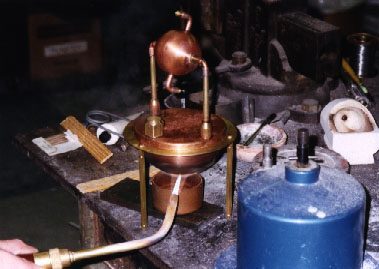
Heron Alexandrinus, otherwise known as the Hero of Alexandria, was a 1st century Greek mathematician and engineer who is known as the first inventor of the steam engine. His aeolipile, created around 50 AD, represented humanity’s first successful harnessing of steam power for mechanical motion.
The aeolipile consisted of a sphere positioned in such a way that it could rotate around its axis. Nozzles opposite each other would expel steam and both of the nozzles would generate a combined thrust resulting in torque, causing the sphere to spin around its axis. The rotation force sped up the sphere up to the point where the resistance from traction and air brought it to a stable rotation speed. In this amazing invention, the steam was created by boiling water under the sphere – the boiler was connected to the rotating sphere through a pair of pipes that at the same time served as pivots for the sphere.
The replica of Heron’s machine could rotate at 1,500 rounds per minute with a very low pressure of 1.8 pounds per square inch. The remarkable device was forgotten and never used properly until 1577, when the steam engine was “re-invented” by the philosopher, astronomer and engineer, Taqu al-Din. Had ancient civilizations developed Hero’s concept further, the Industrial Revolution might have occurred over a millennium earlier.
The Derinkuyu Underground City: Subterranean Engineering Marvel
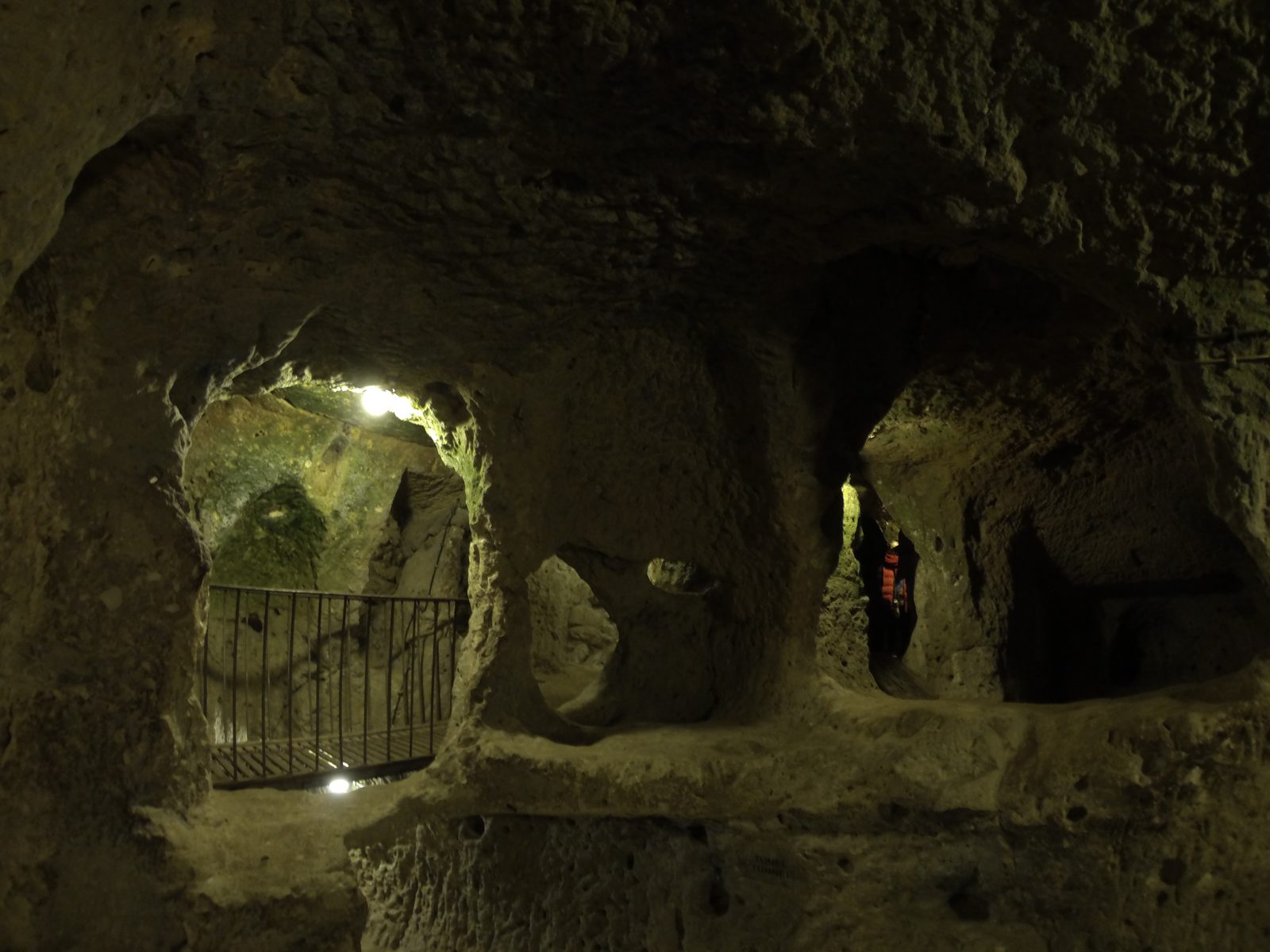
This ancient Turkish marvel spans eighteen levels underground and could house 20,000 people. The engineers created a ventilation system so sophisticated that even the deepest levels received fresh air. Carved directly into volcanic rock in Cappadocia, Turkey, this underground city represents one of the most impressive feats of subterranean engineering in ancient history.
The city’s engineering systems were remarkably advanced for their time. They also designed security systems that included rolling stone doors weighing up to 500 pounds that could be easily operated from the inside but were nearly impossible to move from the outside. The ventilation network consisted of over 15,000 shafts, some extending 200 feet deep, creating air circulation that kept the deepest chambers habitable.
Ancient engineers solved complex problems of water supply, waste management, and structural integrity while working entirely underground. They created wine cellars, stables, chapels, and meeting halls, all carved from solid rock. The city included ingenious communication systems, allowing residents on different levels to coordinate activities and share information throughout the complex network of tunnels and chambers.
Ancient Precision Timekeeping: From Sundials to Water Clocks

The obelisks, constructed by ancient Egyptians around 3,500 B.C.E., were among the earliest models of shadow clocks. The sundial also came from Egypt about two thousand years after. Both were great representations of the time-keeping instruments we use now. However, ancient timekeeping technology extended far beyond simple shadow measurements.
Ancient engineers developed sophisticated water clocks that could measure time accurately regardless of weather conditions or time of day. These devices used carefully calibrated containers with precisely sized holes that allowed water to flow at consistent rates. Some featured multiple chambers and complex gear systems that could indicate not just hours, but seasonal variations in daylight length.
The Mesolithic calendar system discovered at Warren Field in Aberdeenshire, Scotland, is one of the most amazing inventions in history. Research carried out last year on an ancient site excavated by the National Trust for Scotland in 2004 revealed that it contained a sophisticated calendar system that is approximately 10,000 years old, making it the oldest calendar ever discovered in the world. This prehistoric monument used carefully arranged pits to track lunar months and seasonal changes, demonstrating that even Stone Age peoples possessed sophisticated astronomical knowledge.
Conclusion
These eight remarkable inventions demonstrate that ancient peoples were far more sophisticated engineers than we often acknowledge. From mechanical computers that predicted celestial events to concrete that repairs itself over centuries, our ancestors created technologies that solved complex problems with ingenuity and precision. Their innovations weren’t primitive attempts at modern solutions; they were often superior alternatives that we’re only beginning to understand and appreciate.
The legacy of ancient engineering continues to influence modern technology. Researchers today study Roman concrete to develop more sustainable building materials, analyze the Antikythera mechanism to understand early computational thinking, and examine ancient construction techniques to improve contemporary methods. These discoveries remind us that human creativity and problem-solving abilities have remained consistent across millennia, even as our tools and materials have evolved.
What strikes me most about these ancient innovations is how they reveal the universal human drive to understand, create, and improve our world. Whether predicting earthquakes in ancient China or building self-healing structures in Rome, our ancestors approached engineering challenges with the same curiosity and determination that drives innovation today. What other secrets from the ancient world might still be waiting to revolutionize our understanding of what’s possible?

Nelleke is an ex-food scientist turned copywriter chasing her dream of living a balanced and creative life filled with adventures and challenges. She is most likely to be found behind her laptop typing (and deleting) up a storm, reading a book in the sun, lost in the mountains admiring nature or playing in the waves somewhere.