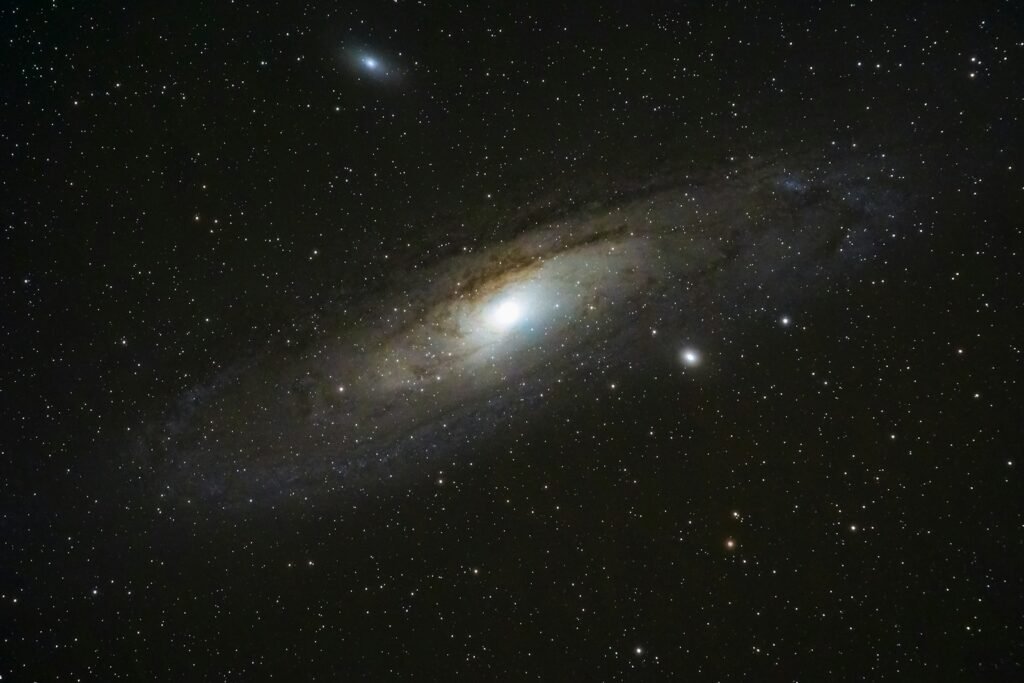

Imagine looking up at a clear night sky and realizing that almost everything you see is, in a sense, a cosmic decoy. The glittering stars, glowing nebulae, and whole galaxies make up only a tiny fraction of what is actually out there. Astronomers now think that most of the universe is built from something we cannot see, cannot touch, and have never produced in any laboratory on Earth. They call it dark matter, and its invisibility is precisely what makes it so unsettling and so irresistible to scientists. The mystery is simple to state but maddeningly hard to solve: how do you study the dominant ingredient of the cosmos when it refuses to shine?
The Hidden Clues: How We “See” What Isn’t There
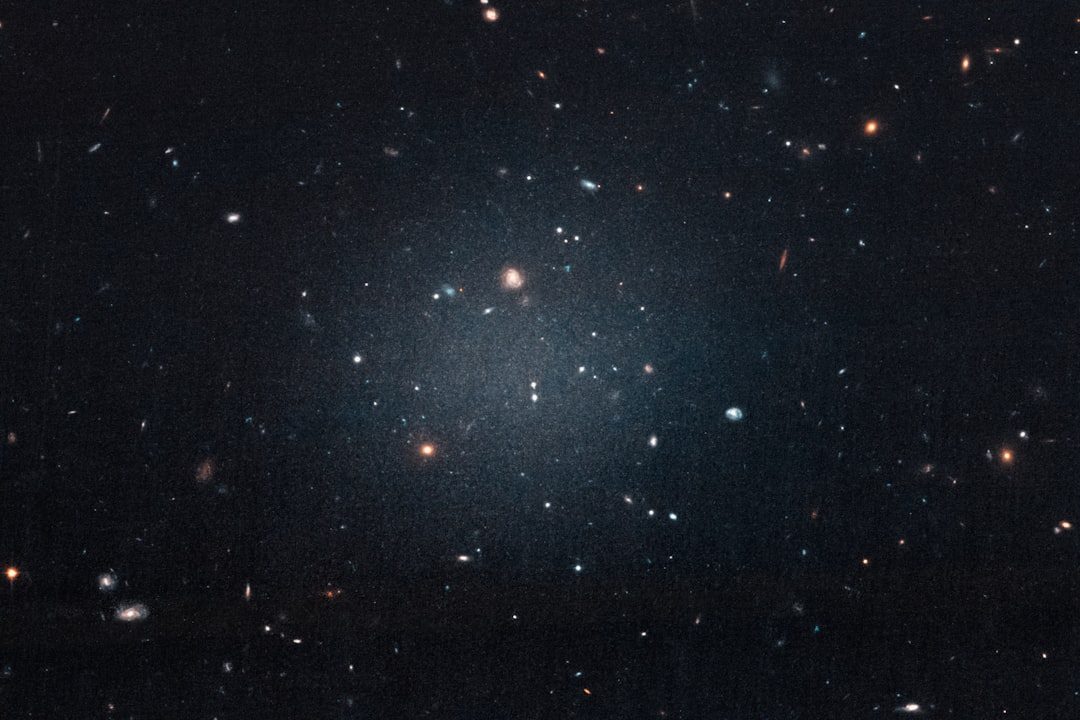
It sounds almost supernatural at first: dark matter does not glow, reflect, or absorb light, yet astronomers say they are confident it is real. The trick is that gravity does not care whether something is bright or dark, visible or invisible, only that it has mass. When scientists map the way stars orbit inside galaxies, they find those stars are moving so fast that the galaxy should fly apart if only visible matter were present. Something unseen appears to be providing extra gravity, like an invisible glue holding everything together.
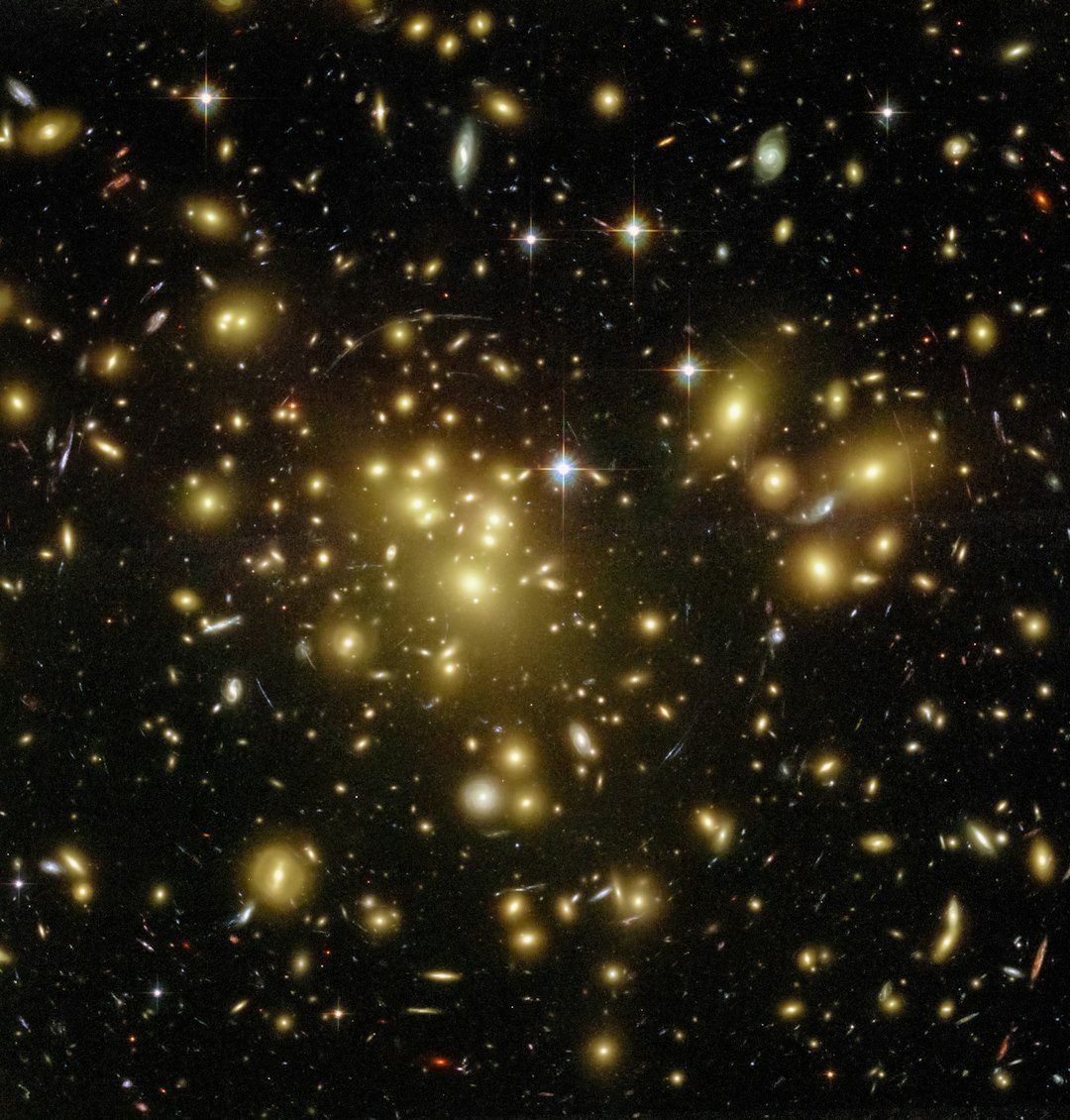
These clues show up on even larger scales in galaxy clusters, the mega-cities of the universe. Light from distant galaxies passing near a massive cluster gets bent and warped in a process called gravitational lensing, distorting the shapes of background galaxies into stretched arcs and smears. By measuring how strong this lensing is, astronomers can weigh the cluster in a way that bypasses what we can see directly. Again and again, the answer comes back heavier than expected, as if a huge, transparent mass is wrapped around the visible galaxies. Dark matter reveals itself not by shining, but by the way it reshapes the paths of stars and light.
From Early Anomalies to a Cosmic Crisis
The story of dark matter begins not with a grand theory, but with a troubling mismatch between expectation and observation. In the nineteen thirties, astronomer Fritz Zwicky studied galaxies locked together in a cluster and found they were whipping around too fast to be held by the visible mass alone. At the time, his claim that there must be hidden matter was easier to ignore than to embrace, especially in an era before precision cosmology. Decades later, in the nineteen seventies, Vera Rubin’s meticulous measurements of how stars move within galaxies turned that quiet anomaly into a mounting crisis.
Rubin found that stars far from a galactic center moved just as fast as those near the middle, a flat rotation curve that defied the standard expectations of Newtonian gravity if only visible matter was present. This pattern appeared across many different galaxies, suggesting it was not a quirk but a rule. The simplest way to make sense of these stubbornly flat curves was to imagine that each galaxy sits inside an enormous halo of invisible mass. When independent lines of evidence started pointing the same way, the dark matter idea shifted from fringe speculation to central pillar of modern cosmology. Still, naming the mystery did not resolve it; it only sharpened the questions.
What Dark Matter Might Be Made Of
Once astronomers accepted that there was extra mass lurking in and around galaxies, physicists stepped in with a natural follow-up: what, exactly, is it? The most widely explored idea is that dark matter consists of new, as-yet-undetected particles that barely interact with ordinary matter. Candidates with names like WIMPs and axions sound almost whimsical, but behind those acronyms sit deep questions about the structure of matter and the forces of nature. Unlike everyday particles of light or atoms, these hypothetical particles would pass through us by the trillions every second, ghostlike and almost never leaving a trace.
To catch such elusive quarry, scientists have built exquisitely sensitive detectors in underground laboratories shielded from cosmic rays and radiation. Huge tanks of ultra-pure liquids, chilled crystals, and novel quantum devices are all waiting for the faintest jolt from a dark matter particle colliding with an atomic nucleus. So far, these direct searches have not found an unambiguous signal, forcing physicists to refine or discard some of their earlier models. Rather than discouraging the field, each null result tightens the net and pushes researchers to more creative ideas. The uncomfortable possibility is that dark matter may not fit neatly into any of the favorite particle categories we have imagined so far.
Why We Can’t See It: Light, Gravity, and the Cosmic Blind Spot
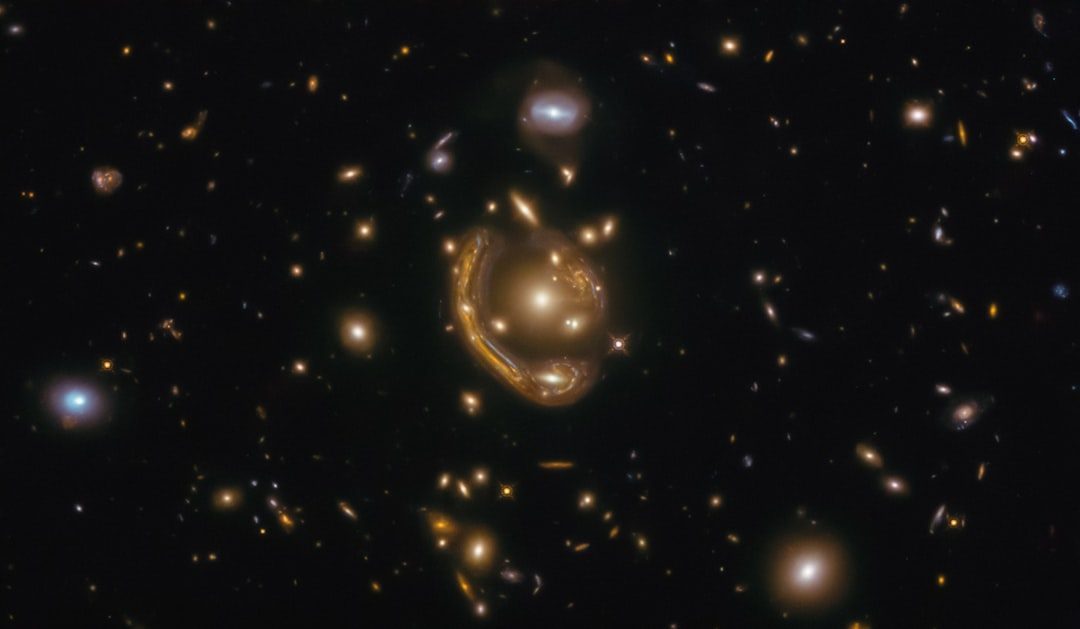
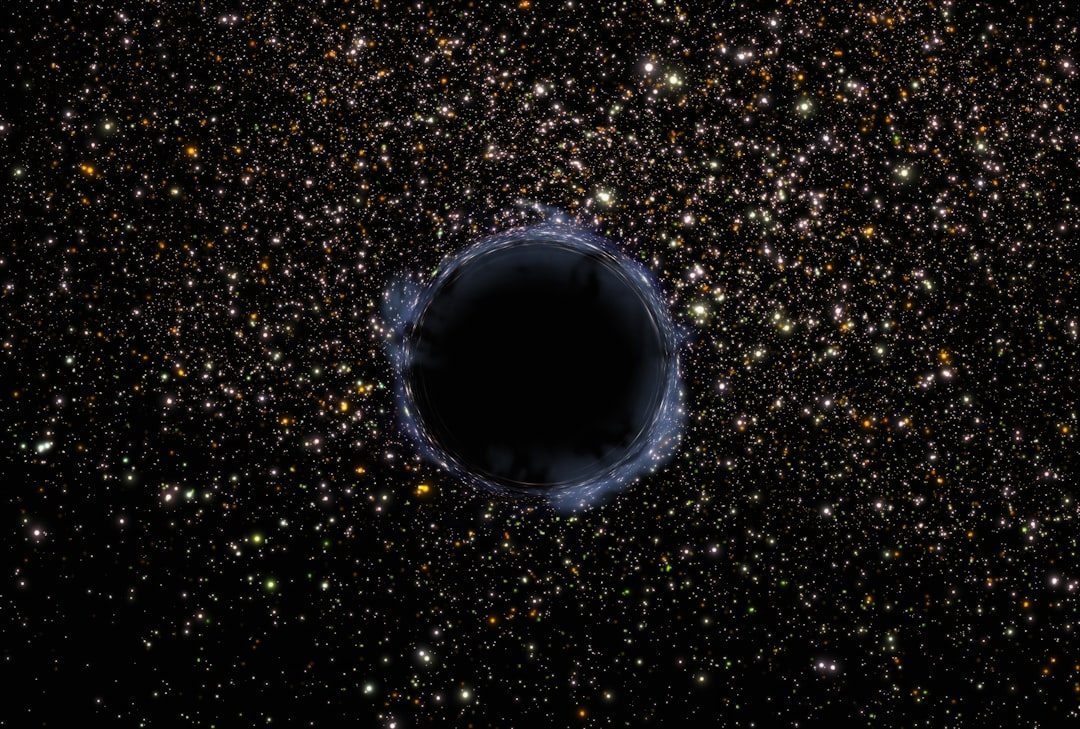
At the heart of the dark matter mystery is a simple physical fact: it does not appear to interact with light. Ordinary matter talks to light constantly, through charged particles like electrons that absorb, emit, or scatter photons. This ongoing conversation is what lets us see stars, gas clouds, and even the thin dust between them, and it informs nearly all our telescopes and cameras. Dark matter, by contrast, seems to sit in the universe like a silent spectator, exerting gravity without any detectable flicker of electromagnetic activity. In practical terms, that means no glow in visible light, no heat in infrared, no buzz in radio, and no shadow against a brighter background.
Because of this cosmic quietness, astronomers are forced to rely on gravity as their only direct handle on dark matter. They map how galaxies spin, track how clusters bend light, and simulate how tiny ripples in the early universe grew into today’s cosmic web. In those computer models, dark matter weaves the scaffolding on which gas gathers and eventually condenses into stars. If they leave dark matter out, the universe that grows on the screen looks nothing like the real one we observe today. So while we cannot see dark matter in the usual sense, its gravitational fingerprints are stamped across the universe from the Big Bang to the present day.
Why It Matters: The Cosmic Backbone of Everything We Know
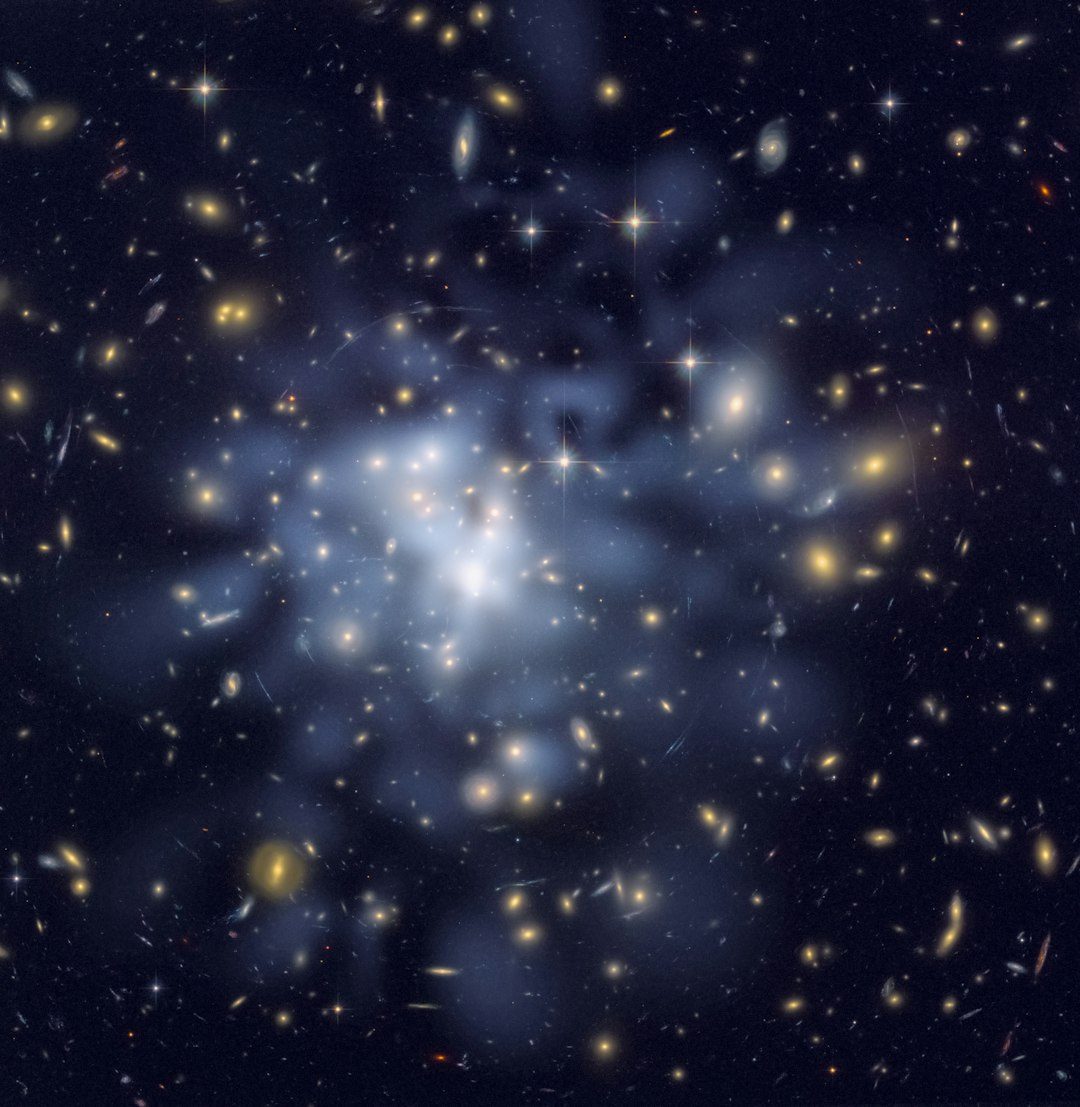
Dark matter is not just a curiosity for astronomers; it is a backbone problem for understanding why the universe looks the way it does. Without it, the formation of galaxies would have been slower and messier, and the night sky we know might never have taken shape. Cosmologists estimate that dark matter outweighs ordinary matter by roughly five to one, meaning that most of the matter in the cosmos is hidden from direct view. That ratio influences how structures grew after the Big Bang, how the cosmic microwave background looks, and how galaxies cluster in space. If those numbers were significantly different, the timeline of cosmic evolution could shift enough to alter the prospects for planets and even life itself.
The stakes spill beyond astronomy into fundamental physics. Finding out what dark matter is made of would likely reveal something new about the basic laws governing particles and forces. It might expose cracks in our current best theory of particle physics or hint at entire sectors of matter that barely brush against our own. In that sense, dark matter is both a missing ingredient and a clue to a bigger recipe book of nature. When scientists say that solving the dark matter puzzle could rewrite textbooks, they are not exaggerating. Understanding what we cannot see may be the key to understanding why we are here at all.
Challengers at the Edge: Do We Need New Gravity Instead?
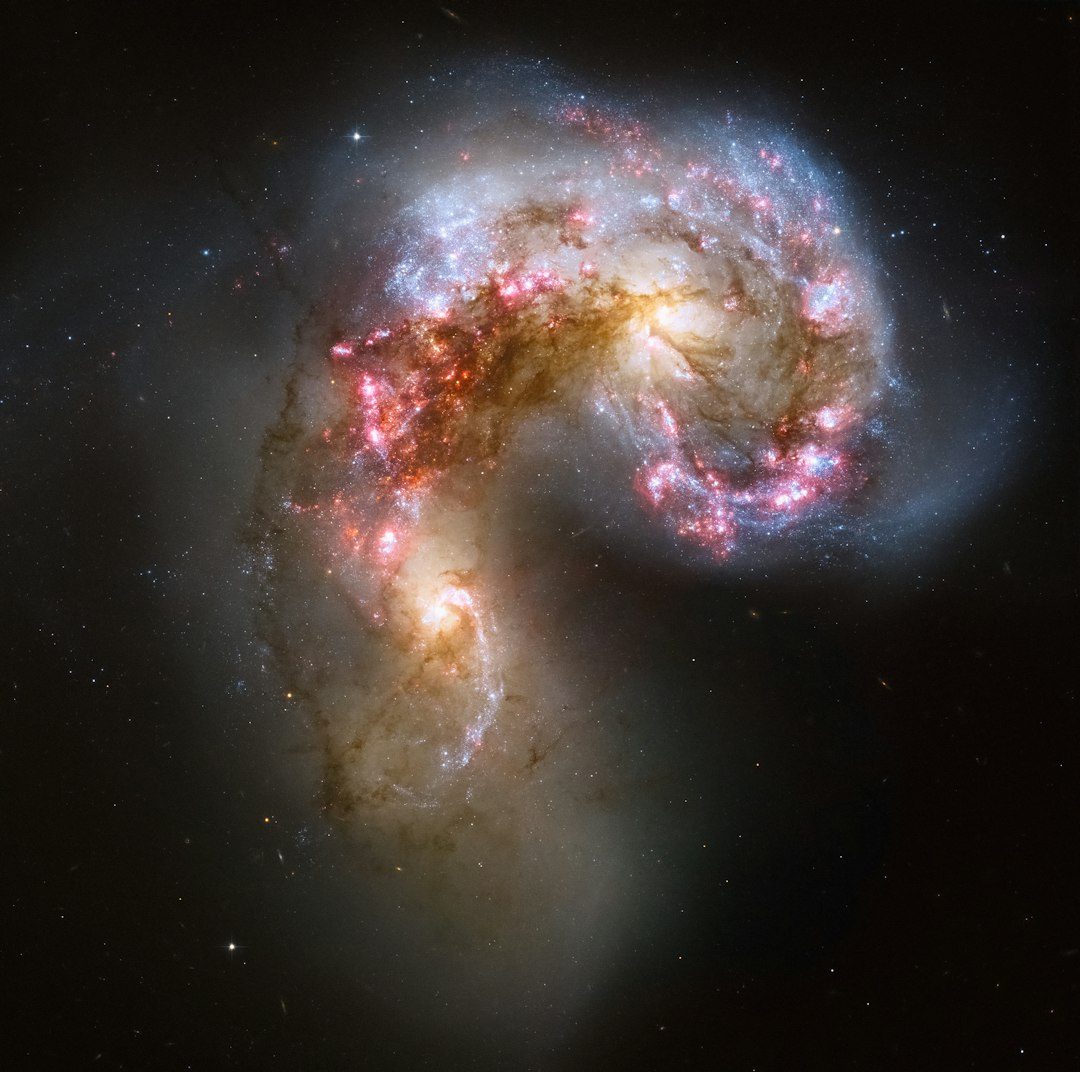
Not everyone agrees that unseen matter is the only way to explain the strange motions in galaxies and clusters. A bold minority of physicists argues that the flaw may lie not in missing mass but in our laws of gravity themselves. They propose modified gravity theories that tweak how gravity behaves at very low accelerations or on very large scales. In some galaxies, these models can mimic the flat rotation curves that first pointed to dark matter, using no extra invisible material at all. To many researchers, this is an attractive idea because it dares to question ordinances laid down by Newton and Einstein.
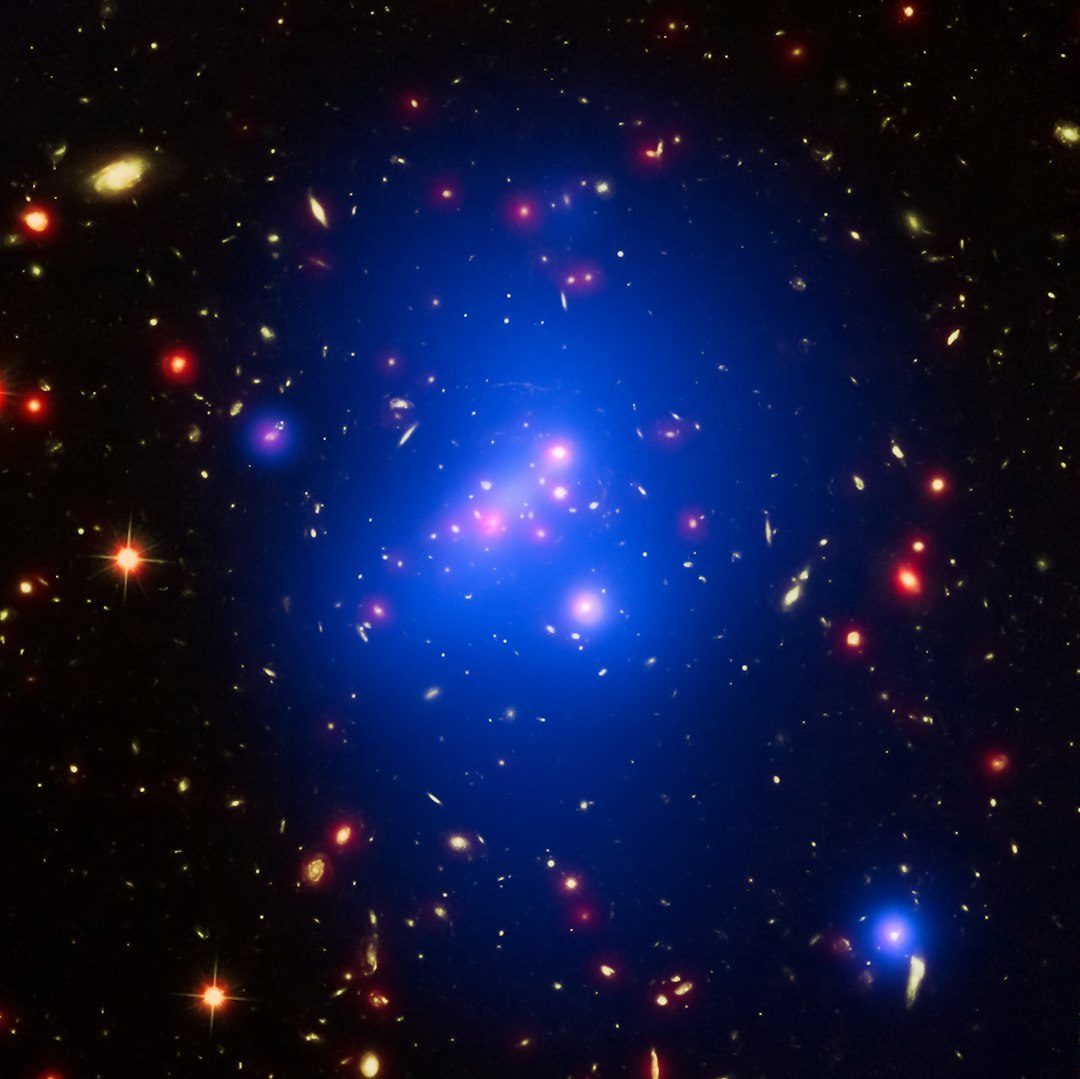
However, the further you zoom out, the tougher it gets for modified gravity to keep up with the full range of observations. The patterns of the cosmic microwave background, the detailed maps of galaxy clustering, and dramatic systems like colliding galaxy clusters tend to line up more naturally with dark matter than with altered gravity alone. A striking example is a system where the visible gas and the inferred mass appear to have separated during a collision, as if the invisible material kept going while the ordinary matter slammed on the brakes. These are not easy scenes to explain by changing the rules of gravity without adding some kind of extra substance. The result is a lively, sometimes heated debate that keeps both camps sharpening their arguments and refining their models.
The Future Landscape: New Telescopes, New Detectors, New Clues
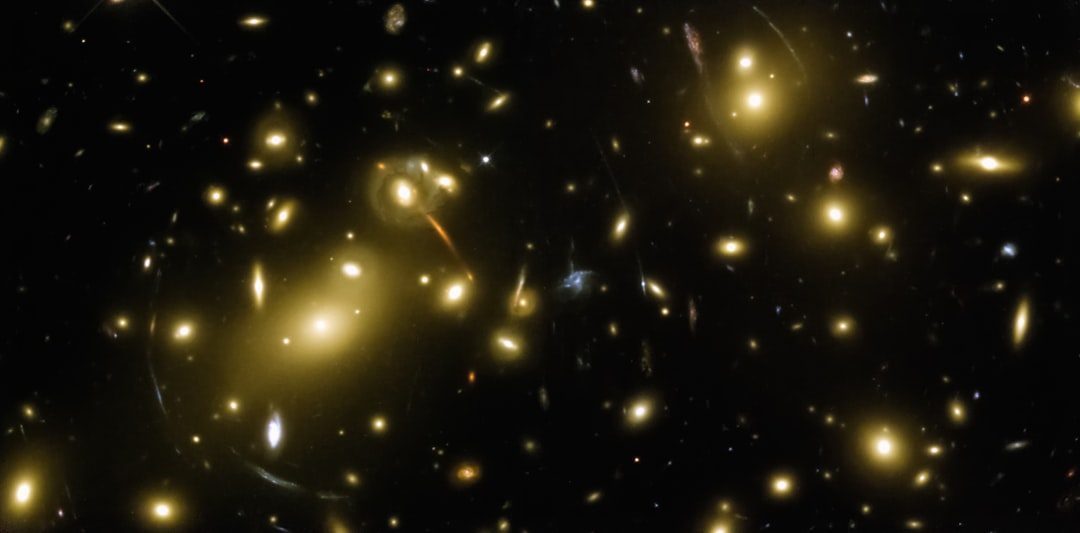
Despite decades of effort, the hunt for dark matter is still in an awkward in-between phase: we are convinced it is there, but we cannot yet say what it is. That may change in the coming years as a new generation of telescopes and detectors comes online. Powerful sky surveys will map billions of galaxies, tracing subtle distortions in their shapes caused by gravitational lensing. These maps act like a giant X-ray of the universe, revealing how dark matter is distributed on large scales. The more precisely we can chart this invisible scaffolding, the better we can test competing models of dark matter and gravity.
Meanwhile, underground experiments are reaching sensitivities that would have been unimaginable a few decades ago. Some are looking for heavy particles that give off tiny flashes of light when they bump into atomic nuclei, while others are searching for much lighter candidates that might vibrate fields or resonant cavities. On another front, particle physicists are using high-energy colliders to try to create dark matter in the lab, looking for missing energy that slips out of the detectors. It is entirely possible that the first clear sign of dark matter will come from an unexpected direction, through a measurement no one thought to prioritize. The landscape ahead is uncertain but charged with the feeling that, sooner or later, the universe will have to give up at least part of its secret.
How You Can Stay Engaged With a Universe You Cannot See
Dark matter can feel abstract, especially when daily life is dominated by much more immediate concerns than invisible cosmic scaffolding. Yet part of the magic of science is that ordinary people can still plug into these huge, slow-burning quests. Many observatories and space agencies now share their data openly, and citizen science platforms invite volunteers to help classify galaxies, spot gravitational lenses, or flag weird objects. By spending a few spare minutes tracing arcs of light or tagging galaxy shapes on your laptop, you are indirectly helping refine the maps that test dark matter theories. It is a small but real way to be part of the story.
Supporting basic research, whether through public funding, education initiatives, or simply paying attention, also matters more than it might seem. The detectors that chase dark matter often spin off new technologies in imaging, cryogenics, and data analysis that drift into medicine, communication, and computing. Talking about these mysteries with friends, encouraging kids to ask big questions about the universe, or visiting a local planetarium are simple steps that help keep curiosity alive. Dark matter may be invisible, but the culture of discovery around it is very tangible. In a world that often feels noisy and chaotic, there is something grounding about remembering that, above us, a silent and unseen drama is still unfolding.
Suhail Ahmed is a passionate digital professional and nature enthusiast with over 8 years of experience in content strategy, SEO, web development, and digital operations. Alongside his freelance journey, Suhail actively contributes to nature and wildlife platforms like Discover Wildlife, where he channels his curiosity for the planet into engaging, educational storytelling.
With a strong background in managing digital ecosystems — from ecommerce stores and WordPress websites to social media and automation — Suhail merges technical precision with creative insight. His content reflects a rare balance: SEO-friendly yet deeply human, data-informed yet emotionally resonant.
Driven by a love for discovery and storytelling, Suhail believes in using digital platforms to amplify causes that matter — especially those protecting Earth’s biodiversity and inspiring sustainable living. Whether he’s managing online projects or crafting wildlife content, his goal remains the same: to inform, inspire, and leave a positive digital footprint.