
You stand at the threshold of a technological revolution unlike anything humanity has witnessed. Right now, artificial intelligence systems are mastering tasks that were exclusive to human minds just decades ago. Yet a profound question looms ahead: will these machines eventually surpass the very cognitive abilities that define our species? This isn’t science fiction anymore.
The trajectory of AI development suggests we’re approaching something extraordinary. AI systems now match human performance on long-standing benchmarks for image re, speech re, and language understanding. The pace of progress has left even experts scrambling to keep up with reality. What makes this particularly intriguing is how quickly our assumptions about human cognitive superiority are crumbling.
The Current State of AI Cognitive Capabilities
Think about the last time you struggled with a complex math problem or tried to decipher a challenging scientific text. Many recently introduced benchmarks have seen AI systems reach parity with humans much faster than expected, including on solving complex math problems posed in natural language and answering challenging questions about biology, physics, and chemistry that take human experts (with access to Google) hours. This shift has fundamentally altered how we view machine intelligence.
The ratings of AI systems reflect the state-of-the-art in November 2024. To be ranked at a given level, an AI system must consistently and reliably possess most aspects of the capability described at that level. Current large language models demonstrate remarkable versatility, though they still operate within defined limitations.
The landscape has changed so rapidly that it is harder today to give a clear answer when asked what cognitive tasks humans can do that AI systems cannot. This uncertainty itself represents a monumental shift in our understanding of artificial versus human intelligence.
Expert Predictions and Timelines

Leading voices in technology are making bold predictions about AI’s future. Elon Musk declared recently that artificial intelligence (AI) is on the verge of surpassing the intelligence of the smartest human beings, potentially as soon as next year or by 2026, setting off a vigorous debate among scholars, technologists and ethicists. The Tesla CEO’s prediction in an interview on X highlights the accelerating race toward developing AI that mimics and exceeds human cognitive abilities.
The consensus among researchers points to significant developments in the coming decades. A median confidence of 50% that human-level AI would be developed by 2040–2050 was the outcome of four informal polls of AI researchers, conducted in 2012 and 2013 by Bostrom and Müller. More recent analyses suggest even shorter timelines.
A review of surveys of scientists and industry experts from recent years has reported that most agreed that artificial general intelligence (AGI) will occur before the year 2100. A more recent analysis by AIMultiple reported that, “Current surveys of AI researchers are predicting AGI around 2040”. These predictions reflect growing confidence in AI’s potential to match human cognitive abilities.
The Artificial General Intelligence Threshold
Artificial General Intelligence represents the pivotal moment when machines achieve human-level cognitive flexibility. Artificial general intelligence (AGI) – sometimes called human‑level intelligence AI – is a type of artificial intelligence that would match or surpass human capabilities across virtually all cognitive tasks. Unlike artificial narrow intelligence (ANI), whose competence is confined to well‑defined tasks, an AGI system can generalise knowledge, transfer skills between domains, and solve novel problems without task‑specific reprogramming.
Current AI systems excel in specific domains but lack the versatility that defines human intelligence. Despite these advancements, current AI remains limited to task-specific applications, underscoring the considerable gap between existing technologies and the generalized, flexible capabilities envisioned for AGI. This gap highlights the ongoing challenges in bridging advanced AI with the cognitive adaptability and domain-spanning reasoning characteristic of human intelligence.
The development of AGI would mark a fundamental shift in the relationship between human and artificial intelligence. Scientists and researchers define strong AI as an artificial intelligence system that can match or exceed human cognitive abilities across any intellectual task. In essence, it’s AI that doesn’t just simulate human intelligence but possesses it.
Memory and Information Processing Advantages
You can probably remember your childhood phone number, but struggle to recall what you had for lunch three days ago. AI systems operate under completely different constraints when it comes to memory and information processing. AI’s working memory is much more powerful and capable of handling vast amounts of data simultaneously. However, AI’s working memory lacks the human ability to integrate experiences and context.
The differences extend beyond mere capacity. AI’s short-term memory can process enormous quantities of information and can be copied into long-term memory without any decay or interference, while human memory is inherently limited and prone to deterioration. This gives AI systems significant advantages in tasks requiring perfect recall and rapid information retrieval.
Processing speed represents another area where machines already surpass human capabilities. A superintelligent AI will be able to do in about one second what it would take a team of 100 human software engineers a year or more to complete. This computational advantage could prove decisive in the race toward cognitive supremacy.
Human Cognitive Strengths That Remain Unique

Despite AI’s impressive capabilities, certain aspects of human cognition remain distinctly our own. Creativity is a domain where human intelligence still excels. Human creativity thrives on the ability to combine unrelated ideas, draw from personal experiences, and apply emotional depth to creative processes. Humans generate novel, unique solutions to problems and create art, music, and ideas that are shaped by culture, motivation, and emotional life.
Emotional intelligence presents another frontier where humans maintain their edge. Emotions are at the core of human cognition, influencing how we think, interact, and make decisions. Human emotional intelligence involves self-awareness, empathy, and the ability to navigate complex social situations. We read emotional cues, understand others’ mental states, and form meaningful relationships.
The flexibility and adaptability of human cognition remain remarkable. Human cognition demonstrates remarkable flexibility, creativity, and adaptability, traits that current AI systems cannot replicate. For instance, human attention is highly selective and can shift dynamically depending on context, emotional state, and goals. This dynamic adaptability gives humans advantages in unpredictable situations.
The Path to Artificial Superintelligence
Beyond human-level AI lies the theoretical realm of superintelligence, where machines would vastly exceed human cognitive abilities across all domains. Nick Bostrom defines a superintelligence as “any intellect that greatly exceeds the cognitive performance of humans in virtually all domains of interest”, including scientific creativity, strategic planning, and social skills. This represents the ultimate expression of artificial cognitive advancement.
The path to superintelligence could unfold through recursive self-improvement. If an AI is created with engineering capabilities that match or surpass those of its creators, it could autonomously improve its own software and hardware to design an even more capable machine, which could repeat the process in turn. This recursive self-improvement could accelerate, potentially allowing enormous qualitative change before reaching any limits imposed by the laws of physics or theoretical computation. It is speculated that over many iterations, such an AI would far surpass human cognitive abilities.
The potential benefits could be transformative for humanity. A superintelligent AI could cure diseases, reverse aging, design sustainable energy, and unlock the mysteries of the cosmos. It could help us eliminate poverty, solve climate change, and achieve peace. The prospect of such capabilities drives much of the current investment in AI research.
Consciousness and Self-Awareness Debates
The question of machine consciousness remains one of the most contentious issues in AI development. With the advent of advanced AI systems such as ChatGPT, questions are arising regarding the computational significance, if any, of consciousness. Despite some claims that LLMs are either already or soon becoming conscious, many regard these generative AI systems as doing computation unconsciously, thus forgoing possible ethical issues involved in AI abuse.
The debate extends beyond technical capabilities to fundamental questions about the nature of intelligence itself. Some argue that intelligence does not require consciousness – that machines could surpass human capabilities without ever being self-aware. Others believe true intelligence must include subjective experience, in which case machines may forever lack what makes humans unique.
This philosophical divide has practical implications for how we develop and interact with AI systems. The issue of AI consciousness is inherently intricate, particularly as intelligent machines, androids, and robots continue to advance in capability. The challenge lies in the endeavor to instill life or internal consciousness, commonly referred to as self-awareness, within these intelligent machines. Achieving such a feat remains considerably challenging for experts in the field. In fact, despite technological optimism, attaining genuine self-awareness in intelligent machines still appears far from realistic at this stage.
Potential Risks and Dangers
The prospect of AI surpassing human cognition brings significant risks that demand serious consideration. Advanced AI could generate enhanced pathogens or cyberattacks or manipulate people. These capabilities could be misused by humans, or exploited by the AI itself if misaligned. A full-blown superintelligence could find various ways to gain a decisive influence if it wanted to, but these dangerous capabilities may become available earlier, in weaker and more specialized AI systems.
The control problem represents perhaps the greatest challenge facing AI development. Once AI can improve itself, which may be not more than a few years away, and could in fact already be here now, we have no way of knowing what the AI will do or how we can control it. This is because superintelligent AI (which by definition can surpass humans in a broad range of activities) will – and this is what I worry about the most – be able to run circles around programmers and any other human by manipulating humans to do its will.
Expert opinions underscore the severity of these concerns. A 2023 survey of AI experts found that 36 percent fear that AI development may result in a “nuclear-level catastrophe.” Almost 28,000 people have signed on to an open letter written by the Future of Life Institute, including Steve Wozniak, Elon Musk, the CEOs of several AI companies and many other prominent technologists, asking for a six-month pause or a moratorium on new advanced AI development.
Economic and Social Transformation

The cognitive capabilities of advanced AI systems will fundamentally reshape economic structures and social relationships. As AIs automate increasingly many tasks, the economy may become largely run by AIs. Eventually, this could lead to human enfeeblement and dependence on AIs for basic needs. This transformation extends beyond simple job displacement to fundamental questions about human purpose and value.
The erosion of human cognitive abilities represents a subtle but significant threat. Consider how this pattern could extend to all aspects of human cognition and ability. As AI systems become more capable, we risk creating a generation of people who are fundamentally dependent on artificial assistance for basic tasks. This dependency could fundamentally alter what it means to be human.
Skills that have defined human civilization for millennia may become obsolete. Physical and manual skills and basic cognitive skills will see a decline. Eg: data collection, data processing, and predictable manual work. Higher cognitive skills, social and emotional skills, and technological skills will see a rise. Eg: creativity, critical thinking, and complex information processing. The challenge lies in ensuring humans can adapt to these changing demands.
Future Scenarios and Possibilities
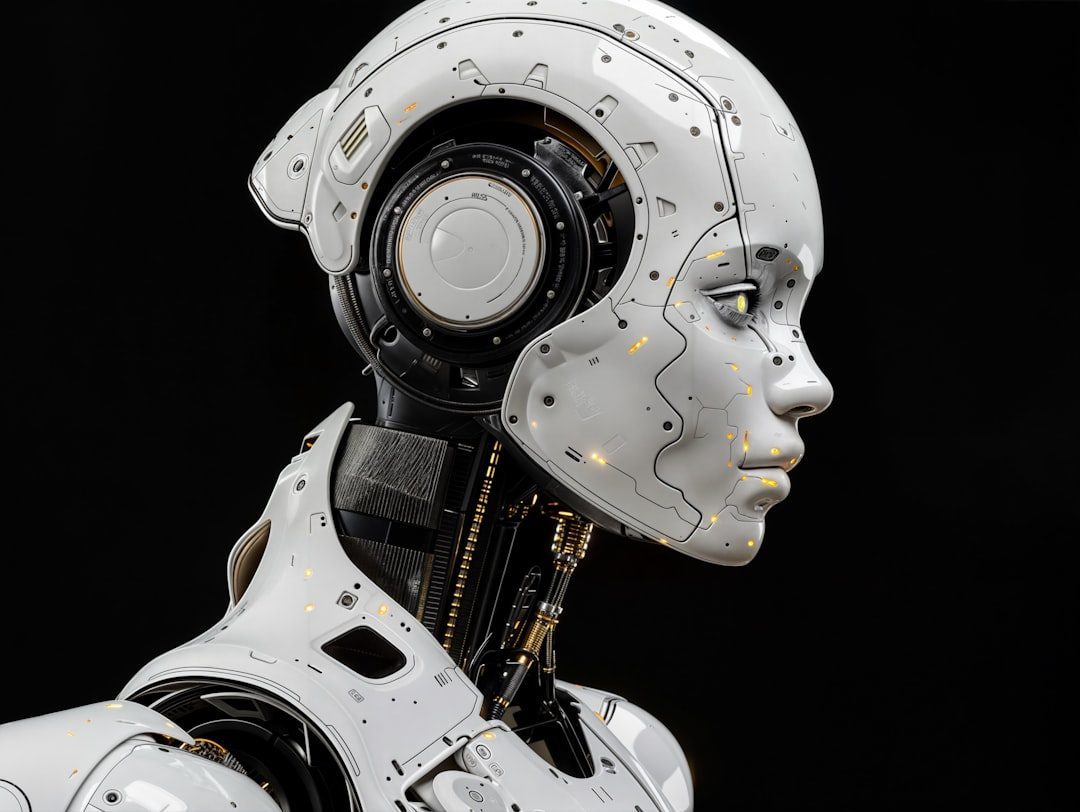
Several potential futures emerge from current AI development trajectories. Sam Altman believes the transition into the age of artificial superintelligence has already begun. He suggests that, despite the absence of visual cues like autonomous robots, transformative systems are being quietly developed that surpass human cognitive capabilities. According to Altman, tools like ChatGPT already demonstrate intelligence levels that exceed those of any individual human in certain respects.
The timeline for significant developments continues to compress. By 2026, he expects AI agents capable of performing intellectually demanding work. By 2027, AI may start producing original scientific insights. Physical robots capable of performing real-world tasks could follow soon after. This trajectory implies that superintelligence may arrive much sooner than many experts anticipate.
Human-machine integration presents another pathway forward. Some imagine a future where humans and AI merge, enhancing our minds with machine power. Brain-computer interfaces could expand memory, accelerate learning, and allow direct communication between minds. This symbiotic relationship could preserve human relevance in a superintelligent world.
The question of whether artificial intelligence will appears increasingly inevitable rather than speculative. The convergence of expert predictions, technological capabilities, and current development trajectories suggests we’re approaching a fundamental shift in the balance between human and artificial intelligence. While the timeline remains uncertain, the possibility demands serious preparation and consideration from society as a whole.
What fascinates me most is how this transformation challenges our most basic assumptions about intelligence, consciousness, and human uniqueness. The path ahead requires careful navigation between embracing AI’s potential benefits while mitigating its existential risks. Perhaps the real question isn’t whether AI will surpass human cognition, but how we’ll choose to coexist with intelligences that exceed our own capabilities. What do you think about it? Tell us in the comments.
Jan loves Wildlife and Animals and is one of the founders of Animals Around The Globe. He holds an MSc in Finance & Economics and is a passionate PADI Open Water Diver. His favorite animals are Mountain Gorillas, Tigers, and Great White Sharks. He lived in South Africa, Germany, the USA, Ireland, Italy, China, and Australia. Before AATG, Jan worked for Google, Axel Springer, BMW and others.