Picture yourself walking through the shadows of towering earthen pyramids, their massive forms rising from the Illinois prairies like monuments from a lost world. This isn’t ancient Egypt or Mesoamerica – this is America’s most forgotten treasure, a place that once rivaled London in size yet remains unknown to millions.
You’re about to discover a civilization so advanced, so mysterious, that archaeologists are still piecing together its secrets nearly a thousand years after its inhabitants vanished. Cahokia wasn’t just a city – it was America’s first metropolis, and the story of what happened there will change everything you thought you knew about pre-Columbian North America. So let’s get started with this incredible journey through time.
The Astonishing Scale of America’s Lost Metropolis
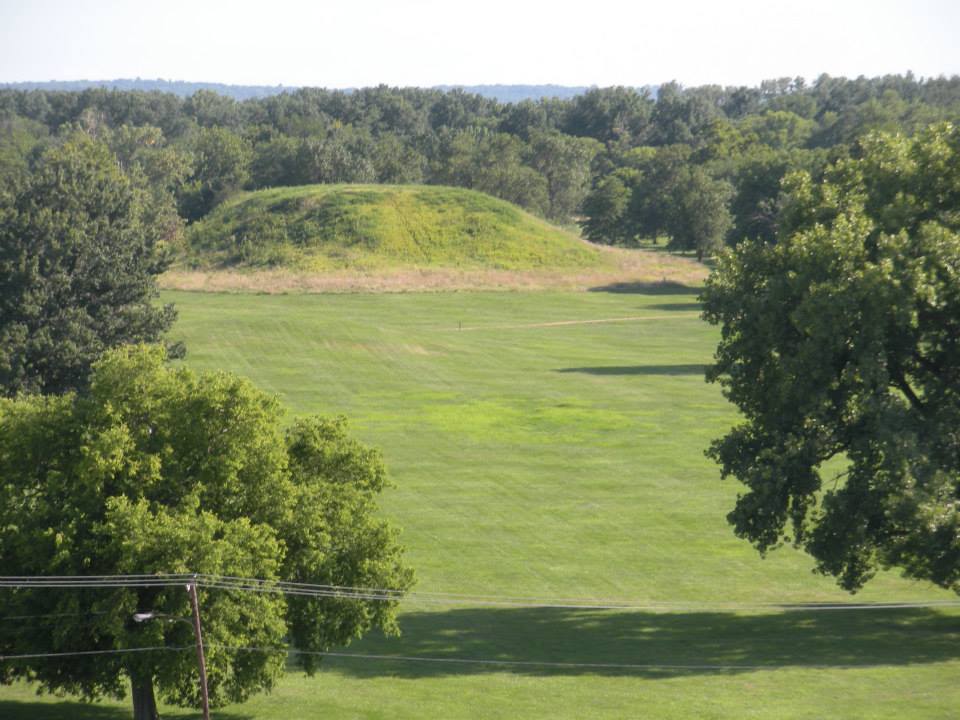
You’ll struggle to wrap your mind around just how enormous Cahokia was in its prime. At the high point of its development, Cahokia was the largest urban center north of the great Mesoamerican cities in Mexico and Central America. If the highest population estimates are correct, Cahokia was larger than any subsequent city in the United States until the 1780s, when Philadelphia’s population grew beyond comparable levels in the 1790s.
Think about that for a moment – nearly a thousand years ago, America had a city that wouldn’t be matched in size until after the Revolutionary War. Located opposite modern-day St. Louis, Missouri, this city is called Cahokia by archaeologists, and it was as large in its day as New York and Philadelphia before the mid-1700s. Ten thousand indigenous citizens once called it home. Tens of thousands more, farmers mostly, lived in the nearby countryside.
The numbers become even more staggering when you consider the construction effort. The original site contained 120 earthen mounds over an area of 6 square miles (16 km2), of which 80 remain today. To achieve that, thousands of workers over decades moved more than an estimated 55 million cubic feet (1,600,000 m3) of earth in woven baskets to create this network of mounds and community plazas.
Monks Mound: An Engineering Marvel That Defies Imagination
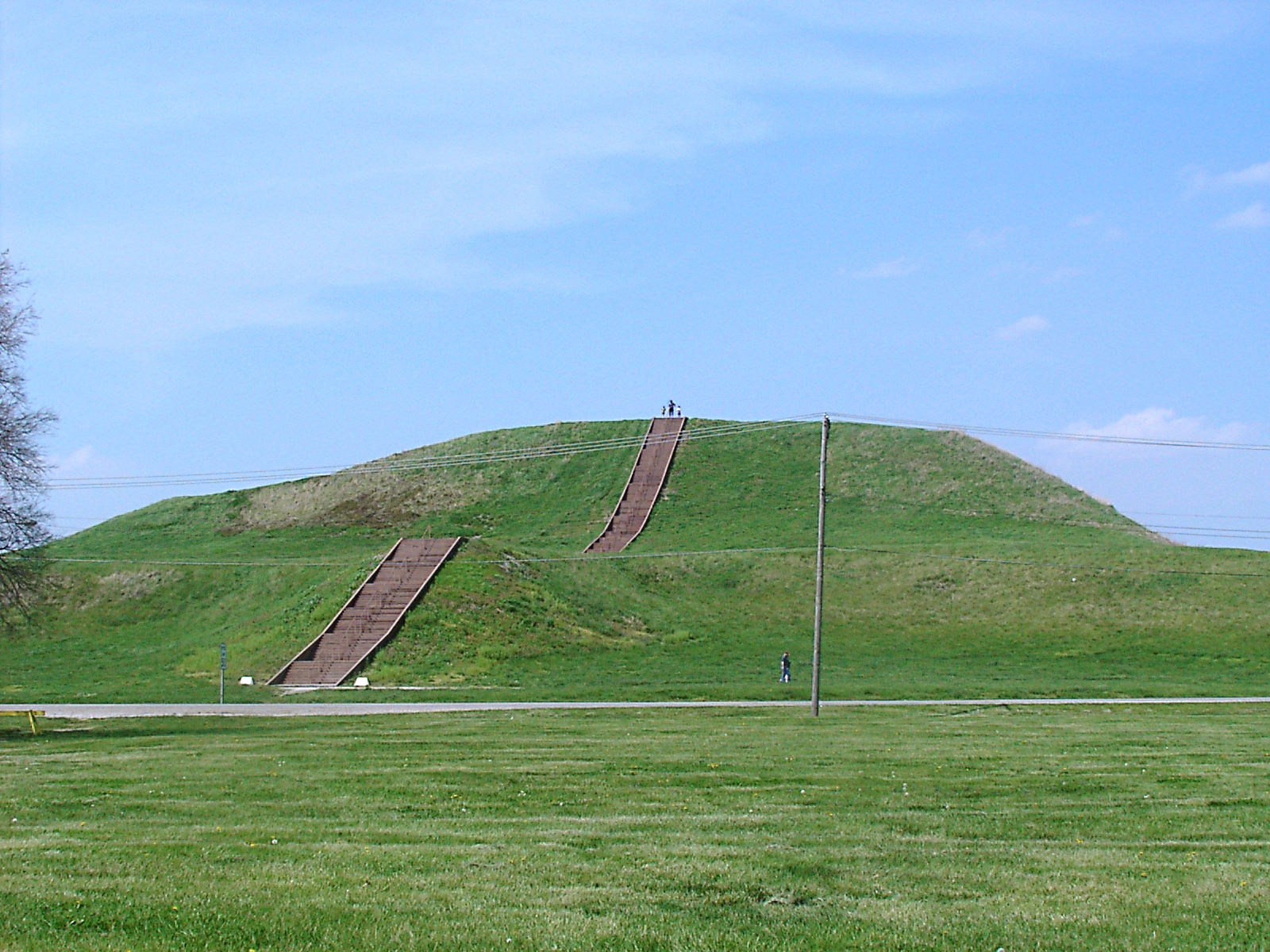
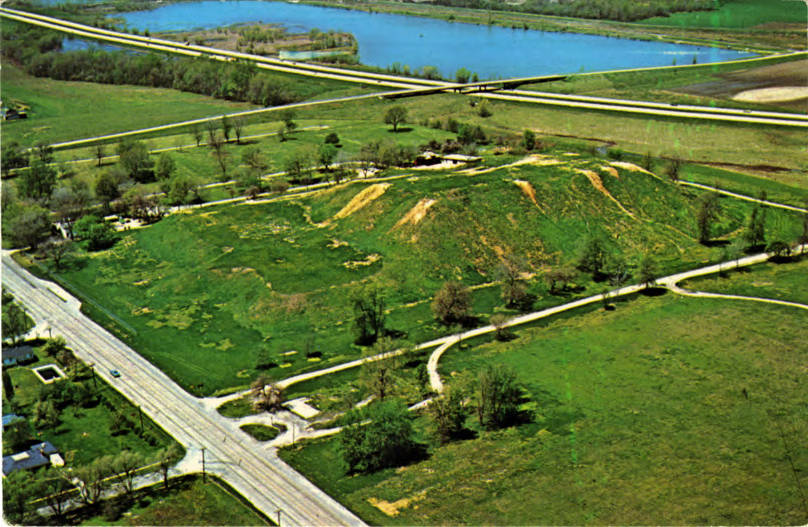
Standing at the heart of Cahokia, Monks Mound represents one of the most impressive engineering feats in human history. Monks Mound is the largest Pre-Columbian earthwork in the Americas and the largest pyramid north of Mesoamerica. Located at the Cahokia Mounds UNESCO World Heritage Site near Collinsville, Illinois, the mound size was calculated in 1988 as about 100 feet (30 m) high, 955 feet (291 m) long including the access ramp at the southern end, and 775 feet (236 m) wide. This makes Monks Mound roughly the same size at its base as the Great Pyramid of Giza (13.1 acres / 5.3 hectares).
The sheer human effort required to build this monument is mind boggling. Scholars have calculated that making a structure as large as Monks Mound required carrying 14,666,666 baskets, each filled with 1.5 cubic feet of soil, weighing about 55 pounds each, for a total of 22 million cubic feet. An average pickup truck holds 96 cubic feet, so it would take 229,166 pickup loads to bring the same amount to the site.
The Mound was built by Mississippian Culture Native Americans in stages, with some 34 million cubic feet of earth over a relatively short period. The Cahokians used three construction techniques for the fill: 1) moving basket load after basket load of clay and sandy soils; 2) cutting sod blocks and stacking them and 3) scattering earth fill to create this cathedral of earth.
The Mysterious “Big Bang” That Created a City Overnight
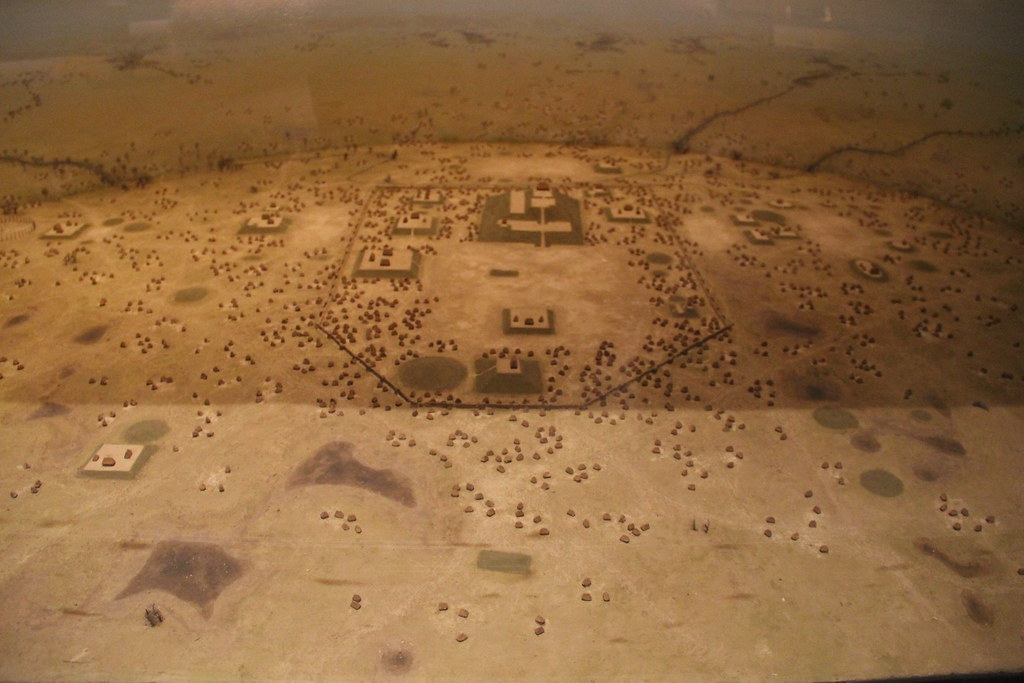
The most puzzling aspect of Cahokia’s story is how quickly it transformed from a simple farming village into a massive urban center. Around or shortly after AD 1050, everything at and around the old village of Cahokia changed. The exact year is uncertain owing to the imprecision of radiocarbon dating, but it is clear from archaeological discoveries that, over a very short period of time, a small group of planners – perhaps even one single person – redesigned Cahokia from a village into a city.
Imagine the incredible coordination this required. Implementing the new design meant that hundreds of old village houses had to be ripped down and, in some areas, the naturally undulating bottomland had to be leveled. Cahokia’s huge earthen pyramids and plazas were built. Around them, new neighborhoods were laid out, with homes now built with prefabricated sapling walls each topped with a thatched roof.
Around AD 1050 large earthen mounds were constructed and new forms of pottery styles, new kinds of stone tools, new architectural elements, and neighborhood planning appeared. This rapid process of growth in size and complexity at Cahokia is called “the big bang”. Archaeologists still debate what could have triggered such dramatic change so suddenly.
A Sophisticated Urban Plan That Mirrored the Cosmos
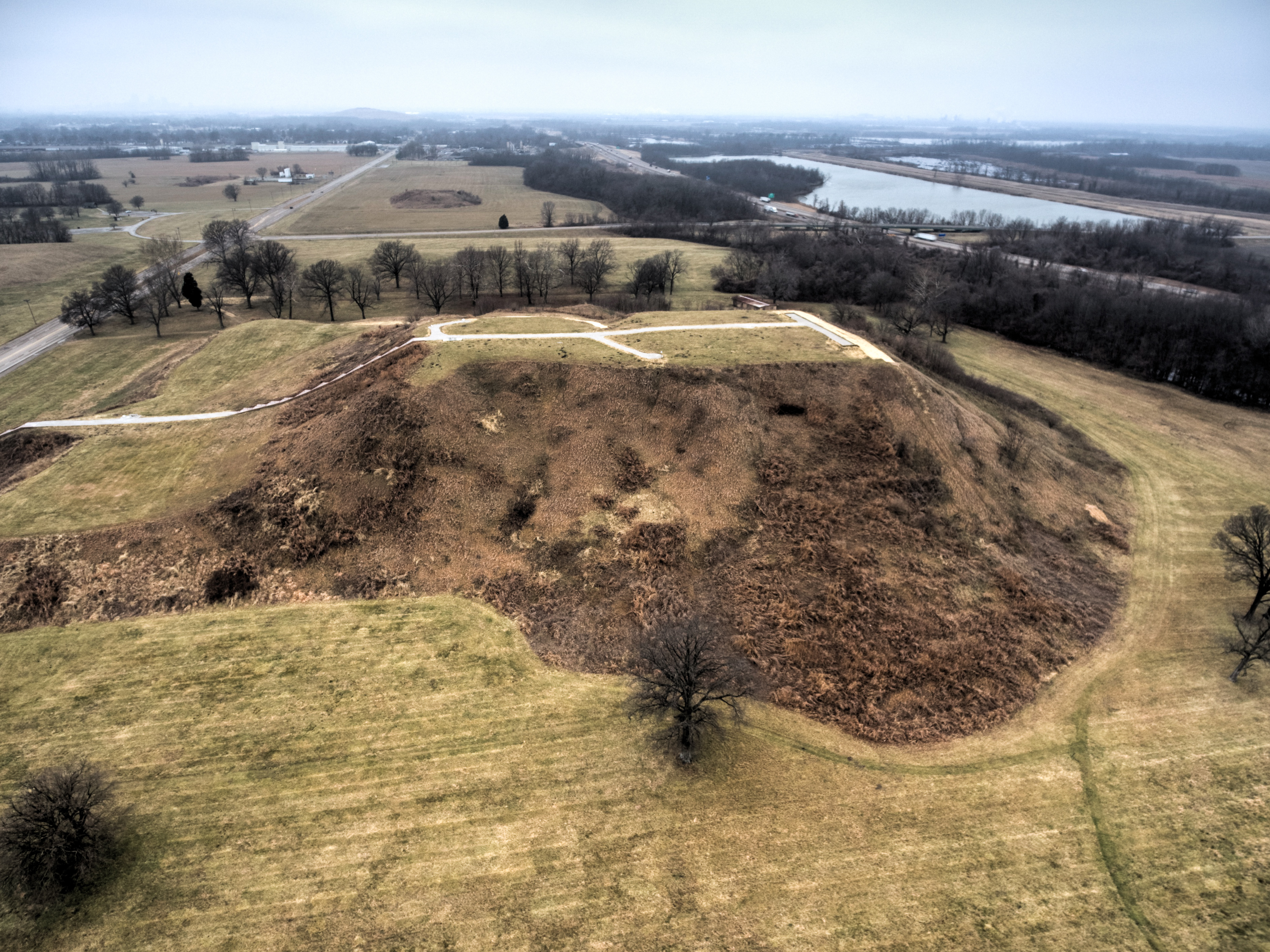
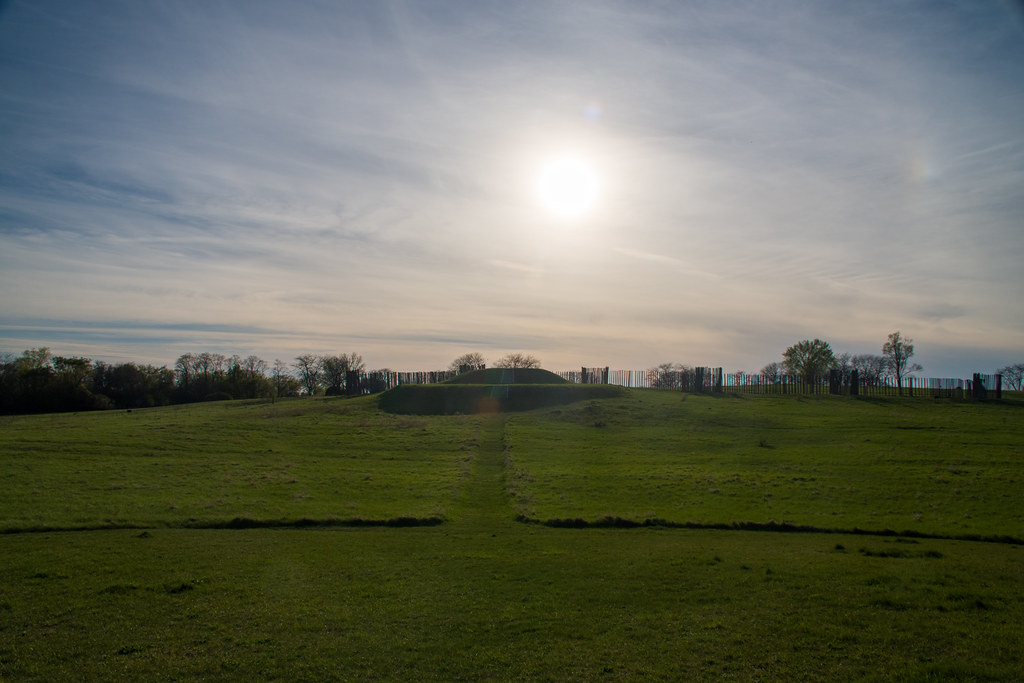
Far from being a haphazard settlement, Cahokia displayed urban planning skills that rival modern cities. Along with the early phase of Monks Mound, an overarching urban layout was established at the site. It was built with a symbolic quadripartite worldview and oriented toward the four cardinal directions with the main east–west and north–south axes defined with Monks Mound near its center point. Four large plazas were established to the east, west, north, and south of Monks Mound.
The Grand Plaza alone demonstrates the sophistication of Cahokian engineering. To the south of Monks Mound is the Grand Plaza, a large area that covered roughly 50 acres (20 ha) and measured over 1,600 ft (490 m) in length by over 900 ft (270 m) in width. Researchers originally thought the flat, open terrain in this area reflected Cahokia’s location on the Mississippi’s alluvial flood plain, but instead soil studies have shown that the landscape was originally undulating ridge and swale topography. In one of the earliest large-scale construction projects, the site had been expertly and deliberately leveled and filled by the city’s inhabitants.
Archaeologists have demonstrated how the alignments of the mounds with the cardinal directions show that Cahokia is a landscape cosmogram. Native American architecture often translates patterns in the sky into man-made patterns on the earth to create a sacred geography for ritual purposes.
Daily Life in Ancient America’s Greatest City
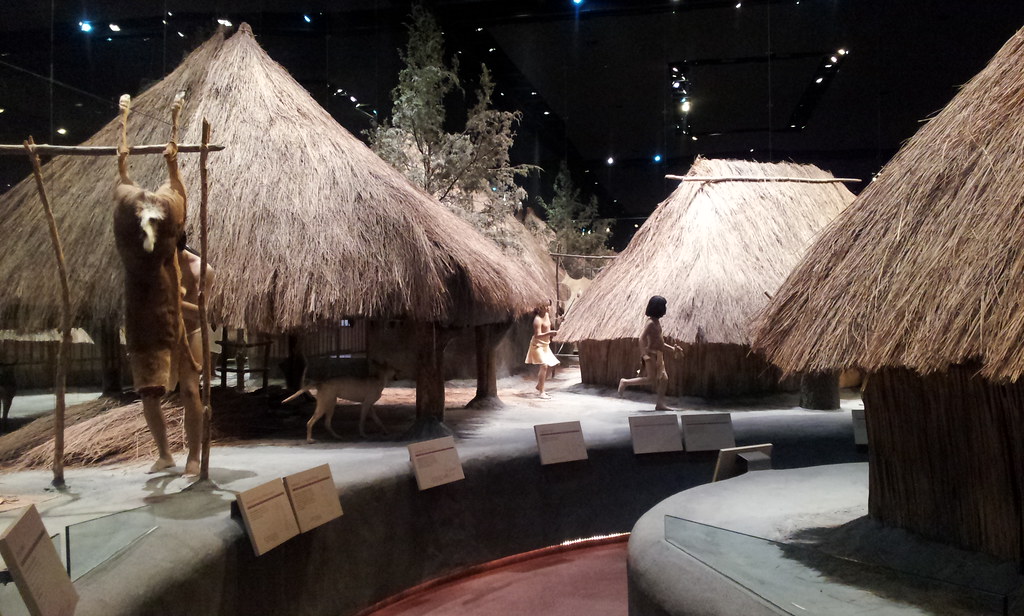
You might wonder what everyday life looked like in this remarkable city. The inhabitants of Cahokia lived in sophisticated neighborhoods with clear social divisions. Cahokian domestic structures were generally of pole-and-thatch construction and followed rectangular footprints. Wall trenches were often used instead of posts for building construction.
Cahokia’s economy was largely based on agriculture, and the people of Cahokia were skilled farmers who cultivated crops like corn, beans, and squash. They also harvested wild plants and fruits, hunted game, and fished in the nearby rivers. The agricultural abundance allowed for specialization that few ancient American societies achieved.
Mississippian society was characteristically a series of complex chiefdoms, with kinship determining social relationships traced through the female clan line. Other levels of social rank in Mississippian society included priests, warriors, and commoners who tended the agricultural fields and produced specialty goods. This created a dynamic social structure where your family connections and skills could determine your place in society.
A Trading Empire That Spanned the Continent
Cahokia’s influence extended far beyond its impressive earthen walls. It maintained trade links with communities as far away as the Great Lakes to the north and the Gulf Coast to the south, trading in such exotic items as copper, Mill Creek chert, shark teeth, and lightning whelk shells. You can imagine merchants arriving from distant lands, their canoes loaded with precious goods.
The evidence for this vast trade network is remarkable. Mississippian culture pottery and stone tools in the Cahokian style were found at the Silvernale site near Red Wing, Minnesota, and materials and trade goods from Pennsylvania, the Gulf Coast, and Lake Superior have been excavated at Cahokia. This wasn’t just local commerce – this was continental trade on a scale that wouldn’t be seen again for centuries.
Archaeological evidence suggests that Cahokia traded extensively with other civilizations, exchanging goods such as exotic shells, copper, and precious stones from far-off places like the Gulf Coast and Appalachia. In return, Cahokia likely provided its trading partners with agricultural goods, crafts, and other commodities. The importance of Cahokia’s trade network cannot be overstated, as it helped to foster economic and cultural ties between different groups across the continent.
Sacred Rituals and the Dark Side of Power
Cahokia’s religious practices reveal both the spiritual sophistication and the darker aspects of this ancient civilization. Cahokian religion seems to have merged beliefs about life and death with the movements of stars, sun, and moon in the heavens. Specific deities were recognized, the most prominent being a female goddess (depicted in small red stone sculptures found at and around Cahokia). The goddess is depicted associated with the bones of the dead, a monstrous mythical serpent, and agricultural crops.
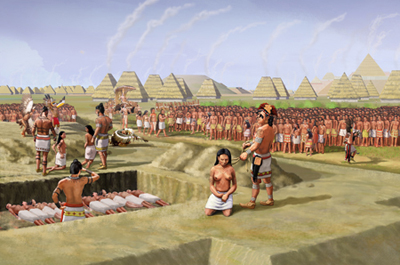
However, archaeological discoveries have revealed disturbing evidence of human sacrifice. One of the most interesting discoveries made during excavations was that of a small ridgetop mound referred to as Mound 72. Here, archeologists found the bodies of more than 270 people, mostly young women believed to have been sacrificial victims.
These offerings seem to have included human sacrifices. In several burial mounds and in the ceremonial areas of what archaeologists call the “East St. Louis site,” pits have been found containing the remains of between one and fifty-three young females executed as part of single events. In Cahokia’s first century, such sacrificial rites might have occurred every few years, perhaps in conjunction with the passing of a planet or star.
The Great Mystery: Why Did Cahokia Vanish?
Perhaps the most haunting question about Cahokia is why such a powerful civilization simply disappeared. Yet, for all its grandeur, Cahokia’s story remains shrouded in mystery. Researchers still do not know why it incorporated so rapidly around 1050 CE, how its leaders coordinated massive construction and trade networks spanning hundreds of miles, and why, by the early 1200s, this remarkable urban settlement was abruptly abandoned.
The theories for Cahokia’s decline are as varied as they are intriguing. Although this mixed agricultural strategy was successful for dispersed populations in the region, it ultimately proved unsuitable for the much denser population at Cahokia. The site and its hinterland declined and were eventually abandoned, probably because of environmental degradation. The population placed substantial demands on wood resources for fuel and construction and, during the initial centuries of the city’s occupation, cleared the forests upstream of the site. The denuded watershed produced greatly increased rates of runoff, erosion, and unseasonable summer flooding in Cahokia’s fields, causing crops to fail and overall production to decline.
A gradual decline in the Cahokian population is thought to have begun sometime after 1200 A.D. and two centuries later, the entire site had been abandoned. Though their fate remains unknown, theories include climate changes, war, disease, and drought. Archeologists continue to be puzzled by the fact that there are no legends, records, nor mention of the once grand city in the lore of other local tribes, including the Osage, Omaha, Ponca, and Quapaw. This strange silence has led some experts to theorize that something particularly dreadful happened at the site, for which the other tribes wished to forget.
The abandoned city of Cahokia stands as one of history’s most fascinating puzzles. Here was a civilization that achieved urban sophistication on par with ancient civilizations around the world, yet it vanished so completely that even neighboring tribes seemed to forget its existence.
Recent archaeological discoveries continue to reveal new secrets about this remarkable place, from sophisticated wooden monuments to evidence of far reaching trade networks. Each artifact tells part of the story of people who built America’s first great city, then mysteriously disappeared into the mists of time. What happened to the thousands of people who once called Cahokia home remains one of archaeology’s greatest mysteries. What do you think happened to them? Tell us in the comments.
Hi, I’m Andrew, and I come from India. Experienced content specialist with a passion for writing. My forte includes health and wellness, Travel, Animals, and Nature. A nature nomad, I am obsessed with mountains and love high-altitude trekking. I have been on several Himalayan treks in India including the Everest Base Camp in Nepal, a profound experience.