On a limestone ridge above modern Şanlıurfa in southeastern Turkey, a ring of T-shaped pillars has been quietly overturning everything we thought we knew about the deep past. Göbekli Tepe is older than pottery, older than cities, and likely older than agriculture as we understand it. Yet its towering stones and carved menagerie shout ambition, coordination, and purpose. The puzzle is simple to state and hard to solve: why did mobile hunter-gatherers build something so grand, then bury much of it themselves? Researchers are piecing together answers from microscopic wear on tools, animal bones left from feasts, and careful radiocarbon dates. The story that emerges is part ritual, part social experiment, and entirely human.
The Hidden Clues
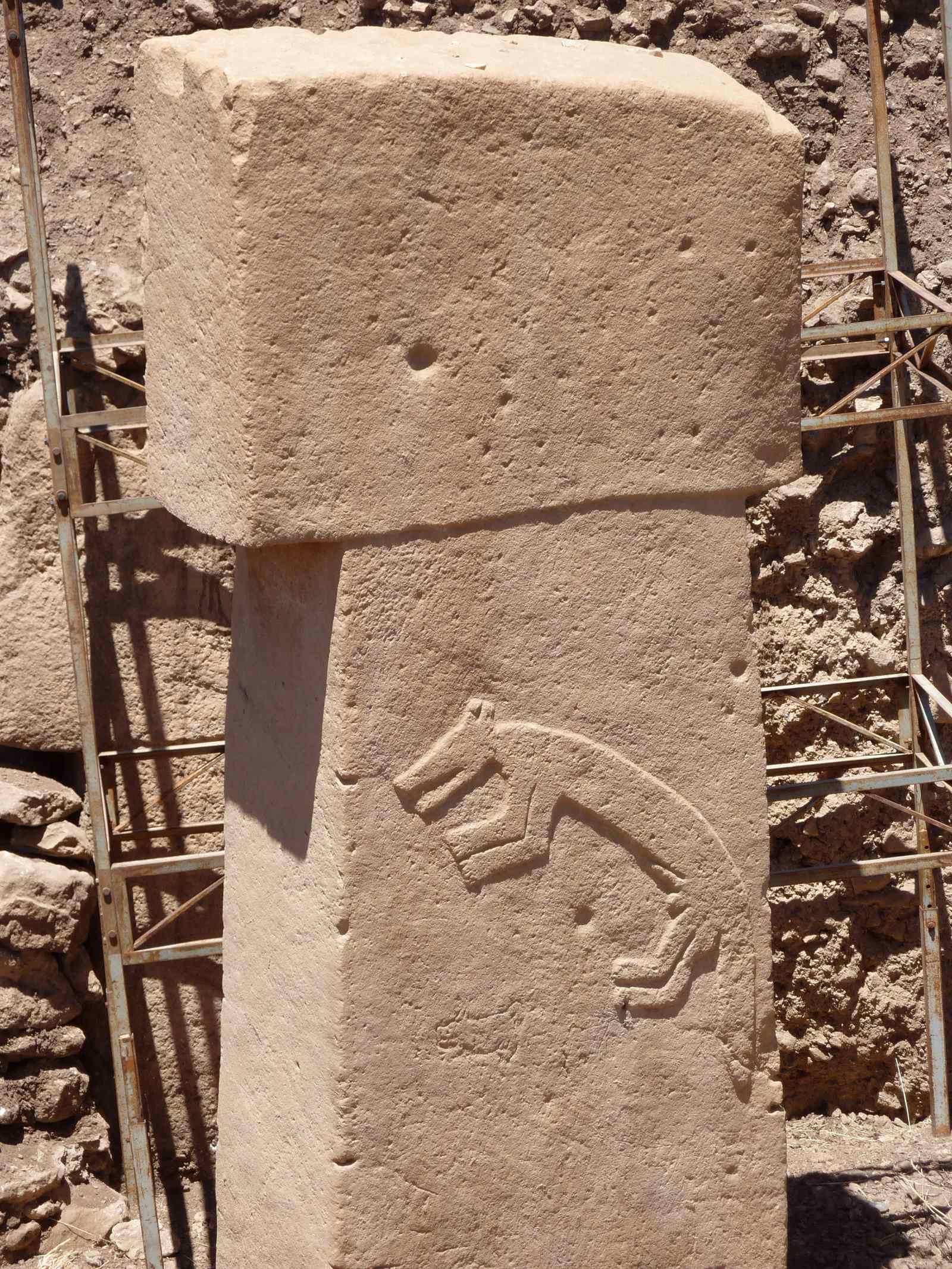
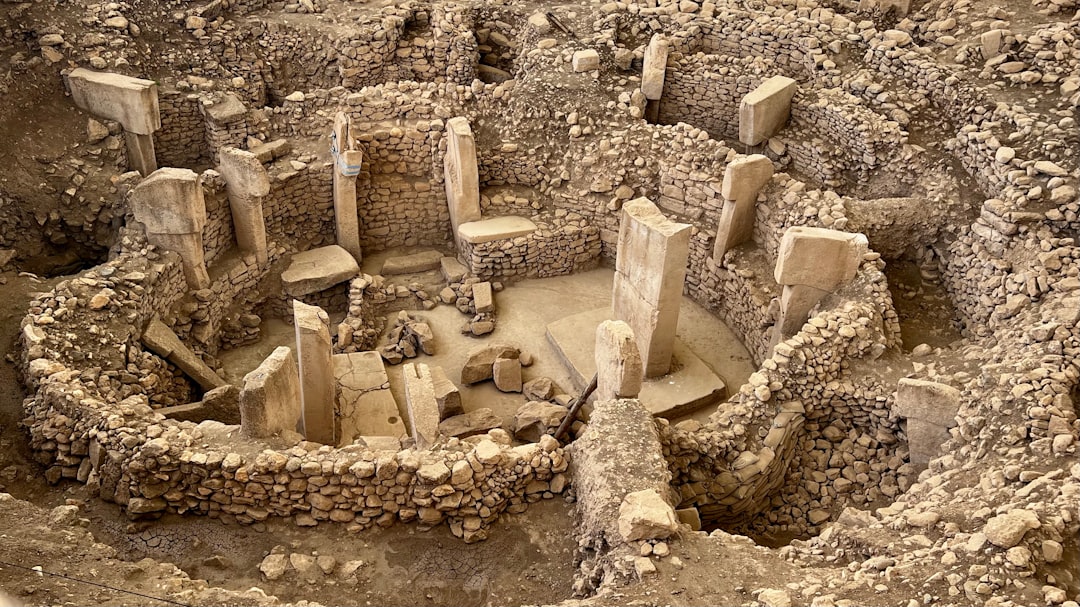
Here’s the jolt that hooks even seasoned archaeologists: Göbekli Tepe appears to belong to the era before domesticated crops and herds were widespread in the region. The site’s earliest levels fall into the Pre-Pottery Neolithic, roughly between 9600 and 8200 BCE, when communities still hunted wild gazelle, boar, and birds and gathered seeds and nuts. Massive limestone pillars – some exceeding five meters and weighing many tons – stand in circular or oval enclosures, a scale that demands skilled planning and organized labor. Many stones carry reliefs of foxes, snakes, vultures, and scorpions, arranged with an intentionality that feels almost narrative.
Archaeologists report that the enclosures were deliberately backfilled with debris that includes flint flakes, stone vessels, and piles of animal bones, as if chapters of a story were sealed on purpose. The fill makes the place feel like a time capsule, preserving contexts that would otherwise have eroded away. Taken together, these clues whisper that communities gathered here for something more than shelter or storage. They came to make meaning – and to show they could.
A Landscape of Stone and Story
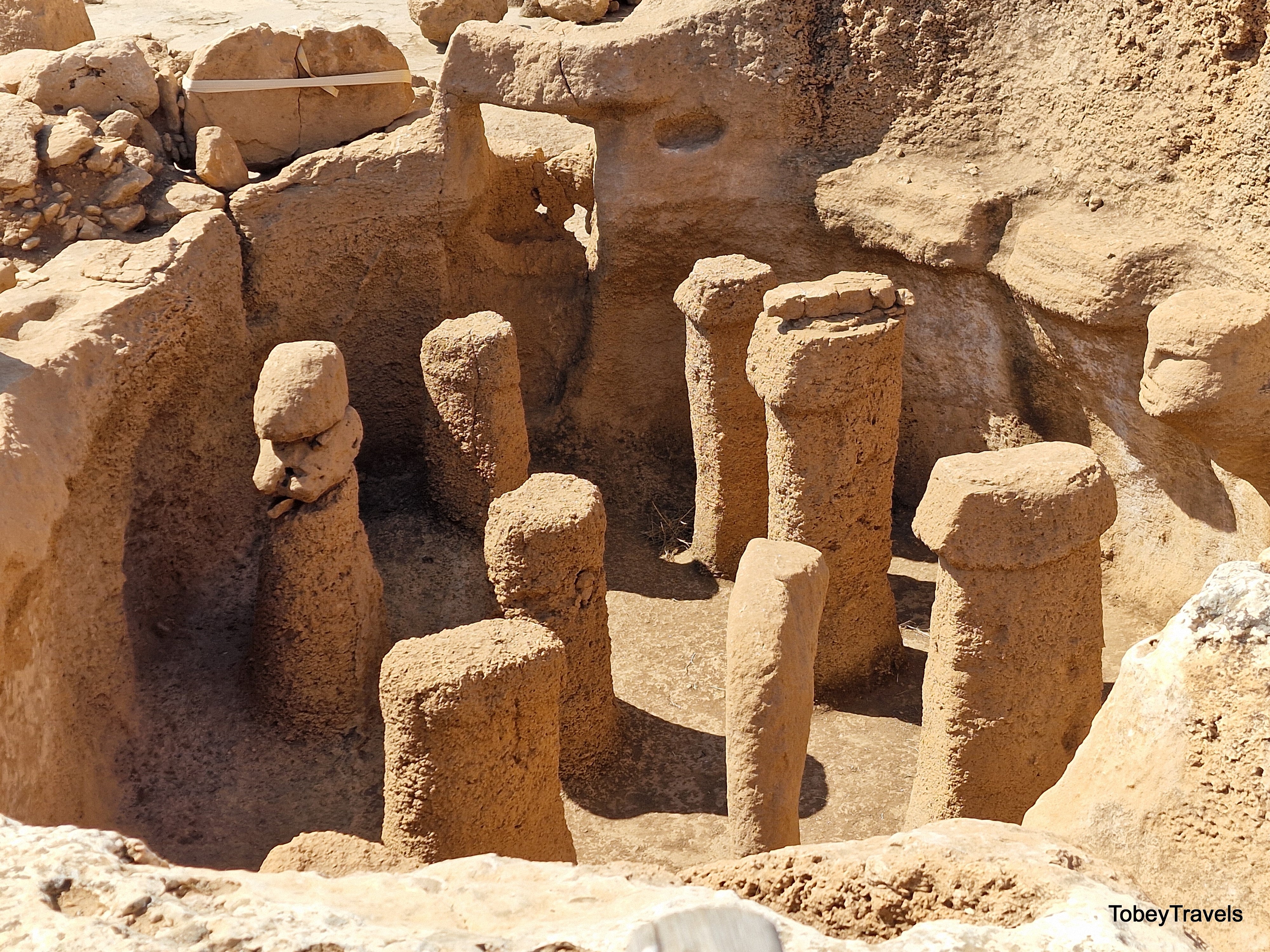
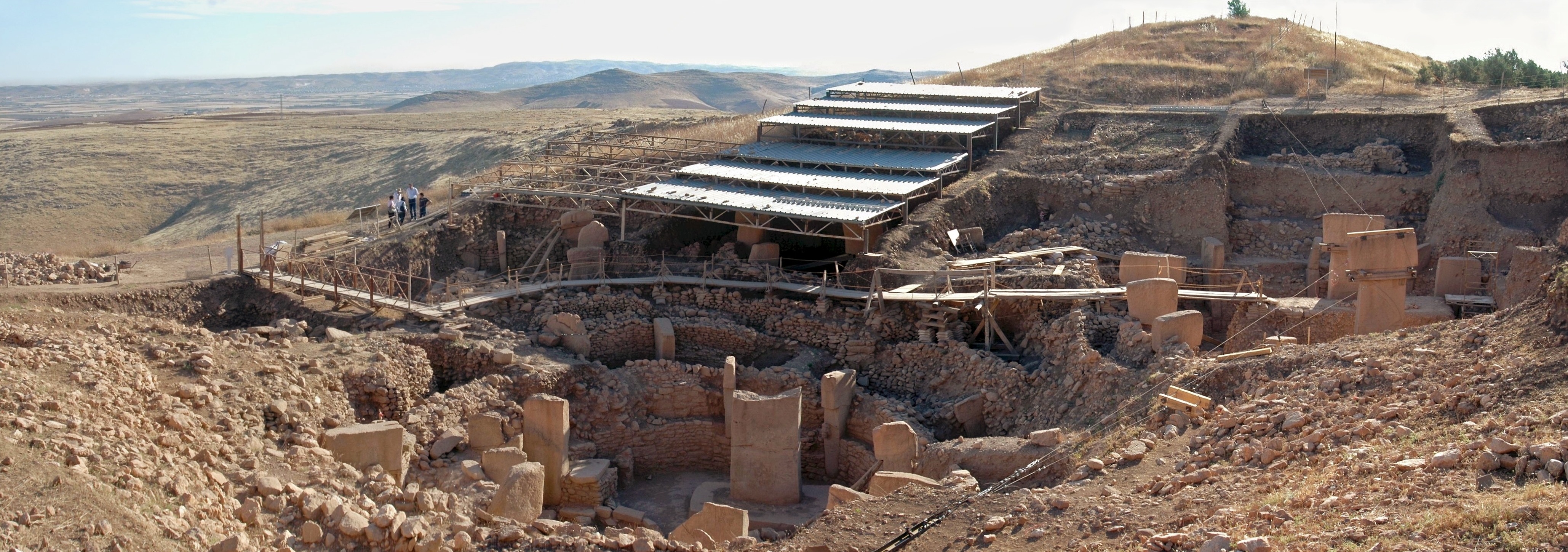
Göbekli Tepe isn’t just one set of rings; it’s a hill layered with enclosures, terraces, quarries, and work areas that evolved over centuries. Two especially tall pillars often dominate each circle, set like silent characters in a play, with subtle human traits such as arms, hands, and belts carved in low relief. Around them, smaller pillars create a chorus, each carved with animals that probably mattered to local myth, memory, or status. The site was not built once; it was iterated, renewed, and reimagined by generations.
To grasp the scale, consider a few quick facts: – Earliest construction dates to roughly eleven millennia ago. – Central pillars in some enclosures rise over five meters. – Carvings represent wild fauna rather than domesticated species. – The site joined the UNESCO World Heritage List in the late 2010s. Each point nudges us away from tidy timelines and toward a more tangled origin story for complex societies.
From Ancient Tools to Modern Science
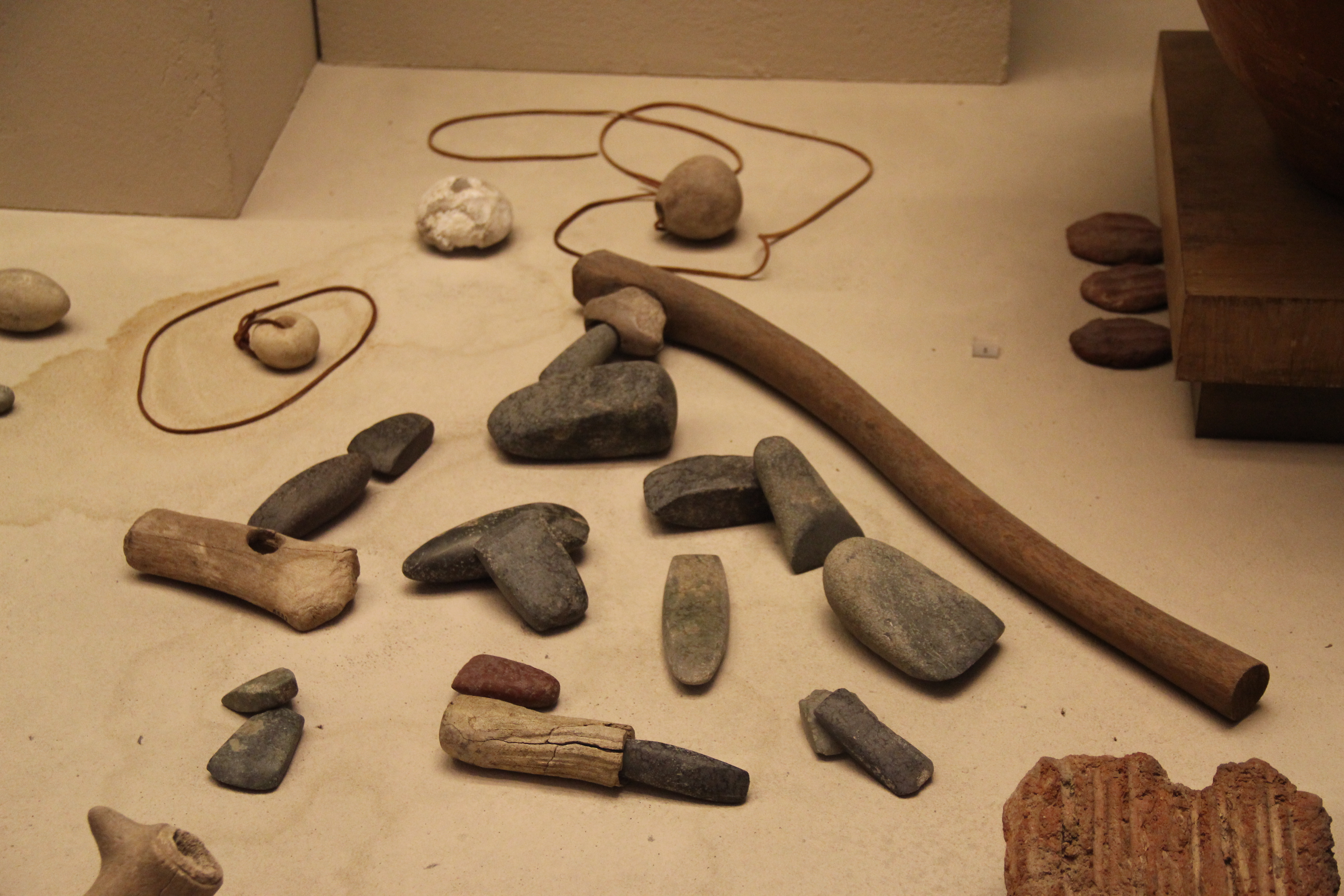
What turns stone and bone into insight is a modern toolkit as impressive as any ancient quarry. Radiocarbon dating pins down phases of activity; microscopic use-wear analysis reveals how flint blades sliced meat or carved wood; and residue studies trace plant processing that could hint at early culinary traditions. Ground-penetrating radar and magnetometry scan for hidden enclosures without lifting a trowel, while photogrammetry captures carvings in high-resolution 3D for later study. Even isotopic analysis of animal remains can reconstruct hunting seasons and herd movements.
These techniques, layered together, are rewriting local lifeways with unusual precision. Evidence points to large-scale feasting, repeated gatherings, and coordinated building events that required logistics and leadership. The data also show continuity and change – new enclosures rising while older ones were filled in, a rhythm that looks like ritual cycles rather than one-off construction. In other words, science is catching the tempo of a community long vanished but still legible in stone.
Feasts, Faith, and Social Glue

One compelling interpretation is that Göbekli Tepe functioned as a ritual aggregation center, drawing scattered groups into temporary crowds. Feasts leave fingerprints: heaps of butchered animal remains, specialized cutting tools, and cooking facilities suggest periodic events big enough to bond people who didn’t live together year-round. Feeding many mouths at once is logistics and theater, a performance that turns food into glue for alliances and obligations. The pillars, with their stark animal iconography, may have served as mnemonic anchors for stories and shared identities.
In this reading, belief and bounty go hand in hand. Ritual gatherings can motivate labor that no chief or king yet existed to compel, and construction itself becomes a devotional act. If early plant tending or animal management began nearby, it might have followed the social demands of hosting big events, not the other way around. That flips an old assumption on its head: maybe monuments didn’t come after farming – maybe they helped invent it.
The People Behind the Pillars
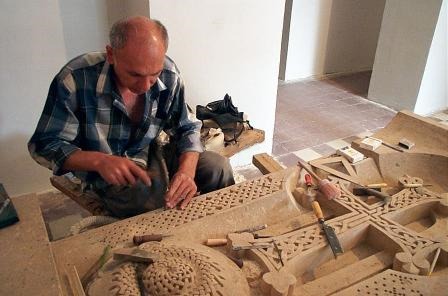
It’s tempting to imagine master builders, but the workforce likely looked more like a patchwork of kin groups pulling together in seasonal pulses. Quarry scars show where blocks were cut from bedrock and dragged uphill, probably using wooden levers, sledges, and lots of muscle and coordination. The absence of domestic architecture in the earliest layers suggests the hilltop wasn’t a permanent village, reinforcing the idea of episodic gatherings. Yet the sculpture is anything but casual; the hands, belts, and animal sequences point to trained artisans or at least highly practiced craft traditions.
As a science journalist, I still remember first seeing high-resolution scans of the carvings and double-checking the dates, because the timeline felt upside down. The aesthetic confidence is unmistakable, and it implies teaching, apprenticeship, and pride in work. In short, the people behind the pillars were not improvising in the dark; they were composing in stone with rules we’re only beginning to understand. That is a different kind of intelligence than ours, but no less sophisticated.
Global Perspectives
Placing Göbekli Tepe in a world context helps clarify what’s unique and what isn’t. Later megalithic sites such as Stonehenge or the Atlantic European passage graves also stitched communities together through ritual construction, but they emerged millennia afterward and within farming societies. In the Near East, other sites in the broader Taş Tepeler region echo the T-pillar tradition, suggesting a shared cultural horizon rather than a one-off masterpiece. Comparative studies reveal similar social functions – gathering, memory-making, landscape marking – even when the materials and timelines differ.
What stands out is that Göbekli Tepe pushes the start line for monumentality back into hunter-gatherer realities. That matters when we model how complexity arises: not only from surplus grain, but from shared stories powerful enough to mobilize hands and stone. The site becomes a keystone in a global discussion about when belief, art, and cooperation crystallize into architecture. And it reminds us that creativity loves company long before it loves cities.
Why It Matters
Göbekli Tepe forces a difficult but generative question: do big ideas drive economies, or do economies create space for big ideas? For decades, the textbook arc ran from domestication to villages to temples. Here, the sequence seems to bend, implying that ritual and social identity could have catalyzed the push toward more reliable food and settled life. That reframes how we think about innovation, suggesting that meaning-making is not a byproduct of civilization – it is one of its engines.
There’s a practical side to this, too. When archaeologists design surveys or interpret fragmentary finds elsewhere, Göbekli Tepe warns against assuming simple camps or storage pits in early layers. Instead, we look for signs of performance and congregation: specialized toolkits, feasting residues, or deliberately buried structures. The site becomes a method as much as a place, a reminder to test the old models rather than teach them unchallenged.
The Future Landscape
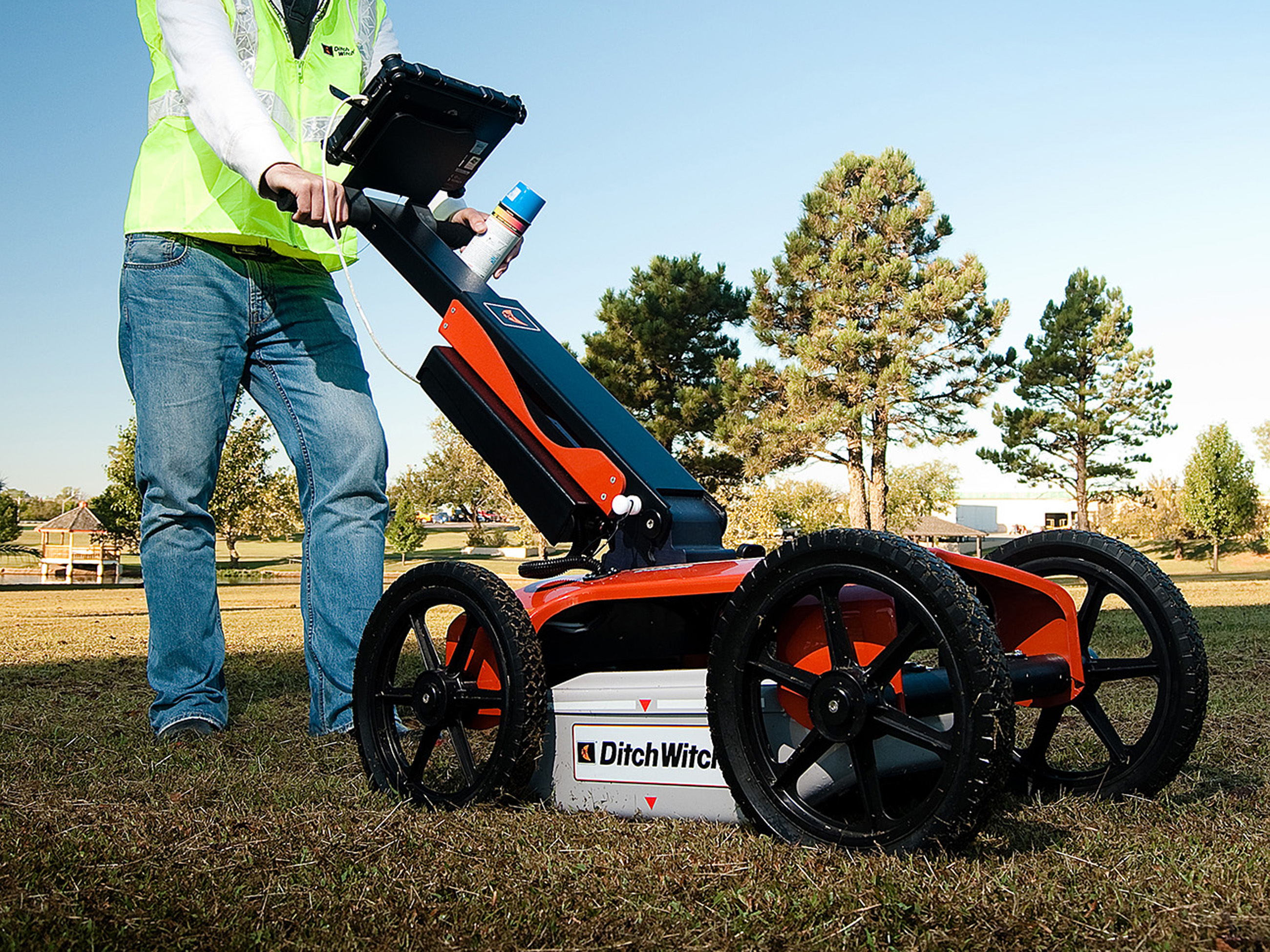
The next breakthroughs will likely come from methods that see what trowels can’t. Enhanced ground-based radar could map still-buried enclosures, while new statistical models integrate dates, tool-use signatures, and animal remains to reconstruct event calendars. High-fidelity 3D models will allow researchers worldwide to study carvings in microscopic detail, tracking chisel sequences and workshop styles. Even ancient proteins and environmental DNA preserved in sediments may add traces of plants or animals that escaped the naked eye.
Beyond the lab, conservation and tourism pose intertwined challenges. Protective shelters help, but vibration, humidity, and foot traffic must be managed without turning a living landscape into a sterile exhibit. Regional research across related sites will test whether Göbekli Tepe was exceptional or representative within a broader network. The horizon is wide, but careful stewardship will decide how much of it we get to explore.
Call to Action

If this deep-time story moves you, there are simple, concrete ways to help. Support museums and archaeological research foundations that fund fieldwork, lab analyses, and training for the next generation of archaeologists. Seek out public lectures and digital archives that share open data and 3D models, and push for policies that keep those resources accessible. When traveling, choose guides and operators committed to site protection, and embrace slow, respectful tourism over box-ticking speed.
Closer to home, teach the idea that culture is not a luxury; it’s infrastructure for cooperation. Share reliable articles with friends who are curious but overwhelmed by sensational claims, and be the person who asks for evidence without spoiling the wonder. The stones have lasted eleven thousand years; whether their stories do is up to us.