The universe is a generous storyteller but a strict editor, and nowhere is that clearer than in its treatment of time. For more than a century, physicists have tested the seams of reality, chasing wormholes, warp drives, and clever paradoxes like cats after a laser pointer. Each time, the rules push back with sharp precision: light-speed limits, energy conditions, and quantum constraints that behave like cosmic gatekeepers. The mystery endures because the equations of general relativity tease us with possibilities even as nature appears to slam the door. What follows is the case file – clues, suspects, and the best theories – on why the timeline won’t let us barge through the back door.
The Hidden Clues
Here’s a jolt to start: the equations that describe gravity allow geometries where time can loop, yet the world we measure never seems to permit it. Particle showers in the upper atmosphere arrive right on schedule, GPS satellites keep our maps honest, and cosmic rays don’t whisper hints of cause running backward. Everywhere we look, signals respect a universal speed limit and a one-way arrow that keeps birthdays before obituaries. The data are mundane by design, and that’s the point – the ordinary regularity of clocks, orbits, and decay rates is evidence that the universe is aggressively pro-causality.
Even time dilation – the stretchy, headline-grabbing effect from relativity – plays by the rules. Moving clocks slow down, not upend cause and effect; they never let messages jump the gun on their own causes. Like a movie that can be paused and played in slow motion but never edited to change the plot, spacetime lets us lean on time’s flow without rewriting the script.
From Ancient Puzzles to Modern Physics
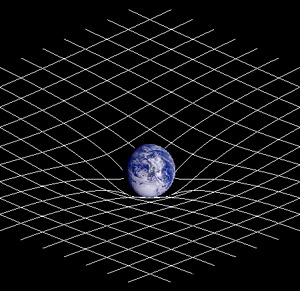
Long before modern physics, storytellers noticed that revisiting the past makes trouble – the classic “save the day, ruin the timeline” trope. The twentieth century gave those intuitions math: Einstein’s general relativity permits exotic solutions such as rotating universes, spinning black holes, and theoretical cylinders that could, on paper, bend worldlines into loops. Mathematically, these “closed timelike curves” are legal residents in spacetime’s zoning code. But mathematics is the audition; experiments and stability arguments are the casting directors, and they’ve been merciless.
Whenever physicists try to turn those paper possibilities into physical recipes, the ingredient list becomes absurd. You’re asked to assemble infinite cylinders, perfectly tuned cosmic strings, or wormholes held open by forms of energy that no lab has ever seen in the right amounts. The gap between elegant equations and stubborn reality has grown into a canyon, and every new calculation lights that canyon up in brighter relief.
A Universe That Hates Paradoxes
Paradoxes are not just narrative headaches; they’re violations of logical bookkeeping. If an event can both happen and not happen depending on your time loop, physics loses its ledger. Some researchers respond with a hard-nosed rule known as self-consistency: if closed time loops ever exist, only histories that avoid contradictions can occur. In that view, the universe doesn’t wink at paradoxes; it fences them off with iron rails.
Another camp suggests that apparent contradictions might peel off into separate branches of reality, so no single timeline is broken. That’s philosophically daring but scientifically unproven, and it brings its own accounting problems. The bottom line remains simple and stubborn: all observations to date point to a cosmos where cause precedes effect and where paradoxes, like mirages, vanish as you approach.
Quantum Detours and Closed Timelike Curves
Quantum physics invites mischief, yet its mischief is unusually disciplined. Negative energy densities, hinted at by the Casimir effect, suggest a loophole for propping open a wormhole’s throat, but quantum rules also impose strict rations on how much negative energy you can stockpile and how long you can keep it. Try to amplify the effect, and quantum inequalities snap shut like a mousetrap. Attempts to stabilize a time machine geometry trigger calculations where vacuum fluctuations swell toward infinity near the would-be “chronology horizon,” signaling a likely breakdown of the setup long before any traveler buckles a seatbelt.
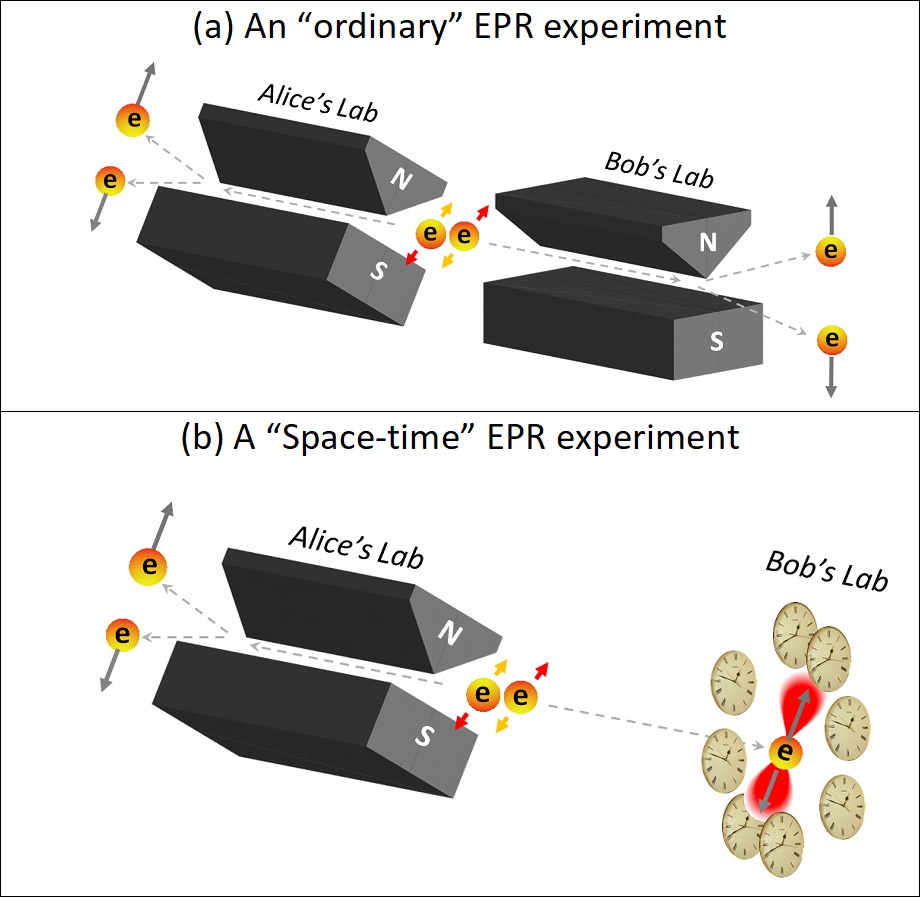
Even clever thought experiments in quantum information that emulate time loops rely on idealizations and postselection that real hardware can’t match without smuggling in new paradoxes. The lab can simulate the logic of a loop, but not the loop itself. At every scale tested, quantum mechanics behaves like an ally of causality, not its saboteur.
The Price of Breaking Causality

Suppose you insisted on building a time machine anyway. The engineering memo reads like science fiction’s harsh fine print: you’d need spacetime curvature arranged with hairline precision, materials with negative energy that may exist only fleetingly, and control over gravitational tidal forces that make black holes look gentle. Any small disturbance – say, a stray particle or a sliver of radiation – could spiral into runaway amplification, shredding the device in a feedback loop of its own making. In practice, the slightest nudge appears fatal.
Consider a few sobering checkpoints that researchers emphasize:
– Faster-than-light signals let information reach the past in some frames, and relativity forbids such signals for anything that carries information.
– Proposed warp drives and stable wormholes require exotic energy distributions that violate ordinary energy conditions far beyond what experiments have hinted at.
– Attempts to skirt the rules tend to invite infinite energies or instabilities at the boundary where chronology would break.
– High-precision timing networks on Earth and in orbit show no deviations that would hint at rogue causality.
Why It Matters

This isn’t just philosophical hair-splitting; causality is the spine of everything from navigation to computing. Your phone’s map works because clocks aboard satellites and on Earth can be corrected by relativity without allowing mixed-up signals from the future. Medical imaging, particle accelerators, and communications infrastructure all depend on equations that assume today influences tomorrow, never the other way around. If causality cracked, foundational tools would lose coherence, like a library whose catalog numbers randomly reshuffled.
There’s also a deeper human stake. The arrow of time, strongly tied to rising entropy, underwrites our sense of agency, responsibility, and memory. If the past could be edited at will, promises and proofs would be pliable in dangerous ways. Science thrives on reproducibility precisely because cause and effect are nailed down; protect that, and you protect the credibility of discovery itself.
The Future Landscape
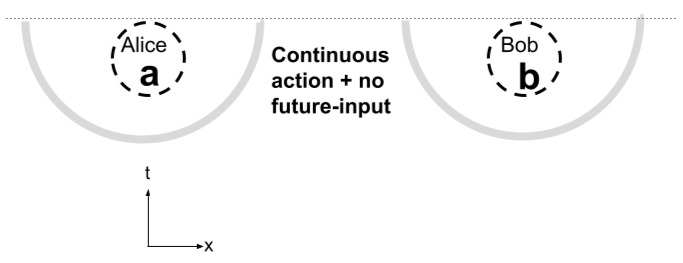
So where does the search go next? Expect tighter constraints rather than headline-grabbing loopholes: upgraded gravitational-wave detectors, pulsar timing arrays, and deep-space clocks will probe spacetime’s grain with vicious precision. If any exotic structures that enable time loops exist, they’ll need to survive a gauntlet of new observations that punish even tiny deviations from causal order. The smart money is on chronology protection emerging not as a single law, but as a chorus of principles from quantum theory, thermodynamics, and geometry that harmonize into a no-travel policy.
At the same time, theorists will keep testing the fence for weak boards. Studies of quantum gravity candidates, from spacetime discreteness to holographic dualities, may reveal why paradoxes fizzle instead of flourish. And that’s healthy science: push hard on the walls to discover which are load-bearing. The likely outcome is clarity, not chaos – a sharper understanding of why the door stays locked, and what that teaches us about time’s architecture.
How You Can Engage
You don’t need a particle accelerator to be part of the story; curiosity is the gateway. Seek out public data releases from space missions and gravitational-wave observatories, and follow how teams cross-check timing and causality. Support basic research through membership in science nonprofits, or back open-source tools that help students and teachers experiment with relativity on the desktop. When sensational claims surface about broken light-speed or messages from the future, ask for the calibration files, the replication plan, and the statistical sanity checks. Good skepticism is a civic skill.
Share the wonder, too. Explain to a friend how your GPS depends on relativity but never violates causality, or try a kitchen demo of entropy with ice cubes racing to melt and never to reassemble. The universe’s refusal to allow time tourism isn’t a letdown; it’s a promise that reality is readable, testable, and fair. That’s a future worth defending, even if it means we’re all stuck moving forward together. Would you really want it any other way?