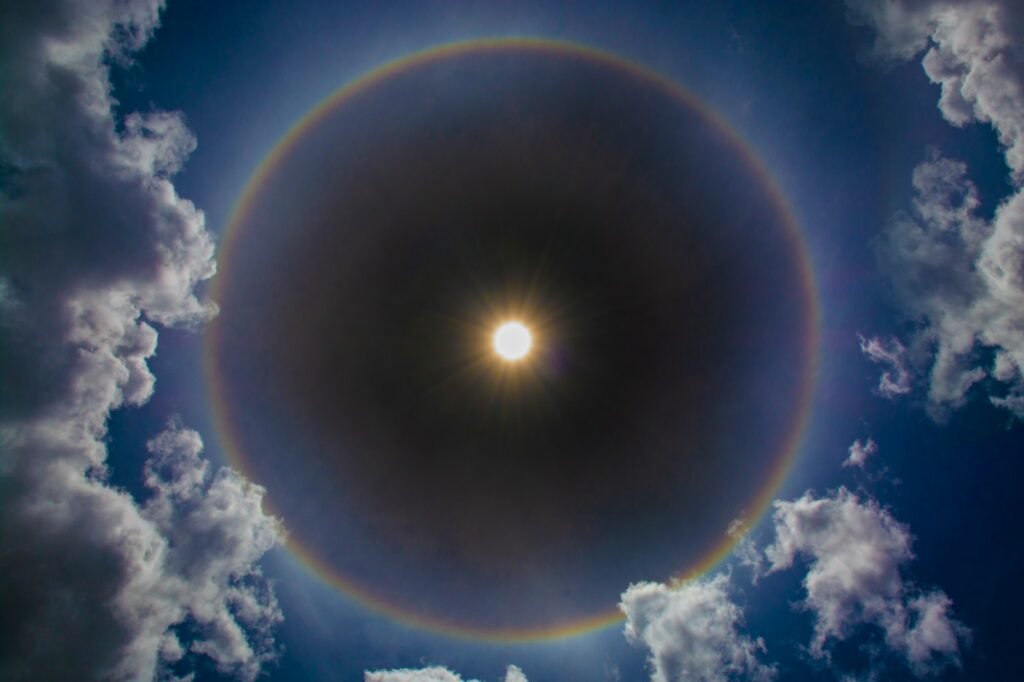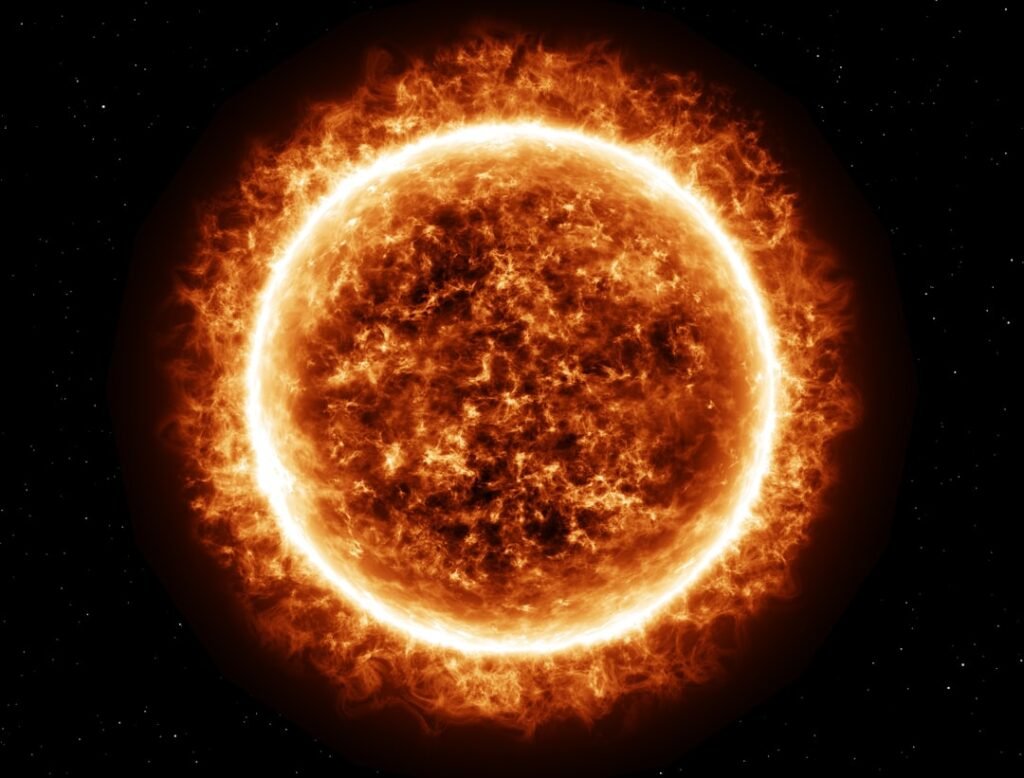

The Sun has a way of reminding us who’s boss, sometimes with a sudden flash that turns the sky electric and sends technology wobbling. For a civilization that stores its memories on humming servers and spinning disks, that flash raises a haunting question: could a single solar tantrum wipe our collective past? Scientists studying violent eruptions on the Sun say the danger isn’t science fiction, but neither is it inevitable doom. The real story lives in the middle, where physics, infrastructure, and human choices collide. And that’s exactly where the next chapter of our history – preserved or erased – will be written.
The Hidden Clues

The trail of past solar fury is buried in places you might not expect: tree rings and polar ice. In certain years, trees quietly record sudden spikes of carbon-14, likely triggered by intense cosmic particle showers linked to solar events, with famous spikes around the eighth and tenth centuries. Ice cores carry complementary signals, offering a time-stamped ledger of atmospheric chemistry shifts that hint at past radiation surges. These proxies aren’t perfect, and researchers debate which signals track solar storms best, yet together they sketch a pattern of rare but colossal outbursts. I think of them as postcards from ancient skies, warning that the quiet Sun we know can roar. Those postcards suggest we’ve seen extremes before – and will again.
From Ancient Storms to Modern Science

The 1859 Carrington Event famously lit auroras near the tropics and made telegraph systems spark, a dramatic preview of what a superstorm can do to technology. Another intense storm in 1921 disrupted rail and communication networks across continents, the kind of systemic shock that today would ripple through finance and logistics. Fast forward to 1989, when a geomagnetic storm collapsed the Hydro‑Québec power grid in minutes, leaving millions in the dark and turning transformers into weak links. The 2003 Halloween storms battered satellites, muddied GPS signals, and forced airlines to reroute high‑latitude flights. In 2012, a hyper‑fast coronal mass ejection missed Earth by about a week, a near miss that reads like a narrow escape in an adventure novel. Each episode adds a page to our playbook, refining models and hardening skeptics into planners.
What a Solar Flare Really Is

A solar flare is a burst of electromagnetic energy from tangled magnetic fields snapping in the Sun’s atmosphere, often paired with a coronal mass ejection that hurls billions of tons of plasma into space. Flares deliver X‑rays and ultraviolet light at light speed, while the bulkier plasma clouds take many hours to days to arrive. The real mischief depends on the magnetic orientation of that cloud – if its field points south relative to Earth’s, it can couple strongly to our magnetosphere and drive severe storms. At ground level, fluctuating geomagnetic fields induce currents in long conductors like power lines and pipelines, stressing equipment never designed for such surges. In orbit, satellites face radiation, surface charging, and atmospheric drag that can tug low‑Earth orbit craft out of their safe lanes. On paper it’s tidy physics; in practice it’s a chain reaction with surprises at every link.
How a Space-Weather Disaster Unfolds
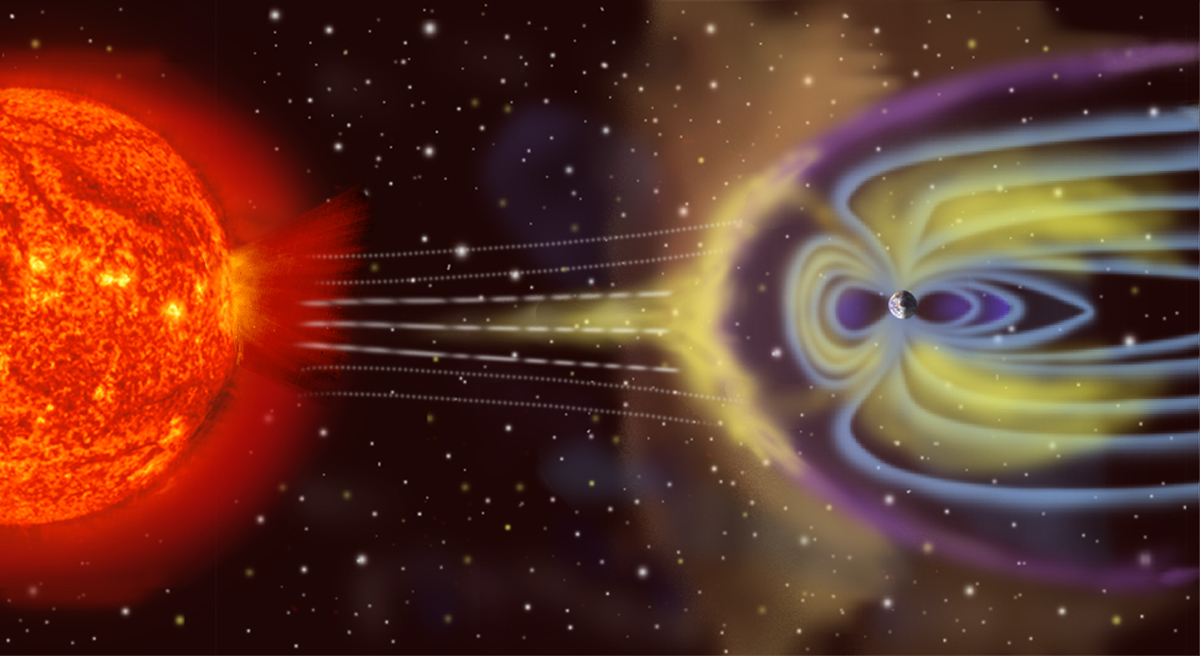
Picture this: minutes after a giant flare, high‑frequency radio fades and some navigation signals wobble, while airlines delay polar routes to keep crews within safe radiation limits. Hours later, a fusillade of energetic particles pelts satellites, corrupting bits, tripping safe modes, and complicating the very observations needed to manage the crisis. When the coronal mass ejection finally arrives, the geomagnetic storm surges through power networks, saturating transformers and forcing grid operators into a high‑stakes balancing act. Communications backbones strain as timing errors creep into GPS‑synchronized systems that underpin everything from financial trades to cell towers. Subsea fiber itself is immune to geomagnetic fields, but long undersea cables rely on powered repeaters and shore equipment that could be stressed by induced currents and voltage imbalances. Data centers may ride through on generators – until fuel runs low and cooling systems falter, turning uptime into a countdown.
Why It Matters

We’ve poured our memories into the cloud – photos, research, health records, legal archives – assuming redundancy equals immortality, but redundancy only works if failures aren’t simultaneous. A severe, widespread storm can break that assumption by stressing energy, timing, and connectivity all at once across multiple regions. Unlike a cyberattack or a single‑site disaster, a solar storm doesn’t respect borders and can hit several continents in the same day, compressing recovery windows. Even if physical media survives, prolonged outages and desynchronization can corrupt databases, stall backups, and erode the chain of custody for critical records. The nightmare isn’t a Hollywood‑style erasure of every byte; it’s a messy, selective loss that fractures continuity and trust in the historical record. That’s why scientists, utilities, archivists, and insurers now discuss space weather in the same breath as earthquakes and pandemics.
Global Perspectives

Different regions face different hazards, and latitude isn’t the only variable that matters. North American and Northern European grids span long distances with high‑capacity lines that can pick up strong induced currents, while some countries operate with tighter margins that leave fewer options in a storm. Aviation hubs near polar routes, fisheries dependent on satellite data, and precision agriculture guided by GNSS all carry their own exposure maps. Space‑weather centers in the United States, Europe, and parts of Asia now issue watches and warnings, building a culture of preparedness that simply didn’t exist a generation ago. Still, many developing regions rely on aging transformers and limited spare inventories, making recovery slower if components fail. The risk is shared, but resilience is uneven, and that inequality can turn a solar storm into a global bottleneck.
The Future Landscape

Forecasting is leaping forward with constellations of solar and heliospheric monitors, improved computer models, and machine learning tools that digest decades of storm data. Closer to home, utilities are deploying real‑time geomagnetically induced current sensors, adding series capacitors, and exploring neutral‑blocking devices to keep transformers out of danger. Satellite operators test hardened components and build autonomous safe modes that can ride through particle barrages without ground contact. Data guardians are revisiting old‑school wisdom: off‑grid tape backups, cold storage copies far from primary hubs, and recovery plans that assume days without GPS timing. I still keep a few vital documents in print, a habit that feels quaint until you imagine a week‑long outage and a locked digital vault. The endgame isn’t invincibility; it’s graceful degradation and rapid, verified recovery.
The Hidden Costs of Losing the Lights

Space weather doesn’t just threaten equipment; it threatens tempo, the cadence that keeps modern life synchronized. When timing drifts, payment systems queue, supply chains miss handoffs, and emergency services juggle patchy communications while the public scrambles for information. Hospitals lean on backups and triage which systems to keep alive, while labs pause experiments that can’t survive a power interruption or a skewed clock. Cultural memory can suffer too, as local archives and community stations without generators go quiet, and small institutions realize their backups weren’t as independent as they thought. The price isn’t only measured in outages, but in trust lost when records conflict or vanish. That erosion is slow to repair, even after the auroras fade.
What You Can Do Today

Preparation scales from households to nations, and it starts with mundane steps that matter when the grid shudders. Keep an offline copy of essential documents, maintain a small backup power source for communications, and store enough fuel or batteries to bridge several days without resupply. If you run a business, test black‑start procedures, verify that backups are geographically and electrically diverse, and practice operating without GPS timing. Ask utilities and local officials about transformer spares, GIC monitoring, and mutual‑aid agreements that speed repairs after a major storm. Support funding for space‑weather forecasting assets and ground networks that extend warning times from minutes to hours, because time is the cheapest form of resilience. When the Sun clears its throat, a little foresight can keep our story intact.
Suhail Ahmed is a passionate digital professional and nature enthusiast with over 8 years of experience in content strategy, SEO, web development, and digital operations. Alongside his freelance journey, Suhail actively contributes to nature and wildlife platforms like Discover Wildlife, where he channels his curiosity for the planet into engaging, educational storytelling.
With a strong background in managing digital ecosystems — from ecommerce stores and WordPress websites to social media and automation — Suhail merges technical precision with creative insight. His content reflects a rare balance: SEO-friendly yet deeply human, data-informed yet emotionally resonant.
Driven by a love for discovery and storytelling, Suhail believes in using digital platforms to amplify causes that matter — especially those protecting Earth’s biodiversity and inspiring sustainable living. Whether he’s managing online projects or crafting wildlife content, his goal remains the same: to inform, inspire, and leave a positive digital footprint.