Picture this scene: thousands of years before Christopher Columbus ever set foot on a ship, brilliant minds across the ancient world were already gazing at the stars, studying shadows, and observing lunar eclipses to prove something extraordinary. They knew our planet was round. Not only did they understand this fundamental truth about Earth’s shape, but they also calculated its size with stunning accuracy using nothing more than basic geometry and careful observation.
The popular myth that people believed in a flat Earth until Columbus is one of history’s greatest misconceptions. According to historian Jeffrey Burton Russell, “no educated person in the history of Western Civilization from the third century B.C. onward believed that the Earth was flat.” That was thanks to scientists, philosophers and mathematicians who, as early as around 600 B.C., made observations that Earth was round. Ready to discover how these ancient civilizations figured out one of humanity’s first great scientific achievements? Let’s dive into their remarkable stories.
The Greek Pioneers Who Started It All

The earliest documented mention of the concept dates from around the 5th century BC, when it appears in the writings of Greek philosophers. By the 5th century B.C., it was widely accepted that the Earth is a sphere. This is a critical point, as there is a widespread misconception that ancient peoples thought the Earth was flat.
Some early Greek philosophers alluded to a spherical Earth, though with some ambiguity. Pythagoras (6th century BC) was among those said to have originated the idea, but this might reflect the ancient Greek practice of ascribing every discovery to one or another of their ancient wise men. Think about it like this: imagine being the first person to look up at the moon’s curved phases and wonder if our own world might have that same round shape.
The real breakthrough came when Greek thinkers moved beyond philosophical speculation to actual evidence. In the late seventh to early sixth century BC, the Ionian geometer Thales hypothesised that the earth was a disk that floated on the ocean: so round, but still flat. His younger associate Anaximander theorised that it was a cylinder – like a column floating upright in the centre of the universe.
Aristotle’s Revolutionary Evidence
Around 350 BC, the great Aristotle declared that the Earth was a sphere (based on observations he made about which constellations you could see in the sky as you travelled further and further away from the equator) His approach was brilliant because he didn’t just theorize. He gathered proof.
During a Lunar eclipse, Earth’s shadow is always round. If Earth had any other than round, you would sometimes see another shape. Picture yourself watching a lunar eclipse unfold: the shadow creeping across the moon’s surface is always curved, never straight or angular. The position of the stars are clearly different when observed in the north and in the south. For instance, he noted that some stars seen from Egypt and Cypres weren’t visible from Greece at all.
Aristotle had a third piece of evidence that might surprise you. In ancient times, there were elephants in North Africa, at least near the Strait of Gibraltar. If Earth were round, this would explain the existence of elephants there and in India, but not in Europe: The could simply walk around the other side. Honestly, this shows how ancient minds connected geography with biology in ways we might not expect today.
Eratosthenes: The Master Calculator
Eratosthenes (276-194 B.C.) the father of “Geography,” made the discovery around seventeen hundred years before Columbus. This brilliant Greek mathematician didn’t just prove Earth was round. He measured it with remarkable precision.
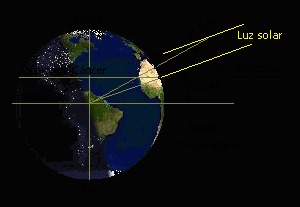
He continued his observations and noted that at noon, on the summer solstice which s the longest day of the year, there were no shadows being casted in a well in the city of Syene in Egypt. The Sun was directly overhead at that time, so he assumed that the Sun was so far off that the Rays of our Star were approaching Earth in parallel. Meanwhile, in Alexandria to the north, shadows were definitely visible at the same moment.
The math was elegant. On the summer solstice, exactly at noon, in ancient Alexandria, Eratosthenes was able to measure the angle of the sun’s rays concluding they were 7.2 degrees angle with a tall rod. Using geometry, he calculated that this angle represented one-fiftieth of Earth’s full circumference. He went on and multiplied five hundred miles by fifty and obtained twenty-five thousand miles. Eratosthenes added another two hundred miles because of “potential bad measurements.” This is how Eratosthenes concluded that the circumference of the Earth to be 25,200 miles.
The actual measurement of the circumference of Earth is 24,901 miles or 40,075 km. That’s incredibly close considering he used only shadows and basic math!
Ancient India’s Independent Understanding

The spherical shape of the Earth was known and measured by astronomers, mathematicians, and navigators from a variety of literate ancient cultures, including the Hellenic World, and Ancient India. Greek ethnographer Megasthenes, c. 300 BC, has been interpreted as stating that the contemporary Brahmins of India believed in a spherical Earth as the center of the universe.
The question of whether Indian scholars arrived at this knowledge independently remains fascinating. We are told that scholars in ancient India also believed that the earth was spherical. While we do not have technical texts dealing with the subject, the Greek writerMegasthenes (fourth to third century BC) wrote that the people of India had some similar views to the Greeks (fr. 41 = Strabo, Geography, 15.1.59): [T]hey say that world had a beginning, and is liable to destruction, and is in shape spherical.
It is said that intellectual elites in India learned that the world is spherical in the Gupta Era and so by about the time of the fall of the Gupta Empire in AD 543 However, the relationship between Greek and Indian astronomical knowledge during this period remains complex and debated among historians.
What’s particularly intriguing is that Indian astronomers developed sophisticated mathematical models for celestial mechanics. While the textual evidence has not survived, the precision of the constants used in pre-Greek Vedanga models, and the model’s accuracy in predicting the Moon and Sun’s motion for Vedic rituals, probably came from direct astronomical observations. The cosmographic theories and assumptions in ancient India likely developed independently and in parallel, but these were influenced by some unknown quantitative Gree
The Roman World Embraces Spherical Earth
In the West, the idea came to the Romans through the lengthy process of cross-fertilization with Hellenistic civilization. Many Roman authors such as Cicero and Pliny refer in their works to the rotundity of Earth as a matter of course. The Romans weren’t just passive recipients of Greek knowledge. They actively incorporated and spread these ideas throughout their vast empire.
Think about the practical implications: Roman engineers building roads across continents, Roman merchants planning trade routes across seas, Roman generals moving armies across diverse terrains. For them, understanding Earth’s true shape wasn’t just academic – it was essential for running an empire. Pliny also considered the possibility of an imperfect sphere “shaped like a pinecone”.
Knowledge of the spherical shape of Earth was received in scholarship of Late Antiquity as a matter of course, in both Neoplatonism and Early Christianity. From the 8th century and the beginning medieval period, “no cosmographer worthy of note has called into question the sphericity of the Earth”. Such widely read encyclopedists as Macrobius and Martianus Capella (both 5th century AD) discussed the circumference of the sphere of the Earth, its central position in the universe, the difference of the seasons in Northern and Southern Hemispheres, and many other geographical details.
Mesopotamian Cosmology and Its Evolution
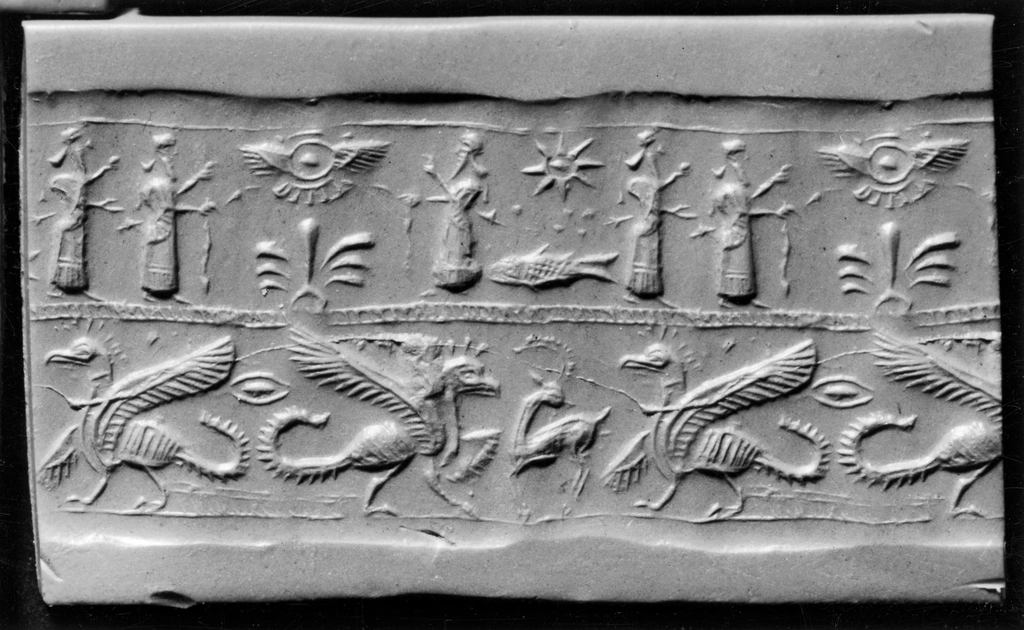
Early Mesopotamian civilizations began with different concepts. In early Mesopotamian mythology, the world was portrayed as a disk floating in the ocean with a hemispherical sky-dome above In early Egyptian and Mesopotamian thought, the world was portrayed as a disk floating in the ocean. A similar model is found in the Homeric account from the 8th century BC in which “Okeanos, the personified body of water surrounding the circular surface of the Earth, is the begetter of all life and possibly of all gods.”
Yet even within Mesopotamia, brilliant minds emerged who grasped Earth’s true nature. Seleucus of Seleucia (c. 190 BC), who lived in the city of Seleucia in Mesopotamia, wrote that Earth is spherical (and actually orbits the Sun, influenced by the heliocentric theory of Aristarchus of Samos). Imagine the intellectual courage it took for Seleucus to propose not only that Earth was round, but that it actually moved around the sun!
The transition from flat-earth mythology to spherical understanding in Mesopotamia shows how scientific ideas can take root even in cultures with strong traditional cosmologies. This wasn’t just about accepting new information – it required reimagining humanity’s entire place in the cosmos.
Medieval Islamic World’s Contributions
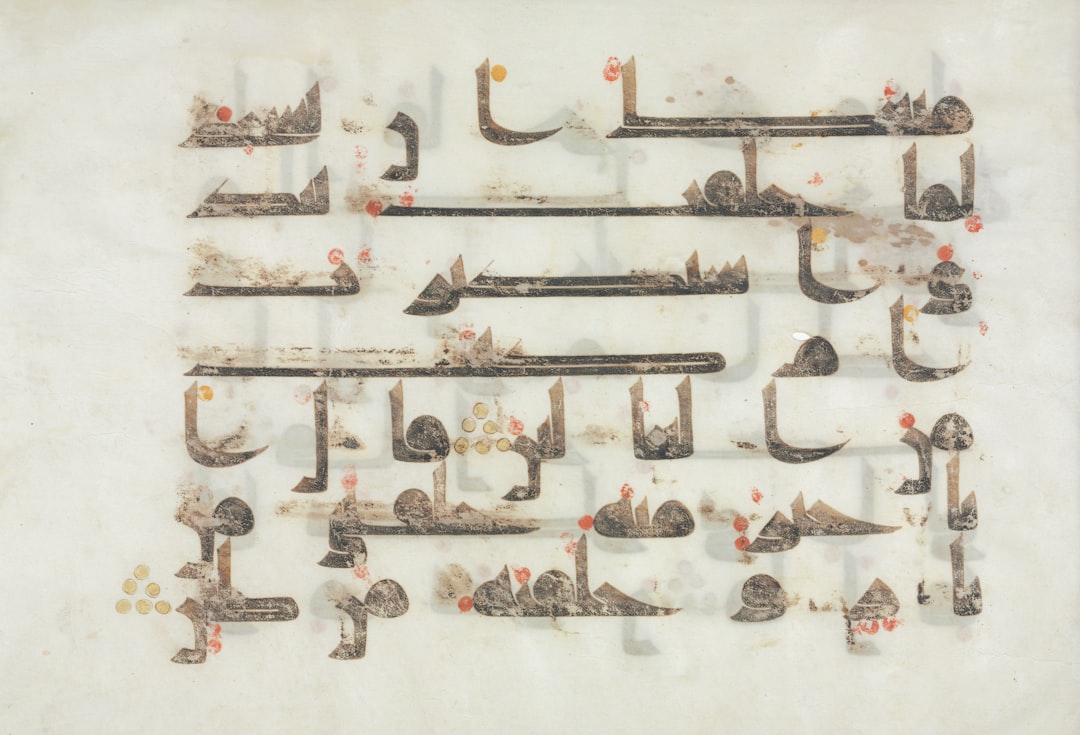
Muslim scholars in early Islam maintained that the Earth is flat. However, since the 9th century, Muslim scholars have tended to believe in a spherical Earth. The Islamic world became a crucial bridge for preserving and expanding ancient knowledge about Earth’s shape.
During the High Middle Ages, the astronomical knowledge in Christian Europe was extended beyond what was transmitted directly from ancient authors by transmission of learning from medieval Islamic astronomy. Islamic scholars didn’t just preserve Greek texts – they improved upon them, conducted their own observations, and made new calculations.
Consider how this knowledge traveled: from ancient Greece to the Islamic world, then back to medieval Europe through places like Islamic Spain. It’s a perfect example of how scientific understanding crosses cultures and continues to grow through collaboration across civilizations. By 1300, the works of Ptolemy and others arrived in Europe by way of Islamic Spain, and fully restored the Spherical Earth to respectability.
China’s Unique Square Earth Tradition

China presents one of the most interesting cases in the history of understanding Earth’s shape. In contrast, ancient Chinese scholars consistently describe the Earth as flat, and this perception remained unchanged until their encounters with Jesuit missionaries in the 17th century. China persisted in the flat-Earth model until a Jesuit influence in the 1600s, despite a 1267 gift of a Persian globe from Jamal ad-Din. China is also unusual in that its flat-Earth model was of a square rather than a circle, the latter common in other cultures.
What makes this particularly fascinating is that Chinese astronomers were incredibly sophisticated. Shen Kuo (1031–1095), a polymath often compared to Leonardo, among other things invented nautical compass, measured the distance between the North star and the true north, improved designs of the armillary sphere, and, most importantly for us, wrote on solar and lunar eclipses explaining how phases indicated that the Sun and the Moon were spherical rather than flat like fans.
If half of a sphere is covered with (white) powder and looked at from the side, the covered part will look like a crescent; if looked at from the front, it will appear round. Thus we know that the celestial bodies are spherical. Yet somehow, this brilliant understanding of celestial spheres didn’t extend to Earth itself in Chinese cosmology.
The Evidence Ancient Sailors Observed Daily

It has been suggested that seafarers probably provided the first observational evidence that Earth was not flat, based on observations of the horizon. This argument was put forward by the geographer Strabo (c. 64 BC – 24 AD), who suggested that the spherical shape of Earth was probably known to seafarers around the Mediterranean Sea since at least the time of Homer, citing a line from the Odyssey as indicating that the poet Homer knew of this as early as the 7th or 8th century BC.
Given that opportunities for observations of a lunar eclipse do not come along that often, there was also evidence of the roundness of the earth in the experiences of sailors. When a ship appears on the horizon it’s the top of a ship that is visible first. A wide range of astronomy texts over time use this as a way to illustrate the roundness of the Earth.
Think about ancient merchants crossing the Mediterranean or brave explorers venturing into unknown waters. Every day, they witnessed the same phenomenon: distant ships appearing mast-first over the horizon. As the image suggests this is exactly what one would expect on a spherical Earth. If the Earth were flat, it would be expected that you would be able to see the entire ship as soon as it became visible. For observant sailors, this was proof as clear as sunrise.
The beauty of this evidence lies in its accessibility. You didn’t need to be a mathematician or philosopher to notice it. Any sailor, fisherman, or coastal dweller could observe this daily demonstration of Earth’s curvature. Yet it took brilliant minds to connect this observation to the larger truth about our planet’s shape.
Isn’t it remarkable how these ancient civilizations figured out such a fundamental truth about our world? They used simple tools, careful observation, and brilliant reasoning to understand something that required satellites for us to see directly. Contrary to popular myth, very few educated people after about 300 BC doubted that the Earth was a sphere. Their legacy reminds us that human curiosity and scientific thinking have been shaping our understanding of the world for thousands of years. What other “modern” discoveries might have ancient roots we haven’t fully appreciated yet?