For over a century, archaeologists have looked to the fertile valleys of Mesopotamia as humanity’s urban birthplace. Southern Mesopotamia was the place where all that was first achieved, or so we believed. The ancient cities of Uruk, Ur, and Eridu have long held the crown as civilization’s earliest urban experiments. Yet beneath Ukrainian cornfields and Peruvian desert sands, a remarkable story is being unearthed that challenges everything we thought we knew about humanity’s first cities.
Shadows in the Cornfields
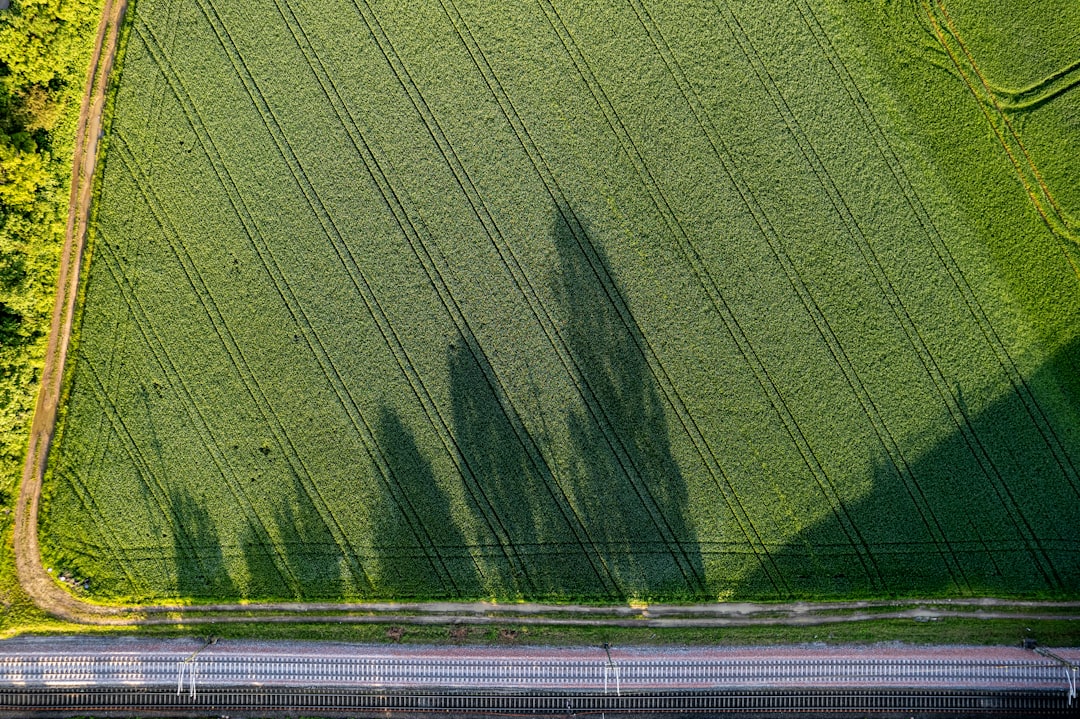
In a recent publication by the Swiss Neue Zürcher Zeitung, researchers describe the astonishing remnants of what may have been “the largest city in the world,” discernible today only through aerial shadows and scattered pottery shards. In the 1960s, a Soviet military topographer named Konstantin Shishkin was examining aerial photos taken in Ukraine when he noticed strange shadows on a piece of land south of the capital city of Kiev. These shadows took the shape of concentric circles, soon discovered to be caused by archaeological ruins sitting just beneath the surface.
The Trypillia megasites, as they came to be known, paint an extraordinary picture of urban life from roughly six thousand years ago. This site in Ukraine dates back to approximately 4100 BCE, representing some of the largest prehistoric settlements in Europe. These weren’t simple villages either. In terms of overall size, some of Cucuteni-Trypillia sites, such as Talianki (with a population of 15,000 and covering an area of some 320 hectares – 790 acres) in the Uman Raion of Ukraine, are as large as (or perhaps larger than) the more famous city-states of Sumer in the Fertile Crescent. These Eastern European settlements were largely contemporary with early Mesopotamian urban centers.
The Americas’ Hidden Genesis
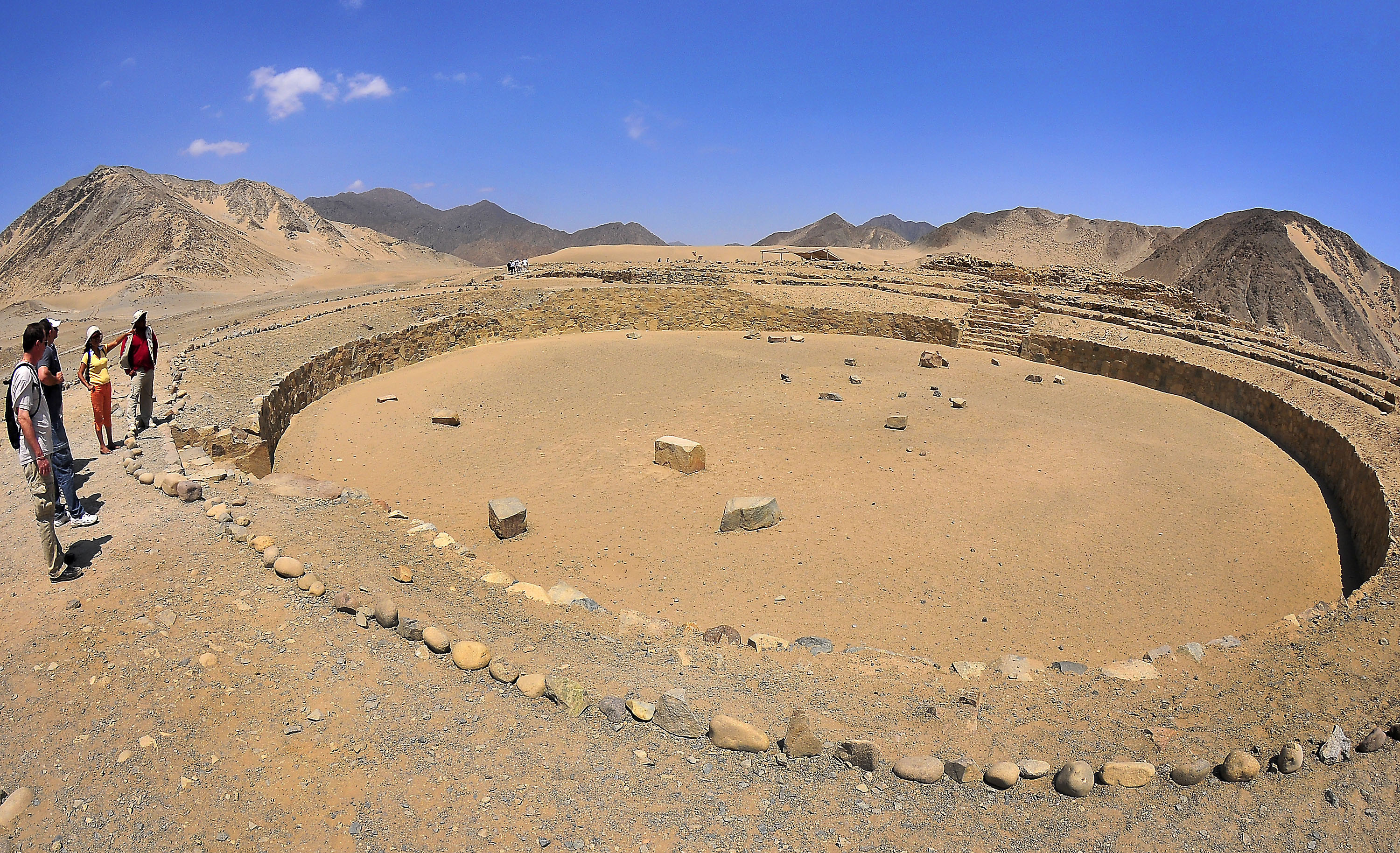
Meanwhile, on Peru’s north-central coast, another ancient urban story was unfolding. The evidence collected suggests that Caral was inhabited some 5,000 years ago, between 2600 and 2000 BCE (Before the Common Era, or Before Christ). For comparative purposes, the Great Pyramid of Khufu in Egypt was built around 2600 BCE. Complex society in the Caral–Supe arose a millennium after Sumer in Mesopotamia, was contemporaneous with the Egyptian pyramids, and predated the Mesoamerican Olmecs by nearly two millennia.
What makes Caral particularly fascinating is its peaceful nature. Among all these impressive archaeological finds, one notable absence stands out to researchers: weapons. There is no evidence of warfare, no weaponry or fortifications surrounding the city, and no traces of mutilation or violence inside the tombs discovered. Caral seems to have been a peaceful city. This challenges long-held assumptions that warfare was necessary for early urban development.
Redefining What Makes a City
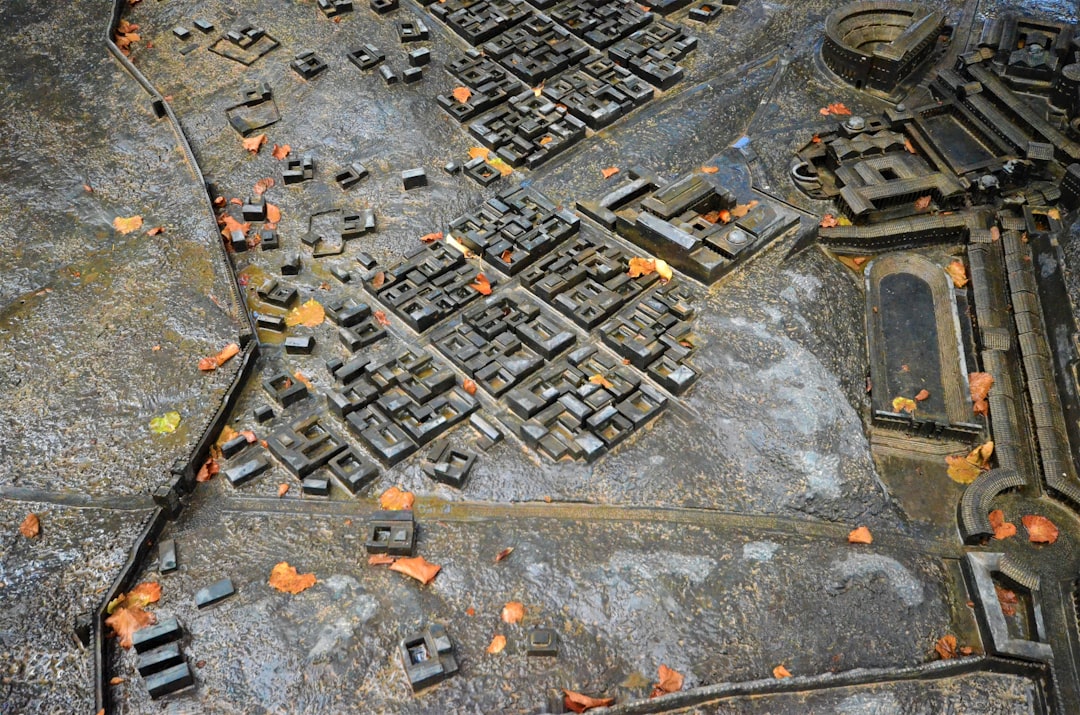
Nevertheless, Johannes Müller now considers them cities. He argues that the key feature of a city is not its size, but rather a concept and planning that is evident from the beginning. Moreover, he suggests that a crucial aspect of urban life is that one doesn’t know all the people living in the same settlement, even those just 1.5 kilometers away. The Trypillia settlements were organized in concentric circles rather than the grid patterns we typically associate with ancient cities. According to U-krane, they were circular or oval, with houses organized in concentric rings, interrupted by boulevards or wide corridors. “These are the first planned cities of humanity,” says NZZ, noting that the most remarkable site surpasses the size of Monaco and is comparable to Central Park.
Academicians have not designated the gigantic settlements of Cucuteni-Trypillia culture as “cities” due to the lack of conclusive evidence for internal social differentiation or specialization. However, there is some debate among scholars whether these settlements ought to be labeled as proto-cities. The absence of traditional urban markers like temples, palaces, or clear social hierarchies doesn’t necessarily mean these weren’t cities, just different kinds of urban experiments.
The Technology Behind the Discovery
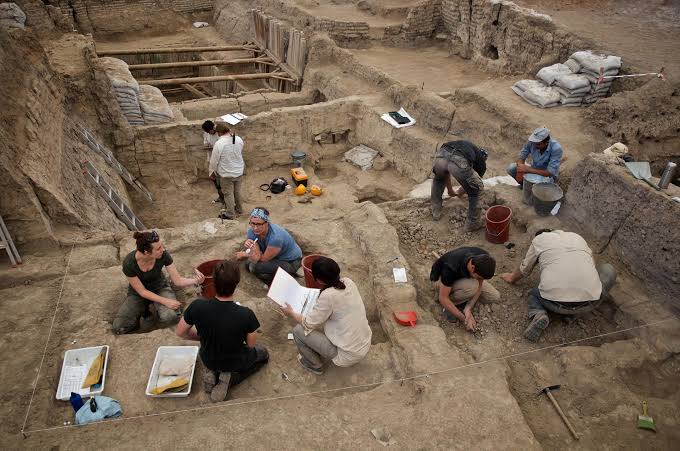
Modern archaeological techniques have revolutionized our understanding of these ancient sites. Using geomagnetics, the team re-mapped the settlements and used high-resolution imaging to locate the remains of various structures. The team discovered that the structures were laid out in circular patterns. However, it wasn’t until the 1970s that Ukrainian scientists, as reported by NZZ, launched a research campaign that required creative strategy as excavating a site of that size proved to be cumbersome and unfeasible. By employing geomagnetic techniques, researchers unveiled structures beneath the earth’s surface, discovering Trypillia megasites that span over 100 hectares.
Similarly, at Caral, radiocarbon dating has been crucial. Serious archaeological work at Caral-Supe began in the 1990s, led by Peruvian archaeologists who provided the first extensive documentation of the site. Further research in the early 21st century recognized Caral-Supe as the oldest-known civilization in the Americas. This groundbreaking discovery was partially thanks to the radiocarbon work carried out on 95 samples from the site, the earliest dating from 3,200 BCE, associated with large-scale human settlement and architectural construction.
The Great Collapse Mystery
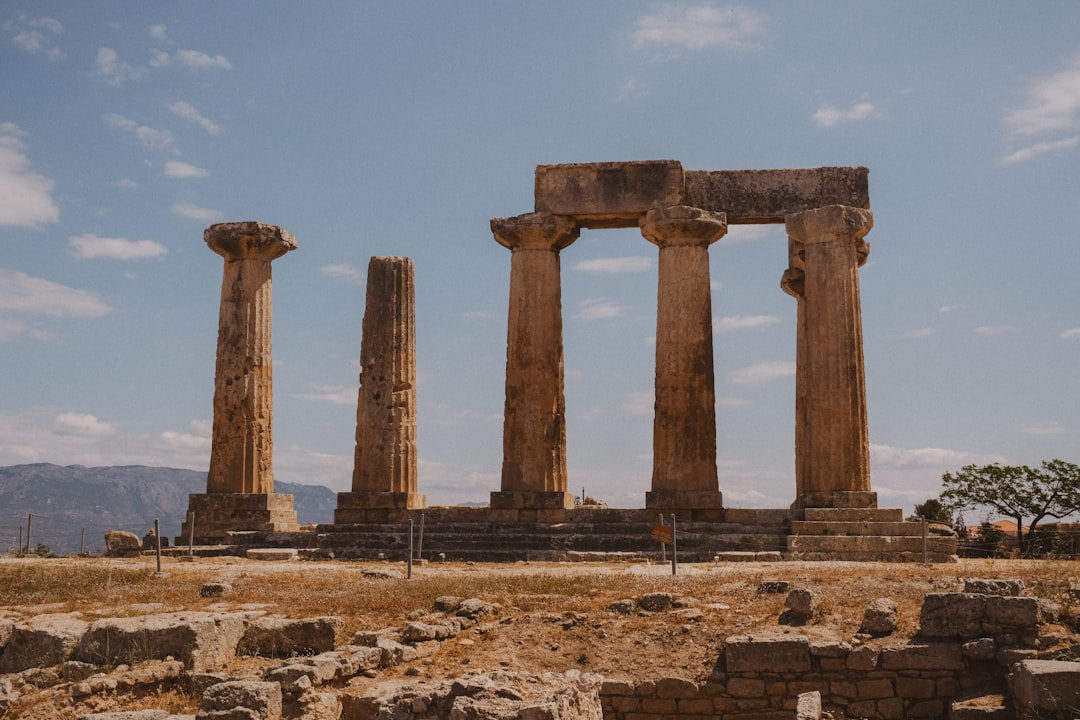
One of the most intriguing aspects of the Trypillia megasites is their mysterious disappearance. Around 3600 BCE, the Megasites disappeared. The reason for their abandonment is another mystery, with no evidence of conflicts, violence, or external invasion. The cause seems to have been internal. The nature of the society that built and inhabited these megasites is a subject of intense debate among archaeologists, as per Euromaidan Press, but it disappeared around 3,600 BCE for mysterious reasons. As of right now, a strange gap in time still exists between these megasites’ timeline and the next major city in Ukraine; thus, what happened in the span of 3,000 years?.
Researchers theorize that climate change may have played a role. Due to a dramatic worldwide climate change around 3200 BCE, the area of the Cucuteni-Trypillia culture would have been plunged into a devastating Dust Bowl drought. With their reliance on agriculture to produce food, feeding the many inhabitants of these large-scale settlements would have been unsustainable, leading to the dramatic end of the Cucuteni-Trypillia farming society and replaced by the more drought-appropriate pastoral nomadic society of the Proto-Indo-Europeans that followed.
Why This Changes Everything
Recent archaeological discoveries are rewriting the narrative of human history. Contrary to long-held beliefs that the first cities emerged in Mesopotamia or Central Asia, new evidence suggests that these ancient urban centers may have actually originated in Ukraine. The implications extend far beyond simple chronology. These discoveries suggest that urbanization wasn’t a singular invention that spread outward from one location, but rather a human innovation that emerged independently in multiple places around the world.
Caral is one of the “cradles of civilization,” six sites where civilization first originated through completely unrelated and independent processes. The site is of central importance to archaeology, as the findings and evidence it hosts can hint at the origins of other Andean civilizations and the processes involved in early urban organization worldwide. This parallel development suggests that city-building was a natural progression of human social organization rather than a rare historical accident.
The Future of Archaeological Discovery
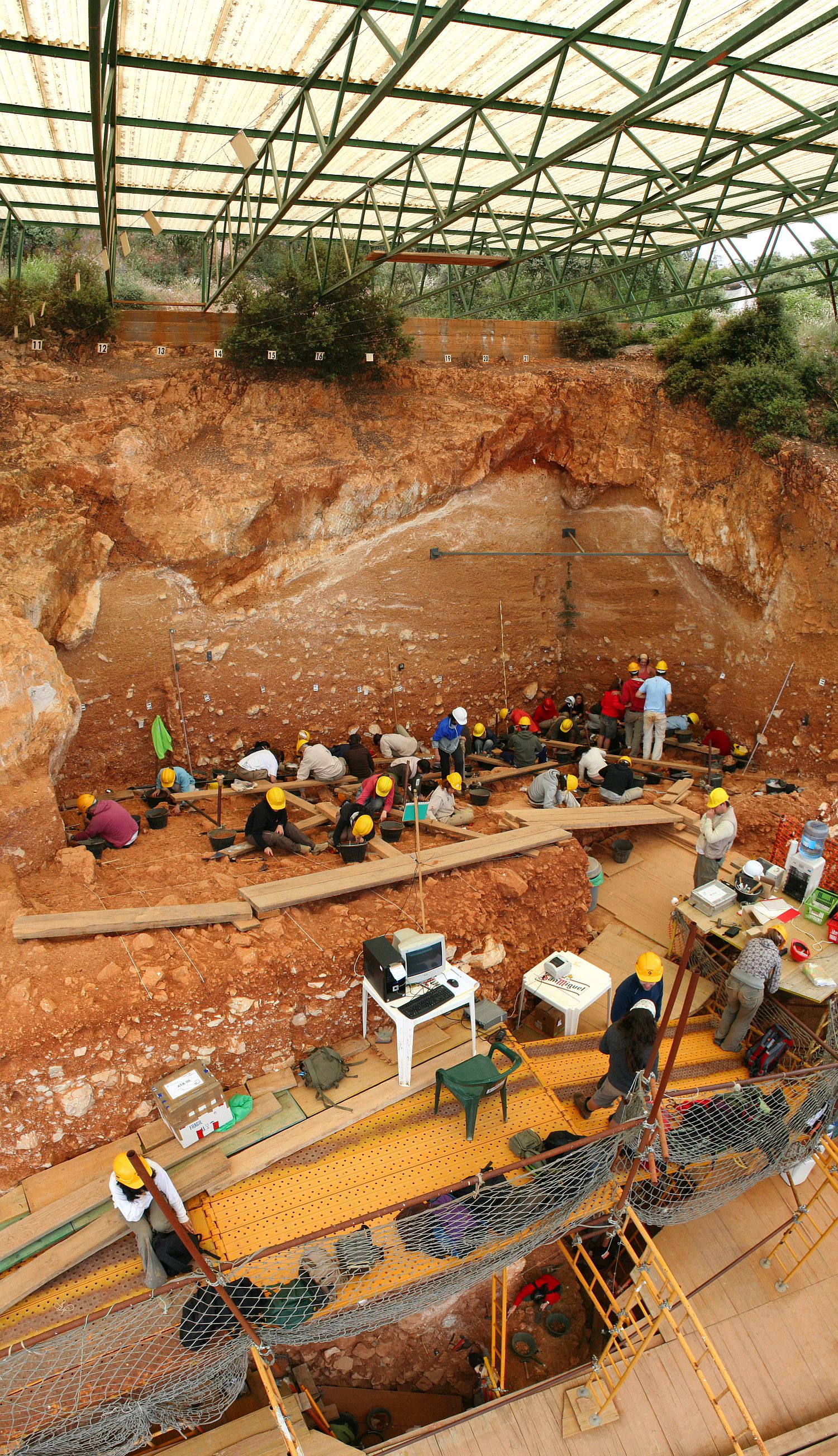
These discoveries herald a new era in archaeology where advanced technology reveals hidden histories. By employing geomagnetic techniques, researchers unveiled structures beneath the earth’s surface, discovering Trypillia megasites that span over 100 hectares. These findings challenge previous assumptions which placed urbanization later in human history. The Ukrainian settlements suggest that numerous dwellings – and by extension, cities – existed between the end of the Stone Age and the emergence of the Bronze Age. It changes everything archeologists thought they knew.
Currently, Müller and his colleagues are hoping to unearth more information to shed light on some of the Cucuteni-Trypillia culture’s more mysterious aspects, including their death rituals, social hierarchies, environmental impact, and even their eventual collapse, about which almost nothing is known. “That’s why we have to keep at it. We’re not finished with it yet,” Regina Uhl, a fellow researcher from the German Archaeological Institute, told Neue Zürcher Zeitung. Future excavations may reveal even older urban settlements, further pushing back the timeline of human civilization.
Supporting the Research
How can the public contribute to this groundbreaking research? UNESCO recognition has been crucial for sites like Caral, which was named a UNESCO World Heritage Site in 2009. This honor shows Caral’s big role in the growth of pre-Columbian Andean cultures. Supporting archaeological organizations, visiting these sites responsibly, and advocating for heritage preservation helps ensure continued research funding and protection of these irreplaceable historical treasures.
Educational institutions worldwide are incorporating these new findings into archaeology and history curricula, preparing the next generation of researchers to question established narratives and seek evidence wherever it might lead. Citizen science initiatives are also emerging, allowing amateur archaeologists to contribute to mapping and documentation efforts using satellite imagery and ground-penetrating radar data.
The story of humanity’s first cities is far from finished. As technology advances and more sites emerge from beneath desert sands and agricultural fields, we’re discovering that our ancestors were urban pioneers thousands of years earlier than we imagined. Perhaps the real question isn’t where the first city emerged, but how many different places our ingenious species independently invented urban life. What other ancient cities might be hiding just beneath our feet, waiting to rewrite history once again?