Night settles on a coral reef, and the water seems calm – until a small, patterned cone slides from the sand and turns the quiet into a razor’s edge. The geography cone snail, Conus geographus, hunts with a hidden harpoon and a venom cocktail so precise it can drop a fish in a heartbeat. It is secretive, patient, and devastatingly effective, echoing the Scorpio archetype with eerie fidelity. Science once underestimated this animal as just another pretty shell, but new research reveals a pharmacological arsenal and survival strategy that borders on the unbelievable. The real story isn’t only that it’s dangerous; it’s that its biology is rewriting how we think about pain, nerves, and the chemistry of life.
The Hidden Clues
To find C. geographus, you have to think like a shadow. It shifts under a thin veil of sand by day, emerging at dusk with a deliberate glide, the shell’s map-like tessellations breaking its outline. That quiet presence conceals a flexible proboscis and a barbed tooth, loaded like an arrow in a living crossbow. When a fish wanders too close, the strike is almost polite – no splash, no drama – just sudden stillness where motion used to be. The intensity is all in the invisibles: chemistry, timing, and the fine-tuned geometry of an ambush.
I still remember picking up an empty cone shell on a beach years ago and being surprised that fear could coexist with fascination. The shell felt like a coded message, a warning in elegant handwriting. That’s the geography cone’s power: it doesn’t need to be large to be lethal, or loud to be heard. Everything about it whispers – then the science shouts. If Scorpio had a mascot, it would choose this quiet assassin of the shallows.
Anatomy of a Perfect Ambush
The geography cone’s weapon is a disposable, hollow radular tooth, sharpened like a micro-dart and fired from a muscular proboscis. Once embedded, the tooth delivers a cocktail of conotoxins that target nerve channels with frightening specificity. Some peptides block voltage-gated calcium channels; others jam sodium or potassium gates, freezing electrical signals in their tracks. Among the most startling tricks in its toolkit is a form of weaponized insulin released into the water to push nearby fish into hypoglycemic stupor, making them slow and careless. This is not brute force – it’s neurochemical choreography.
What seems like magic is really exquisite evolutionary engineering. Each toxin hits a different lock on the neural door, and together they click the system shut. The snail then reels in its prize with a measured patience, proof that survival can be surgical rather than explosive. If intensity is focus refined to a point, this is intensity perfected. The secrecy lies not in what you see, but in how the biology hides in plain sight.
From Ancient Tools to Modern Science
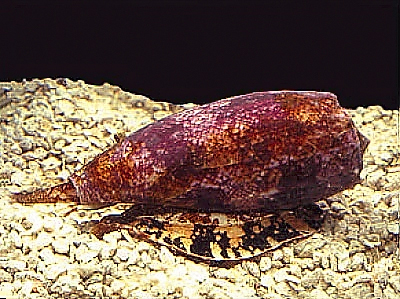
Long before laboratories learned the snail’s chemical alphabet, people traded and treasured cone shells for their beauty, often unaware of the living danger they once housed. Fishers in the Indo-Pacific have long treated live cone snails with caution, a community wisdom that science eventually confirmed. When pharmacologists began isolating individual conotoxins, they found precision tools for probing the nervous system. One toxin from a related cone species became an approved non-opioid pain drug delivered directly into spinal fluid, a proof of concept that venoms can be medicine. The geography cone’s library, meanwhile, remains a largely unread book with many chapters still sealed.
The result is a rare convergence: museum objects, local knowledge, and cutting-edge biochemistry all point to the same truth. Beauty and danger often share a border, and curiosity is the passport. By treating shells as archives rather than trinkets, researchers are uncovering molecular keys to pain, epilepsy, and even diabetes research. The snail, in its secrecy, has been carrying a pharmacopeia at reef’s edge. We were late to the reading, but we’re catching up fast.
Why It Matters
Traditional painkillers often work like sledgehammers, dulling pain but carrying heavy costs, including dependence and side effects. Cone snail peptides act more like laser pointers, targeting specific ion channels and receptors involved in nerve signaling. That precision opens doors to therapies that could avoid the pitfalls of broad-acting drugs. Studying these toxins also maps the nervous system with new clarity, revealing functions that were previously hidden or muddled by less specific tools. For patients living with severe, intractable pain, that difference is not academic – it’s life-changing.
There’s a deeper scientific payoff, too. When nature solves a problem – in this case, how to reliably stop a fish – it often discovers general rules that translate beyond the reef. Conotoxins are teaching us about channel gating, synaptic release, and the choreography of nerve networks under stress. Each peptide is a molecular hypothesis, and the snail’s venom gland is an experimental library. In a world desperate for better neurology and safer analgesia, that library matters.
The Hidden Economy of Venom
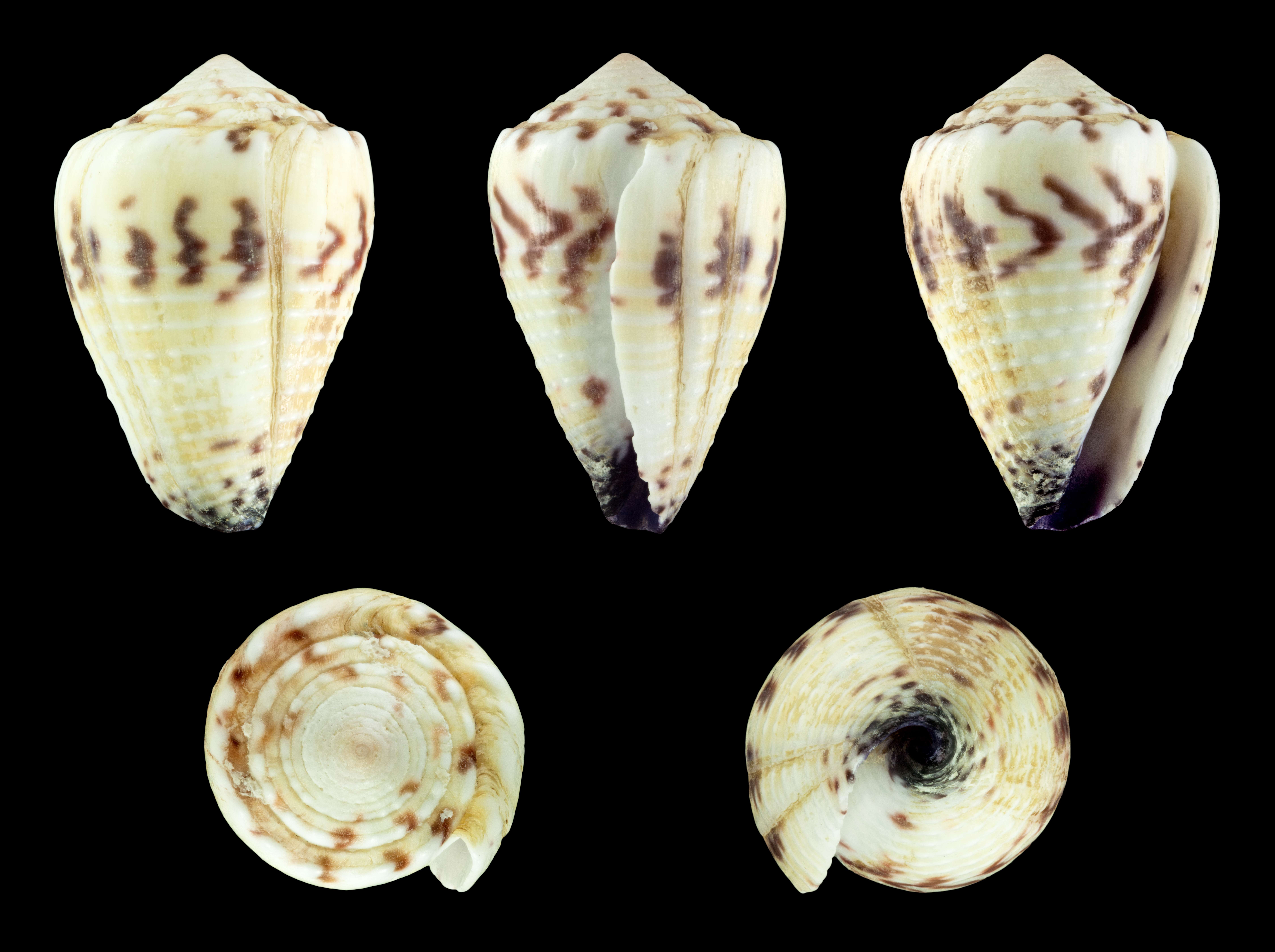
The geography cone isn’t a lone genius; it’s part of a vast guild of cone snails, each with a different chemical dialect. Researchers estimate that hundreds of unique peptides can come from a single species’ venom, with the combined diversity across cones reaching into the tens of thousands. The vast majority remain uncharacterized, partly because many cones are rare, and their habitats are fragile. Modern venomics – high-throughput extraction, mass spectrometry, and transcriptomics – is accelerating discovery, but it still feels like skimming the surface of a very deep pool. Every new peptide discovered is a potential tool, a potential therapy, or a clue to how life wires itself.
Quick facts that sharpen the picture: – Many cone snails are specialized – some hunt worms, some mollusks, and a smaller group, including C. geographus, hunt fish. – Fish-hunting cones generally produce the fastest-acting venoms, tuned for split-second shutdowns. – Only a small proportion of cone toxins have been tested in clinical contexts, leaving a massive, unexplored pipeline. – Sustainable, nonlethal sampling methods are increasingly used to protect both snails and reefs.
Global Perspectives
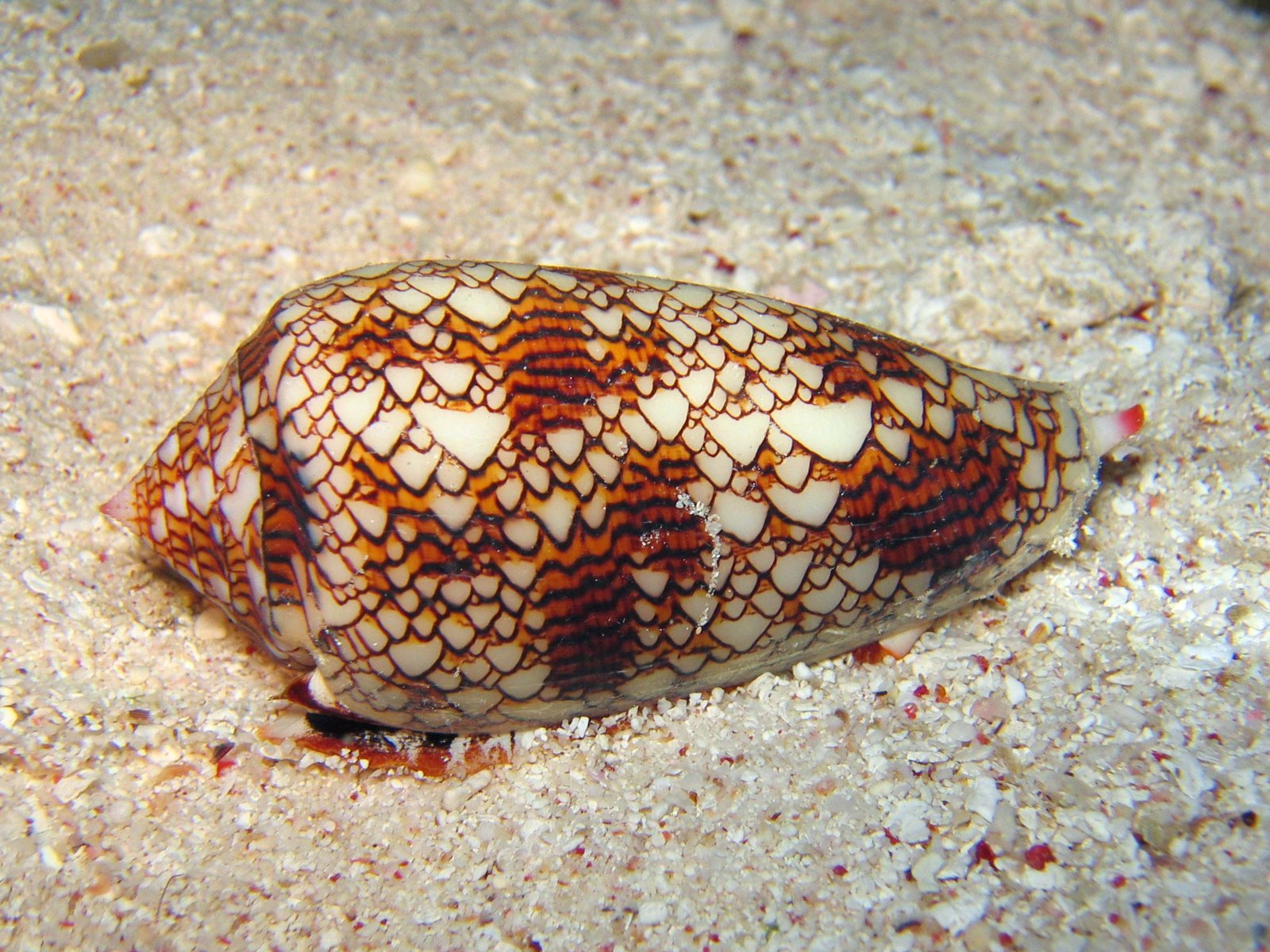
C. geographus lives across the tropical Indo-Pacific, from the Red Sea to the Great Barrier Reef and into the central Pacific islands. Human encounters are uncommon but serious, most often when people handle live snails while gathering shells or fishing at night. Local communities often carry lore about the danger, a cultural early warning system that science later codified with venom analyses and clinical reports. Climate change and reef degradation complicate the picture by stressing ecosystems and shifting species distributions. When reefs crumble, everything that depends on them, including small specialists like cones, is at risk.
At the same time, the biomedical interest in venom can create subtle pressures. Ethical sourcing and fair collaboration with Pacific and Southeast Asian communities are essential to avoid biopiracy. A secure future for cone snails should include reef protection, respect for local knowledge, and benefit sharing from any medical breakthroughs. The story is global, but the stakes are local and immediate. The reefs are both laboratory and home, and they need to survive for the research to matter.
The Future Landscape
Next-generation venomics is moving from discovery to design. Machine-learning models now predict which peptide tweaks could improve stability, specificity, or delivery, shrinking the long road from reef sample to candidate drug. Synthetic biology labs are building microbial factories to produce rare conotoxins without harvesting snails, easing conservation concerns. On the clinical side, better delivery systems – like targeted nanoparticles or novel intranasal routes – aim to make peptide drugs practical outside specialized settings. The technology is catching up to the biology, which is a rare and hopeful alignment.
But challenges remain, and they’re not small. Peptides can be fragile in the bloodstream, and scaling manufacturing without cutting corners is hard. Regulatory pathways for venom-derived medicines still demand careful, expensive trials, and failure rates can be discouraging. There’s also the unsolved problem of treating cone envenomation itself – supportive care exists, but a widely available antivenom does not. The intensity of the science must be matched by the patience to see it through.
The Hidden Clocks of Risk and Safety
Because envenomation progresses quickly, first aid is all about time. Pressure-immobilization can slow lymphatic spread, and rapid medical attention can make the difference between severe symptoms and catastrophe. The paradox is that the same speed prized in a medical toxin – fast, clean action – is dangerous in the wild. Divers, fishers, and beachcombers benefit from simple, practical rules: do not handle live cone snails, especially large ones, and treat unknown shells with caution. Respect is the cheapest and most effective safety protocol.
There’s a policy angle here, too. Coastal tourism is growing in many parts of the Indo-Pacific, and public education lags behind. Clear signage, local briefings, and collaboration with dive operators can reduce incidents without feeding sensational fear. The geography cone isn’t out to get us; it’s out to get dinner. Our job is to keep that line clear.
How You Can Help
If this animal speaks to your inner Scorpio – focused, private, unflinching – channel that energy into keeping both reefs and research alive. Support reef conservation groups that protect coastal habitats where cone snails and countless other specialists live. Back open, ethical science by endorsing projects that share benefits with local communities and use nonlethal sampling. If you dive or snorkel, choose operators who emphasize marine safety and education, and keep your hands off the reef and its residents. Small choices add up, especially when nearly half of reef systems in some regions face significant stress.
You can also help push the science forward in simple ways. Engage with reputable natural history museums and citizen-science platforms that document marine biodiversity. Encourage funding for non-opioid pain research, where conotoxin-inspired drugs could change lives. Share what you’ve learned with friends who collect shells and ask them to avoid live creatures and sensitive habitats. In a world full of noise, there’s power in a quiet, informed decision – doesn’t that feel like the right kind of intensity to practice today?