The alert would hit before breakfast: satellites glitching, radio fading, auroras blooming far beyond polar skies. The story sounds apocalyptic, but the real plot is messier and more human – how we’d navigate a suddenly harsher space-weather world with tools we already have and others we still need. Earth’s magnetic field is the quiet bodyguard that rarely asks for thanks, deflecting much of the Sun’s charged particle barrage and shaping our technology’s comfort zone. Imagine it faltering in a day; scientists don’t think that’s how physics works, but as a thought experiment it exposes the pressure points in our modern lives. What fails, what bends, and what we can fix tells us who we are under a sky that won’t stop moving.
The Hidden Clues: From Ancient Tools to Modern Science
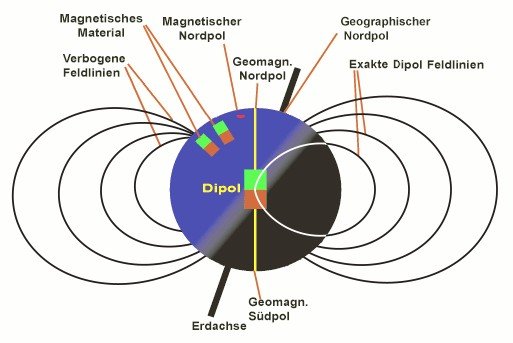
Long before satellites, fired clay and lava flows kept the receipts. As mineral grains cooled, they aligned with the local field, leaving a magnetic fingerprint that lets researchers read past intensity changes and flips. The rock record shows reversals and short-lived dips called excursions, including a notable weak spell around 42,000 years ago (the Laschamp excursion) that did not trigger global catastrophe. That’s a sobering clue: life adapts, even when the planet’s magnetic mood swings. Still, the record also whispers that weak fields open the door to livelier space weather and trickier days for technology.
Modern measurements sharpen the picture. Ground observatories and satellite missions map a field that isn’t uniform, with a particularly weak patch over the South Atlantic that nudges satellites into extra radiation. Long-term records suggest the global dipole moment has ebbed by roughly about one tenth since the nineteenth century, while shifting flows in Earth’s liquid outer core keep rearranging the lines. None of this screams “tomorrow’s collapse,” but it does say the system is dynamic and uneven. When the field sags, the consequences don’t wait for a tidy schedule. They ripple out along orbits, power lines, and flight paths.
What Would Collapse Really Mean?
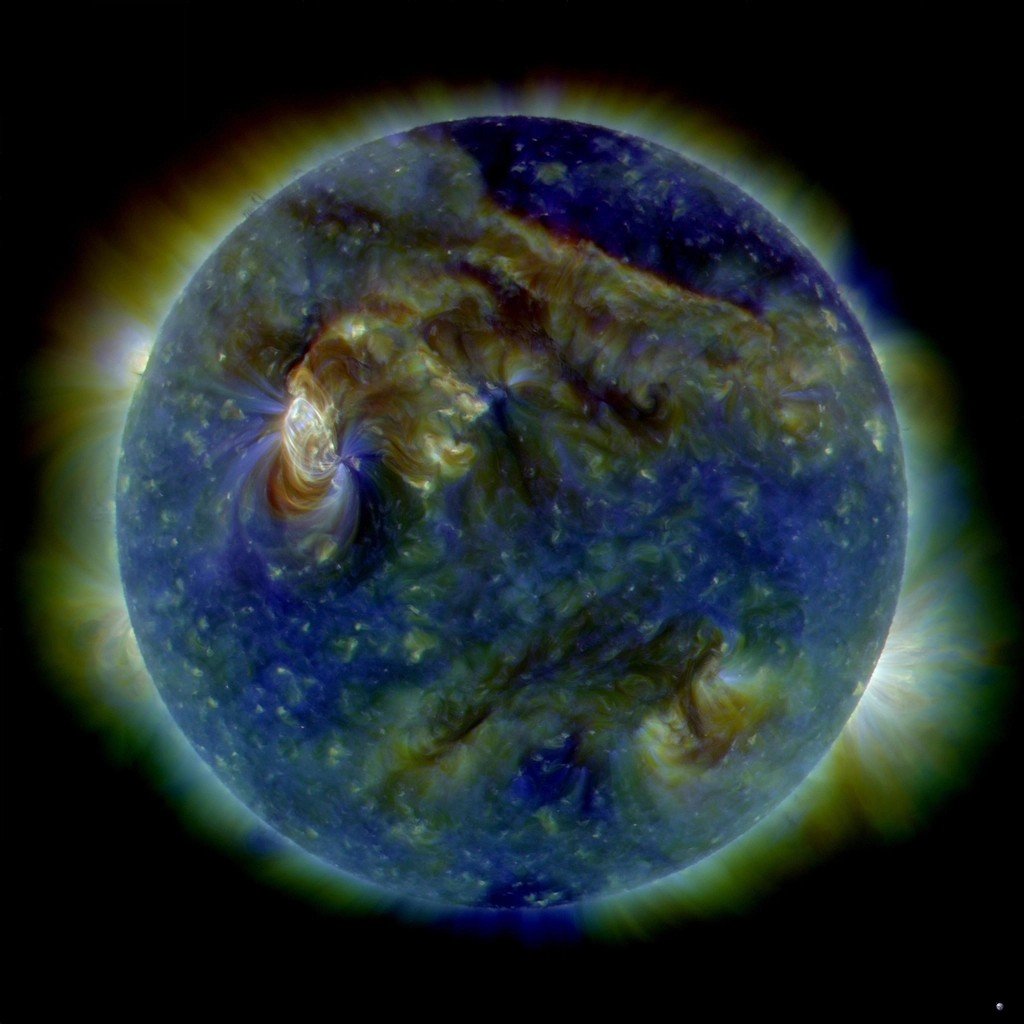
Collapse doesn’t mean the field vanishes like a switch flipped to off. It means the magnetosphere – the bubble that deflects much of the solar wind – would shrink and reshape, letting more charged particles reach the upper atmosphere. Radiation belts would puff and distort, and the boundary where Earth’s space begins would bristle with currents and turbulence. The ionosphere would see bursts of energy that change how radio waves travel and how GPS signals bend. In short: more noise in the space around us, and more stress on anything that relies on clean signals and stable power.
The air itself would react. Energetic particles can spark chemistry that nibbles at high-latitude ozone for days to weeks, subtly changing how ultraviolet light filters to the surface. Low-Earth-orbit satellites would feel more drag as storms heat and swell the upper atmosphere, shaving days or months off lifetimes in crowded orbital highways. Some spacecraft would ride out the storm with robust shielding; others might tumble or brown out, especially if they already skate through weak-field regions. It wouldn’t be a movie-style apocalypse, but it would be a messy stress test – one that keeps engineers up at night.
The Sky That Never Sleeps
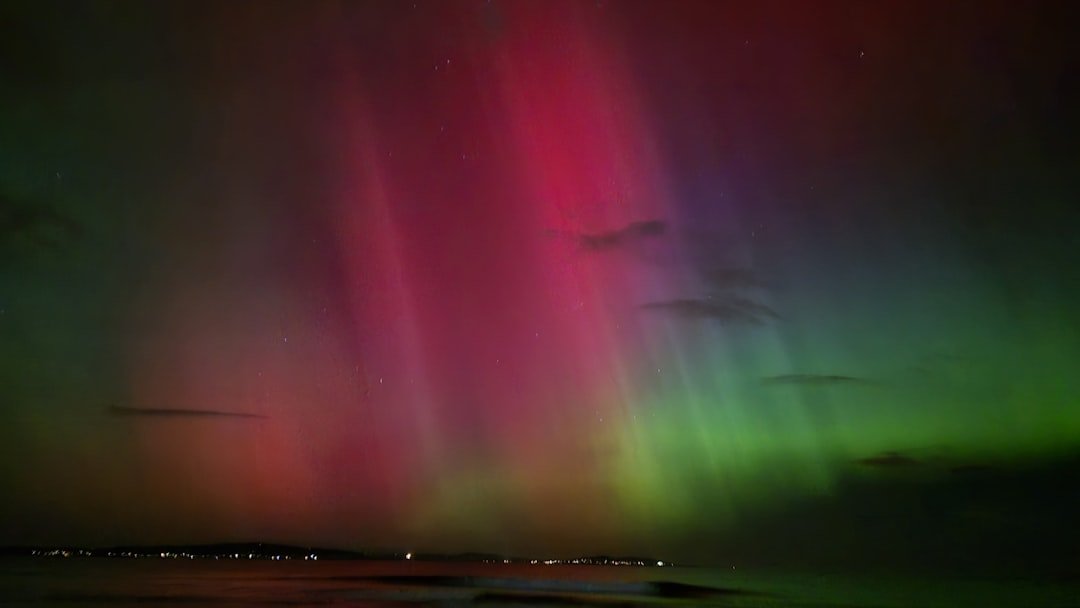
First come the lights. Auroras would march toward the equator, flooding skies in places that rarely see them, gorgeous and a little unnerving. But that beauty rides on currents that twist navigation, scramble HF radio, and cut polar communications just when pilots want them most. Satellite operators would juggle safe modes, reroute data, and time maneuvers to avoid the worst streams of particles. Spacewalks could be delayed; delicate instruments would hide behind protective modes while the storm throws its weight around.
I still remember standing under a rippling aurora once, feeling small and lit up inside, like the sky had switched languages and was speaking in color. That thrill sits next to a practical worry: the same energy painting the atmosphere can seep into circuits and sensors. Imagine a global festival in the heavens with a pickpocket moving through the crowd. Everyone’s looking up, but someone must watch the bags. That tension – wonder versus risk – is the heartbeat of space weather.
On the Ground: Power, Flights, and Daily Life
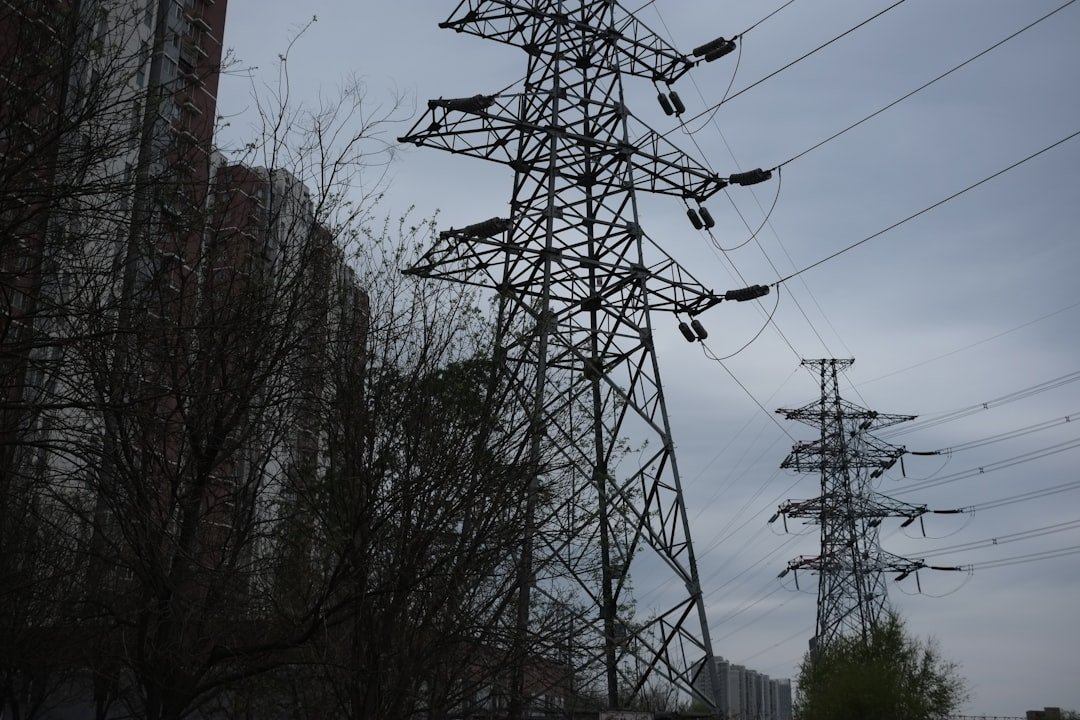
Back on Earth, long metal runs act like antennas for trouble. Storm-driven electric fields can push geomagnetically induced currents through transmission lines, heating transformers and tripping protections across whole regions. Engineers know this drill from past storms that darkened cities and stressed grids, and the stakes would climb if the magnetosphere offered less shelter. Airlines would reroute around polar caps to limit radiation doses and keep radios reliable, adding time and cost to already tight schedules. Even buried pipelines can see corrosive currents increase maintenance headaches.
Daily life would feel glitchy rather than ruined. GPS timing – the heartbeat for financial trades, cell towers, and data centers – could wobble, nudging systems toward backup clocks and redundancy plans. Precision farming that leans on centimeter-level corrections would dial back operations until signals settle. Offshore navigation, emergency communications, and power-market operations would all lean harder on forecasts and defensive playbooks. The smartest response looks boring: surge margins, spare parts, practice drills, and honest public updates.
Why It Matters
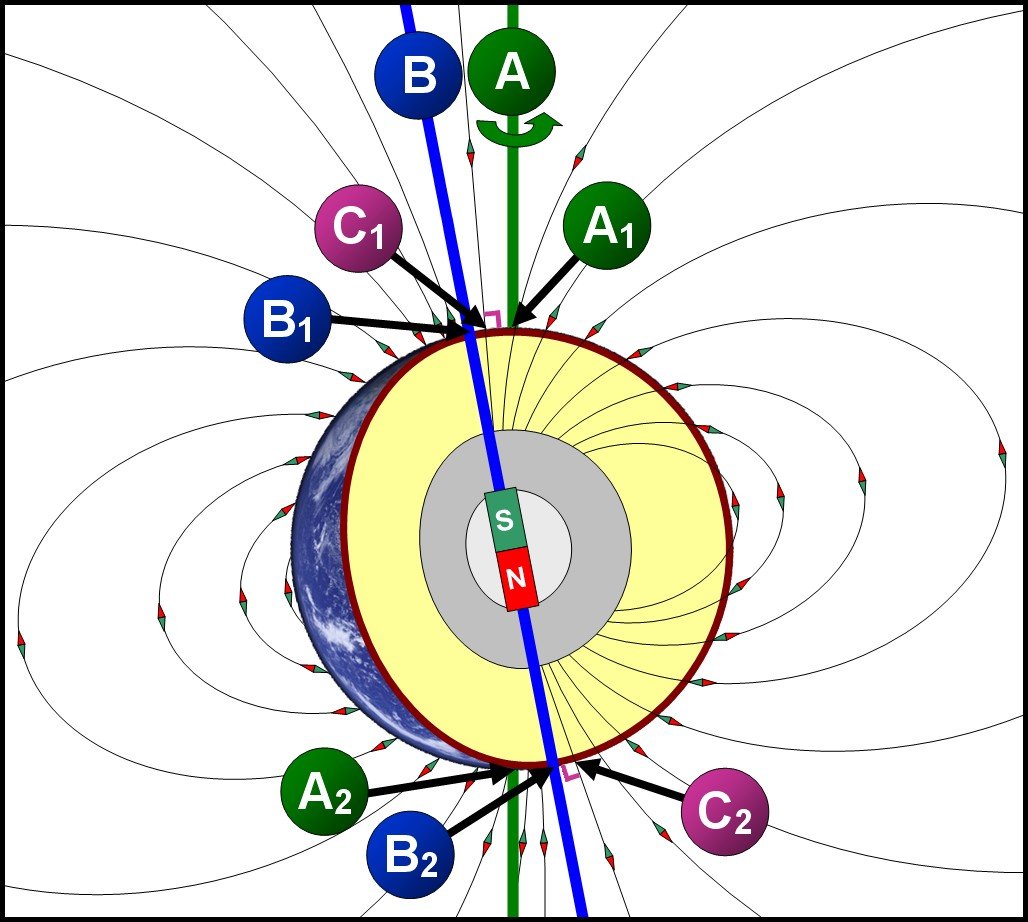
It matters because our civilization quietly married the sky. We built an economy that assumes satellites will guide tractors, clocks will be universal, jets will sprint over the poles, and power grids will hum without surprise. A weaker magnetic shield doesn’t end that marriage, but it complicates it, like moving to a windy coast where you bolt the windows before a storm. Past generations lived through magnetic wobbles with less tech at stake; we live with more to lose but also more tools to manage it. The difference between a headline and a footnote is preparation.
Here’s the grounding context. Earth’s global field has flipped many times in the deep past, and life persisted without obvious mass die-offs tied solely to reversals. The atmosphere won’t blow away in a week; gravity and chemistry still do heavy lifting, and escape plays out over geological ages. Yet space weather already causes damage today, and a weaker field sharpens those edges. So the risk isn’t extinction – it’s disruption, cost, and cascading failures that can be avoided if we respect the physics and plan accordingly.
Global Perspectives
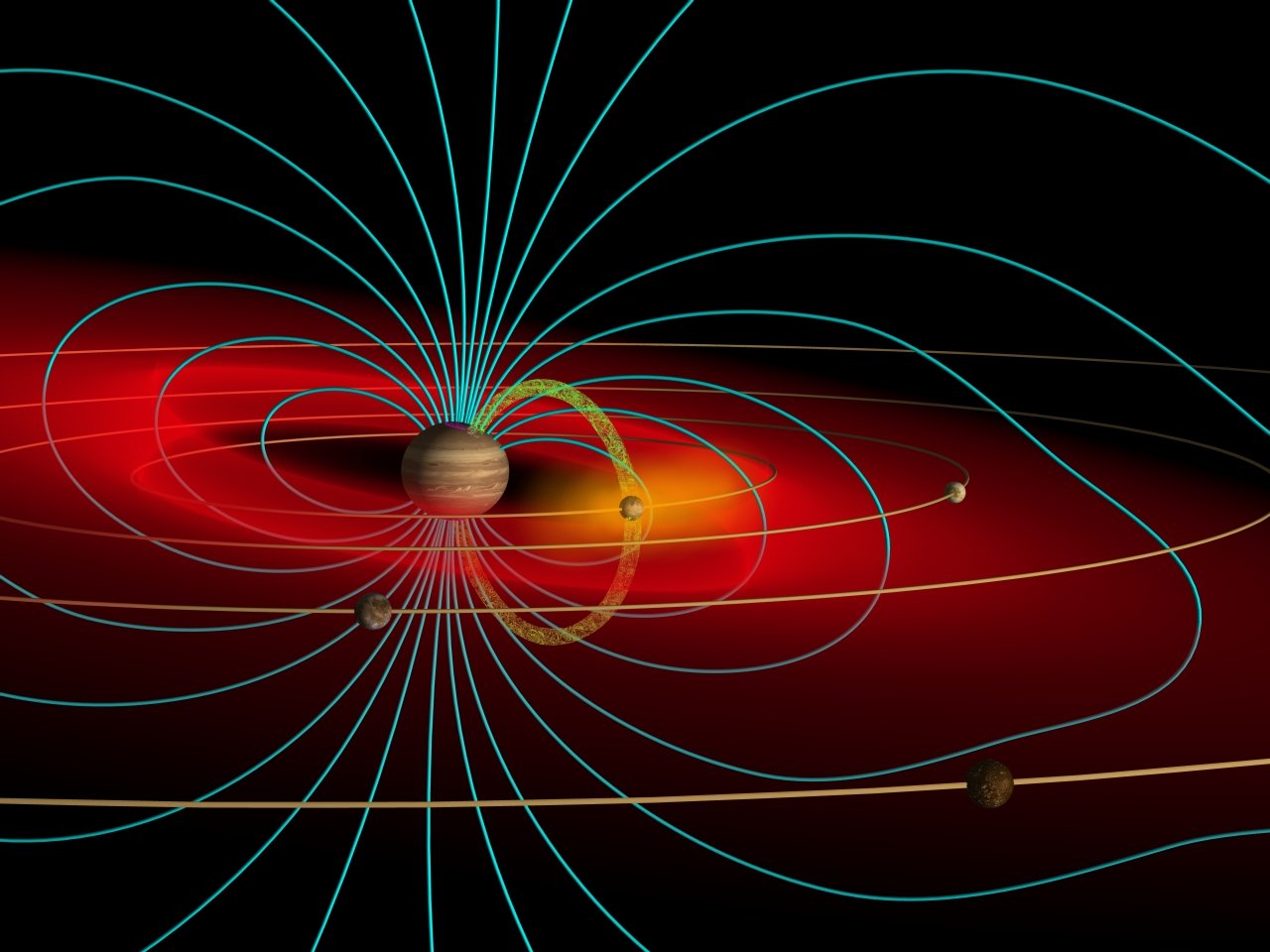
Risk is not evenly distributed. High-latitude nations from Canada to Scandinavia sit under auroral ovals where currents slice through ground and sky, while regions under the South Atlantic weak spot face extra satellite hazards. Developing countries often rely on long-distance transmission and lack spare transformers, making recovery slower if the grid trips hard. Airlines that bet on polar express routes would absorb delays and fuel costs, while equatorial communities might see more satellite service outages than they bargained for. The same storm can be a light show in one place and a budget crisis in another.
Cooperation is the quiet superpower. Space-weather centers share alerts across borders; power operators swap playbooks; research teams deploy magnetometers and ionospheric sensors from Antarctica to equatorial islands. In a crunch, constellation operators can pool tracking and radiation data to shorten recovery times. Universities and small labs now fly cubesats that add nimble measurements the big craft miss. A sprawling, stitched-together network beats any single observatory when the sky gets loud.
The Future Landscape
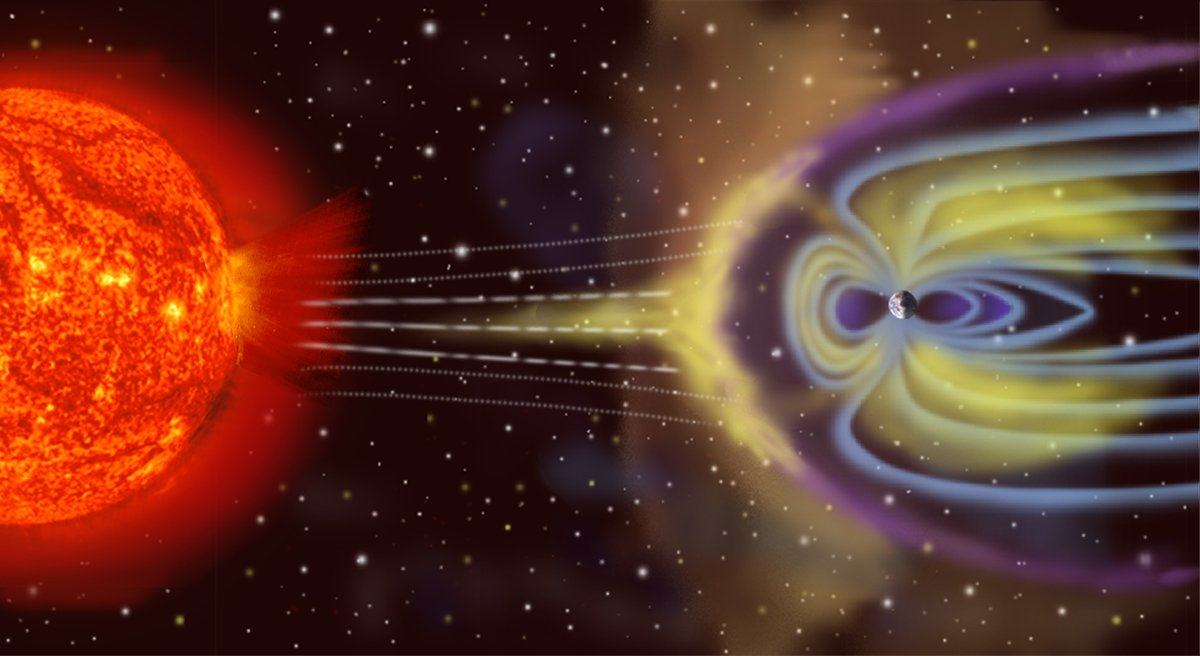
The near term is busy. Solar activity is cresting this cycle, and new missions are taking vantage points that let us see eruptions coming from the Sun’s far side and edges. Fresh instruments will sample the solar wind before it hits home, giving grid operators and spacecraft minutes to hours of lead time – precious in a fast storm. Forecast models are blending physics with machine learning to translate raw plasma data into practical warnings for timing, radiation, and drag. Satellite builders are thickening shields, hardening electronics, and designing graceful safe modes that don’t turn a storm into a self-inflicted outage.
On the ground, utilities are testing series capacitors and specialized blockers to choke off harmful currents without wrecking normal operations. Transformer designs are moving toward higher thermal margins and better monitoring so subtle heating gets noticed early. Aviation is refining dose tracking and alternate routes, making detours smoother when storms snarl the poles. And yes, low-Earth-orbit megaconstellations are learning the hard lessons – calibrating density-altitude forecasts, planning orbital “loiter zones,” and keeping fuel in the tank for draggy days.
How You Can Help
Start by staying space-weather literate. Follow national alerts, even casually, so an aurora headline or a polar flight detour lands with context, not panic. If you work with critical timing or navigation, pressure-test the backups and ask dumb questions early; it’s amazing how many smart systems fail on the simple stuff. Support local grid modernization and science education – better transformers and better textbooks both pay off when the Sun coughs. And if you’re lucky enough to see the sky ignite, enjoy the beauty, then check on the people whose tech keeps the lights on.
There’s a deeper civic habit here: normalize preparation without drama. Communities that drill for storms bounce back faster, whether the gusts come from oceans or the Sun. Talk with schools about citizen-science magnetometers and aurora reporting; those small data streams add up. Back research missions that give everyone fair warning, because a shared sky deserves shared tools. If tomorrow came early, would we be ready?
Suhail Ahmed is a passionate digital professional and nature enthusiast with over 8 years of experience in content strategy, SEO, web development, and digital operations. Alongside his freelance journey, Suhail actively contributes to nature and wildlife platforms like Discover Wildlife, where he channels his curiosity for the planet into engaging, educational storytelling.
With a strong background in managing digital ecosystems — from ecommerce stores and WordPress websites to social media and automation — Suhail merges technical precision with creative insight. His content reflects a rare balance: SEO-friendly yet deeply human, data-informed yet emotionally resonant.
Driven by a love for discovery and storytelling, Suhail believes in using digital platforms to amplify causes that matter — especially those protecting Earth’s biodiversity and inspiring sustainable living. Whether he’s managing online projects or crafting wildlife content, his goal remains the same: to inform, inspire, and leave a positive digital footprint.