

Have you ever noticed how your dog seems to know exactly when dinnertime approaches, even without looking at a clock? Or how they can appear to predict your arrival home from work with uncanny accuracy? The relationship between dogs and time isn’t just about routine – it’s about experiencing the very fabric of existence in ways we’re only beginning to understand. While we humans rely on artificial markers like clocks and calendars, our canine companions navigate through time using an entirely different sensory compass that makes our mechanical measurements seem almost primitive.
The Secret Clock Inside Every Dog

Dogs possess something called a circadian rhythm, much like humans do, but theirs operates on a level that puts our natural time-keeping abilities to shame. A dog’s circadian rhythm – the 24-hour cycle that regulates sleep time, wake time, and other biological processes – does work similarly to a person’s circadian rhythms. In fact, experts believe canine cycles adapted to human cycles during domestication.
Like humans, dogs have an internal biological clock that affects their perception of time. A dog’s circadian rhythm regulates various physiological processes over a 24-hour cycle. External cues like daylight and darkness influence this biological clock. This internal timepiece doesn’t just tell them when to sleep – it orchestrates their entire daily experience in ways that make them remarkably attuned to the rhythm of life itself.
When Sixty Minutes Feels Like Seventy-Five

Here’s where things get really fascinating: time actually moves differently for dogs than it does for us. Dogs have a higher metabolism than humans, which may influence their time perception, though the exact relationship is not fully understood. Imagine living in a world where every minute stretches just a bit longer, where every moment has more space to unfold.
This isn’t just speculation – it’s backed by solid research showing that dogs perceive time as passing more slowly than humans do. This is based on research on various species, showing differences based on metabolism, ecology, and lifespan, as well as other factors. So when you leave for what feels like a quick trip to the store, your dog might be experiencing something closer to an extended absence.
The Incredible Nose That Smells Yesterday
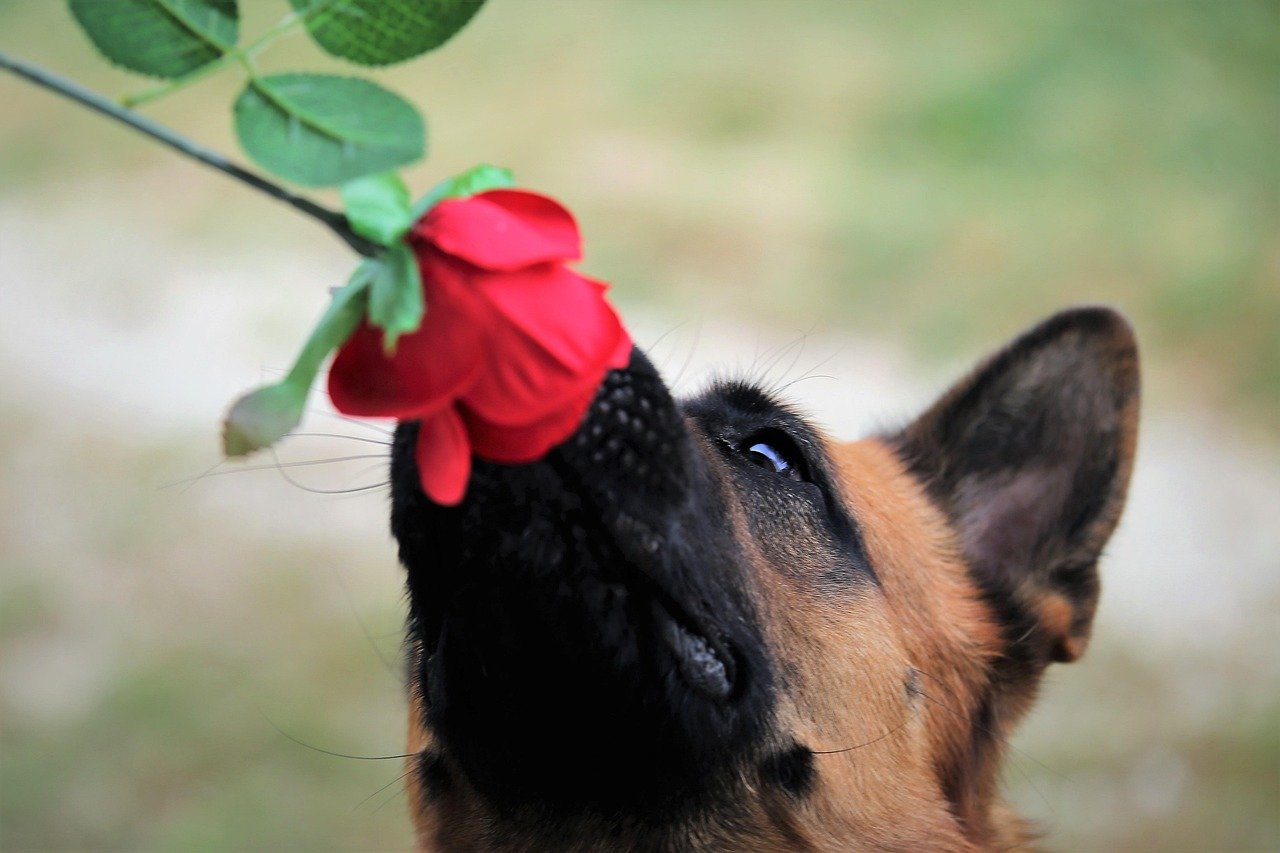
Perhaps the most mind-blowing aspect of canine time perception involves their superhero-level sense of smell. Dogs perceive time through their sense of smell; for them, every day has a distinct scent. This concept is beautifully explained by researcher Alexandra Horowitz in her book “Being a Dog: Following the Dog Into a World of Smell”.
For example, when you are home, your scent is strongest. After you leave and over the course of your day, your scent begins to weaken. Your dog can use the level of your scent to predict your return home. It’s like having a molecular calendar that tracks the passage of time through the fading intensity of familiar odors floating through their world.
Visual Processing That Puts High-Speed Cameras to Shame

For instance, research suggests that dogs can process certain types of visual information differently than we can The subjective experience of time duration may differ between dogs and humans, though this relationship is complex and not fully understood. This enhanced visual processing means dogs are essentially living with a built-in slow-motion camera that captures details we completely miss.
For example, when a dog catches a frisbee, it may be able to see the rotation of the frisbee and the subtle changes in its trajectory more clearly and for a longer duration within the same time frame than a human observer would. Their world is filled with visual information that exists in spaces between our human moments – like living inside the frames of a movie we can only see as smooth motion.
The Body Clock That Never Needs Winding

Dogs perceive time through changes in their body, observation, and smell. Though they may not know “5 p.m.,” or “dinner,” they may know exactly what time it is by the feeling of their empty stomach. Dogs can understand time as the continuous sequence of events marked by changes in their bodies and in the environment.
This biological awareness creates a natural rhythm that puts our smartphone alarms to shame. Dogs don’t need external reminders – their bodies serve as living chronometers that track the passage of time through hunger pangs, energy levels, and internal chemical shifts that we barely notice in ourselves.
Memory That Creates Time Travel

We also know that dogs are capable of emotional and scent memory, and one study has determined that dogs may have episodic memory. This type of memory allows them to connect past experiences with present moments in ways that essentially let them time travel through their own experiences.
As discussed, episodic memory allows dogs to remember past events. In a way, yes – because even though our bodies are in the present, our minds can be in the past. When your dog gets excited about car rides, they’re not just responding to the present moment – they’re accessing a rich archive of past adventures that color their current experience.
Environmental Cues That Serve as Nature’s Calendar
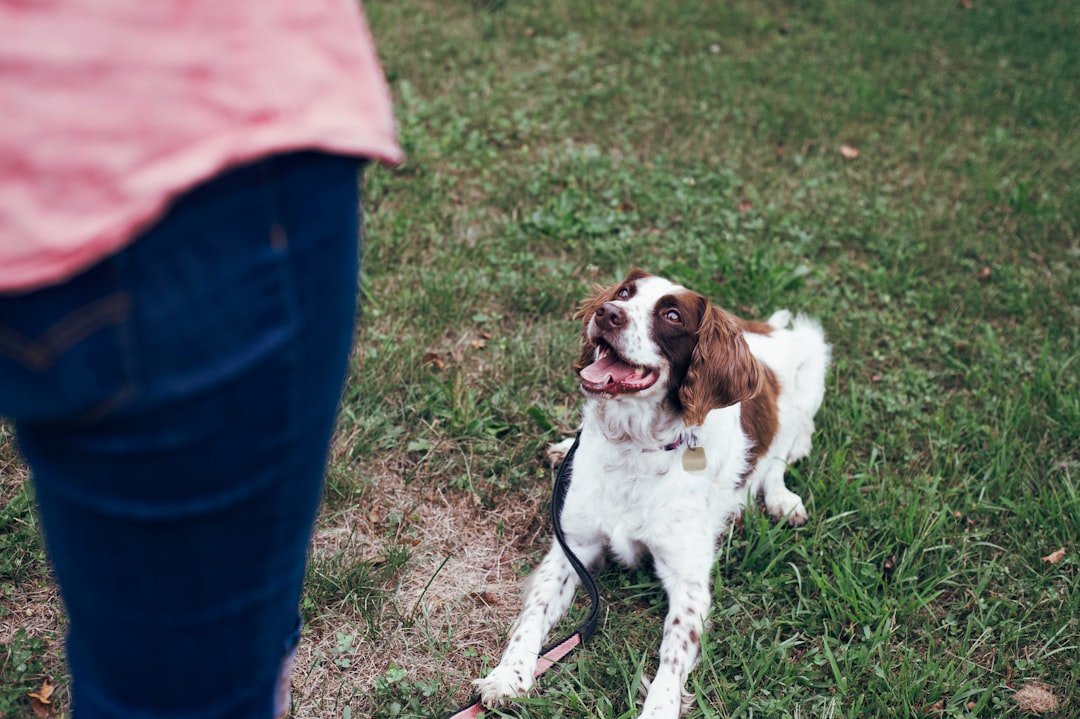
Studies suggest that dogs pick up on environmental cues like light levels, temperature changes, household sounds and even their own body signals, like hunger. These consistent messages help them create a timeline of their day. Dogs are essentially living weather stations and household monitoring systems rolled into one furry package.
Dogs have better hearing than humans; perhaps they can hear the car coming and distinguish it from other cars long before it pulls into the driveway. Or there might be more subtle clues, things we wouldn’t even think about: the slant of light at that time of day, or a very slight sound the clock makes, or maybe something the neighbor in the upstairs apartment always does at that time of day.
The Greeting That Reveals Time’s True Nature

Leave your house for five minutes or eight hours and your dog will probably have the same wiggly response to your return. But this doesn’t mean they can’t tell time has passed – it reveals something deeper about how they experience reunion and connection that transcends our human obsession with precise duration.
While opinion remains divided, a 2011 study suggests that dogs can distinguish between different lengths of time. The subjects were filmed and had their heart rates monitored while they were left at home alone for periods of 30 minutes, 2 hours and 4 hours. The dogs that were left alone for longer periods of time greeted their owners more enthusiastically when they got home.
Metabolic Rates That Rewrite the Rules of Time
There is empirical evidence that metabolic rate has an impact on animals’ ability to perceive time. In general, it is true within and across taxa that animals of smaller size (such as flies), which have a fast metabolic rate, experience time more slowly than animals of larger size, which have a slow metabolic rate.
The study showed that small-bodied animals with fast metabolic rates, such as some birds, perceive more information in a unit of time, hence experiencing time more slowly than large bodied animals with slow metabolic rates, such as large turtles. Dogs, with their active metabolisms, exist somewhere in this spectrum – experiencing moments with more detail and duration than we might imagine possible.
Routine as the Foundation of Canine Time
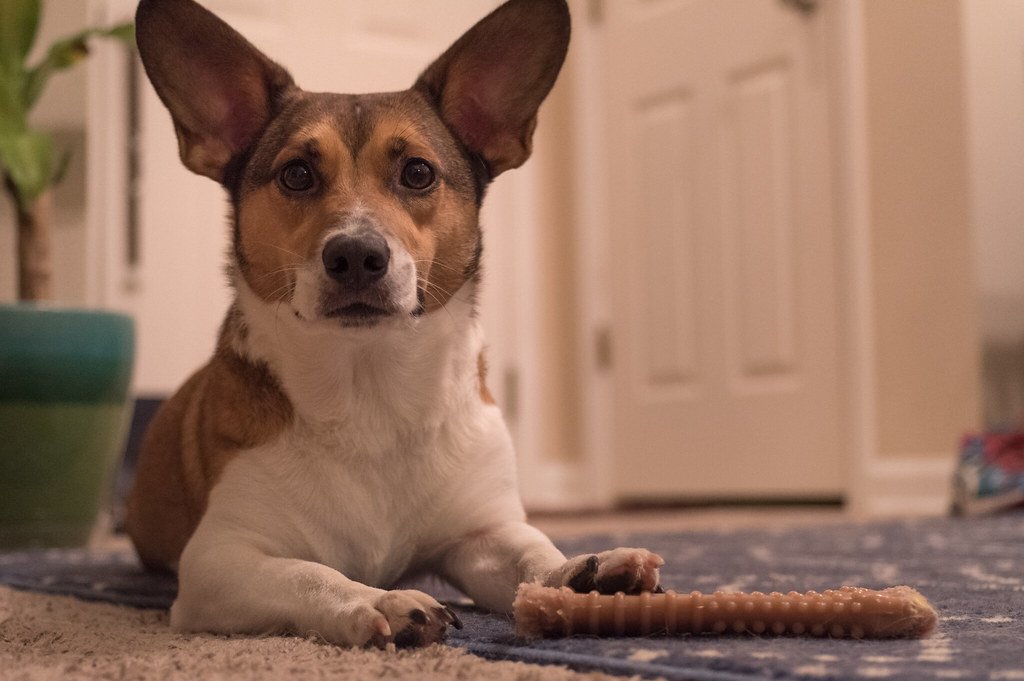
Dogs thrive on routine and generally do best when they know what to expect out of the day. They have an associative, episodic-like memory. To put it simply, they link a behavior or object with a specific activity. Your behavior and routines will clue them into the time of day.
This associative ability turns every aspect of your daily routine into a time marker for your dog. The sound of your coffee grinder becomes “morning,” the jingle of keys transforms into “adventure time,” and the closing of laptop lids signals “human is finally available for proper attention.” They’re reading a clock written in the language of your habits.
The Critical Flicker Fusion That Reveals Hidden Worlds

This time perception ability can be shown to vary across all animals, using a phenomenon called the critical flicker fusion frequency. The phenomenon, based on the maximum speed of flashes of light an individual can see before the light source is perceived as constant, is the principle behind the illusion of non-flashing television, computer and cinema screens. This is also the reason pet dogs see flickering televisions, as their eyes have a refresh rate higher than the screen of the TV.
This means that while you see smooth, continuous images on your television screen, your dog is watching what essentially amounts to a really fast slideshow. Their visual system processes information so quickly that our electronic displays can’t keep up with their natural refresh rate – they’re literally seeing a different version of reality.
Language and Time: The Human Advantage We Take for Granted

And the way we think about time – even the fact that we can think about it at all – is a function of our ability to communicate about it. “Language has opened up all these possibilities of things we can think about,” says Bryant, who specializes in the evolution of communication. And time is one of them.
In fact, a lot of time perception involves ruminating about the past and the future, and dogs probably don’t engage in a lot of introspection. Humans are likely the only species that is able to wonder about how other species (and other members of our own species) conceptualize time. Dogs live in a more immediate reality where time flows as a continuous stream rather than being dissected into past, present, and future compartments.
Conclusion
The way dogs experience time challenges everything we thought we knew about temporal perception. They exist in a world where scents carry timestamps, where visual information flows like a river of detail we can barely imagine, and where the rhythm of existence is measured not in seconds and minutes, but in the ebb and flow of biological processes and sensory experiences that connect them to the living pulse of their environment.
Understanding canine time perception doesn’t just satisfy our curiosity – it opens a window into an entirely different way of being present in the world. While we frantically check our phones and worry about schedules, dogs are reading the temporal landscape through their noses, feeling time pass through their bodies, and experiencing each moment with a richness that our clock-obsessed culture has largely forgotten.
What would it feel like to experience time the way your dog does – to smell yesterday lingering in the corners, to see the world refresh faster than any television screen, and to feel the passage of time as a physical sensation flowing through your entire being? Did you expect that the secret to understanding time might be hiding right there in your living room, wagging its tail?