


Every friend group has one: the person who swears they feel fantastic on five hours of sleep and still beats you to the sunrise. It sounds unfair, even suspicious, until you look under the hood of biology. For years, scientists framed sleep need as a one-size-fits-most rule, and for the vast majority that’s right. But a small group appears wired differently, with bodies that compress recovery into less time without the usual costs. The mystery is finally giving way to genetics, brain circuits, and a new understanding of what “enough” really means.
The Hidden Clues

Natural short sleepers aren’t forcing themselves to cut corners; they wake up ready, day after day, with no rebound crashes on weekends. When researchers bring them into sleep labs, their patterns hold up under scrutiny: fewer hours, high sleep efficiency, and solid next-day performance. I tried to imitate one of these people once and made it to midweek before my mood and focus hit a wall – proof that copycats are not the real thing. The giveaway, scientists noticed, is consistency across years and life stages, not a brief phase of burning the candle at both ends. That consistency pointed to biology, not bravado.
Families were the first breadcrumb trail – several generations with the same short-sleep trait sparked the hunt for shared DNA twists. Once those families were studied with careful diaries, actigraphy, and overnight recordings, the pattern looked less like hype and more like a stable, inherited behavior. That’s when the genetic search accelerated and the puzzle pieces began to click into place.
From Genes to Brains

Beginning in 2009, scientists tied the first rare variant in a gene called DEC2, also known as BHLHE41, to people who naturally slept fewer hours yet functioned normally. Follow-ups in animals showed that this mutation altered sleep architecture and linked to wake-promoting systems, offering a plausible molecular lever for reduced sleep need. A decade later, researchers identified another variant – this time in ADRB1, which affects β1-adrenergic receptors in the brainstem’s sleep-wake circuitry – again in families with lifelong short sleep and robust daytime alertness. These are not common variants; they’re rare, but they prove a principle: sleep need can be genetically dialed. Together, they helped shift the field from culture-war debates about willpower to testable biology.
More recently, a variant in NPSR1, part of a wakefulness-signaling pathway, surfaced in another father–son pair with natural short sleep. In mouse models carrying the same change, animals slept less but resisted the cognitive dips that usually follow sleep loss, hinting at more efficient restorative processes per minute of sleep. These findings don’t mean most of us can train our way to five hours; they do suggest multiple routes in the brain can compress what sleep accomplishes. Each gene nudges different nodes in a network that controls sleep depth, timing, and quality. That network view explains why no single mutation tells the whole story.
The Body Clock’s Quiet Negotiations
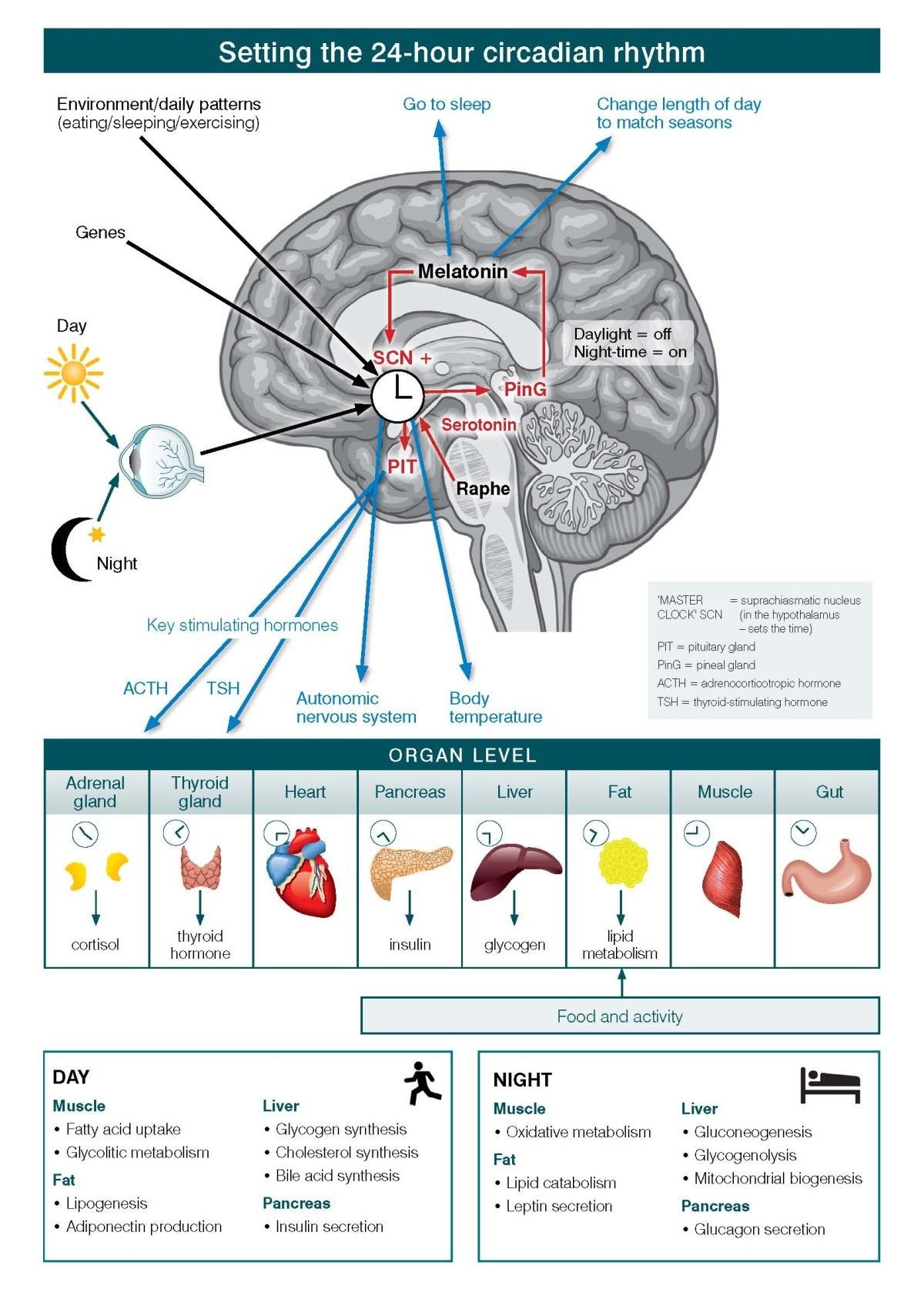
Two forces steer every night: the circadian clock that times when we feel sleepy, and a homeostatic “pressure” that builds the longer we’re awake. Natural short sleepers seem to make the pressure drop faster, like a battery that recharges to full with a shorter plug-in. Their clocks look fairly typical – bedtimes and wake times align with social schedules – but the recovery happens in fewer total minutes. That’s why they don’t need weekend catch-up or midday naps to feel normal. In other words, it’s not that they cheat the rules; their rules are slightly different.
Home isn’t just the hours – it’s the intensity inside those hours. For most of us, deep non-REM periods early in the night carry the heaviest restorative load, then taper; in short sleepers, those high-value phases may be packed more densely. Researchers are still mapping how synapses reset and how networks recalibrate across the night in these individuals. The brain may simply do the same jobs faster, without leaving quality on the table. That’s a crucial distinction from the average person who shortens sleep and pays for it the next day.
Sleep Pressure: How Much Rest You Really Need

Classic experiments comparing habitual short sleepers to long sleepers found that after sleep deprivation, long sleepers show a bigger rebound in slow-wave activity – the brain’s deep-sleep signature – while short sleepers show less. The kinetics of the homeostatic process looked similar, but short sleepers tolerated higher pressure with fewer symptoms, suggesting their baseline is set differently. That’s like two cars using the same engine control but with different idle points. The finding raised a subtle point: shorter sleep does not automatically signal a broken homeostat; sometimes it signals a recalibrated one. This nuance helps explain why some people thrive at six hours while others wilt.
Even animal studies with chronic sleep restriction show that the homeostatic machinery remains intact, adjusting slow-wave energy to repay what’s owed over subsequent nights. The implication for humans is cautionary but optimistic: our sleep system is robust, but the individual set point matters. Shortening sleep against your biology forces continual repayments and performance tax. Shortening sleep with the “short-sleeper” blueprint doesn’t. Knowing which side you fall on is the difference between cruising and running on fumes.
Performance at Dawn: Who Thrives on Less

Natural short sleepers don’t just avoid harm; some studies suggest they hold up surprisingly well on tasks that normally sag after a short night. Their secret appears to be higher sleep efficiency and targeted preservation of key brain rhythms, not some superhuman tolerance for deprivation. Meanwhile, most people who shave sleep accumulate risks that touch nearly every organ system – metabolic control, mood regulation, cardiovascular strain. That divergence is the headline: less sleep is not a lifestyle hack unless your biology supports it. For everyone else, it’s a slow-motion tax.
It’s also why caffeine is such a mixed bag. Variants in the adenosine A2A receptor gene (ADORA2A) help explain why some people feel jittery and sleep poorly after an afternoon coffee while others shrug it off. Those differences bend daytime alertness and nighttime depth but don’t convert a normal sleeper into a true short sleeper. Coffee can mask fatigue, but it doesn’t change the bill your brain expects to settle at night. Biology still calls the tab.
Why It Matters

For decades, sleep advice leaned heavily on averages and discipline: go to bed on time, avoid screens, and push through with willpower if you must. The short-sleeper story challenges that one-size-fits-all model and reframes the question from “How little can I get away with?” to “What does my brain actually need?” That shift matters for clinical care, where a small subset of patients aren’t insomniac – they’re simply wired for less sleep and don’t need treatment. It also matters for public messaging: glorifying sleep scarcity is reckless, but acknowledging real biological diversity builds trust. Science works best when it matches lived experience.
Compared with traditional approaches that treat any short sleep as a problem, the emerging playbook is more precise. It uses family history, objective monitoring, and, in some cases, genetic clues to distinguish deprivation from natural variance. It also integrates circadian timing, since bad timing can undermine even adequate hours. The payoff is practical: better diagnoses, fewer unnecessary pills, and advice that helps people get the right sleep, not just more. Precision sleep medicine is moving from slogan to strategy.
The Future Landscape
What’s next is both exciting and tricky. Researchers are tracing additional rare variants and testing how combinations of common genetic markers might fine-tune sleep need across populations. Noninvasive tools – home EEG headbands, smarter wearables, and algorithms that infer deep-sleep intensity – could help identify genuine short sleepers outside of labs. On the therapeutic side, wake-sleep pathway receptors like NPSR1 and β1-adrenergic targets hint at druggable levers, though safety and ethics loom large. No one wants a pill that invites chronic undersleep in the wrong person.
There are also tantalizing clues that certain short-sleep variants could protect brain health, at least in animal models. In mice carrying an ADRB1 short-sleep mutation layered onto a tauopathy model, researchers saw improved REM sleep and less tau buildup in specific brain circuits, suggesting that the way sleep is organized might influence neurodegeneration risk. Translating that to humans will take time, careful trials, and guardrails against hype. Still, it raises a provocative possibility: quality and pattern may matter as much as quantity in safeguarding the aging brain.
Conclusion

Be curious about your sleep, not combative with it. Track your nights for a month and notice patterns: do you wake refreshed without catching up later, or do you drift toward recovery naps and weekend oversleep? If you suspect you’re a natural short sleeper, talk with a clinician before making big changes, and consider objective testing instead of relying on vibes and coffee. If you’re not, respect your biology and protect your hours like you would protect your savings. Your brain invests those hours wisely.
You can also support research by participating in sleep studies, especially if your family shares unusual sleep traits, and by advocating for work and school schedules that respect circadian timing. Precision sleep science moves faster when the public engages – by sharing data, funding studies, and resisting the glamorization of sleepless hustle. However your nights look, aim for alignment, not heroics. The best sleep is the sleep that fits you. Would you have guessed your brain might have its own rulebook?
Suhail Ahmed is a passionate digital professional and nature enthusiast with over 8 years of experience in content strategy, SEO, web development, and digital operations. Alongside his freelance journey, Suhail actively contributes to nature and wildlife platforms like Discover Wildlife, where he channels his curiosity for the planet into engaging, educational storytelling.
With a strong background in managing digital ecosystems — from ecommerce stores and WordPress websites to social media and automation — Suhail merges technical precision with creative insight. His content reflects a rare balance: SEO-friendly yet deeply human, data-informed yet emotionally resonant.
Driven by a love for discovery and storytelling, Suhail believes in using digital platforms to amplify causes that matter — especially those protecting Earth’s biodiversity and inspiring sustainable living. Whether he’s managing online projects or crafting wildlife content, his goal remains the same: to inform, inspire, and leave a positive digital footprint.


