
When the first crisp images of Pluto beamed home in July 2015, that bright, heart‑shaped mark stole the show – and then refused to stay quiet. What looked like a photogenic patch turned out to be a restless machine, tugging on Pluto’s winds, ice, and even its interior. I remember staring at that portrait on a laptop in a crowded newsroom and feeling the floor tilt a little: if a dwarf planet could be this alive, what else are we underestimating? Since then, scientists have pieced together how this heart powers a nitrogen cycle, sculpts dunes, and maybe hints at a hidden ocean. The surprise is not just that Pluto has weather, but that much of it beats to the rhythm of this frozen heart.
The Hidden Clues

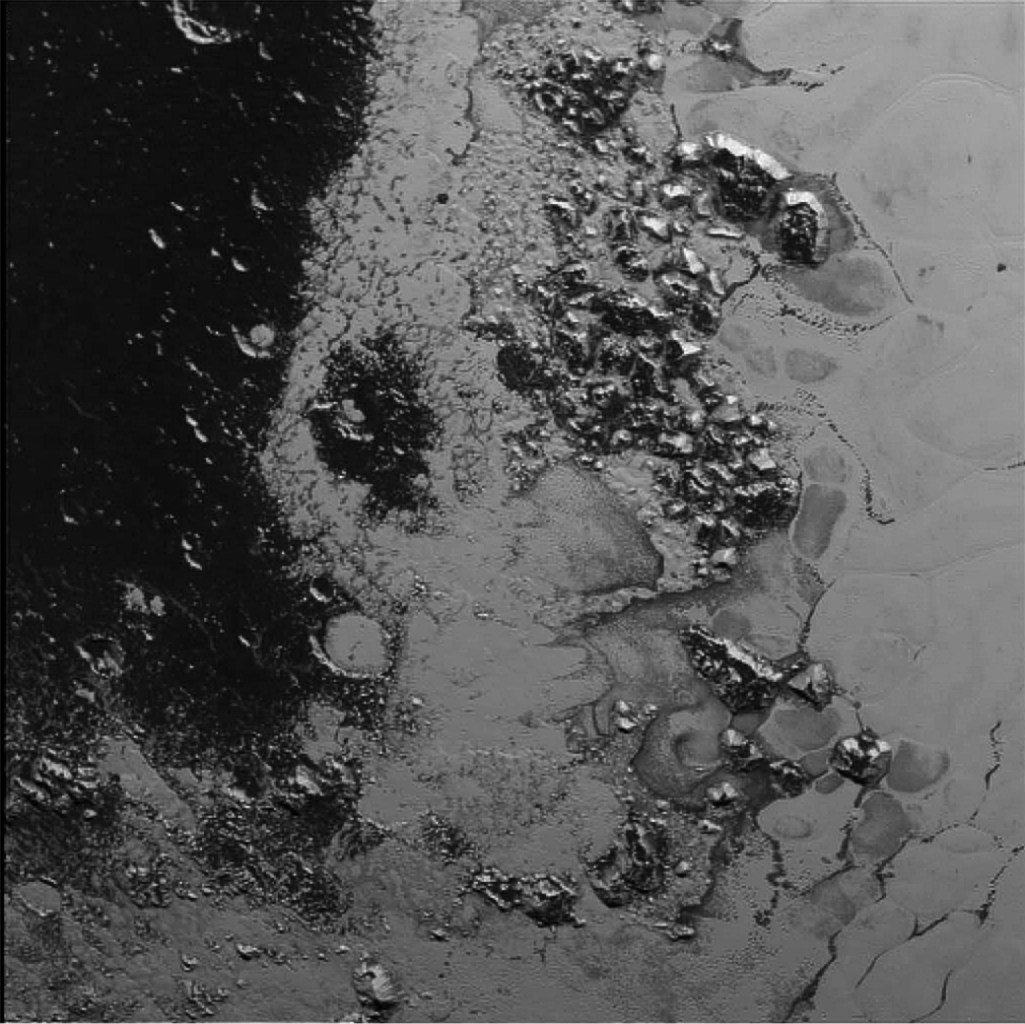
The heart has two distinct lobes, and the western one – Sputnik Planitia – is a deep basin filled with nitrogen ice that behaves more like syrup than stone. Its surface is tiled with polygonal cells tens of miles across, subtle but unmistakable fingerprints of slow, overturning convection. Along the margins, you can trace flow lines like brushstrokes, showing the ice creeping outward and around rugged blocks of water‑ice mountains. Even from space, the basin looks like a living sheet, cracked, healed, and cracked again.
That motion is only part of the story, because nitrogen ice is volatile in Pluto’s cold sunlight, able to sublimate into gas and then frost out elsewhere. Sputnik Planitia acts as a giant cold trap, collecting nitrogen when temperatures dip and releasing it when they rise. Over seasons that can last decades to centuries, this inhale‑exhale cycle helps set the pressure of Pluto’s thin atmosphere. The result is a planetary feedback loop anchored inside one strikingly bright patch of ground.
From First Glimpses to Modern Science
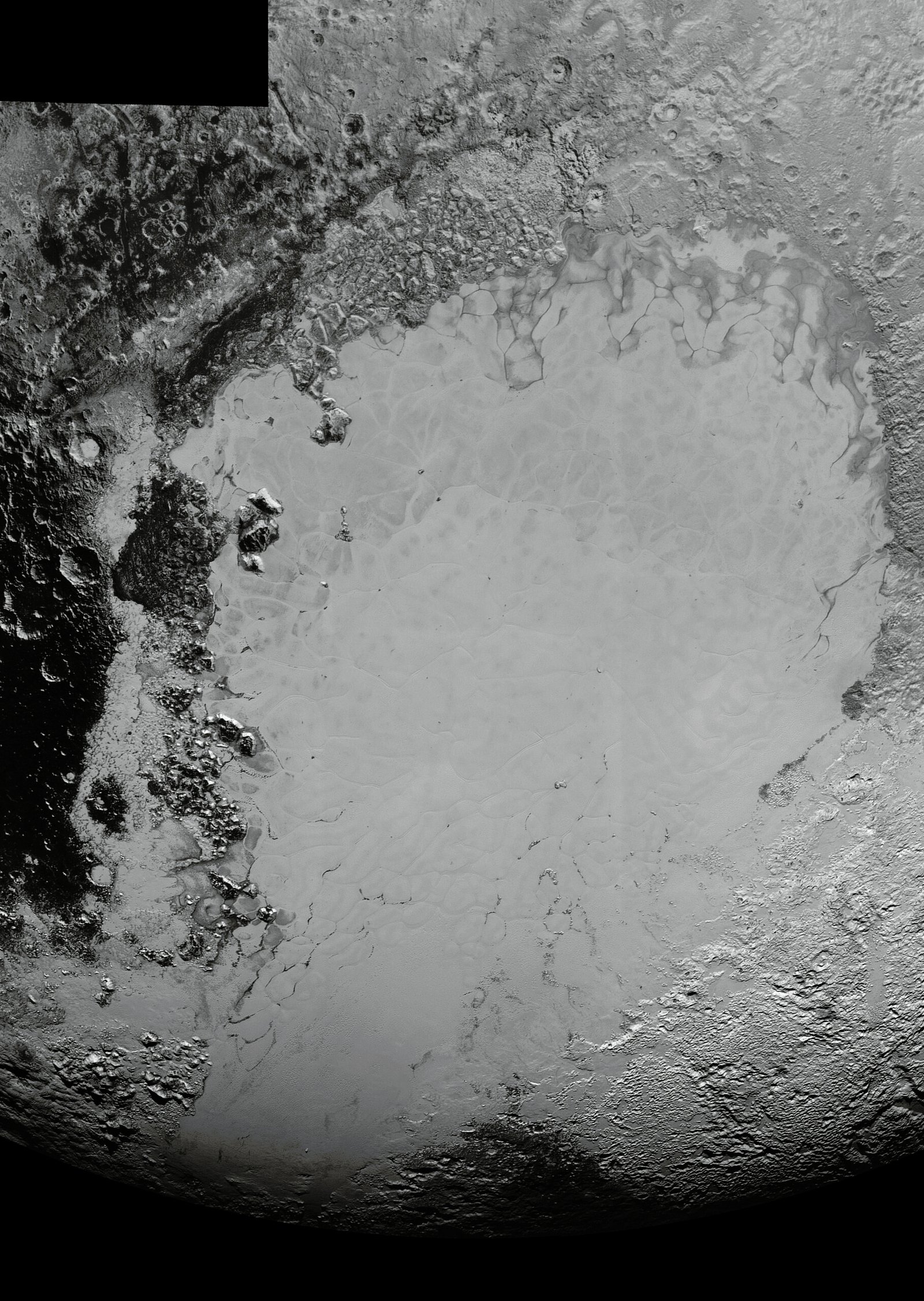
Before the flyby, Pluto was a faint, flickering point, and much of what we knew came from stellar occultations and guesswork. New Horizons upended that, turning pixels into landscapes and hunches into measurements. It mapped temperature contrasts across the heart, spotted layered hazes high in the sky, and revealed the basin’s steep, scarped rim. Within weeks, models began to treat Sputnik Planitia not as a curiosity but as the engine around which the climate might organize.
Since then, researchers have tuned those models with lab data on nitrogen and methane ices, and with long‑baseline observations from Earth. They test how sunlight, topography, and Pluto’s odd seasons push nitrogen around the globe. The emerging consensus is that the heart stores, moves, and times much of that volatile traffic. In other words, the cute shape is the control knob.
A Glacier with a Pulse
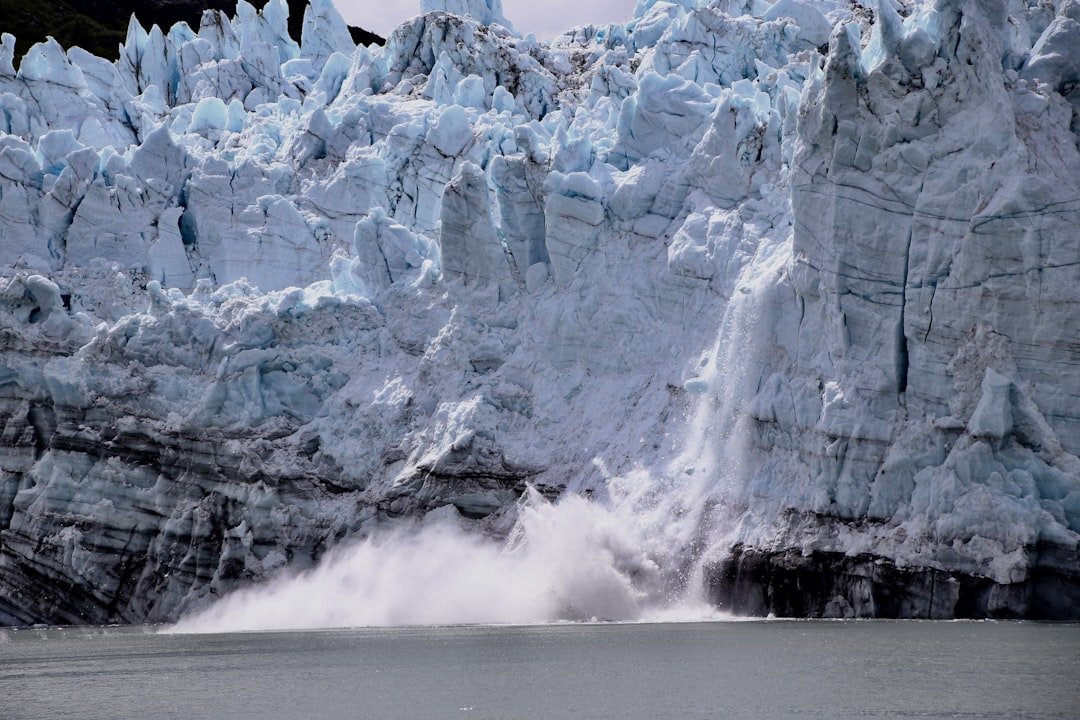
Inside Sputnik Planitia, nitrogen ice convects like hot oatmeal cooling on a winter morning, but on timescales that stretch far beyond any human lifetime. Warm ice rises in the middle of each polygon, cools at the top, and sinks at the edges, renewing the surface and erasing small craters. That constant rearrangement suggests the ice layer is thick – likely several kilometers – and mobile enough to flow around bedrock obstacles. The basin’s bright smoothness is not youth by accident; it is youth by motion.
Seasonal sunlight tilts the balance further, driving sublimation on sunlit faces and frosting in shadowed corners. That subtle push adds or removes mass, changing surface slopes and nudging the glacier to adjust. Over many seasons, the glacier’s “pulse” couples to the atmosphere above, altering pressure and wind patterns. It’s an icy metronome keeping time for the whole world.
Winds Carved in Ice

Pluto’s atmosphere may be thin, but it leaves strong hints of its presence along the heart’s rim. At the basin’s western edge, ridges and aligned ripples look like dunes – built not of sand, but of methane‑ice grains lofted and pushed by winds. The pattern implies winds preferentially sweep along the basin’s boundary, steered by the topography and temperature contrasts between the cold interior and the higher, rougher terrain outside. Where the glacier exhales nitrogen gas, breezes pick up and carry particles downslope.
High above, the sky stacks into many haze layers, born from sunlight cracking methane and condensing hydrocarbons. Those hazes act like a dimmer switch, absorbing and scattering light, then feeding back into how quickly the surface warms or cools. Add the heart’s own thermal inertia, and you get circulations that loop and eddy in ways we’re still chasing with models. For a world once dismissed as inert, that’s a head‑turning amount of atmospheric choreography.
The Ocean Under the Heart

The heart also hints at something deeper. Sputnik Planitia’s location near Pluto’s equator, and the way the planet seems to have rotated to place the basin there, points to a hidden mass anomaly – like a weight tacked under a spinning toy that forces it to settle in a specific orientation. The best explanation is a subsurface ocean that flexed upward beneath the basin, plus dense nitrogen ice filling it in, together creating a gravitational “handle.” That scenario fits with a surprisingly intact shell, scattered fractures, and the basin’s tidy alignment.
If Pluto keeps a cold, briny ocean under a thick crust, the heart’s behavior may be coupled to interior heat in subtle ways. Slow loss of heat could change ice thickness, which changes convection vigor and volatile storage, which changes winds and pressure. That nested cascade – from ocean to ice to air – turns a postcard‑pretty feature into a planetary systems problem. It’s complexity in miniature, the kind of puzzle that rewards patience.
Why It Matters
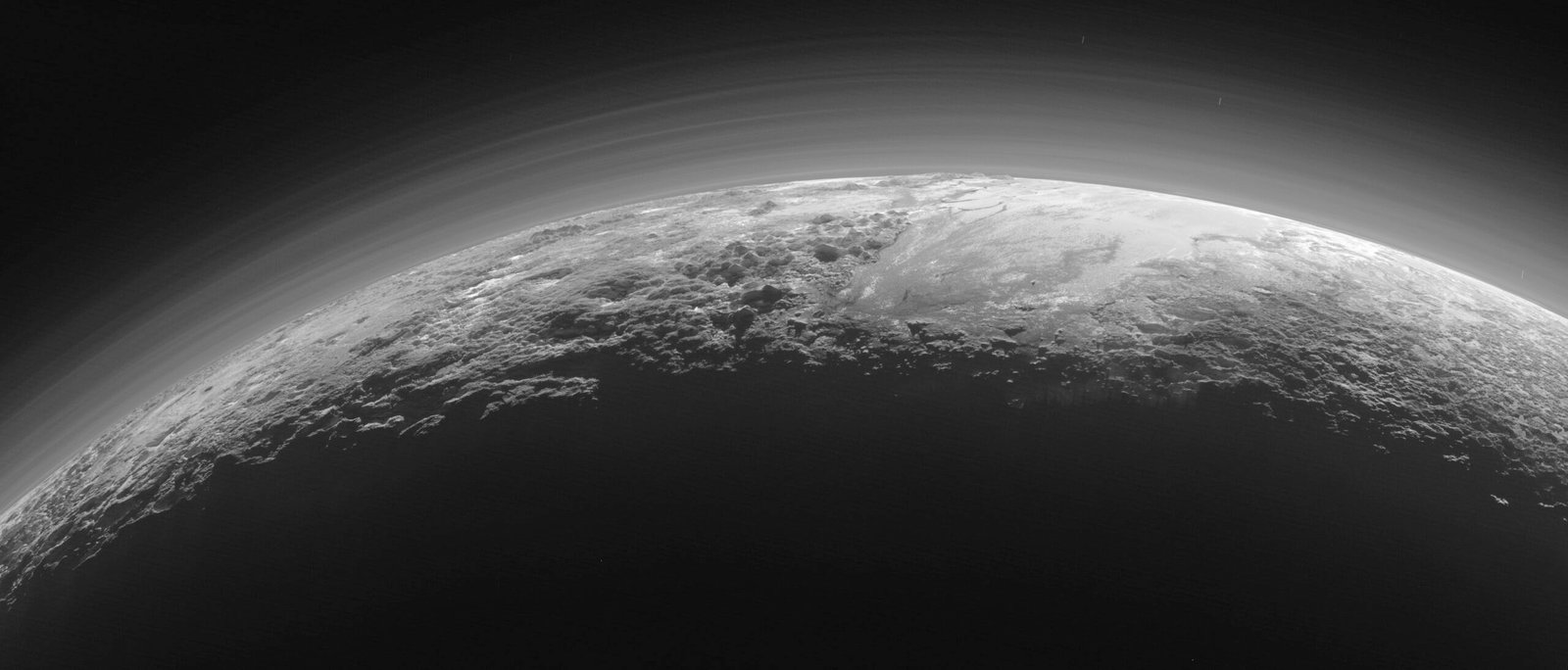
Pluto shakes up what “climate” means by proving you don’t need thick air or warm seas to build a functioning environmental engine. Traditional climate case studies favor Earth, Mars, and Titan, where atmospheres or liquids dominate, but Pluto shows a volatile glacier can pick up that role. A single basin can gatekeep an atmosphere’s pressure, choreograph winds, and refresh surfaces with chemistry and frost. That changes how we design models and what we look for on distant worlds.
It also widens the search for active geology in the outer solar system. If nitrogen and methane can run the show on Pluto, they may do so on Triton, Eris, and Makemake under different lighting and seasonal rhythms. Lessons from the heart help us interpret faint lightcurves and ground‑based spectra from those bodies with more confidence. And they sharpen our expectations for exoplanets where exotic ices could play starring roles.
Global Perspectives
Pluto’s climate engine is local in origin but global in influence, and that perspective matters for two reasons. First, it reminds us that planetary climate is a tapestry woven from terrain, sunlight, and chemistry, not just a blanket of air. Second, it demonstrates how a single topographic basin can anchor a world’s seasonal heartbeat, an idea transferable to moons and dwarf planets across the Kuiper Belt. The outer solar system stops feeling like a museum of frozen relics and starts reading like a living atlas.
There’s also a humbling human angle. We discovered the heart about 85 years after Pluto itself, and only learned its power within the last decade, yet its cycles have likely run for millions of years. That timescale mismatch is why comparative planetology is so addictive: it offers a way to speed‑read the past by catching the present in motion. Standing under a dark sky, it’s hard not to feel a little small and very curious.
The Future Landscape

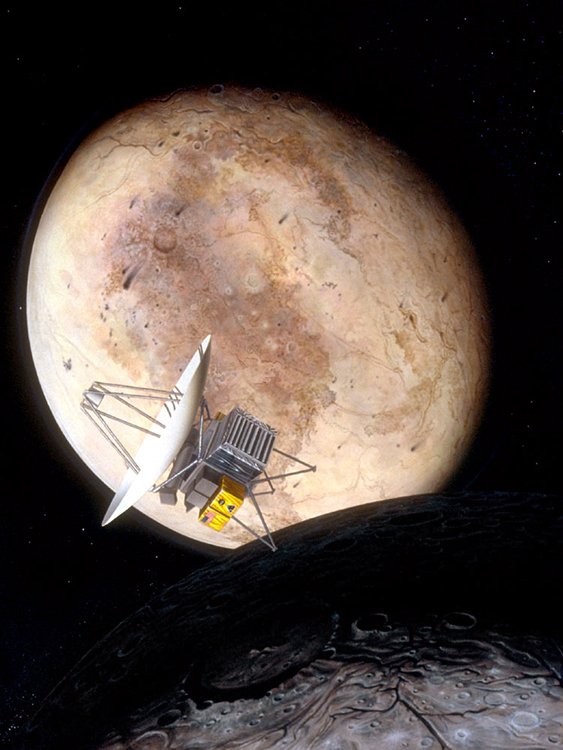
The next breakthroughs will come from two directions: better models and bolder missions. On the modeling side, laboratory measurements of exotic ice flow, grain cohesion, and sublimation will trim the uncertainties, while supercomputers test how the heart’s pulse changes over centuries. On the mission side, an orbiter would be transformational – mapping winds, monitoring pressure, and probing gravity to confirm or rule out an ocean. Long‑lived cameras could watch the glacier’s polygons migrate and see dunes shift, building a time‑lapse of climate at work.
There are hurdles, of course: distance, power, and patience. Getting to Pluto takes years, and staying requires frugal energy and rugged instruments that can nap and wake on command. But the payoff is a complete climate book, not just a chapter – one we can use to read other worlds with fewer assumptions. If the heart is a machine, we’ve only just opened the casing.
How You Can Join the Next Chapter
Curiosity counts, even from home. Follow the continuing analyses of Pluto’s flyby data, and keep an eye on observing campaigns that time Pluto’s changes as it passes in front of distant stars. Small telescopes and coordinated timing matter more than you’d think for tracking an atmosphere that thins and thickens with the seasons. I’ve attended amateur star parties where someone’s careful notes ended up guiding a professional follow‑up – little efforts scale when people care.
You can also support organizations that advocate for deep‑space exploration and share their educational resources with a friend or classroom. When budget seasons roll around, let representatives know that you value long‑horizon missions that answer big, patient questions. Most of all, keep that first image of the heart handy and show it to someone new. A spark travels fast; after all, it only took one photo to reveal a climate engine hiding in plain sight – what will the next one uncover?
Suhail Ahmed is a passionate digital professional and nature enthusiast with over 8 years of experience in content strategy, SEO, web development, and digital operations. Alongside his freelance journey, Suhail actively contributes to nature and wildlife platforms like Discover Wildlife, where he channels his curiosity for the planet into engaging, educational storytelling.
With a strong background in managing digital ecosystems — from ecommerce stores and WordPress websites to social media and automation — Suhail merges technical precision with creative insight. His content reflects a rare balance: SEO-friendly yet deeply human, data-informed yet emotionally resonant.
Driven by a love for discovery and storytelling, Suhail believes in using digital platforms to amplify causes that matter — especially those protecting Earth’s biodiversity and inspiring sustainable living. Whether he’s managing online projects or crafting wildlife content, his goal remains the same: to inform, inspire, and leave a positive digital footprint.