Imagine a creature that weighs as much as a small car, spends most of its day submerged in muddy African rivers, and somehow manages to protect its sensitive skin from the scorching sun without ever visiting a pharmacy. The hippopotamus has been doing exactly this for millions of years, manufacturing its own biological sunscreen that would make modern cosmetic companies envious. This remarkable adaptation isn’t just a quirky biological fact—it’s a sophisticated chemical process that showcases nature’s incredible problem-solving abilities.
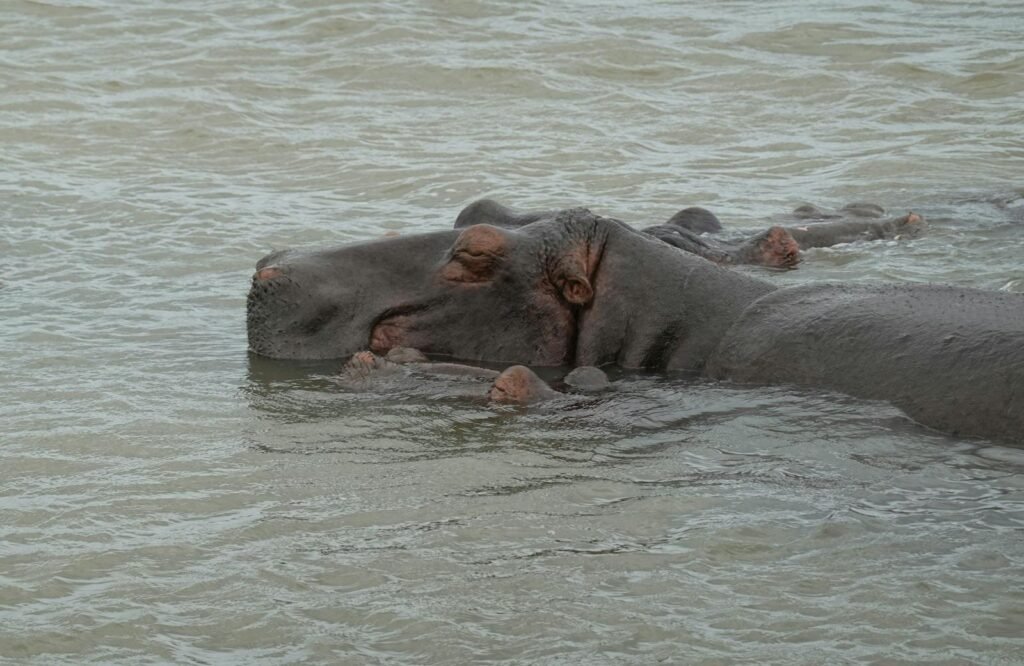
Under the relentless African sun, where temperatures can soar above 40°C (104°F), most mammals would suffer severe sunburn and dehydration. Yet hippos emerge from their watery refuges with their skin perfectly protected, thanks to a crimson secretion that oozes from specialized glands. This isn’t blood, as many people assume when they first witness the phenomenon, but rather one of nature’s most ingenious survival mechanisms.
The Science Behind Hippo Sweat

The reddish substance that coats a hippo’s skin isn’t technically sweat at all. Unlike human perspiration, which consists primarily of water and salt, hippo secretions are produced by specialized mucous glands scattered across their skin. These glands work overtime when hippos are exposed to sunlight or stress, creating a protective barrier that serves multiple purposes.
This remarkable fluid contains two key compounds: hipposudoric acid and norhipposudoric acid. These molecules are responsible for the distinctive red and orange coloration that gives hippos their characteristic “bloody sweat” appearance. What’s fascinating is that these compounds don’t just provide color—they’re the active ingredients in nature’s most effective sunscreen.
The secretion process is triggered by various factors, including temperature, stress levels, and UV exposure. When a hippo senses danger or feels the heat of the sun, specialized cells begin producing these protective compounds at an accelerated rate.
UV Protection That Rivals Modern Sunscreens

Scientists have discovered that hippo secretions provide protection equivalent to SPF 15-20 sunscreen. The hipposudoric acid absorbs UV radiation in the range of 280-400 nanometers, which covers both UVA and UVB rays that cause skin damage and cancer in humans. This natural protection is remarkably effective, considering that most dermatologists recommend SPF 30 for daily use.
The compounds work by creating a molecular barrier that reflects and absorbs harmful radiation before it can penetrate the skin. Unlike synthetic sunscreens that can wash off or degrade over time, hippo secretions bond with the skin’s surface, creating a long-lasting protective layer.
Research has shown that this natural sunscreen remains effective even after extended exposure to water, making it perfectly suited for an animal that spends 16 hours a day submerged. The secretion’s durability is enhanced by its slightly acidic pH, which helps it adhere to the skin’s surface.
The Antimicrobial Properties

Beyond sun protection, hippo secretions possess powerful antimicrobial properties that prevent bacterial and fungal infections. The hipposudoric acid acts as a natural antibiotic, creating an environment hostile to harmful microorganisms. This is crucial for animals living in bacteria-rich river water where open wounds could quickly become infected.
Studies have demonstrated that these compounds can inhibit the growth of both gram-positive and gram-negative bacteria. The antimicrobial effect is so potent that researchers are investigating potential medical applications for humans. In the wild, this protection allows hippos to engage in territorial battles without fear of infection from cuts and scrapes.
The secretion’s antimicrobial properties also help maintain healthy skin despite constant exposure to murky water containing various pathogens. This dual-action formula—combining sun protection with infection prevention—represents millions of years of evolutionary refinement.
Color-Changing Chemistry

One of the most visually striking aspects of hippo secretions is their ability to change color over time. Fresh secretions appear clear or slightly pink, but within minutes of exposure to air and sunlight, they transform into a deep red or orange hue. This color change isn’t just for show—it indicates the activation of the protective compounds.
The chemical reaction responsible for this transformation involves the oxidation of hipposudoric acid when it encounters oxygen and UV light. As the molecules reorganize, they begin absorbing different wavelengths of light, creating the characteristic red coloration. This process is similar to how an apple turns brown when exposed to air, but with a protective rather than deteriorative outcome.
The intensity of the color often indicates the level of stress or environmental pressure the hippo is experiencing. Younger hippos tend to produce more vibrant secretions, while older animals may show more muted colors, reflecting changes in their glandular activity over time.
Evolutionary Advantages

The development of natural sunscreen represents a crucial evolutionary adaptation for hippos transitioning from a fully aquatic to a semi-aquatic lifestyle. Early hippo ancestors likely spent less time in direct sunlight, but as they evolved to exploit terrestrial feeding opportunities, sun protection became essential for survival.
This adaptation allowed hippos to expand their ecological niche without compromising their skin health. The ability to emerge from water during daylight hours for feeding, social interactions, and territorial displays provided significant advantages over purely aquatic competitors. The secretions essentially gave hippos the freedom to be active during peak daylight hours when other large mammals seek shade.
The evolutionary pressure to develop this protection was likely intense, as sunburned skin would have made hippos vulnerable to infection and reduced their reproductive success. Those individuals with more effective secretions would have had better survival rates, passing these traits to future generations.
The Glandular System

Hippos possess thousands of specialized mucous glands distributed across their entire body surface. These glands are most concentrated around the head, neck, and back—areas that receive the most direct sunlight when the animal is partially submerged. The glandular system is remarkably efficient, capable of producing secretions on demand based on environmental conditions.
Each gland contains specialized cells that synthesize the complex organic compounds responsible for sun protection. The production process requires significant energy, which explains why hippos must consume vast quantities of grass each night to fuel their metabolic needs. A single adult hippo can produce several liters of protective secretions daily when conditions demand it.
The glands also respond to emotional states, producing more secretions during times of stress or excitement. This physiological response ensures that hippos are maximally protected during vulnerable periods, such as territorial disputes or mating season.
Comparison to Human Sunscreen

While human sunscreens rely on chemical compounds like oxybenzone and octinoxate, hippo secretions use naturally occurring organic acids that have been refined through millions of years of evolution. Human sunscreens typically last 2-4 hours before requiring reapplication, while hippo secretions provide continuous protection that replenishes itself automatically.
The environmental impact of hippo secretions is also vastly different from synthetic sunscreens. Human sunscreen chemicals have been linked to coral reef bleaching and marine ecosystem disruption, while hippo secretions are completely biodegradable and pose no environmental threat. In fact, these secretions likely contribute to the nutrient cycle in African river systems.
However, hippo secretions do have limitations compared to commercial sunscreens. The SPF equivalent of 15-20 is moderate by human standards, and the compounds can’t be easily synthesized for human use due to their complex molecular structure and the specific conditions required for their production.
Environmental Factors Affecting Production

The production of hippo secretions is heavily influenced by environmental conditions, particularly temperature, humidity, and UV intensity. During the dry season, when sun exposure is most intense, hippos produce significantly more secretions than during cooler, cloudier periods. This dynamic response system ensures optimal protection when it’s needed most.
Altitude also plays a role, as hippos living at higher elevations face increased UV exposure and typically produce more protective secretions. Similarly, hippos in areas with less tree cover or natural shade produce more secretions than those in heavily forested regions. This adaptability demonstrates the sophisticated nature of their protective system.
Seasonal variations in secretion production have been observed, with peak production occurring during breeding season when hippos spend more time out of water for social interactions. The stress of mating rituals and territorial disputes also triggers increased secretion production, providing additional protection during these vulnerable periods.
The Role of Diet
The production of hippo secretions requires specific nutrients that must be obtained through their diet. The complex organic compounds in their natural sunscreen are synthesized from precursor molecules found in the grasses and aquatic plants they consume. A hippo’s diet directly affects the quality and quantity of protective secretions they can produce.
Hippos that graze on nutrient-rich grasses produce more effective secretions than those with limited dietary options. The amino acids and organic compounds necessary for secretion production are abundant in their preferred food sources, which explains why hippos are such dedicated grazers, consuming up to 80 pounds of vegetation nightly.
During drought periods when food becomes scarce, hippos may produce less effective secretions, making them more vulnerable to sun damage. This creates a challenging cycle where environmental stress reduces their ability to produce the very protection they need most during harsh conditions.
Medical Research Applications

The unique properties of hippo secretions have caught the attention of medical researchers investigating new approaches to skin protection and antimicrobial treatments. Scientists are studying the molecular structure of hipposudoric acid to understand how it might be synthesized or modified for human use. The challenge lies in recreating the complex chemical environment necessary for these compounds to function effectively.
Current research focuses on developing synthetic analogs that could provide similar benefits without requiring the complex biological systems that produce the natural compounds. Early studies suggest that simplified versions of these molecules might be effective in treating certain skin conditions or providing enhanced sun protection.
The antimicrobial properties of hippo secretions are particularly interesting to researchers developing new antibiotics. As bacterial resistance to conventional treatments increases, nature-based solutions like those found in hippo secretions offer promising alternatives for medical applications.
Conservation Implications

Understanding hippo secretions has important implications for conservation efforts. As climate change increases global temperatures and UV radiation levels, the effectiveness of natural protection systems may be tested beyond their evolutionary limits. Hippos in areas experiencing extreme heat or drought may struggle to produce adequate secretions, potentially affecting their survival.
Conservation programs now consider the availability of suitable grazing areas not just for nutrition, but also for the production of protective secretions. Protecting the grasslands that hippos depend on becomes even more critical when viewed through the lens of their sunscreen production needs.
Additionally, water pollution can affect the production and effectiveness of hippo secretions. Contaminated water sources may disrupt the delicate chemical balance required for optimal secretion production, making hippos more vulnerable to sun damage and infection.
Behavioral Adaptations

Hippos have developed sophisticated behavioral patterns that complement their natural sunscreen production. They typically emerge from water during the cooler parts of the day, when UV radiation is less intense and their secretions are most effective. This timing minimizes the stress on their protective systems while maximizing their benefits.
Social grooming behaviors also play a role in maintaining the effectiveness of their protective secretions. Hippos often engage in mutual grooming, which helps distribute secretions evenly across their skin and removes any debris that might interfere with protection. This cooperative behavior ensures that all members of a group maintain optimal sun protection.
During particularly hot periods, hippos may engage in “mud wallowing” behavior, covering themselves with mud that provides additional protection while their secretions work underneath. This layered approach to sun protection demonstrates the sophisticated survival strategies that have evolved alongside their biological sunscreen.
Myths and Misconceptions

Despite scientific understanding of hippo secretions, several myths persist about their “bloody sweat.” Many people still believe that hippos sweat blood, a misconception that dates back to ancient observations by early naturalists. This myth has been perpetuated by the dramatic visual impact of seeing a hippo covered in red secretions.
Another common misconception is that the red coloration indicates illness or injury. In reality, the vibrant red color is a sign of a healthy, functioning protective system. Hippos that fail to produce adequate secretions are actually at greater risk of health problems, not those displaying normal coloration.
Some cultures have attributed magical or medicinal properties to hippo secretions, leading to unfortunate hunting pressure on wild populations. While these secretions do have remarkable properties, they cannot be harvested sustainably or used effectively outside of the biological system that produces them.
Future Research Directions

Scientists continue to explore the potential applications of hippo secretion research in developing new materials and treatments. Advanced spectroscopy techniques are revealing new details about the molecular structure of these compounds, potentially leading to breakthrough applications in medicine and materials science.
Biomimetic research aims to create synthetic materials that replicate the properties of hippo secretions without requiring biological production. This could lead to new types of sunscreens, antimicrobial coatings, or protective materials for various industrial applications.
Long-term studies are also investigating how climate change might affect hippo secretion production and effectiveness. Understanding these impacts will be crucial for developing conservation strategies that account for changing environmental conditions and their effects on this remarkable natural protection system.
The Broader Ecological Impact

Hippo secretions don’t just protect individual animals—they play a role in the broader ecosystem of African waterways. The compounds eventually wash into river systems, where they contribute to the complex chemistry of aquatic environments. Some researchers believe these secretions may have subtle effects on water quality and the organisms that depend on these waterways.
The secretions also serve as chemical signals for other hippos, conveying information about health, stress levels, and reproductive status. This communication system helps maintain social hierarchies and coordinate group behaviors, demonstrating that the benefits of natural sunscreen extend beyond simple protection.
As hippos move between water and land, they transport these compounds across different environments, potentially affecting the chemistry of both aquatic and terrestrial ecosystems. This ecological role adds another layer of complexity to understanding the full impact of hippo secretions on African environments.
Conclusion

The remarkable ability of hippos to produce their own natural sunscreen represents one of nature’s most ingenious solutions to environmental challenges. Through millions of years of evolution, these massive mammals have developed a sophisticated chemical defense system that provides UV protection, antimicrobial properties, and environmental signaling capabilities all in one remarkable secretion.
Their success story offers valuable insights for human innovation, from developing more effective sunscreens to creating new antimicrobial treatments. As we face increasing environmental challenges and the need for sustainable solutions, the hippo’s natural sunscreen serves as a powerful reminder of nature’s problem-solving capabilities.
The next time you reach for sunscreen, remember that somewhere in Africa, a hippo is effortlessly producing its own superior protection, proving that sometimes the best solutions have been around far longer than we might have imagined. What other secrets might nature be hiding in plain sight?