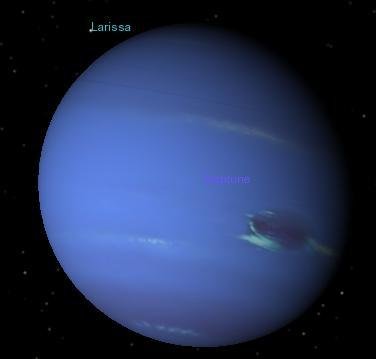

Picture this: a world where winds scream across the surface at speeds that would make a jet fighter look like it’s standing still, where temperatures plummet to depths that would freeze the very air we breathe, and where the entire planet glows with an ethereal blue light that seems almost otherworldly. Welcome to Neptune, the solar system’s most enigmatic ice giant, where nature has crafted phenomena so extreme they challenge our understanding of planetary physics.
The Ice Giant That Defies Logic

Neptune sits at the edge of our solar system like a frozen sentinel, bathed in perpetual twilight. Despite receiving only one-thousandth of the sunlight that Earth enjoys, this distant world generates more energy than it receives from the Sun. Scientists have puzzled over this mysterious heat source for decades, as Neptune radiates about 2.6 times more energy than it absorbs from solar radiation.
The planet’s internal furnace likely stems from leftover heat from its formation billions of years ago, compressed and trapped within its core. This primordial energy continues to drive the planet’s dynamic atmosphere, creating weather patterns that dwarf anything we experience on Earth. The sheer scale of Neptune’s energy output suggests that its interior remains incredibly active, despite its location in the frigid outer reaches of our solar system.
When Winds Break the Sound Barrier
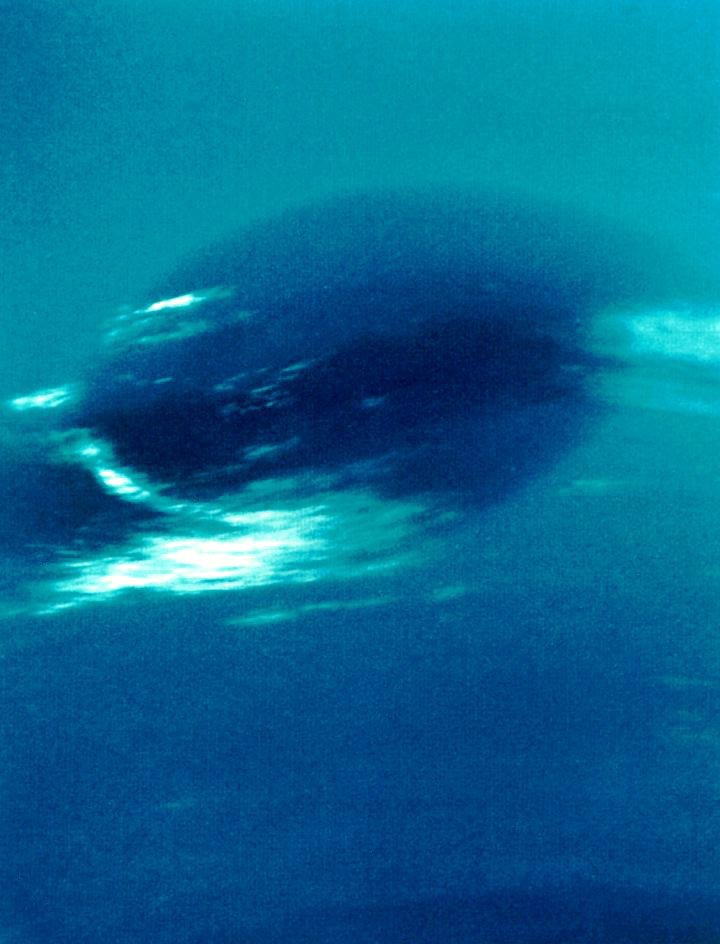
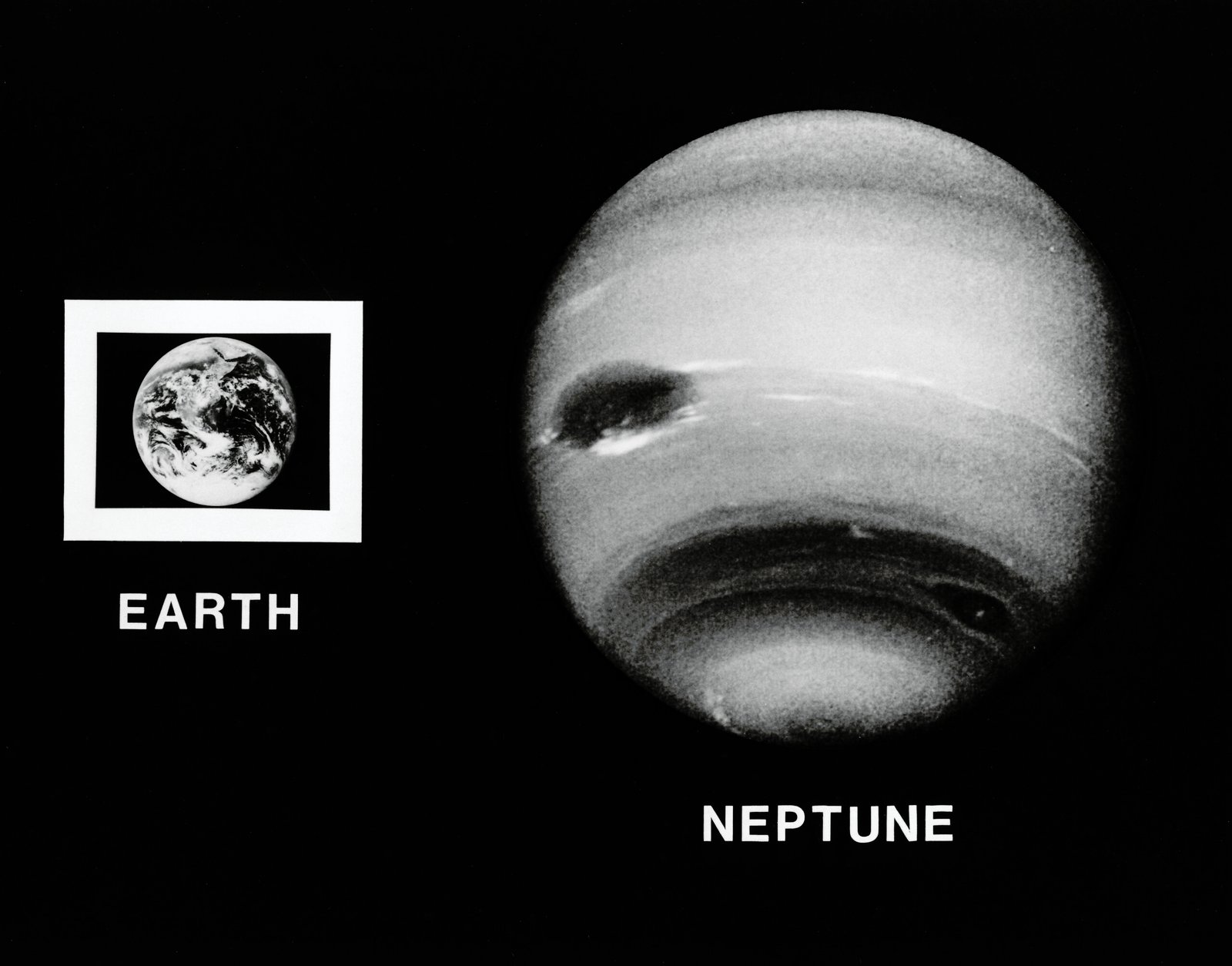
Neptune’s atmosphere hosts the fastest winds in the solar system, reaching speeds of up to 2,100 kilometers per hour. These supersonic gusts make Earth’s most powerful hurricanes look like gentle breezes by comparison. The Great Dark Spot, a massive storm system comparable in size to Earth itself, showcases these incredible wind speeds as it churns through Neptune’s atmosphere.
What makes these winds even more remarkable is their direction – they blow in the opposite direction to the planet’s rotation. This retrograde motion puzzles scientists, as it seems to violate basic principles of atmospheric dynamics. The winds essentially race backward around the planet, creating a meteorological phenomenon that challenges our understanding of how planetary atmospheres should behave.
The Mysterious Blue Glow
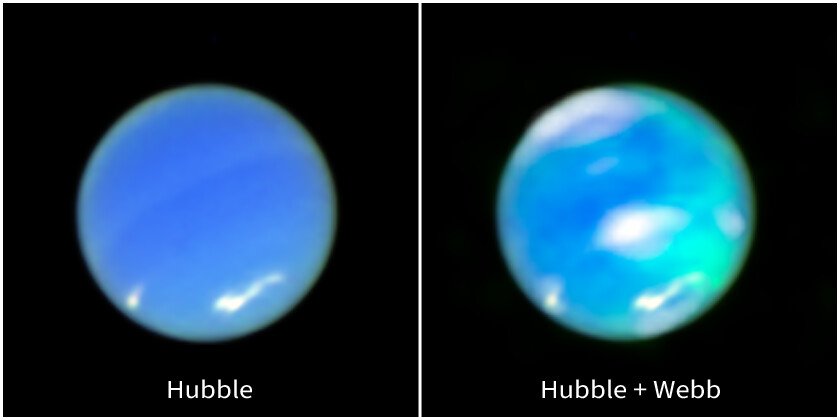
Neptune’s striking blue appearance comes from methane in its atmosphere, which absorbs red light and reflects blue wavelengths back to space. However, the planet’s blue is deeper and more intense than Uranus, despite both planets having similar amounts of methane. This suggests that another unknown component contributes to Neptune’s vivid coloration.
Recent research points to a mysterious substance that scientists haven’t yet identified, possibly a complex organic compound formed under extreme pressure and temperature conditions. This unknown material might be created through photochemical reactions high in Neptune’s atmosphere, where ultraviolet radiation from the Sun breaks apart methane molecules and allows them to recombine into new compounds.
Temperatures That Defy Comprehension
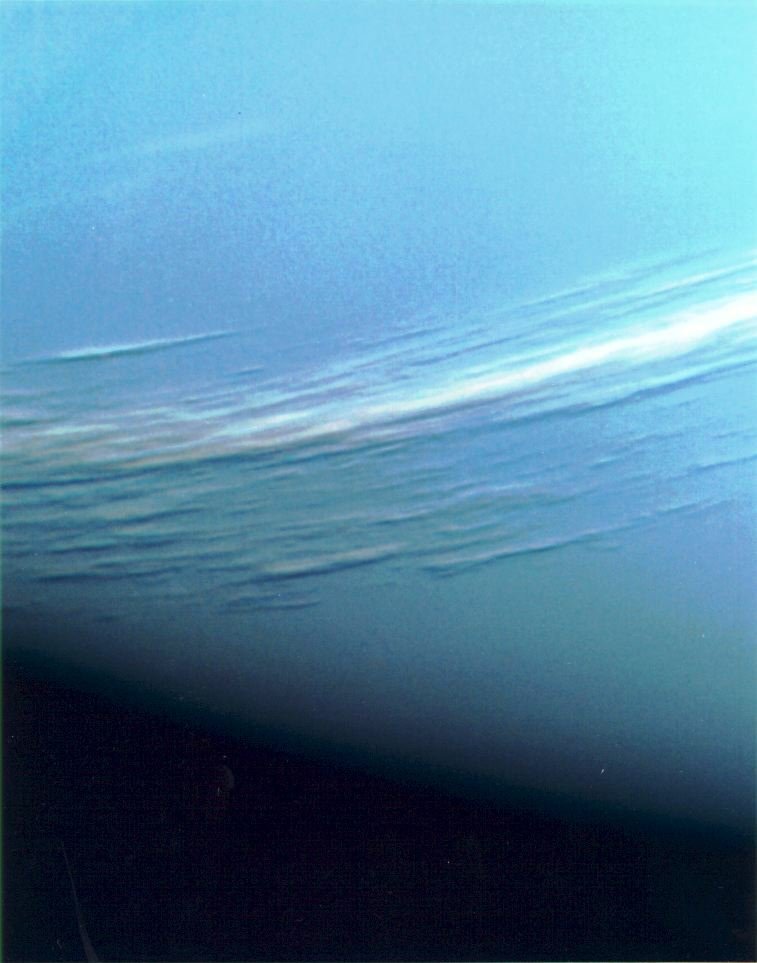
The surface temperatures on Neptune plunge to a bone-chilling -218 degrees Celsius, making it one of the coldest places in the solar system. At these temperatures, nitrogen would be solid, and even the hardiest extremophiles from Earth would be instantly frozen solid. Yet somehow, this frozen world maintains incredibly dynamic weather patterns.
The extreme cold creates unique atmospheric conditions where different gases freeze at different altitudes, forming distinct layers in the atmosphere. These temperature gradients contribute to the planet’s complex weather systems and may play a role in generating its supersonic winds. The contrast between the planet’s internal heat and its frigid exterior creates a perpetual state of atmospheric instability.
The Great Dark Spot’s Vanishing Act
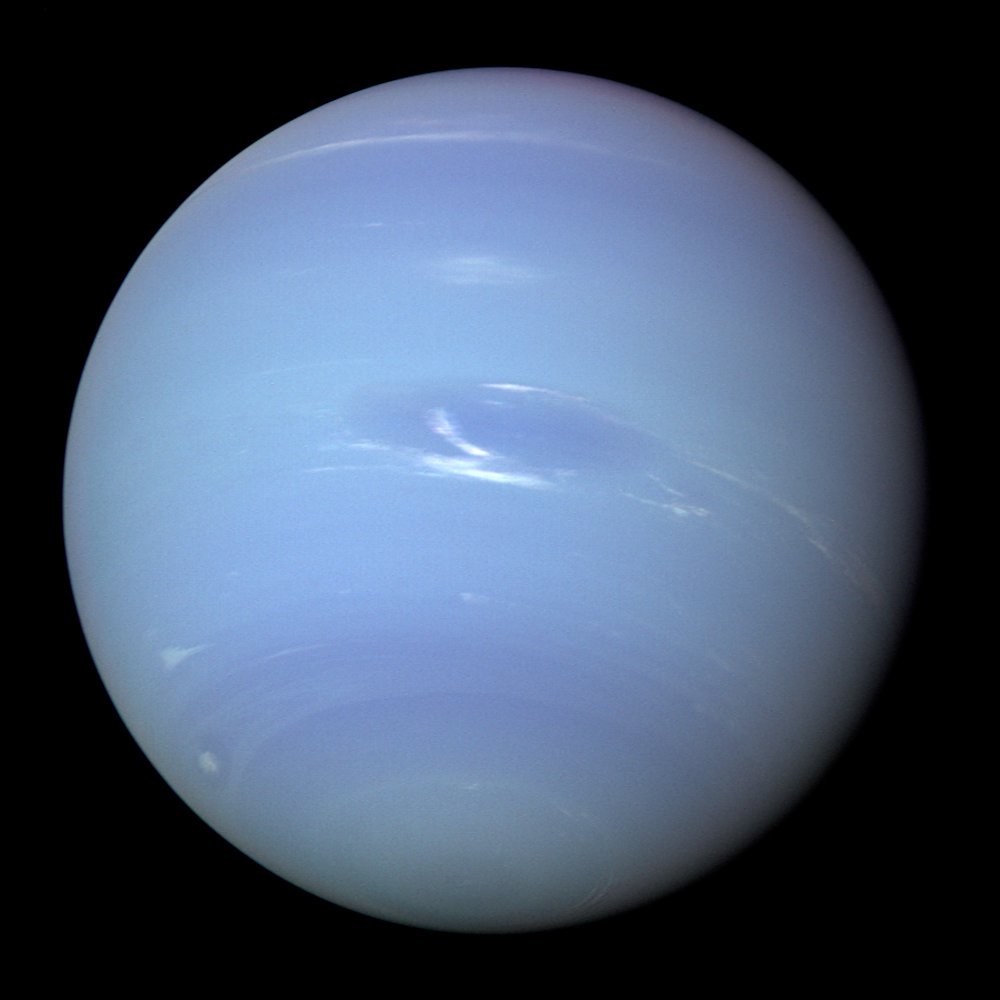
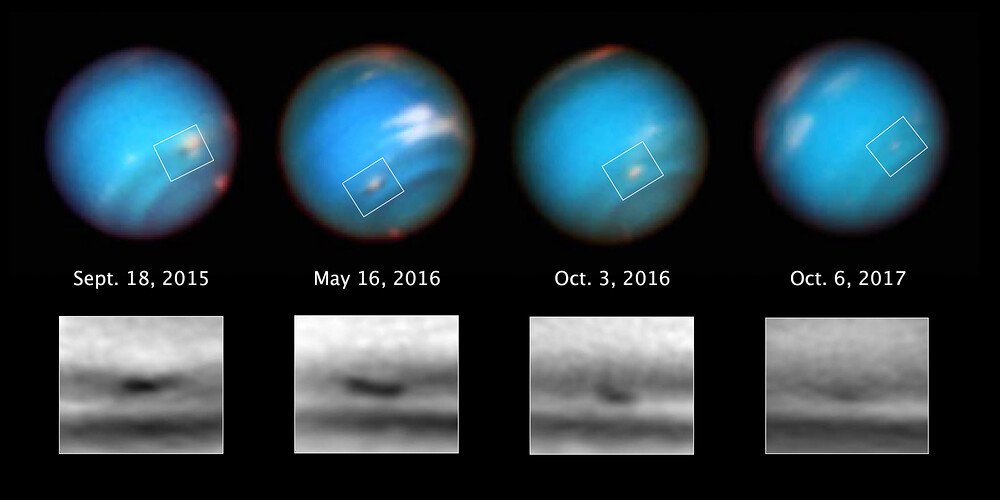
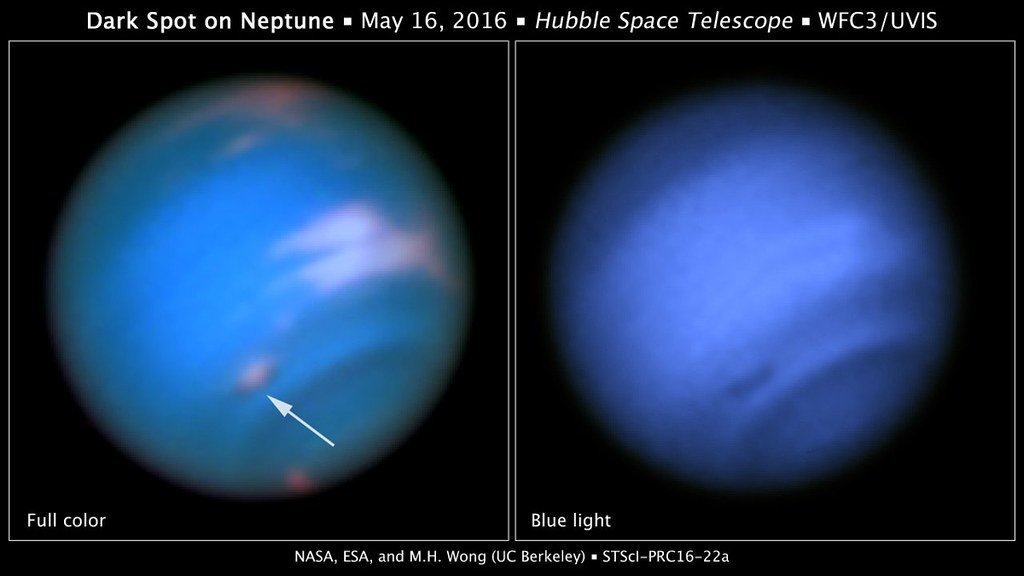
When Voyager 2 first observed Neptune in 1989, it captured images of a massive storm system called the Great Dark Spot, roughly the size of Earth. This anticyclonic storm appeared to be a permanent feature, similar to Jupiter’s Great Red Spot. However, when the Hubble Space Telescope observed Neptune just five years later, the Great Dark Spot had completely vanished.
This disappearance shocked scientists and revealed that Neptune’s atmospheric features are far more dynamic than previously thought. Unlike Jupiter’s long-lived storm systems, Neptune’s weather patterns can form and dissipate within years or even months. New dark spots have since appeared and disappeared, suggesting that Neptune’s atmosphere is in constant flux, driven by the planet’s mysterious internal heat source.
Magnetic Field Mysteries
Neptune’s magnetic field tilts at a peculiar 47-degree angle from its rotational axis, creating one of the most unusual magnetic environments in the solar system. This extreme tilt suggests that the magnetic field originates not from the planet’s core, but from electrical currents in its mantle of water, ammonia, and methane ices. The magnetic field strength is about 27 times stronger than Earth’s, despite Neptune’s distance from the Sun.
The offset and tilted magnetic field creates a complex magnetosphere that interacts with the solar wind in unpredictable ways. This unusual configuration may contribute to Neptune’s ability to retain its atmosphere despite being so far from the Sun. The magnetic field also influences the behavior of Neptune’s moons and rings, creating a dynamic system of charged particles and electromagnetic interactions.
The Frozen Chemistry Lab
Neptune’s interior functions like a massive, high-pressure chemistry laboratory where exotic materials form under conditions impossible to replicate on Earth. The planet’s core likely contains a mixture of rock, ice, and metals compressed to incredible densities. At these pressures and temperatures, water behaves unlike anything we know, potentially forming superionic ice where hydrogen ions flow freely through a crystal lattice of oxygen.
Scientists theorize that diamond rain might fall through Neptune’s atmosphere, created when methane breaks down under extreme pressure and temperature. These diamonds could be as large as gemstones, cascading through the planet’s interior like a bizarre precipitation system. The carbon from decomposed methane undergoes such intense pressure that it crystallizes into diamonds, which then sink toward the planet’s core.
Ring System Secrets

Neptune’s ring system consists of five main rings named after astronomers who contributed to the planet’s discovery: Galle, Le Verrier, Lassell, Arago, and Adams. These rings are composed of organic compounds that have been altered by radiation, giving them a reddish-brown color. Unlike Saturn’s bright, icy rings, Neptune’s rings are incredibly dark and difficult to observe from Earth.
The rings show unusual brightness variations, with some sections appearing much brighter than others. These “ring arcs” in the Adams ring were initially thought to be incomplete rings, but later observations revealed they are actually bright segments within a complete ring. The gravitational influence of Neptune’s moon Galatea likely maintains these ring arcs, preventing the material from spreading uniformly around the planet.
Triton’s Backward Dance
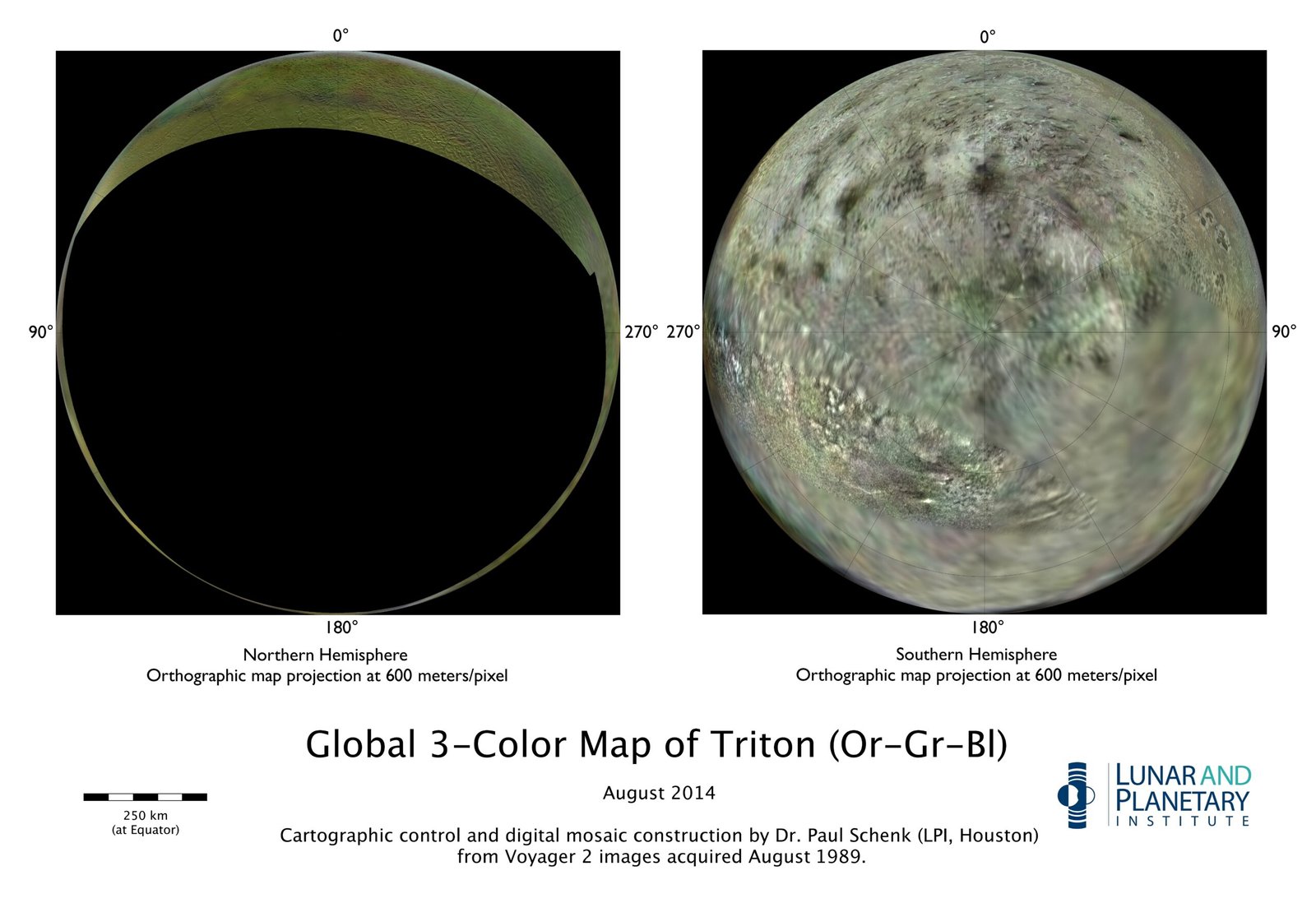
Neptune’s largest moon, Triton, orbits the planet in a retrograde direction, suggesting it was likely a captured Kuiper Belt object. This icy world hosts active geysers that spew nitrogen gas and dark particles up to 8 kilometers high, despite surface temperatures of -235 degrees Celsius. Triton’s thin atmosphere and geological activity make it one of the most interesting objects in the outer solar system.
The moon’s retrograde orbit means it’s slowly spiraling inward toward Neptune, and in about 3.6 billion years, it will either crash into the planet or be torn apart by tidal forces to form a spectacular ring system. Triton’s surface shows signs of relatively recent geological activity, with few impact craters and smooth plains that suggest the moon has been resurfaced by cryovolcanism within the last few million years.
Seasonal Extremes Across Decades
Neptune’s seasons last approximately 40 Earth years due to its 165-year orbital period around the Sun. These extended seasons create long-term changes in the planet’s atmospheric dynamics and cloud formations. During its southern summer, which lasted from 1980 to 2020, Neptune’s southern hemisphere showed increased cloud activity and brighter atmospheric features.
The planet’s extreme axial tilt of 28.3 degrees means that different regions experience wildly different amounts of sunlight over the course of its orbit. This creates dramatic seasonal variations in atmospheric heating that may contribute to the formation and dissipation of storm systems like the Great Dark Spot. Climate models suggest that Neptune’s weather patterns operate on timescales that dwarf human civilization.
The Radio Wave Enigma
Neptune emits radio waves in patterns that don’t match any known source, creating another layer of mystery around this distant world. These radio emissions appear to be linked to the planet’s rotation and magnetic field, but their exact origin remains unclear. The signals vary in intensity and frequency, sometimes disappearing entirely for periods of time.
Scientists believe these radio waves might be generated by interactions between Neptune’s magnetic field and charged particles in its magnetosphere, but the irregular nature of the emissions suggests a more complex process. Some theories propose that the radio waves are produced by lightning in Neptune’s atmosphere, though direct evidence of lightning on the planet has not been conclusively detected.
Formation Theories and Migration

Neptune likely formed much closer to the Sun than its current position, somewhere between Jupiter and Saturn. According to the Grand Tack model, gravitational interactions with Jupiter caused Neptune to migrate outward to its present location over millions of years. This migration would have scattered countless small bodies throughout the outer solar system, helping to populate the Kuiper Belt.
The planet’s composition and structure support this migration theory, as Neptune contains more heavy elements than would be expected if it formed in its current cold location. The abundance of water, ammonia, and methane in Neptune’s interior suggests it formed in a region where these compounds could condense from the solar nebula. This migration process also explains why Neptune is denser than Uranus, despite being farther from the Sun.
Atmospheric Layers and Composition
Neptune’s atmosphere consists of roughly 80% hydrogen and 19% helium, with traces of methane, hydrogen deuteride, and ethane. The methane concentration increases with depth, reaching a maximum in the stratosphere where it forms a haze layer. This methane haze helps trap heat in the atmosphere, contributing to Neptune’s complex thermal structure.
The planet’s atmosphere is divided into several distinct layers, each with unique temperature and pressure characteristics. The troposphere, where most weather occurs, extends from the surface to about 50 kilometers altitude. Above this lies the stratosphere, where temperatures increase with altitude due to absorption of solar radiation by methane and other hydrocarbons. The thermosphere, Neptune’s uppermost atmospheric layer, can reach temperatures of several hundred degrees Celsius due to absorption of high-energy solar radiation.
Exploration Challenges and Future Missions

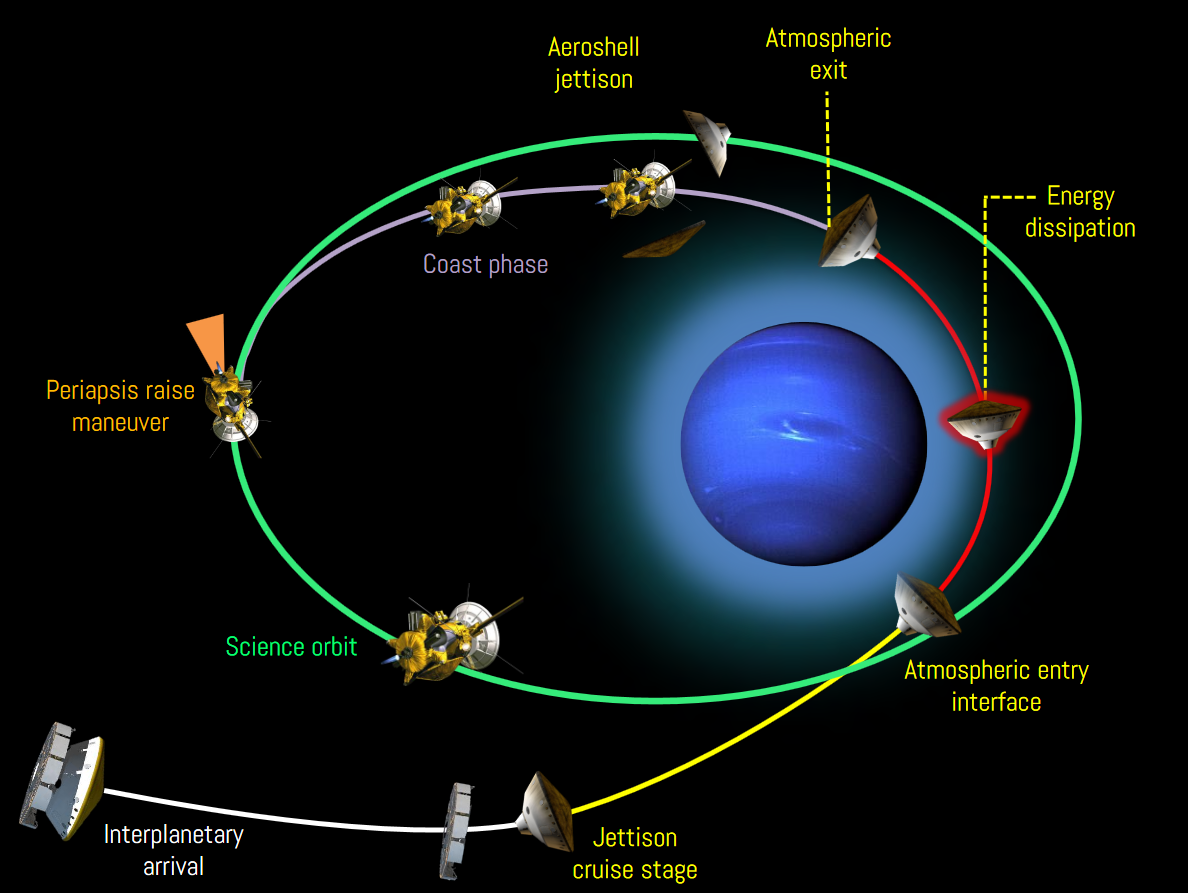
Only one spacecraft has ever visited Neptune: Voyager 2, which flew by the planet in 1989. The mission provided most of our detailed knowledge about Neptune, but many questions remain unanswered. The extreme distance to Neptune makes future missions challenging, requiring decades of travel time and advanced propulsion systems.
Several proposed missions to Neptune are in various stages of development, including orbital missions that would study the planet’s atmosphere, magnetosphere, and moons in detail. These missions would likely use nuclear-powered spacecraft and gravitational assists from multiple planets to reach Neptune within reasonable timeframes. The scientific payoff from such missions would be enormous, potentially revolutionizing our understanding of ice giant planets and their role in planetary system formation.
Neptune’s Influence on the Solar System
Despite its distance, Neptune plays a crucial role in shaping the outer solar system through its gravitational influence. The planet’s gravity affects the orbits of numerous Kuiper Belt objects, including Pluto, which is locked in a 3:2 orbital resonance with Neptune. This gravitational relationship prevents Pluto from ever colliding with Neptune, despite their orbits crossing.
Neptune also acts as a “shepherd” for many smaller objects in the outer solar system, either capturing them into stable orbits or ejecting them into interstellar space. The planet’s gravitational influence extends far beyond its immediate vicinity, affecting the distribution of matter throughout the Kuiper Belt and beyond. Some scientists believe Neptune’s gravity may have played a role in shaping the orbits of distant objects like Sedna and other extreme trans-Neptunian objects.
Comparative Planetology
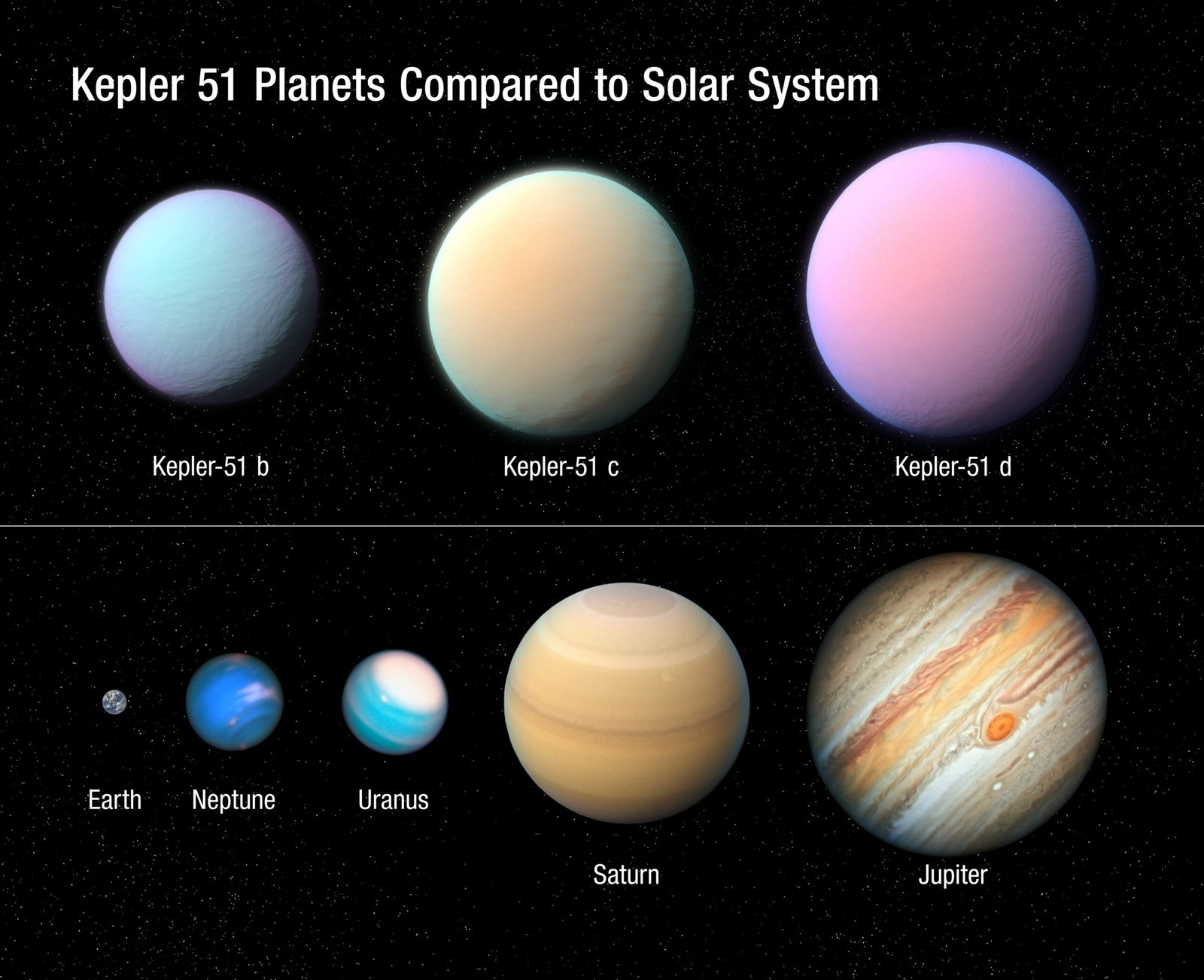
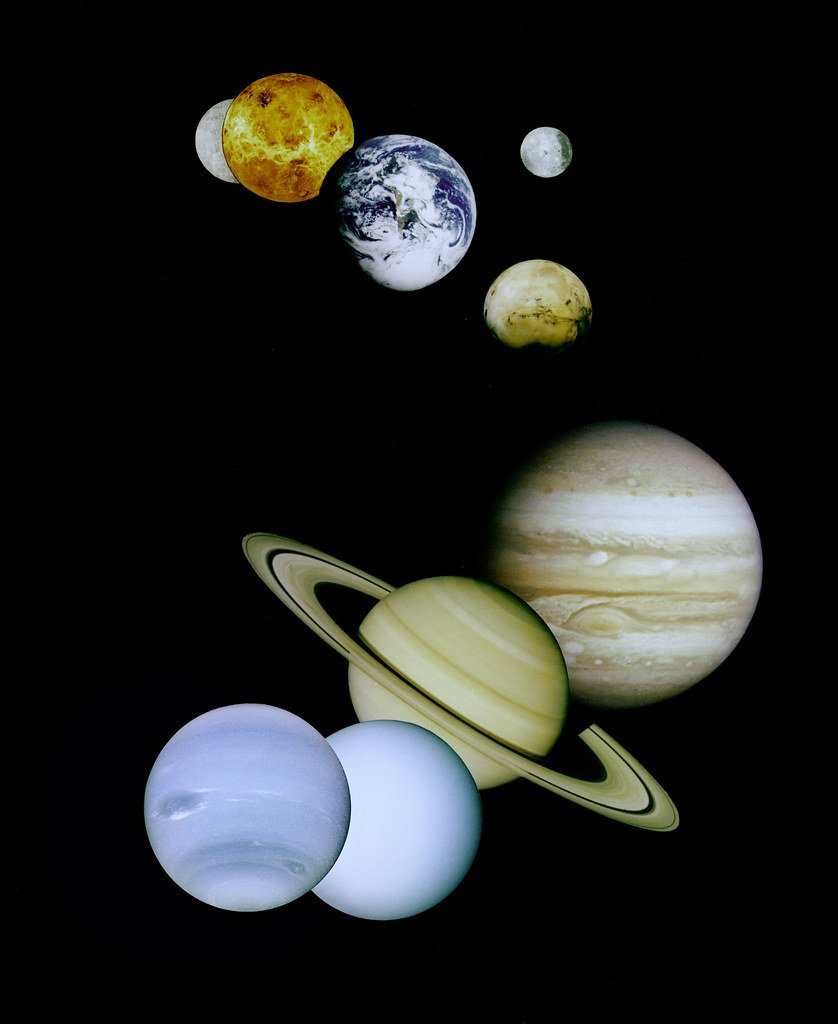
Comparing Neptune to other ice giants reveals fascinating differences in planetary evolution and atmospheric dynamics. While Uranus rotates on its side and has a relatively calm atmosphere, Neptune maintains an upright orientation and hosts the solar system’s most extreme weather. Both planets have similar compositions, yet their atmospheric behaviors are dramatically different.
These differences provide important clues about how planetary atmospheres evolve and respond to different energy sources. Neptune’s internal heat source drives its dynamic weather, while Uranus relies almost entirely on solar heating. This comparison helps scientists understand how planetary formation, composition, and internal structure influence atmospheric behavior across different types of worlds.
The Search for Life’s Building Blocks

While Neptune itself is inhospitable to life as we know it, the planet and its moons may contain important clues about the building blocks of life. The complex organic chemistry occurring in Neptune’s atmosphere under extreme conditions might produce compounds that could serve as precursors to biological molecules. Scientists are particularly interested in the formation of complex hydrocarbons and nitrogen compounds in Neptune’s atmosphere.
Triton’s subsurface ocean, if it exists, could potentially harbor conditions suitable for simple life forms. The moon’s geological activity and possible liquid water beneath its icy surface make it an intriguing target for astrobiological research. Future missions to the Neptune system might include instruments designed to detect signs of prebiotic chemistry or even simple life forms in these extreme environments.
Technological Marvels of Detection
Studying Neptune from Earth requires incredibly sophisticated technology to overcome the challenges of distance and the planet’s faint appearance. Ground-based telescopes equipped with adaptive optics systems can now observe Neptune’s atmospheric features and track changes over time. Space-based telescopes like Hubble and the James Webb Space Telescope provide unprecedented views of Neptune’s atmospheric dynamics and composition.
Advanced computer modeling and simulation techniques help scientists understand Neptune’s complex atmospheric behavior and internal structure. These models incorporate data from Voyager 2, ground-based observations, and theoretical physics to create comprehensive pictures of how Neptune functions as a planetary system. The combination of observational data and computational modeling continues to reveal new aspects of Neptune’s mysterious nature.
Neptune stands as a testament to the incredible diversity and complexity of our solar system, a world where extreme conditions create phenomena that challenge our understanding of planetary science. From its supersonic winds that race backward around the planet to its mysterious blue glow and internal heat source, Neptune continues to surprise and intrigue scientists decades after its discovery. The planet’s dynamic atmosphere, unusual magnetic field, and complex ring system demonstrate that even in the frigid outer reaches of our solar system, nature finds ways to create spectacular and unexpected phenomena. As we develop new technologies and plan future missions to this distant world, Neptune promises to reveal even more secrets about planetary formation, atmospheric dynamics, and the incredible variety of worlds that exist beyond our own pale blue dot. What other mysteries might this frozen giant be hiding in its supersonic winds and icy depths?