
Time stretches behind us like an endless ocean, carrying secrets that most people never get to witness. While we rush through our daily lives, there are places on Earth where millions of years whisper their stories through stone, ice, and ancient formations. These forgotten landmarks don’t just tell us about the past – they reveal the profound depths of geological time that shaped our planet.
The Antelope Canyon of Time

Deep within Arizona’s Navajo Nation lies a slot canyon that serves as nature’s own cathedral of time. Antelope Canyon wasn’t carved by human hands, but by millions of years of flash floods sculpting Navajo sandstone into flowing, wave-like walls. The narrow passages reveal layers of rock that span roughly 190 million years, each stripe telling a story of ancient deserts and changing climates.
What makes this place truly extraordinary is how it demonstrates the power of water over deep time. The seemingly gentle trickle of occasional rainfall has created one of the most photographed geological formations on Earth. Walking through these corridors feels like stepping through the pages of a geological textbook, where each curve and contour represents countless seasons of patient erosion.
The interplay of light and shadow here changes throughout the day, creating an almost spiritual experience that connects visitors to the vast timescales of Earth’s history.
Iceland’s Thingvellir: Where Continents Pull Apart
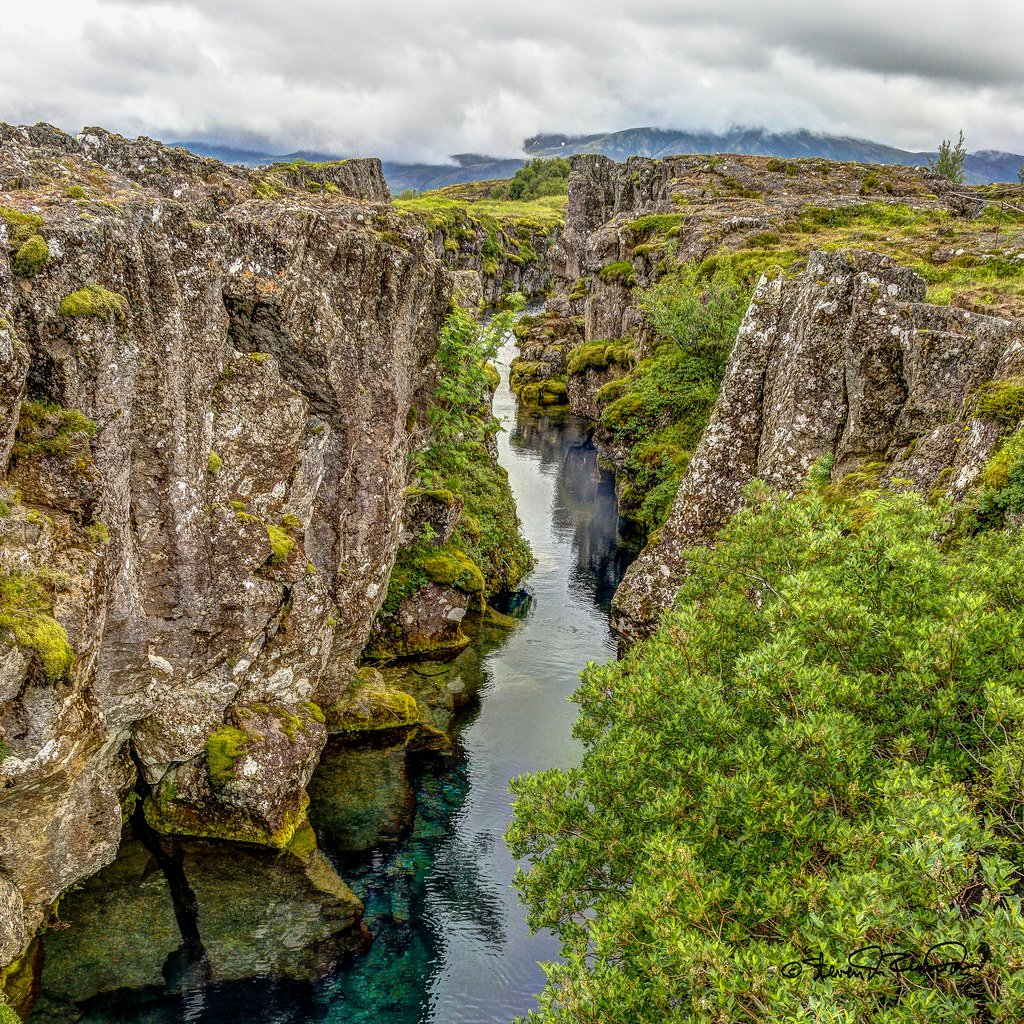
At Thingvellir National Park in Iceland, you can literally stand between two continents as they slowly drift apart. This remarkable rift valley marks the boundary between the North American and Eurasian tectonic plates, which have been separating at a rate of about 2 centimeters per year for millions of years. The dramatic landscape of jagged cliffs, deep fissures, and crystal-clear lakes provides a front-row seat to continental drift in action.
The geological processes happening here offer a rare glimpse into the forces that have shaped our planet over hundreds of millions of years. As you walk along the marked paths, you’re witnessing the same type of rifting that once split the supercontinent Pangaea apart. The clear waters of Silfra fissure, where divers can swim between continents, represent some of the purest water on Earth, filtered through lava rock for decades.
This living laboratory of plate tectonics demonstrates how our planet continues to evolve, even as we stand upon it.
The Devil’s Marbles: Australia’s Time Capsules
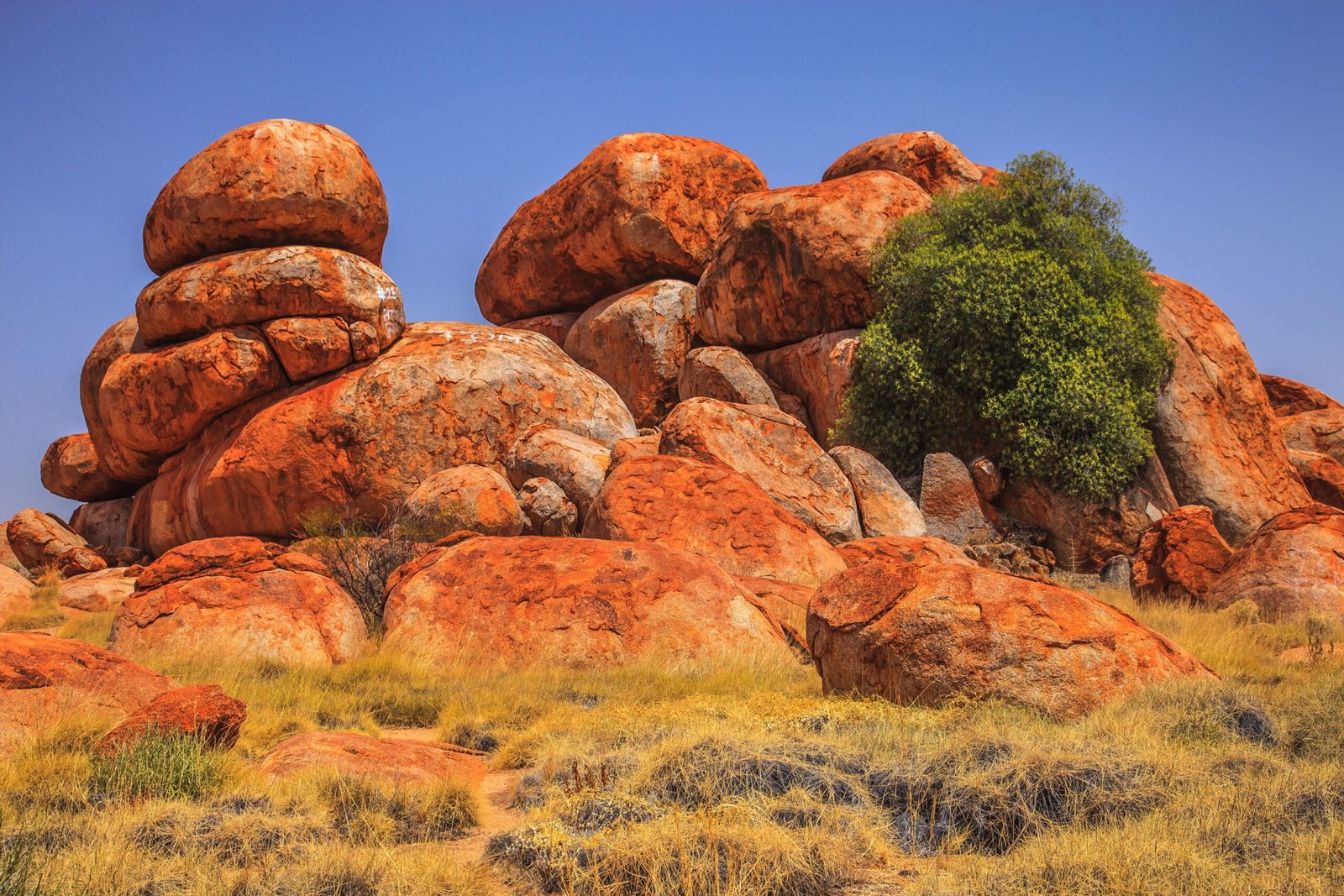
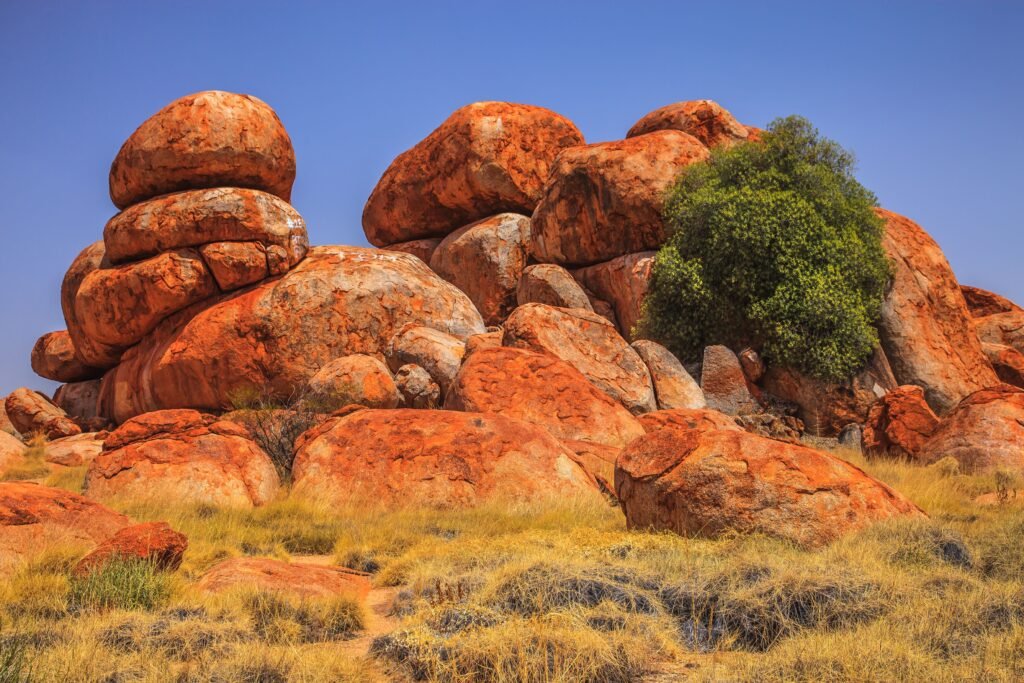
In the heart of Australia’s Northern Territory, massive granite boulders sit scattered across the landscape like marbles left behind by giants. These formations, known as Karlu Karlu to the Aboriginal people, represent some of the oldest exposed rock on Earth, dating back over 1.7 billion years. The spherical shapes weren’t carved by wind or water, but created through a process called spheroidal weathering that occurs over millions of years.
These ancient stones have witnessed the rise and fall of entire ecosystems, ice ages, and the gradual drift of continents. The granite formed deep underground when Australia was part of a much larger landmass, and only reached the surface through countless cycles of erosion and uplift. Each boulder tells a story of chemical weathering, where the outer layers gradually peel away like onion skin, revealing the solid core beneath.
Standing among these time capsules, you’re surrounded by rocks that predate complex life on Earth by over a billion years.
The Banded Iron Formations of Lake Superior
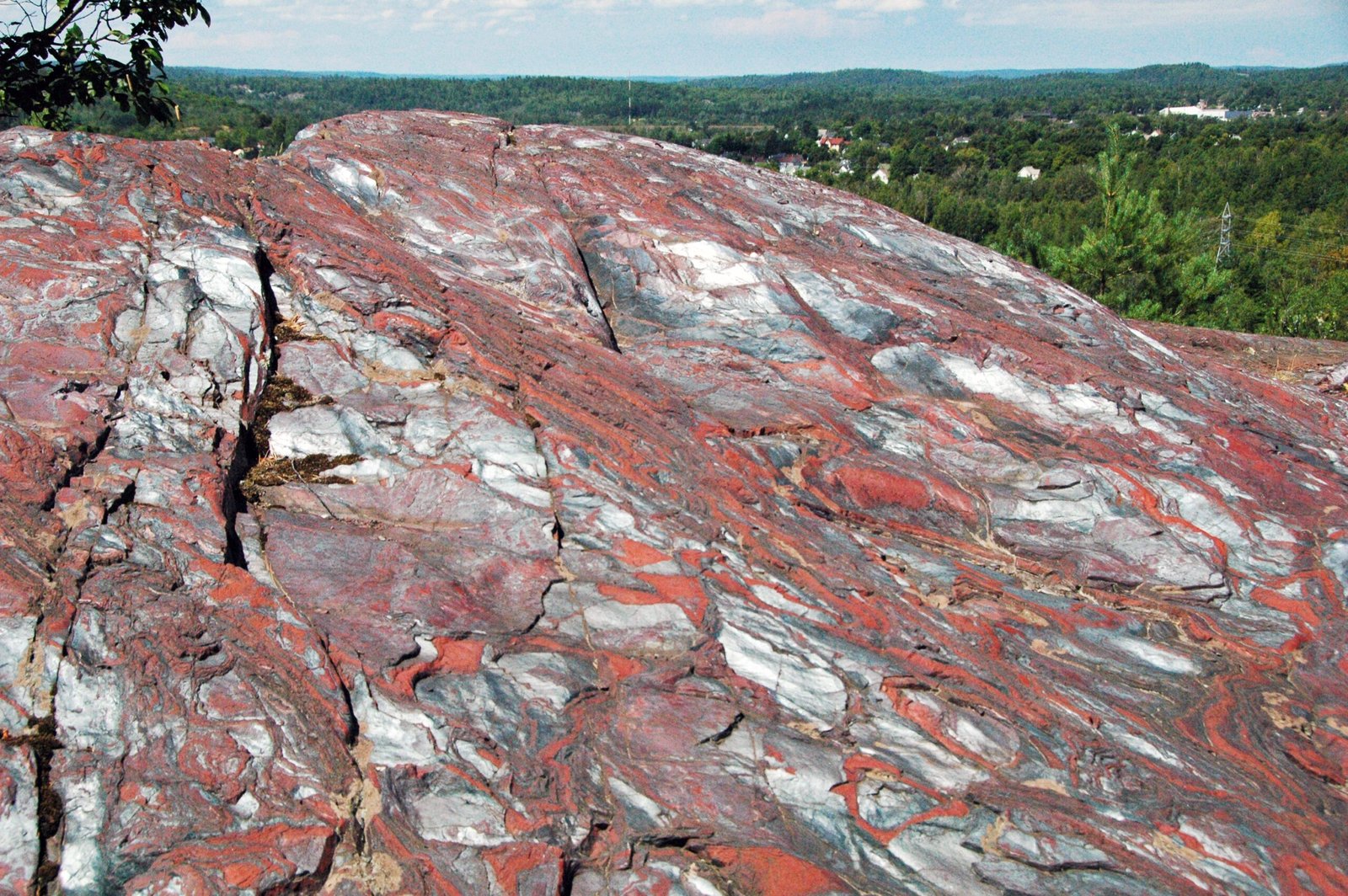
Along the shores of Lake Superior, distinctive red and black striped rocks tell one of the most important stories in Earth’s history. These banded iron formations, created between 2.5 and 1.8 billion years ago, mark the Great Oxidation Event when cyanobacteria first began producing oxygen as a waste product. The alternating bands of iron oxide and silica represent seasonal cycles that occurred over hundreds of millions of years.
These formations are essentially fossilized evidence of Earth’s first environmental catastrophe – and salvation. The oxygen produced by early bacteria was initially toxic to most life forms, causing mass extinctions while simultaneously creating the atmosphere that would eventually support complex life. Each band represents decades or centuries of bacterial activity, creating a timeline of Earth’s atmospheric evolution.
Walking along these ancient shorelines, you’re looking at the geological signature of the moment when our planet transformed from a reducing to an oxidizing atmosphere.
The Stromatolites of Shark Bay
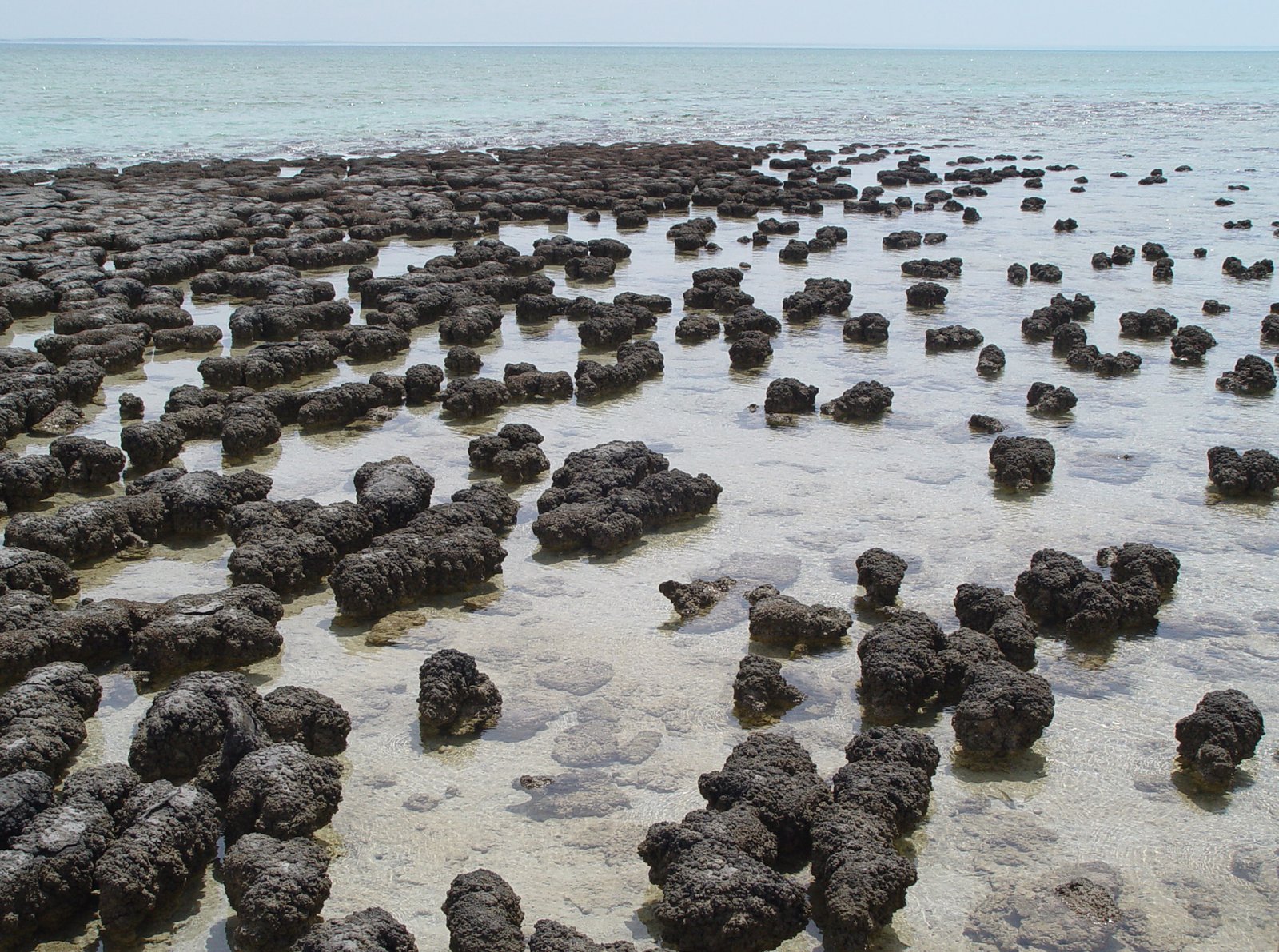
In the shallow waters of Shark Bay, Western Australia, living rocks continue a story that began over 3.5 billion years ago. These stromatolites are built by cyanobacteria, some of Earth’s earliest life forms, creating layered structures that represent the oldest evidence of life on our planet. The modern stromatolites at Shark Bay are virtually identical to their ancient predecessors, offering a direct window into the Precambrian world.
These microbial mats grow incredibly slowly, adding just millimeters per year to their height. The largest formations here have been growing for thousands of years, creating living monuments to the persistence of life. The hypersaline conditions of Shark Bay create an environment similar to early Earth, where these simple organisms could thrive without competition from more complex life forms.
Observing these living fossils is like looking at Earth’s biological clock, where each layer represents years of patient growth in one of the most extreme environments on the planet.
The Burgess Shale: Explosion of Life Frozen in Time
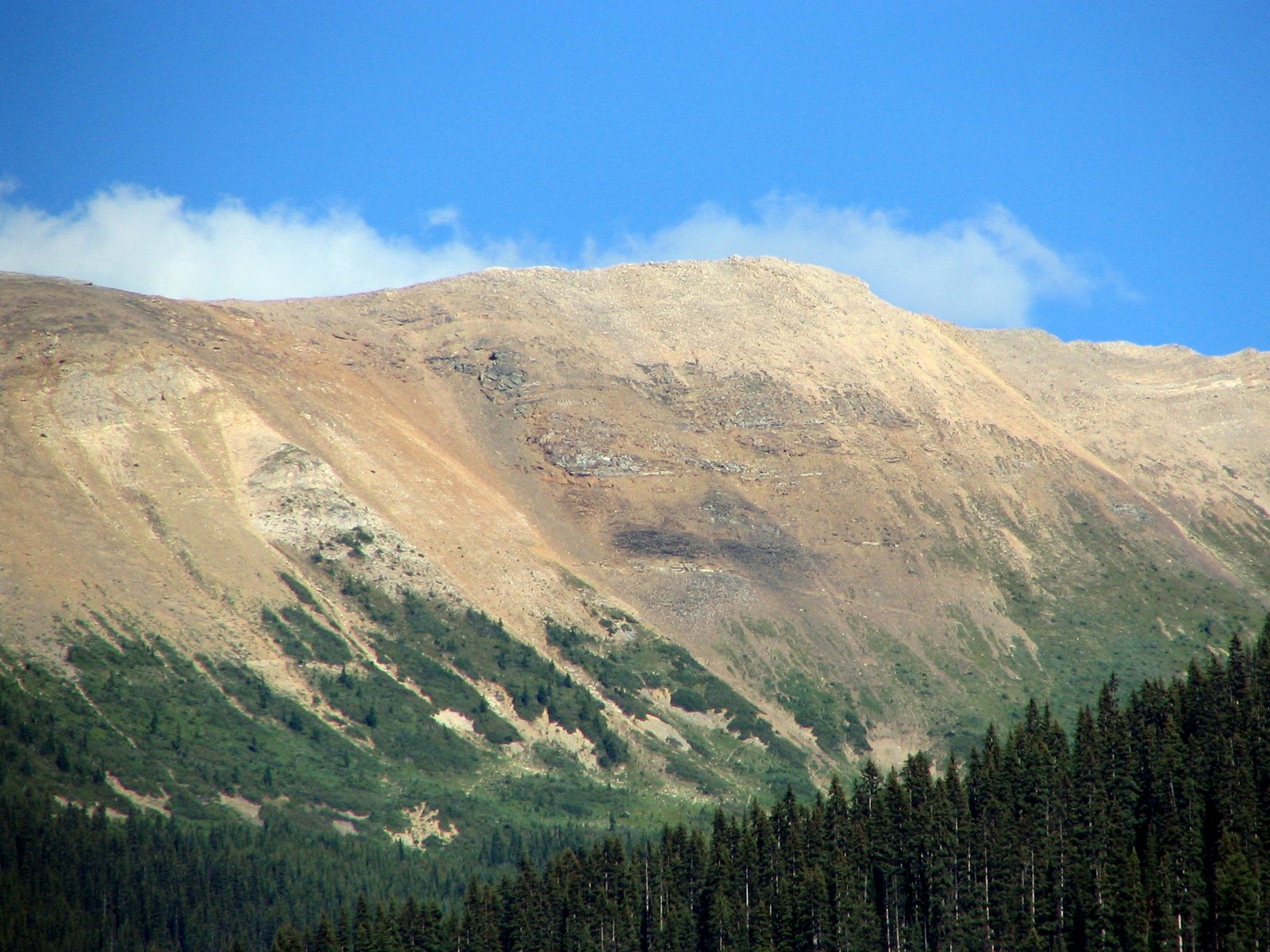
High in the Canadian Rockies, the Burgess Shale preserves one of the most extraordinary moments in Earth’s history – the Cambrian Explosion that occurred 508 million years ago. This fossil deposit captures the moment when life on Earth suddenly diversified into complex forms, preserving soft-bodied organisms that would normally decay without a trace. The exceptional preservation shows us creatures so bizarre they seem almost alien, yet they represent our own evolutionary ancestors.
The formation of these fossils required a perfect storm of conditions: rapid burial in fine sediment, lack of oxygen, and minimal bacterial decay. The result is a fossil record so detailed that paleontologists can see the gut contents of creatures that lived half a billion years ago. Many of the organisms preserved here represent evolutionary experiments that didn’t survive, offering insights into paths not taken in the history of life.
These mountains contain what Stephen Jay Gould called “life’s most exuberant period of evolutionary experimentation,” frozen in stone for us to discover.
The Giant’s Causeway: Volcanic Time Signatures
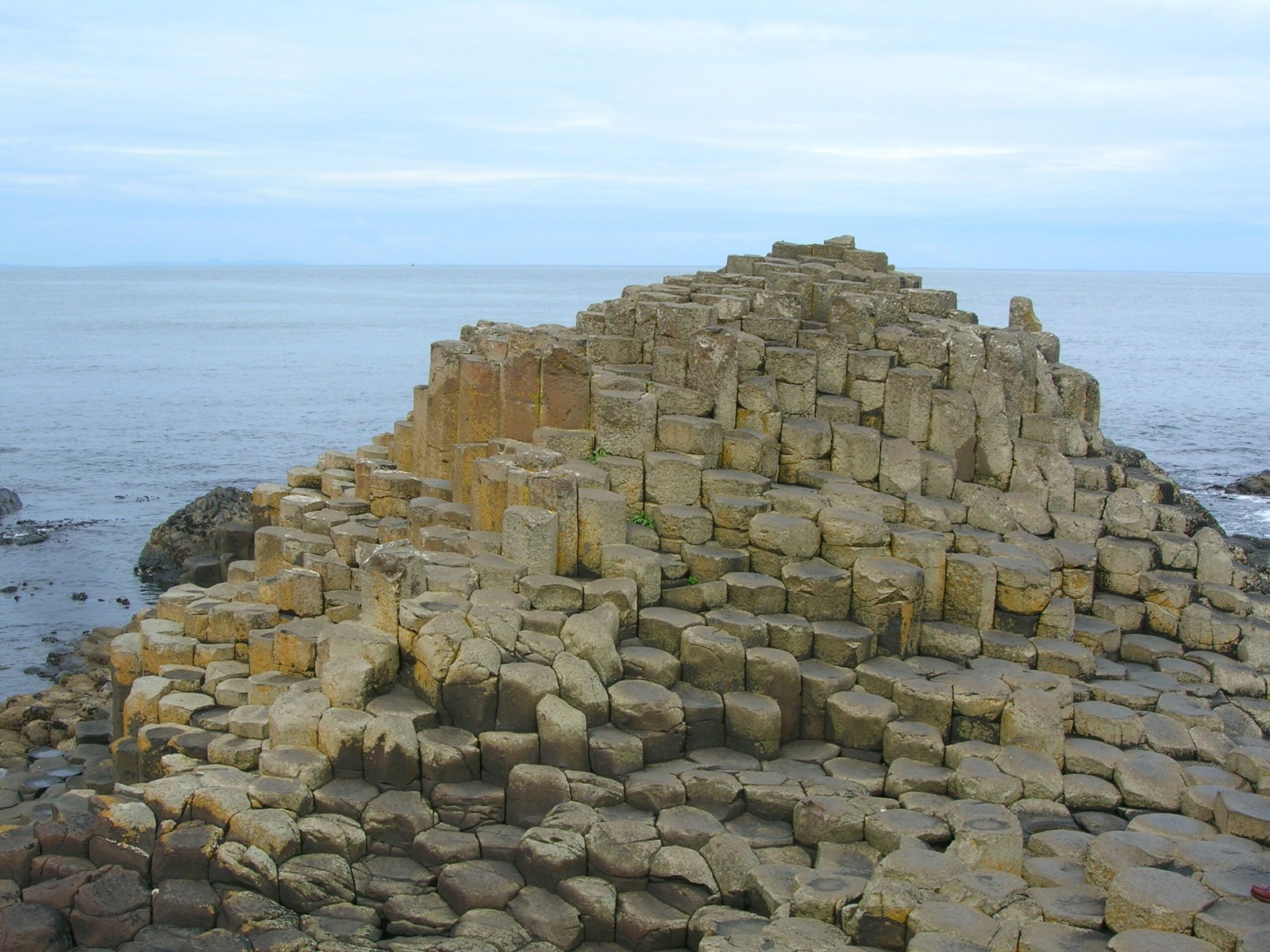
Along Northern Ireland’s coast, approximately 40,000 hexagonal basalt columns create one of the most geometrically perfect natural formations on Earth. These columns formed 50-60 million years ago when intense volcanic activity created vast lava plateaus during the opening of the North Atlantic Ocean. As the molten rock cooled slowly and evenly, it contracted and cracked into remarkably uniform hexagonal shapes, creating a natural monument to the mathematical precision of geological processes.
The formation of these columns demonstrates how simple physical laws can create complex patterns over geological time. Each column represents a single cooling event, where the lava contracted at a uniform rate, creating the hexagonal pattern that minimizes stress in the cooling rock. The different heights of the columns reflect variations in the cooling rate and the composition of the lava flows.
Standing on these ancient stepping stones, you’re witnessing the geological aftermath of the supervolcanic activity that helped shape the modern Atlantic Ocean.
Reading the Stories Written in Stone
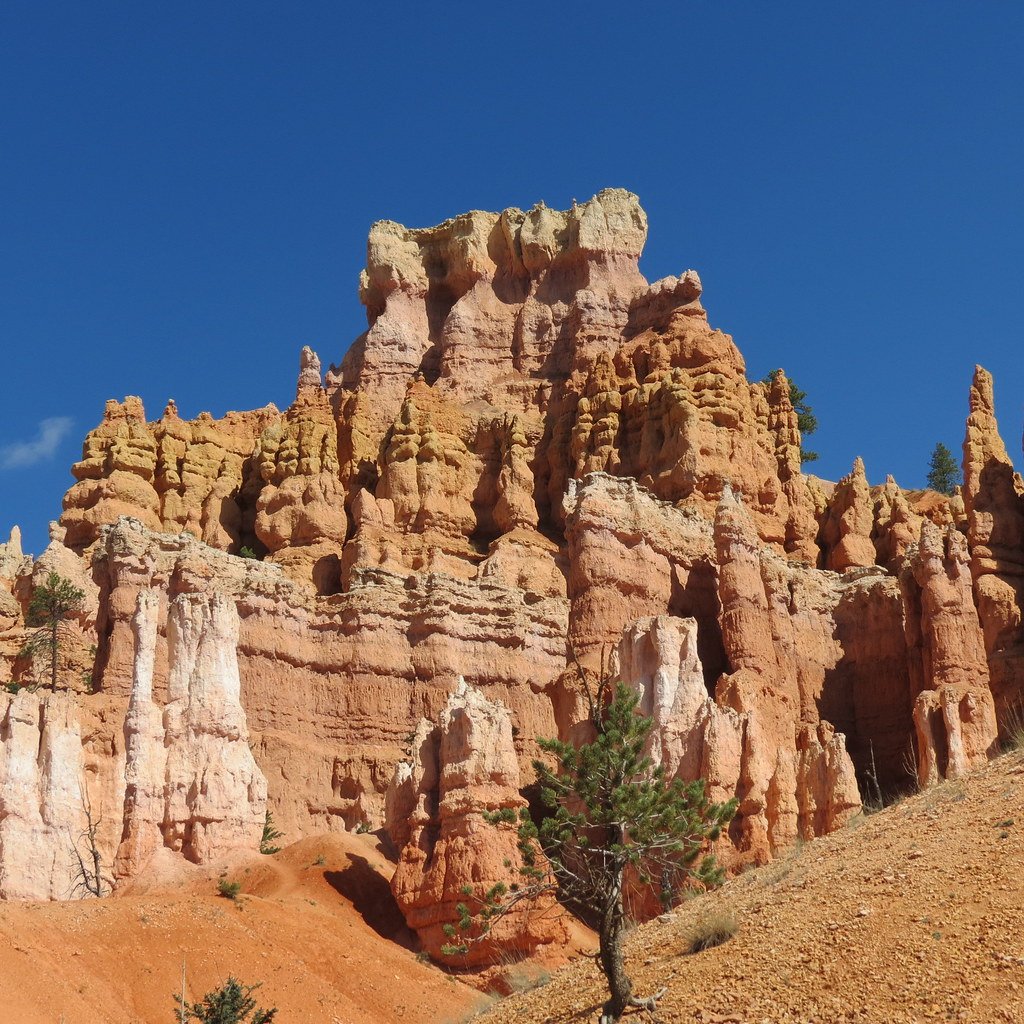
Each of these forgotten landmarks serves as a chapter in Earth’s autobiography, written in languages of rock, mineral, and time. The stories they tell span billions of years, from the earliest signs of life to the ongoing processes that continue to shape our planet. These places remind us that we are temporary visitors on a world that has been writing its history long before humans appeared and will continue long after we’re gone.
The preservation of these geological records depends on incredibly specific conditions – the right chemistry, the right burial conditions, the right geological stability. Most of Earth’s deep history has been erased by erosion, subduction, and other geological processes, making these surviving records all the more precious.
Understanding these places helps us appreciate not just the vastness of geological time, but our own place within it.
The Science of Deep Time Preservation

The concept of deep time revolutionized our understanding of Earth’s history, but it required the development of sophisticated dating techniques to unlock these ancient secrets. Radiometric dating, stratigraphy, and paleomagnetic analysis have allowed scientists to place these landmarks within the vast timeline of Earth’s history. Each method provides different insights into the age and formation of these ancient structures.
The preservation of these geological records often depends on being protected from the very processes that created them. Volcanic ash that once destroyed entire ecosystems now preserves them as fossils. The same tectonic forces that create mountains also expose the ancient rocks within them. This paradox of destruction and preservation is central to understanding how we can read Earth’s deep history.
Modern technology continues to reveal new details about these ancient places, from high-resolution scanning of fossil structures to chemical analysis of mineral compositions.
Climate Chronicles in Ancient Rocks

Many of these forgotten landmarks contain detailed records of ancient climate conditions, preserved in the chemistry and structure of their rocks. The banded iron formations, for instance, not only record the Great Oxidation Event but also preserve evidence of ancient ice ages and atmospheric composition. Sedimentary layers in these formations show seasonal and longer-term climate cycles that occurred billions of years ago.
The stromatolites of Shark Bay provide insights into how early life forms responded to changing environmental conditions. The growth patterns in these structures reflect variations in temperature, salinity, and nutrient availability over thousands of years. These biological records complement the geological evidence, creating a more complete picture of Earth’s environmental history.
Understanding these climate records helps scientists predict how current climate change might affect both geological and biological systems.
The Role of Catastrophic Events

Several of these landmarks preserve evidence of catastrophic events that shaped Earth’s history in dramatic ways. The Burgess Shale captures the aftermath of underwater avalanches that instantly buried entire ecosystems. The Giant’s Causeway represents the volcanic catastrophes that accompanied the breakup of supercontinents. These sudden events often create the exact conditions needed for exceptional preservation.
Catastrophic events in Earth’s history often serve as reset buttons for evolution and geology. The mass extinction events preserved in some fossil records show how life bounced back from near-total annihilation. The volcanic events recorded in igneous formations demonstrate how the planet’s internal heat engine continues to reshape the surface.
These catastrophic signatures remind us that Earth’s history is not one of gradual change, but of long periods of stability punctuated by dramatic transformations.
Microbial Time Travelers

Some of the most remarkable aspects of these forgotten landmarks involve the persistence of microbial life across billions of years. The cyanobacteria building modern stromatolites are virtually identical to those that created the first oxygen on Earth. These microscopic organisms have survived every mass extinction event, ice age, and environmental catastrophe in Earth’s history.
The study of these ancient microbes provides insights into the limits of life and the conditions that allow it to persist. The extreme environments where many of these organisms thrive – high salinity, extreme temperatures, low oxygen – mirror conditions on early Earth and potentially on other planets. These living fossils serve as natural laboratories for understanding how life might survive in space.
The continuity of microbial life across deep time demonstrates the resilience of life and its ability to adapt to changing conditions.
Erosion as Both Destroyer and Revealer

The geological processes that threaten to destroy these ancient landmarks are often the same ones that revealed them in the first place. Erosion strips away younger rock layers to expose ancient formations, but it also gradually wears them away. The delicate balance between preservation and destruction creates a narrow window in time when these features are visible and accessible.
The rates of erosion at these sites vary dramatically, from millimeters per year in arid climates to meters per year in tropical regions. This means that some of these landmarks are essentially temporary features on a geological timescale, destined to be worn away within thousands rather than millions of years. The race between scientific study and natural destruction adds urgency to geological research.
Understanding erosion patterns helps scientists predict how long these natural archives will remain available for study.
The Technology of Time Detection

Modern scientific instruments have revolutionized our ability to read the stories preserved in these ancient landmarks. Mass spectrometers can determine the age of rocks by measuring the decay of radioactive isotopes. Electron microscopes reveal the microscopic structures of ancient organisms. Satellite imagery tracks the ongoing changes at these sites over time.
New techniques like laser ablation dating allow scientists to determine the age of individual mineral grains, providing unprecedented detail about the timing of geological events. Ground-penetrating radar reveals buried structures and helps scientists understand the three-dimensional architecture of these formations. These technological advances continue to reveal new aspects of Earth’s deep history.
The combination of traditional geological fieldwork with cutting-edge technology creates a more complete picture of how these landmarks formed and evolved.
Conservation Challenges Across Deep Time

Protecting these irreplaceable records of Earth’s history presents unique challenges that span multiple timescales. While the rocks themselves have survived for millions or billions of years, human activities can destroy them in decades. Mining, development, and even tourism can irreversibly damage these geological treasures. The challenge lies in balancing scientific access with long-term preservation.
Climate change adds another layer of complexity to conservation efforts. Rising sea levels threaten coastal formations, while changing precipitation patterns affect erosion rates. The same climate systems that helped preserve these landmarks for millions of years are now changing rapidly due to human activities. This creates a race against time to document and protect these sites.
International cooperation is essential for protecting these global treasures, as many of the most significant sites cross national boundaries or exist in remote locations.
Deep Time and Human Perspective

These forgotten landmarks challenge our human-centered view of time and change. While we measure our lives in decades, these places operate on timescales that dwarf human civilization. The perspective shift required to understand deep time is both humbling and inspiring, reminding us that we are part of a much larger story that began long before us and will continue long after.
The concept of deep time also influences how we think about environmental change and conservation. The geological record shows that Earth has experienced dramatic changes throughout its history, but the current rate of change is unprecedented in the geological record. This perspective helps us understand both the resilience and vulnerability of Earth’s systems.
Understanding deep time can transform how we see our place in the universe and our responsibilities as temporary stewards of the planet.
Conclusion: Witnesses to Eternity
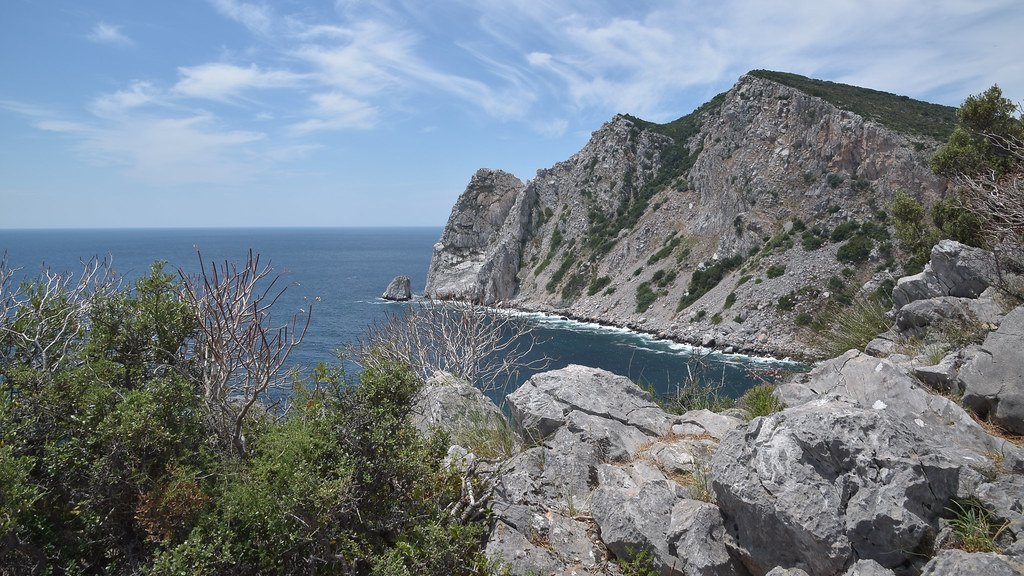
These seven forgotten landmarks stand as silent witnesses to the vast sweep of geological time, each one preserving irreplaceable records of Earth’s deep history. From the microscopic builders of stromatolites to the massive forces that split continents apart, these places remind us that our planet has been writing its autobiography for billions of years. They challenge us to think beyond human timescales and consider our place in the grand narrative of planetary evolution.
The stories preserved in these ancient rocks and formations provide crucial insights into how Earth’s systems work and how they might respond to future changes. As we face unprecedented environmental challenges, these geological archives offer both warnings and hope, showing us how life and landscapes have adapted to dramatic changes throughout Earth’s history.
7 Forgotten Landmarks That Reveal Deep TimeThe next time you encounter one of these remarkable places, take a moment to appreciate the vast timescales they represent. In a world that often feels rushed and temporary, these landmarks offer a different perspective on time itself – one measured not in years or decades, but in the patient accumulation of geological moments that span eternity. What stories might these ancient witnesses tell us about the future of our changing planet?