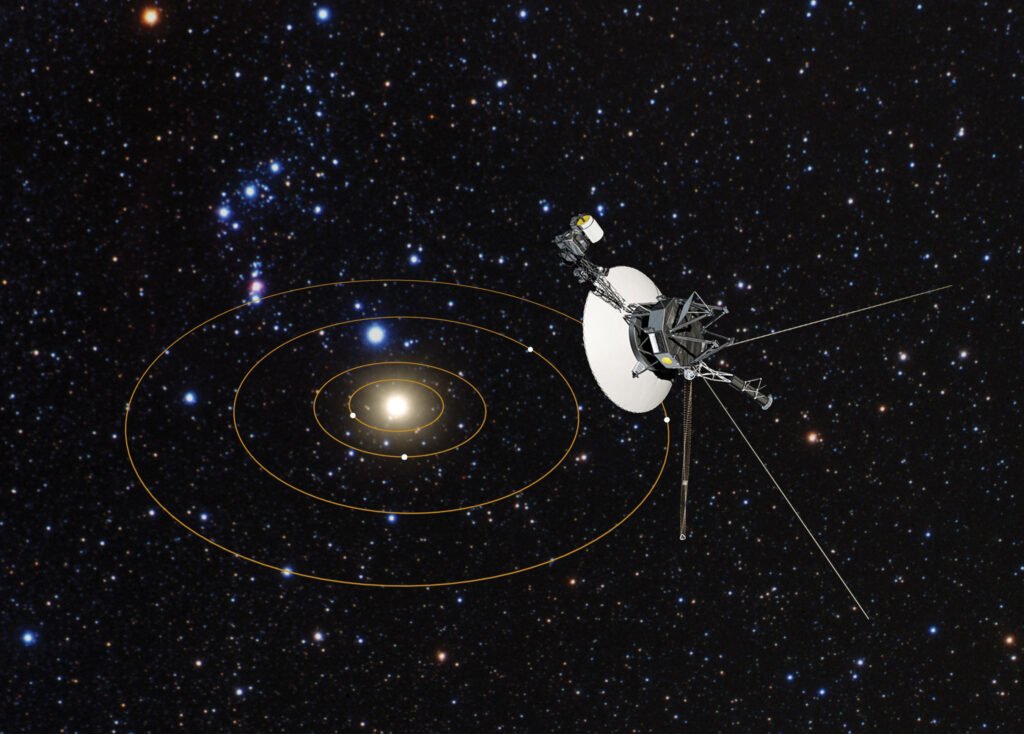
In the vast emptiness of space, where silence reigns absolute and darkness stretches beyond human comprehension, a tiny spacecraft continues its relentless journey away from everything we’ve ever known. Right now, as you read these words, Voyager 1 is racing through the cosmos at over 38,000 miles per hour, carrying humanity’s hopes and dreams to the stars. This remarkable machine, no bigger than a compact car, has become our most distant ambassador—a testament to human ingenuity that has shattered every expectation and redefined our understanding of the universe itself.
The Golden Record: Humanity’s Time Capsule in Space
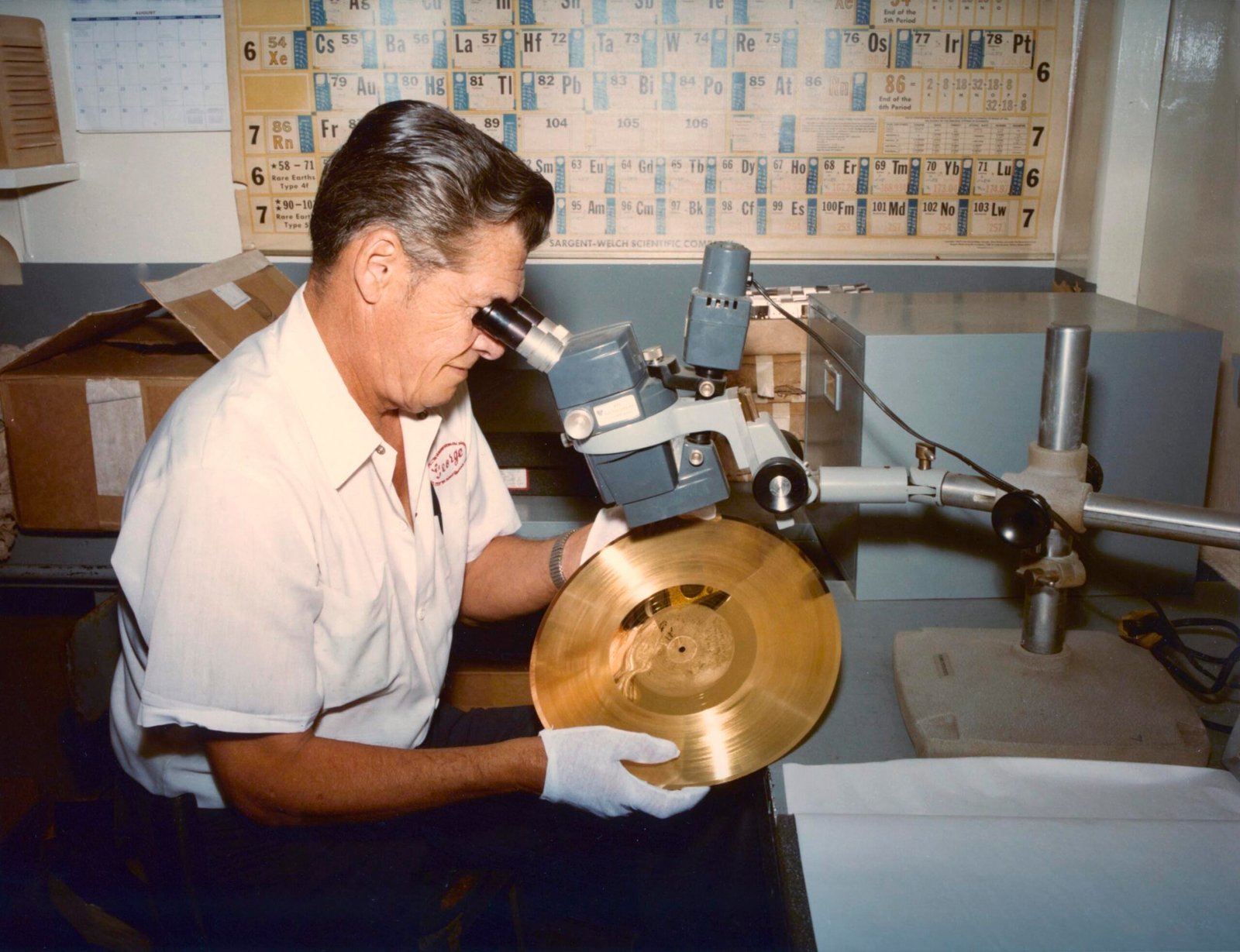
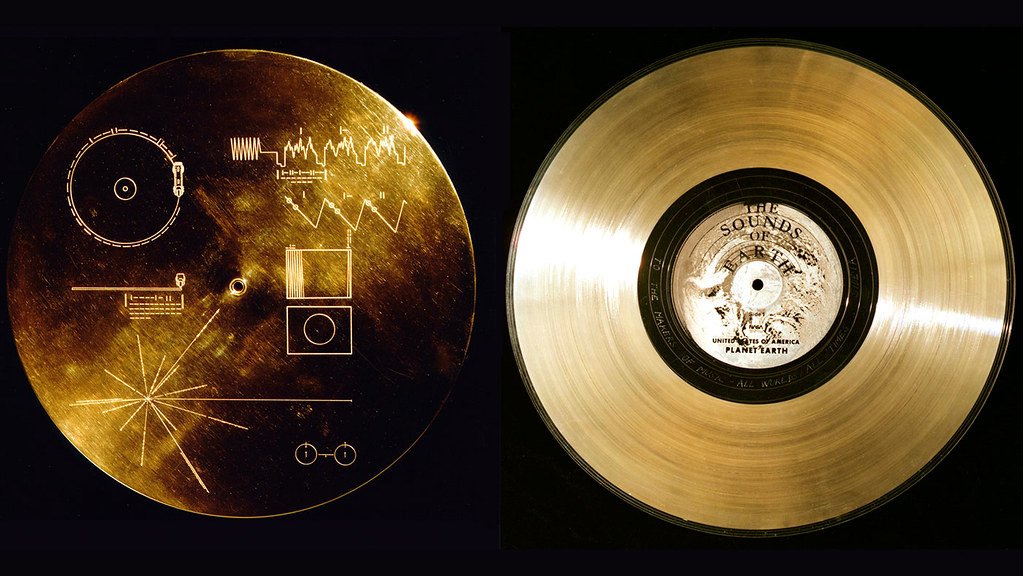
Attached to both Voyager spacecraft sits perhaps the most ambitious message ever crafted by our species—the Golden Record. This 12-inch gold-plated copper disk contains sounds and images selected to portray the diversity of life and culture on Earth. From a baby’s cry to Beethoven’s symphonies, from greetings in 55 languages to the mathematical definition of hydrogen, this record represents humanity’s attempt to introduce ourselves to any cosmic neighbors who might encounter it.
The selection process itself reads like a fascinating chapter in human psychology. A committee led by Carl Sagan wrestled with impossible questions: How do you represent all of humanity in just 90 minutes of audio? They included everything from Bach to Chuck Berry, from Javanese gamelan to Peruvian panpipes. Even today, scientists debate whether these choices truly capture the essence of our species.
What makes this record truly extraordinary isn’t just its contents, but its durability. Scientists estimate it could survive for over a billion years in the vacuum of space, outlasting our sun itself. In some distant future, when Earth is nothing but cosmic dust, alien archaeologists might discover this golden disk and hear the voice of humanity echoing across the ages.
Breaking the Sound Barrier of Space
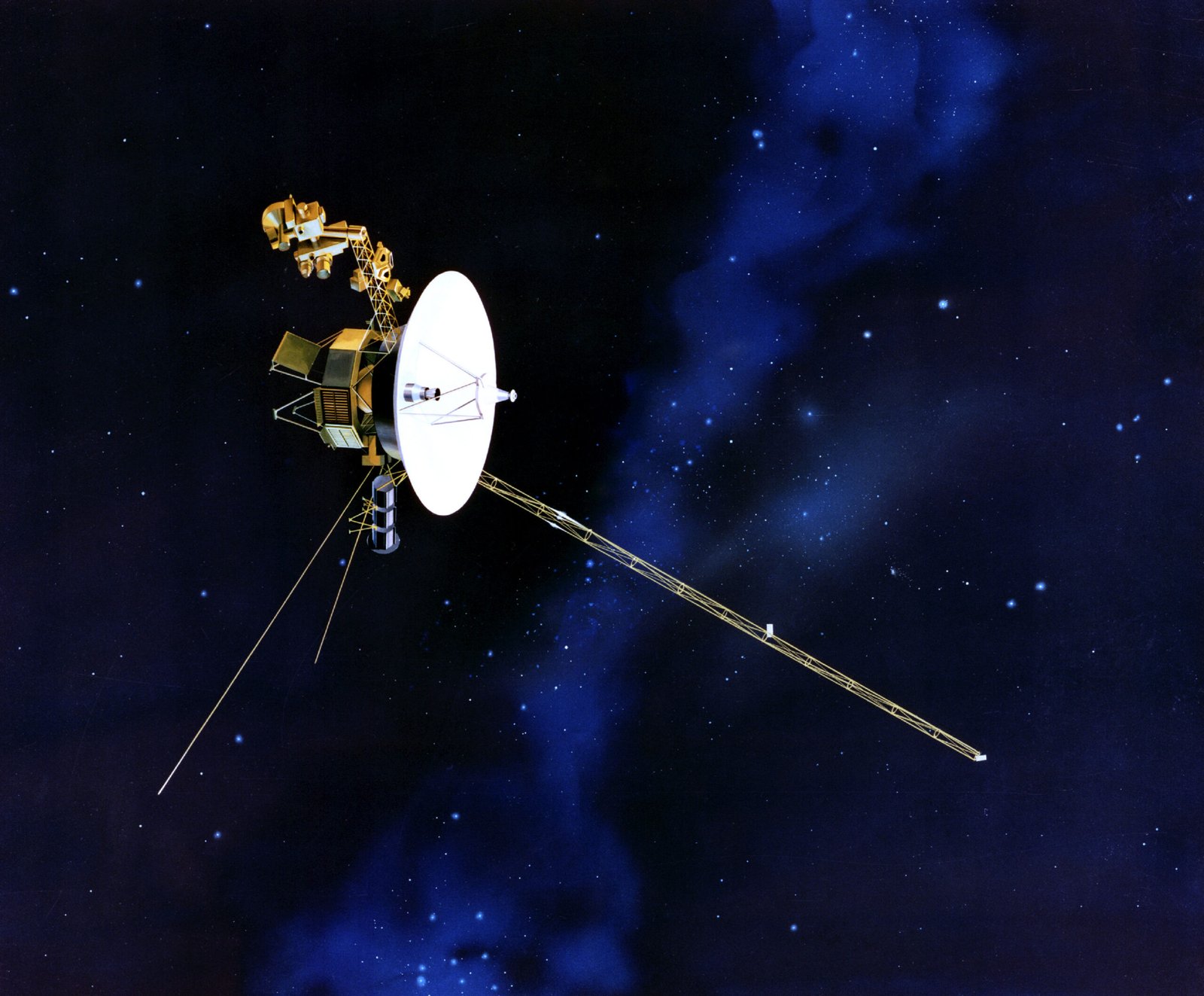
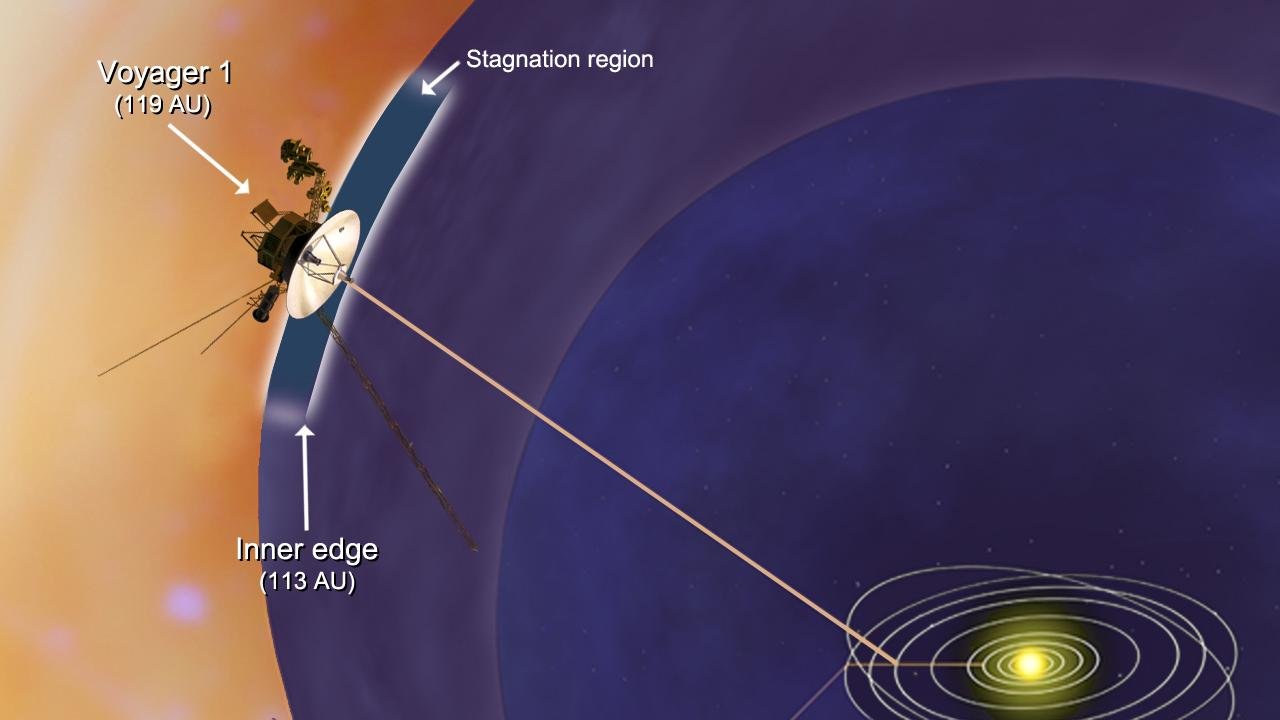
In August 2012, something unprecedented happened in the history of human exploration. Voyager 1 crossed the heliopause—the boundary where our sun’s influence ends and true interstellar space begins. This wasn’t just another milestone; it was humanity’s first step into the cosmic ocean that separates the stars. The spacecraft had literally broken through the solar system’s equivalent of a sound barrier.
The moment almost slipped by unnoticed. Unlike the dramatic splash of a spacecraft landing on Mars, Voyager’s transition into interstellar space was subtle, detected only through careful analysis of plasma wave data. The sun’s constant stream of charged particles, which had been Voyager’s companion for 35 years, suddenly quieted to a whisper.
This crossing revealed something scientists had only theorized about: interstellar space isn’t empty. Instead, it’s filled with a thin soup of gas and dust, the remnants of ancient stellar explosions. Voyager found itself swimming in material that once lived inside massive stars, now spread across the galaxy like cosmic seasoning.
The Magnetic Field Mystery That Rewrote Textbooks
Scientists expected Voyager 1’s magnetic field readings to change dramatically when it entered interstellar space. According to every model and theory, the spacecraft should have encountered a completely different magnetic environment. Instead, Voyager delivered one of the biggest surprises in space exploration history—the magnetic field remained remarkably similar to what it experienced in the outer solar system.
This discovery forced physicists to completely reconsider how magnetic fields behave on cosmic scales. The implications ripple through our understanding of how galaxies form, how cosmic rays travel, and how the universe itself is structured. It’s like expecting to hear a completely different language when you cross a border, only to find the locals speaking a familiar dialect.
The mystery deepens when you consider that Voyager 2, following a different trajectory, has provided contrasting data. This suggests that the boundary between our solar system and interstellar space isn’t uniform—it’s more like a complex, ever-changing frontier with regional variations that we’re only beginning to understand.
Cosmic Rays: The Universe’s Most Energetic Messengers

Beyond the protective bubble of our solar system, Voyager 1 encountered a bombardment of cosmic rays unlike anything experienced in the inner solar system. These high-energy particles, accelerated by supernova explosions and other violent cosmic events, paint a picture of a universe far more dynamic and dangerous than most people realize. The spacecraft’s instruments detected cosmic ray intensities nearly 100 times stronger than those measured near Earth.
Think of cosmic rays as the universe’s postal service, delivering messages from the most extreme events in cosmic history. Some of these particles began their journey when massive stars exploded billions of years ago, carrying information about stellar death across unimaginable distances. Voyager’s measurements have helped scientists understand how these cosmic messengers navigate through space and how our solar system’s magnetic field normally shields us from their full intensity.
The data reveals something both humbling and terrifying: space is a shooting gallery of high-energy particles that would be lethal to unprotected human explorers. This discovery has profound implications for future deep-space missions and underscores just how remarkable it is that life has flourished in our protected corner of the cosmos.
The Great Void: Density Measurements That Shocked Scientists
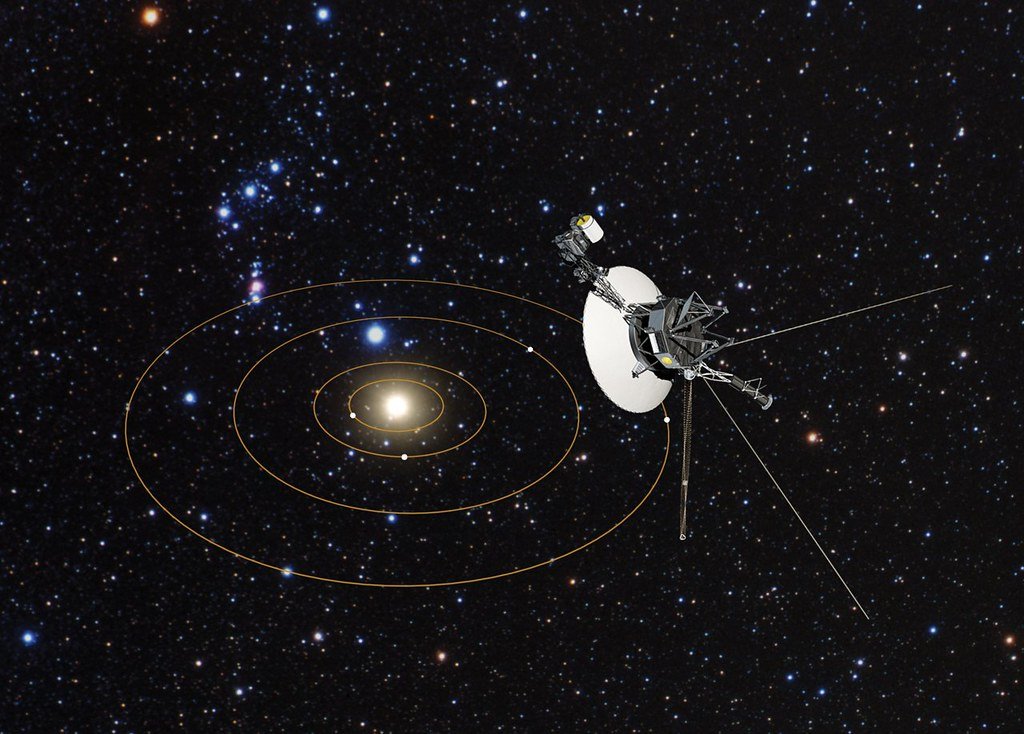
When Voyager 1 began measuring the density of interstellar space, scientists braced themselves for readings close to absolute zero. What they found instead challenged fundamental assumptions about the structure of our local cosmic neighborhood. The density of matter in interstellar space turned out to be higher than expected—still incredibly thin by Earth standards, but dense enough to suggest that space between stars is more active and complex than anyone imagined.
To put this in perspective, the “dense” interstellar medium that Voyager encountered contains roughly one atom per cubic centimeter. Compare this to Earth’s atmosphere, which contains about 25 quintillion molecules in the same space. Yet this seemingly insignificant difference has huge implications for understanding how matter moves through the galaxy and how stars form from cosmic dust and gas.
These measurements have revolutionized our understanding of the local interstellar medium and forced astronomers to recalibrate models of galactic evolution. It’s like discovering that what you thought was an empty swimming pool actually contains a few drops of water—seemingly trivial, but it changes everything about how you understand the system.
Temperature Extremes in the Cosmic Deep
The temperature readings from Voyager 1 paint a picture of space as a realm of impossible extremes. While the spacecraft itself operates in temperatures that would instantly freeze any earthly liquid, the sparse plasma around it reaches tens of thousands of degrees. This paradox illustrates one of space’s most counterintuitive properties: temperature isn’t what we think it is when matter becomes so sparse that atoms barely interact.
In the dense interstellar medium, individual particles move at incredible speeds—fast enough to register temperatures of 50,000 degrees Fahrenheit or more. Yet there are so few particles that if you could somehow stick your hand into this “hot” space, you’d freeze solid in seconds. It’s like being surrounded by a handful of very fast-moving marbles in an enormous empty room.
These temperature measurements have helped scientists understand the complex physics of plasma behavior in near-vacuum conditions. The data suggests that interstellar space is heated by shock waves from stellar explosions, creating a cosmic environment that’s simultaneously scorching and freezing depending on how you measure it.
Solar Wind’s Final Frontier
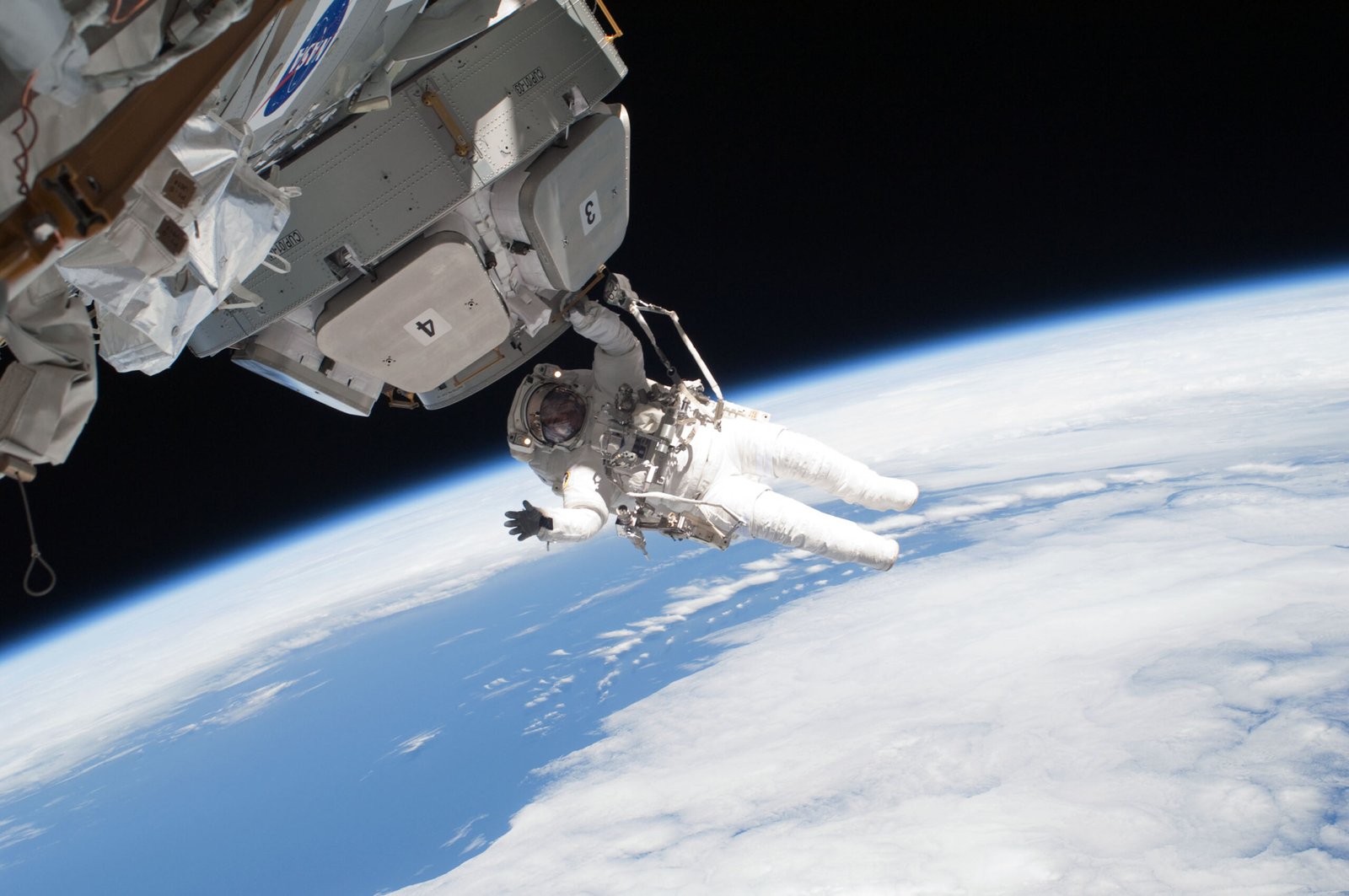
For 35 years, Voyager 1 rode the solar wind—a constant stream of charged particles flowing from our sun at over a million miles per hour. This cosmic breeze had been the spacecraft’s constant companion, providing a steady reference point for navigation and scientific measurements. But crossing into interstellar space meant leaving this familiar wind behind, like a sailor suddenly finding themselves in perfectly still waters.
The transition wasn’t immediate or dramatic. Instead, Voyager detected a gradual weakening of the solar wind over several months, as if our sun’s influence was slowly fading like a distant radio signal. Scientists discovered that the solar wind doesn’t stop abruptly at a fixed boundary; rather, it gets compressed and heated as it encounters the interstellar medium, creating a complex interaction zone.
This discovery has profound implications for understanding how our solar system moves through the galaxy. The sun, dragging all its planets along, plows through interstellar space like a boat creating a wake. Voyager’s measurements have given us our first direct look at the shape of this cosmic wake and how it affects the space environment around us.
The Heliopause: Our Solar System’s Invisible Border

The heliopause represents one of the most significant boundaries in our cosmic neighborhood—the point where our sun’s influence finally yields to the broader galactic environment. Voyager 1’s crossing of this invisible frontier marked humanity’s first direct contact with the space between stars. Unlike the dramatic landscapes of planetary exploration, this boundary exists only as a shift in invisible forces and particle densities.
Scientists compare the heliopause to the surface of a bubble, but this analogy fails to capture its true complexity. The boundary shifts and flexes like a living thing, responding to changes in solar activity and variations in the interstellar medium. Voyager’s data suggests this frontier can move inward or outward by billions of miles depending on cosmic weather patterns.
The crossing revealed that our solar system’s protective bubble isn’t perfectly spherical, as many models predicted. Instead, it’s distorted by the solar system’s motion through space and by variations in the surrounding interstellar environment. This discovery has forced scientists to completely reimagine the shape and dynamics of our cosmic home’s outer boundary.
Plasma Waves: The Sound of Interstellar Space
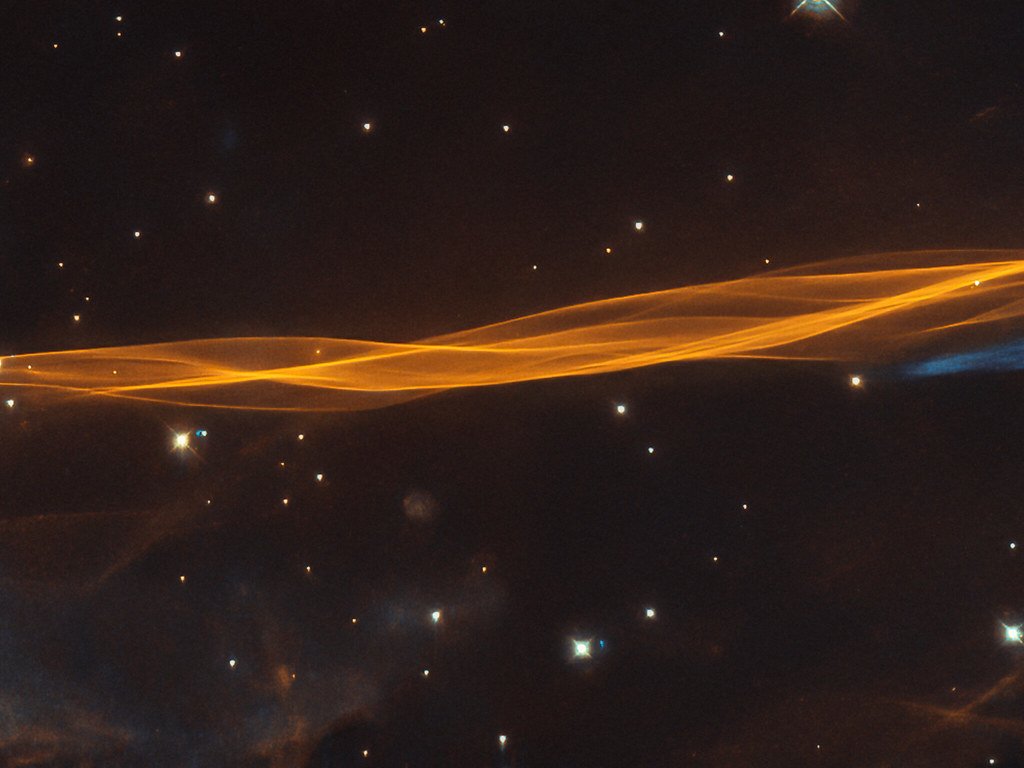
One of Voyager’s most haunting discoveries has been the detection of plasma waves in interstellar space—vibrations that represent the closest thing to “sound” that exists in the cosmic void. These waves, caused by interactions between charged particles and magnetic fields, create eerie oscillations that scientists can convert into audio frequencies. The result sounds like something from a science fiction movie: ghostly whooshes and electronic moans that represent the universe’s own soundtrack.
These plasma waves serve as more than cosmic curiosities; they’re crucial diagnostic tools that help scientists understand the physical properties of interstellar space. By analyzing wave frequencies and amplitudes, researchers can determine particle densities, magnetic field strengths, and temperature variations in regions so remote that no other measurement technique could reach them.
The waves also reveal the dynamic nature of what most people consider empty space. Far from being a static void, interstellar space pulses with electromagnetic activity, responding to distant stellar explosions and magnetic field variations like a vast, invisible ocean stirred by cosmic storms.
Power Systems at the Edge of Failure
Perhaps the most remarkable aspect of Voyager 1’s continued operation is its power system’s longevity. The spacecraft relies on three radioisotope thermoelectric generators (RTGs) that convert heat from decaying plutonium into electricity. After nearly five decades in space, these power sources continue to function, though they lose about 4 watts of power each year. It’s like running a marathon where the finish line keeps moving farther away while your legs get progressively weaker.
NASA engineers have performed incredible feats of power management to keep the spacecraft operational. They’ve systematically shut down non-essential systems, including the cameras that captured iconic images of the outer planets, to conserve energy for the most critical scientific instruments. Each decision represents a careful balance between scientific priorities and power constraints.
Current projections suggest Voyager 1 will have enough power to operate some instruments until around 2025, though this estimate keeps being revised as engineers find new ways to squeeze performance from aging systems. The spacecraft’s gradual shutdown will mark the end of an era, but its final years continue to provide unprecedented data from humanity’s most distant outpost.
Communication Across the Cosmic Gulf

Every piece of data from Voyager 1 must travel over 15 billion miles to reach Earth—a journey that takes radio signals more than 22 hours even at the speed of light. This means that when mission controllers send a command to the spacecraft, they must wait nearly two days for confirmation that it was received and executed. It’s like having a conversation with someone on the other side of a vast canyon, where each exchange takes almost a full day.
The spacecraft transmits with just 23 watts of power—less than a typical household light bulb—yet NASA’s Deep Space Network can still detect its whisper-faint signals. This feat of engineering represents one of the most impressive long-distance communication achievements in human history. The signals are so weak that collecting enough data for a single image would take months of continuous transmission.
As Voyager continues to recede, communication becomes increasingly challenging. The spacecraft’s antenna must be pointed precisely at Earth to maintain contact, and any malfunction in its attitude control system could sever the connection forever. Each successful data transmission represents a small miracle of engineering persistence across impossible distances.
Unexpected Discoveries About Galactic Structure
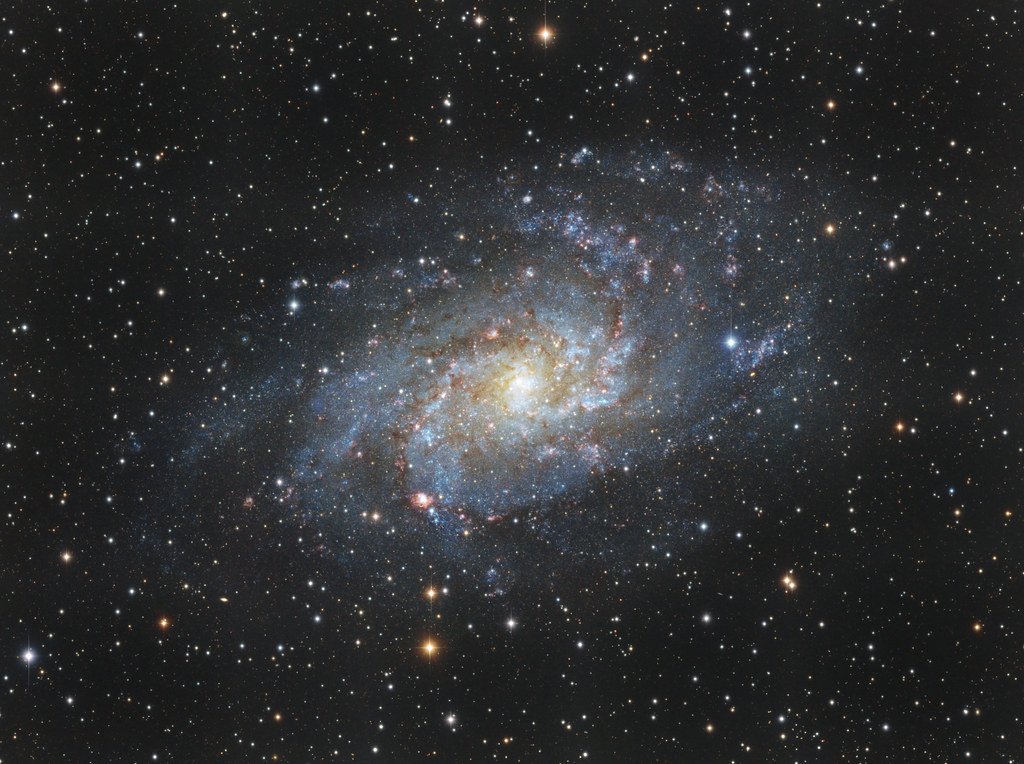
Voyager 1’s journey into interstellar space has revealed surprising details about our galaxy’s local structure. The spacecraft’s measurements suggest that our solar system is moving through a relatively dense region of the interstellar medium—something astronomers call the Local Interstellar Cloud. This cosmic neighborhood appears to be shaped by ancient supernova explosions that cleared out cavities in space and compressed surrounding material into sheets and filaments.
The data indicates that our solar system entered this cloud relatively recently in cosmic terms—perhaps within the last 100,000 years. This timing coincides with interesting periods in Earth’s geological and climate history, leading some scientists to speculate about possible connections between our galactic environment and terrestrial evolution.
These discoveries have broader implications for understanding how solar systems interact with their galactic environment over long timescales. As our sun orbits the galaxy, it encounters different regions of interstellar space with varying densities and compositions. Voyager’s measurements provide our first direct sampling of this cosmic ecosystem that our planet has been swimming through for billions of years.
The Search for the Bow Shock
Scientists expected Voyager 1 to encounter a dramatic shock wave where the solar wind crashes into the interstellar medium—similar to the bow wave created by a boat moving through water. This “bow shock” should have appeared as a sudden jump in magnetic field strength and particle density. Instead, Voyager sailed through the expected region without detecting any clear shock signature, adding another puzzle to interstellar space exploration.
The missing bow shock has forced scientists to reconsider how our solar system interacts with its galactic environment. Current theories suggest that the shock might be much weaker than expected, or positioned differently than models predicted. Some researchers propose that local magnetic field configurations could suppress shock formation entirely.
This mystery highlights how much we still don’t understand about the physics of interstellar boundaries. Voyager 2, following a different trajectory, may yet encounter the elusive bow shock and provide crucial comparative data. The absence of expected phenomena can be just as scientifically valuable as their discovery, forcing researchers to develop new theories and models.
Radiation Environment Beyond the Solar System
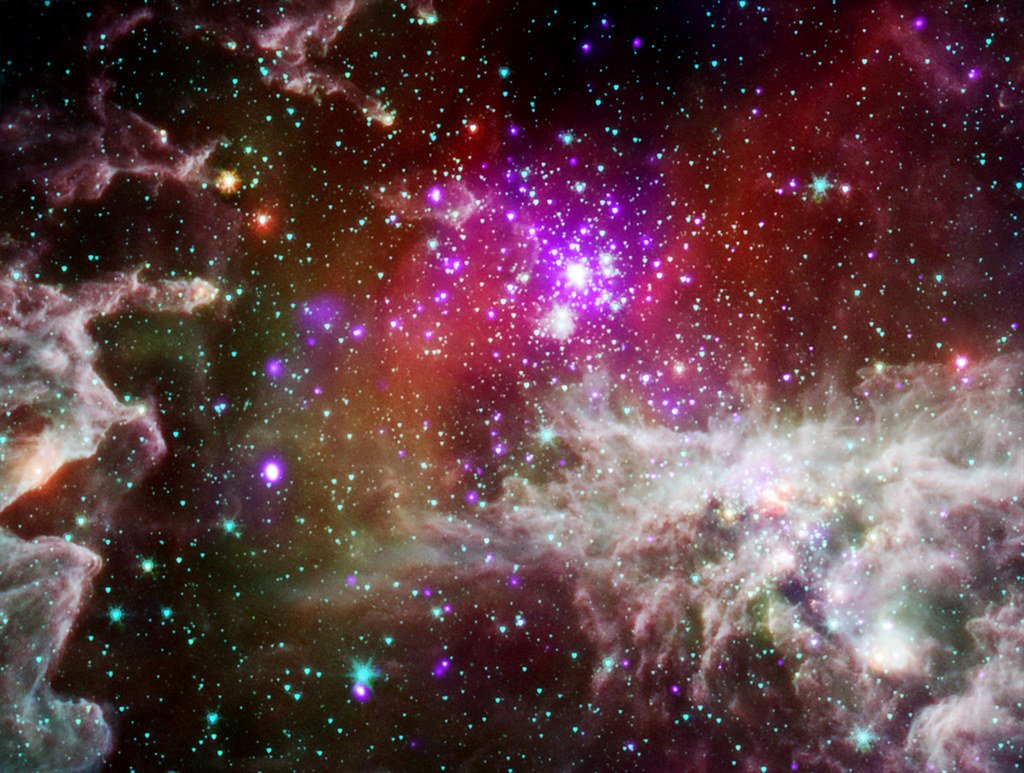
The radiation environment encountered by Voyager 1 in interstellar space presents both opportunities and challenges for future deep-space missions. While cosmic ray intensity increases dramatically beyond the heliopause, the spacecraft has also escaped certain types of solar particle radiation that can damage electronics. It’s like leaving a dangerous neighborhood only to find yourself in a different kind of dangerous neighborhood.
The spacecraft’s continued operation in this high-radiation environment provides valuable data about the long-term effects of cosmic ray bombardment on spacecraft systems. Some components have actually performed better than expected, while others have shown signs of gradual degradation. This real-world testing is invaluable for designing future interstellar missions.
Perhaps most importantly, Voyager’s survival demonstrates that properly designed spacecraft can operate for decades in the harsh interstellar environment. This knowledge will be crucial for planning missions to nearby star systems, where spacecraft will need to function reliably during journeys lasting centuries or millennia.
The Pale Blue Dot’s Lasting Legacy

In 1990, Voyager 1 turned its camera back toward Earth and captured one of the most profound images in human history: our planet as a tiny pale blue dot suspended in a sunbeam. This photograph, taken from nearly 4 billion miles away, fundamentally changed how many people view our place in the universe. Carl Sagan’s meditation on this image remains one of the most moving reflections on human existence ever written.
The emotional impact of this image extends far beyond its scientific value. It shows Earth not as the center of creation, but as a fragile oasis in an vast cosmic ocean. Every human drama, every war, every love story, every scientific discovery—all of it confined to that tiny point of light barely visible against the darkness.
Today, as Voyager 1 continues its journey, Earth has become invisible even to its sophisticated instruments. We are now truly alone with our thoughts in the cosmic dark, connected to our most distant creation only by fading radio signals that take nearly a day to cross the gulf between us. This progression from pale blue dot to invisible speck captures humanity’s ongoing transition from a planetary to an interstellar species.
Engineering Miracles in the Cosmic Deep

The fact that any 1970s technology continues to function in the extreme environment of interstellar space borders on miraculous. Voyager 1’s electronics have endured temperature swings from hundreds of degrees above absolute zero to near absolute zero, bombardment by high-energy particles, and mechanical stresses that would destroy most earthly machines. The spacecraft represents the pinnacle of robust engineering design.
Many of Voyager’s components were built with redundancy and over-engineering that would be considered wasteful by today’s standards. Ironically, this “inefficient” approach has enabled the mission’s incredible longevity. Modern spacecraft, optimized for cost and weight, rarely achieve such operational lifespans.
The mission has also benefited from exceptional ground support and mission operations. NASA engineers have developed increasingly creative solutions to manage power, maintain communication, and extract maximum scientific value from aging instruments. This human element—the dedication of multiple generations of scientists and engineers—has been just as crucial as the spacecraft’s hardware in achieving interstellar success.
Future Missions to the Stars

Voyager 1’s success has inspired numerous proposals for follow-up interstellar missions with more advanced capabilities. Future spacecraft could carry better instruments, more powerful transmitters, and possibly even small probes designed to study interstellar objects encountered along the way. However, the tremendous distances and time scales involved make interstellar exploration uniquely challenging.
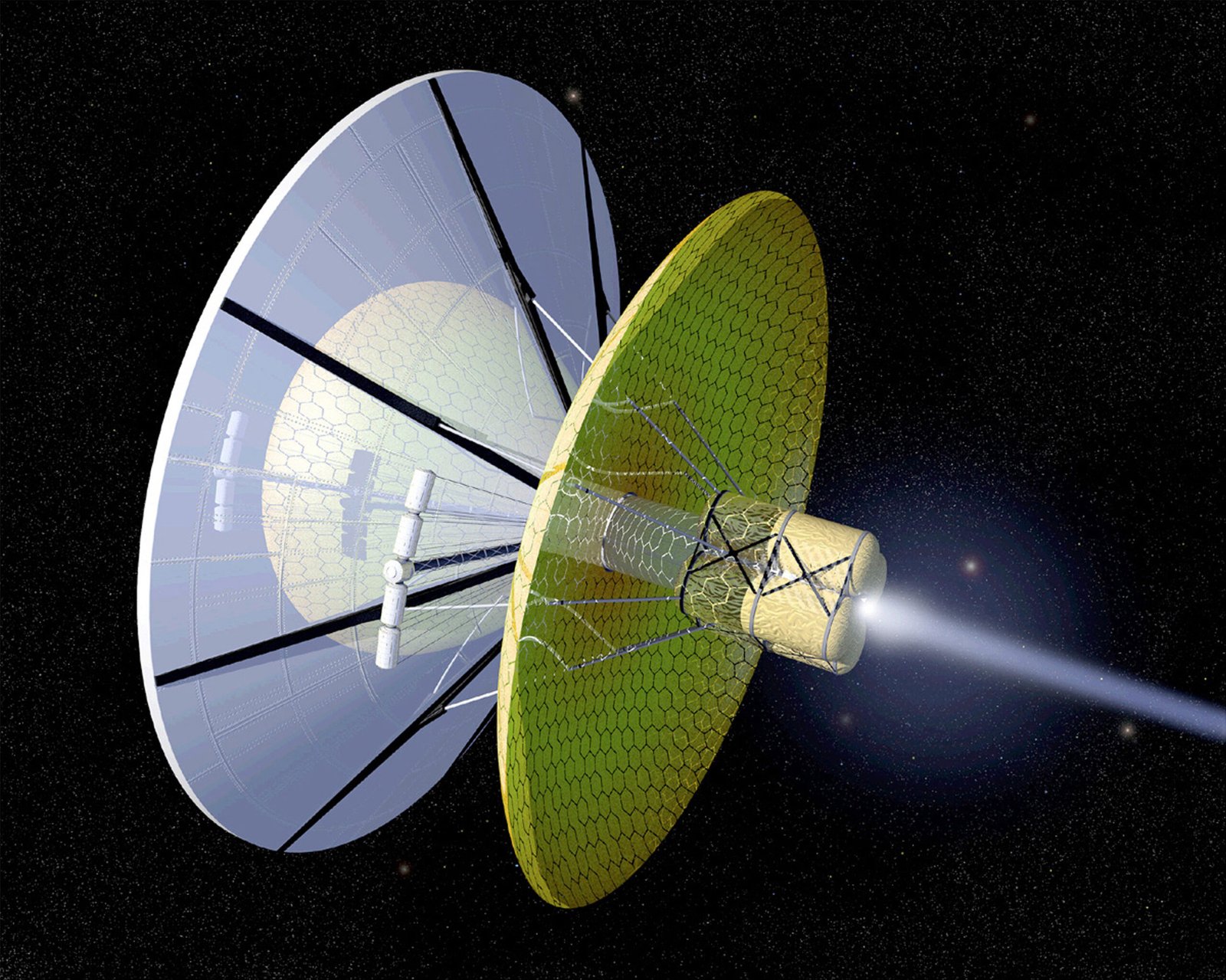
Several concepts under development could potentially reach nearby star systems within human lifetimes. Breakthrough Starshot proposes using powerful lasers to accelerate tiny probes to 20% of light speed, enabling them to reach Proxima Centauri in about 20 years. While these missions would be very different from Voyager’s grand tour approach, they represent the next logical step in interstellar exploration.
Perhaps most importantly, Voyager 1’s legacy lies not in the specific discoveries it has made, but in proving that interstellar exploration is possible with human technology and determination. Every future mission to the stars will build upon the foundation laid by this remarkable spacecraft and the teams of people who made its journey possible.
The Eternal Journey Continues
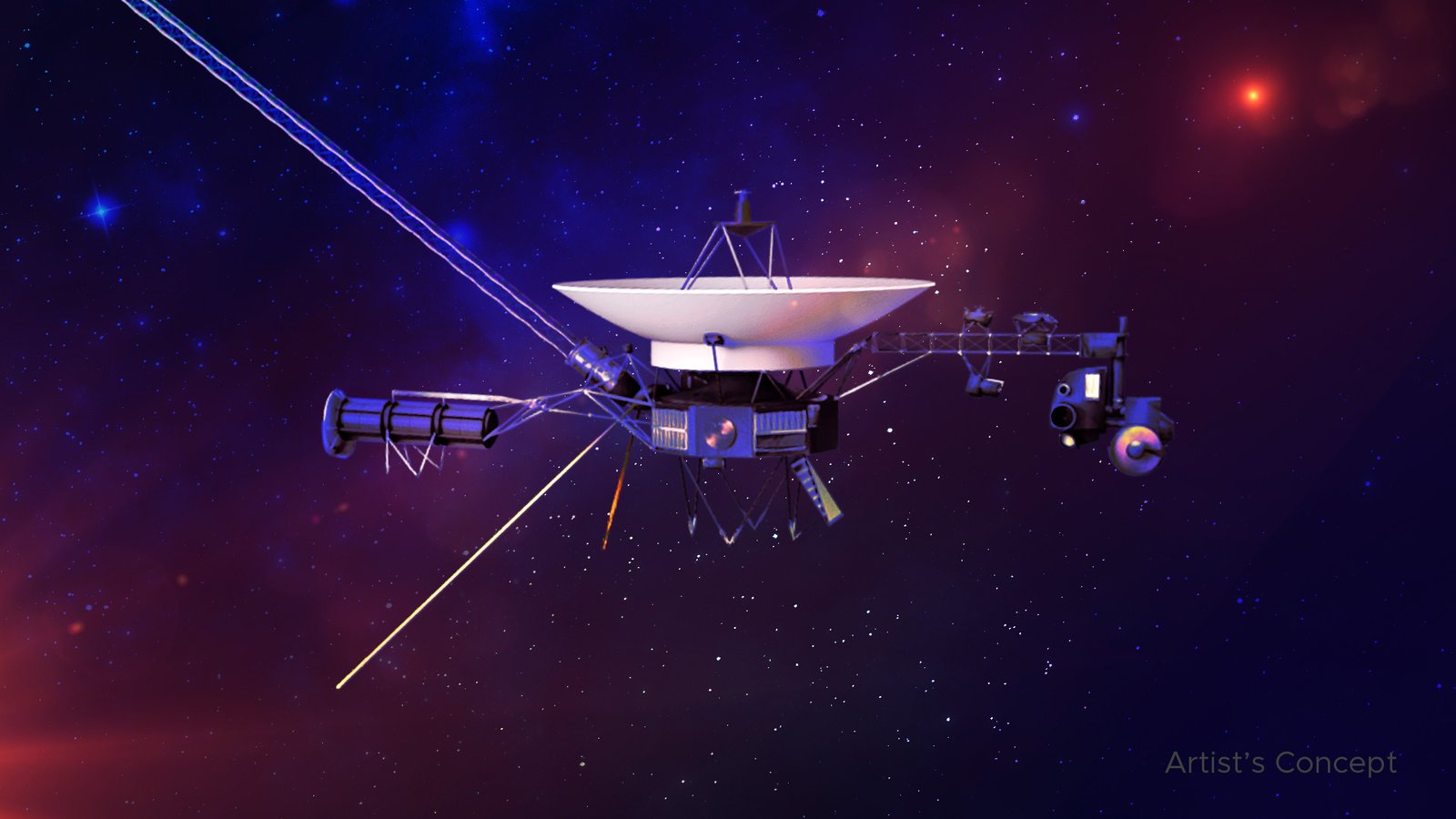
As Voyager 1 gradually falls silent, it will continue its cosmic voyage for millions of years. Long after human civilization has evolved beyond recognition, this small messenger will still be racing through the galaxy, carrying its golden record toward an uncertain destiny. In about 40,000 years, it will pass within 1.6 light-years of the red dwarf star AC+79 3888, though it will be long dead by then.
The spacecraft’s ultimate fate remains uncertain. It might wander the galaxy for billions of years, occasionally encountering other star systems and their planets. It could eventually be captured by a star’s gravity or destroyed by collision with cosmic debris. Most romantically, it might someday be discovered by an alien civilization that decodes its golden record and learns about a long-vanished species called humanity.
Whatever happens to Voyager 1, its journey represents something unprecedented in the history of life on Earth: the first time any terrestrial organism has permanently left the solar system and entered the broader galactic community. We are no longer a purely planetary species, and we have this small, remarkable machine to thank for taking us across that threshold. What other boundaries will we cross as we follow in its wake?