Nature has a wild imagination that puts even the most creative science fiction writers to shame. Scattered across our planet are creatures so bizarre, so impossibly strange, that they seem like they’ve stepped out of an alien world or a fever dream. Yet these remarkable beings are absolutely real, breathing and thriving in environments we can barely comprehend.
From the deepest ocean trenches to the most remote rainforests, evolution has crafted organisms that challenge our understanding of what life can become. These aren’t just evolutionary accidents or nature’s mistakes – they’re sophisticated solutions to survival challenges that have been millions of years in the making. Each weird feature, no matter how absurd it might appear, serves a crucial purpose in the grand theater of survival.
The Vampire Squid That Isn’t Actually a Vampire

Deep in the ocean’s midnight zone, where sunlight has never touched, lives one of the most misunderstood creatures on Earth. The vampire squid sounds terrifying, but this softball-sized cephalopod is actually a gentle filter-feeder that wouldn’t hurt a fish if it tried. Its name comes from its dark, cloak-like webbing and red eyes that glow like embers in the darkness.
What makes this creature truly extraordinary isn’t its spooky appearance, but its incredible ability to survive in one of the planet’s most hostile environments. The vampire squid can live in oxygen levels so low that most other animals would suffocate within minutes. When threatened, it doesn’t flee like other squids – instead, it turns itself inside out, revealing spines that make it look like a spiky sea urchin.
This remarkable defense mechanism, called “pineappling,” transforms the vampire squid from a soft, vulnerable target into what appears to be an inedible ball of spikes. It’s like carrying a portable fortress that can be deployed in seconds, showcasing how evolution finds ingenious solutions to survival challenges.
The Naked Mole Rat’s Fountain of Youth
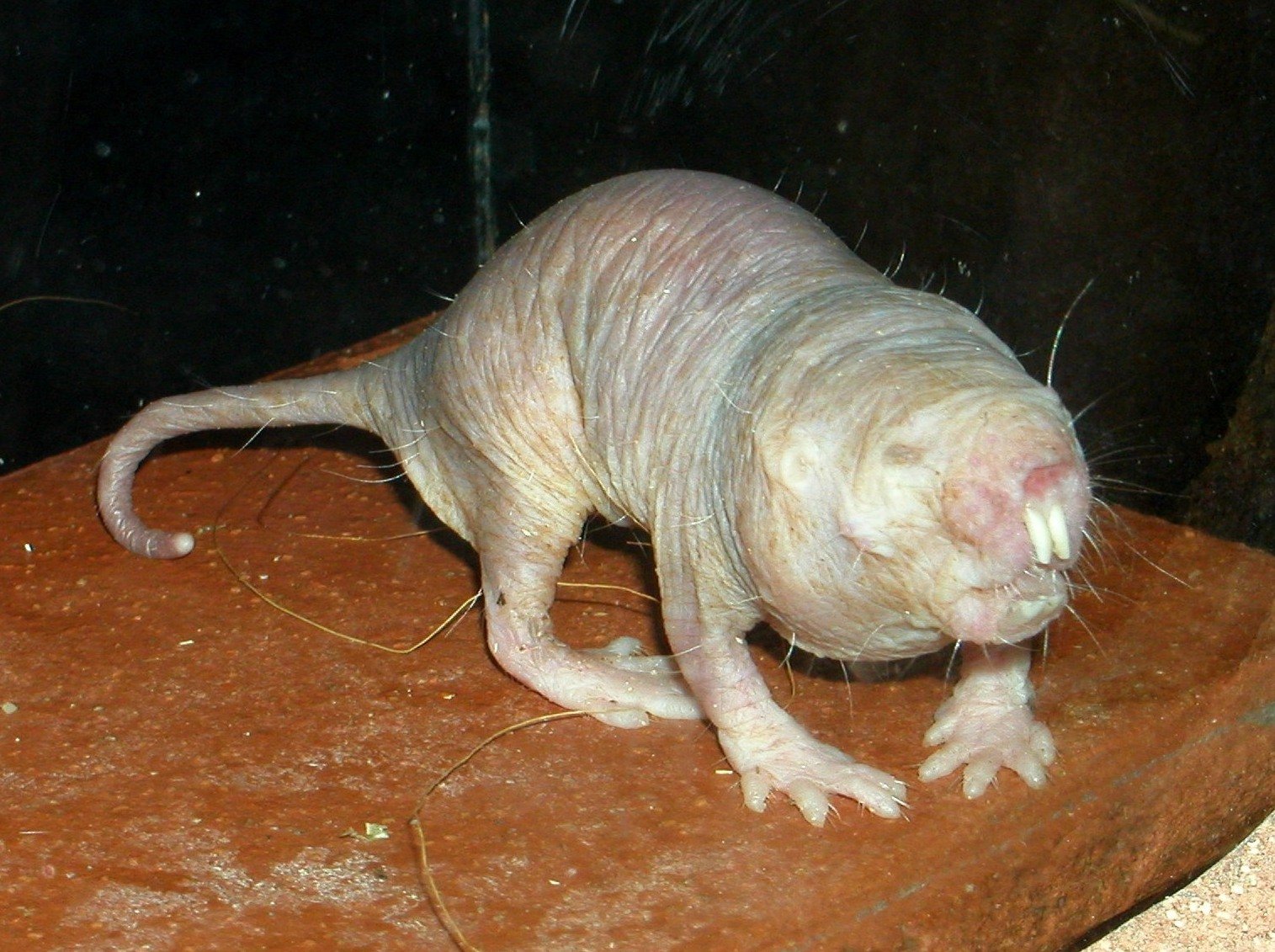
If aliens designed a mammal as a joke, they might have come up with the naked mole rat. These wrinkled, buck-toothed rodents look like tiny, hairless elephants that forgot to grow up properly. But beneath their comically ugly exterior lies one of nature’s most fascinating biological mysteries – they’re practically immortal.
Naked mole rats can live over 30 years, which is extraordinary for a rodent their size. Most mice live only two years, making these underground dwellers the Methuselahs of the rodent world. Even more incredible, they rarely develop cancer, despite their long lifespans. Scientists have discovered that their cells produce a super-strong version of a molecule called hyaluronic acid, which appears to prevent tumors from forming.
Their bizarre social structure mirrors that of insects more than mammals. Like bees or ants, they live in colonies with a single breeding queen and workers who sacrifice their own reproduction to serve the colony. This cold-blooded lifestyle in a warm-blooded mammal breaks so many biological rules that scientists are still trying to understand how it evolved.
The Pistol Shrimp’s Sonic Boom

Don’t let its small size fool you – the pistol shrimp packs more firepower than most military weapons. This tiny crustacean, no bigger than your thumb, can snap its specialized claw shut so fast that it creates a bubble that collapses with the force of a gunshot. The sound reaches 210 decibels, louder than a rock concert and capable of stunning or killing small fish instantly.
The physics behind this biological weapon are mind-boggling. When the claw snaps shut, it creates a cavitation bubble that briefly reaches temperatures approaching that of the sun’s surface – around 8,000 degrees Fahrenheit. For a split second, this tiny shrimp creates one of the hottest spots on Earth, all from the power of moving water really, really fast.
The pistol shrimp uses this incredible ability not just for hunting, but for communication and territory defense. Colonies of these shrimps create underwater soundscapes that rival busy construction sites. Some species have even evolved partnerships with gobies, small fish that act as their eyes while the nearly blind shrimp provides protection with its sonic cannon.
The Immortal Jellyfish That Cheats Death

While humans dream of eternal youth, one tiny jellyfish has actually achieved it. Turritopsis dohrnii, aptly nicknamed the immortal jellyfish, has discovered the ultimate biological cheat code – when it faces death, disease, or old age, it simply reverses its aging process and starts life over again. It’s like having a reset button for your entire existence.
This remarkable creature begins life as a tiny polyp on the ocean floor, grows into a swimming medusa, and when times get tough, it can revert back to its juvenile polyp stage. The process, called transdifferentiation, essentially allows the jellyfish to age backward, transforming its adult cells into stem cells and rebuilding itself from scratch. It’s regeneration taken to an almost absurd extreme.
Scientists are fascinated by this biological time machine because it challenges our fundamental understanding of aging and death. While the immortal jellyfish can theoretically live forever, most don’t actually achieve immortality in the wild – they still fall victim to disease, predation, and accidents. But the fact that biological immortality is possible at all opens incredible possibilities for understanding aging in other species.
The Leafy Sea Dragon’s Living Camouflage

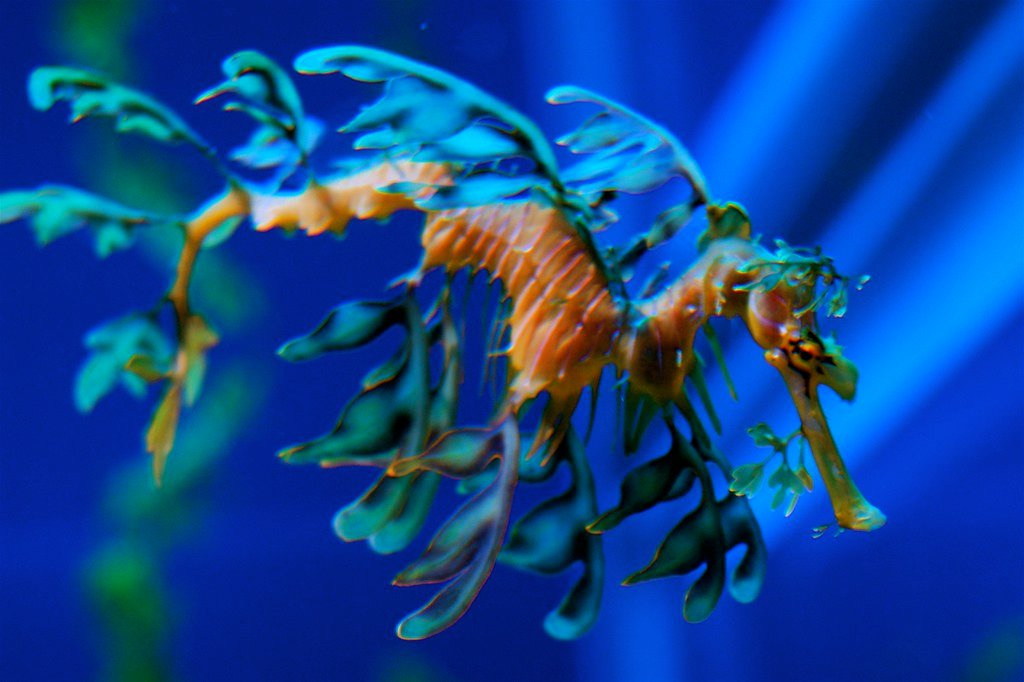
Looking like a piece of floating seaweed that decided to grow eyes and fins, the leafy sea dragon represents camouflage taken to an art form. These ethereal creatures drift through the kelp forests of southern Australia, their elaborate appendages swaying in perfect mimicry of the plants around them. They’re so convincing that even experienced divers sometimes mistake them for drifting vegetation.
Unlike their seahorse cousins, leafy sea dragons can’t wrap their tails around objects for anchoring. Instead, they rely entirely on their incredible disguise and subtle fin movements to navigate their underwater world. Their camouflage is so effective that predators often swim right past them, unable to distinguish the dragon from actual seaweed.
What makes their disguise even more remarkable is that those leaf-like appendages aren’t just for show – they’re highly sensitive sensory organs that can detect the slightest water movements. This means they can sense approaching predators or prey while remaining perfectly hidden. It’s like having invisibility cloak with built-in radar, showcasing how evolution can combine multiple survival strategies into one incredible package.
The Anglerfish’s Bioluminescent Dating App

In the pitch-black depths of the deep ocean, finding a mate is like searching for a needle in a haystack the size of Texas. The anglerfish has solved this problem with one of nature’s most extreme dating strategies, complete with a built-in flashlight and a relationship arrangement that makes modern dating apps look normal by comparison.
Female anglerfish carry a glowing lure that dangles in front of their massive mouths like a biological fishing rod. This bioluminescent beacon, powered by symbiotic bacteria, attracts unsuspecting prey directly into their cavernous jaws. But the really weird part is what happens when a male anglerfish finds a female – he literally becomes part of her body.
Male anglerfish are tiny compared to females and have evolved to be living sperm packets. When a male finds a female, he bites onto her and releases enzymes that dissolve his mouth and her skin, fusing them together permanently. He becomes a permanent appendage, supplying sperm whenever she needs it. It’s the ultimate committed relationship – till death do us part becomes till we literally become one organism.
The Tardigrade’s Indestructible Superpowers
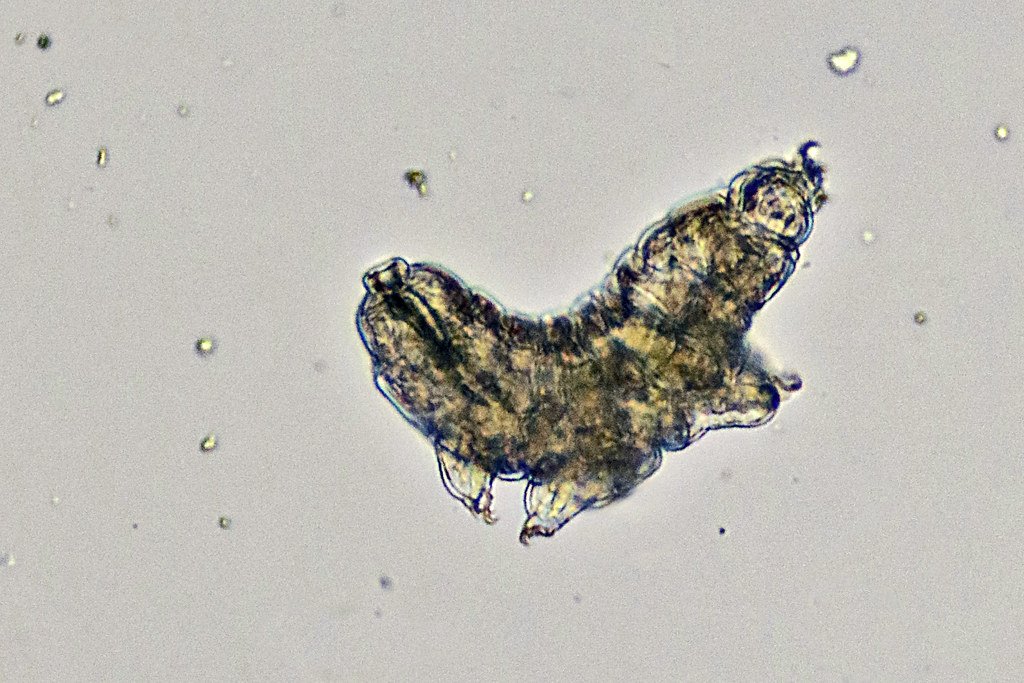
Meet the tardigrade, also known as the water bear or moss piglet – a microscopic creature that looks like a cross between a vacuum cleaner and a teddy bear, but with superpowers that would make comic book heroes jealous. These tiny animals, smaller than the period at the end of this sentence, are virtually indestructible and can survive conditions that would kill almost every other living thing on Earth.
Tardigrades can withstand temperatures from near absolute zero to over 300 degrees Fahrenheit, pressure six times greater than the deepest ocean trenches, and radiation levels that would be lethal to humans. They can even survive the vacuum of space, making them the ultimate extremophiles. When conditions become unbearable, they simply shut down all biological processes and wait it out in a state called cryptobiosis.
During cryptobiosis, tardigrades lose up to 99% of their water content and essentially become living mummies. They can remain in this state for decades, possibly even centuries, then spring back to life when conditions improve. Scientists have revived tardigrades that had been dried out for over 30 years, and they resumed their normal activities as if nothing had happened. It’s like having a pause button for life itself.
The Goblin Shark’s Extendable Nightmare Jaw

Imagine a shark that looks like it was designed by someone who had never actually seen a shark but had only heard terrifying descriptions of one. The goblin shark, sometimes called a “living fossil,” sports an elongated snout that makes it look more like a deep-sea unicorn than a predator. But the real shock comes when it feeds – its jaw shoots out of its mouth like something from an alien horror movie.
This prehistoric shark has remained virtually unchanged for over 125 million years, earning it the title of living fossil. Its bizarre appearance isn’t just for shock value – that strange, flattened snout is packed with electroreceptors that can detect the electrical fields produced by other animals’ muscle contractions. It’s like having a biological metal detector specifically tuned to find prey in the murky depths.
When the goblin shark detects potential prey, its jaw mechanism springs into action with terrifying efficiency. The entire jaw structure shoots forward up to nine percent of the shark’s body length, creating a suction effect that vacuums prey directly into its mouth. It happens so fast that high-speed cameras are needed to capture the full sequence, making it one of the most dramatic feeding behaviors in the animal kingdom.
The Mantis Shrimp’s Superhero Vision
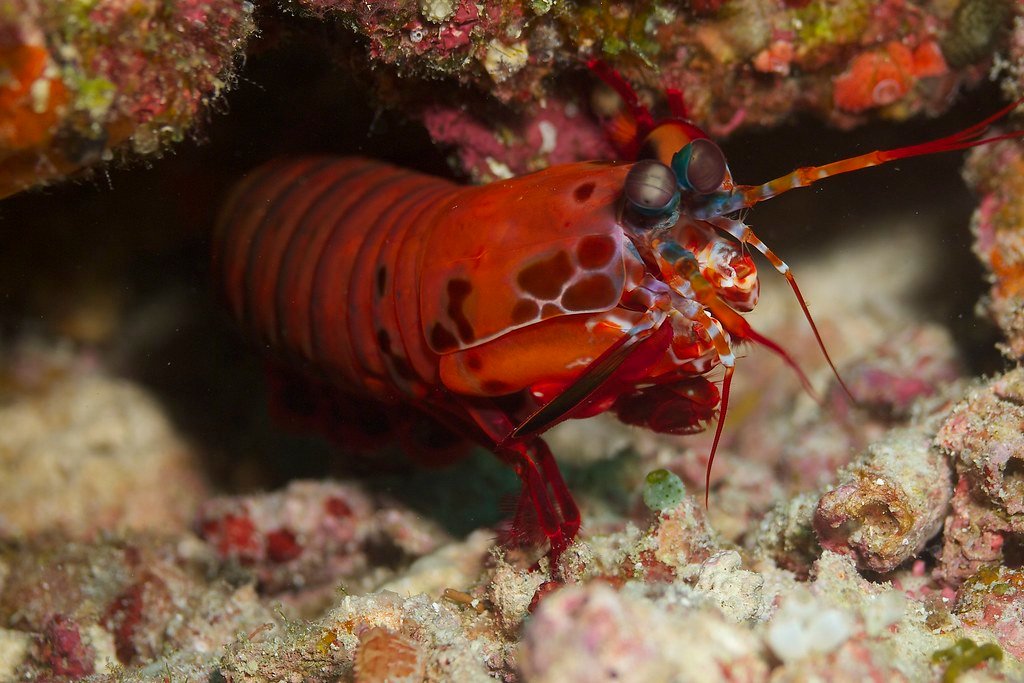
The mantis shrimp isn’t actually a shrimp at all, but it packs more superpowers into its colorful body than most comic book characters. These vibrant crustaceans possess the most complex eyes in the animal kingdom, capable of seeing colors and patterns that exist far beyond human perception. While humans have three types of color receptors, mantis shrimps have up to 16, allowing them to see a rainbow that would make our color spectrum look black and white by comparison.
But spectacular vision is just the beginning of their superpowers. Some species of mantis shrimp can punch with the force of a bullet, accelerating their club-like appendages at speeds comparable to a .22 caliber bullet. The strike is so fast and powerful that it creates cavitation bubbles in the water, similar to the pistol shrimp but with even more devastating force.
These underwater boxers use their incredible punching power to crack open hard-shelled prey like crabs and mollusks. The impact is so intense that it produces light – a phenomenon called sonoluminescence. Some aquariums have reported mantis shrimps cracking their glass tanks with their punches, giving new meaning to the phrase “window shopping.” Their combination of incredible vision and devastating punching power makes them the ultimate predators of the coral reef.
The Blobfish’s Misunderstood Transformation

The blobfish became an internet sensation as the “world’s ugliest animal,” but this unfortunate creature is actually the victim of a terrible misunderstanding. In its natural habitat, deep beneath the ocean’s surface where pressure is over 100 times greater than at sea level, the blobfish looks like a perfectly normal, if somewhat grumpy, fish. The blob-like appearance only occurs when it’s brought to the surface and decompressed.
At depths of 2,000 to 4,000 feet, the extreme pressure compresses the blobfish’s body into a normal fish shape. Its gelatinous flesh, which looks so bizarre at surface pressure, is actually a perfect adaptation to deep-sea life. Instead of a gas-filled swim bladder like most fish, the blobfish’s jelly-like body provides buoyancy without the risk of compression injuries that would affect gas-filled organs.
When deep-sea fishing nets drag blobfish to the surface, the rapid decompression causes their bodies to expand and lose structure, creating the infamous blob appearance. It’s like inflating a balloon beyond its capacity – the poor fish literally falls apart under the reduced pressure. This makes the blobfish a tragic example of how human activities can turn a perfectly adapted deep-sea resident into an internet meme.
The Aye-Aye’s Supernatural Finger Power

Madagascar’s aye-aye looks like nature’s attempt at creating a gremlin – with bat-like ears, rodent teeth, and one incredibly long, skeletal middle finger that seems designed for pointing accusingly at someone. This unusual primate has become the subject of local superstitions, with some Malagasy people believing that pointing with its extended finger brings death. The reality is far more fascinating than the folklore.
That creepy elongated finger is actually a sophisticated tool evolved for a very specific purpose – extracting insect larvae from tree bark. The aye-aye uses its finger like a biological stethoscope, tapping on wood to listen for hollow spaces where insects might be hiding. Its ears can detect the subtle differences in sound that indicate the presence of prey beneath the surface.
Once it locates a promising spot, the aye-aye uses its ever-growing incisors to gnaw through the bark, then inserts its specialized finger to extract the larvae. The finger even has a ball-and-socket joint that allows it to move independently of the others, giving the aye-aye incredible dexterity. It’s like having a built-in Swiss Army knife specifically designed for insect extraction, though unfortunately for the aye-aye, this remarkable adaptation has made it a target of human superstition.
The Frilled Shark’s Time Travel Abilities

Swimming through the deep ocean like a living relic from the age of dinosaurs, the frilled shark represents a direct link to prehistoric seas. This eel-like shark has remained virtually unchanged for over 80 million years, making it one of the most primitive sharks still alive today. Its six pairs of frilly gill slits, which give it its name, are arranged more like those of ancient sharks than modern species.
The frilled shark’s most distinctive feature is its mouth, which is positioned at the front of its head rather than underneath like most sharks. This unusual placement, combined with its flexible jaw structure, allows it to swallow prey nearly as large as itself. Its needle-like teeth are designed to grip slippery squid and fish, preventing escape once the prey is captured.
Perhaps most remarkably, frilled sharks can unhinge their jaws like snakes, allowing them to consume prey that seems impossibly large for their size. Their extremely slow metabolism means they can go months between meals, a crucial adaptation for life in the food-scarce deep ocean. Encountering a frilled shark is like meeting a dinosaur – a reminder of how little our oceans have changed in the deepest, most remote places.
The Saiga Antelope’s Inflatable Nose Job

Picture an antelope that looks like it’s permanently wearing a snorkel mask, and you’ll have a good mental image of the saiga antelope. This peculiar mammal roams the grasslands of Central Asia sporting an inflated, trunk-like nose that seems comically oversized for its body. But this bizarre facial feature is actually a sophisticated climate control system that would impress any HVAC engineer.
The saiga’s inflatable nose serves as a biological air conditioner and heater, filtering and conditioning the harsh air of the steppes. During brutal winters when temperatures plummet far below freezing, the nose warms incoming air before it reaches the lungs. In scorching summers, it helps cool and humidify the air, preventing dehydration and heat exhaustion.
This remarkable nose also acts as a dust filter during the frequent sandstorms that sweep across the steppes. The internal chambers trap particles and debris, protecting the delicate lung tissue from damage. Male saigas can even inflate their noses further during mating season, creating resonating chambers that amplify their calls to attract females. It’s like having a built-in megaphone that doubles as a climate control system.
The Dumbo Octopus’s Deep-Sea Flying Act

In the deepest parts of our oceans, where sunlight has never penetrated and pressure would crush a human instantly, lives perhaps the most adorable creature in the abyss. The dumbo octopus gets its name from its ear-like fins that resemble Disney’s famous flying elephant, and watching it move through the water is like witnessing an underwater ballet performance.
These deep-sea dancers live at depths of up to 23,000 feet, making them some of the deepest-living octopuses on Earth. Their ear-like fins aren’t just for show – they provide the primary means of propulsion, allowing the dumbo octopus to glide gracefully through the water column. Unlike their shallow-water cousins who rely mainly on jet propulsion, dumbo octopuses prefer to fly rather than rocket through their liquid sky.
What makes these creatures even more remarkable is their ability to hover motionlessly in mid-water, a feat that requires incredible energy efficiency in an environment where food is scarce. They can control their buoyancy with precision, rising and falling through the water column like biological blimps. Their diet consists mainly of small crustaceans and worms that drift down from the ocean’s upper layers, making them living vacuum cleaners of the deep sea.
The Pangolin’s Living Armor Strategy
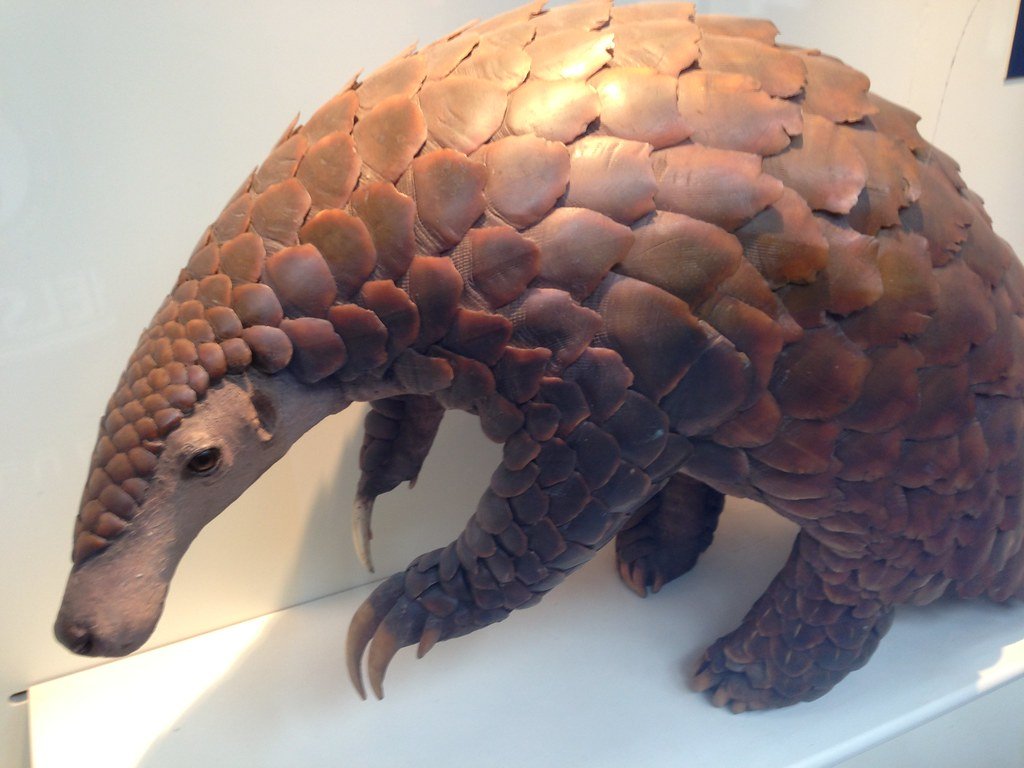
Imagine if a pinecone decided to grow legs and walk around, and you’ll have a pretty good idea of what a pangolin looks like. These unique mammals are covered head to tail in overlapping scales made of keratin – the same material as human fingernails and rhinoceros horns. When threatened, they roll into a perfect ball, creating an impenetrable fortress that even large predators can’t crack open.
Pangolins are the world’s only truly scaly mammals, and their armor is so effective that they’ve survived virtually unchanged for millions of years. Each scale is sharp-edged and can be raised or lowered like tiny shields, creating gaps that allow the pangolin to breathe while remaining protected. The tail is particularly muscular and can be wrapped around the body like a security blanket made of natural armor.
But pangolins aren’t just walking fortresses – they’re also incredible diggers with claws so powerful they can tear through concrete. They use these claws to rip open termite mounds and ant hills, then use their extremely long tongues to harvest insects. A pangolin’s tongue can be longer than its entire body and is stored in a special cavity that extends into the chest cavity. It’s like having a built-in fishing line specifically designed for catching insects in tight spaces.
The Yeti Crab’s Bacterial Garden
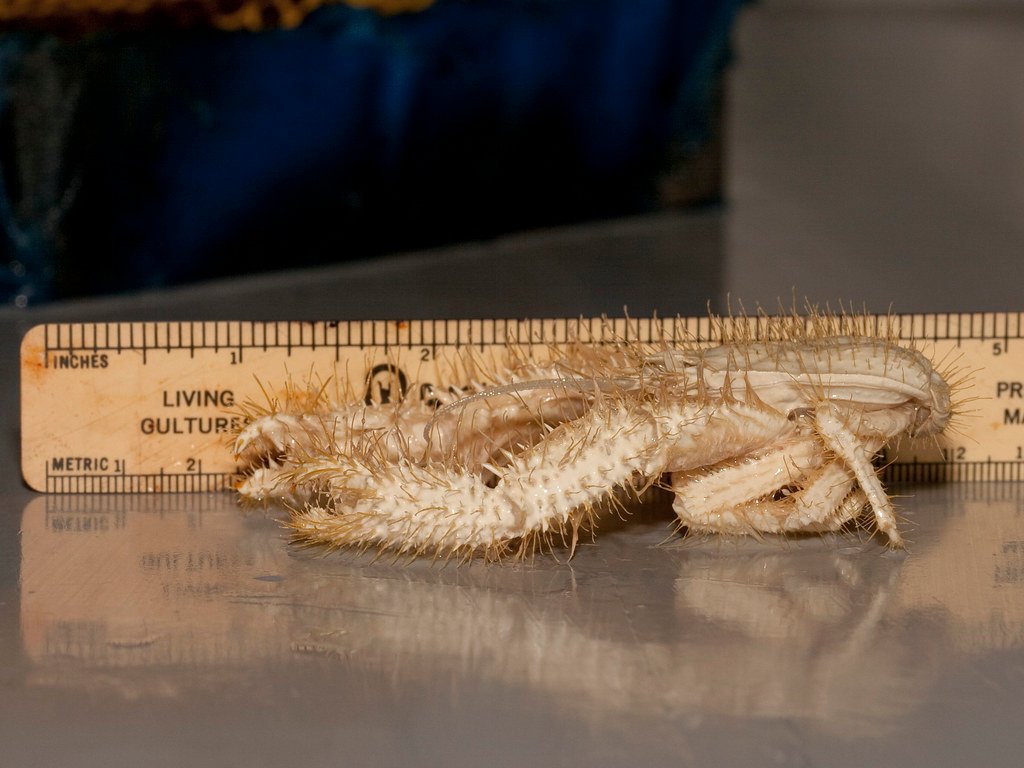
Discovered only in 2005 near hydrothermal vents in the South Pacific, the yeti crab looks like it’s wearing fuzzy mittens on its claws. These strange, hair-like filaments aren’t just for warmth – they’re actually bacterial gardens that the crab carefully tends and harvests for food. It’s like having a mobile farm that you carry around on your hands, ready to provide fresh meals whenever you need them.
Living near hydrothermal vents means dealing with toxic chemicals and extreme temperatures that would kill most other creatures. The yeti crab has turned this hostile environment to its advantage by cultivating bacteria that can process these toxic chemicals and convert them into food. The crab literally farms its own meals using some of the most extreme bacteria on Earth.
The hairy claws aren’t just passive bacterial homes – the yeti crab actively tends its bacterial gardens, waving its claws through the chemical-rich water to provide nutrients for its microscopic livestock. Scientists have observed the crabs “combing” their hairy appendages with specialized mouth parts, harvesting the bacteria like tiny farmers collecting crops. This remarkable relationship represents one of the most sophisticated examples of animal agriculture found in nature.
The Glass Sponge’s Ancient Skyscraper

Deep beneath the Pacific Ocean, ancient glass sponges have been quietly building some of Earth’s largest living structures for thousands of years. These remarkable creatures create massive reef systems that can stretch for miles, some of which are older than the Egyptian pyramids. The Hexactinellida, or glass sponges, construct their bodies from silica – essentially making themselves out of glass fibers that would impress any materials engineer.
Individual glass sponges can live for over 11,000 years, making them among the oldest living animals on Earth. Their skeletons are made of spicules that form intricate lattice structures stronger than many human-made materials. These biological skyscrapers can grow to enormous sizes, with some specimens reaching over 6 feet in height and living for millennia without ever moving from their chosen spot.
What makes glass sponges truly extraordinary is their ability to conduct light through their bodies like biological fiber optic cables. The silica spicules can transmit light from the surface down into the depths of the sponge, potentially helping symbiotic organisms perform photosynthesis in the deep ocean. They’ve essentially evolved their own biological internet, using light instead of electricity to communicate information throughout their massive bodies.