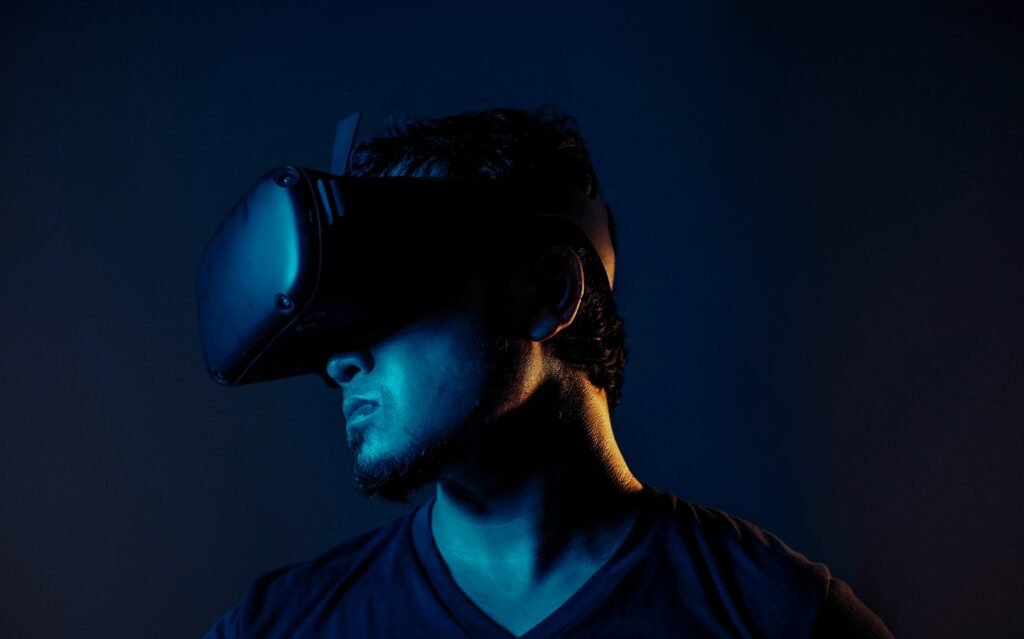
Imagine waking up tomorrow to discover that everything you’ve ever experienced – every sunset, every laugh, every tear – was nothing more than carefully crafted code running on some cosmic computer. This isn’t just the plot of a science fiction movie anymore. Leading scientists, philosophers, and tech visionaries are seriously considering the possibility that our entire reality might be an elaborate digital simulation. From quantum mechanics anomalies to the rapid advancement of our own computing power, mounting evidence suggests we might be living inside the ultimate video game.
The Original Argument That Started It All
In 2003, philosopher Nick Bostrom dropped a philosophical bombshell that would forever change how we think about reality. His simulation hypothesis proposed that at least one of three statements must be true: civilizations don’t reach technological maturity, they lose interest in running simulations, or we’re almost certainly living in one.
Bostrom’s logic was elegantly simple yet profoundly unsettling. If advanced civilizations can run detailed simulations of their ancestors, they would likely run many of them. This means simulated beings would vastly outnumber real ones, making it statistically probable that any randomly selected conscious being – including you – exists within a simulation.
Elon Musk’s Billion-to-One Odds

Tech entrepreneur Elon Musk thrust the simulation hypothesis into mainstream consciousness with his startling claim that the odds we’re living in base reality are “billions to one against.” His argument centers on the explosive growth of video game technology over just four decades.
Consider how games evolved from Pong’s simple bouncing dot to today’s photorealistic virtual worlds. If this trend continues, Musk argues, games will become indistinguishable from reality within decades. Once that happens, how could we possibly know we’re not already inside such a simulation?
The Quantum Mechanics Smoking Gun

Quantum mechanics might be providing us with the strongest evidence that reality operates like a computer program. The fundamental behavior of particles at the quantum level eerily resembles how a computer conserves processing power by only calculating what’s being observed.
Take the famous double-slit experiment, where particles behave differently when observed versus when unobserved. This mirrors how video games render only what players can see, leaving the rest as basic code until needed. Could quantum uncertainty be reality’s way of avoiding unnecessary calculations?
The concept of quantum superposition – where particles exist in multiple states until measured – becomes less mysterious when viewed through a computational lens. It’s exactly how an efficient simulation would operate.
Digital Physics and the Pixelated Universe

Our universe appears to have built-in limits that suspiciously resemble the constraints of a digital system. The speed of light acts like a maximum processing speed, while Planck’s constant suggests reality might have a smallest possible unit – like pixels on a screen.
These fundamental constants could represent the hardware limitations of whatever system is running our simulation. Just as computer graphics have resolution limits, our universe might have similar boundaries that prevent us from zooming in indefinitely.
The Fermi Paradox Solution

The Fermi Paradox asks why, in a universe teeming with potentially habitable planets, we haven’t encountered alien civilizations. The simulation hypothesis offers an elegant solution: we’re alone because the simulation only needs to include Earth and its immediate cosmic neighborhood.
Creating an entire universe filled with alien civilizations would require enormous computational resources. A more efficient approach would be simulating just Earth and making the rest of the universe appear vast and empty, exactly as we observe it.
Glitches in the Matrix

Could supposed supernatural phenomena, unexplained events, and “glitches” actually be programming errors in our simulated reality? Throughout history, humans have reported experiences that seem to defy the laws of physics – from ghost sightings to objects appearing in impossible locations.
While skeptics dismiss these as hallucinations or hoaxes, simulation theorists suggest they might be genuine glitches in the code. After all, even the most sophisticated programs have bugs, and a universe-scale simulation would likely have a few imperfections.
The Mandela Effect as Memory Updates

The Mandela Effect describes the phenomenon where large groups of people remember historical events differently than recorded history. Thousands swear they remember Nelson Mandela dying in prison during the 1980s, when he actually died in 2013.
Simulation theorists propose that these collective false memories might result from retroactive updates to the simulation’s database. When programmers correct historical inconsistencies, they might leave traces in our collective memory, creating these widespread “misrememberings.”
Mathematical Constants as Code Signatures

The precise mathematical constants that govern our universe – like pi, the golden ratio, and the fine structure constant – might be signatures left by the simulation’s programmers. These numbers appear with stunning regularity throughout nature, from the spiral of shells to the structure of galaxies.
Some researchers suggest these constants are too perfectly calibrated for life to be coincidental. Instead, they might represent the mathematical framework chosen by our simulation’s creators to ensure their digital universe could support complex life forms like us.
The Observer Effect as Computational Efficiency
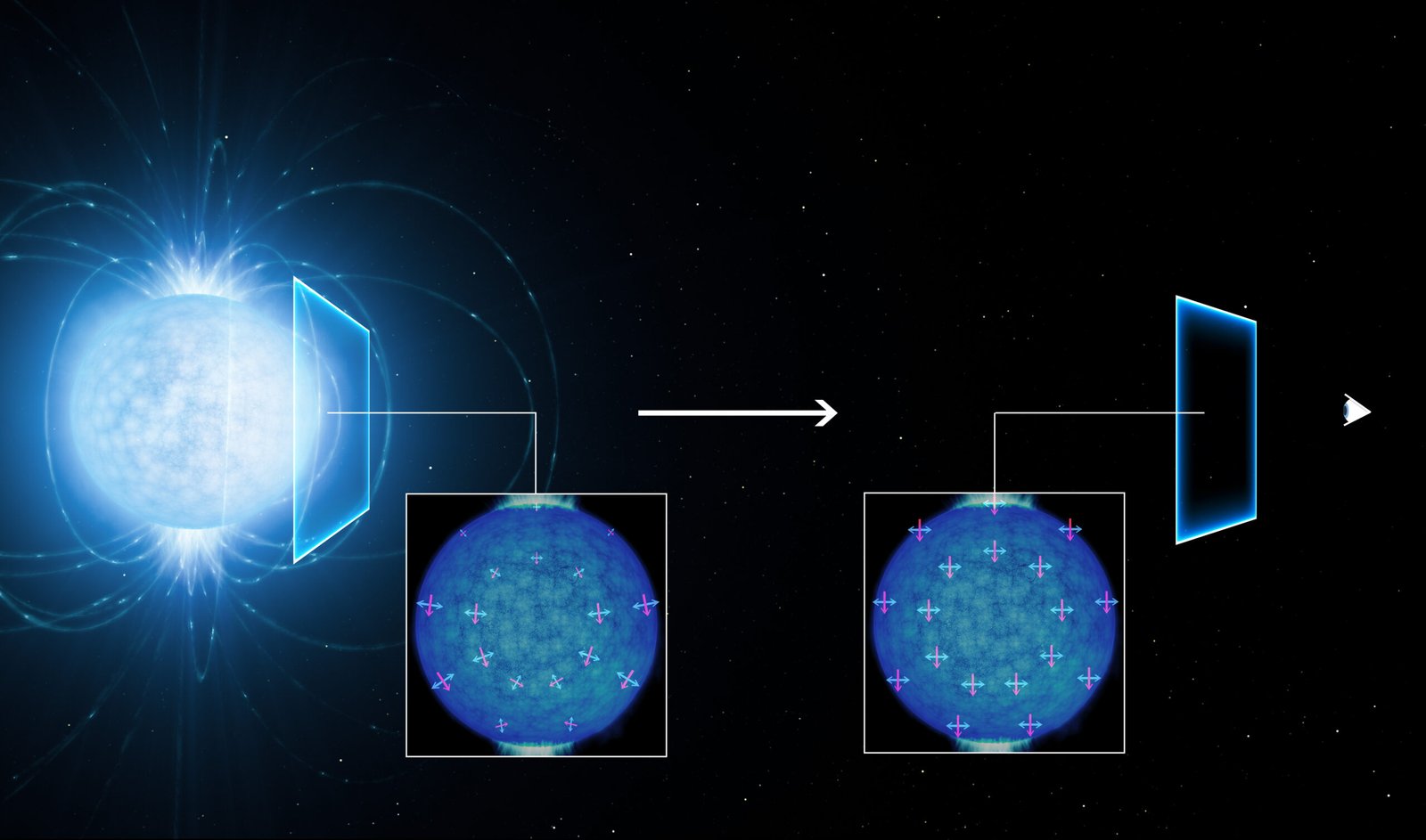
One of quantum mechanics’ most puzzling aspects is how the act of observation affects reality. This observer effect could be evidence of a simulation optimizing its computational load by only fully rendering what conscious observers are actively examining.
Think about how modern video games use “level of detail” algorithms, showing full graphics only for nearby objects while simplifying distant ones. Our universe might work similarly, maintaining detailed physics only where conscious observers are present to witness them.
Information Theory and Digital Breadcrumbs

Leading physicists increasingly view information, not matter or energy, as the fundamental building block of reality. This shift toward an information-based understanding of physics aligns perfectly with the simulation hypothesis.
If our universe is indeed made of information, then the distinction between “real” and “simulated” becomes meaningless. A simulation composed of information would be every bit as real as a universe made of traditional matter – they would be essentially the same thing.
The Accelerating Pace of Technological Progress
Our rapid advancement in computing power and virtual reality technology might be the strongest evidence supporting the simulation hypothesis. If we can create increasingly realistic simulations, more advanced civilizations certainly could as well.
Companies like Meta and Apple are already developing immersive virtual worlds that blur the line between digital and physical reality. If this trend continues exponentially, future simulations might be indistinguishable from reality, making Bostrom’s statistical argument even more compelling.
The emergence of artificial intelligence adds another layer to this argument. As our AI systems become more sophisticated, they might eventually create their own simulations, leading to nested realities within realities.
The Goldilocks Universe Problem

Our universe appears fine-tuned for life in ways that seem almost impossibly precise. If the fundamental forces were even slightly different, stars couldn’t form, atoms would be unstable, or life would be impossible.
While some scientists invoke the multiverse to explain this fine-tuning, the simulation hypothesis offers an alternative: our universe’s parameters were deliberately chosen by programmers who wanted to create a reality capable of supporting intelligent life. We exist because someone designed our reality specifically for consciousness to emerge.
The Recursive Loop of Simulated Beings
If we’re simulated beings who eventually create our own simulations, we might be part of an endless recursive loop. Each level of reality creates the next, forming an infinite chain of nested simulations stretching both upward and downward.
This concept suggests that even if we discover we’re simulated, it wouldn’t diminish our reality’s significance. We would still be conscious, thinking beings capable of creating our own digital worlds and potentially giving rise to new forms of consciousness.
Consciousness as the Ultimate Test

The hard problem of consciousness – explaining how subjective experience arises from physical processes – becomes even more intriguing in a simulated reality. If consciousness can emerge from silicon-based computers, then the material substrate might be irrelevant.
Your thoughts, emotions, and experiences would be equally valid whether they arise from biological neurons or digital circuits. The simulation hypothesis doesn’t diminish human consciousness; it suggests consciousness might be more fundamental and universal than previously imagined.
This realization could revolutionize how we think about artificial intelligence and the possibility of creating genuinely conscious machines.
The Energy Requirements Objection

Critics argue that simulating an entire universe would require impossible amounts of energy and computational power. However, this objection might be based on flawed assumptions about how such a simulation would work.
A universe-scale simulation wouldn’t need to calculate every atom simultaneously. Like modern games, it could use clever shortcuts, rendering detail only where needed and using statistical approximations for the rest. Quantum mechanics’ probabilistic nature might actually make our universe easier to simulate than a purely deterministic one.
The Ethical Implications of Simulated Existence

If we are simulated beings, what ethical obligations do our creators have toward us? The question becomes even more complex when we consider that we might eventually create our own conscious simulations.
Some philosophers argue that creating conscious simulations might be ethically problematic, as it could subject digital beings to suffering without their consent. Others suggest that simulated consciousness might experience richer, more meaningful lives than their creators, making simulation a form of gift rather than imprisonment.
Testing the Simulation Hypothesis

While we may never definitively prove we’re in a simulation, scientists are proposing experiments that could provide compelling evidence. These range from searching for computational artifacts in cosmic ray patterns to looking for geometric structures in spacetime itself.
Some researchers suggest that if our universe is simulated, we might eventually find evidence of the grid-like structure underlying reality. Others propose that sufficiently advanced experiments might cause the simulation to crash or reveal glitches, providing undeniable proof of our digital existence.
The very act of searching for simulation evidence might be the test itself – perhaps only simulations sophisticated enough to question their own reality are worth running.
What It Means for Human Purpose and Meaning
Discovering we’re in a simulation wouldn’t make life meaningless – it might actually enhance its significance. If consciousness can arise in digital form, it suggests that awareness and experience are more fundamental than previously thought.
Your relationships, achievements, and struggles would remain equally real and important regardless of the underlying substrate. Love, creativity, and personal growth don’t become less valuable when experienced by simulated beings.
In fact, being part of a simulation might mean we’re incredibly precious – conscious beings created or allowed to emerge by entities with godlike technological capabilities. Rather than diminishing human worth, it might confirm our special place in the cosmic order.
The evidence pointing toward a simulated reality continues to accumulate, from quantum mechanics’ computational features to the rapid advancement of our own simulation technology. While we may never have absolute proof, the mounting scientific case suggests we should take the possibility seriously. Whether we exist in base reality or the most sophisticated video game ever created, our consciousness, experiences, and relationships remain profoundly real and meaningful. Perhaps the most remarkable aspect of the simulation hypothesis isn’t that it might be true – but that we’re sophisticated enough to contemplate it at all. Are you ready to question everything you think you know about reality?