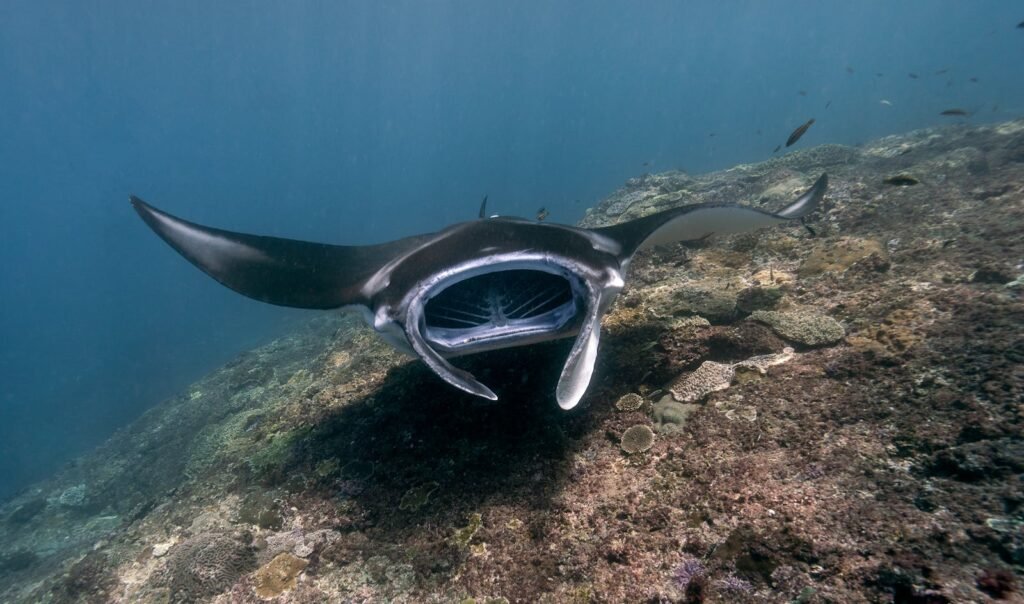
Picture this: you’re floating in the crystal-clear waters of the Maldives when a massive shadow glides beneath you. A manta ray, spanning twenty feet from wingtip to wingtip, emerges from the blue depths with an almost ethereal grace. But here’s what might blow your mind – that gentle giant swimming below you might actually remember you. Not just your species, but YOU specifically. Recent scientific discoveries are turning everything we thought we knew about fish intelligence upside down, revealing that these ocean wanderers possess memories, form friendships, and even have personal preferences that would make your social media algorithm jealous.
The Brain Behind the Beauty

Manta rays possess the largest brain-to-body ratio of any fish species, which immediately sets them apart from their underwater neighbors. Their brains are not only impressively sized but also remarkably complex, containing specialized regions that mirror structures found in mammals and birds known for advanced cognitive abilities. Scientists have discovered that manta ray brains house well-developed areas for processing visual information, spatial navigation, and most surprisingly, social recognition.
The neural architecture of these magnificent creatures includes a highly developed telencephalon, the brain region responsible for higher-order thinking processes. This sophisticated brain structure allows mantas to process complex environmental information and make decisions based on past experiences. Research conducted at marine research stations worldwide has revealed that manta rays can retain information for months, possibly even years.
Memory Masters of the Deep

When marine biologist Dr. Andrea Marshall first began studying manta rays in Mozambique, she noticed something extraordinary. Individual mantas would return to the same cleaning stations year after year, not just remembering the location, but seemingly recognizing the specific cleaner fish that had served them before. This wasn’t random behavior – it was evidence of long-term memory that rivals some of the most intelligent land animals.
Laboratory studies have since confirmed what field researchers suspected for decades. Manta rays can remember complex navigation routes spanning hundreds of miles, returning to precise feeding and mating locations with uncanny accuracy. They’ve been observed remembering the seasonal timing of plankton blooms, arriving at feeding grounds just as their favorite microscopic meals reach peak abundance.
The implications of this memory prowess extend far beyond simple navigation. Mantas remember positive and negative experiences with remarkable clarity, influencing their future behavior and social interactions in ways that continue to astound researchers.
Social Networks Beneath the Waves

Forget Facebook – manta rays have been maintaining sophisticated social networks for millions of years. These gentle giants don’t just randomly encounter each other in the vast ocean; they actively seek out specific individuals and maintain relationships that can span decades. Research teams tracking individual mantas have documented consistent association patterns that mirror the social structures found in dolphin pods and elephant herds.
Young manta rays often shadow older, more experienced individuals, learning crucial survival skills through observation and mimicry. This mentor-student relationship can last for years, with juveniles following their “teachers” to the best feeding grounds and safest resting spots. The social bonds formed during these learning periods often persist into adulthood, creating lifelong friendships that influence feeding, mating, and migration behaviors.
Perhaps most fascinating is the discovery that manta rays exhibit what researchers call “social preferences” – they genuinely seem to enjoy the company of certain individuals while actively avoiding others. Video footage from underwater observation stations shows mantas changing direction to join specific companions while ignoring other nearby individuals of their species.
The Cleaning Station Chronicles

Cleaning stations serve as the underwater equivalent of social clubs for manta rays, and the relationships formed at these crucial locations reveal the depth of their social intelligence. These underwater oases, typically located on coral reefs or rocky outcrops, become gathering places where mantas not only get parasites removed but also engage in complex social interactions that researchers are only beginning to understand.
Individual manta rays show remarkable loyalty to specific cleaning stations, often traveling great distances to return to their preferred locations. Even more intriguing is their apparent preference for particular cleaner fish species and even individual cleaners. Some mantas will wait in queue for their favorite cleaner to become available, passing up opportunities for immediate service from other cleaners.
The social dynamics at these stations are surprisingly complex, with established hierarchies determining feeding order and access to the best cleaning services. Dominant individuals often secure prime positions, while younger or smaller mantas wait their turn in a display of social awareness that challenges traditional notions of fish intelligence.
Recognition and Facial Features

Just as humans recognize each other by facial features, manta rays possess unique spot patterns on their undersides that serve as natural identification cards. But here’s where it gets really interesting – they seem to recognize these patterns in each other, essentially remembering faces in their own distinctive way. Scientists have documented instances where manta rays approach specific individuals based solely on visual recognition of these unique markings.
The ability to recognize individuals extends beyond simple pattern recognition to include behavioral cues and swimming styles. Experienced researchers report that mantas can identify familiar individuals from considerable distances, often before the distinctive ventral patterns become clearly visible. This suggests a level of individual recognition that incorporates multiple sensory inputs and learned associations.
Video analysis has revealed that manta rays adjust their approach behavior based on the identity of approaching individuals. They swim more directly toward known companions while maintaining greater distance from unfamiliar or previously aggressive individuals, demonstrating both memory and social judgment that was once thought impossible in fish.
Emotional Responses in Giant Fish

The concept of fish experiencing emotions might sound far-fetched, but mounting evidence suggests that manta rays display behavioral responses that closely resemble emotional states. Researchers have observed what appears to be excitement when mantas encounter preferred companions, characterized by increased swimming speed, barrel rolls, and playful chasing behaviors. Conversely, when separated from familiar groups, individual mantas often exhibit behaviors consistent with stress or loneliness.
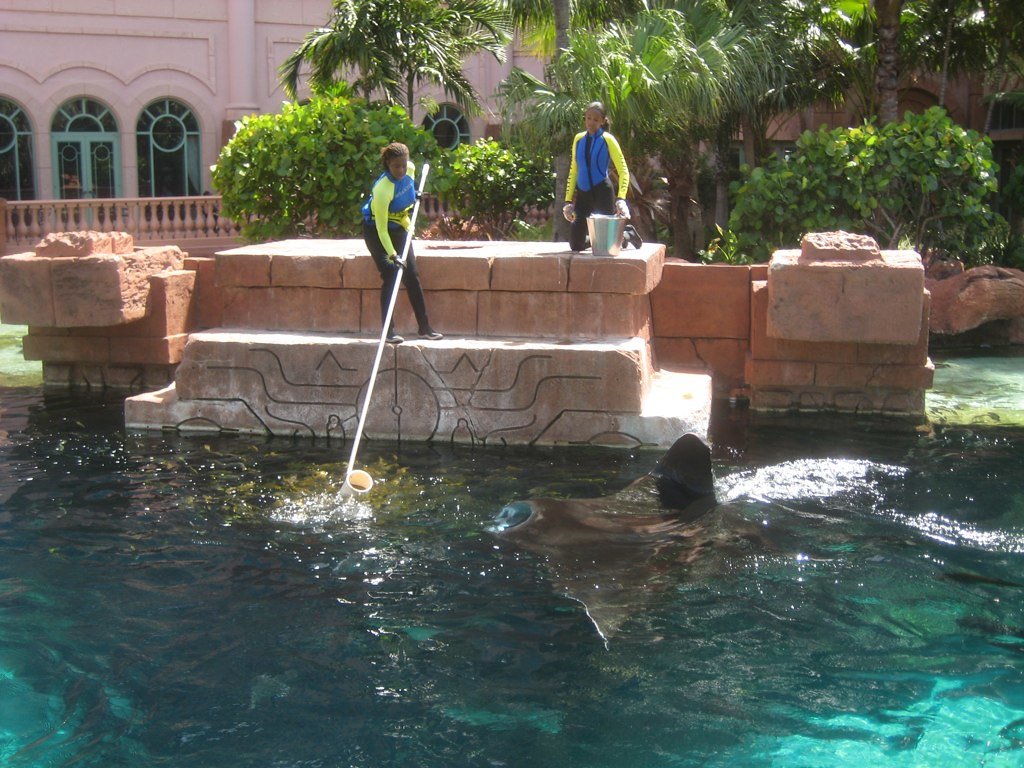
Captive manta rays have provided particularly compelling evidence of emotional complexity. Marine park researchers report that individual mantas show distinct personality traits, with some being naturally curious and interactive while others remain shy and reserved. These personality differences remain consistent over time, suggesting stable emotional patterns rather than random behavioral variations.
Perhaps most remarkably, manta rays have been observed engaging in what can only be described as play behavior. Juvenile mantas somersault through the water, chase each other in spirals, and interact with objects in their environment in ways that serve no obvious survival purpose but appear to bring them joy.
Learning and Cultural Transmission
Manta ray communities exhibit something that researchers are cautiously calling culture – the transmission of learned behaviors from one generation to the next. Young mantas don’t just inherit instinctive behaviors; they actively learn from their elders, acquiring knowledge about feeding techniques, migration routes, and social protocols that can vary significantly between different populations.
In the waters around Indonesia, researchers have documented manta ray populations that have developed unique feeding strategies specific to their local environment. These techniques are taught to younger generations through observation and practice, creating distinct cultural differences between geographically separated groups. Some populations have mastered the art of barrel roll feeding in plankton-rich waters, while others have developed precise timing techniques for feeding on seasonal fish spawn.
The implications of cultural learning in manta rays extend far beyond academic curiosity. It suggests that these animals possess the cognitive flexibility to adapt their behaviors based on environmental conditions and social learning, rather than relying solely on hardwired instincts.
Communication Beyond Words

While manta rays don’t vocalize like dolphins or whales, they’ve developed sophisticated methods of underwater communication that researchers are only beginning to decode. Body language plays a crucial role in manta ray social interactions, with specific swimming patterns, positioning, and even color changes conveying different messages to other individuals.
Scientists have identified what appears to be a repertoire of communicative behaviors including synchronized swimming, specific approach angles, and deliberate physical contact. During mating season, males perform elaborate courtship displays that involve complex aerial maneuvers and precise positioning relative to females. These behaviors require not only physical coordination but also the ability to read and respond to subtle social cues.
Recent technological advances in underwater monitoring have revealed that manta rays may also communicate through low-frequency vibrations and electrical signals generated by their massive pectoral fins. These signals could potentially carry information over considerable distances, allowing for communication between individuals separated by miles of ocean.
Navigation and Mental Mapping

The navigation abilities of manta rays border on the supernatural, requiring cognitive mapping skills that rival those of migratory birds and sea turtles. These ocean wanderers maintain detailed mental maps of vast oceanic territories, remembering not just locations but also seasonal timing, current patterns, and food availability at hundreds of different sites across their range.
Individual manta rays have been tracked covering distances of over 1,000 miles in single migrations, yet they consistently return to specific locations with remarkable precision. This navigation feat requires the integration of multiple environmental cues including magnetic fields, water temperature gradients, and celestial patterns. The cognitive processing power needed to maintain such detailed spatial awareness suggests mental capabilities far beyond simple stimulus-response reactions.
Perhaps most impressively, manta rays can modify their traditional migration routes based on changing environmental conditions, demonstrating the cognitive flexibility to update their mental maps in real-time. This adaptive navigation ability has proven crucial as climate change alters ocean conditions and food distribution patterns.
Problem-Solving Abilities

Laboratory studies have revealed that manta rays possess remarkable problem-solving abilities that put them in the same cognitive league as some of the ocean’s most intelligent inhabitants. When presented with novel challenges, such as navigating maze-like structures to reach food rewards, mantas demonstrate the ability to learn from trial and error, remember successful strategies, and apply learned solutions to new situations.
In the wild, manta rays have been observed using tools and manipulating their environment to achieve specific goals. Some individuals have learned to use stationary objects like rock formations or coral heads to help remove stubborn parasites, while others have figured out how to use strong currents to assist in feeding efficiency. These behaviors require forward planning and an understanding of cause-and-effect relationships.
Recent experiments have shown that manta rays can distinguish between different geometric shapes, colors, and patterns, and can be trained to associate these visual cues with rewards. This visual discrimination ability, combined with their memory capabilities, allows them to navigate complex underwater environments and recognize important environmental markers.
Individual Personalities Shine Through
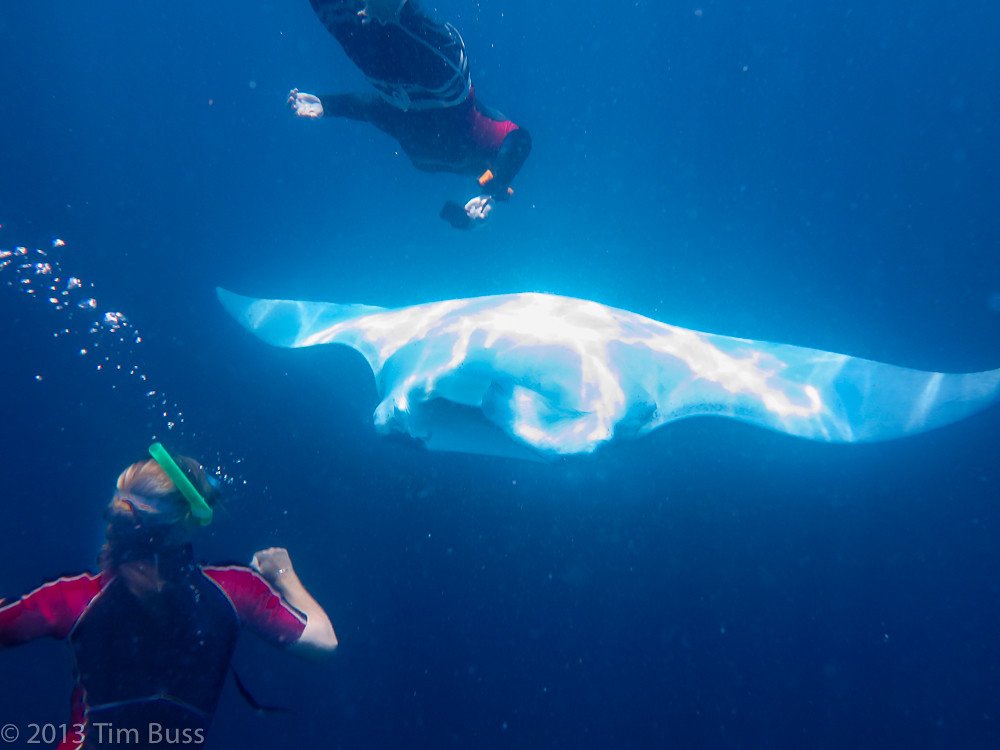
Anyone who has spent significant time observing manta rays will tell you that each individual has a distinct personality, and scientific research is beginning to validate these observations. Some mantas are naturally bold and curious, approaching divers and boats with apparent interest, while others remain cautious and maintain their distance from human activity. These personality traits remain consistent across multiple encounters and different environmental conditions.
Personality differences extend to feeding behavior as well. Some individuals are aggressive competitors at feeding sites, using their size and speed to secure the best positions, while others employ more patient strategies, waiting for opportunities to feed without direct confrontation. These behavioral differences aren’t random but reflect consistent individual approaches to survival challenges.
Long-term studies have shown that manta ray personalities can influence their social relationships, with certain personality types tending to associate with similar individuals. Bold, curious mantas often form groups with other adventurous individuals, while more cautious personalities tend to associate with similarly reserved companions.
The Science of Manta Ray Intelligence

Neuroscientist research has revealed that manta rays possess several key brain structures associated with advanced cognitive abilities in other species. Their enlarged cerebellum suggests sophisticated motor control and learning capabilities, while their well-developed optic tectum indicates advanced visual processing abilities. Most significantly, their enlarged telencephalon contains structures analogous to the hippocampus in mammals, the brain region crucial for memory formation and spatial navigation.
Recent studies using advanced brain imaging techniques have shown that manta ray brains exhibit high levels of neural activity in regions associated with social cognition and emotional processing. The complexity of their neural networks rivals that found in some bird and mammal species known for their intelligence, suggesting that the evolutionary pressures of ocean life have produced cognitive abilities comparable to those found in terrestrial animals.
Genetic analysis has revealed that manta rays possess genes associated with synaptic plasticity and neural development that are remarkably similar to those found in highly intelligent vertebrates. This genetic foundation provides the biological basis for the complex behaviors and cognitive abilities that researchers continue to document in wild populations.
Conservation Implications of Smart Fish

The growing recognition of manta ray intelligence has profound implications for conservation efforts and marine protection policies. If these animals possess the cognitive complexity to form long-term social relationships, experience emotions, and maintain cultural knowledge, then their protection becomes not just an environmental issue but an ethical imperative comparable to protecting other highly intelligent species.
Traditional fisheries management approaches that treat fish as simple, replaceable resources are increasingly inappropriate when applied to species with complex social structures and individual personalities. The loss of individual manta rays isn’t just a reduction in population numbers – it represents the loss of unique personalities, learned behaviors, and social relationships that took years or decades to develop.
Understanding manta ray intelligence also reveals the devastating impact of habitat destruction on these animals’ complex social networks. When cleaning stations are destroyed or feeding areas are compromised, the effects ripple through entire social communities, disrupting relationships and learned behaviors that cannot be easily restored.
Future Research Horizons

Scientists are only scratching the surface of manta ray intelligence, and future research promises to reveal even more surprising cognitive abilities in these ocean giants. Advanced tagging technologies are beginning to provide unprecedented insights into their daily lives, social interactions, and decision-making processes. Researchers are developing new experimental approaches to test cognitive abilities in wild populations without disrupting natural behaviors.
Artificial intelligence and machine learning techniques are being applied to analyze vast databases of manta ray behavior, potentially revealing patterns and relationships that human observers might miss. These technological advances could unlock new understanding of manta ray communication, social structures, and decision-making processes.
Collaborative research efforts spanning multiple countries and research institutions are beginning to piece together a global picture of manta ray intelligence and behavior. As this knowledge base grows, it will undoubtedly continue to challenge our assumptions about fish cognition and the nature of intelligence itself.
What This Means for Ocean Conservation
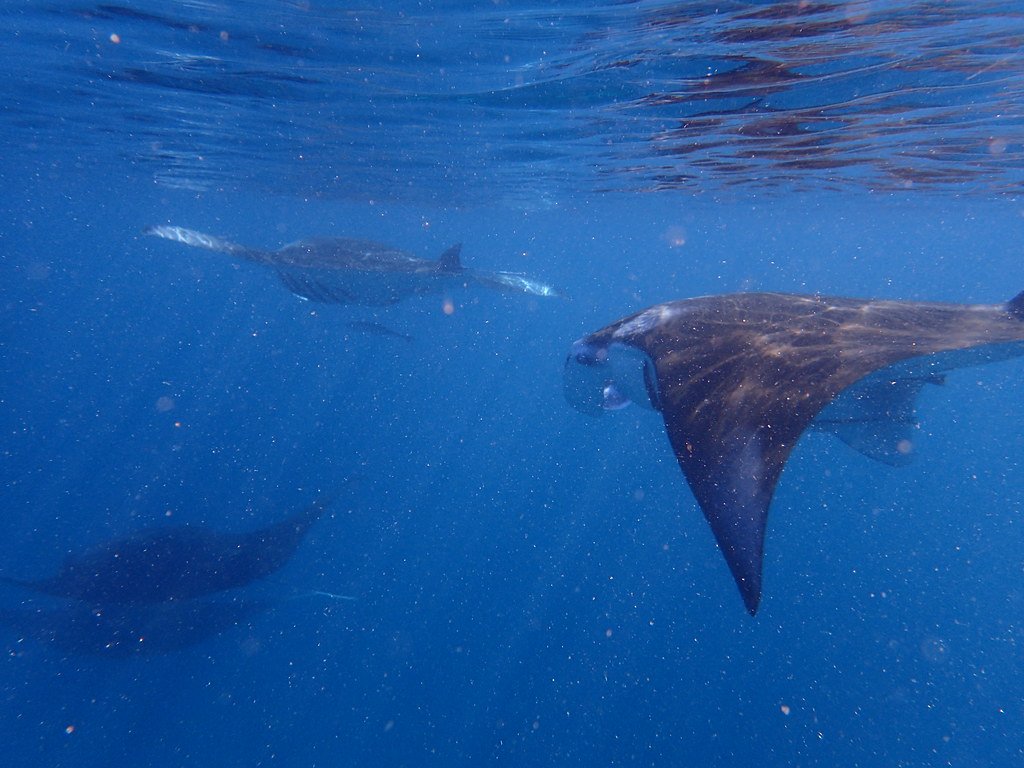
The revelation that manta rays possess complex cognitive abilities fundamentally changes how we must approach ocean conservation. These aren’t just beautiful animals swimming through our oceans – they’re individuals with memories, relationships, and personalities that deserve protection not just as species but as sentient beings. The traditional approach of managing marine resources as commodities becomes ethically questionable when applied to animals capable of forming friendships and experiencing emotional states.
Marine protected areas take on new significance when we understand that they’re protecting not just habitats but social communities with complex relationships built over decades. The destruction of critical habitats doesn’t just eliminate feeding or breeding grounds – it breaks up social networks and destroys cultural knowledge that may take generations to rebuild, if it can be rebuilt at all.
This new understanding demands a more sophisticated approach to marine conservation that considers the social and emotional needs of intelligent marine life. It’s no longer enough to ensure species survival; we must also protect the conditions that allow these remarkable cognitive abilities to flourish.
The next time you see footage of manta rays gliding through tropical waters, remember that you’re watching some of the ocean’s most intelligent residents. These gentle giants remember their friends, return to favorite places, and navigate their underwater world with a sophistication that rivals many land animals we consider highly intelligent. Their existence challenges us to reconsider not just what we know about fish, but what it truly means to be intelligent in an alien underwater realm. What other secrets might these ocean wanderers be keeping in their remarkable minds?