Picture this: somewhere in the vast emptiness between stars, floating in the cosmic dark, there might be entire worlds where life could flourish without ever seeing a sun. It sounds like pure fantasy, yet scientists are discovering that the universe is far more hospitable than we ever imagined. There may be trillions of rogue planets in the galaxy: dark, untethered from any star, and completely alone. But what if these mysterious wanderers aren’t lifeless wastelands? What if they represent an entirely new frontier for understanding how life can emerge in the most unexpected places?
The Hidden Universe of Wandering Worlds

A rogue planet, also termed a free-floating planet (FFP) or an isolated planetary-mass object (iPMO), is an interstellar object of planetary mass which is not gravitationally bound to any star or brown dwarf. Rogue planets may originate from planetary systems in which they are formed and later ejected, or they can also form on their own, outside a planetary system. These cosmic orphans represent one of the most intriguing discoveries in modern astronomy. Unlike the planets in our solar system that orbit predictably around the Sun, rogue planets drift through space completely alone. Because rogue planets do not orbit a parent star, they are cast adrift into interstellar space. On their meanderings, rogue planets are pulled toward whatever large, gravitationally attractive body they happen to pass by. Scientists estimate that The Milky Way alone may have billions to trillions of rogue planets, a range the upcoming Nancy Grace Roman Space Telescope is expected to refine. This staggering number suggests that rogue worlds might actually outnumber traditional planets by a significant margin.
When Stars Go Rogue: The Ejected Wanderers
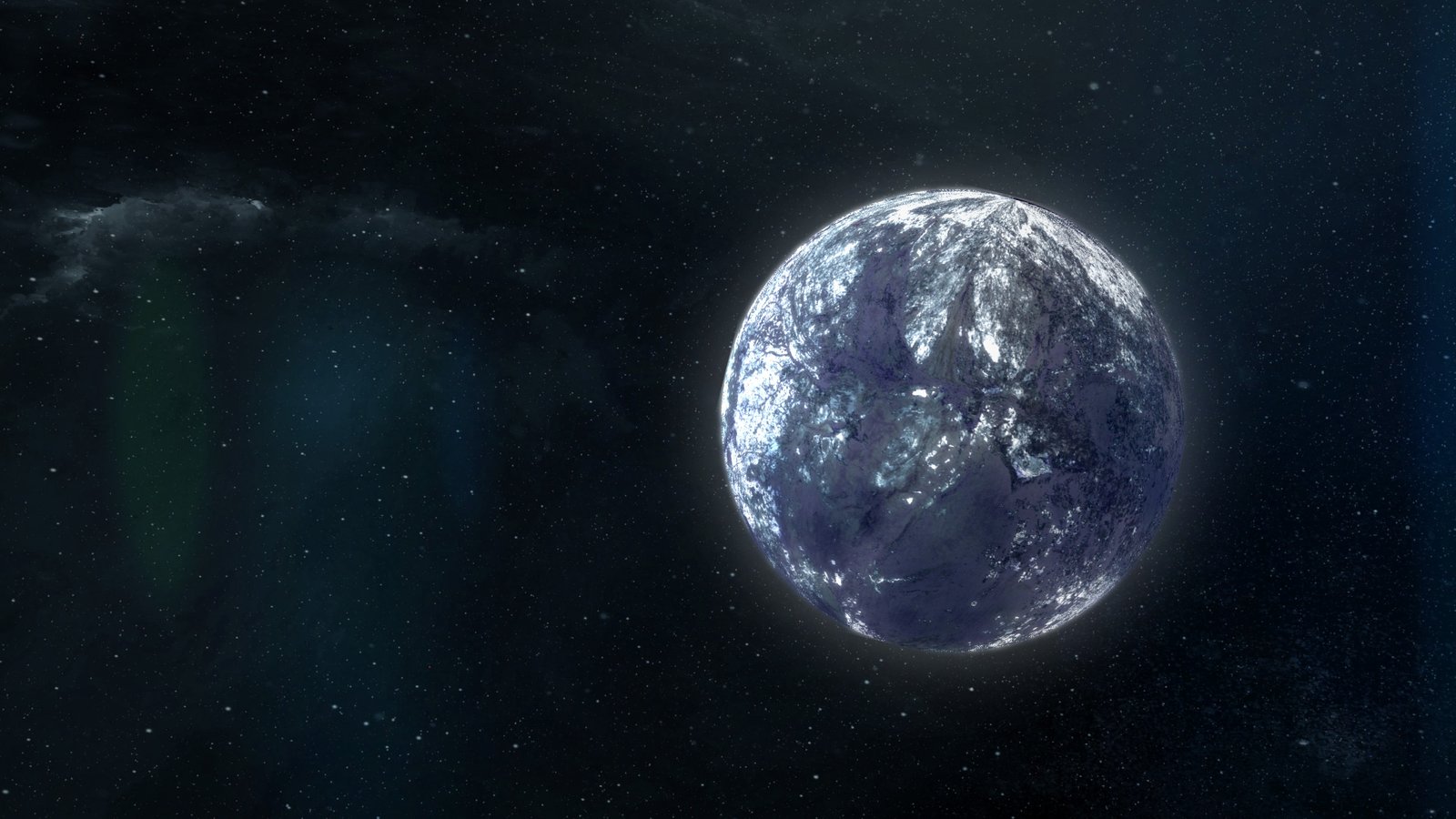
Most rogue planets begin their lives just like Earth did – forming around a young star in a disk of swirling gas and dust. However, their stories take a dramatic turn when gravitational chaos strikes their home systems. Most rogue planets are ejected during the early stages of planetary formation when planetary systems are more chaotic and there is more interaction among planets, David Bennett, a senior research scientist at NASA’s Goddard Space Flight Center, told Space.com. However, the instabilities in orbits and the uncertainties in the interactions between planets mean that unlucky worlds can be hurled into the abyss of space throughout the lifetime of any planetary system. Think of it like a cosmic game of billiards where planets occasionally get knocked clean off the table. Once ejected, these worlds begin an eternal journey through the galaxy, carrying with them whatever atmosphere and internal heat they managed to retain. Solar systems can be very chaotic, though, which can lead to a planet being completely ejected from its system! These rogue planets float freely through space without orbiting a star, and they are very hard to spot and study.
Born in Isolation: The Strange Case of Sub-Brown Dwarfs
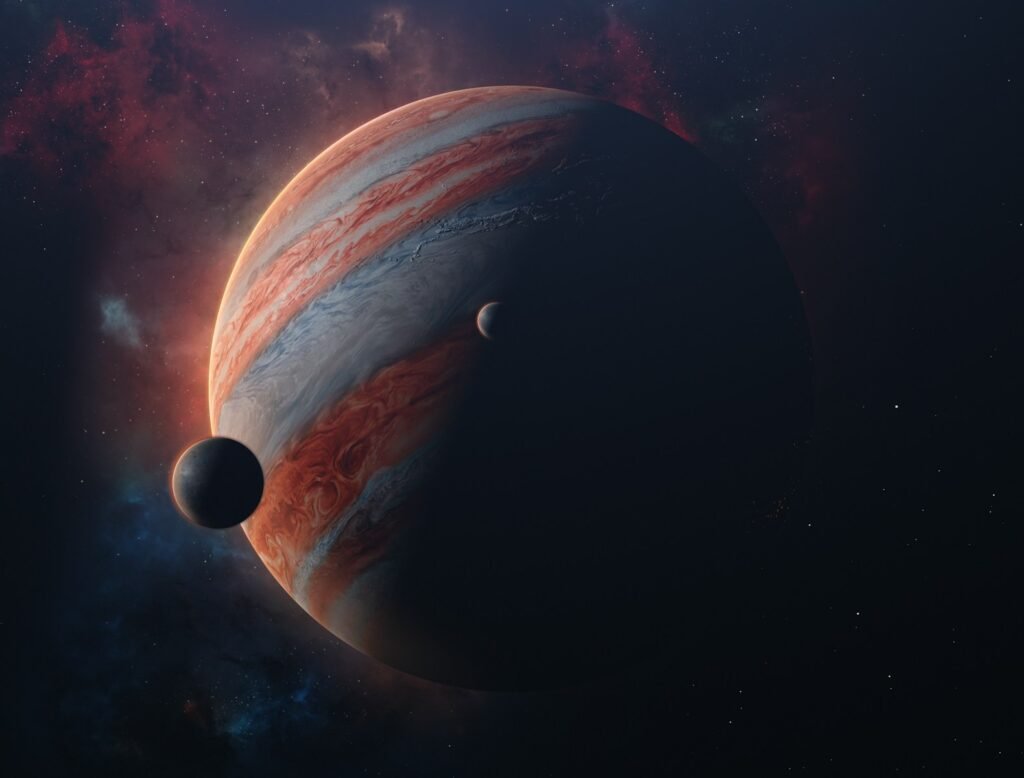
Not all rogue planets are cosmic exiles. Some of these mysterious objects form in a completely different way that challenges our understanding of planetary birth. At least some of the rogues appear to have formed in place: not exiled but born in solitude, apart from any star. These are the only type of rogue planets that can be observed directly. Scientists call these objects sub-brown dwarfs, and they represent something truly extraordinary. Some planetary-mass objects may have formed in a similar way to stars, and the International Astronomical Union has proposed that such objects be called sub-brown dwarfs. A possible example is Cha 110913−773444, which may either have been ejected and become a rogue planet or formed on its own to become a sub-brown dwarf. These objects blur the line between planets and failed stars, forming directly from collapsing clouds of gas and dust but never gaining enough mass to ignite nuclear fusion. It’s like nature tried to build a star but ran out of material halfway through the construction.
The Mysterious World of Brown Dwarfs

Brown dwarfs occupy a fascinating middle ground in the cosmic hierarchy, serving as bridges between planets and stars. Brown dwarfs are substellar objects that have more mass than the biggest gas giant planets, but less than the least massive main-sequence stars. Their mass is approximately 13 to 80 times that of Jupiter (MJ)—not big enough to sustain nuclear fusion of hydrogen into helium in their cores, but massive enough to emit some light and heat from the fusion of deuterium (2H). These “failed stars” represent a unique category of cosmic objects that could potentially harbor life in unexpected ways. The object is what scientists call a brown dwarf. Nicknamed “failed stars,” brown dwarfs are larger than planets, but not quite large enough to fuse hydrogen, the way stars do. The boundary line is still debated, but scientists tend to draw it at about 13 times the mass of Jupiter. What makes brown dwarfs particularly intriguing is their ability to generate their own heat through limited nuclear fusion, creating warm environments that persist for millions of years even in the depths of interstellar space.
Floating Islands of Heat in the Cosmic Ocean

The key to understanding how rogue worlds might support life lies in recognizing that these objects don’t need to be completely frozen wastelands. Just like Jupiter’s moon Europa or Saturn’s Enceladus, a rogue planet could have a thick icy crust but retain liquid water beneath due to geothermal heat. Even without sunlight, the decay of radioactive elements and residual heat from the planet’s formation could keep an internal ocean warm. This concept revolutionizes our thinking about habitability. Imagine a world where the surface is locked in eternal winter, but beneath kilometers of ice, vast oceans remain liquid and potentially teeming with life. However, it has been conjectured that rogue planets that retain their original hydrogen-helium atmospheres and have internal radioactive heating could have liquid water on their surfaces and thus suitable conditions for life. It has also been conjectured the moons of rogue planets might be more hospitable to life thanks to the presence of water that could survive under a thick carbon dioxide atmosphere that would trap the heat generated by tidal friction, and, if a moon was large enough, it could heat its planet through tides.
The Atmospheric Greenhouse Effect in Deep Space

Some rogue planets might maintain surprisingly warm conditions through an extreme greenhouse effect. Another possibility is that some rogue planets have very thick, insulating atmospheres, rich in hydrogen or other greenhouse gases. These dense atmospheres could trap internal heat, preventing the surface from freezing completely. In extreme cases, scientists speculate that such planets could maintain temperate or even warm environments — despite being alone in space. While we have no confirmed examples yet, models suggest that a hydrogen-rich atmosphere might act like a thermal blanket, keeping a planet’s surface surprisingly habitable. This scenario is like wrapping a planet in the ultimate cosmic blanket, where thick atmospheric layers create an insulating effect so powerful that internal heat becomes trapped and concentrated. The implications are staggering – there could be worlds drifting through space with surface temperatures suitable for liquid water, completely independent of any star’s warmth.
Life in the Darkness: Lessons from Earth’s Extremophiles

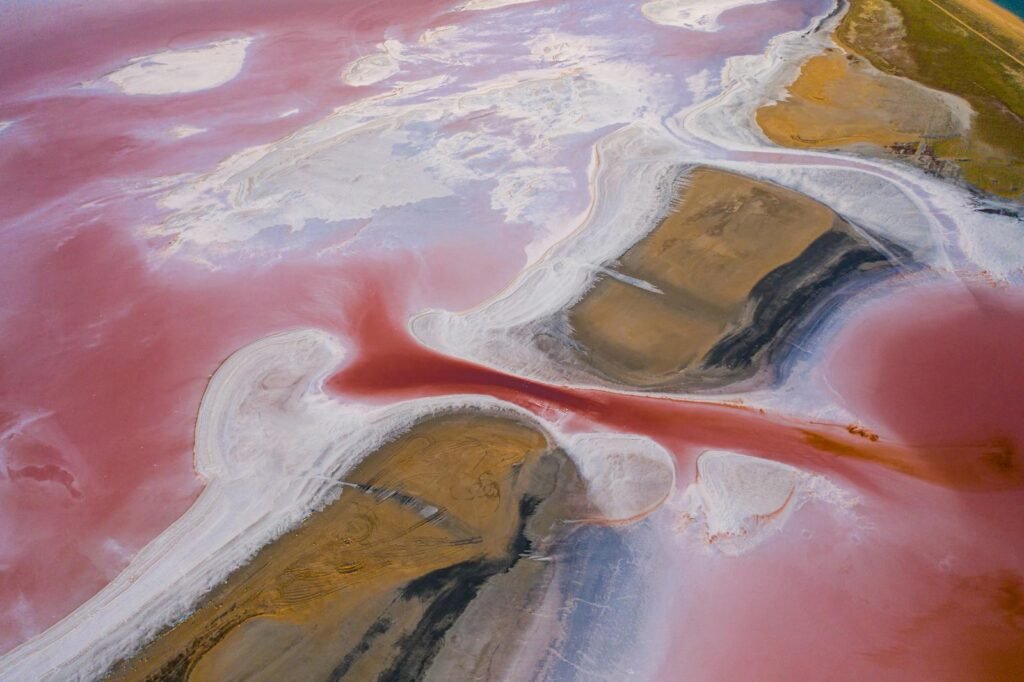
The possibility of life on rogue worlds becomes less far-fetched when we consider Earth’s most resilient organisms. An extremophile (from Latin extremus ‘extreme’ and Ancient Greek φιλία (philía) ‘love’) is an organism that is able to live (or in some cases thrive) in extreme environments, i.e., environments with conditions approaching or stretching the limits of what known life can adapt to, such as extreme temperature, pressure, radiation, salinity, or pH level. Since the definition of an extreme environment is relative to an arbitrarily defined standard, often an anthropocentric one, these organisms can be considered ecologically dominant in the evolutionary history of the planet. Dating back to more than 40 million years ago, extremophiles have continued to thrive in the most extreme conditions, making them one of the most abundant lifeforms. The study of extremophiles has expanded human knowledge of the limits of life, and informs speculation about extraterrestrial life. These remarkable organisms have already demonstrated that life can survive in conditions we once thought impossible. Studies on the International Space Station reveal that bacteria such as Deinococcus radiodurans can endure the vacuum and radiation of space for years. Such endurance bolsters the argument for lithopanspermia’s plausibility. If life can survive the harsh vacuum of space itself, the sheltered environment beneath a rogue planet’s icy surface might seem like paradise by comparison.
Chemosynthetic Ecosystems: Life Without Light

The most compelling evidence for life on rogue worlds comes from studying Earth’s deep-sea ecosystems that thrive without sunlight. This opens the possibility for life similar to what we see around hydrothermal vents on Earth’s ocean floor — ecosystems that thrive without sunlight, relying on chemistry. This idea is exciting because it breaks the old assumption that life needs a star. On Earth, entire ecosystems exist in darkness, driven by heat and chemistry. These chemosynthetic communities demonstrate that photosynthesis isn’t the only game in town when it comes to powering life. Deep-sea organisms use chemical energy from volcanic vents to fuel their metabolism, creating complex food webs in the absolute darkness of the ocean floor. Hydrothermal Vents: Deep-sea vents spewing superheated, mineral-rich water provide a haven for thermophiles, microorganisms that thrive in high temperatures. Acid Mine Drainage: These toxic environments, formed by the interaction of water, air, and mining waste, harbor acidophiles, microbes that prosper in highly acidic conditions. Frozen Deserts: The frigid expanse of Antarctica’s Dry Valleys, with temperatures reaching -80°C, is home to psychrophiles, organisms that excel in extreme cold. If such life can flourish in Earth’s most hostile environments, the prospect of similar communities existing in rogue planets’ subsurface oceans becomes tantalizingly plausible.
The Cosmic Recycling Program: Stellar Death and Birth

The universe operates on a grand scale of recycling that connects the death of stars to the birth of new worlds and potentially new life. A planetary nebula is a type of emission nebula consisting of an expanding, glowing shell of ionized gas ejected from red giant stars late in their lives. It is expected that the Sun will form a planetary nebula at the end of its life cycle. Planetary nebulae probably play a crucial role in the chemical evolution of the Milky Way by expelling elements into the interstellar medium from stars where those elements were created. When stars die, they don’t simply vanish – they seed space with the heavy elements necessary for life. These remnants also enrich the interstellar medium with heavier elements, which are later incorporated into new stars and planets, continuing the cosmic cycle. Supernova remnants eventually merge with the interstellar medium, spreading their enriched materials and seeding future stellar generations. This cosmic recycling program ensures that each generation of stars and planets is richer in life-enabling elements than the last. Over time, the material from the planetary nebula is scattered into space. Eventually it will form part of the clouds of dust and gas where new stars form. Even rogue planets benefit from this process, carrying within their rocky cores and atmospheres the chemical legacy of countless stellar generations.
Stellar Nurseries: Cosmic Cradles of Creation

Star formation is the process by which dense regions within molecular clouds in interstellar space—sometimes referred to as “stellar nurseries” or “star-forming regions”—collapse and form stars. Higher density regions of the interstellar medium form clouds, or diffuse nebulae, where star formation takes place. These stellar nurseries represent some of the most dynamic and creative environments in the universe. These “stellar nurseries,” such as the Orion Nebula, showcase the early stages of star birth, revealing the intricate interplay of gravity, radiation, and turbulence. By studying these processes, astronomers gain insights into the mechanisms that lead to the creation of stars, planetary systems, and ultimately the conditions necessary for life. Within these cosmic foundries, Once a molecular cloud assembles enough mass, the densest regions of the structure will start to collapse under gravity, creating star-forming clusters. This process is highly destructive to the cloud itself. Once stars are formed, they begin to ionize portions of the cloud around it due to their heat. It’s in these chaotic environments that many rogue planets likely receive their initial “kick” into interstellar space, but they also represent regions where life-supporting materials are constantly being mixed and redistributed throughout the galaxy.
The Interstellar Highway: How Life Might Travel Between Worlds

The space between stars isn’t empty – it’s filled with a complex network of gas, dust, and potentially life-carrying materials. The ISM plays a crucial role in astrophysics precisely because of its intermediate role between stellar and galactic scales. Stars form within the densest regions of the ISM, which ultimately contributes to molecular clouds and replenishes the ISM with matter and energy through planetary nebulae, stellar winds, and supernovae. This interplay between stars and the ISM helps determine the rate at which a galaxy depletes its gaseous content, and therefore its lifespan of active star formation. This interstellar medium could serve as a cosmic highway for life itself. Panspermia hypothesises that microscopic life-forms can be transported across the interstellar distances. This may occur through natural celestial events, such as asteroid impacts, which have the potential to eject debris, potentially harbouring life, into space. Lithopanspermia, a subset of this concept, postulates that life might travel while shielded within rocks. When these rocks collide with celestial bodies, they could deposit their living cargo, potentially seeding new ecological niches. Rogue planets, with their ability to retain atmospheres and subsurface oceans, could serve as ideal vessels for transporting life across vast cosmic distances, acting like biological arks drifting between star systems.
Brown Dwarf Companions: Unlikely Stellar Families

There are planetary-mass objects known to orbit brown dwarfs, such as 2M1207b, 2MASS J044144b and Oph 98 B. A direct image of the brown dwarf 2M1207A (left) and its visible exoplanet using a coronagraph (right). These discoveries reveal that even failed stars can host their own miniature planetary systems. Brown dwarfs, despite their inability to sustain hydrogen fusion, can provide long-term heat sources for orbiting worlds. They are between 13 and 80 times more massive than Jupiter, and are therefore massive enough to fuse deuterium, but not hydrogen. In comparison, the Sun is about 1000 times more massive than Jupiter. Although brown dwarfs produce their own heat and energy, they shine much less brightly than stars, which makes them difficult to observe. These systems represent a middle ground between traditional planetary systems and completely isolated rogue worlds. A planet orbiting a brown dwarf could potentially maintain liquid water through the dwarf’s modest heat output, creating stable conditions for life that could persist for hundreds of millions of years. Unlike the violent stellar winds and radiation from normal stars, brown dwarfs provide a gentler, more stable environment that might actually be more conducive to the development of complex life forms.
The Population Explosion: How Many Rogues Are Out There?
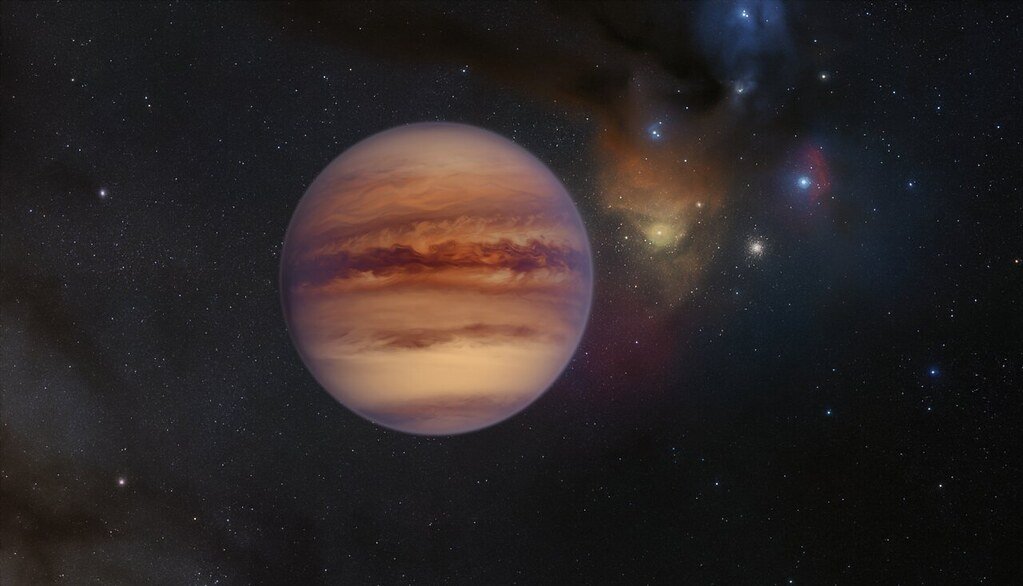
Rogue planets are quite numerous. Extrapolating from the results of years-long microlensing surveys gives a galactic population of about two trillion rogue planets, with small, Earth-sized bodies more numerous than large, Jupiter-sized objects. There are even six times as many rogue planets as planets that orbit stars. This staggering statistic fundamentally changes our perspective on planetary abundance in the universe. The traditional view of planets as rare, star-dependent objects is being replaced by a reality where free-floating worlds vastly outnumber their stellar-bound cousins. In October 2023 an even larger group of 540 planetary-mass object candidates was discovered in the Trapezium Cluster and inner Orion Nebula with JWST. The objects have a mass between 13 and 0.6 MJ. These discoveries suggest that the galaxy is teeming with orphaned worlds, each potentially carrying its own unique evolutionary story and possibly harboring life in forms we’ve never imagined.
Hunting Invisible Worlds: The Challenge of Detection

Finding rogue planets presents one of astronomy’s greatest challenges because these objects emit virtually no light of their own. Rogue planets much smaller than Jupiter are too small to be seen directly in optical and infrared telescopes. However, such planets can be indirectly observed through