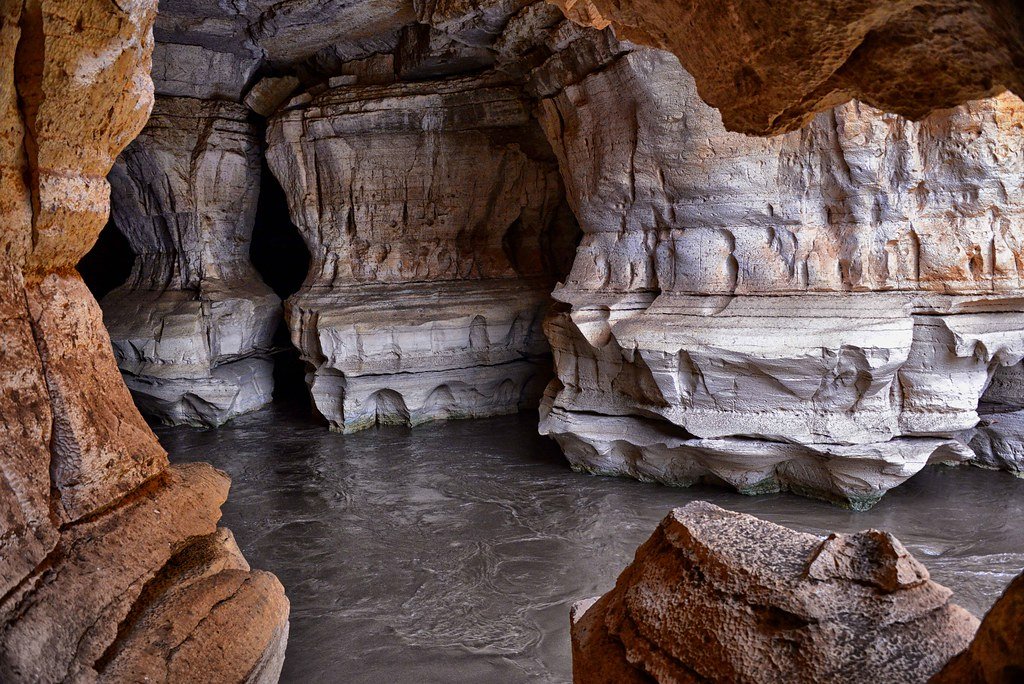

Picture standing at the entrance of a massive cave when suddenly, without warning, a powerful gust of wind rushes past you—so strong it could blow your hat clean off. You haven’t stepped outside into a storm; you’re deep underground where the air should be still and silent. Yet here you are, experiencing something that feels impossible: the earth itself seems to be breathing, drawing air into its rocky lungs or exhaling with tremendous force. This isn’t your imagination playing tricks on you in the darkness—you’ve just encountered one of nature’s most fascinating phenomena.
When Underground Worlds Come Alive

A breathing cave or barometric cave is a rare type of cave in which atmospheric pressure gradients between the inside and outside of a cave cause air to flow in to or out of the cave. When you walk into one of these caves, you might feel a sudden gust of wind, as if the earth itself is sighing or gasping. This movement of air can be so forceful that it blows hats off heads or makes the entrance whistle like a giant flute. Think of it like a massive underground balloon that constantly adjusts itself to match the air pressure outside. Such caves are found all over the world, from Mammoth Cave in Kentucky to Wind Cave in South Dakota. Visitors often describe the sensation as eerie, yet exhilarating, as if they’ve stumbled into a hidden world with its own rules. The feeling of “breathing” is so strong in some caves that it has inspired centuries of myths about underground monsters or spirits.
The Science Behind Nature’s Underground Ventilator
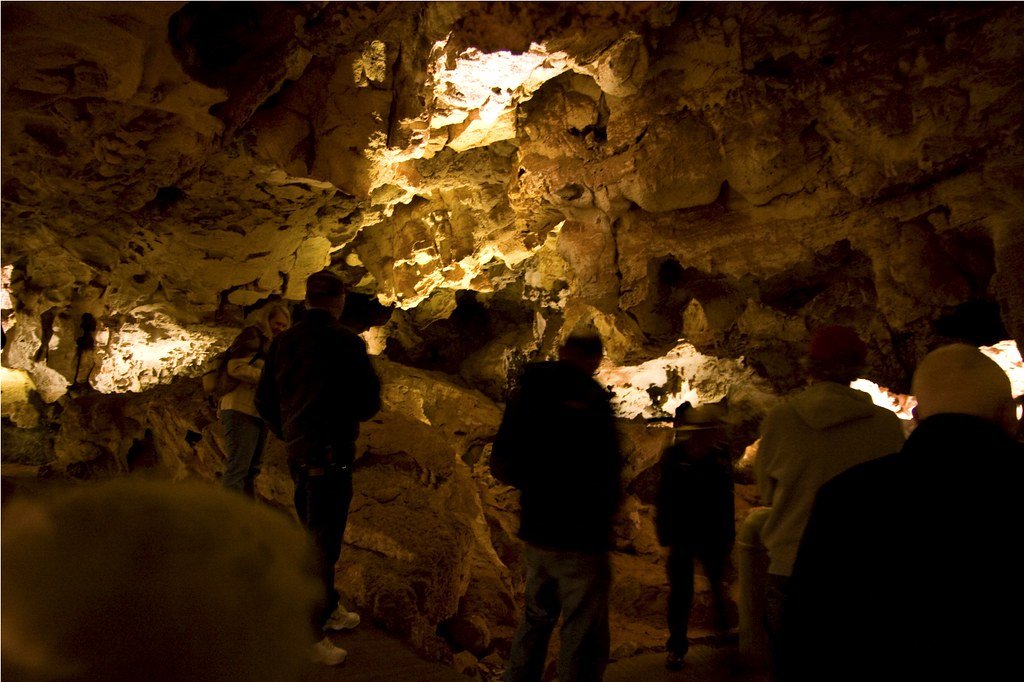
The science behind a cave’s “breathing” is rooted in a simple but powerful principle: changes in air pressure. When barometric pressure outside the cave shifts—say, before a thunderstorm or as the weather warms or cools—the cave responds by moving air in or out. It’s actually quite similar to how your own lungs work, except instead of muscles creating the pressure difference, it’s the weight of the atmosphere above doing all the heavy lifting. The speed of the airflow in barometric caves is directly correlated with the atmospheric pressure difference between the inside and outside of the cave. When the air pressure outside of the cave is higher than that inside the cave air blows into the cave and vice versa; if the air pressures are at equilibrium there is no airflow. Imagine trying to squeeze a balloon underwater—the deeper you go, the more pressure pushes back. These caves work on the same principle, constantly adjusting to find balance with the world above.
How Cave Architecture Shapes the Breath

The number and size of cave entrances, as well as the shape of the passages, are crucial factors. A small, narrow entrance acts like the mouth of a bottle, focusing the airflow and amplifying the sensation of wind. Wide or multiple entrances, by contrast, may diffuse the airflow and make the breathing less noticeable. Think of blowing up a balloon through a thin straw versus a wide tube—the narrow opening creates much more noticeable pressure. Some caves are almost airtight except for a single hole, which can turn ordinary weather changes into dramatic underground gales. This effect is most noticeable in caves with only one or two entrances, where the entire volume of air moves as a single mass. In larger cave systems, the breathing can be more complex, with different chambers acting independently or even creating competing airflows.
The Most Famous Breathing Caves on Earth

Jewel Cave and Wind Cave are the most well-documented examples of breathing caves. Wind speeds at the natural entrance have been measured exceeding 30 miles per hour during significant barometric pressure changes. Wind Cave’s breathing is caused by a simple but powerful principle of physics: the relationship between atmospheric pressure and the large volume of air contained within the cave. The cave contains an estimated 6 billion cubic feet of air in its known passages (and likely much more in undiscovered sections). That’s enough air to fill about 70 million typical home refrigerators! What makes this effect so dramatic at Wind Cave is the disparity between the cave’s vast volume and its relatively small natural entrance. All that air must squeeze through a small opening, creating the strong winds that early explorers described. In caves which mainly consist of narrow passageways, such as Jewel Cave, also in South Dakota and less than 30 kilometers (19 mi) away from Wind Cave, airflow can be measured in many areas throughout the cave system.
When Temperature Plays Second Fiddle

The concept of air flowing through a cave is common, but in most caves this airflow is caused by a difference in temperature rather than air pressure; in barometric caves the thermal mechanism inside the cave is not great enough to cause such airflow. Here’s where things get really interesting—most caves actually use what scientists call the chimney effect to move air around. The most common driver of airflow in caves is the density difference between the subsurface and the outside air, known as the chimney effect. When outside temperature is colder than cave temperature, cave air is light and buoyantly rises out upper entrances while outside air is drawn in the lower entrances. But in breathing caves, the pressure differences are so powerful they can completely override these temperature effects. It’s like having two different weather systems competing underground, with atmospheric pressure usually winning the battle.
Predicting Weather from Underground Winds

The strength and direction of Wind Cave’s airflow serve as a natural barometer. Park rangers can often predict weather changes based on the cave’s breathing pattern: Strong outward airflow often indicates an approaching low-pressure system (potentially stormy weather) Strong inward airflow suggests an approaching high-pressure system (typically clear weather). This makes perfect sense when you think about it—the cave is essentially a massive underground weather station. Even more remarkable is the fact that this airflow can completely reverse direction as atmospheric conditions change. Imagine being able to predict tomorrow’s weather just by standing in a cave entrance and feeling which way the wind blows. Today, visitors can experience this phenomenon firsthand at the beginning of the Natural Entrance Tour, where rangers often demonstrate the airflow with tissue paper or by having visitors feel the breeze on their faces. It’s like having a conversation with the earth itself about what’s happening in the sky above.
The Remarkable Pressure Wave Journey

Compared to the outside atmosphere, the pressure signals within Wind Cave and Jewel Cave showed (1) an absolute displacement due to different altitudes of the measuring sites, (2) a delay related to the travel times of the pressure wave to the measuring sites, (3) a smoothing effect, and (4) a damping effect due to long response times of the caves to external pressure changes. Think of it like dropping a stone in a pond—the ripples take time to reach the other side, and they get weaker as they travel. The spatial distribution of the changes observed in this study shows that for Wind Cave, the cave opening and the narrow entrance area represent the main obstacle for pressure propagation, while for Jewel Cave, the deep areas have the greatest influence on the development of air pressure gradients. An inter-cave comparison also reveals substantial differences in cave airflow dynamics between Wind Cave and Jewel Cave, with the relevant period of surface air pressure variations for cave airflow velocity and the cave reaction times being significantly longer at Jewel Cave compared to Wind Cave. It’s like having two different underground personalities—one quick and reactive, the other slow and thoughtful.
How Scientists Decode Cave Breathing Patterns

Based on high-resolution long-term air pressure measurements from the surfaces and several locations inside the caves, as well as ultra-sonic airflow measurements at the openings, the analysis proves that for both caves, cave airflow velocity can be predicted more accurately by air pressure gradients than by previous surface air pressure changes. Modern scientists use incredibly sensitive instruments that can detect pressure changes smaller than what you’d feel when riding in an elevator. Depending on the location, the presented model predicts 99.2% to 99.7% of measured air pressure inside Wind Cave compared to 90.3% and 99.4% inside Jewel Cave, thus proving that the previously identified and now modeled processes adequately and comprehensively describe the speleoclimatological pressure dynamics inside barometric caves. That’s an incredibly high level of accuracy—imagine being able to predict someone’s mood with 99% certainty just by watching their breathing patterns. Slightly weaker model performance is observed at the lower elevator level inside Wind Cave and at Deep Camp inside Jewel Cave due to irregular pressure disturbances caused by elevator operation and unique morphological features in the deeper parts of Jewel Cave, respectively.
The Amazing World of Underground Weather Systems

Deep beneath the earth’s surface, there are places where the very air seems to come alive. Imagine stepping inside a cavern so vast and mysterious that it feels as if the cave itself is breathing—exhaling cool air in summer, inhaling warmth in winter, as though it’s a living entity. Some caves develop their own weather systems, complete with clouds, wind, and dramatic temperature shifts. It’s like discovering an alien world right beneath our feet. Temperature differences between the cave’s interior and the outside world also drive air movement. Most caves maintain a steady internal temperature, often matching the average yearly temperature of the region. When hot summer air meets the cool cave mouth, or cold winter air hits the warmth inside, the resulting currents can be surprisingly strong. These temperature-driven breezes can create fog, clouds, or even miniature rain showers underground—a phenomenon that feels almost magical. Picture walking into a cave and suddenly finding yourself in the middle of a tiny rainstorm, hundreds of feet below ground.
The Rarity That Makes Breathing Caves Special

All known breathing caves are solutional caves, and breathing caves tend to be much longer than most other caves. Four of the ten longest caves in the world are breathing caves (namely Jewel Cave, Wind Cave, Clearwater Cave, and Lechiguilla Cave). This isn’t a coincidence—it’s like nature has created perfect storm conditions for these underground respiratory systems. The combination of massive underground volumes, limited surface connections, and the right geological conditions creates something truly extraordinary. The size of the cave, the number of entrances, and the volume of sealed-off air all play a part in how dramatic these breaths can be. This natural process is not only fascinating but also essential for the cave’s ecosystem, circulating oxygen and carrying away carbon dioxide. In essence, breathing caves are the lungs of the underground world, keeping entire ecosystems alive in places where sunlight never reaches.
When Humans Interfere with Cave Breathing

Unknown to me, the park had created a new cave management plan that year—fewer tours, and fewer people per tour. Fewer people breathing in the cave meant less carbon dioxide, not only in the cave air but in the waters of Hidden Lake! This discovery shows just how delicate these underground breathing systems really are. When undisturbed, the Timpanogos cave system maintains an average annual temperature of 45 degrees Fahrenheit. But over time, the combined heat from tour lights, people, and people’s exhalations caused cave temperatures to increase. Temperatures often rose by half a degree during the day, then dropped back down at night. On busier weekends, temperatures would rise by one degree but only drop down a half a degree. During the 2020 COVID-19 shutdown, no one was allowed in the cave, not even park staff. The temperature in Chimes Chamber remained constant throughout 2020 and did not increase until tours began again in 2021. It’s a powerful reminder that even our mere presence can alter these ancient breathing patterns.
The Multiple Mechanisms of Underground Airflow

Airflow in caves may be driven by several mechanisms: the most common is the chimney effect, in which the difference in density between the subsurface air and the outside air results in pressure differences that drive the subsurface airflow. The subsurface airflow may also be driven by other mechanisms, such as barometric variations in the external atmosphere or dynamic pressure effect caused by external winds. Think of caves as having multiple breathing techniques, just like humans can breathe through their nose, mouth, or even use special breathing exercises. Density-driven chimney effect airflow is the most common form of cave ventilation, allowing gas exchange between the outside and the karst subsurface. However, cave ventilation can also be driven by other mechanisms, such as barometric changes or pressure differences induced by the outside winds. We show how seasonal airflow patterns driven by the chimney effect are substantially modified by outside winds. Winds can act in the same or opposite direction as the chimney effect and can either enhance, diminish or even reverse the direction of the density-driven airflows. Sometimes these different mechanisms work together like a symphony, other times they fight against each other like competing winds in a storm.
Seasonal Breathing Patterns Underground

Cave ventilation of the chimney circulation driven by an air density gradient is common in most caves. The temperature gradient results in air density differences that dictate when cave air exchanges with the atmosphere. As the temperature of the cave chamber is usually almost constant and the external atmosphere temperature varies diurnally and seasonally, the airflow direction in multi-entrance caves change diurnally and seasonally. It’s like the caves have their own seasonal moods—breathing one way in summer and completely reversing in winter. Based on airflow directions, three ventilation modes, the downward airflow mode (DAF), the upward airflow mode (UAF), and the transitional mode of switching between the DAF and UAF modes, were recognized in a cave with the upper and lower entrances. Note that in the transitional ventilation mode, airflow direction shifts in minute intervals. During transition periods, caves can literally change their minds about which way to breathe multiple times in just a few minutes. Circulating winter and summer convection cells frequently occur near large entrances. The relative elevation of the entrance and cave void determines whether convection is active in the winter or summer.
The Hidden Networks of Underground Air Highways
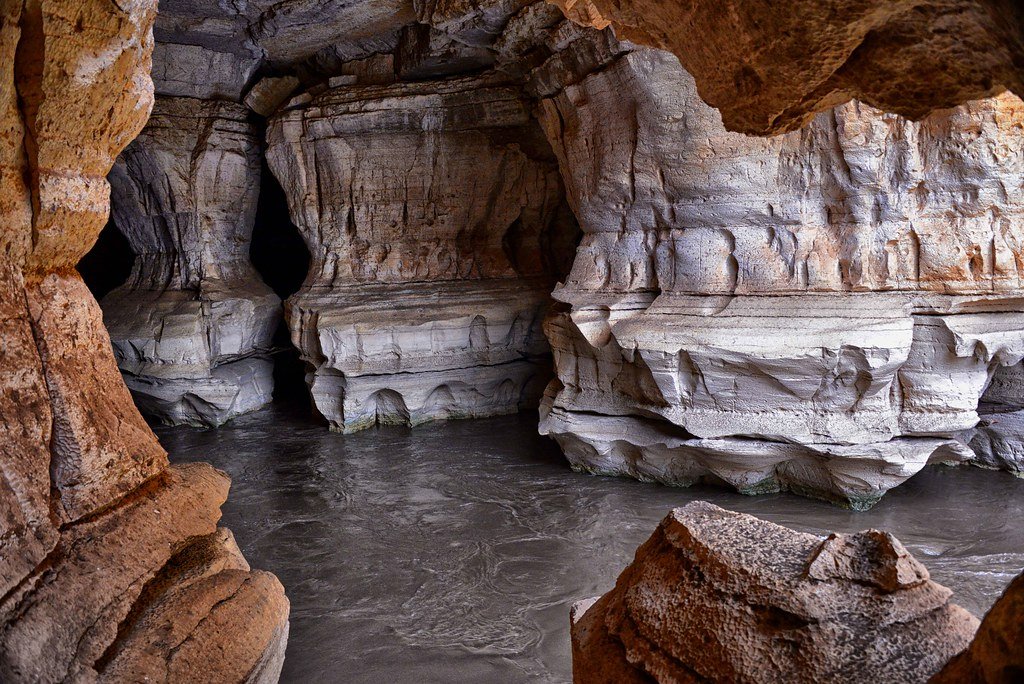
Caves and their surrounding fracture systems in the vadose zone of karst regions host a unique atmospheric environment. Understanding the airflow patterns in caves is critical to understanding the properties of the subsurface atmosphere and the chemical interactions between air, water, and rock. These aren’t just isolated pockets of air—they’re part of vast underground networks that can span for miles. In karst regions, which account for about 15% of the Earth’s ice-free land, solution channels or caves of varying size and complexity are characteristic features of the subsurface. Their development usually begins in the phreatic zone, below the water table, and continues in the vadose zone due to tectonic uplift and/or lowering of the water table. Networks of solution passages and fractures span the entire vadose zone, which can be even more than two kilometres thick. The intersections between the passages and the karst surface represent inlets and outlets of air and water. These can range from large cave entrances to fissures less than a centimetre wide. Imagine an underground metropolis with air highways connecting every neighborhood, from mansion-sized chambers to tiny crack-width alleys.
Cave Breathing as a Navigation Tool for Explorers
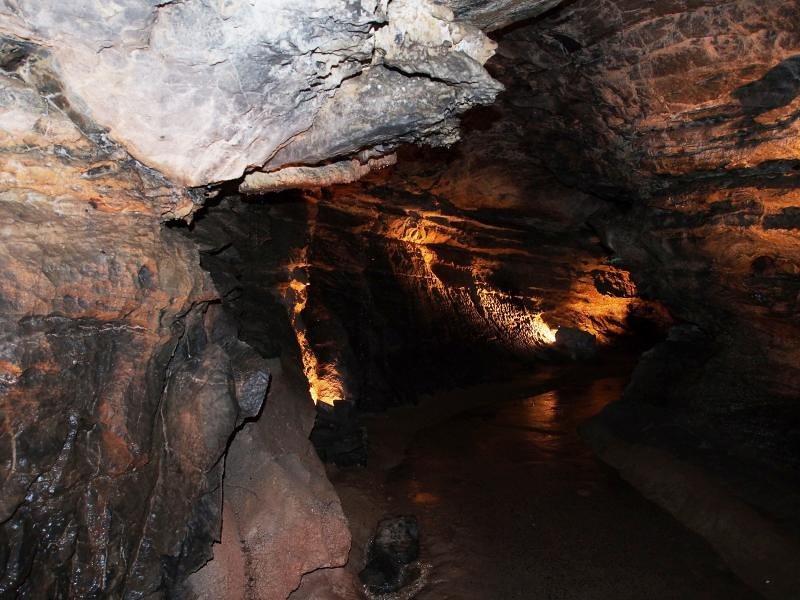
Physical exploration and survey of caves is often the only source of information on the structure of the vadose zone. During cave explorations, cavers observe and track airflow, which is an important indicator of possible cave continuation. This is especially important at constrictions or breakdowns, where it is not possible to see beyond the obstacle. For cave explorers, feeling air movement is like finding breadcrumbs leading to hidden passages. If you can feel air flowing past you in a tight squeeze, there’s probably open space somewhere ahead—even if you can’t see it yet. This breathing becomes a sixth sense for experienced cavers, guiding them through the underground maze when their eyes and hands fail them. Completely natural caves often have small open