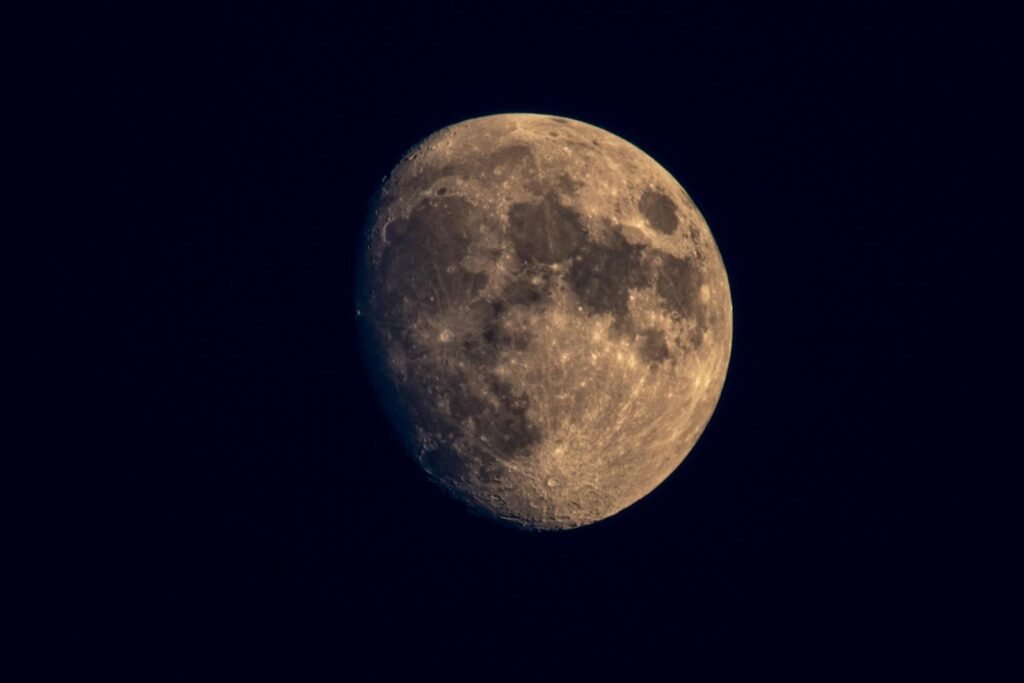

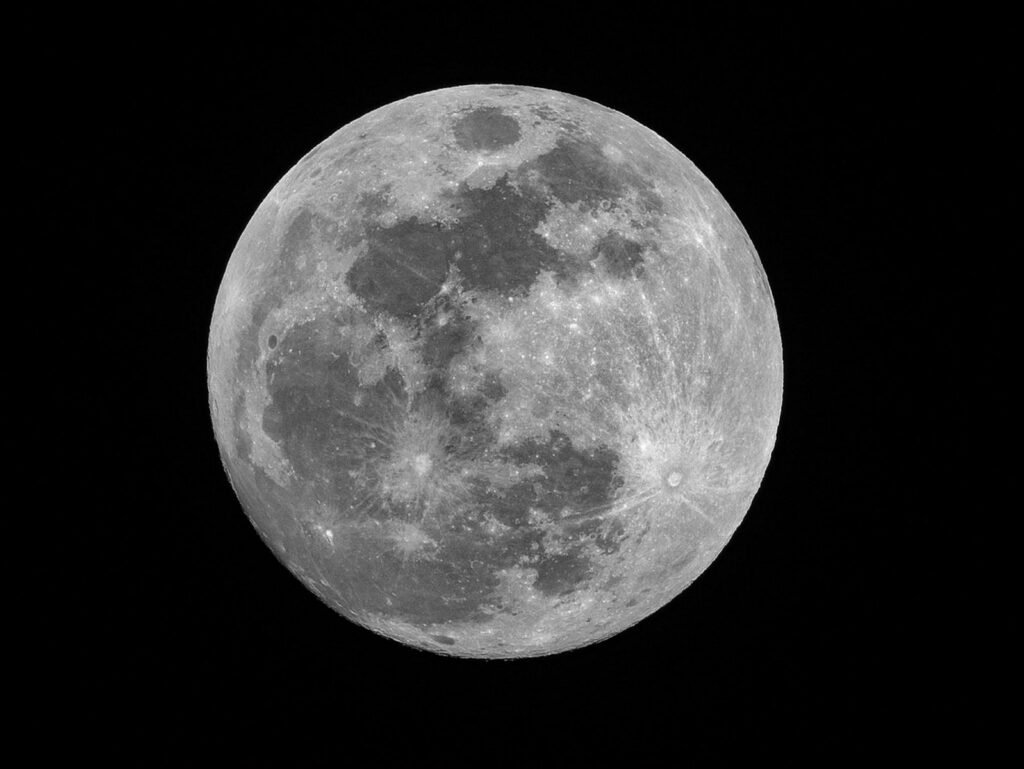
Imagine stepping out of your home tomorrow morning and finding that someone had dumped a collection of golf balls, boots, cameras, and human waste on your front yard. You’d probably be pretty upset, right? Now picture this scenario happening 238,855 miles away on the Moon, and suddenly it becomes one of humanity’s most fascinating and bizarre legacies. Over the course of six Apollo missions between 1969 and 1972, humans didn’t just visit our celestial neighbor – we basically turned it into the universe’s most exclusive junkyard.
When Golf Came to Another World
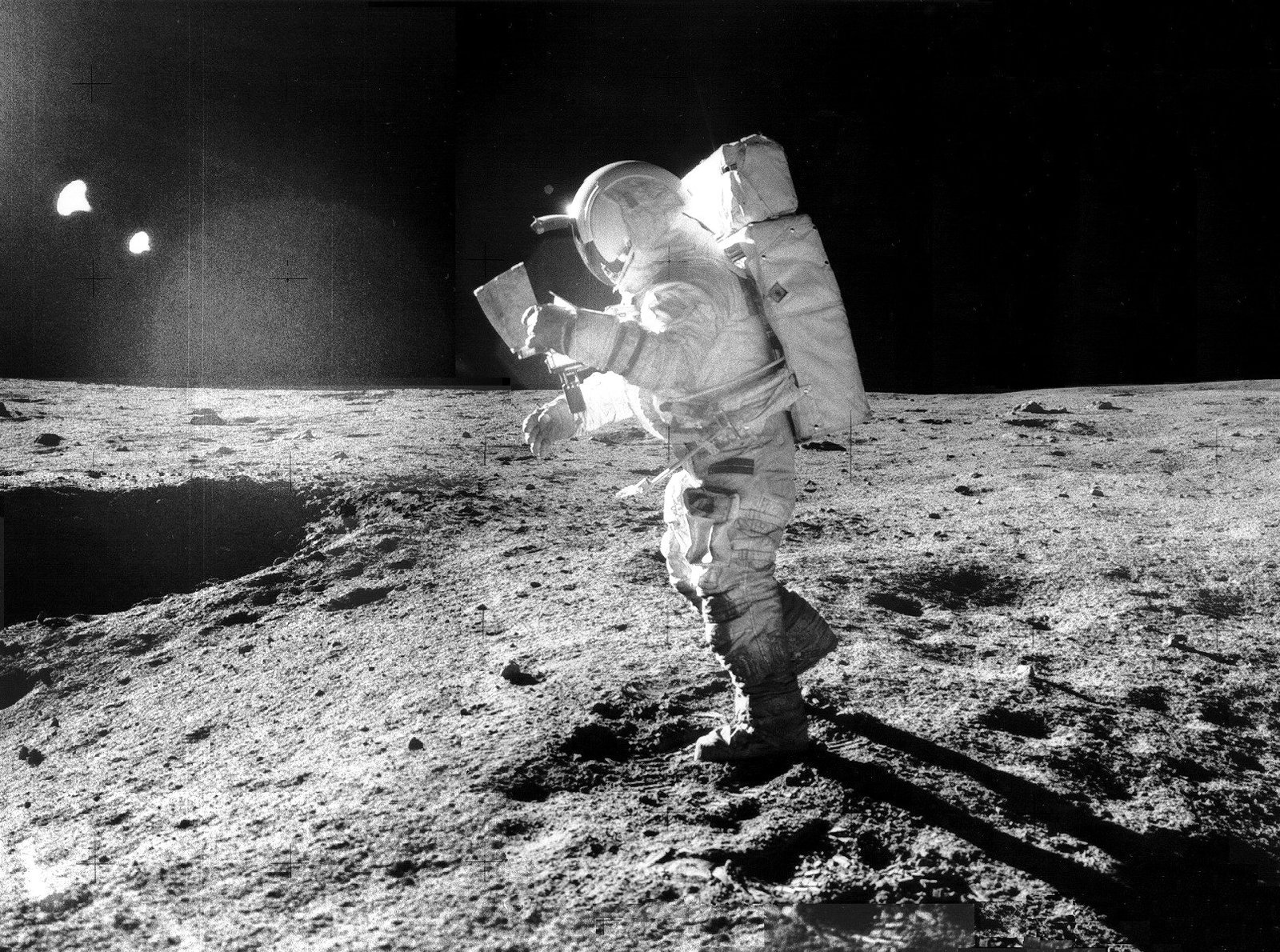
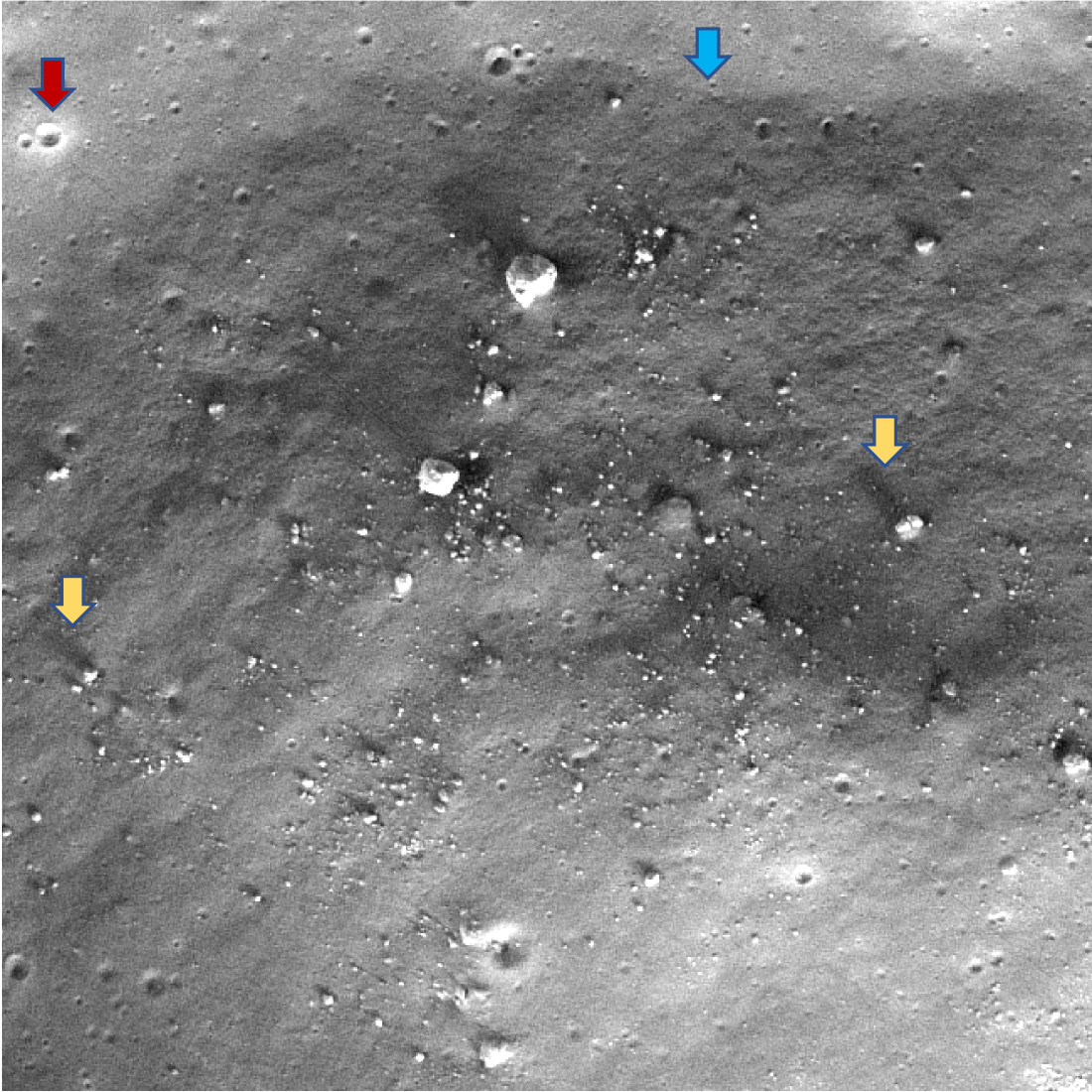
Alan Shepard’s golf shot on February 6, 1971, during Apollo 14 might be the most famous sports moment that occurred 240,000 miles from Earth. Using a makeshift six-iron attached to a sample collection tool, Shepard took several swings and claimed his second ball went “miles and miles and miles” in the low lunar gravity. Recent analysis by imaging specialists revealed the truth was far more humble – the first ball traveled only 24 yards, while the second managed just 40 yards. Even professional golfers today might struggle to defend Shepard’s performance, calling it “a terrible shot” despite the challenging circumstances. What makes this even more remarkable is that Shepard smuggled the club head and golf balls aboard in a sock, completely off NASA’s official inventory. Think of it like sneaking your favorite toy into a business meeting, except the meeting was on the Moon and cost taxpayers $25 billion. Under ideal conditions on the Moon, a professional golfer hitting at 191 mph could theoretically send a ball 2.76 miles – making Shepard’s 40-yard drive look even more modest.
The Ultimate Litter Problem
Humans have deposited over 187,400 kilograms (413,100 pounds) of material on the Moon’s surface. The six crewed Apollo missions alone left behind a massive trove of discarded items. NASA’s approach was brutally practical: “The thing of low value was replaced with the thing of high value,” as they prioritized bringing back lunar samples over creature comforts like armrests from the capsule. This weight management strategy allowed the Apollo missions to return approximately 850 pounds of Moon rocks and lunar soil to Earth. It’s like the ultimate game of “what would you take to a desert island,” except the island was the Moon and the stakes were literally astronomical. With no atmosphere and no wind on the Moon’s surface, these items have remained essentially frozen in time for over 50 years.
Boots Made for Walking (And Staying)

The iconic Moon boots that made those famous first steps were deliberately left behind for practical reasons, as astronauts needed to reduce weight for their fuel-limited return journey. The boots’ soles featured horizontal lines that are still visible in the footprints preserved in the lunar regolith. While most astronauts abandoned their footwear, Apollo 17’s Gene Cernan and Harrison Schmitt made the calculated decision to bring their boots back to Earth, understanding their historic weight versus physical weight trade-off, though they did leave their gloves behind. These bootprints will remain intact for millions of years, only eventually being buried under lunar soil displaced by meteorite impacts. Think of it as the Moon’s version of the Hollywood Walk of Fame, except instead of stars embedded in concrete, we have boot prints pressed into ancient lunar dust. With virtually no atmosphere and no wind, that same footprint from Buzz Aldrin’s famous photograph is probably still there, unchanged after more than half a century.
The Moon’s Most Expensive Garbage Bags

Perhaps the most unglamorous items left on the Moon are 96 bags filled with human waste – urine, feces, and vomit – that Apollo astronauts discarded across six missions because they had to lighten their spacecraft to make room for Moon rocks. The waste collection system was remarkably primitive: plastic bags taped to astronauts’ buttocks, which inevitably led to spills and floating incidents. Scientists today are actually eager to retrieve this material to study whether bacteria has survived in the lunar environment, making these discarded waste bags potential goldmines for biological research. As one researcher noted, human body residues are “rich in information about the diet of those astronauts in space and the effect on their bodies.” It’s probably the only time in history that human excrement became a subject of serious scientific interest and space archaeology. Living in cramped spacecraft with no shower or toilet facilities, astronauts were understandably quick to dispose of their personal waste once they reached the Moon’s surface.
Cameras That Captured History, Then Stayed Forever

Weight restrictions forced astronauts to abandon 12 of the 14 Hasselblad cameras they brought to the Moon, keeping only the precious photographic film that captured an average of 1,500 shots per mission. Among the abandoned equipment was the television camera that Neil Armstrong and Buzz Aldrin used to share their historic moment with more than half a billion humans watching from Earth. One particular camera that recorded the Apollo 11 landing and Armstrong’s “one small step” was mounted in Eagle’s window and later repositioned to film their work on the lunar surface. When the astronauts returned to their spacecraft, they left this camera behind, where it remains on the Moon today. These cameras essentially became the Moon’s first permanent photography studio, except they’ll never develop another roll of film. The weight management was so precise that astronauts even used scales to help weigh materials before deciding what to abandon.
Flags That Will Never Fly
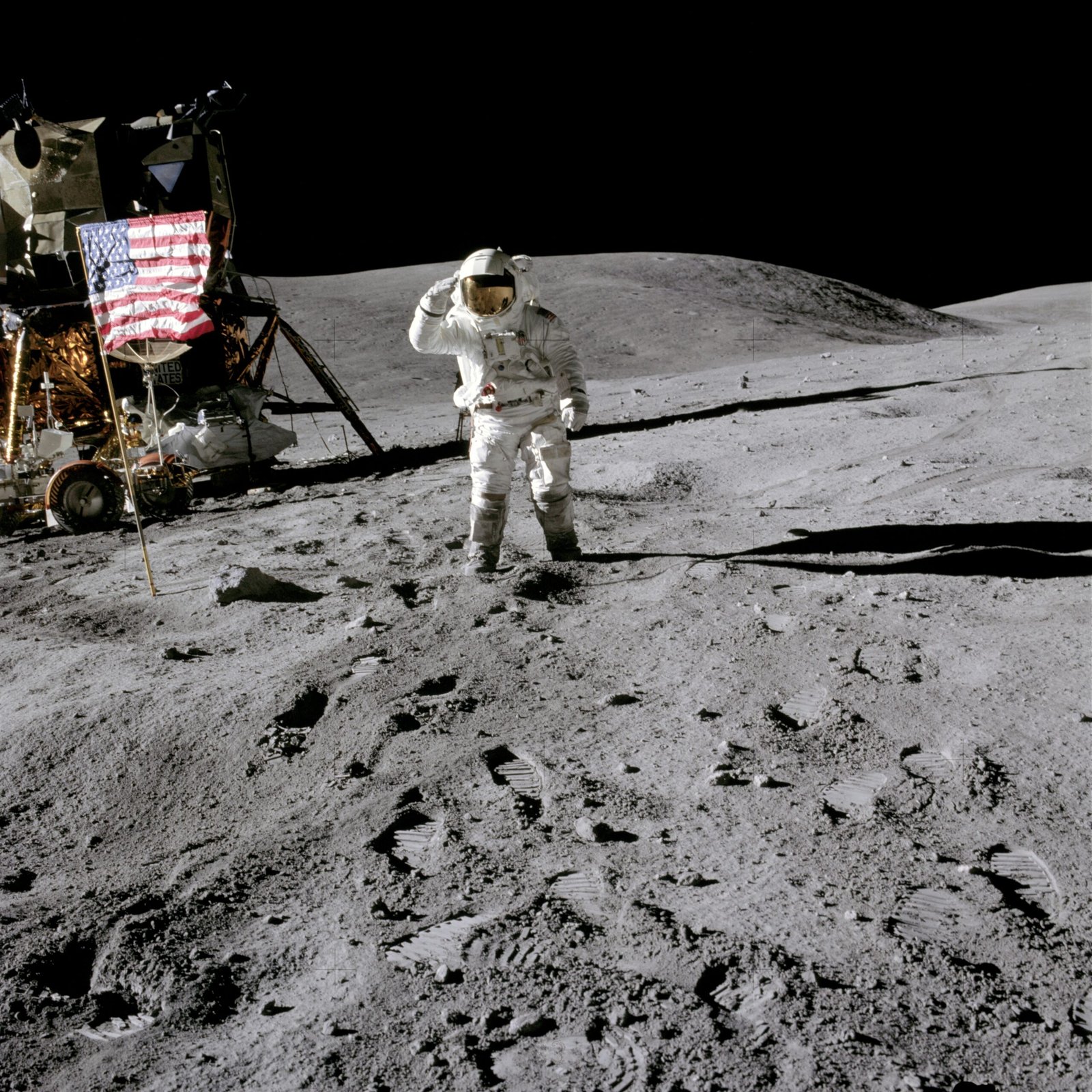
Six American flags were planted on the Moon’s surface during the Apollo program, making the United States the only country to have had astronauts physically place flags on the lunar surface. Because there’s no wind on the Moon, the flags were constructed with extendable metal poles so they could be seen when unfurled, rather than flying naturally. After more than 50 years of exposure to intense ultraviolet radiation, these flags are likely completely bleached white by now. The first flag planted during Apollo 11 was actually blown over by rocket exhaust when the astronauts departed, but each subsequent mission continued the tradition. The Apollo 17 flag had an interesting history – it had already been to the Moon on Apollo 11, hung in Mission Control, and was then returned to the lunar surface on the final mission. It’s like a cosmic version of musical chairs, except with national symbols and interplanetary travel. NASA also reports that a U.S. Marine Corps flag was left on the Moon during Apollo 15, and China became the second country to place a flag on the Moon in 2020 with their uncrewed Chang’e 5 probe.
Scientific Instruments Still Working After Decades
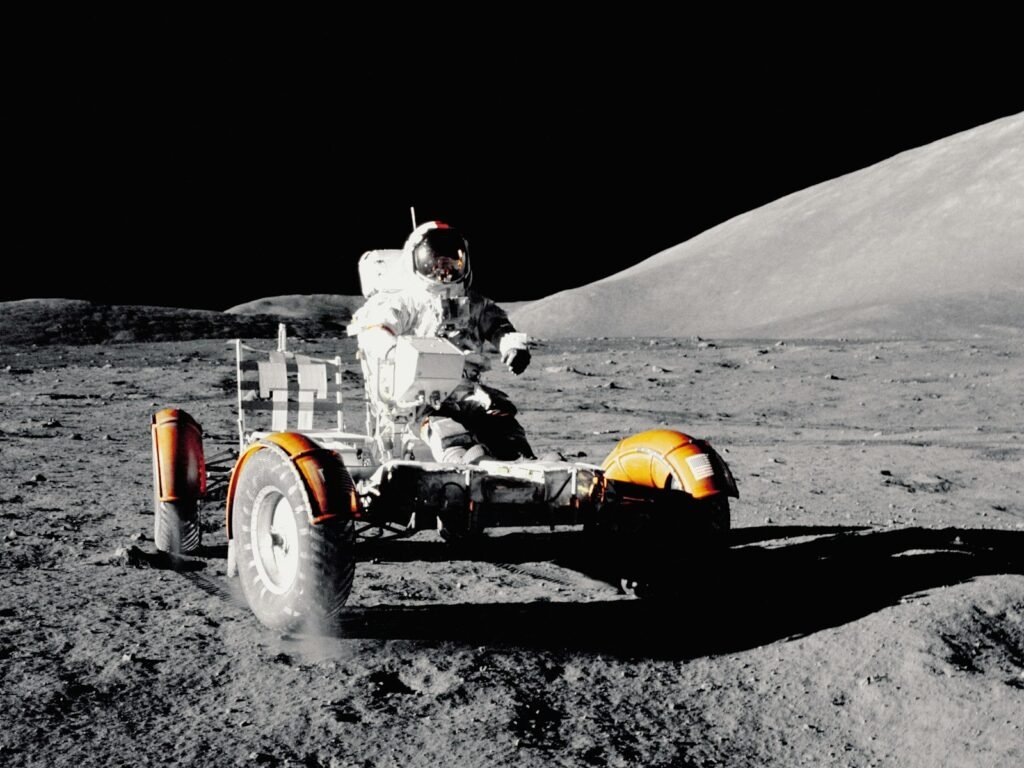
Among the most valuable items left behind are retroreflectors for Lunar Laser Ranging experiments from Apollo 11, 14, and 15, which remain the only Apollo-era artificial objects still in active use on the Moon. Each mission also left behind various scientific experiments on the surface, including magnetometers, seismic experiments, and suprathermal ion detectors that stayed behind while their collected data returned to Earth. Apollo astronauts capitalized on their Moon visits to test scientific theories, such as when Apollo 15’s David Scott and James Irwin tested Galileo’s centuries-old proposition about gravity. Scott’s famous demonstration involved dropping a feather and hammer simultaneously from 1.6 meters high, proving they landed at exactly the same time due to the Moon’s lack of atmosphere, confirming Galileo’s theory that gravity acts equally on all objects regardless of mass. These experiments essentially turned the Moon into humanity’s largest physics laboratory. The retroreflectors have been so successful that scientists even rediscovered the Soviet Union’s Lunokhod 1 retroreflector in 2010 after it was lost for nearly 40 years.
Memorial Objects and Tributes
The Moon serves as a memorial site for space exploration, holding items like the silver astronaut pin left by Alan Bean in honor of Clifton C. Williams, the Bible left by David Scott, and the Fallen Astronaut statuette placed by Apollo 15. The Fallen Astronaut, a 3-inch tall aluminum statuette designed by Belgian artist Paul van Hoeydonk, has been lying in lunar dust for over 50 years as a tribute to the 14 astronauts who gave their lives for space exploration. Armstrong and Aldrin honored the crew of Apollo 1 by placing a mission patch on the lunar surface in tribute to Gus Grissom, Edward White, and Roger Chaffee, who died in a command module fire in 1967. The memorial spirit extended internationally when Frank Borman met with Soviet officials during the space race to arrange for American astronauts to bring objects to the Moon recognizing cosmonauts who had died. Apollo 12’s Alan Bean left a golden olive branch to commemorate Clifton C. Williams, who was supposed to be the lunar module pilot but died in a plane crash. It’s perhaps the most exclusive memorial site in the solar system, accessible only to a handful of humans and visible to billions.
Personal Mementos From Home

Apollo 16 astronaut Charles Duke left behind a plastic-encased family photograph, promising his wife and children he would take them with him on his journey to the Moon. Duke, who was the youngest person to walk on the Moon at age 36, left this personal memento during the mission’s third and final surface excursion. Despite being the youngest lunar explorer, the photograph has likely been completely bleached white by solar radiation after more than 50 years on the surface. Perhaps even more surprising, at least 100 two-dollar bills are reportedly on the Moon’s surface, left behind by the Apollo 15 crew of David Scott, Alfred Worden, and James Irwin. Apollo 11 carried a silicon disk about the size of a half-dollar coin with goodwill messages from 74 countries, along with a gold replica of an olive branch symbolizing peace. These personal touches transformed what could have been purely scientific missions into deeply human endeavors. Duke might just be the ultimate space dad – after all, he literally took his kids to the Moon.
The Moon’s Art Collection

The Moon may house humanity’s most remote art gallery in the form of the “Moon Museum,” a ceramic chip featuring tiny artworks from six artists including Claes Oldenburg, David Novros, and Andy Warhol, allegedly attached to Apollo 12’s lunar module leg. Official commemorative art includes items like the silicon disk inscribed with comments from leaders of 74 countries and the commemorative plaque honoring the Apollo 11 landing. The Apollo 11 descent stage bears a plaque reading “Here men from the planet Earth first set foot upon the Moon. July 1969, A.D.” A small gold olive branch, described as “a millennia-old emblem of peace,” was also placed on the lunar surface by Apollo 11. These artistic elements represent humanity’s desire to leave something beautiful and meaningful, not just functional, on another world. It’s as if we couldn’t resist the urge to redecorate our new cosmic real estate. The uncertainty around some pieces, like the Moon Museum, adds an element of mystery – imagine if art historians of the future have to plan Moon expeditions to verify gallery collections.
Tools of Exploration Left Behind
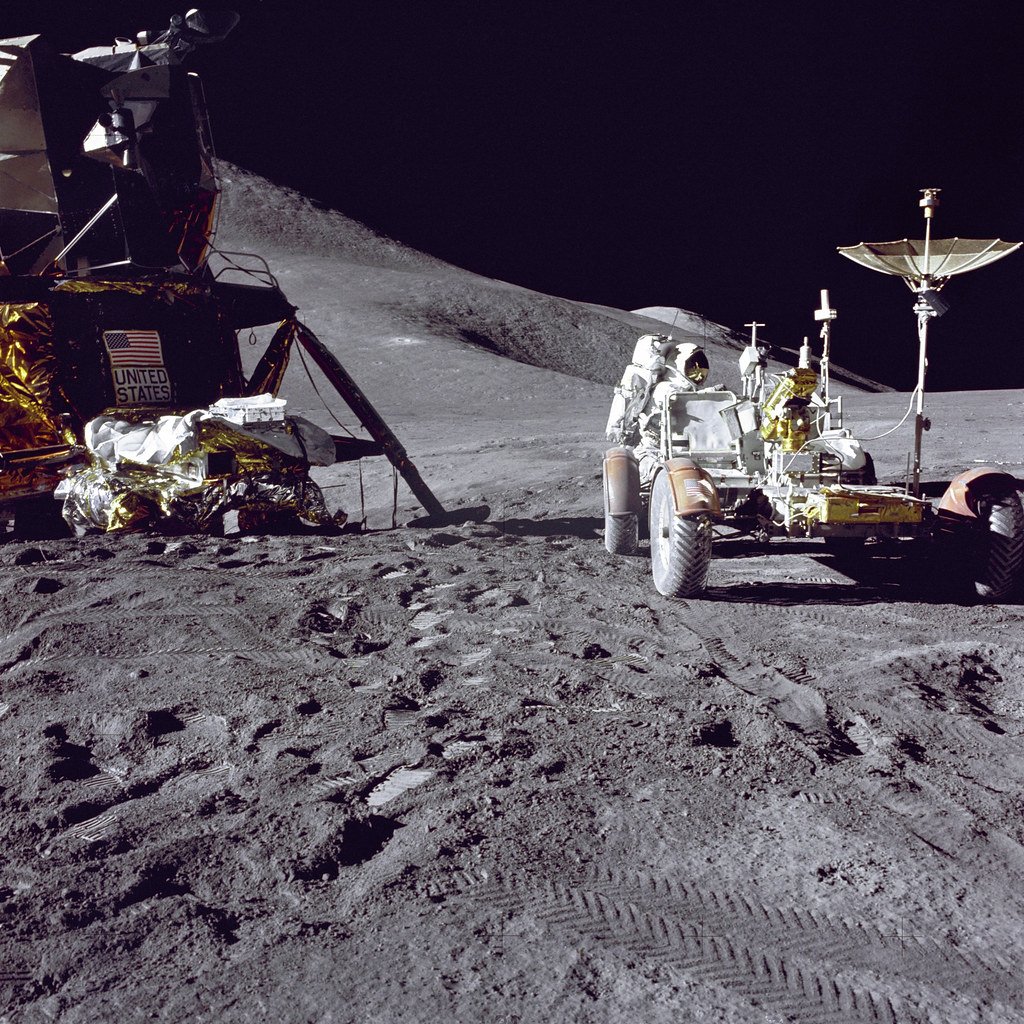
Sampling tools like scoops and tongs were abandoned after serving their purpose, essentially becoming the Moon’s first archaeological implements. Later missions left behind substantial equipment including battery-powered, four-wheeled rovers roughly the size of Volkswagen Beetles, along with various tools from tongs to rakes. Apollo 12 left behind some unusual items including earplugs (unique to this mission) and lunar module utility towels that came in red and blue colors. Color charts were also abandoned – reference tools that astronauts used in photography, similar to holding up white paper for color balance when processing photos later. NASA engineers speculate that future astronauts might potentially reuse some equipment like rover batteries or oxygen scrubbers from Apollo backpacks, though decades of lunar dust exposure could be problematic. It’s like leaving a fully stocked workshop on another planet, except the workshop has been gathering cosmic dust for half a century. The abandoned items included everything from armrests to essential mission equipment, showing that “comfort is not the highest priority” when lunar samples need to be brought home safely.
Vehicles That Will Never Drive Again

More than 70 spacecraft vehicles remain on the Moon simply because they’re too heavy and not worth the cost to bring back, accounting for most of the mass left on the lunar surface. Five S-IVB third stages of Saturn V rockets crashed into the Moon and are the heaviest human-made objects on the lunar surface. Each Apollo landing site contains heavy descent stages of lunar modules that served as launchpads for astronauts’ return journeys, along with various science experiments and memorabilia. The ascent stages of Apollo 12, 14, 15, and 17 were deliberately crashed onto the Moon as planned. Some ascent stages, like those from Apollo 11 and 16, crashed at unknown locations after their orbits decayed. These abandoned vehicles include lunar roving vehicles (the famous “moon buggies”), flags that are now bleached from UV exposure, scientific equipment including laser reflectors, and various forms of trash. Imagine if every time you moved houses, you just left your car in the driveway – except these “driveways” are on the Moon and the “cars” cost millions of dollars.
The Mystery of Missing Inventories
Surprisingly, NASA doesn’t have a complete inventory of what’s on the Moon, with one expert noting “You would think that NASA has a complete inventory — they send up things, they come back and they count them all and everybody knows what’s there and what’s not there — and that’s not necessarily true.”