In a feat that sounds like it was plucked straight from the pages of a science fiction book, a group of Italian physicists have done what was previously considered impossible: they’ve frozen light into a supersolid form. Reported in Nature on March 5, this find compels us to redo our definition of matter itself.
A supersolid is a contradictory phase in which a substance acts as a solid and a superfluid with a fixed structure yet flowing without resistance. So far, this has been seen only in ultra-cold quantum gases. But in a shocking turn of events, scientists at CNR Nanotec and the University of Pavia have shown that light itself can undergo this strange state.
“This is not just a new state of matter, it’s a state that shouldn’t exist under normal physics,” says Dr. Antonio Gianfrate, lead author of the study. “Yet here it is, defying everything we thought we knew.”
Absolute Zero and the Quantum Playground: Where Light Bends the Rules

The Frigid Realm of Quantum Weirdness
To make light become supersolid, researchers needed to head into one of the most harsh environments in physics: temperatures approaching absolute zero (-273.15°C / -459.67°F). At this temperature, atoms shed almost all of their heat energy, and quantum mechanics reigns supreme.
- Bose-Einstein Condensate (BEC): These particles at these temperatures fuse into a single quantum, moving as one single wave.
- Photons in Lockstep: The researchers employed a semiconductor nanostructure to confine photons (light particles) and cool them into a BEC-like state.
- Breaking Point: When too many photons were compressed together, they formed spontaneously into a crystalline structure while maintaining the flowing consistency of a liquid.
“It’s like watching ice form in a river, except the river never stops moving,” explains Dr. Davide Nigro, co-author of the study.
The Birth of a Supersolid: How Light Became Something Else Entirely
A Dance of Particles and Waves
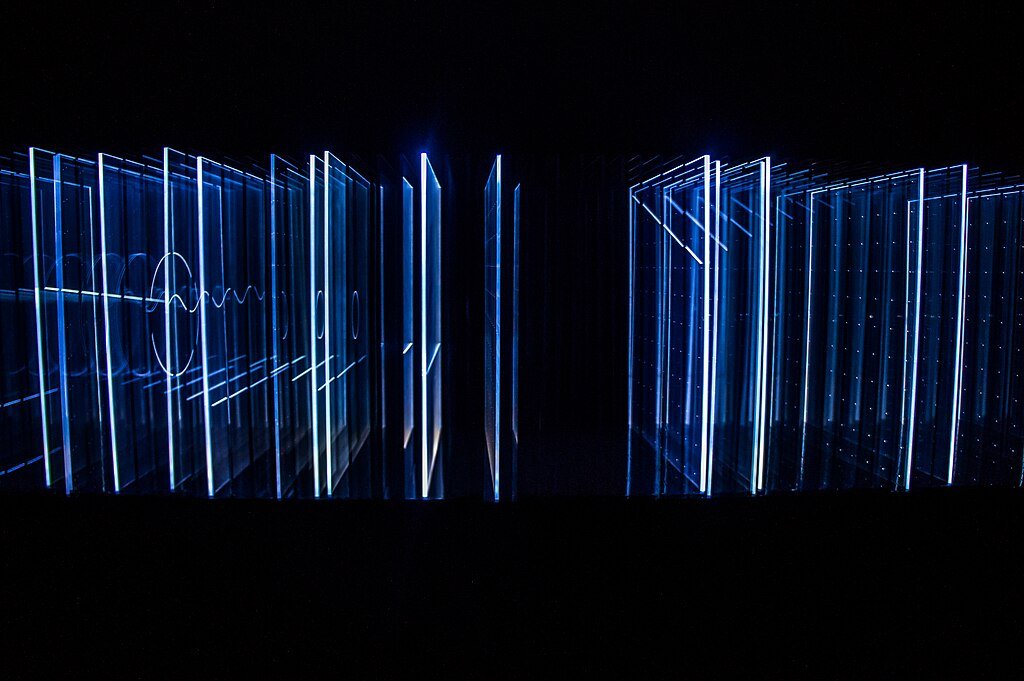
The secret to this breakthrough was in controlling photonic interactions within a semiconductor chip. Here is how it went down:
- Trapping Light: The group utilized nanoscale quantum wells that confine the photons to compel the light into a controllable environment.
- Cooling to Quantum Submission: By cooling the system to close to absolute zero, photons lost their individuality and coalesced into a macroscopic quantum state.
- The Supersolid Emerges: At a critical density, the photons organized themselves into a lattice structure, forming a crystalline light structure that flowed paradoxically without resistance.
“We didn’t just observe a supersolid, we watched light decide to become one,” says Gianfrate.
Why This Discovery Changes Everything
1. A New Frontier in Quantum Materials
Supersolid light has the potential to transform quantum computing and communication. While electrons dissipate easily, photons don’t, so frictionless light circuits can be designed for ultrahigh-efficiency data transfer.
2. Testing the Limits of Physics
Einstein’s theories did not foretell light would crystallize. It makes physicists rethink:
- Can other forms of energy enter supersolid states?
- Does this imply new, undiscovered phases of matter?
3. The Holy Grail of Energy Transmission
If light can flow without resistance in a solid state, could we one day develop lossless power grids or light-based superconductors?
“We’re standing at the edge of a new era in physics,” says Dr. Nigro. “The implications are staggering.”
The Future: Where Do We Go From Here?
Next Steps for Supersolid Light Research
- Stabilizing the State: The current supersolid only lasts under extreme lab conditions. Can it be maintained at higher temperatures?
- Harnessing for Technology: Could this lead to quantum memory storage or new forms of lasers?
- Theoretical Ripples: Will this discovery force revisions to quantum field theory?
“Every time we think we understand light, it surprises us,” reflects Gianfrate. “This is just the beginning.”
Conclusion: A Glimpse Into a Quantum Future
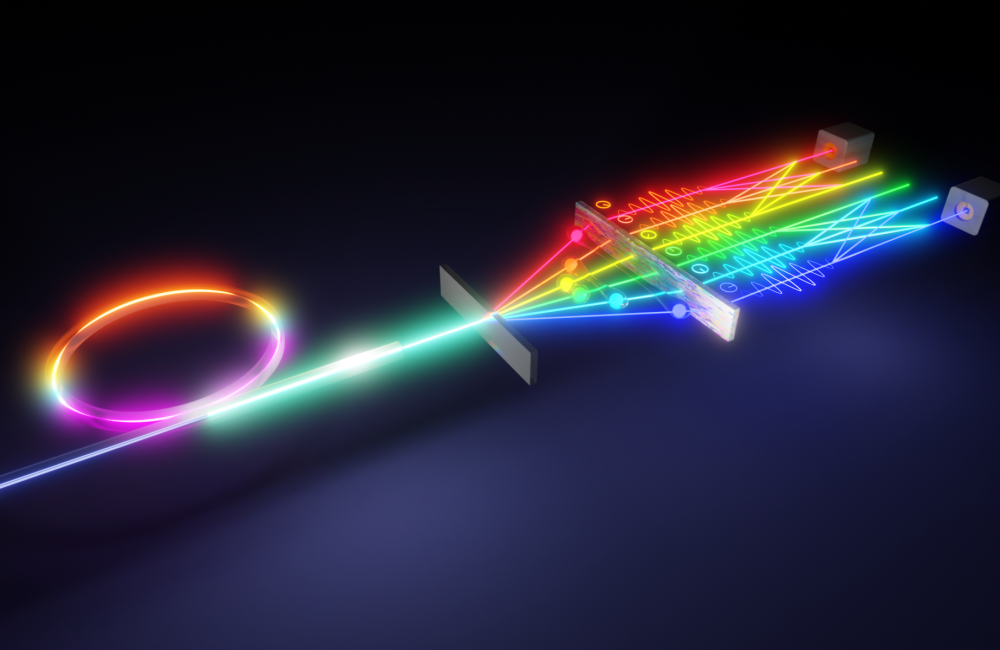
The development of a light supersolid isn’t another scientific achievement, it’s a peek into an odd and interesting universe in which the boundaries between matter and energy begin to blur. The more scientists venture into this unknown territory, the certain thing is that the laws we believed held the universe in motion have just become a lot more interesting.
Sources & Further Reading:
Jan loves Wildlife and Animals and is one of the founders of Animals Around The Globe. He holds an MSc in Finance & Economics and is a passionate PADI Open Water Diver. His favorite animals are Mountain Gorillas, Tigers, and Great White Sharks. He lived in South Africa, Germany, the USA, Ireland, Italy, China, and Australia. Before AATG, Jan worked for Google, Axel Springer, BMW and others.