Dinosaurs have long captivated our imagination, with most of us picturing gigantic, scaly beasts roaming ancient lands. However, recent discoveries have uncovered a fascinating truth: many dinosaurs were as much like birds as they were terrifying reptiles. By examining these feathered dinosaurs, we gain incredible insight into the evolutionary bridge between two of Earth’s most iconic groups of creatures. Here, we explore ten remarkable feathered dinosaurs that reveal how “terrible lizards” were also nature’s proto-birds.
Archaeopteryx: The Iconic Proto-Bird

Often celebrated as the original link between dinosaurs and birds, Archaeopteryx lived approximately 150 million years ago during the Late Jurassic period. This creature had a blend of avian and reptilian features, sporting wings with flight feathers and a long, bony tail. Despite its size—similar to a modern raven—Archaeopteryx possessed teeth and claws, underscoring its status as a genuine transitional species.
Microraptor: The Four-Winged Wonder
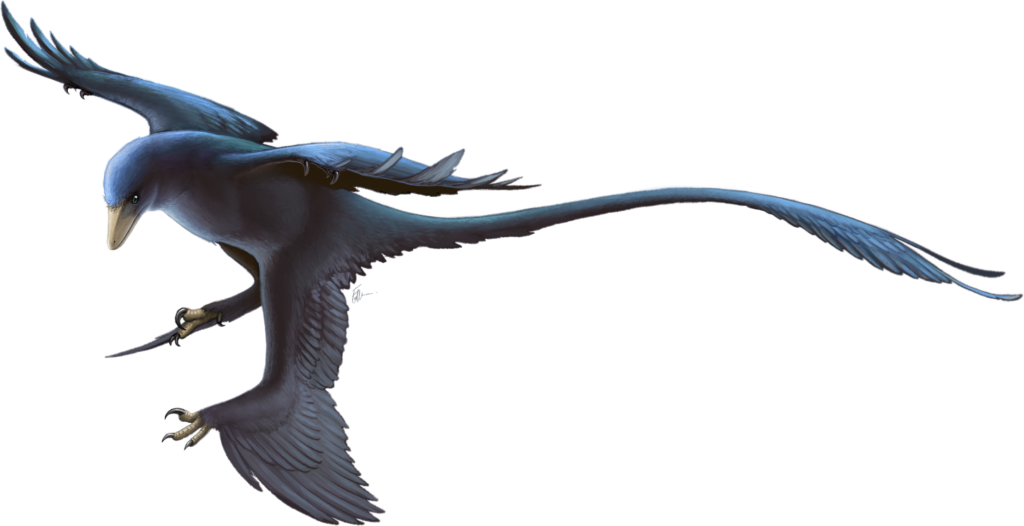
Microraptor, a small, crow-sized dinosaur, fascinates scientists and enthusiasts with its unusual anatomy: it had flight feathers on both its front and hind limbs, earning it the title of the “four-winged dinosaur.” Existing around 120 million years ago, Microraptor highlights the diverse experimentation with flight in the evolutionary timeline, resembling a flying squirrel in its gliding capabilities.
Velociraptor: Beyond “Jurassic Park”
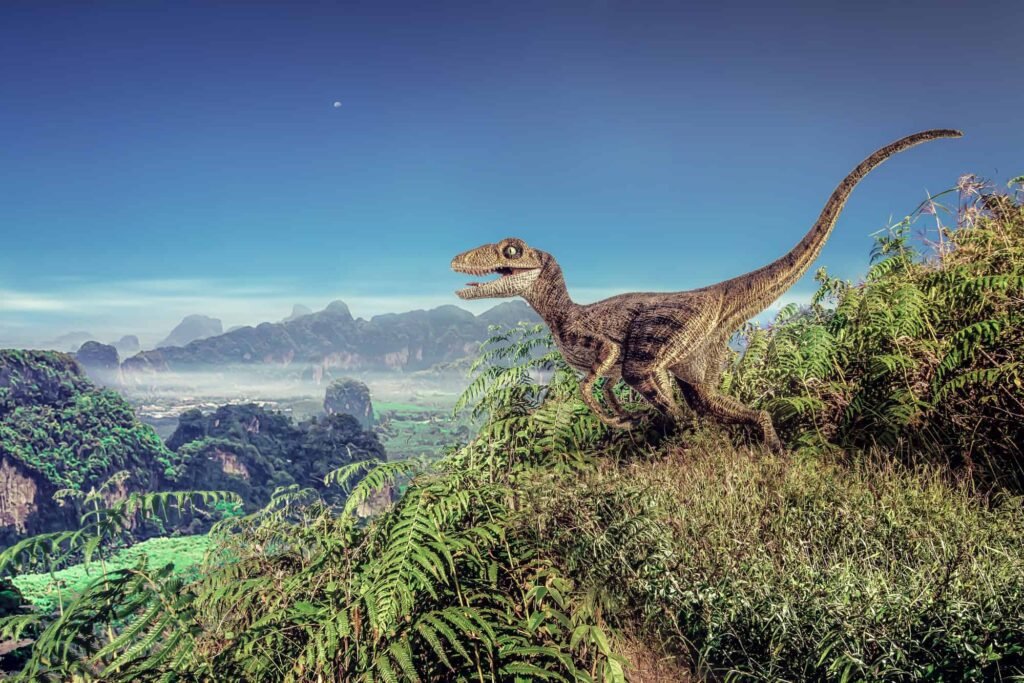
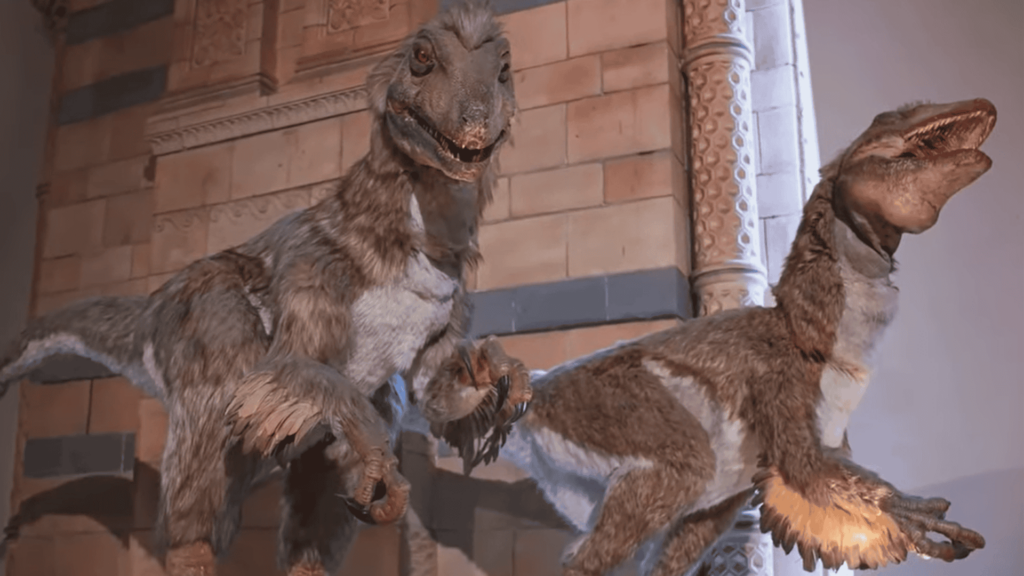
Made infamous by the “Jurassic Park” series, Velociraptor was, in reality, a feathered predator about the size of a turkey. Fossils discovered in Mongolia reveal quill knobs on their arms, indicating the presence of feathers. These agile hunters, dating back about 75 million years, challenge the scaly portrayal seen in popular culture.
Sinosauropteryx: The Colorful Pioneer

Sinosauropteryx was the first non-avian dinosaur discovered to have evidence of feathers, marking a pivotal moment in paleontology. Living around 125 million years ago, this dinosaur was adorned with primitive feathers. Studies of fossilized pigments suggest Sinosauropteryx sported a flamboyant banded tail, making it the first dinosaur to be color-mapped.
Yutyrannus: The Feathered Giant
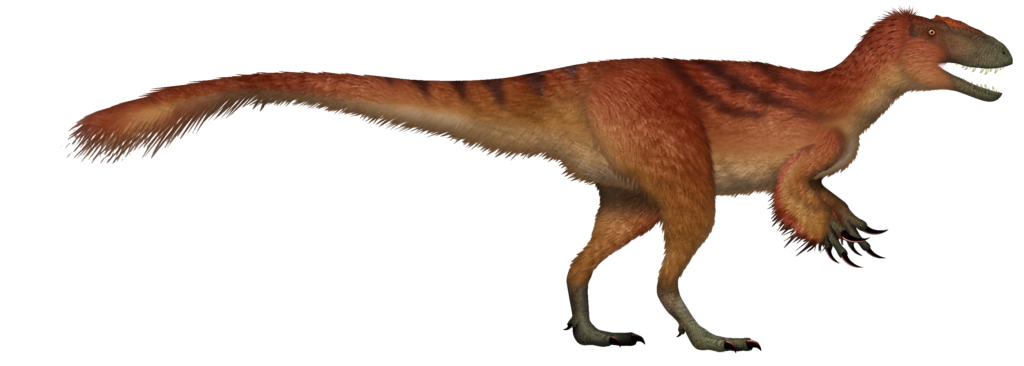
Yutyrannus brings a new twist to the image of colossal carnivorous dinosaurs. This massive tyrannosaur, living around 125 million years ago, was covered in a downy layer of feathers, providing insulation in the cooler climate. Standing about 30 feet long, Yutyrannus proves that even the mightiest dinosaurs could don feathers.
Anchiornis: The Colorful Evolutionary Puzzle

Anchiornis, roughly chicken-sized, thrived approximately 160 million years ago. Its well-preserved fossils reveal not only feathers but even pigmentation patterns. With a speckled black-and-white body and striking red crown, Anchiornis offers an extraordinary glimpse into the colors that adorned some feathered dinosaurs and their impact on mating and camouflage.
Caudipteryx: The Ostrich-Mimic
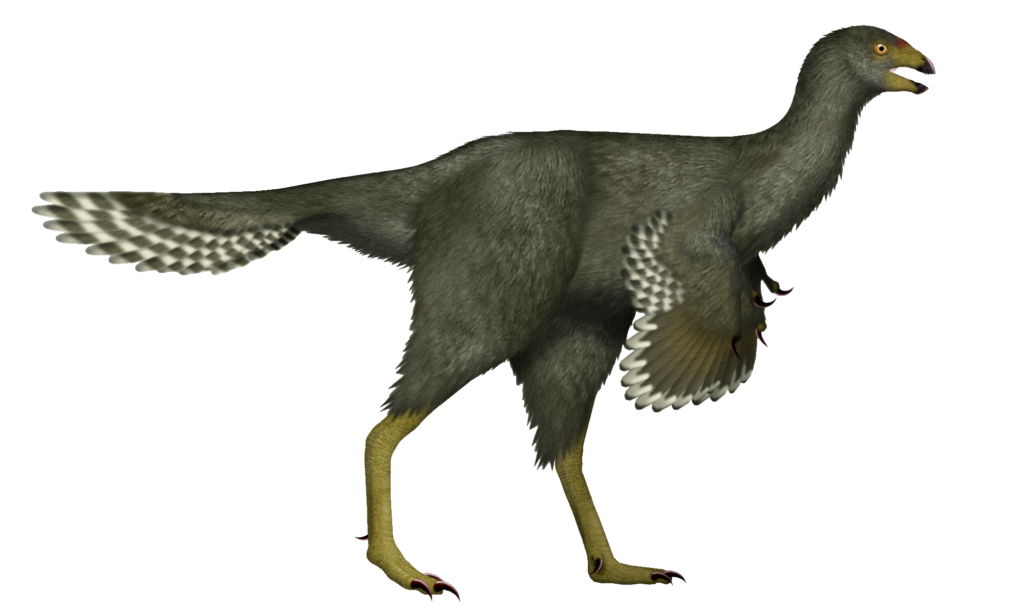
Resembling a modern-day ostrich with its toothless beak and long legs, Caudipteryx lived around 125 million years ago. This peacock-sized, flightless dinosaur suggests that feathers initially served functions beyond flight, likely including temperature regulation and display. Its rediscovery has informed and refined our understanding of dinosaurian lifestyles and behaviors.
Epidexipteryx: The Display Specialist
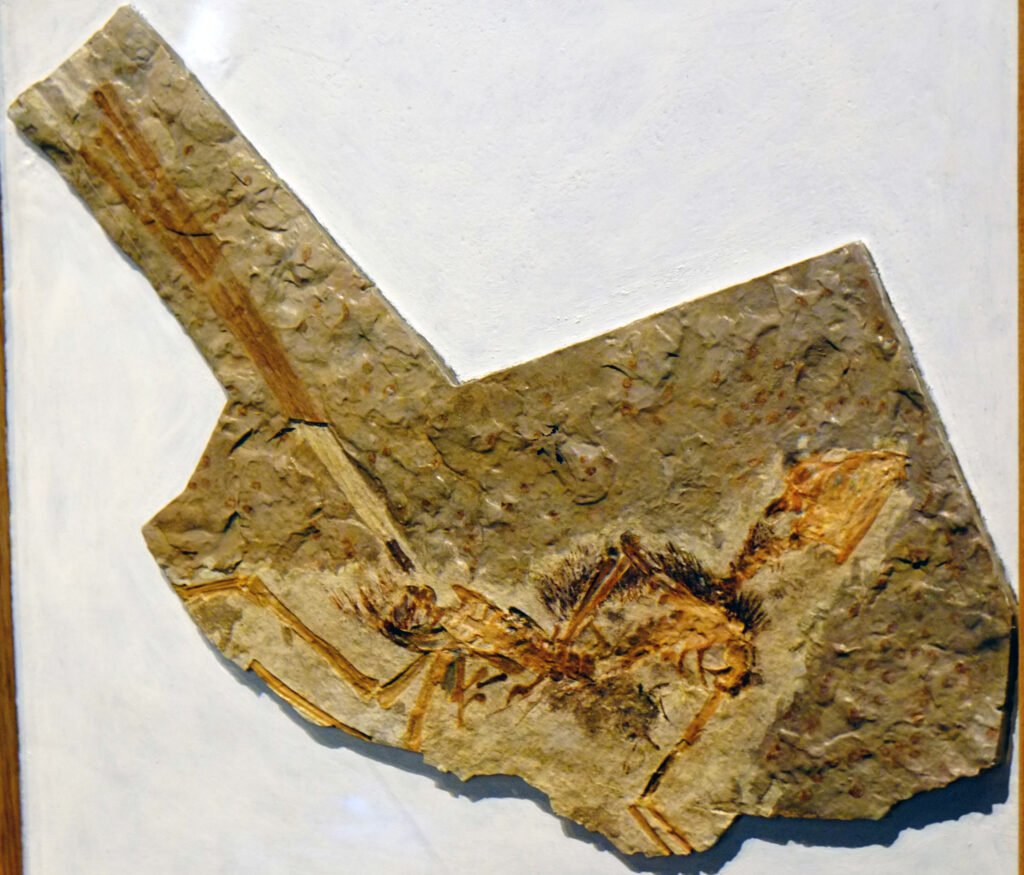
Epidexipteryx, a small theropod from the middle Jurassic period, possessed unique elongated tail feathers that resembled modern birds’ ornamental plumes but were too delicate for flight. This suggests that such features might have arisen initially for visual signaling or mating dances, laying groundwork for future avian evolution.
Sinornithosaurus: The Venomous Feathers
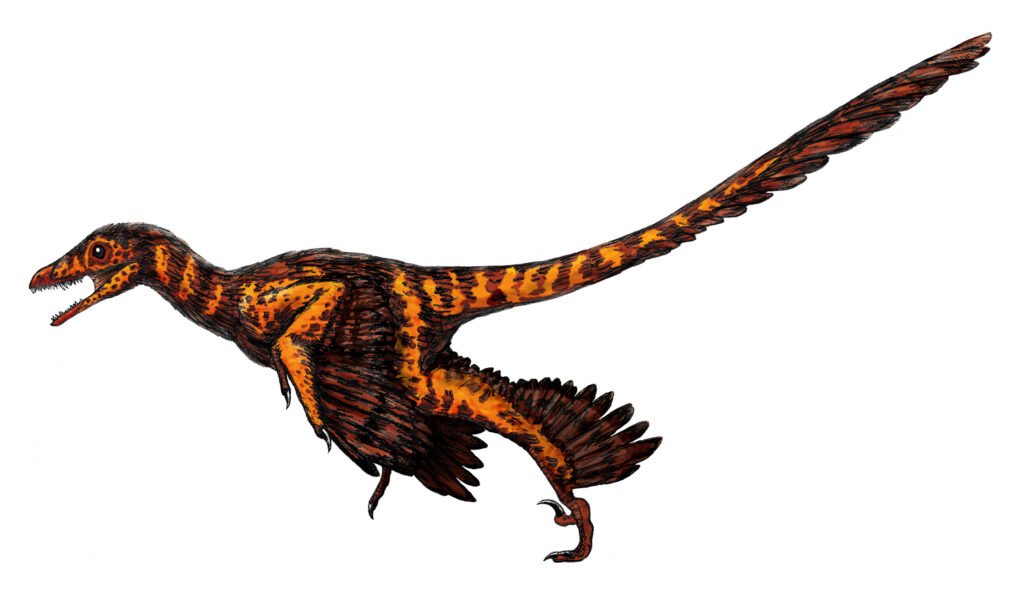
Sinornithosaurus, a feathered dinosaur from the Early Cretaceous, highlights the diverse adaptations seen within these creatures. With evidence pointing to grooves on its teeth for venom delivery, this turkey-sized predator might have used its feathers for camouflage and temperature control, showcasing a distinct blend of avian and reptilian traits.
Feathered Dromaeosaurs: Nature’s Experiment
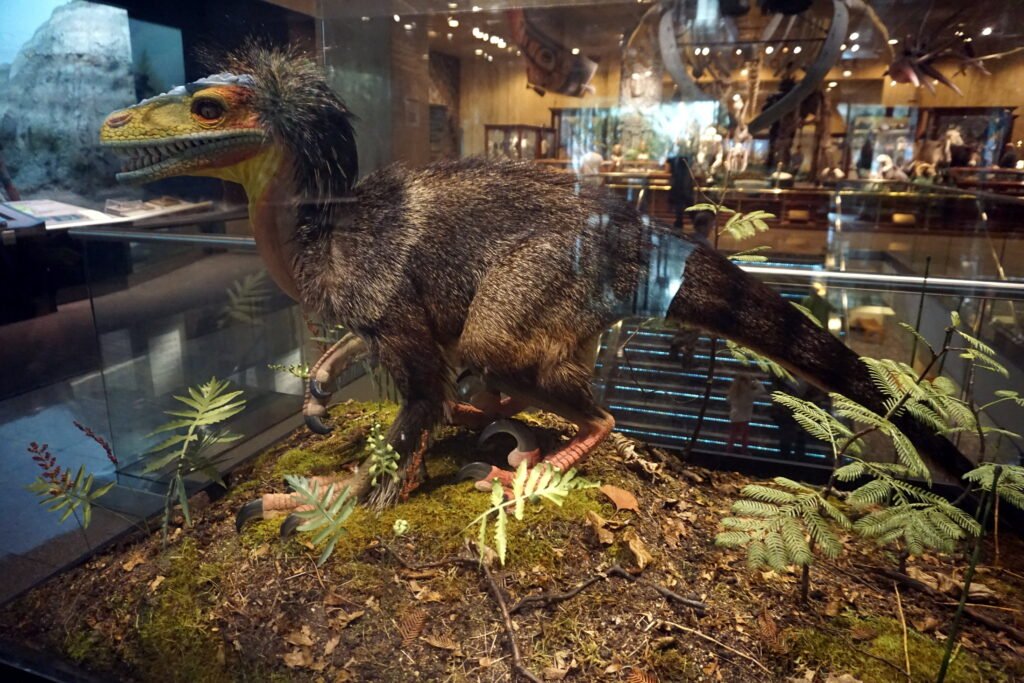
Dromaeosaurs, a family of feathered theropods that includes Velociraptor and its relatives, display an array of feather types and configurations. These predators, which roamed from the Jurassic to the Cretaceous periods, underscore the experimental nature of feathers, where different configurations potentially fulfilled roles in flight, thermoregulation, and display.
Conclusion
These ten feathered dinosaurs remind us that evolution is a dynamic, intricate dance of adaptation and survival. From the vibrant plumes of Anchiornis to the imposing feathers of Yutyrannus, these fascinating creatures paint a vivid picture of how dinosaurs were far more complex than initially believed. The study of feathered dinosaurs not only sheds light on the evolutionary journey from reptiles to birds but also enriches our understanding of the natural world’s ever-changing tapestry. As we uncover more about these intriguing creatures, the boundary between “terrible lizards” and the graceful birds of today continues to blur, revealing a rich, intertwined history.