

You’ve probably wondered what it’s like to experience the world through your dog’s senses. While we share our lives with these amazing creatures, their sensory world is incredibly different from ours. Recent scientific research has uncovered some mind-blowing facts about how dogs perceive reality that will completely change how you think about your furry companion.
Their Vision Isn’t Black and White (But It’s Not Like Ours Either)
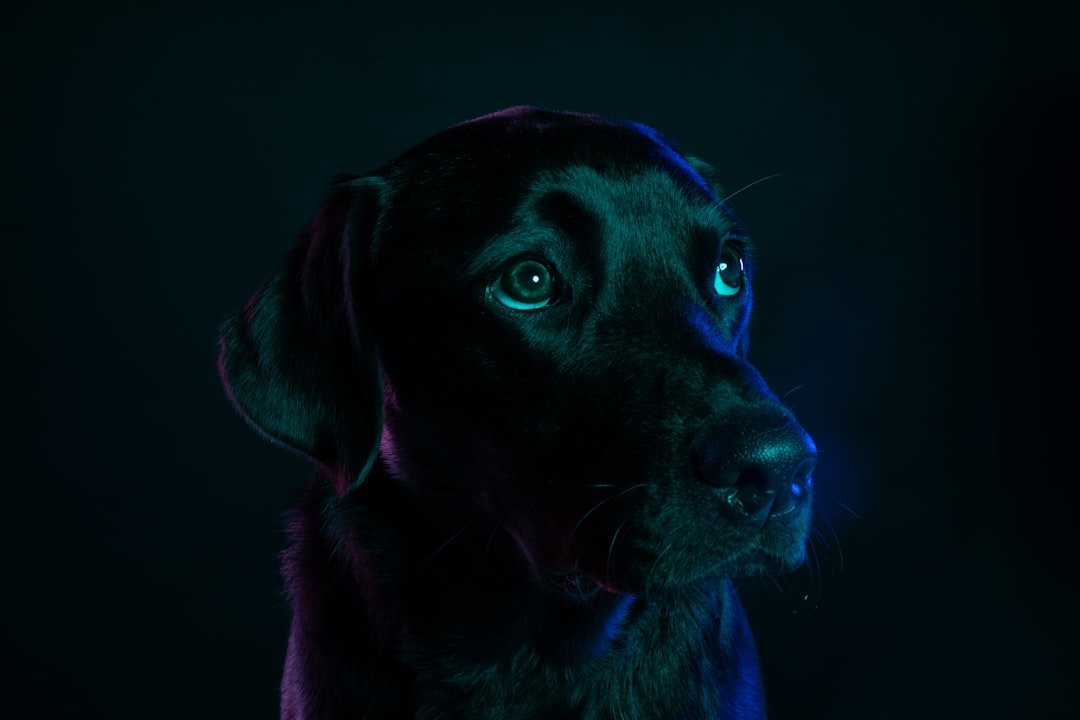
For decades, people believed dogs lived in a colorless world, but that’s completely wrong. Scientists once thought dogs saw only in black and white, but this myth was finally debunked in 1989 when researchers discovered that canines could see blues and yellows but not reds and greens. Dogs possess two types of color-sensing receptors, called cones, in their retinas, making them similar to most mammals and unlike humans, who have three cones.
Think of your dog’s world as similar to someone with red-green colorblindness. Dogs are good at distinguishing between variations of blues and yellows, but they can’t see red and green well. Dogs see the world similarly to humans with red-green color blindness. That bright red ball you threw might look brownish-gray to your pup, while a bright blue toy will really pop in their vision.
They Have Terrible Eyesight (But Amazing Night Vision)

Dogs have roughly 20/75 vision in well-lit conditions, meaning they have to be 20 feet away from something to see it as well as a human who is 50 feet away from that same object. Your dog is basically walking around nearsighted most of the time! However, their vision truly shines when the sun goes down.
For the purpose of hunting in the dark, canine eyes have a larger lens and corneal surface and a reflective membrane, known as a tapetum, that enhances night vision. They also have more rods, which improves low-light vision, in the retina. Cats can see light that is about six times dimmer than the dimmest light that humans can see, and when researchers tried to determine the lowest levels of light dogs could detect, they had to give up because it was so far below what any of the human scientists could measure.
Their Sense of Smell is Beyond Superhuman

If you think you understand how good a dog’s nose is, think again. With about 220 million scent receptors – humans only have 5 million – dogs have smell receptors 10,000 times more accurate than humans’, which means their nose is powerful enough to detect substances at concentrations of one part per trillion – a single drop of liquid in 20 Olympic-size swimming pools!
The canine OR repertoire is composed of 1,094 genes, approximately three times more than a human. This large genetic repertoire is believed to be related to the macrosmia evident in canines, producing an expansive array of ORs that permit the detection of broad ranges of odorant. Whereas in humans, 5% of the brain is dedicated to odors, in dogs this figure is 33%. It’s like they’re living in a completely different universe of scent information.
They Can Smell Your Emotions (And Medical Conditions)

Here’s where things get really wild: dogs aren’t just smelling what you had for lunch. Dogs’ ability to smell illnesses has been well documented, and they can detect metabolic changes in our breath and through our skin. In a 2006 study, five dogs were trained to detect cancer based on breath samples and were able to detect breast cancer with 88 percent accuracy, and lung cancer with 99 percent accuracy.
A negative person who is emotionally unpredictable has a unique chemosignal that dogs can detect. If those scents predict explosive or dangerous behavior, a dog learns to anticipate unsafe surroundings. Your stress literally has a smell, and your dog picks up on it before you’re even aware you’re feeling anxious. Most recently, a test was studied on dogs’ ability to detect COVID-19, and overall, the average rate of successful detection was 94%.
They Use Different Nostrils for Different Purposes

This might sound bizarre, but your dog has a sophisticated nostril strategy. When dogs sniff, they start by using only their right nostril. If they are comfortable with the smell, they then begin using their left nostril. This supports the theory that dogs process novel information using the right hemisphere of their brain, and the left for reacting to familiar situations.
Canines preferentially use the right nostril to sniff conspecific arousal odors and novel odors, delivering sensory input to the right brain hemisphere, which processes threatening and alarming stimuli. Canines preferentially use the left nostril to sniff familiar odors and non-aversive stimuli such as food, as well as heterospecific arousal odors. It’s like having a built-in security system that automatically sorts safe from potentially dangerous smells.
Their Hearing Range Makes Them Living Radar Systems

The human ear can detect pitches up to 20,000 Hertz, whereas dogs can hear frequencies up to 60,000-65,000 Hertz. Dogs are able to register sounds of 35,000 vibrations per second (compared with 20,000 per second in humans), and they also can shut off their inner ear in order to filter out distracting sounds. This explains why your dog starts barking at “nothing” – they’re hearing sounds you can’t even imagine.
Aboriginal breeds had large, erect and very mobile ears that enabled them to hear sounds from a great distance in any direction. Some modern breeds have better hearing than others, but they all can detect noises well beyond the range of the human ear. Dogs’ ears are mobile and move around like satellite dishes, picking up sound from all around them.
They Can Read Your Face and Voice Like a Book

Researchers tested 17 adult dogs of various breeds to see whether they could recognize emotional expressions in the faces and voices of humans and other dogs. The dogs looked much longer at a face when the expression matched the tone of the voice. It’s the first time that a species, other than humans, has been shown to be capable of interpreting the vocal and facial expressions of an entirely different species of animal.
Dogs can determine human emotions using only their ears, at least for happiness, fear, and sadness – using the right side of their brain for processing negative emotions and the left side for positive ones. Additional data collected on heart rate and behavior, such as tail wagging and yawning, supported these findings. They’re basically living mood detectors, constantly analyzing your emotional state through multiple sensory channels.
Their Peripheral Vision is Like Having Eyes in the Back of Their Head

Some estimates for “typical” dogs give a field for one eye of between 135 and 150 degrees, and for both eyes about 250 degrees. That makes the field of view for the average dog about 60 to 70 degrees greater than that of humans, but with less binocular overlap. This wider field of vision comes at a cost, though.
Because many dog’s eyes are more to the sides of their head, their good depth perception isn’t as good as yours. On the flip side, dogs have better vision to the sides, which makes it hard to sneak up on them. While humans can see roughly 180 degrees horizontally, dogs can see around 250 degrees! This gives them a much larger area of view which comes in handy when searching for or spotting prey.
Color Actually Matters More to Them Than We Thought

Despite their limited color range, recent research revealed something surprising about how dogs use color information. Experiments controlling for brightness information in visual stimuli demonstrated that dogs have the ability to perform chromatic discrimination, and for eight previously untrained dogs colour proved to be more informative than brightness when choosing between visual stimuli differing both in brightness and chromaticity.
After ten tests, all the dogs went for the color-based choice more than 70 percent of the time, and six out of the eight dogs went for it 90 or 100 percent of the time. Clearly, they’d memorized the color associated with the raw meat, not whether it was dark or light. This discovery suggests that color plays a more important role in their daily lives than scientists previously believed. For the average pet owner out there, this new research simply gives us a better idea of a dog’s-eye view of the world – and shows that it’s probably more colorful than we’d thought before.
Conclusion

Understanding how your dog experiences the world opens up a whole new appreciation for their behavior and abilities. While they might not see that red frisbee the way you do, they’re experiencing a rich sensory world that’s far more complex and nuanced than we ever imagined. From their incredible ability to detect diseases through scent to their sophisticated emotional reading skills, dogs are living, breathing sensory powerhouses.
The next time your dog seems to be reacting to “nothing,” remember they might be processing information through channels you can’t even access. Their world isn’t limited by human perception – it’s expanded by abilities that make them perfectly adapted partners in our lives. Who knew that behind those adorable eyes was such an incredible sensory processing machine?