
You walk across a sidewalk, drink a glass of water, watch a sunset, and never once think about what’s happening miles beneath your feet. There are forces – ancient, relentless, and wildly powerful – that have been quietly sculpting this planet long before humans ever existed. They move mountains, carve valleys, spin invisible shields around the atmosphere, and even decide where you can safely build a home.
Most people never give these forces a second thought. Honestly, that’s understandable. You can’t see them. You can’t hear them. Yet they’re working on you and everything around you, every single moment of every day. From the molten currents swirling deep inside Earth’s core to the slow creep of rock dissolving in a limestone cave, these geological forces are anything but subtle in their outcomes. Let’s dive in.
Mantle Convection: Earth’s Hidden Engine Running Beneath Your Feet
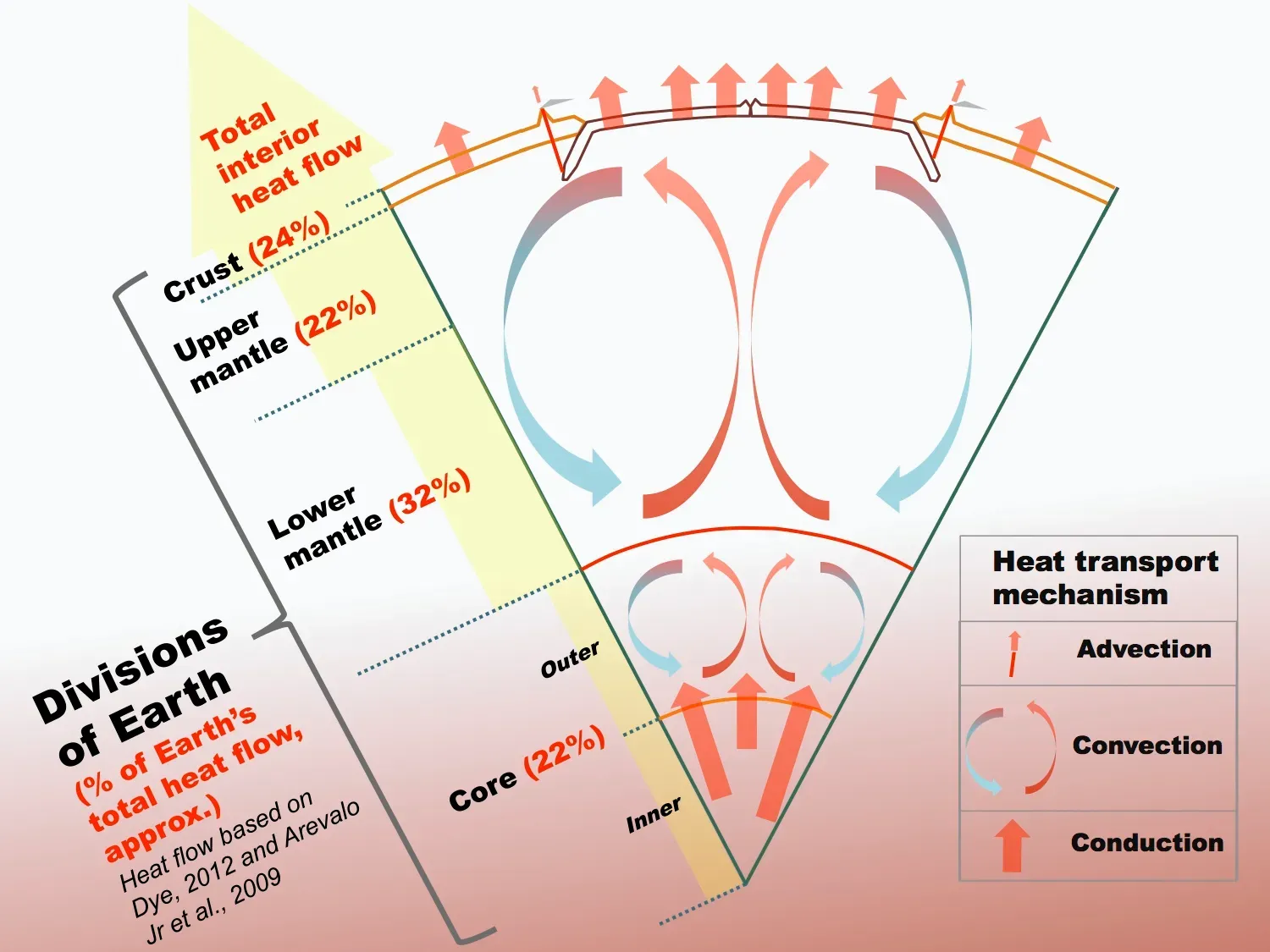
Imagine the inside of Earth as an enormous, impossibly slow boiling pot. That’s essentially what’s happening deep beneath you. Mantle convection is the very slow creep of Earth’s solid silicate mantle as convection currents carry heat from the interior to the planet’s surface. It sounds simple, but the consequences are staggering in scale.
Mantle convection is a fundamental driver of tectonic plate movements, shaping Earth’s surface features and playing a crucial role in geological processes such as the formation of mountains and the opening of ocean basins. You live on land shaped directly by this process. The mountain ranges you marvel at, the ocean trenches that swallow entire ships in darkness – all of it traces back to currents of slowly churning rock you’ll never directly see.
Convection currents in the mantle occur due to density differences caused by variations in temperature and composition, with hotter and less dense mantle material rising while colder, denser material sinks. These convection currents govern the tectonic plate movement and influence various tectonic processes on the planet. Think of it like a conveyor belt running under your feet – one that operates on timescales of millions of years but never, ever stops.
A substantial amount of topography, even within the interiors of tectonic plates, results from the behaviour of Earth’s mantle, with areas of greater elevation caused by hot mantle flow towards the surface and areas of suppressed elevation caused by cold, sinking mantle material. The most prominent of these topographic swells can be found in East Africa, Iceland, Western North America, and Eastern Europe, where they are up to 2 km in height or depth and stretch for hundreds to thousands of kilometres.
Plate Tectonics: The Slow Collision Course That Built Your World
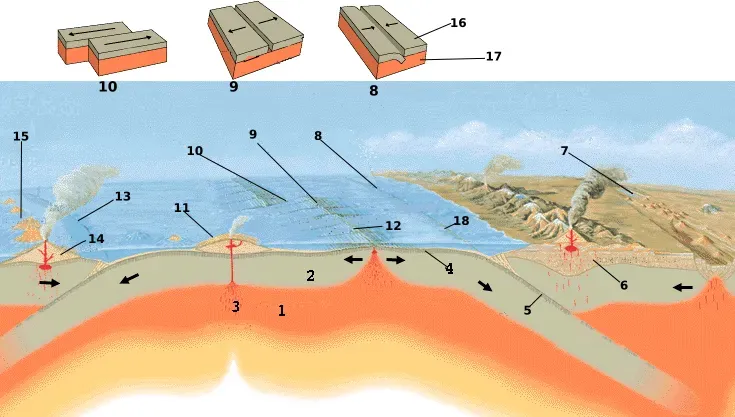
Here’s the thing about plate tectonics – it’s one of those scientific ideas that sounds abstract until you realize it’s responsible for nearly every dramatic landform you’ve ever visited or seen in a photograph. The theory of plate tectonics describes the motions of Earth’s lithosphere, or outermost layer of hard, solid rock, over geologic time. Your continent is literally riding on a moving slab of rock right now.
Earth’s lithosphere is broken into seven major and many minor tectonic plates. These plates move in relation to each other, slowly changing the location of Earth’s continents and oceans. That’s right – the map of the world you memorized in school is just a snapshot. A temporary arrangement. Given enough time, it all shifts.
Incorporating the much older idea of continental drift, as well as the concept of seafloor spreading, the theory of plate tectonics has provided an overarching framework to describe the past geography of continents and oceans, the processes controlling creation and destruction of landforms, and the evolution of Earth’s crust, atmosphere, biosphere, hydrosphere, and climates. During the late 20th and early 21st centuries, it became apparent that plate-tectonic processes profoundly influence the composition of Earth’s atmosphere and oceans, serve as a prime cause of long-term climate change, and make significant contributions to the chemical and physical environment in which life evolves.
One striking example is the Himalayas, which continue to rise as the Indian plate pushes against the Eurasian plate – a process that has been ongoing for around 50 million years. That’s not ancient history. That’s a collision still happening right now, in slow motion, every day you’re alive. I find that genuinely astonishing.
Radioactive Decay: The Invisible Heat Source Powering It All
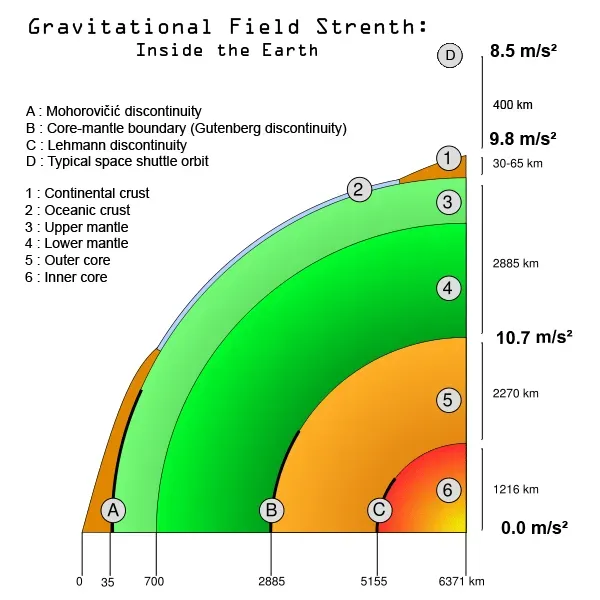
You might associate radioactive decay with nuclear disasters or power plants, but deep inside Earth, natural radioactive decay is the silent fuel source that keeps the entire geological system alive. Radioactive isotopes like Uranium-235, Uranium-232, Thorium-232, and Potassium-40 are sufficiently plentiful that large amounts of heat are generated inside the Earth. Without them, the mantle would cool, convection would stop, and plate tectonics – along with every geological process it drives – would eventually cease.
Four radioactive isotopes inside Earth account for about half of Earth’s internal heat, and like a slow cooker, they constantly release heat within the planet, keeping it on a light simmer. That simmer is the heartbeat of our planet. It’s what keeps Earth geologically alive and, in turn, hospitable for life as you know it.
The heat powering Earth’s core is generated by potential energy released by heavier materials sinking toward the core – planetary differentiation – as well as decay of radioactive elements in the interior. This decay-driven heat is the original engine. It feeds mantle convection, drives tectonic plates, and generates the magnetic field that shields you from lethal solar radiation. You owe a lot more to radioactive decay than most people realize.
Earth’s Magnetic Field: Your Invisible Planetary Shield
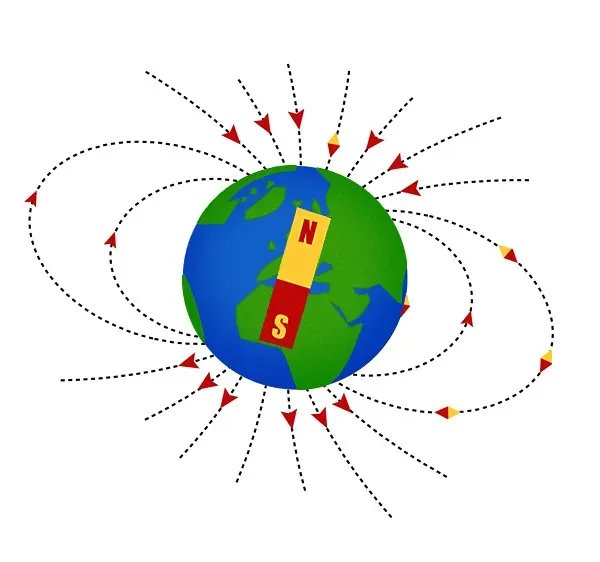
Picture Earth wrapped in a giant invisible force field. That’s basically what the geomagnetic field is, and without it, you wouldn’t be here to read this. The geomagnetic field effectively protects life from the solar wind and cosmic radiation, prevents atmospheric erosion and water loss, and thus makes Earth a habitable planet. Think of it as a planetary immune system.
Earth’s outer core is in a state of turbulent convection as the result of radioactive heating and chemical differentiation. This sets up a process that is a bit like a naturally occurring electrical generator, where convective kinetic energy is converted to electrical and magnetic energy. You’re essentially living on a giant self-sustaining dynamo, and that dynamo is what keeps you alive.
Solar wind variations can disturb the magnetosphere, leading to “space weather” – geomagnetic storms that can penetrate the atmosphere, threatening spacecraft and astronauts, disrupting navigation systems and wreaking havoc on power grids. On the positive side, these storms also produce Earth’s spectacular aurora. So the same force that occasionally knocks out your GPS also paints the night sky in breathtaking colors. It’s complicated.
The geomagnetic field also provides useful clues to orientation and navigation for a diverse group of organisms, from bacteria to vertebrates. Sea turtles, salmon, birds – they all navigate using Earth’s magnetic field like a biological compass. There is evidence that some animals, like sea turtles and salmon, have the ability to sense Earth’s magnetic field and use this sense for navigation.
Geomagnetic Reversals: When the Planet Flips Its Poles

I know it sounds crazy, but Earth’s magnetic poles have flipped – completely swapped north for south – hundreds of times in geological history. There have been at least 183 reversals over the last 83 million years, thus on average once every roughly 450,000 years. The last one happened about 780,000 years ago. We’re long overdue, statistically speaking.
We know from paleomagnetic records that the intensity of the magnetic field decreases by as much as ninety percent at the Earth’s surface during a reversal. During that transition, the planet is considerably more exposed to solar and cosmic radiation. Solar storms – coronal mass ejections – can compress the magnetosphere and induce large electrical currents in the ground, known as Geomagnetically Induced Currents, which can flow through grounding wires of large electrical transformers, causing them to overheat and fail.
Research teams have simulated how a weakened magnetic field might alter atmospheric weather patterns. The analysis suggests that an increase of charged particles entering the atmosphere would increase the production of atmospheric hydrogen and nitrogen oxides – molecules that tend to consume ozone – reducing the ability of stratospheric ozone to shield Earth’s denizens from ultraviolet radiation. That’s not just a geological curiosity. That’s a direct threat to life as you experience it.
Weathering and Erosion: The Slow Sculptors of Every Landscape You See
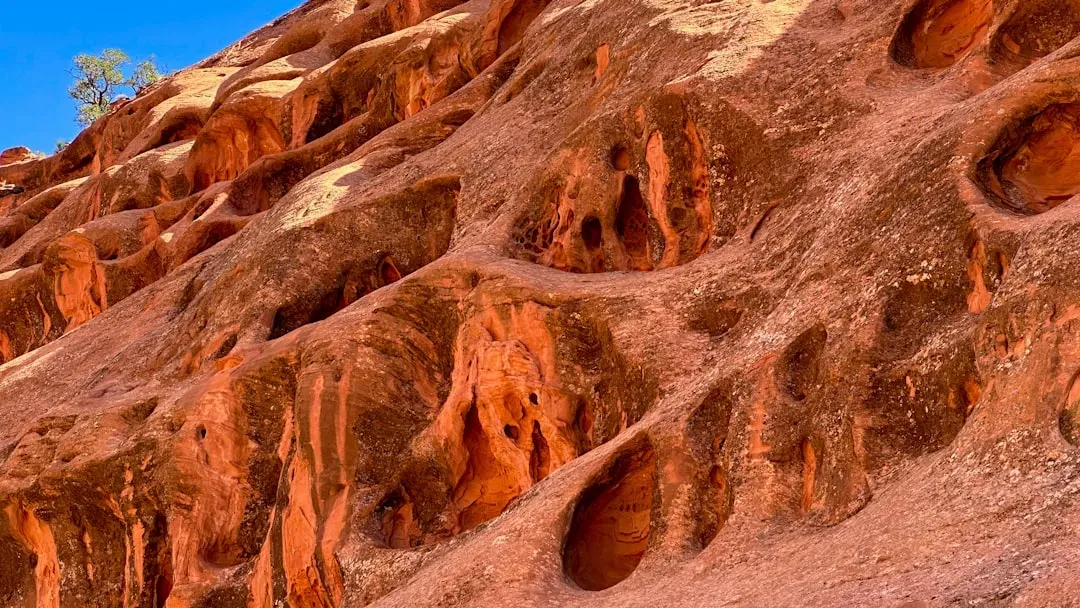
Every canyon, every coastal cliff, every rolling valley – all of it is the result of weathering and erosion working patiently over enormous spans of time. The natural processes of erosion, weathering, and soil formation play a crucial role in shaping Earth’s landscapes and supporting life. Together, they contribute to the gradual breakdown of rocks into soil, a process that takes hundreds to thousands of years.
Weathering is the initial process that breaks down rocks and minerals into smaller pieces. Unlike erosion, which transports materials away, weathering only disintegrates and decomposes rocks in place. Weathering is categorized into three main types: mechanical, chemical, and biological weathering. It’s a relentless three-pronged assault on rock that never takes a break – not for a single moment.
Coastal erosion has become a major issue in recent years in the Arctic, with Alaska’s North Slope losing as much as 30 meters per year. Climate change is thought to be the underlying cause. That’s roughly the length of a school bus – of land gone every year. Erosion isn’t a slow, invisible process in every place. Sometimes you can watch it happen.
The geological study of soil erosion and soil health, plus identifying, predicting and accessing sources of water for irrigation, are all integral to humanity’s ability to feed itself now and into the future. That means the food on your plate tonight is directly connected to geological erosion processes that have been running for millennia.
Groundwater and Aquifer Systems: The Hidden Reservoirs Beneath Your Feet
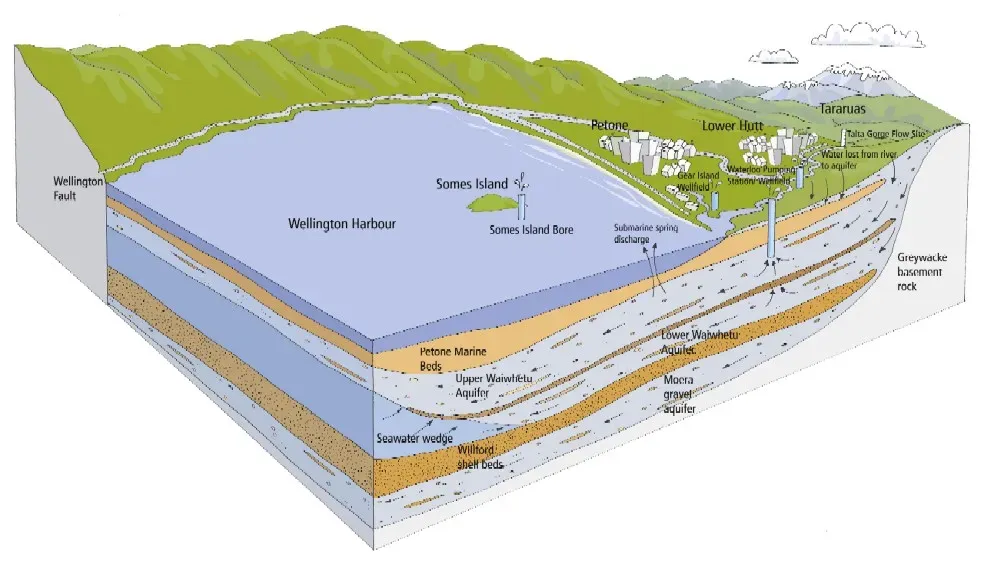
Groundwater is one of our most valuable resources – even though you probably never see it or even realize it is there. Beneath your feet, hidden in the porous gaps of rock and sediment, lies a vast network of stored freshwater that billions of people depend on every single day. It’s one of geology’s most generous gifts to civilization.
An aquifer is an underground layer of water-bearing material consisting of permeable or fractured rock, or of unconsolidated materials such as gravel, sand, or silt. You can think of it like a giant underground sponge. The type of rock, its porosity, and the geological history of the region all determine whether water is even there to be found.
Groundwater is a strong erosional force, as it works to dissolve away solid rock. Carbonic acid is especially good at dissolving limestone. Over many years, groundwater travels along small cracks, dissolves and carries away solid rock, gradually enlarging those cracks, and eventually forms a cave. The same water you drink is also, over geological time, hollowing out the landscape beneath you.
The Ogallala Aquifer of the central United States is one of the world’s great aquifers, but in places it is being rapidly depleted by growing municipal use and continuing agricultural use. This huge aquifer, which underlies portions of eight states, contains primarily fossil water from the time of the last glaciation. Annual recharge, in the more arid parts of the aquifer, is estimated to total only about ten percent of annual withdrawals. That’s a staggering imbalance – and one with serious consequences for future food and water security.
Geological Uplift: The Force That Raises Mountains From the Deep
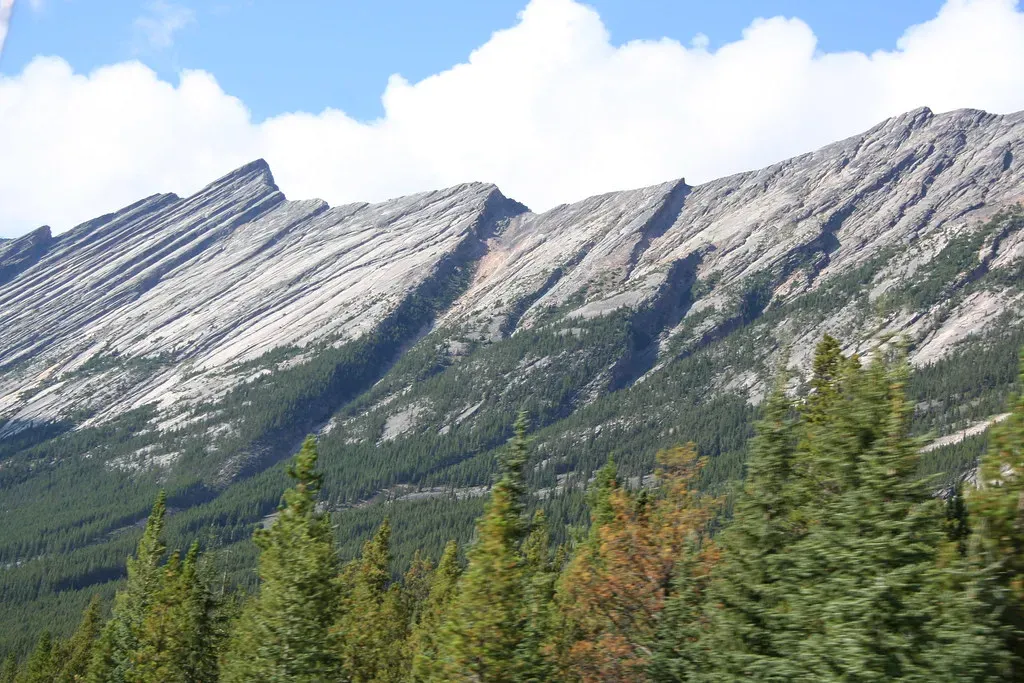
Geological uplift is something most people never hear about, yet it’s one of the most visually dramatic forces on Earth. At its core, uplift occurs when tectonic plates collide or pull apart, causing rocks to rise from their original positions. These movements can be gradual over eons or sudden during seismic events like earthquakes. The mountain range you’re looking at right now is, in geological terms, still rising.
Uplift doesn’t just create mountains. It also shapes valleys and plains through erosion and sediment deposition. As rocks are pushed upwards, they expose ancient materials that reveal insights into our planet’s history – fossils trapped within these layers can narrate tales of life long gone. Uplift is simultaneously a creator and a revealer, opening windows into Earth’s deep past with every centimeter it rises.
Because of its ability to flow, the asthenosphere figures prominently in dynamic theories on the causes of vertical motion observed at Earth’s surface. Periodic compensatory adjustments that take place in the interior of Earth in response to changing mass distributions at the surface – arising from erosion, sedimentation, glaciation and deglaciation, and volcanism – are thought to occur through flow in the asthenosphere. In other words, when massive ice sheets melt, the land beneath them slowly rebounds upward. Scandinavia is still rising today from exactly this effect – a process called postglacial rebound. Fascinating, right?
The Rock Cycle and Fossil Fuel Formation: Geology’s Most Practical Gift
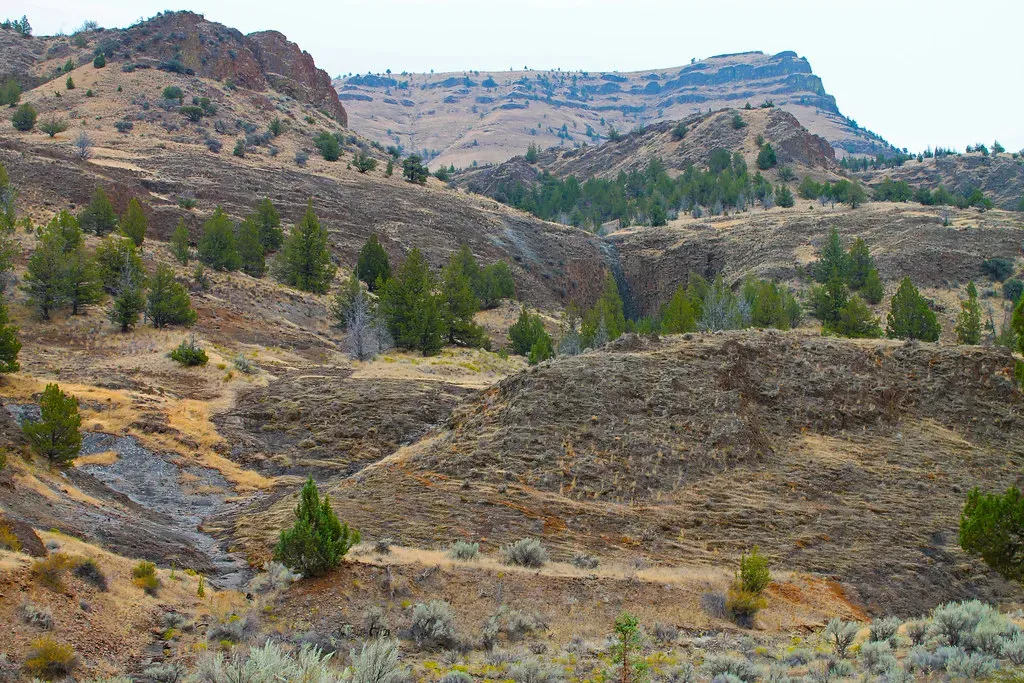
You probably filled up a gas tank recently, or benefited from electricity generated by fossil fuels. What you likely didn’t think about is just how extraordinary the geological process that created those fuels actually is. Fossil fuels have been created over the course of hundreds and thousands or even millions of years as the product of geological forces. Decomposing organic matter trapped beneath sediment and rock is transformed into carbon-rich oil and gas over many millennia.
Geology provides essential knowledge about the location, quality, and sustainability of materials like minerals, fossil fuels, and groundwater. Every resource extraction operation in human history – oil wells, coal mines, natural gas fields – depends on geologists being able to read the rock record accurately. Without that understanding, the energy-powered world you live in would simply not exist.
The geology of an area changes through time as rock units are deposited and inserted, and deformational processes alter their shapes and locations. Rock units are first emplaced either by deposition onto the surface or intrusion into the overlying rock. Deposition can occur when sediments settle onto the surface of Earth and later lithify into sedimentary rock, or when volcanic material such as volcanic ash or lava flows blanket the surface. It’s a cycle so vast it makes human civilization feel like a blink in comparison.
Everything you consume originates from the soil. Even meat products derived from animals such as cows, pigs, chicken, and fish have to be fed from plants and other organisms that are in turn fed by minerals that come from the Earth. Geology isn’t just about rocks. It’s the foundation of every bite of food you’ve ever eaten.
Conclusion: The Ground Beneath You Is Never Really Still
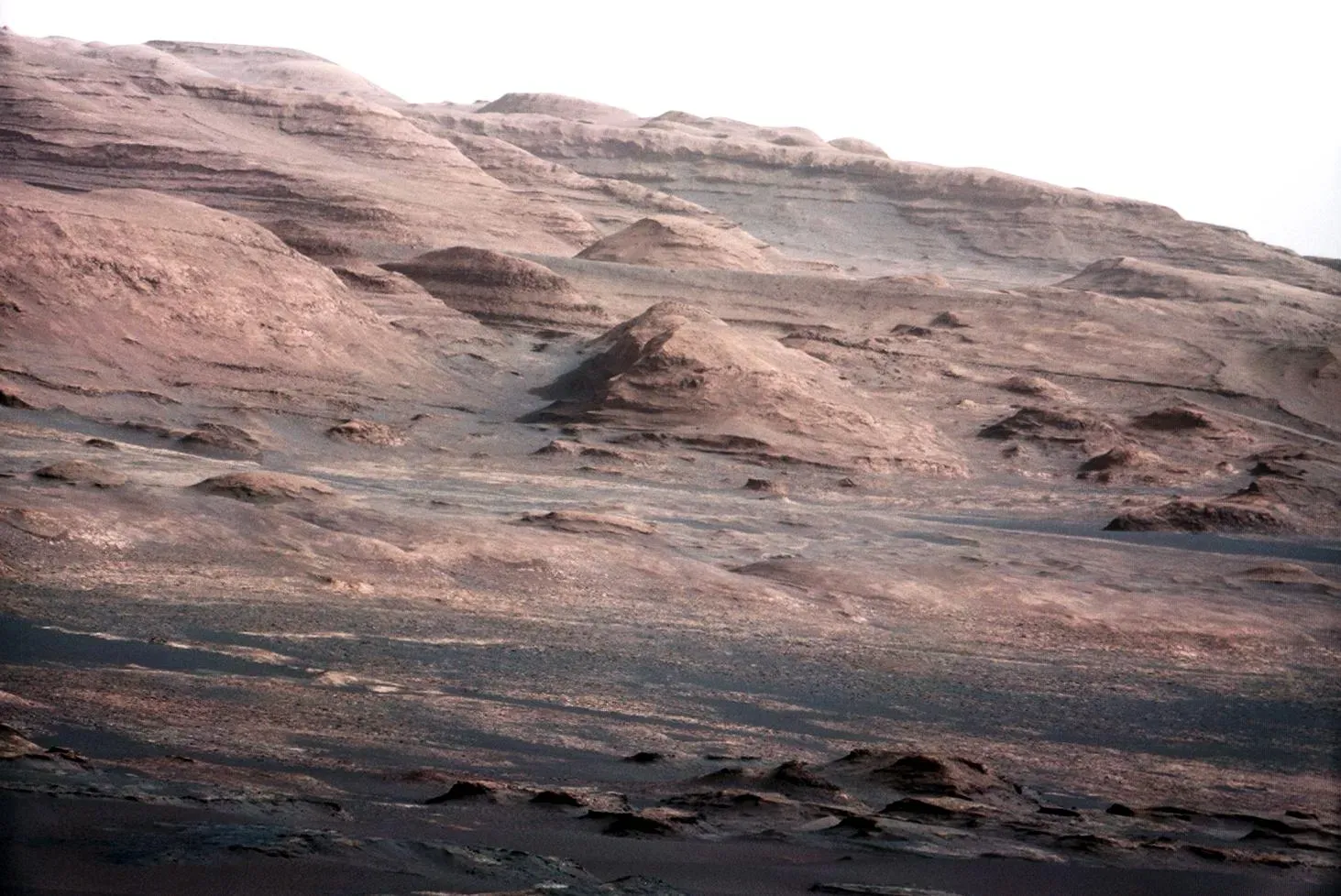
What’s remarkable, honestly, is how invisible all of this is. You go about your day – driving over roads built on geologically stable foundations, drinking water filtered through ancient aquifer rock, protected from solar radiation by a magnetic field born from radioactive heat in Earth’s core – and none of it registers. These nine forces are the silent architects of everything.
They shaped the land your home sits on. They determined where rivers flow and where fertile soil exists. They created the fuel that powered the industrial age, and they will continue reshaping this planet long after human civilization is a footnote in the geological record. Understanding these forces isn’t just interesting science – it’s a reminder of just how dynamic, alive, and astonishing the ground beneath your feet truly is.
The next time you stand on solid ground, remember: it isn’t solid at all. Not really. What do you think – does knowing what’s happening beneath your feet change the way you see the world around you? Share your thoughts in the comments below.