
For most of human history, the night sky was a quiet, distant backdrop. Now it feels more like a crowded, noisy control room bursting with signals, collisions, and mysteries. In just the last decade, a wave of discoveries has basically rewritten the story we tell ourselves about what the universe is, how it began, and how it might end.
What’s wild is that many of these breakthroughs didn’t come from bigger telescopes alone, but from new ways of listening to the universe: ripples in spacetime, ghostlike particles, faint microwaves from the dawn of time. Some of the results are so strange they almost feel like science fiction – except they’re real, and they’re forcing cosmologists to admit that even their best models might be missing something big.
1. Gravitational Waves: Hearing the Universe for the First Time
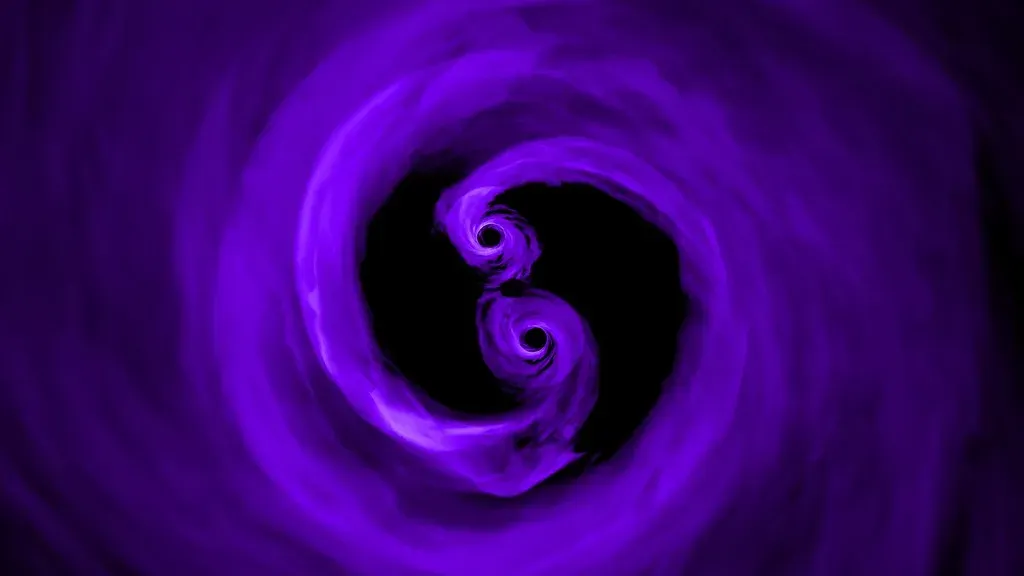
Imagine watching a thunderstorm behind soundproof glass – you’d see lightning, but never hear the thunder. Before 2015, that’s basically how we did astronomy: we saw light, but never heard the “sound” of the universe. The first direct detection of gravitational waves – tiny ripples in spacetime from colliding black holes – changed that overnight and confirmed a prediction of general relativity that had lingered for a century.
Since then, ground-based observatories have picked up scores of signals from pairs of black holes and neutron stars smashing together, revealing populations of heavy black holes that no one expected and mergers happening far more often than early models suggested. In 2023 and 2024, a different technique using pulsar timing arrays found evidence of a low-frequency background of gravitational waves humming across the cosmos, likely from supermassive black hole pairs in merging galaxies. Instead of a silent void, we now picture a universe filled with a constant gravitational “music” that we’re only just beginning to decode.
2. The Hubble Tension: A Growing Cosmic Crisis
Cosmology used to feel almost too neat: one model, one number for how fast the universe is expanding, and everyone goes home happy. That illusion shattered when different methods for measuring the Hubble constant – the expansion rate of the universe – started disagreeing in a stubborn, statistically serious way. Local measurements using supernovae and variable stars show a faster expansion, while early-universe data from the cosmic microwave background points to a slower one.
This mismatch, often called the Hubble tension, has only gotten sharper with better data from telescopes like Hubble and its successor surveys. It’s not a small rounding error; it’s big enough that many cosmologists now think there might be something fundamentally incomplete about the standard model of cosmology. People are exploring ideas like early dark energy, extra types of particles, or new physics in gravity itself, and none of them fully solve things yet. Instead of one clean answer, we’re facing the unsettling possibility that our entire timeline of the universe might be slightly off.
3. James Webb Space Telescope and the “Too-Early” Galaxies
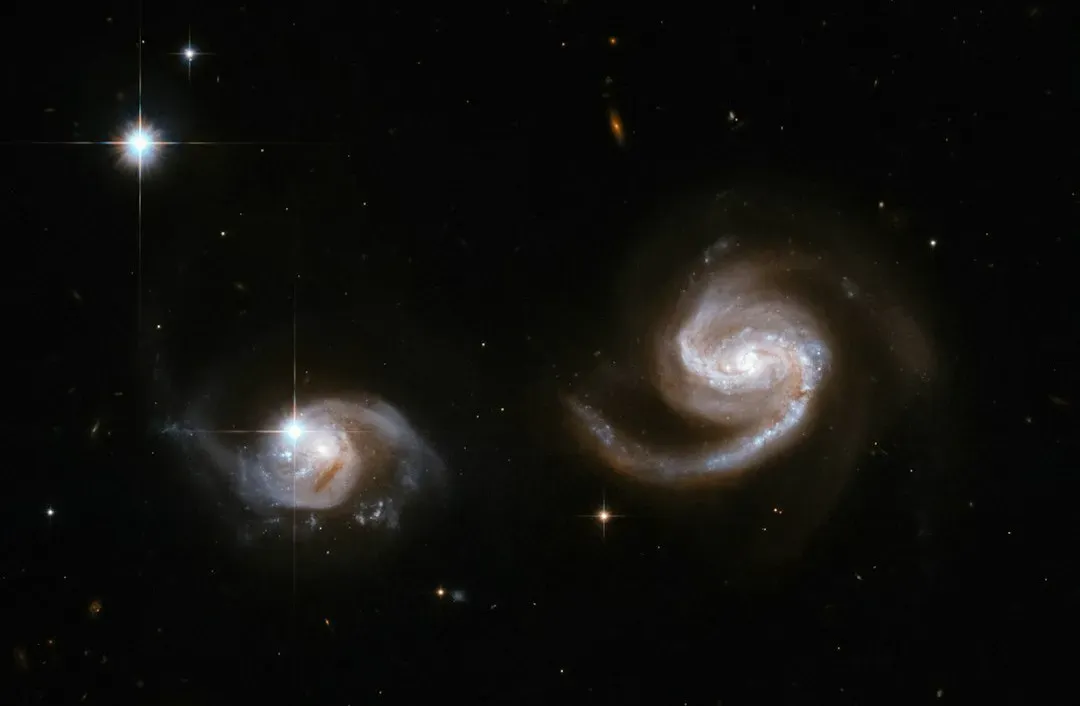
When the James Webb Space Telescope (JWST) finally launched and started sending back data, astronomers expected beautiful images and refinements to existing theories. What they didn’t really expect were surprisingly massive, mature-looking galaxies appearing in the first few hundred million years after the Big Bang. Some of these early candidates seemed so large and structured that they pressed hard against – or even outside – what standard models say is possible in that short cosmic time.
Follow-up observations and better calibrations have shown that some initial claims were overstated, but the core surprise has held: the early universe appears busier, brighter, and more efficient at building galaxies than many simulations predicted. JWST has also revealed intricate structures in distant galaxies and complex chemistry in young planetary systems, hinting that the pathways to stars, planets, and maybe even life could start earlier than we thought. Instead of a slow, gentle cosmic dawn, we’re seeing something more like a rapid-fire sunrise.
4. Fast Radio Bursts and a New Map of Cosmic Matter
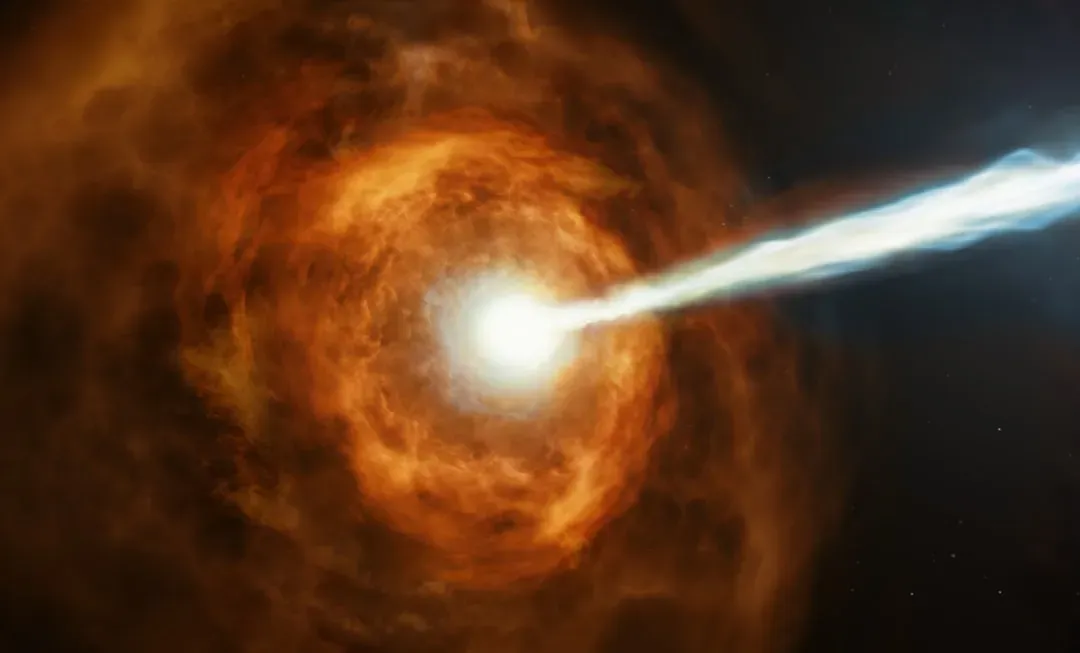
Fast radio bursts (FRBs) are like cosmic camera flashes: ultra-short bursts of radio waves that last milliseconds but can outshine an entire galaxy for that instant. For years, nobody knew what they were or where they came from, and their random, one-off nature drove astronomers a bit crazy. The breakthrough came with instruments able to localize FRBs precisely, revealing that many originate in distant galaxies, often linked to extreme objects like magnetars – neutron stars with absurdly strong magnetic fields.
Beyond just being weird fireworks, FRBs are turning into powerful tools for cosmology. As their signals travel through space, they get delayed and distorted by the thin gas between galaxies; by measuring that effect, scientists can estimate how much normal matter lies along the line of sight. This has helped track down some of the “missing” ordinary matter that theory said should exist but telescopes struggled to find. Instead of thinking of intergalactic space as empty, we now see a tenuous, structured web of gas that FRBs can trace like fluorescent dye in a bloodstream.
5. Dark Energy and the Puzzle of Cosmic Acceleration
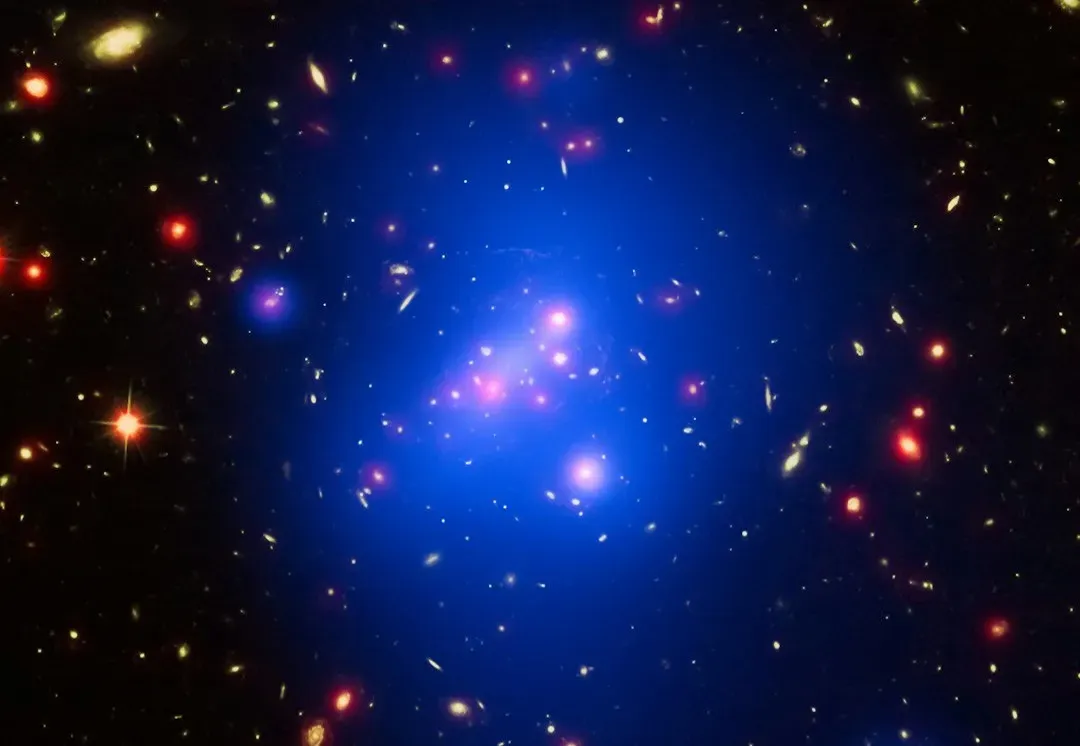
When astronomers discovered that the expansion of the universe is speeding up, not slowing down, it upended decades of assumptions and led to the idea of dark energy – some mysterious component making up most of the cosmic energy budget. That basic picture has stayed in place, but recent high-precision surveys have started hinting that the story might not be as simple as a static, unchanging dark energy. Some data sets leave room for the possibility that dark energy’s influence could evolve slowly over time.
New experiments, from galaxy redshift surveys to weak gravitational lensing maps that trace how matter bends light, are testing whether the standard cosmological model really fits at all scales and epochs. Combined with the Hubble tension, some researchers are wondering if what we call dark energy might actually be a symptom of deeper physics we haven’t captured yet, such as modifications to gravity on the largest scales. Instead of being a solved chapter, dark energy is turning into the central mystery again, reshaping how we think about the ultimate fate of the universe.
6. Black Holes: From Shadows to Quantum Frontiers
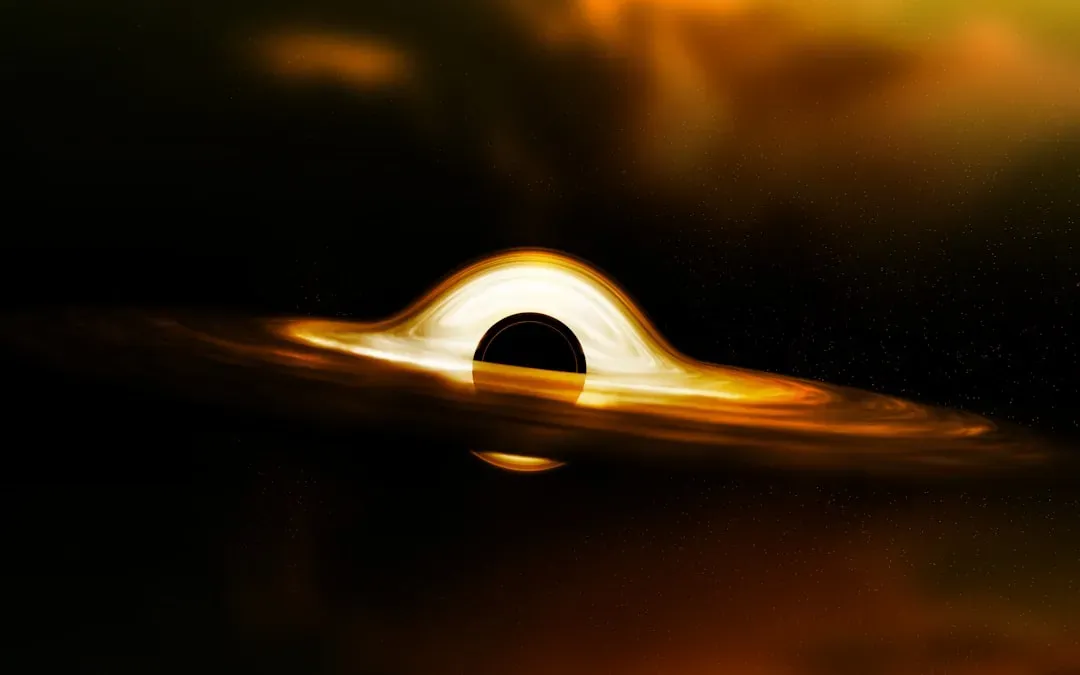
Black holes used to be almost mythical: invisible objects inferred from their effects, but never directly seen. That changed when the Event Horizon Telescope produced images of the “shadow” of the supermassive black hole in the galaxy M87, and later at the center of the Milky Way. Those images, built from a planet-sized network of radio telescopes, matched general relativity’s predictions strikingly well and turned a textbook concept into something viscerally real.
At the same time, we’ve learned that black holes are not just endpoints, but active players in shaping galaxies, launching jets, and stirring up their surroundings. On the theoretical side, the black hole information paradox – the clash between quantum mechanics and relativity about what happens to information that falls in – has pushed researchers to explore radical ideas about spacetime, holography, and quantum gravity. Black holes have shifted from being weird astrophysical oddities to laboratories for the deepest questions about reality itself.
7. Neutrinos and the Ghostly Side of the Cosmos
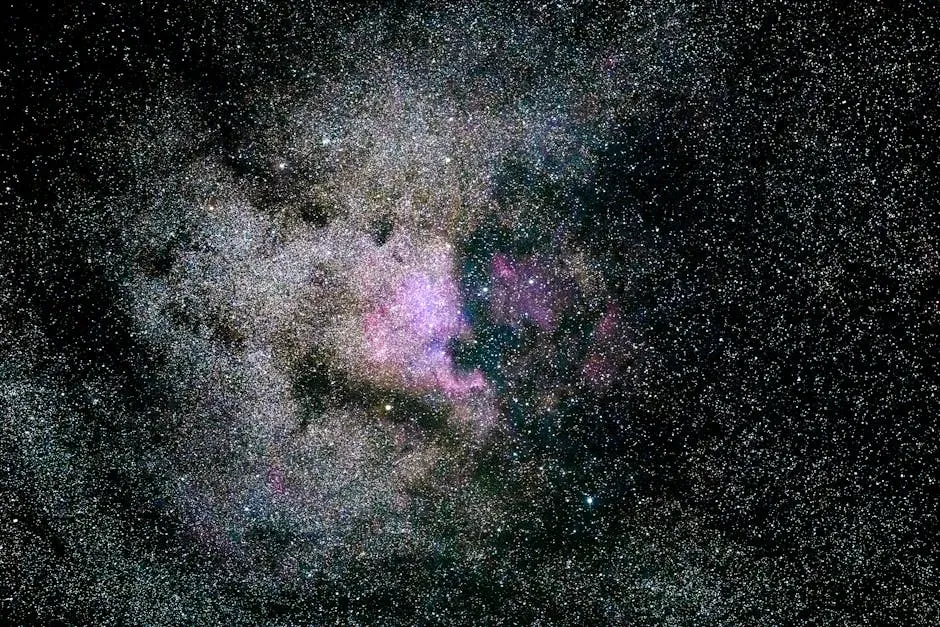
Neutrinos are so shy they can pass through light-years of lead without noticing, yet the universe produces them in staggering numbers in stars, supernovae, and other extreme environments. The discovery that neutrinos have mass, and can oscillate between different types as they travel, already forced a revision of the standard model of particle physics. In cosmology, these tiny masses matter: even a small neutrino mass affects how structures form and how the cosmic web grows over time.
High-energy neutrino observatories nestled in ice and water have started to trace neutrinos back to distant galaxies and violent cosmic accelerators, linking them to the most energetic processes in the universe. Meanwhile, cosmological data sets put tight limits on the total neutrino mass, connecting sky maps to particle experiments underground. The emerging picture is that these ghostlike particles quietly influence the distribution of matter on cosmic scales, showing that even the lightest known particles can leave a heavy imprint on the universe’s history.
8. The Cosmic Microwave Background: New Precision, New Questions
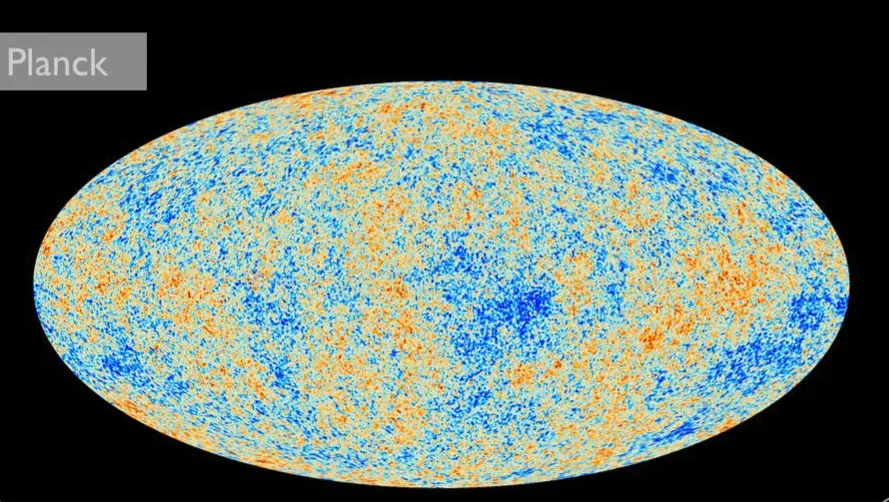
The cosmic microwave background (CMB) is often described as the afterglow of the Big Bang, but that undersells how much information it carries. High-resolution maps of tiny temperature and polarization variations across the sky have turned the CMB into a kind of cosmic DNA, revealing the composition, geometry, and early fluctuations of the universe with stunning precision. These measurements have been the backbone of the standard cosmological model, tying together dark matter, dark energy, and the early growth of structure.
Yet as the data gets sharper, small tensions and anomalies have emerged: subtle differences between large and small angular scales, hints of unexpected features, and those stubborn conflicts with late-universe measurements like the Hubble constant. Upcoming CMB polarization experiments are hunting for the faint signal of primordial gravitational waves from inflation, which would open a window into physics at energies far beyond any particle collider. Instead of a finished story, the CMB is starting to look like a detailed manuscript with a few puzzling footnotes that could change the plot.
9. Exoplanets and the Expanding Definition of “Cosmic Neighborhood”
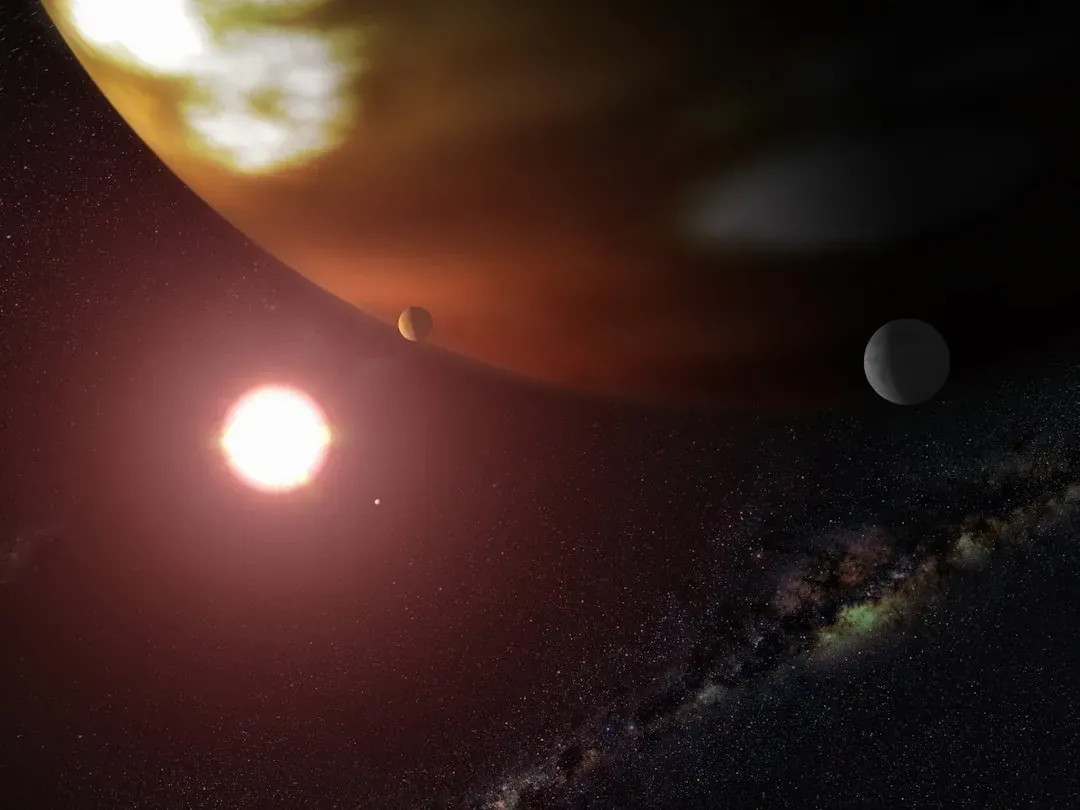
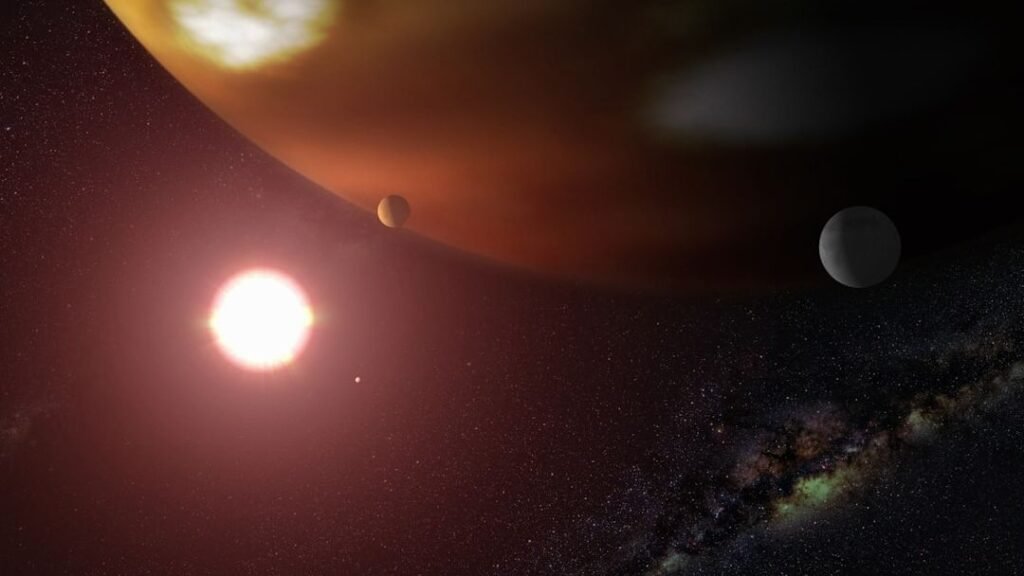
For a long time, planets around other stars were mostly a matter of speculation and science fiction. Now we’ve confirmed thousands of them, from hot Jupiters skimming their stars to rocky worlds in habitable zones, and discovered that planets are the rule, not the exception. This explosion of exoplanet data has forced astronomers to rethink how planetary systems form and evolve, since many of the architectures we see don’t look much like our own solar system at all.
What ties this to cosmology is scale and context: by mapping how common different types of planets are in different kinds of galaxies and environments, we’re starting to see how the broader cosmic history sets the stage for potentially habitable worlds. With telescopes like JWST analyzing exoplanet atmospheres and future missions planned to find Earth-sized planets around Sun-like stars, the search for life is becoming part of the cosmological story. The universe is no longer just a backdrop of galaxies and dark matter; it’s a landscape where worlds might be as common as leaves in a forest.
Conclusion: A Universe Stranger and Closer Than We Thought
All of these breakthroughs share a common thread: each time we invent a new way to look at the cosmos, the universe answers with something stranger than we expected. Gravitational waves, early galaxies, fast radio bursts, and precise sky maps are not just filling in details; they’re poking holes in what we thought were solid walls of understanding. Instead of converging neatly on one final picture, the data is opening doors to new questions about dark energy, gravity, and the very origin of structure.
What’s different now compared to even a couple of decades ago is the sense of proximity – black holes have faces, distant planets have atmospheres, and the afterglow of the Big Bang is mapped like a weather report. The cosmos feels less like an unreachable decoration and more like a dynamic system we can interrogate with a growing toolkit of senses. With so many tensions and surprises in the current data, it’s hard to shake the feeling that we’re on the edge of another big shift in our cosmic story. Which of these mysteries do you think will crack open first?