
Quantum mechanics is the part of physics that feels like it was designed to break your intuition on purpose. Particles behave like waves, cats are somehow dead and alive until you peek, and reality itself seems to reshape depending on what you ask of it. For decades, most of this lived in blackboards, obscure equations, and late-night debates among physicists.
But that’s changing fast. In the last few years, governments and companies around the world have poured billions into what’s now called the “second quantum revolution.” What used to be philosophical weirdness is turning into hardware, chips, networks, and sensors. Below are nine of the strangest quantum mysteries that are already steering how tomorrow’s technology might look and feel.
1. Quantum Superposition: Computers That Try Every Answer at Once
Imagine being able to check every possible route on a map at the same time, instead of one by one; that’s the promise hiding inside quantum superposition. In simple terms, a quantum bit, or qubit, can be in a blend of “zero” and “one” until it’s measured, like a coin that’s both heads and tails mid-spin. This isn’t just a cute metaphor; in the lab, superconducting circuits, trapped ions, and even tiny defects in diamond can all act as qubits and hold these superposed states for short but useful stretches of time.
When many qubits are linked together, a quantum computer can explore a huge space of possibilities in parallel in ways classical computers fundamentally can’t. That’s why tech giants and startups alike are racing to build machines with more stable qubits and lower error rates. If engineers can control superposition at scale, tasks like simulating complex molecules, optimizing logistics, or even cracking some current encryption methods could move from “impossible” to “practically doable.” Superposition is the “cheat code” nature built in; the hard part is learning how to press it without breaking the game.
2. Quantum Entanglement: Spooky Links for Ultra-Secure Communication

Quantum entanglement is the phenomenon Einstein famously mocked as “spooky action at a distance,” and it still feels spooky even when you understand the equations. Two particles can be prepared in such a way that their properties are deeply correlated, no matter how far apart you move them. When you measure one, you immediately know the outcome of the other, as if they’re part of a single shared object stretched across space.
This weirdness is turning into the backbone of quantum communication and future “quantum internet” concepts. With entanglement, you can create cryptographic keys in a way that any eavesdropping physically disturbs the system and becomes detectable. Researchers have already transmitted entangled particles via satellites and optical fibers over hundreds and even thousands of kilometers. If this can be scaled into a global network, we could get communication channels that are not just hard to hack, but fundamentally impossible to copy without being caught.
3. Quantum Tunneling: Electronics Beyond the Limits of Miniaturization
Quantum tunneling is the rule-breaking act where particles sneak through barriers they don’t have enough energy to climb over, like a ball that mysteriously appears on the other side of a hill without ever rolling over the top. At tiny scales, electrons don’t behave like solid marbles; they behave like smeared-out waves, and those waves can leak through barriers in a way that simply doesn’t happen in everyday life. This effect is not rare fringe stuff; it’s already quietly running inside devices like tunnel diodes and the scanning tunneling microscope.
As transistors in classical chips keep shrinking toward the atomic scale, tunneling is both a curse and an opportunity. On one hand, unwanted tunneling becomes a source of leakage current and power waste, making it harder to keep shrinking traditional silicon designs. On the other hand, controlled tunneling is the basis for ultra-fast switches, flash memory operations, and even some proposed quantum logic elements. Engineers are learning to treat tunneling less like a bug and more like a feature that could underpin new low-power, high-performance electronics.
4. Wave–Particle Duality: Designing Devices That Think in Waves
At the heart of quantum mechanics lies an idea that still makes people uncomfortable: the same thing can behave like a particle or a wave depending on how you look at it. Electrons can form interference patterns like ripples in water, but also hit a detector as sharp, discrete hits. Light can act as a smooth wave or as individual photons. This wave–particle duality isn’t just a fun brain teaser; it dictates how we build nearly every modern optical and electronic device.
Future technology is starting to exploit the “wave side” more deliberately. Photonic chips use single photons and their wave interference patterns to perform computations or carry information with lower heat and potentially higher speed than metal wires. Electron waves inside materials give rise to exotic behaviors like topological edge states, which could serve as ultra-robust channels for data. By accepting that nature thinks in waves first and particles second, designers can build devices that guide, twist, and interfere these waves to do useful work in entirely new ways.
5. Quantum Measurement: Sensors That Push Past Classical Limits
One of the strangest rules of quantum mechanics is that measurement doesn’t just reveal reality; it changes it. When you measure a quantum system, you nudge it, disturb it, or even collapse it into one of several possible outcomes. That sounds like a headache, and it definitely is, but it also turns out to be a powerful tool for metrology – the science of precise measurement. If you know how your interference with a system shows up, you can use it to read out tiny changes in fields, forces, or time.
Quantum sensors are already starting to outperform classical ones in specific tasks. Devices based on cold atoms, nitrogen-vacancy centers in diamond, and superconducting circuits can detect incredibly tiny magnetic fields, gravitational variations, or time differences. This might lead to better medical imaging, navigation systems that don’t need GPS, and early-warning tools for underground changes like earthquakes or resource deposits. The same measurement quirks that make quantum experiments so fragile could turn into a new generation of ultra-sensitive instruments.
6. Quantum Decoherence: The Fragility That Drives Powerful Error Correction
For all its promise, the quantum world is ridiculously fragile. Decoherence is what happens when a carefully prepared quantum state gets nudged by its environment – by stray photons, vibrations, or material defects – and loses its quantum character. Superposition decays into classical either–or states, entanglement evaporates, and the delicate advantage you were hoping to use just dissolves into noise. If you’ve ever tried to concentrate in a crowded café, decoherence is the quantum version of that constant background chatter.
Oddly, this fragility has forced researchers to invent some of the most sophisticated error-correction strategies ever devised. Quantum error correction spreads information across many physical qubits so that even if some get disturbed, the overall logical state can be reconstructed. This requires redundancy, clever encoding, and constant monitoring without directly measuring and collapsing the information you care about. If engineers succeed, we’ll get quantum machines that can run long, complex algorithms reliably, and the techniques invented for quantum error correction may feed back into more robust classical communication and computing methods as well.
7. Quantum Randomness: Truly Unpredictable Numbers for a Secure World
Most of the “random” numbers used today in software aren’t actually random; they’re generated by algorithms that can, in principle, be recreated if you know the starting conditions. Quantum mechanics, however, offers something different: outcomes that are fundamentally unpredictable, not just hard to guess. When you measure a quantum system prepared in a certain way, the specific result you get is not fixed until that very act of measurement, and no hidden variables have ever been convincingly shown to be lurking underneath.
This kind of randomness is pure gold for cryptography and security. Quantum random number generators already exist as commercial products, turning single-photon measurements and similar processes into streams of bits that no attacker can predict, even in principle. As our digital infrastructure faces ever more sophisticated threats, truly random keys and tokens become a powerful shield, both for traditional encryption systems and for future quantum-safe protocols. In a world that increasingly models and predicts everything, quantum randomness is a rare source of genuine uncertainty that we can harness on demand.
8. Quantum Teleportation: Moving Information, Not Matter
Quantum teleportation sounds like science fiction, but it’s less about beaming people around and more about moving quantum information flawlessly from one place to another. Using entanglement and a bit of classical communication, the exact state of a qubit in one location can be destroyed there and re-created in a distant qubit. No physical particle travels faster than light, but the information itself is transferred in a way that would be impossible with just classical bits alone.
This protocol is becoming a building block for quantum networks and distributed quantum computing. Teleportation allows quantum states to be transmitted without directly sending fragile qubits through noisy channels, which helps sidestep some of the losses and decoherence that plague long-distance links. Future quantum repeaters and routers will likely rely on chains of teleportation to stitch together city-scale or even continental-scale networks. Instead of moving electrons or photons like trucks on a highway, these systems move the “pattern” itself, like copying a complex dance from one dancer to another without them ever meeting.
9. Quantum Many-Body Mysteries: Simulators for Chemistry, Materials, and Beyond

When you have just one or two quantum particles, the math is already pretty intense; when you have many interacting particles, the complexity explodes. This is the quantum many-body problem, and it’s at the heart of why predicting the behavior of real materials, complex molecules, or high-temperature superconductors is so hard on classical computers. The number of possible configurations grows so fast that even the biggest supercomputers choke on seemingly modest systems.
Quantum simulators and general-purpose quantum computers are being developed precisely to tackle these many-body questions. By using controllable quantum systems – like trapped ions, ultracold atoms in optical lattices, or arrays of superconducting qubits – researchers can “mimic” the physics of other, less accessible systems. This could lead to the discovery of new catalysts for cleaner industrial processes, more efficient batteries, novel superconductors for lossless power grids, and exotic phases of matter with useful properties. Instead of guessing and checking in the dark, humanity may soon have machines that speak nature’s own quantum language back to it.
Riding the Edge of the Quantum Weird
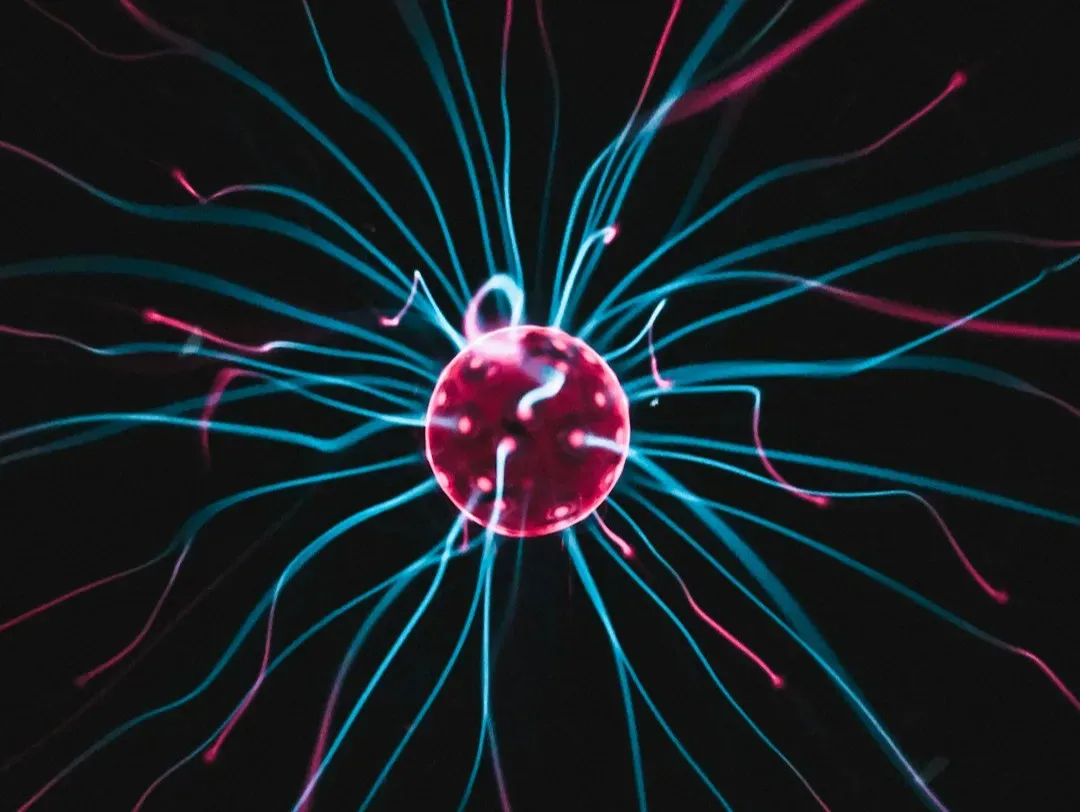
The mysteries of quantum mechanics were once treated as a kind of intellectual curiosity, something for chalkboards and philosophy, not for factories or hospitals. Now they’re slowly hardening into devices, platforms, and infrastructures that might underpin encryption, sensing, computing, and communication in the coming decades. Each strange effect – superposition, entanglement, tunneling, and the rest – is like a different gear in a machine we’re only just learning how to assemble.
There’s no guarantee that every bold promise of the “quantum future” will pan out, and the engineering challenges are enormous, but the direction of travel is clear. We’re turning what used to be paradoxes into tools, and what used to be thought experiments into prototypes. As these technologies mature, they may not just speed up our computers; they may change what problems we even dare to tackle. Which of these quantum mysteries do you think will end up touching your life first?