
You probably trust your eyes completely. After all, they’re right there on your face, feeding your brain raw information about the world around you. Except here’s the thing: your eyes are less like cameras and more like unreliable narrators, constantly editing and improvising the story they tell. The images you see aren’t direct recordings of reality but carefully constructed interpretations that your brain assembles from bits and pieces of sensory input. Illusions shatter this comfortable assumption and expose the incredible shortcuts your brain takes every single second.
What if you could peek behind the curtain and see exactly where your mind is filling in gaps, making educated guesses, or just flat-out lying to you? The following illusions do precisely that, each one revealing a different quirk in how your brain processes the visual world. Let’s dive in.
The Kanizsa Triangle: When Your Brain Sees What Isn’t There
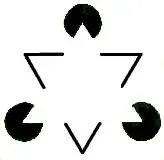
Stare at a few strategically positioned Pac-Man shapes, and suddenly you’ll swear there’s a bright white triangle floating in front of them. Except there isn’t. Your brain perceives its presence by filling in the gaps between the three Pac-Man-like shapes.
This illusion, discovered by Italian psychologist Gaetano Kanizsa in the twentieth century, exposes one of your brain’s most essential survival tricks. Scientists hypothesize that this phenomenon arose to identify patterns in a field of view even when part of an object was obscured or the visual information was missing. In the wild, if a predator is partially hidden behind foliage, you need to recognize the threat fast. Your brain doesn’t wait for complete data; it completes the pattern immediately. Researchers have discovered specialized neurons in area V2 of the visual cortex that respond directly to these phantom shapes, showing just how deeply this pattern-completion process is wired into your visual system.
The Müller-Lyer Illusion: Lines That Lie About Their Length
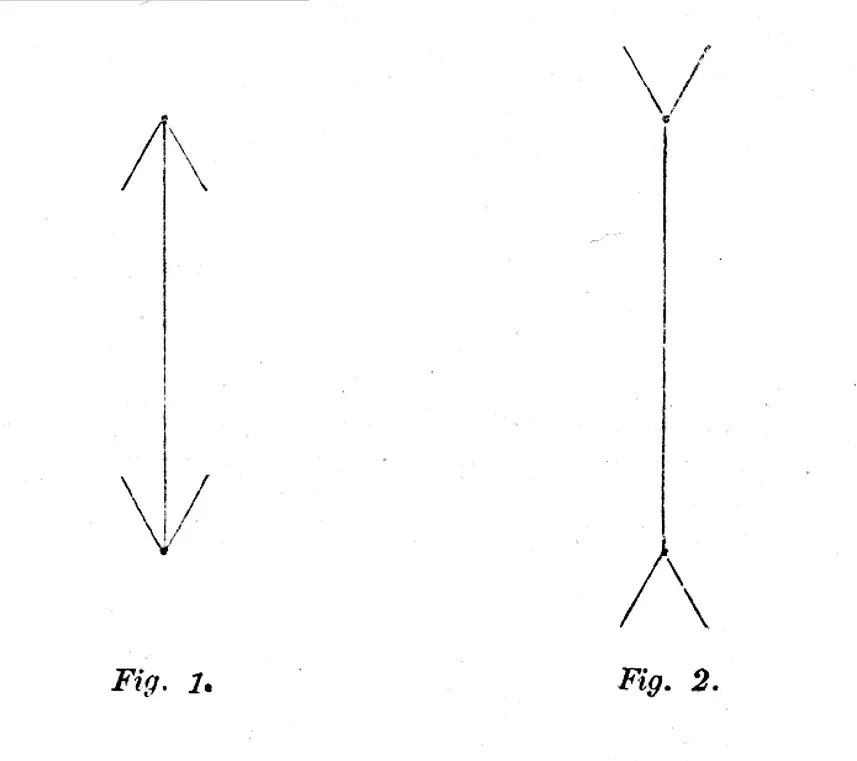
In this example of the Müller-Lyer illusion, the top line looks longer than the bottom line, and yet they are the exact same length. The arrowheads pointing inward make one line appear shorter, while the arrows pointing outward stretch the other visually. It’s maddening because even when you measure them with a ruler, your eyes refuse to believe it.
The presence of the arrowheads and arrow tails at the ends of the lines changes the way we perceive length. The arrowheads make the line look smaller, and the arrow tails make the lines look longer. Scientists suspect this relates to how we interpret depth and corners in three-dimensional space. The outward arrows mimic the far corner of a room, while inward arrows look like a near corner. Still, despite more than a century of study since German psychologist Franz Carl Müller-Lyer introduced it in the late 1800s, experts haven’t completely cracked why this simple trick is so effective.
The Checker Shadow Illusion: A Game of Light and Dark
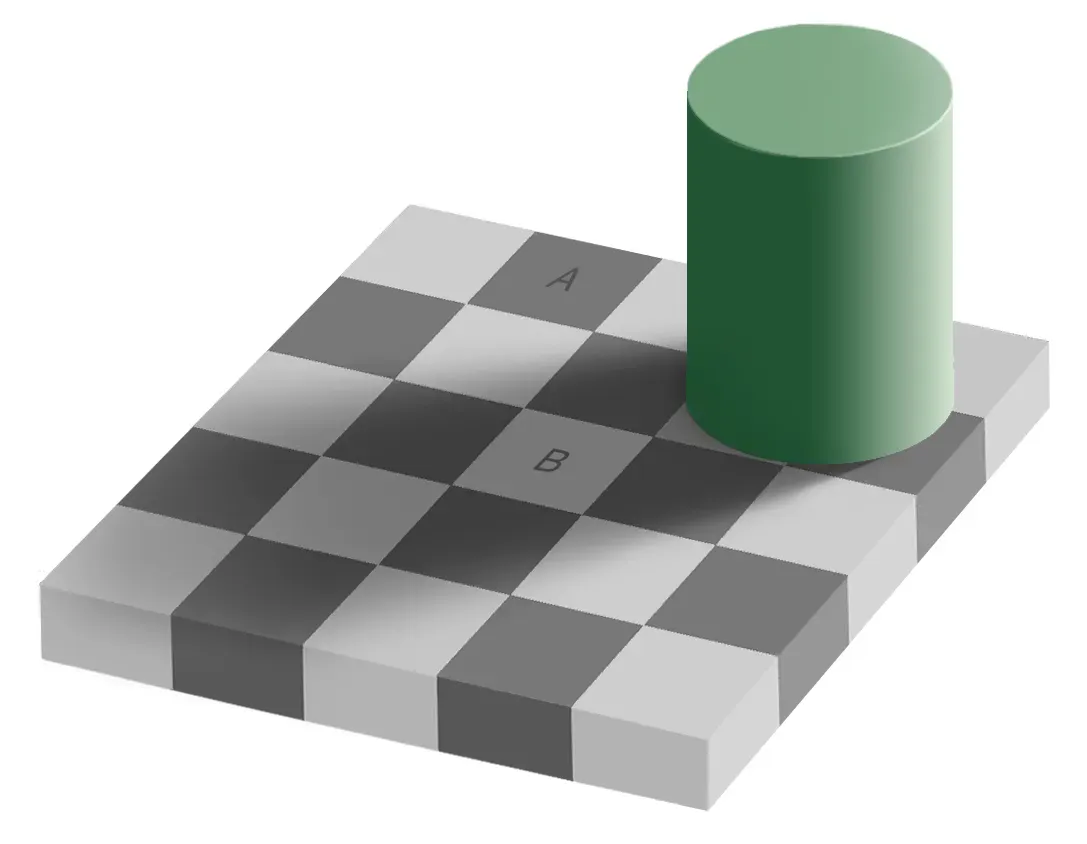
Look at two squares on a checkerboard, one in shadow and one in light. They appear completely different shades of gray. Isolate them side by side, though, and prepare for your brain to short-circuit: they’re identical. The square labeled “A” appears much darker because it is surrounded by lighter squares, while the square labeled “B” appears lighter, because it is surrounded by darker squares. The illusion of a shadow also adds to this effect.
This masterpiece by MIT vision scientist Edward Adelson demonstrates how your visual system doesn’t process colors and brightness in isolation. Your brain interprets every shade relative to its surroundings and automatically adjusts for lighting conditions. It’s constantly doing color correction without asking permission. In everyday life, this is brilliant. A banana looks yellow whether you’re indoors under fluorescent lights or outside at noon. However, put your brain in an artificial scenario like this checkerboard, and its automatic adjustments become glaringly obvious.
The Troxler Effect: The Vanishing Act in Your Periphery
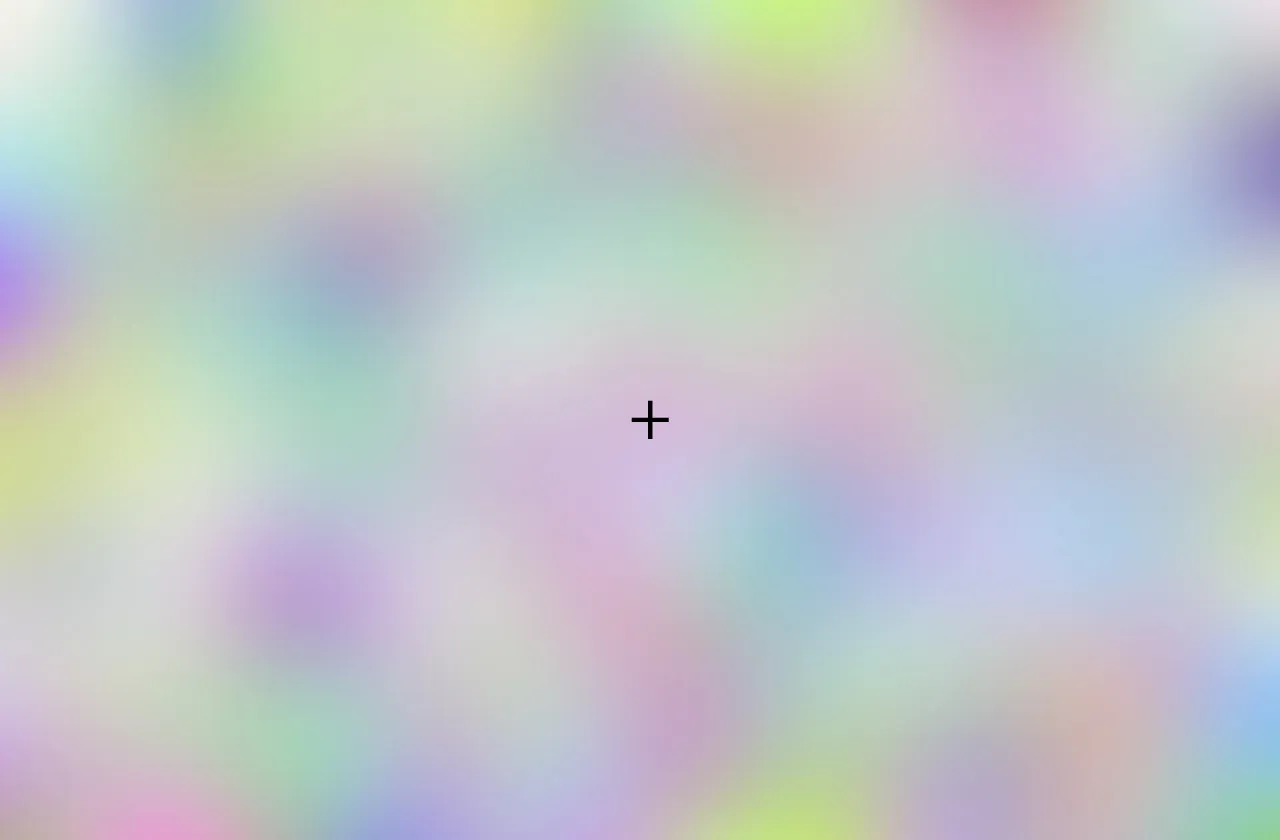
Here’s a weird one. Stare at a fixed point in the center of a colorful image for roughly twenty seconds without moving your eyes. If the effect works, you should see the surrounding colors in your periphery begin to fade to white. It’s like your peripheral vision just gives up and erases everything around the edges.
Discovered by Swiss physician Ignaz Paul Vital Troxler in the early nineteenth century, this illusion reveals how your visual system prioritizes change and motion over static information. When something in your peripheral vision stays completely still, your brain essentially decides it’s not worth the processing power and lets it fade away. If you gaze at the same color for several seconds, prolonged stimulation desensitizes the retina. The cones temporarily stop responding. Your eyes evolved to catch movement because in prehistoric times, that rustle in the bushes could mean danger. Static objects? Not so urgent.
The Ponzo Illusion: Tricked by Perspective
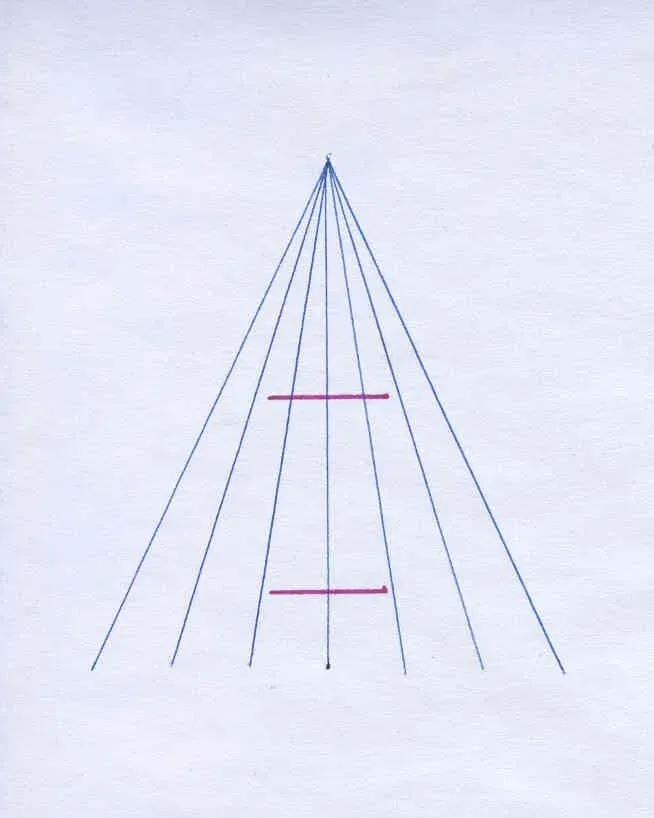
In the Ponzo illusion the converging parallel lines tell the brain that the image higher in the visual field is farther away, therefore, the brain perceives the image to be larger, although the two images hitting the retina are the same size. Think of railroad tracks stretching toward the horizon. Two identical objects placed at different positions between those lines will look drastically different in size.
This illusion is a textbook example of how your brain uses depth cues to interpret flat images. It’s trying to help you navigate a three-dimensional world, but when presented with a two-dimensional picture containing misleading perspective clues, it gets confused. Your visual system assumes the upper object is farther away and therefore compensates by making it appear larger. In normal circumstances, this depth perception is invaluable, but the Ponzo illusion exposes the downside of these automatic calculations.
The Ebbinghaus Illusion: Size Is All About Context
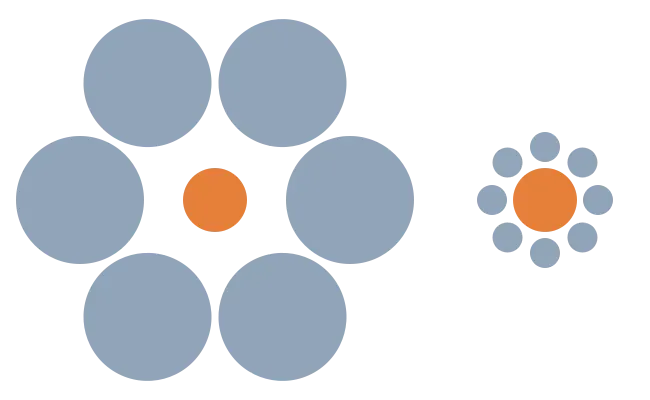
Place two identical orange circles side by side. Surround one with large circles and the other with tiny circles. They are actually identical, but most people think the one on the left looks smaller. This is because we don’t see them in isolation, but compared to the blue dots around them. So the one on the left looks small compared to the large blue dots while the one on the right looks big compared to the small ones.
Named after German psychologist Hermann Ebbinghaus, this illusion highlights how your brain constantly judges objects relative to their surroundings rather than in absolute terms. You can see this principle play out in everyday life. Stand a person of average height next to professional basketball players, and they’ll look tiny. Put that same person next to a group of children, and suddenly they seem towering. Your brain doesn’t measure in inches or centimeters; it measures in comparisons.
The Spinning Dancer: Motion That Flips on Command

The Spinning Dancer is an optical illusion featuring a silhouetted figure that some viewers perceive as spinning clockwise, while others see her spinning counterclockwise. This ambiguous illusion occurs because the brain lacks sufficient depth cues to determine the figure’s orientation, causing perception to flip between two plausible interpretations.
Here’s where things get truly strange. Unlike most illusions where everyone sees the same thing, this one is genuinely ambiguous. Your brain will commit to one direction of rotation, then suddenly, without warning, it might flip to the other. There’s no right answer because the silhouette genuinely could be spinning either way. The image lacks the depth information needed to resolve the ambiguity, so your visual system just picks an interpretation and runs with it. Some people can even train themselves to flip the direction at will, revealing how much voluntary control we might have over these supposedly automatic processes.
The Ames Room: When Giants and Miniatures Share Space
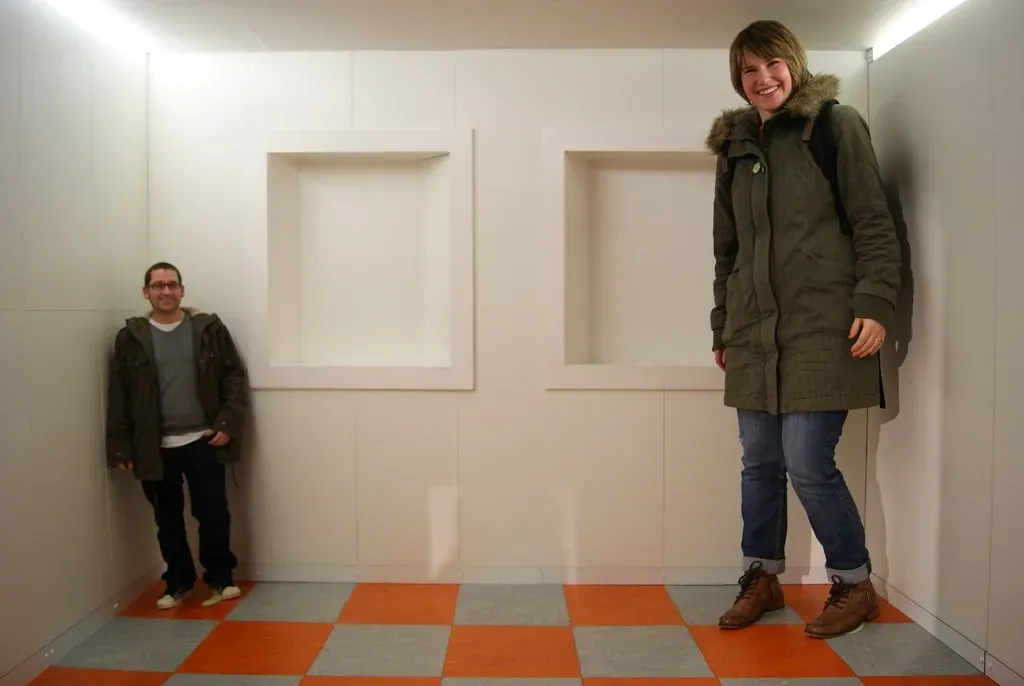
This illusion occurs because the room’s construction features slanted walls and a tilted floor, but it is viewed through a peephole that limits depth perception. The brain assumes the room is a standard rectangular shape, distorting the perceived size of the people based on their positions, revealing how the brain applies assumptions about geometry and scale.
You’ve probably seen photos of this: two people standing in opposite corners of a room, one looking like a giant and the other shrunk to doll size. The room itself is wildly distorted, but from one specific viewing angle, it looks perfectly normal. Your brain’s assumption that rooms are rectangular boxes takes over, and rather than questioning the room’s geometry, it adjusts the people’s sizes to make sense of the scene. It’s a powerful demonstration of how your prior expectations about architecture shape what you perceive, even when the reality is far stranger.
The Hermann Grid: Phantom Spots That Dance in the Corners
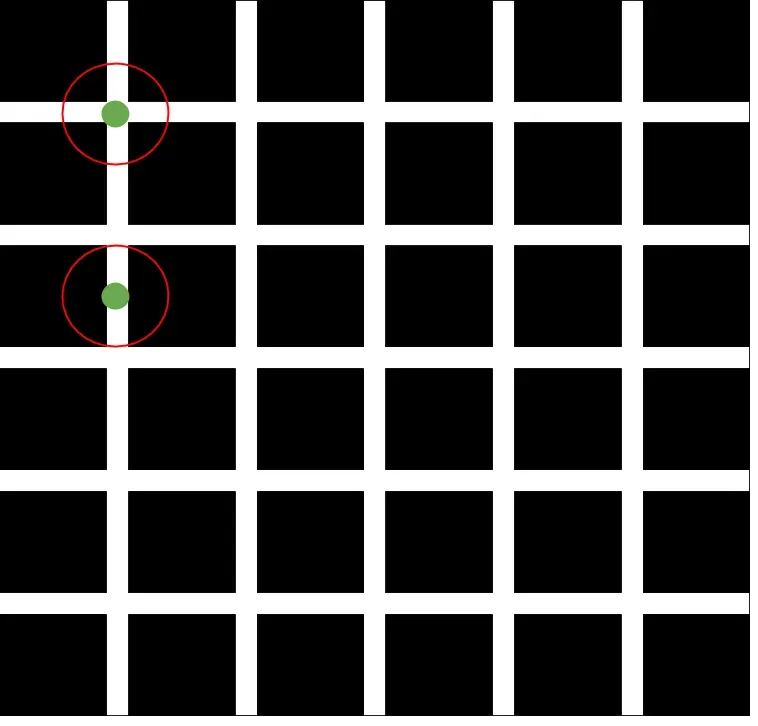
Look at a grid of black lines on a white background, and you’ll notice ghostly gray spots flickering at the intersections. The circles aren’t there, but your brain fills in the gaps where the lines are about to intersect and perceives gray spots. Try to focus directly on one of those spots, and it vanishes immediately.
Some brightness illusions, such as the Hermann grid illusion or Chevreul illusion, can be explained by the function of the center-surround antagonistic receptive field of retinal ganglion cells. Essentially, the neurons in your retina that detect light and dark are constantly comparing neighboring areas. At the intersections, this comparison creates the perception of gray spots that aren’t actually present in the image. This illusion operates at such an early stage of visual processing that it happens before the information even reaches your visual cortex. Your retina itself is already interpreting and distorting reality before your brain gets involved.
Conclusion
These illusions aren’t glitches or mistakes. They’re windows into the sophisticated, shortcut-taking machinery inside your skull. They reveal the brain’s incredible ability to predict, adapt, and creatively process information, transforming simple visual inputs into complex, meaningful experiences. Every single second, your brain is making educated guesses, filling in missing information, and constructing a coherent experience from incomplete data.
The reality you experience is not a photograph of the external world but a carefully edited interpretation designed to help you survive and navigate your environment. Sometimes those interpretations go spectacularly wrong, and that’s when illusions happen. Next time you encounter one, don’t just marvel at the trickery. Appreciate the fact that your brain is constantly performing similar feats of creative reconstruction, usually getting it right, occasionally getting it delightfully wrong. What other assumptions is your brain making right now that you don’t even notice?