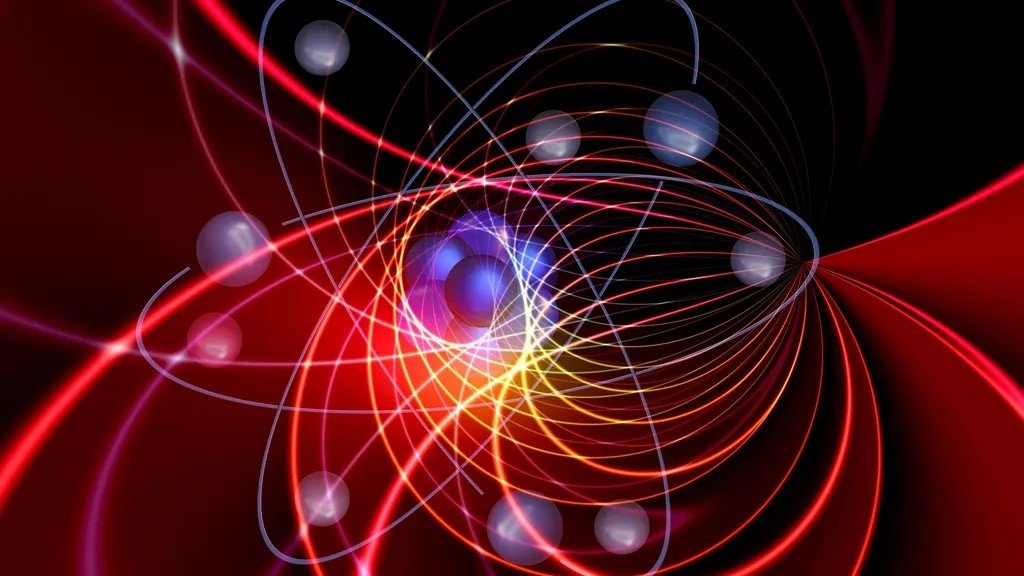

There’s a strange borderland in science where everyday logic falls apart, and quantum physics lives right there on the edge. It’s the place where particles act like waves, where things can be in more than one state at the same time, and where just looking at something can change what it is. For a long time I honestly thought quantum physics was just fancy dressing for sci‑fi movies, until I dug into it and realized it’s quietly running the technology in our pockets and the MRI machines in hospitals.
The wild part is this: the universe you think you know is only the “large-scale” version of reality. Down at the tiniest levels, under atoms and inside particles, nature plays by rules that feel shocking, hilarious, and a little unsettling. Let’s walk through nine of the most mind-bending quantum ideas, stripped of heavy math and explained like you’re talking about them over coffee with a curious friend.
1. Wave–Particle Duality: When Matter Refuses to Pick a Side
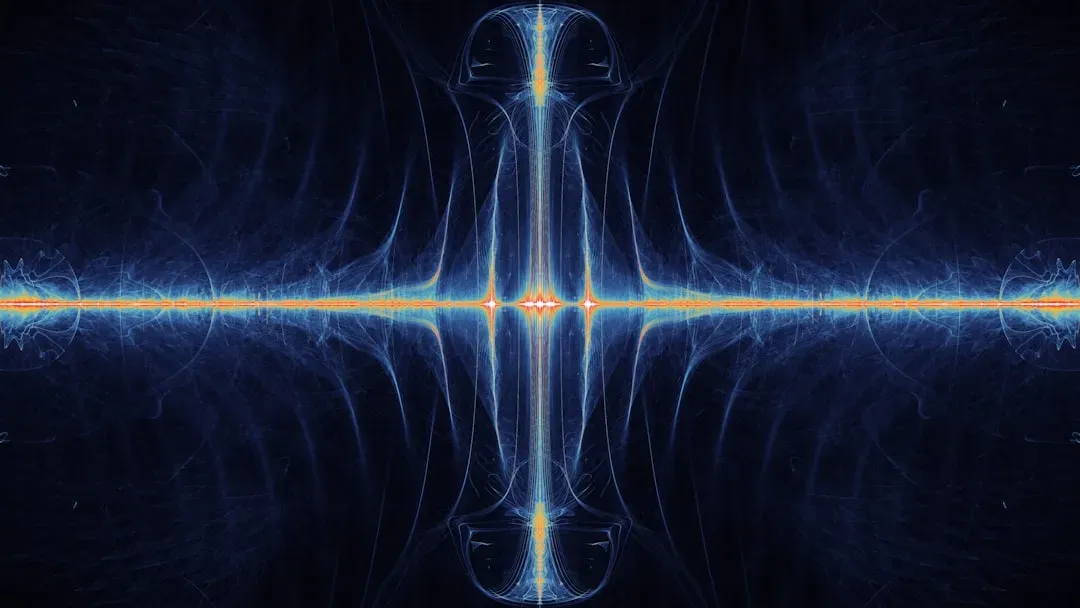
Imagine if water could decide whether to be a wave or a marble depending on who’s looking. That’s basically what happens with electrons and photons: they behave like smooth, spread-out waves when nobody’s watching closely, and like tiny bullets when you measure them. The famous double-slit experiment showed that single particles, fired one at a time, can build up a wavy interference pattern over time, as if each particle somehow goes through two paths at once.
When you try to “catch” which path the particle takes, the interference pattern disappears and you’re left with something that looks like ordinary particle behavior. It’s as if the universe is saying: you only get the wave story or the particle story, never both at once. In everyday life, objects are so huge compared to quantum scales that this duality is completely hidden, which is why your coffee mug never behaves like a ripple on a pond. But deep down, everything you see is made of stuff that refuses to fully commit to being one thing or the other.
2. Superposition: Being in Many States at the Same Time
Superposition is the idea that, until you measure a quantum system, it doesn’t have a single definite state. Instead, it exists in a blend of possibilities, like a deck of cards that’s somehow all possible top cards at once until you look. This isn’t just theoretical hand-waving; experiments with electrons, photons, and even molecules show that they can genuinely occupy multiple configurations at the same time.
The famous thought experiment with a cat that’s both “alive and dead” in a box is a dramatic metaphor for this idea. In reality, superposition is fragile: once something interacts strongly with its environment, the many possibilities “collapse” into one outcome. Quantum computers are trying to harness this weirdness by using qubits that can be in a mixture of zero and one simultaneously, which lets them explore a huge number of computational paths in parallel. The tricky part is keeping those qubits from collapsing too soon, like trying to keep soap bubbles from popping while juggling them.
3. Entanglement: Spooky Connections Across Space
Entanglement is what happens when two or more particles become linked so deeply that what you do to one instantly affects the other, no matter how far apart they are. It’s like rolling two dice on opposite sides of the galaxy and always getting perfectly coordinated results, in a way that can’t be explained by hidden instructions set in advance. For a long time, this sounded like pure philosophy, but experiments keep confirming that entanglement is absolutely real and not just a math trick.
This phenomenon doesn’t let you send messages faster than light, but it does mean that the universe is more deeply interconnected than our common sense suggests. Today, entanglement is at the heart of quantum cryptography, where keys for encryption are generated in such a way that any eavesdropping attempt disturbs the entangled correlations and can be detected. There are also prototypes of quantum networks that aim to use entanglement as a kind of invisible “wiring” between distant quantum devices. The whole thing feels like nature’s version of an unbreakable, invisible handshake.
4. The Uncertainty Principle: Limits on What We Can Know

The uncertainty principle doesn’t say that our instruments are just clumsy; it says the universe itself puts hard limits on what can be known at the same time. For example, the more precisely you know a particle’s position, the fuzzier its momentum becomes, and vice versa. This isn’t about bad measurement techniques, it’s baked into the fabric of reality at the quantum level.
One way to picture it is like trying to take a perfectly sharp photo of something that’s rushing by: the more you freeze its place, the less you know about its speed. In quantum mechanics, that trade-off is fundamental, not just practical. This challenges the old idea that, with enough information, we could predict everything exactly, like a cosmic machine. Instead, nature seems to be built around probabilities and ranges, not rigid certainties, and that can feel unsettling if you like having everything nailed down.
5. Quantum Tunneling: Walking Through Walls (Sort Of)
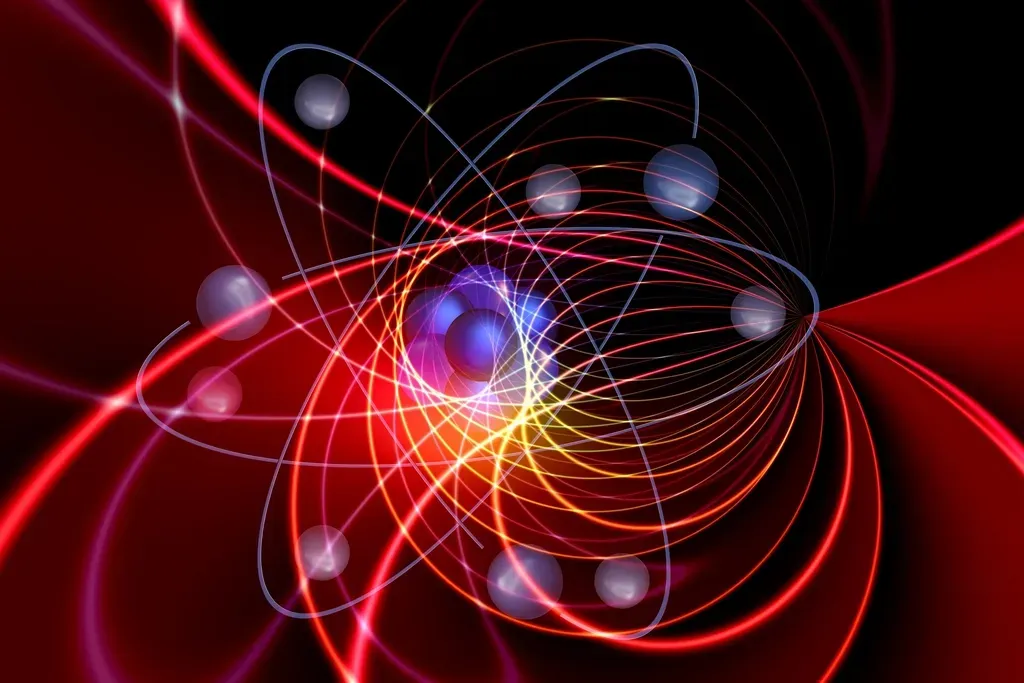
Quantum tunneling is what happens when a particle manages to cross a barrier it doesn’t have enough energy to climb over, at least according to classical physics. It’s like a ball sitting in a valley that somehow appears on the other side of a hill without ever rolling over the top. At the quantum level, because particles are also waves, there’s a small chance that their wave-like nature “leaks” through barriers, and occasionally, they show up on the other side.
This isn’t just a party trick; tunneling powers real devices and even stars. The sun relies on tunneling for nuclear fusion in its core, because protons don’t have enough energy by temperature alone to get close enough to fuse, yet they still do, thanks to tunneling. On Earth, tunnel diodes, flash memory, and scanning tunneling microscopes all depend on this effect in different ways. It’s a reminder that even when something looks like a solid, impenetrable wall, at the tiniest scale it’s more like a probabilistic fog.
6. The Measurement Problem: Does Reality Need an Observer?
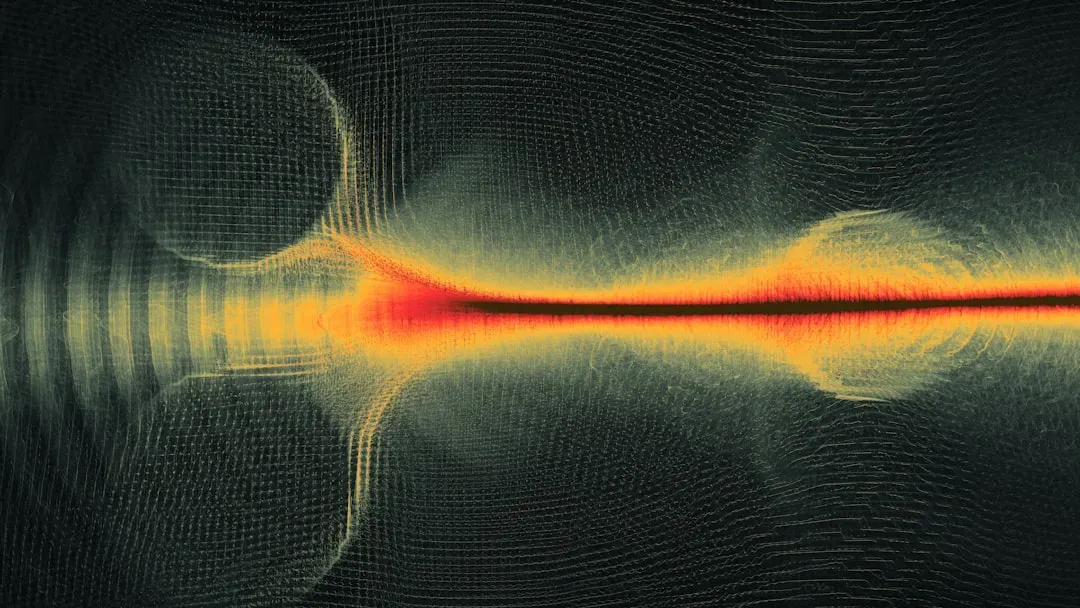
One of the strangest open questions in quantum physics is what exactly counts as a “measurement” and why it seems to snap a system out of superposition into a single outcome. The equations of quantum mechanics describe smooth, continuous evolution, but the act of measuring introduces a sudden, jump-like collapse. That weird split between smooth evolution and abrupt collapse is what people call the measurement problem.
Different interpretations of quantum mechanics try to explain this without changing the successful predictions of the theory. Some suggest reality is constantly branching into many possible worlds, others say there’s hidden structure behind the probabilities, and some lean on ideas like decoherence, where interactions with the environment effectively act as a measurement. The funny part is that, even without agreeing on the “true” story, physicists use the same math to build lasers, chips, and quantum devices that work incredibly well. It’s like driving a car you understand mechanically but still arguing over what “motion” really is.
7. Quantum Vacuum: Empty Space That Isn’t Empty
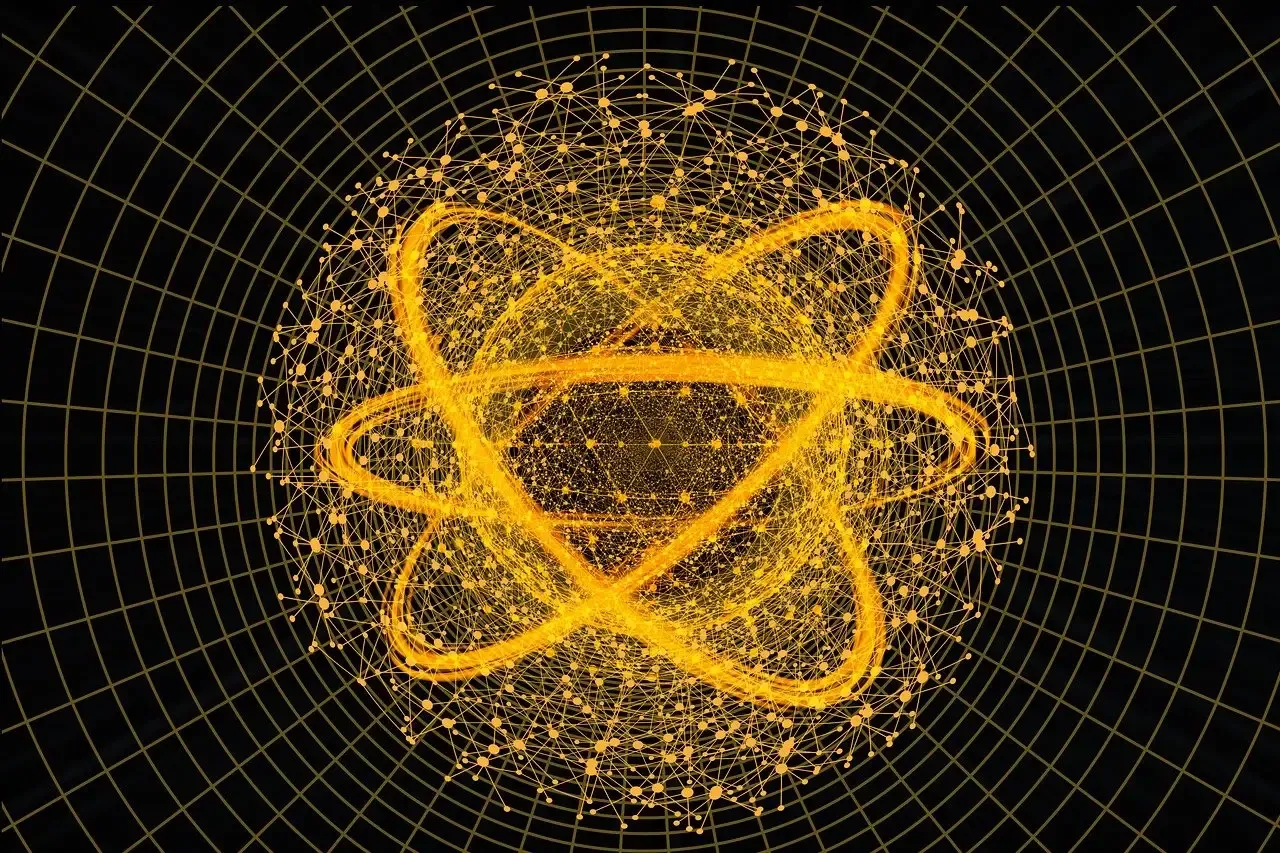
In quantum physics, the vacuum is not a featureless nothing, it’s more like a restless stage where particles and fields constantly flicker in and out of existence. Even what we call “empty space” is filled with fluctuating fields that never quite settle to zero energy. These restless fluctuations can have real, measurable effects, which is a deeply unsettling thought if you grew up thinking of nothing as truly nothing.
One famous example is the tiny force between two uncharged metal plates placed very close together in a vacuum, known as a vacuum or Casimir effect, which arises from those ever-flickering fields. There are also subtle shifts in atomic energy levels that can only be explained when you include the quantum vacuum in the calculations. On a cosmic scale, something similar to vacuum energy shows up as dark energy, the mysterious driver behind the accelerated expansion of the universe. The idea that “empty” space is secretly humming with activity is one of those concepts that makes you look at the room around you in a totally new way.
8. Quantum Computing: Using Weirdness as a Resource

Instead of fighting quantum weirdness, quantum computing tries to use it as a tool. Classical bits are either zero or one, but qubits can be in superpositions of both, and multiple qubits can become entangled so their states are deeply linked. This allows certain algorithms to explore an enormous space of possibilities in ways that would take ordinary computers an impractical amount of time.
We’re still in the early days: building stable quantum processors is brutally hard because qubits are incredibly sensitive to noise and interference. Yet there are already specialized demonstrations where quantum devices outperform the best classical machines on carefully chosen tasks. Companies and research labs are racing to make quantum computers that can handle useful problems like optimizing complex systems, simulating new materials, or breaking specific cryptographic schemes. It’s a bit like the early days of aviation: rickety prototypes, lots of crashes, but clearly a technology that could eventually change the map.
9. Decoherence: Why We Don’t See Quantum Strangeness Everywhere
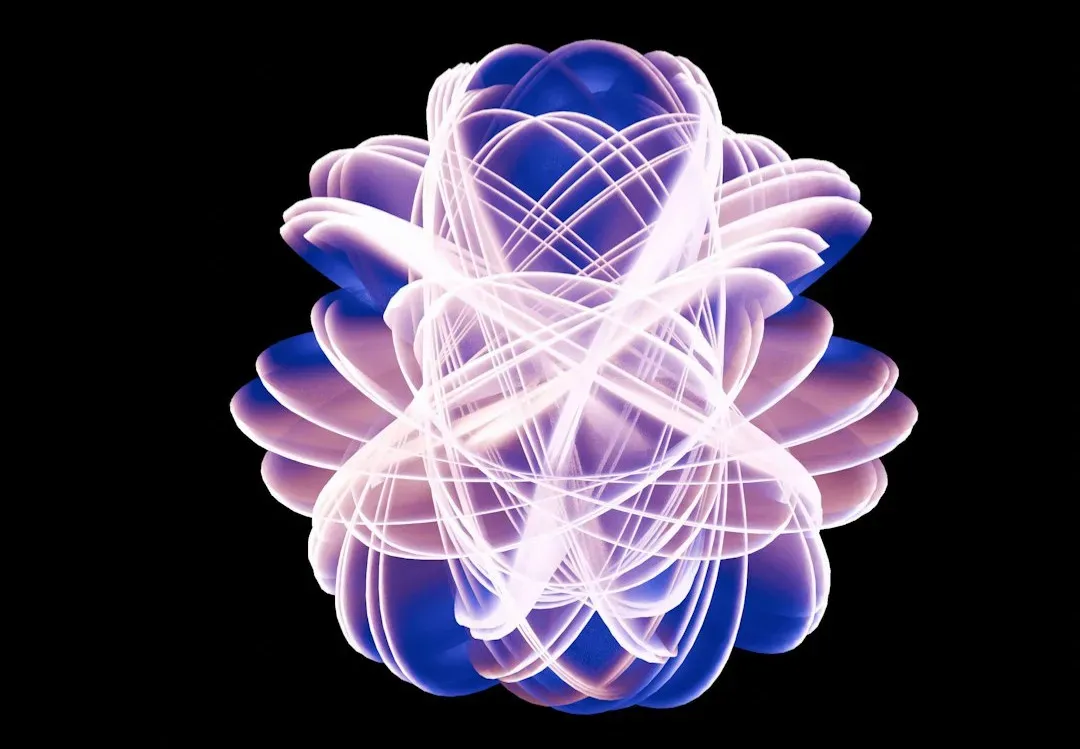
If superposition and entanglement are real, why doesn’t your toaster behave like a quantum computer and your cat like a blurry probability cloud? Decoherence is the process that explains how quantum possibilities effectively turn into classical realities as systems interact with their environments. Every stray photon, air molecule, or vibration acts like a tiny measurement, bleeding away the delicate quantum correlations that make superpositions special.
In practice, this means that large, warm, messy objects lose their quantum behavior incredibly quickly, long before we could ever notice it. To see quantum effects clearly, you usually need super cold, super clean, highly isolated setups, which is why quantum labs look like high-tech shrines to extreme control. For me, decoherence is strangely comforting: it suggests there’s no magical line between the quantum world and our everyday world, just a gradual washing-out of weirdness as things get bigger and more entangled with everything else. The ordinary world is what quantum mechanics looks like after endless interactions have blurred the strangeness into something familiar.
Conclusion: Living in a Quietly Quantum World
Quantum physics strips away the illusion that reality is simple, solid, and fully knowable in a neat, mechanical way. Instead, it shows us a universe built from probabilities, superpositions, and deep connections that ignore our everyday intuitions about space and time. What started as a desperate attempt to explain odd lab results now underpins semiconductors, lasers, medical scanners, atomic clocks, and the first steps toward quantum networks and computers.
For all its philosophical headaches, quantum theory has passed every experimental test thrown at it for roughly a century, and modern research keeps pushing into weirder territory with larger objects, longer entanglement distances, and more precise control. The more we probe, the more it feels like our common-sense picture of the world is just a useful cartoon drawn on top of something far stranger and richer underneath. When you look at your phone, your GPS, or a beam of light through a window, does it feel different now knowing that, deep down, they’re all quietly obeying quantum rules you can’t see?