
Somewhere in the deep future, long after every star in our night sky has died, the universe itself may face an ending so strange that human language can barely keep up. Cosmologists today are not just mapping galaxies; they are sketching possible final acts for reality as we know it. Will everything rip apart, fade into freezing darkness, or crunch back into a cosmic reboot? Each theory is a kind of story we tell based on hard data, sharpened equations, and a lot of humility about what we still do not know. Thinking about the end of the universe sounds bleak, but it also throws into sharp focus how miraculous it is that we exist right now, in this brief, bright moment.
The Heat Death: A Universe That Slowly Forgets How to Shine
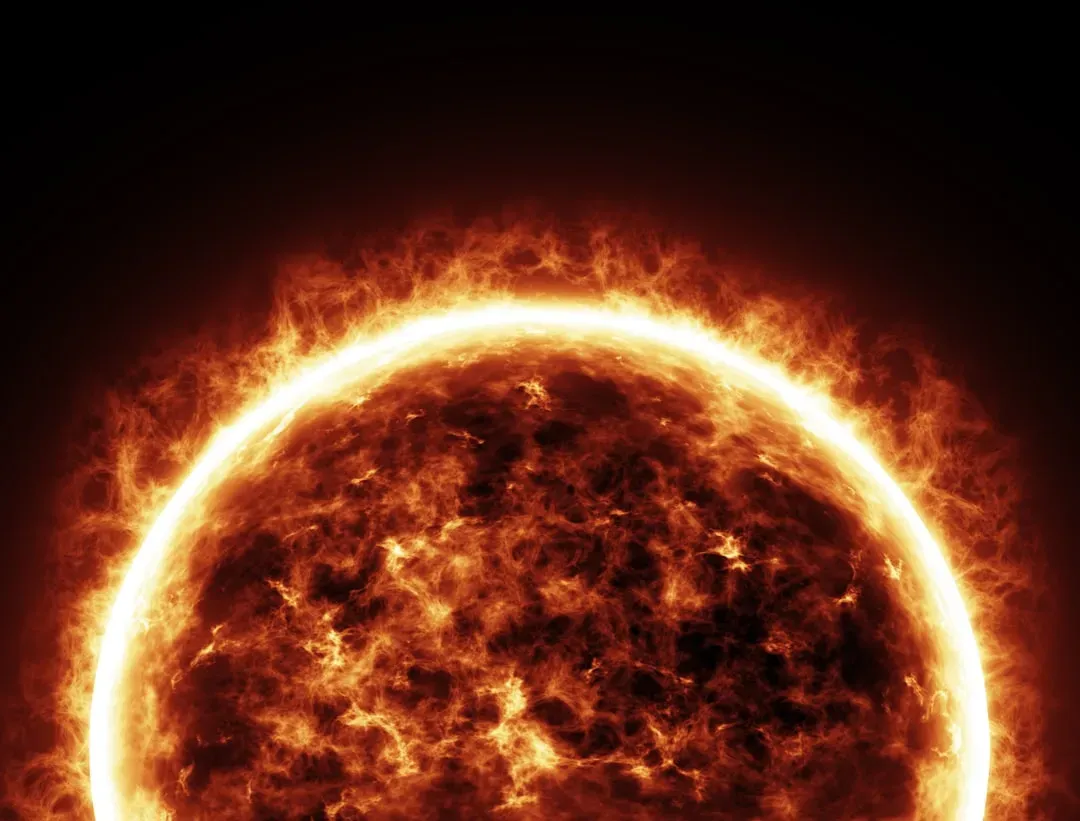
One of the leading contenders for the universe’s ultimate fate sounds almost painfully anticlimactic: no explosion, no crunch, just an endless fade-out. In the so‑called heat death or “Big Freeze” scenario, the universe keeps expanding and cooling until there is almost no usable energy left to do anything interesting. Stars burn through their nuclear fuel, white dwarfs cool into dark, invisible husks, and even black holes slowly evaporate through a quantum leakage process known as Hawking radiation. Over unimaginable stretches of time, the cosmos trends toward maximum entropy, a thermodynamic state where everything is smeared out and uniform.
What makes this theory powerful is that it emerges naturally from what we already observe: space is expanding, and dark energy appears to be accelerating that expansion. If this continues indefinitely, galaxies will drift so far apart that distant ones will slip beyond our observable horizon, leaving future astronomers in a lonely, star-poor sky. Eventually, even the last embers of starlight will wink out, and the universe will become a thin, cold bath of low-energy particles. It is less a dramatic finale and more like a theater that keeps emptying until the lights turn off, the air cools, and the stage gathers dust forever.
The Big Crunch: A Cosmic Story That Folds Back on Itself
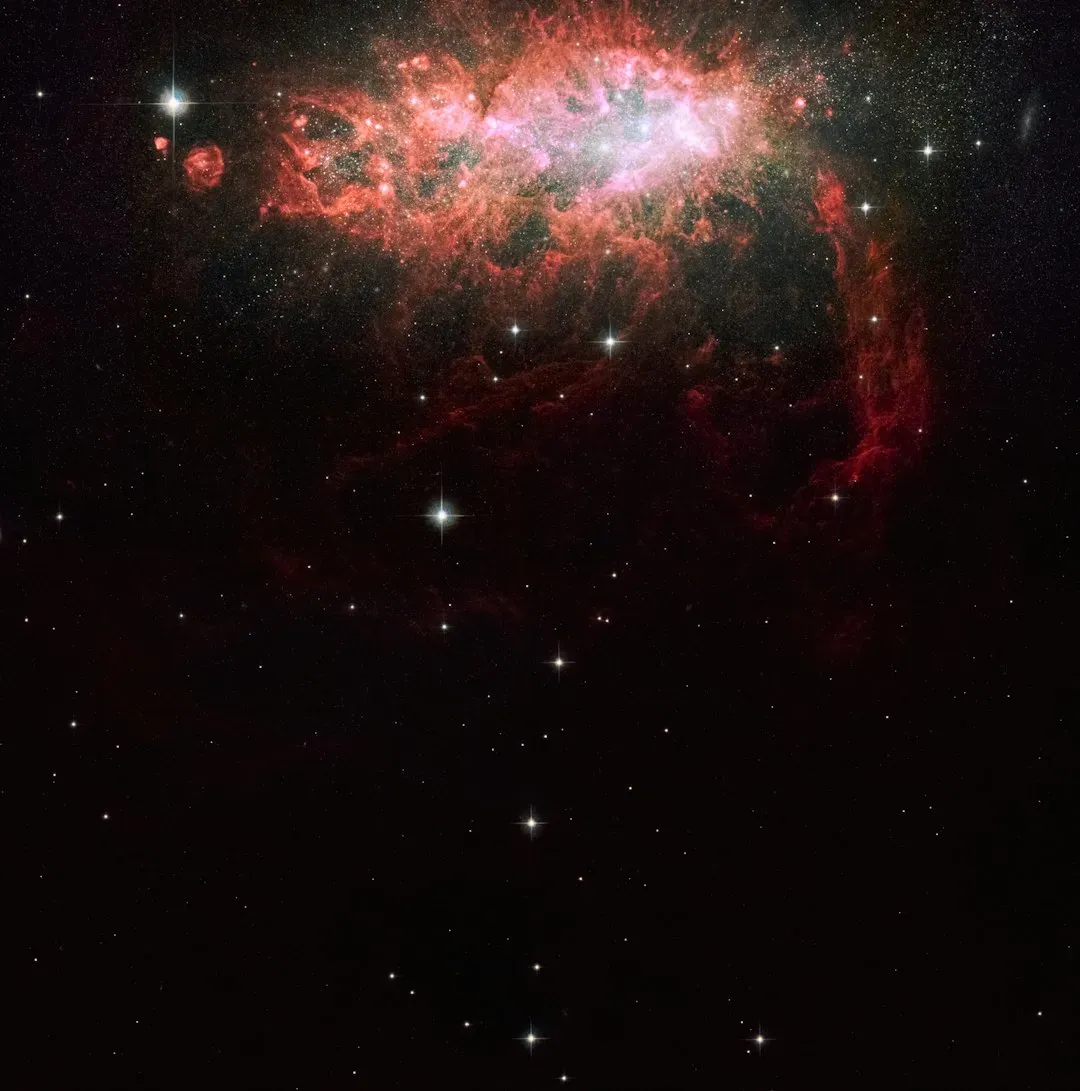
For much of the twentieth century, many cosmologists quietly rooted for a different kind of ending: the Big Crunch. In this scenario, gravity eventually wins the cosmic tug‑of‑war against expansion, slowing it down and then reversing it. Galaxies that are currently racing away from one another would, over stupendous timescales, begin to fall back together. Temperatures and densities would rise, stars and galaxies would collide, and the entire universe would collapse into an incredibly hot, dense state, not unlike the conditions near the Big Bang.
There is something poetically satisfying about the Big Crunch, a universe that breathes in and out like a cosmic lung instead of coasting into a thin, frozen eternity. It also offers the tantalizing idea that collapse could somehow seed a new expansion, in a kind of cyclic universe where Big Bangs and Big Crunches alternate endlessly. However, the discovery in the late 1990s that cosmic expansion is accelerating, not slowing, pushed the Big Crunch out of favor. Unless dark energy behaves very differently in the far future than it does today, a full recollapse looks increasingly unlikely – but not entirely ruled out, which keeps the idea alive in some speculative models.
The Big Rip: When Dark Energy Becomes a Cosmic Wrecking Ball
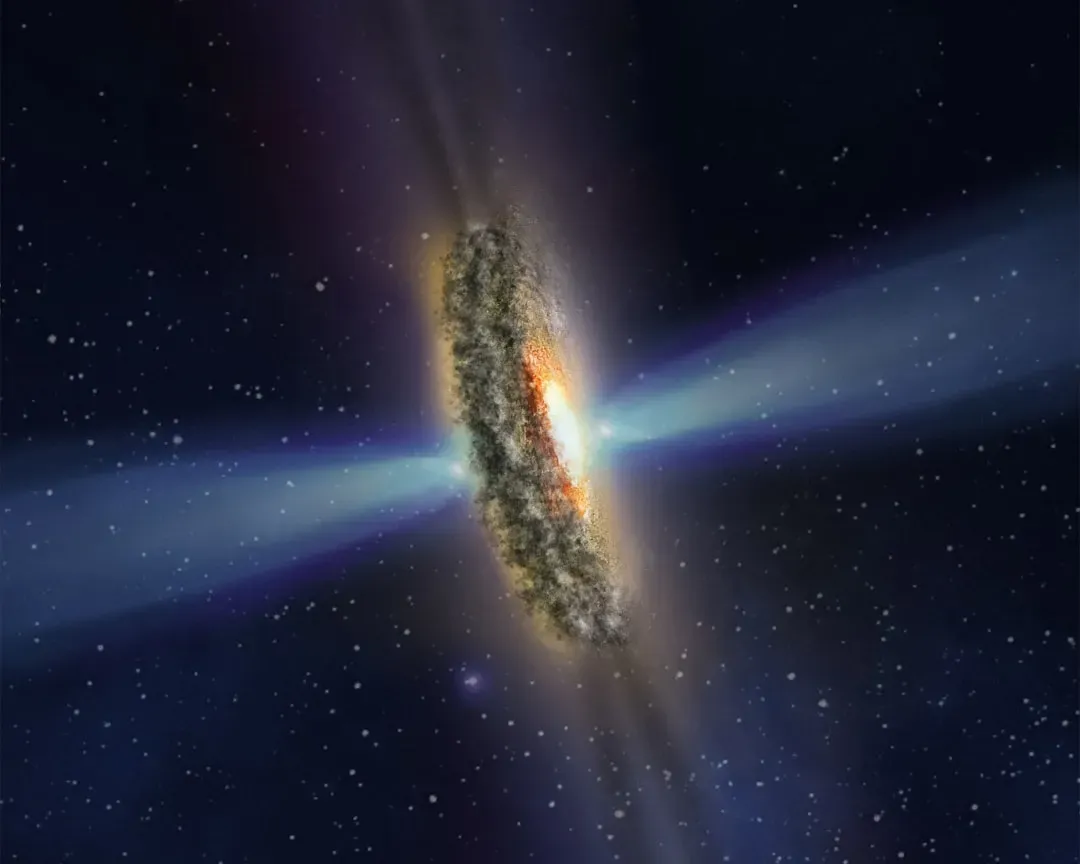
If the heat death is a slow fade and the Big Crunch is a cosmic reversal, the Big Rip is pure cosmic horror. This theory depends on a twist in the nature of dark energy, the mysterious force driving the accelerated expansion of the universe. If dark energy’s strength increases over time instead of staying constant, the expansion does not just continue – it runs wild. Galaxies are pulled apart, then solar systems, then planets themselves, and eventually even atoms and subatomic particles are torn as the fabric of space stretches faster than anything can hold together.
Mathematically, models of the Big Rip can pinpoint a kind of doomsday, a finite time when the scale factor of the universe becomes infinite and everything disintegrates. Depending on the parameters, galaxies would be destroyed billions of years before that final moment, with smaller structures ripped apart closer to the end. Observational data so far mostly favor dark energy behaving like a constant property of space, which makes the Big Rip less likely than the Big Freeze but still an active area of research. This is the kind of scenario that reminds you how much of cosmology hangs on something we cannot see directly yet dominates the evolution of everything.
Cyclic Universes: The Endless Phoenix of Cosmology
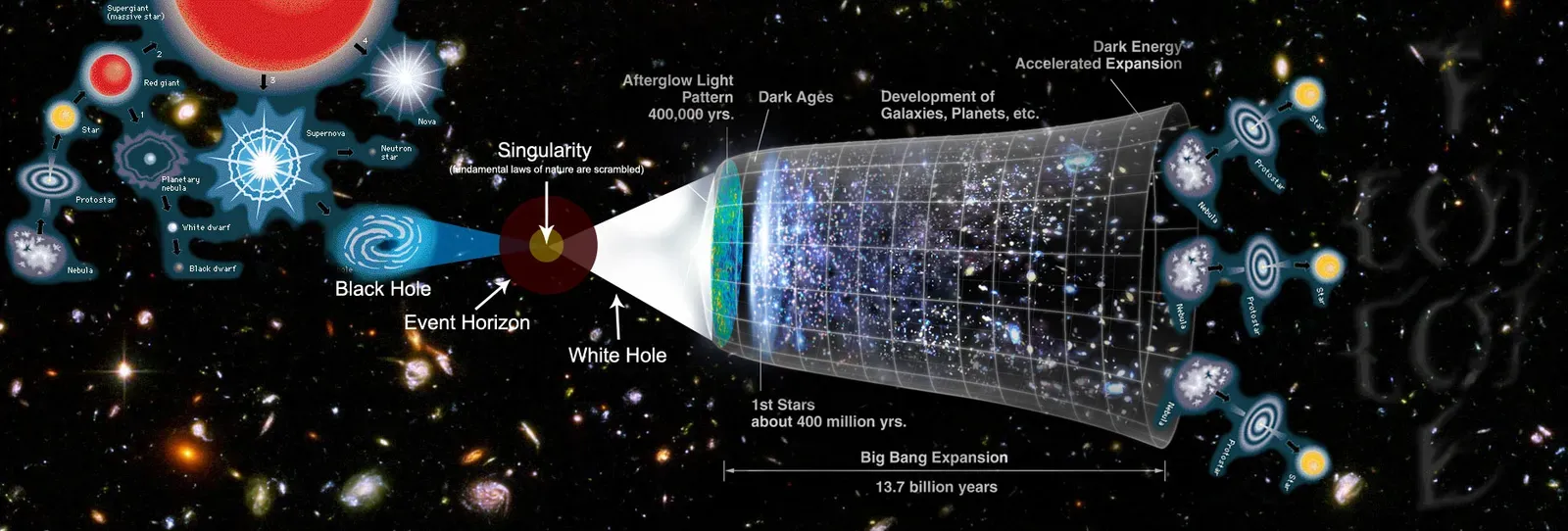
To many scientists and philosophers, the idea of a single, one‑off universe that appears from nowhere and ends forever feels oddly unsatisfying. Cyclic models answer that discomfort by suggesting that the cosmos may be eternal, going through repeated phases of expansion and contraction, or more exotic bounces and renewals. In some versions, what we call the Big Bang is just one transition in an infinite sequence, like a phoenix that keeps rising from its own ashes. Instead of time having a single beginning and a single end, it becomes a loop or a chain of cosmic eras.
Modern cyclic theories draw on advanced physics, including ideas from string theory and quantum gravity, to imagine ways the universe might bounce instead of ending in a singularity. For example, a collapsing phase could trigger a new expanding phase through quantum effects or collisions between higher‑dimensional “branes” in a larger space. While these models are rich and mathematically intriguing, they are very hard to test directly, and most remain speculative. Still, they offer an emotionally and philosophically compelling alternative: maybe the end is never truly the end, just the close of one chapter before another begins that no observer will be around to connect.
The Multiverse and Vacuum Decay: A Quantum Trapdoor Under Reality
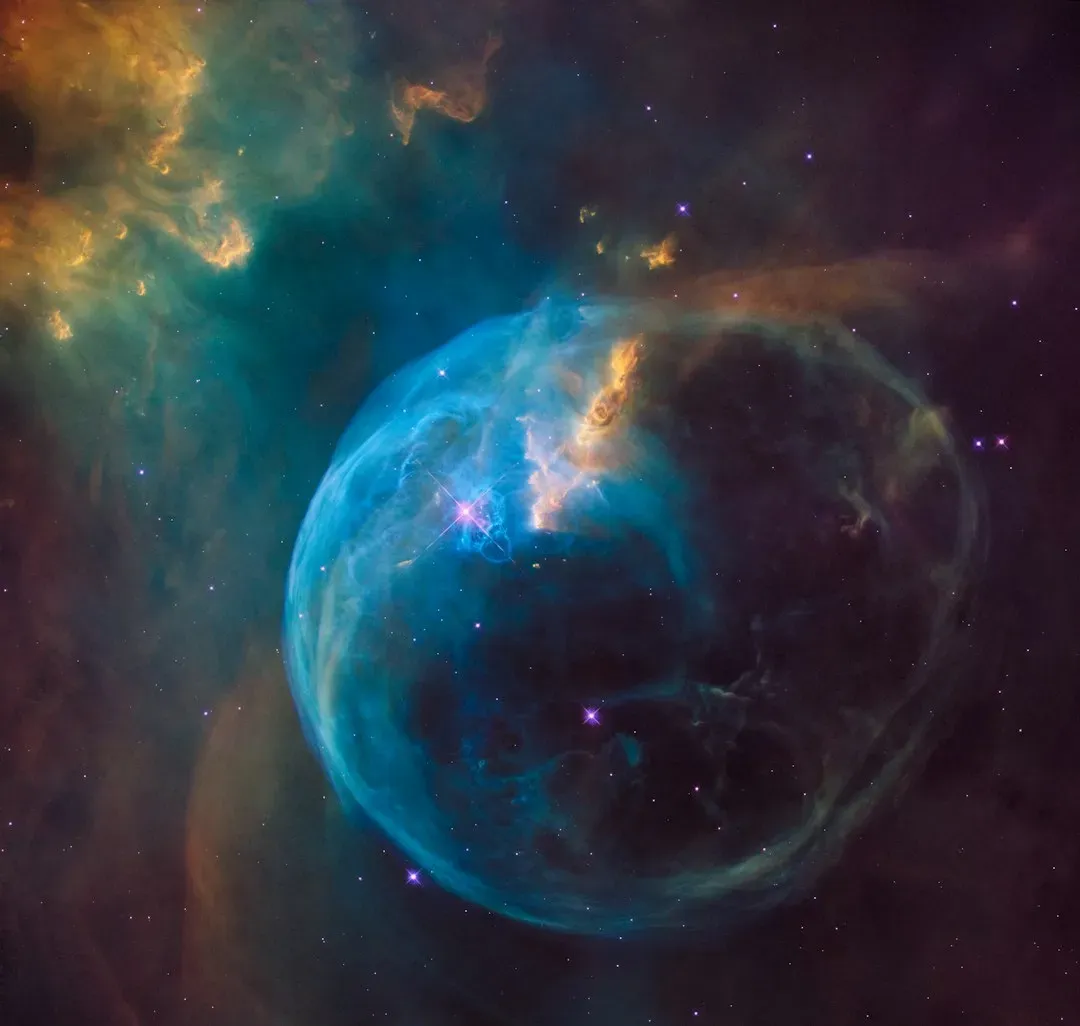
Some of the most unsettling end‑of‑universe ideas come not from astronomy but from particle physics. Our universe might be living in what physicists call a “metastable” vacuum, a kind of good‑enough energy state that is not truly the lowest possible. If that is the case, quantum mechanics allows for the possibility that a tiny region somewhere could suddenly tunnel into a lower‑energy vacuum, creating a bubble that expands at nearly the speed of light. Inside that bubble, the laws of physics themselves could change, and everything we know – from atoms to stars – would be instantly reconfigured or destroyed.
This scenario, sometimes dubbed vacuum decay, would be utterly without warning; no telescope could see the bubble coming because it outruns any signal. The idea sounds like pure science fiction, but calculations using the measured mass of the Higgs boson and other particles have raised the unsettling possibility that our universe might indeed sit near this kind of metastable energy range. On the other hand, unknown physics at higher energies could stabilize everything, and vast timescales mean that, even if vacuum decay is possible, it is overwhelmingly unlikely to happen anytime soon. Still, the mere fact that the equations allow for a quantum trapdoor under our reality is one of the strangest – and most humbling – insights of modern cosmology.
The Role of Black Holes: Cosmic Shredders and Quiet Archivists
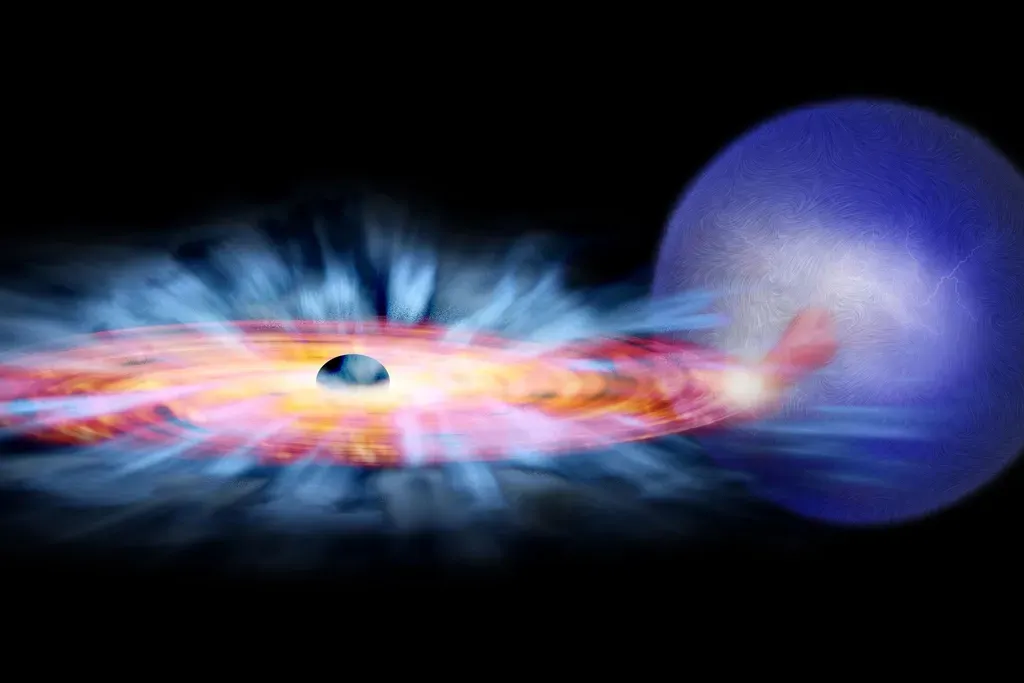
Black holes are the universe’s most dramatic characters, and any serious theory of the end has to deal with what they become in the far future. In many scenarios, as stars die and galaxies age, black holes gradually swallow much of the remaining matter, acting like cosmic shredders that grind complexity down into hot, featureless disks of infalling gas. Over even longer timescales, though, black holes themselves are not eternal. Quantum effects predict that they slowly radiate away their mass in the form of tiny particles, a process so glacially slow that even a massive black hole could take a stupendous amount of time to evaporate.
There is also a deep puzzle about what happens to information that falls into a black hole, a question that links cosmology to the foundations of quantum mechanics. Some solutions suggest that information is somehow preserved in subtle correlations in the radiation, while others imagine quantum imprints on the horizon or new forms of space‑time geometry. In a heat‑death universe, the last act may be a lonely epoch in which the final black holes quietly evaporate, releasing a thin mist of radiation into an almost perfectly empty cosmos. It is a strange image: the most violent objects we know of ending not with a bang but with a whisper.
Why It Matters: What the End of Everything Tells Us About Now
It is fair to ask why any of this matters when the timelines involved dwarf human history to the point of absurdity. None of these scenarios will play out for many billions – or far, far more – years, well beyond the lifespan of our sun, our planet, or our species in anything like its current form. But studying the end of the universe is not morbid daydreaming; it is a stress test for our deepest theories of nature. How space expands, how quantum fields behave, how gravity and quantum mechanics fit together – these questions are all wrapped up in the universe’s ultimate fate.
There is also a philosophical jolt hidden in this research. When you learn that the stars are temporary, that galaxies will thin out, and that even atoms may not be forever, everyday worries can suddenly feel very small. At the same time, the fragility of cosmic structure makes our brief window of existence feel more precious, not less. For me, sitting with these ideas once made my daily commute feel strange: the same traffic and coffee stops, but overlaid with the awareness that we are tiny, conscious ripples in a universe still figuring out how its own story ends. In that sense, thinking about the end is really a way of sharpening our sense of how astonishing it is that there is a present at all.
The Future Landscape of Cosmology: New Telescopes, New Clues, New Surprises
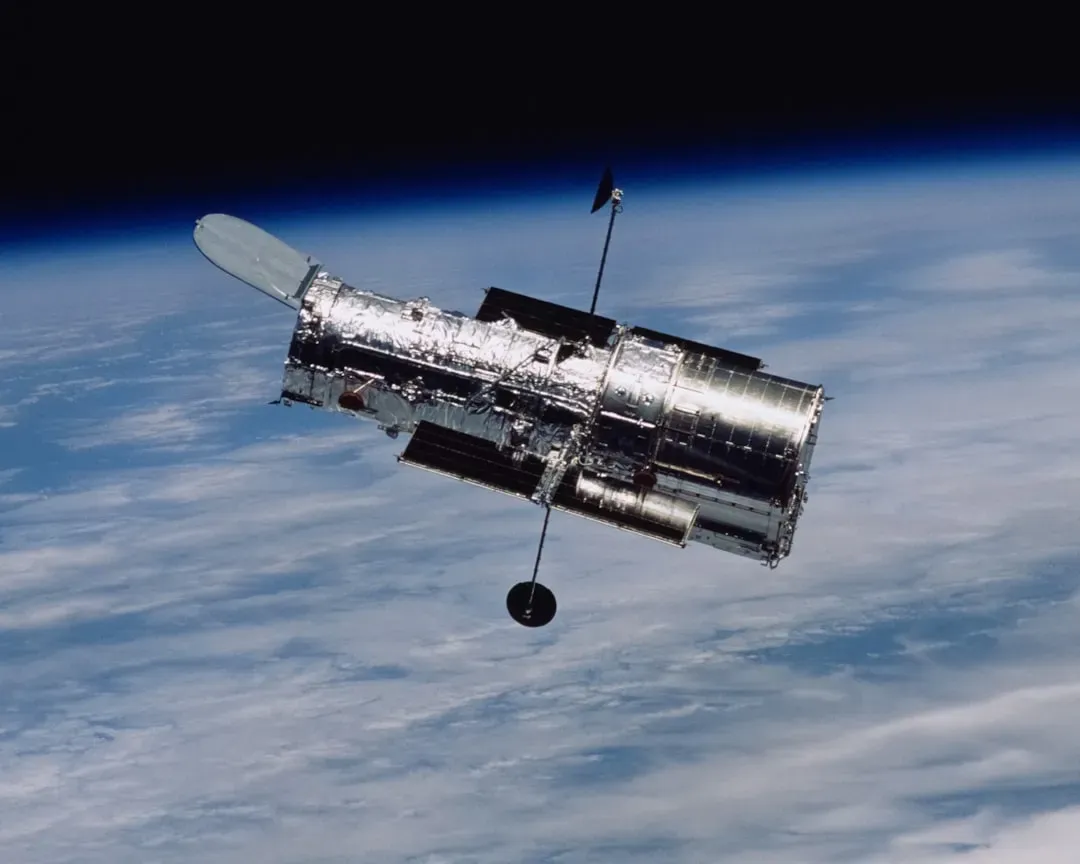
Although we cannot time‑travel to watch the end of the universe, we are getting better at reading its early chapters and middle acts, and that is where the future of this field lies. New space telescopes and massive ground‑based observatories are mapping the distribution of galaxies and dark matter with unprecedented precision, letting scientists test how cosmic expansion has changed over time. Subtle patterns in the cosmic microwave background, the afterglow of the Big Bang, can reveal hints about whether space‑time might be cyclic, whether dark energy evolves, or whether unexpected physics shaped the early universe. Researchers are also hunting for primordial gravitational waves, ripples in space‑time that could support or rule out entire families of end‑of‑universe models.
On the particle physics side, upgrades to accelerators and detectors aim to refine measurements of fundamental constants like the mass of the Higgs boson, which feeds directly into questions about vacuum stability. New theoretical tools, from quantum gravity proposals to simulations on powerful supercomputers, help scientists explore extreme conditions that no experiment can replicate. The global implication is that our picture of the universe’s fate is not fixed; it is a moving target that will sharpen or shift as data improve. That uncertainty can feel unsettling, but it is also the beating heart of science: the recognition that today’s “best guess” is really a stepping stone to a more complete story we have not yet written.
How You Can Engage With the End of the Universe
Cosmology can feel remote, like something best left to people working late nights with chalkboards and telescope time, but the story of the universe’s fate is not theirs alone. Public funding, political will, and cultural curiosity all shape which big experiments get built and which ambitious questions we decide to pursue. There are simple ways to be part of that ecosystem: supporting science journalism, visiting planetariums and science museums, and paying attention when missions and observatories come up in the news. Even conversations with friends and family about what we have learned – about dark energy, black holes, or the cosmic microwave background – keep these questions alive in the broader culture.
If you feel compelled to go a step further, you can back citizen‑science projects that help astronomers classify galaxies or spot supernovae, or lend your voice when policymakers debate investments in basic research. None of us can personally influence how the universe ends, but we can influence how well our species understands the path we are on. In a cosmos where even stars and galaxies are temporary, curiosity becomes a kind of quiet rebellion, a way of insisting that these fleeting minds want to know how the story plays out. And for as long as the universe allows us to ask questions, that might be one of the most meaningful things we do.
Suhail Ahmed is a passionate digital professional and nature enthusiast with over 8 years of experience in content strategy, SEO, web development, and digital operations. Alongside his freelance journey, Suhail actively contributes to nature and wildlife platforms like Discover Wildlife, where he channels his curiosity for the planet into engaging, educational storytelling.
With a strong background in managing digital ecosystems — from ecommerce stores and WordPress websites to social media and automation — Suhail merges technical precision with creative insight. His content reflects a rare balance: SEO-friendly yet deeply human, data-informed yet emotionally resonant.
Driven by a love for discovery and storytelling, Suhail believes in using digital platforms to amplify causes that matter — especially those protecting Earth’s biodiversity and inspiring sustainable living. Whether he’s managing online projects or crafting wildlife content, his goal remains the same: to inform, inspire, and leave a positive digital footprint.