
Have you ever felt like there’s more to reality than what you see? That somewhere out there, a different version of you might be living a completely different life? It sounds like something out of a sci-fi movie. Yet, these ideas aren’t just wild speculation anymore. Some of the brightest minds in physics are taking the concept of parallel universes and extra dimensions very seriously.
Here’s the thing: our universe may not be alone. From quantum mechanics to string theory, multiple branches of modern physics hint at the possibility that our reality is just one tiny piece of an unimaginably vast cosmic puzzle. So let’s dive in and explore these mind-bending theories that challenge everything you thought you knew about existence itself.
The Many-Worlds Interpretation: Every Choice Creates a New Universe
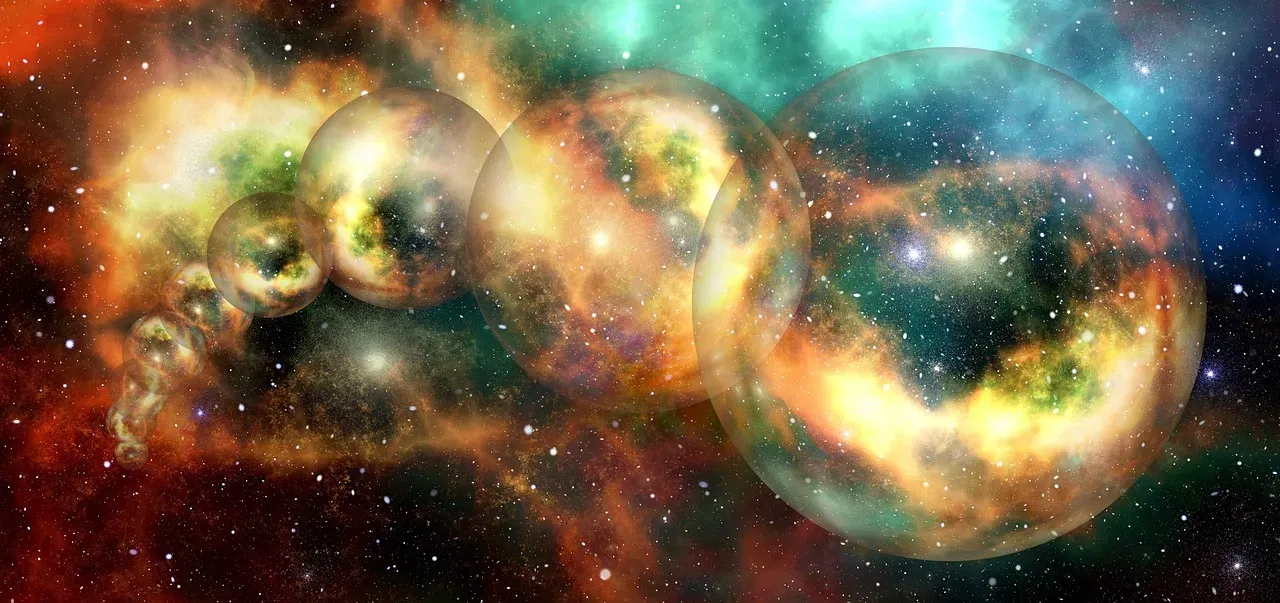
The Many-Worlds Interpretation dates back to physicist Hugh Everett, who first proposed it in 1957. It’s perhaps one of the wildest ideas in all of quantum mechanics. According to this interpretation, every time a decision is made, the universe splits into different realities. Think about that for a second. The shirt you chose to wear this morning? In another universe, you picked a completely different color.
The theory suggests that every time a quantum event happens, the universe splits into many branches, with each branch showing a different outcome. This means all possible outcomes of every decision, every quantum measurement, actually happen somewhere. You exist in countless universes, each experiencing a slightly different version of your life. Let’s be real, that’s a lot to wrap your head around.
The theory asserts that the universal wavefunction is objectively real, and that all possible outcomes of quantum measurements are physically realized in different worlds. Still, this interpretation has its skeptics. Most physicists find it too extreme, though it has merit in finding a place for the observer inside the system.
Cosmic Inflation and Bubble Universes: An Endless Sea of Realities
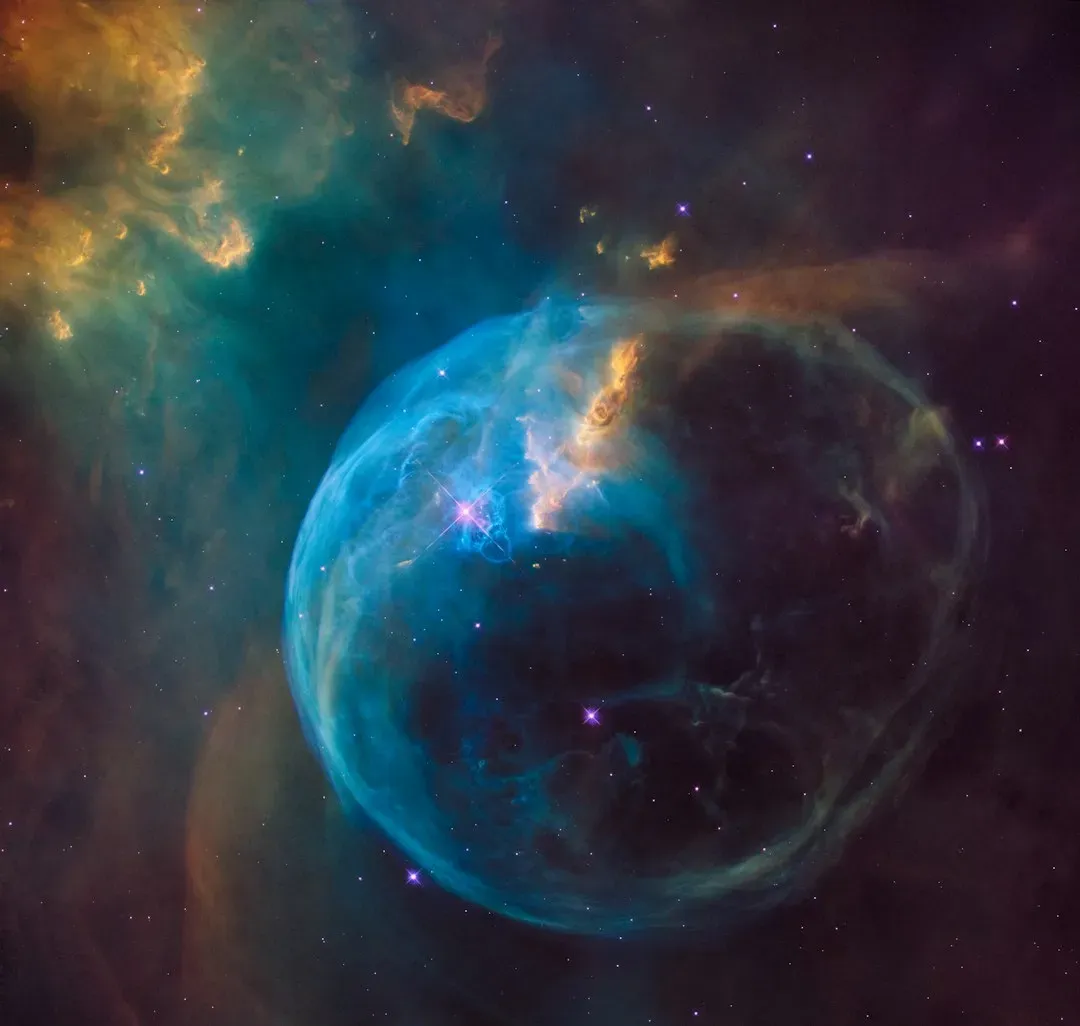
Cosmic inflation is one of the leading theories about what happened in the first fraction of a second after the Big Bang. When our universe was very young, less than a second old, it underwent a period of rapid expansion, inflating to become many orders of magnitude larger. Imagine a balloon that suddenly expands at an exponential rate.
The fascinating part is this: inflation does not end everywhere at the same time, and it is possible that as inflation ends in some regions, it continues in others. This process could have created what scientists call bubble universes. Each bubble might become its own universe, with our visible universe being just one of many bubbles in a bigger multiverse.
These bubble universes might have interacted early on, leaving marks on the cosmic microwave background. Honestly, it’s hard to say for sure whether we’ll ever detect such marks. Yet cosmologists are actively searching for these clues in the oldest light in the universe.
String Theory’s Extra Dimensions: Reality Beyond What We Can See
String theory is a theoretical framework in which point-like particles are replaced by one-dimensional objects called strings that propagate through space. These strings vibrate at different frequencies, and those vibrations determine the properties of particles we observe. It’s like musical notes creating different sounds.
Here’s where it gets really interesting: for string theory to work, scientists believe there must be more than the three dimensions we see, with some versions of the theory predicting up to 11 dimensions. Why can’t we see these extra dimensions? Scientists think that higher dimensions might be curled up so small that we can’t see them, or if we could access them, we might experience time differently.
If this fifth dimension existed, that dimension had to be scrunched down to about 10 to the negative 35 meters. That’s unimaginably small. We are dealing with shrinking six extra dimensions to small sizes that, while unobservable to us, can still be probed by microscopic strings. The shape of these hidden dimensions could determine the very laws of physics in our universe.
Level II Parallel Universes: Different Physical Laws, Different Realities
Not all parallel universes need to follow the same rules as ours. Max Tegmark’s classification includes Level II universes with different physical constants. Imagine a universe where gravity is stronger, or where the speed of light is different. Life as we know it couldn’t exist there.
The underlying fundamental theory may be 11-dimensional and supersymmetric, with the potential energy of the field driving inflation having several different minima, corresponding to different ways of breaking symmetry and different low-energy physics. What this means is that depending on how the early universe cooled down, entirely different sets of physical laws could emerge.
These Level II universes would be separated from ours by vast distances beyond the cosmic horizon. The multiverse is thought to exist far beyond the cosmological horizon, theorized to be so far away that it is unlikely any evidence will ever be found. Still, the theory offers an elegant explanation for why our universe seems so perfectly tuned for life.
The Anthropic Principle: Why Our Universe Seems Just Right
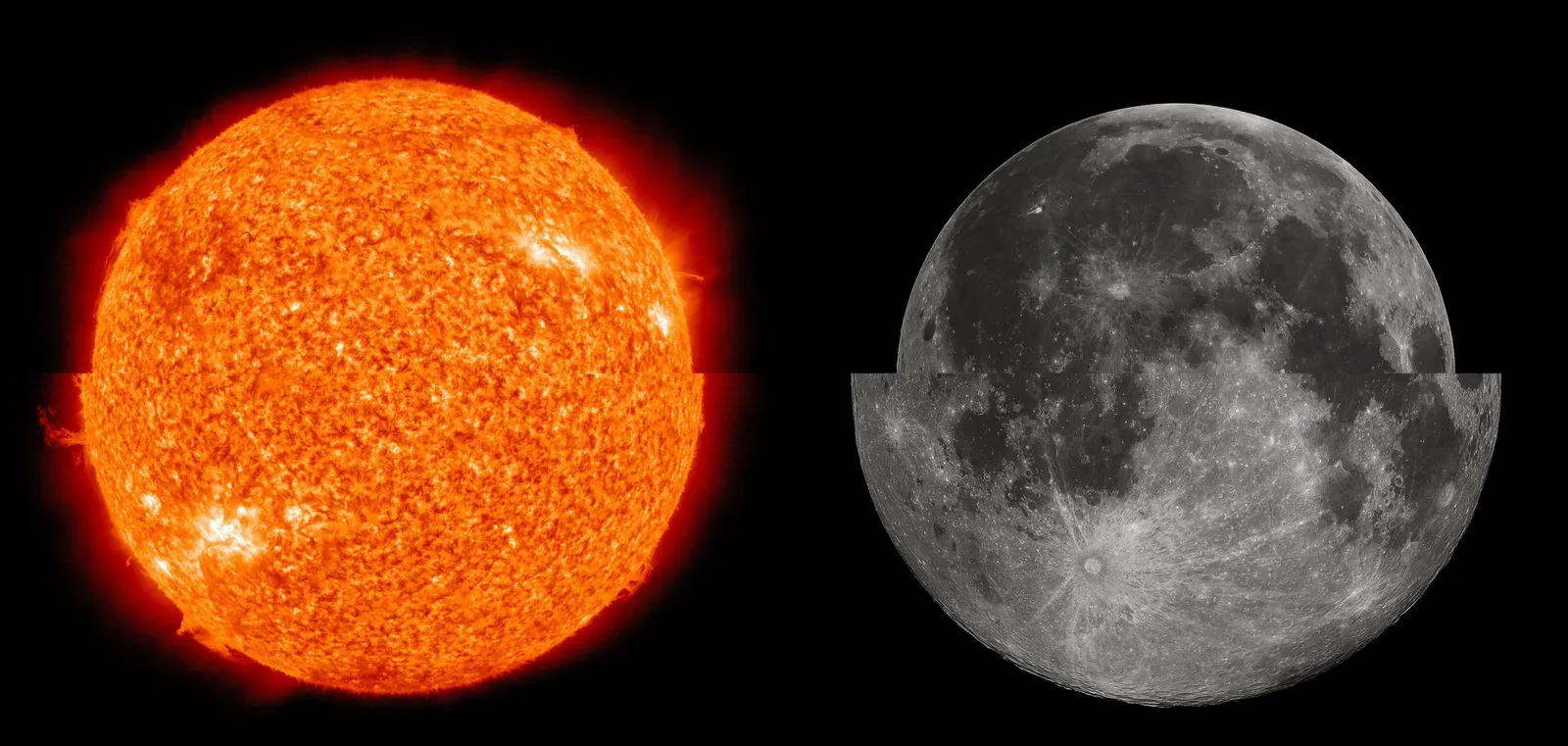
The biggest piece of evidence for the multiverse is that life exists, particularly intelligent life capable of making cosmological observations. Think about it. So many things had to line up just right in our universe that the existence of life seems improbable, and if there was only one universe, it likely shouldn’t have life in it.
This is where the anthropic principle comes in. The principle suggests that the existence of a multitude of universes, each with different physical laws, could explain the fine-tuning of our universe for conscious life. In a multiverse containing countless universes with random properties, at least one would have conditions suitable for life. We simply happen to live in that lucky one.
In a multiverse, fine-tuning might make sense because of many universes with different constants, and we might just be lucky to live in a universe where conditions support life. Some scientists find this reasoning unsatisfying, almost like giving up on finding a deeper explanation. The debate continues to this day.
Brane Theory and M-Theory: Membranes Floating in Higher Dimensions

In string theory, a brane is a physical object that generalizes the notion of a point particle to higher dimensions, with a point particle viewed as a brane of dimension zero. This gets complicated quickly. Branes can have multiple dimensions, and our entire universe might be a three-dimensional brane floating in a higher-dimensional space.
Matrix theory, the latest formulation of string theory, has eleven spacetime dimensions, and it was discovered that five distinct types of string theory were actually different limits of M theory. Brian Greene’s nine types of multiverses include brane multiverses, where parallel universes exist on separate branes.
Imagine our universe as a sheet of paper floating in a room. Other sheets might be floating nearby, representing other universes. They could be incredibly close in higher-dimensional space yet completely inaccessible to us. M-theory proposes that all five superstring theories are aspects of a single eleven-dimensional theory with higher-dimensional analogs of strings.
Quantum Entanglement and the Holographic Principle: Reality as Information
Quantum entanglement is one of the strangest phenomena in physics. Two particles can become linked in such a way that measuring one instantly affects the other, no matter how far apart they are. Some interpretations suggest this could connect to parallel universes. Spooky action at a distance can lead to a multiverse, with some interpretations proposing that our entire universe is described by a single universal wave function that constantly splits.
Then there’s the holographic principle, which suggests that all the information contained in a volume of space can be represented by information on the boundary of that space. It’s like how a hologram on a flat surface can create a three-dimensional image. This principle has deep connections to string theory and the nature of reality itself.
Brian Greene’s classification includes holographic multiverses, where our three-dimensional reality might be a projection from information stored on a two-dimensional surface. I know it sounds crazy, but physicists take this seriously. It could fundamentally change how we understand the fabric of space and time.
Recent Evidence from Cosmic Observations: The Cold Spot and Gravitational Waves
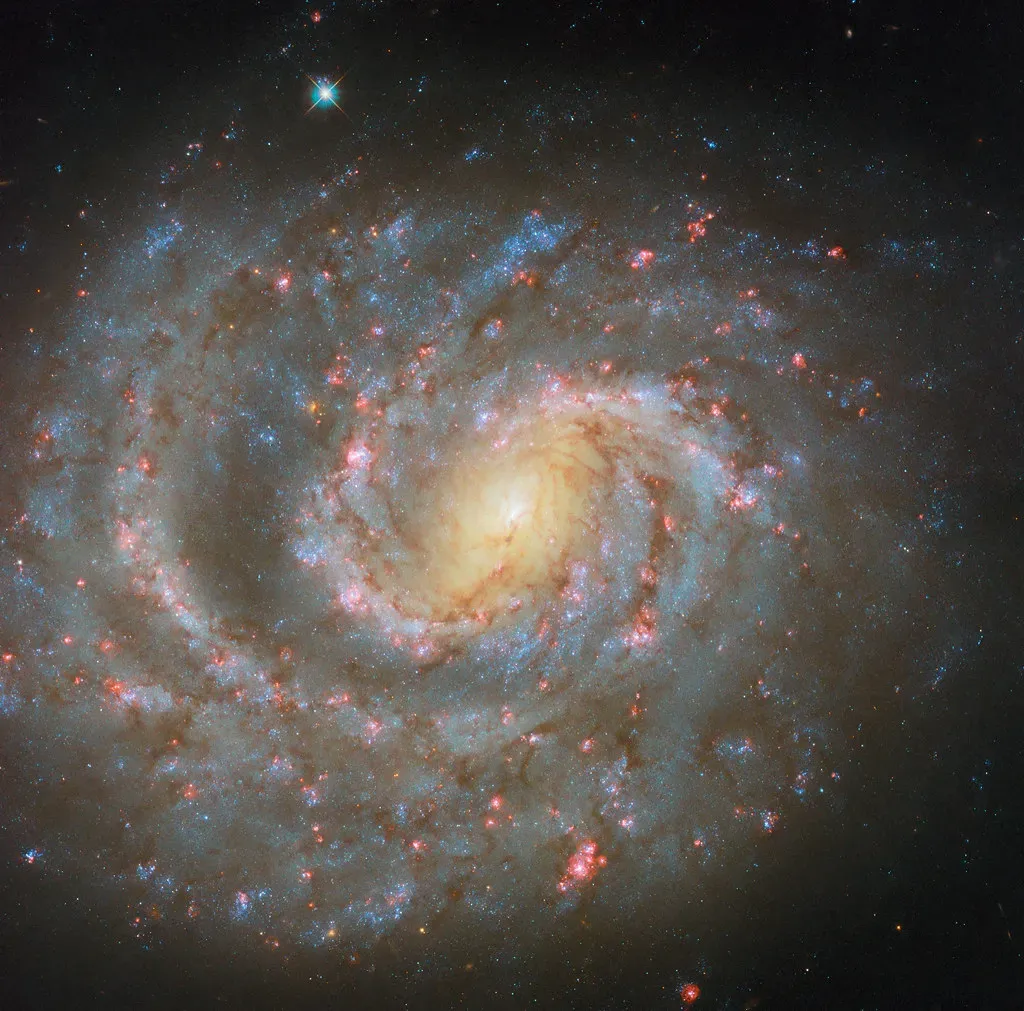
One spot seen from the Southern Hemisphere in the constellation Eridanus is particularly cold, around 0.00015 degrees colder than its surroundings, dubbed the Cold Spot. Some scientists have speculated that this anomaly could be evidence of a collision with another universe in the distant past.
Anomalous quantum oscillations detected by Swiss and American physicists using a large particle accelerator cannot be explained by standard laws of physics, and this may be the first evidence of the existence of parallel worlds. These findings, reported in early 2025, have sparked intense debate in the scientific community.
Future measurements of gravitational waves will be looking for subtle signals predicted by string theory, and if black holes are fuzzballs, they should produce different signals when they merge, and if extra dimensions exist, black holes may oscillate in different ways. Technology is finally catching up to theory, giving us new ways to test these wild ideas.
The Challenge of Testing Multiverse Theories: Science or Philosophy?
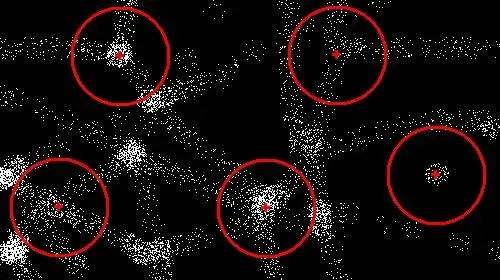
Some physicists have argued that the multiverse is a philosophical notion rather than a scientific hypothesis, as it cannot be empirically falsified. This is a serious concern. If you can’t test something, is it really science? Critics argue that unfalsifiable theories fall outside the boundaries of scientific inquiry.
Scientists don’t currently have a way to directly test the idea of the multiverse, raising questions about what it means that the multiverse is currently untestable. However, a 2025 survey of more than 1000 physicists revealed no consensus on the interpretation of quantum phenomena, showing just how divided the scientific community remains.
Understanding quantum physics and its realms has been impossible until now, but technology has improved and things may be changing. Scientists are developing cleverer indirect tests. Maybe we’ll never visit a parallel universe, but we might find fingerprints of their existence in our own cosmic backyard.
Conclusion: Living in a Universe of Infinite Possibilities
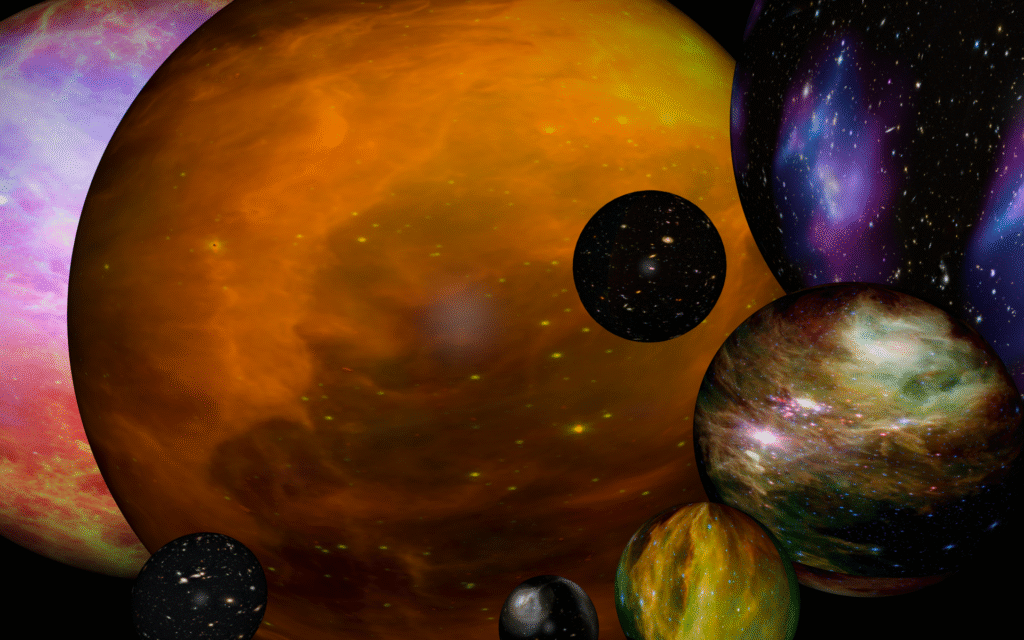
The theories we’ve explored push the boundaries of human imagination and scientific inquiry. From quantum mechanics splitting reality into infinite branches to string theory’s hidden dimensions, these ideas challenge our most basic assumptions about existence. Whether parallel universes and extra dimensions truly exist remains one of the greatest mysteries in modern physics.
What’s remarkable is that we’re living in a time when these questions might actually be answerable. New telescopes, particle accelerators, and gravitational wave detectors are giving scientists unprecedented tools to probe the nature of reality. The next few decades could bring revolutionary discoveries.
The concept of the multiverse forces us to rethink our place in the cosmos. If countless universes exist, each with different laws and different versions of reality, what does that mean for us? Are we special, or just one possibility among infinite others? These questions touch on philosophy, science, and what it means to be human. What do you think? Could there be another you out there, reading this same article in a parallel universe, but making completely different choices? The possibilities are literally endless.
Jan loves Wildlife and Animals and is one of the founders of Animals Around The Globe. He holds an MSc in Finance & Economics and is a passionate PADI Open Water Diver. His favorite animals are Mountain Gorillas, Tigers, and Great White Sharks. He lived in South Africa, Germany, the USA, Ireland, Italy, China, and Australia. Before AATG, Jan worked for Google, Axel Springer, BMW and others.