


If you’ve ever stared into someone’s eyes and felt like you were looking into another universe, you weren’t completely wrong. Tucked into those small orbits in your skull are some of the most complex pieces of biological engineering on the planet, quietly translating light into your entire visual experience of reality. Most of the time, we barely notice them working, until something goes wrong or a pair of glasses suddenly makes everything sharp again.
The human eye doesn’t just “see” in a simple way. It edits, fills in gaps, lies to you sometimes, and protects you in ways you rarely appreciate. Once you understand what your eyes are actually doing every second, even something as ordinary as glancing at your phone or watching a sunset feels a little more magical. Let’s dig into what’s really going on every time you open your eyes.
The Eye Sees the World Upside Down (Your Brain Flips It)

One of the strangest truths about vision is that the world you think you see the right way up actually hits the back of your eye completely upside down. The cornea and lens at the front of the eye bend, or refract, light in such a way that the image projected onto the retina is inverted and reversed. If you could take a photo of what’s landing on your retina, it would look like someone turned the world upside down and swapped left and right.
Your brain quietly fixes this chaos without asking your permission. Parts of the visual cortex reorganize that raw information so that you experience a stable, upright world. Experiments with special goggles that flip the image you see have shown that, after a while, the brain gradually adapts and makes the world feel “normal” again. It’s a reminder that what you “see” isn’t simply what your eyes capture; it’s what your brain decides to show you.
You Have a Blind Spot That Your Brain Erases
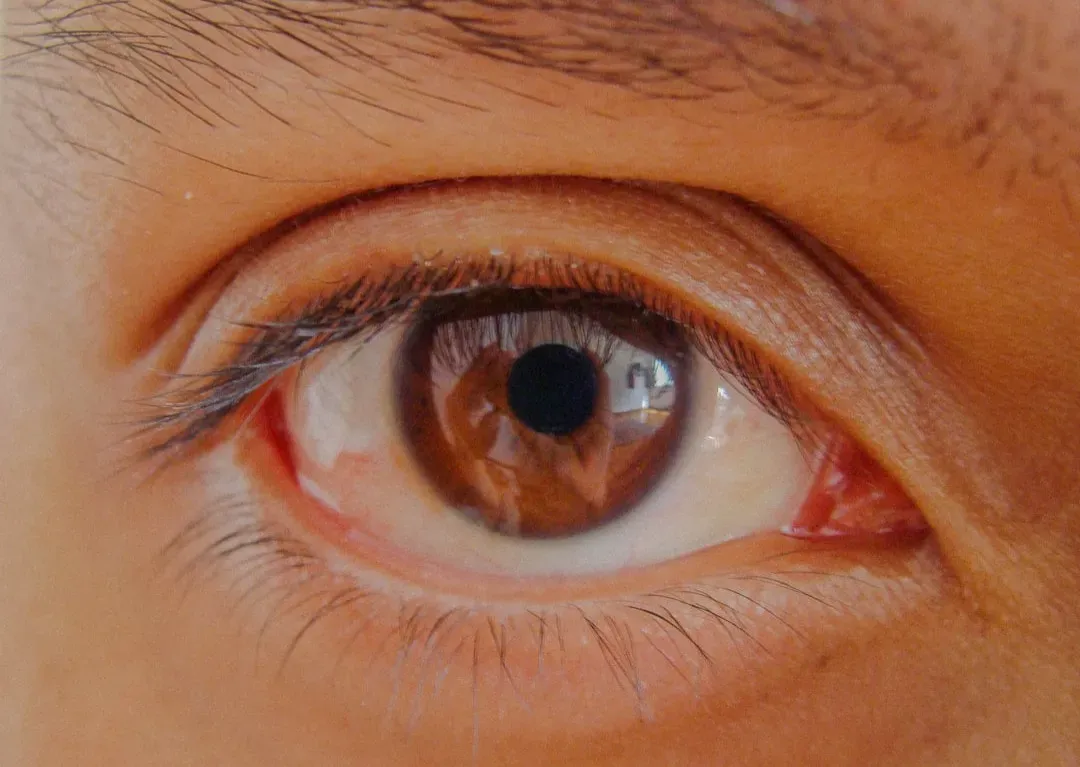
Every eye has a small patch on the retina where there are no light-detecting cells at all. This is the spot where the optic nerve bundles up and exits the back of the eye, carrying visual information toward the brain. Because there are no rods or cones there, that little area cannot see anything. In theory, you should be walking around with a small black hole in your vision all the time.
But you don’t notice it, because your brain is an expert at patching reality. It fills in that missing area using information from the surrounding regions and from your other eye, like an overenthusiastic photo editor doing touch-ups. You can actually test your blind spot with simple marks on a page, and it’s a bit unsettling when something just disappears. That moment reveals how much of your visual world is quietly “edited” rather than faithfully recorded.
Your Retina Works Like a Living Camera Sensor
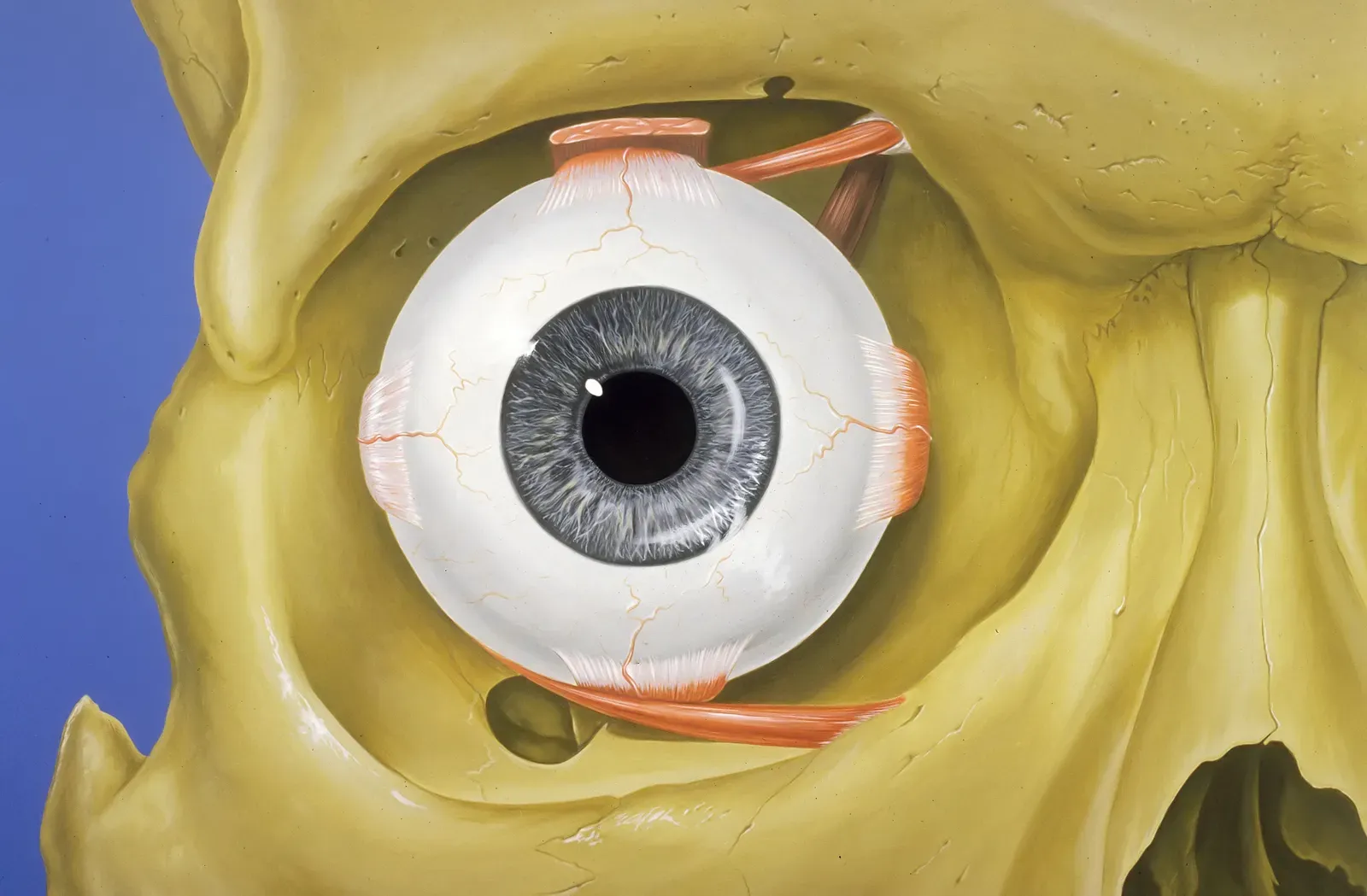
The retina at the back of your eye is often compared to a camera sensor, but that analogy actually undersells how sophisticated it is. It contains millions of rod and cone cells that turn light into electrical signals, with rods being more sensitive to low light and cones specializing in color and detail. Cones dominate in the central area called the fovea, which is why you see sharpest in the exact center of your gaze.
What makes the retina even more impressive is that it doesn’t just passively receive light; it does early processing before the signal ever hits the brain. Different layers of cells inside the retina start detecting edges, movement, and contrasts, sorting information so the brain has less raw data to clean up. It’s a bit like having a powerful graphics card built into your eyeball, pre-processing the scene so your brain can focus on the bigger picture.
Your Eyes Perform Tiny Constant Movements You Never Notice

Even when you think you’re staring at something completely still, your eyes are constantly flickering with tiny, rapid movements. These little motions, called microsaccades and drifts, prevent the image on your retina from fading away. If the image were perfectly stable, your light-sensitive cells would gradually stop responding, and the scene would start to disappear from your awareness.
On top of that, your eyes perform larger, lightning-fast jumps called saccades several times a second as they scan the world. You usually don’t notice these either, because your brain “turns down” visual awareness during the jumps and blends everything into one seamless experience. In everyday life, this is why you can read a page of text quickly or scan a crowded room without feeling like your world is jerking around like a badly edited video.
You Only See Sharp Detail in a Tiny Part of Your Vision

Most people assume their entire field of view is equally sharp, but that’s an illusion. Only a small region in the center of your retina, the fovea, captures fine detail at high resolution. If you stretch out your arm and look at your thumbnail, that little area represents roughly how much of the world you actually see in razor-sharp focus at any given instant.
Everything outside that center area is lower resolution, more like your peripheral “awareness” than a detailed picture. Your brain cleverly combines rapid eye movements with memory to create the feeling of a fully sharp scene. It’s a bit like how a smartphone stitches together multiple photos to form a panorama, just done at breathtaking speed inside your head without you realizing it.
Color Vision Is a Clever Brain Trick, Not a Property of Light
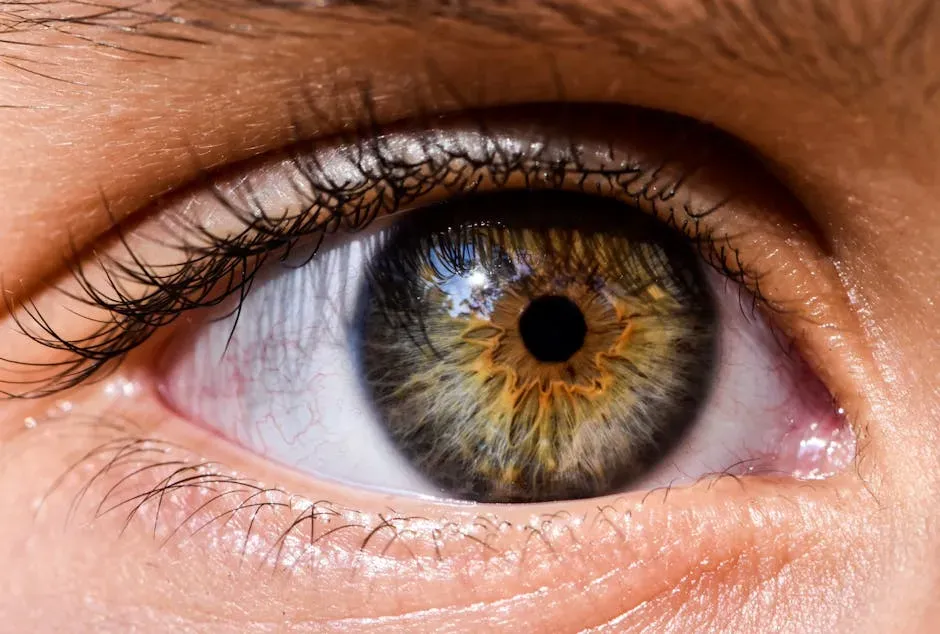
Light itself doesn’t come with labels like red, blue, or green; it’s just waves of different wavelengths. Your eye has three main types of cone cells, each tuned to a different range of wavelengths, and your brain interprets the relative activity of these cones as color. When certain wavelengths hit your eye, the brain turns abstract energy into a rich internal experience of color that feels absolutely real.
Because of this, color isn’t as fixed as we think. The same object can look slightly different depending on the lighting, surrounding colors, and what your brain expects to see. That’s why two people might argue over whether a dress looks blue or gold in a viral photo. Your color world is partly physics and partly interpretation, and your eyes and brain are constantly negotiating what counts as “red” or “green” in any moment.
Your Eyes and Brain Edit Reality to Keep Things Stable

You might imagine that your eyes deliver a live, raw feed of the world to your brain like a camera, but that’s not really what happens. Instead, your visual system is constantly smoothing out motion, adjusting for lighting changes, and compensating for your own movements. When you move your head, your brain cancels out the motion so the world appears stable rather than wobbling like shaky footage.
This stability can sometimes create strange effects. Optical illusions, for example, take advantage of the shortcuts your brain uses to interpret edges, contrast, and shading. When an illusion “tricks” you, it isn’t that your eyes are failing; they’re doing exactly what they evolved to do in natural environments. It’s just that in certain situations, the rules your brain uses to keep the world stable backfire in amusing and sometimes mind-bending ways.
Your Eyes Reveal a Lot About Your Health

An eye exam is not just about figuring out your glasses prescription; it can also act like a window into your overall health. Because blood vessels and nerves in the retina are visible without surgery, eye doctors can sometimes spot early signs of conditions like diabetes, high blood pressure, or certain neurological issues. Changes in the tiny blood vessels at the back of the eye can hint at broader problems elsewhere in the body.
Even subtle symptoms like dryness, redness, or flashes of light can be early warnings that something more serious is going on. Modern imaging tools can scan the layers of the retina in extremely fine detail, letting doctors catch disease before you notice any obvious symptoms. It’s one of the reasons a routine eye checkup can be surprisingly important, even if you think your vision is perfectly fine.
Vision Is Deeply Personal: No Two People See the World Exactly Alike

We talk about “seeing the same thing,” but in a strict sense, no two people ever do. Eye shape, lens clarity, cone sensitivity, and even the density of cells in the fovea vary from person to person. Tiny differences in how your cones respond to wavelengths can shift your personal experience of color, so your “perfect sky blue” might not match someone else’s, even though you both call it by the same name.
On top of that, your brain’s expectations, memories, and attention shape what you notice and what you ignore. Two people can walk down the same street and later remember completely different details, because their eyes and brains filtered for different things. Once you realize how individual vision really is, it becomes easier to understand why people genuinely see the world differently, both literally and metaphorically.
A Tiny Organ With a Massive Job
The human eye is small enough to fit comfortably behind a pair of glasses, yet complex enough to keep scientists and doctors fascinated for a lifetime. It doesn’t just capture light; it collaborates with the brain to construct a world that feels solid, colorful, and stable, even though the raw input is incomplete, inverted, and constantly jumping around. Every blink and every glance is backed by a huge amount of silent teamwork between cells, nerves, and neural circuits.
Understanding how your eyes truly work can change how you look at everyday life, from reading a message to watching a sunset bleed across the horizon. It turns ordinary vision into something you might feel a bit more protective of, and maybe a bit more grateful for. Knowing all this, how will you look at the world the next time you simply open your eyes?


