
Some stars behave so strangely that even seasoned astronomers have to stop, stare, and admit: we really don’t understand what’s going on yet. These aren’t the familiar twinkling pinpoints you idly glance at on a clear night; they are cosmic outliers that seem to bend the rules of physics, challenge long‑held theories, and occasionally look like something straight out of science fiction.
Over the last two decades, new telescopes on the ground and in space have blown open our view of the sky. By capturing light across the spectrum, from low‑energy radio waves to blistering gamma rays, they’ve revealed a small but growing list of stars that simply don’t fit the standard textbook picture. Let’s walk through nine of the most baffling and exciting examples, and what they might be trying to tell us about how the universe really works.
Tabby’s Star: The Flickering Mystery That Launched a Thousand Theories
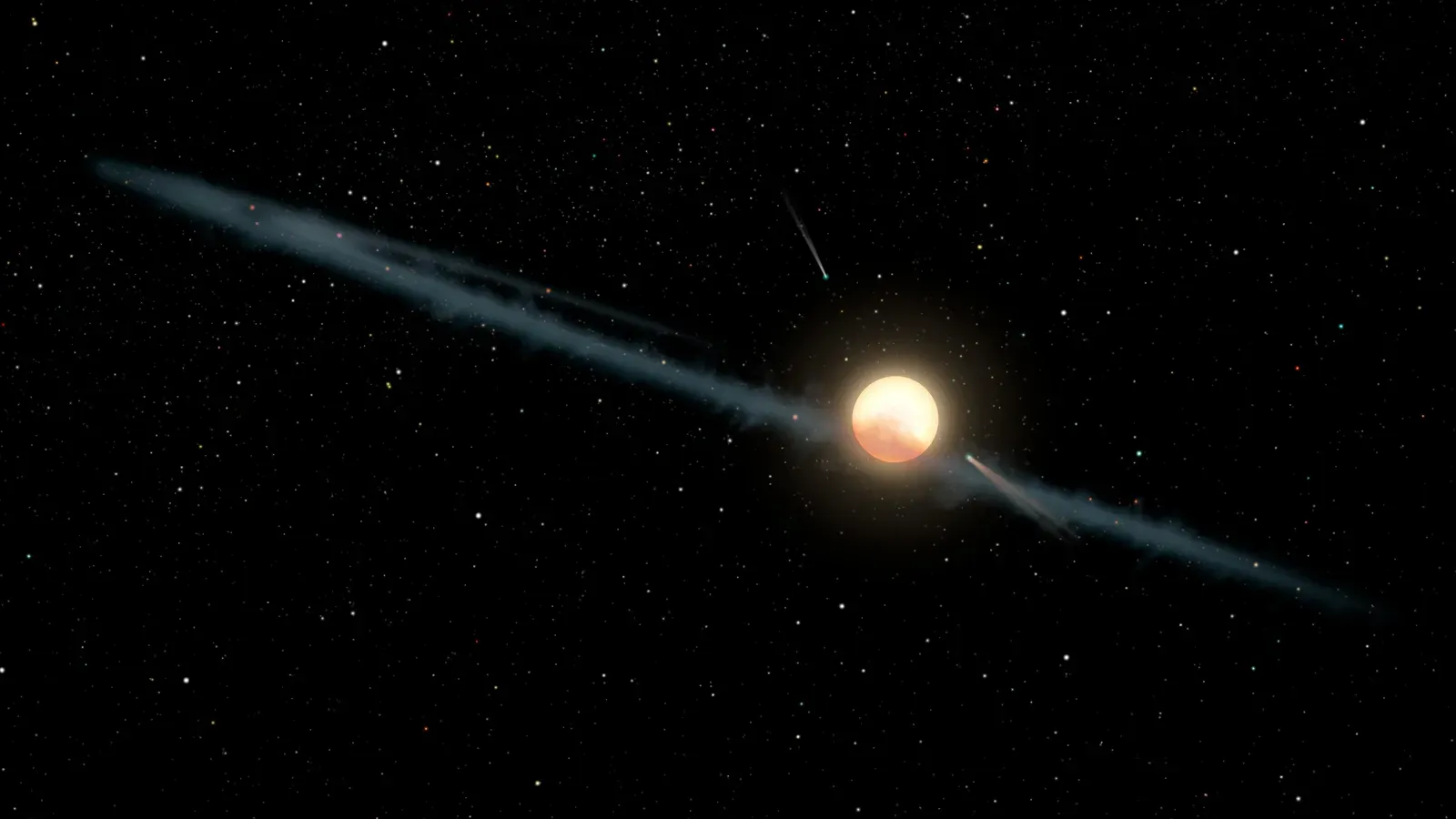
Imagine watching a star and seeing its light dim by nearly a quarter, then brighten again, with no clear rhythm and no obvious cause. That’s Tabby’s Star, officially known as KIC 8462852, one of the strangest stars ever caught by NASA’s Kepler space telescope. Its bizarre, irregular dips in brightness initially sparked wild ideas, including enormous artificial structures, because nothing known at the time matched its behavior.
As more observatories joined in, astronomers noticed that the star dimmed more strongly at shorter, bluer wavelengths than in redder light. That pattern strongly suggested dust rather than solid, opaque objects, because tiny dust grains scatter blue light more efficiently. The leading ideas today involve swarms of dusty fragments from disrupted comets or a disintegrating, uneven disk of material. Yet the exact configuration remains elusive, and the star keeps misbehaving just enough to remind everyone that the mystery isn’t fully solved.
Magnetars: Zombie Stars With Magnetic Fields That Defy Imagination
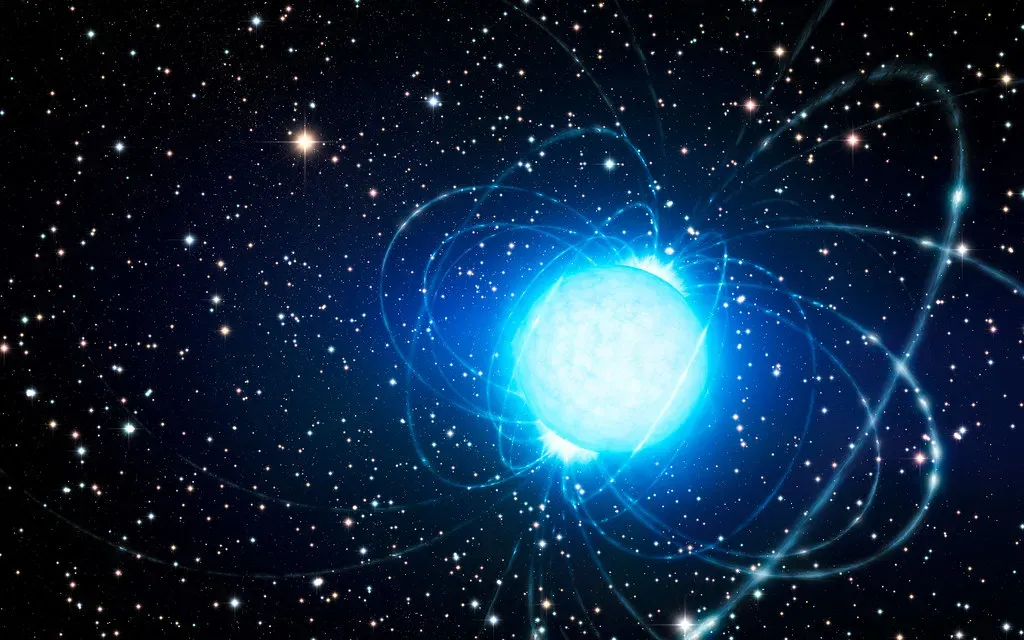
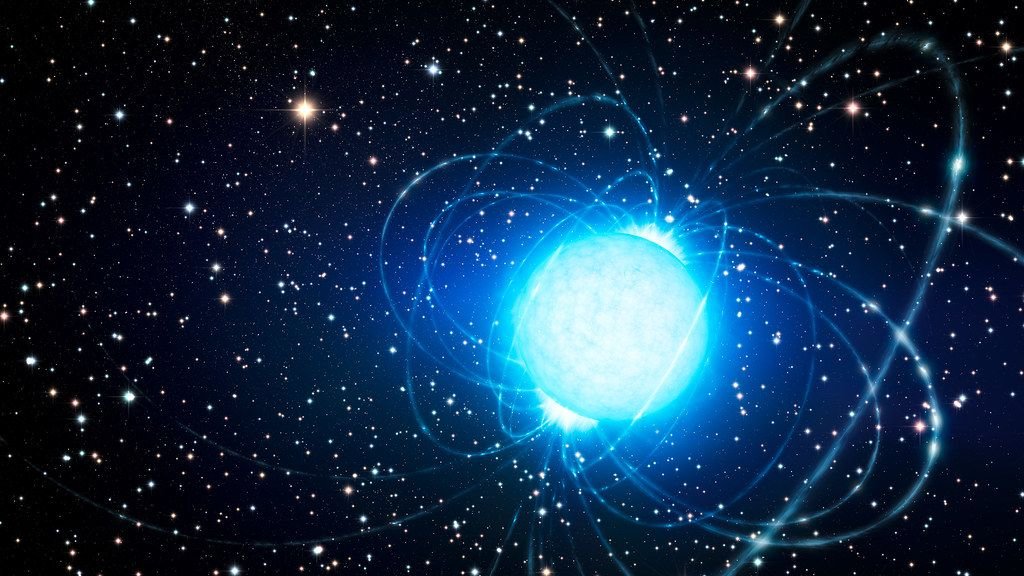
Take a massive star, let it explode as a supernova, then compress its core down to something the size of a city, and you get a neutron star. Now turn the magnetic field dial not just up, but up another trillion‑fold beyond anything we can generate on Earth – that’s a magnetar. These objects are so extreme that if you somehow stood halfway to the Moon from one, its magnetic field could theoretically disrupt the electrons in your body.
Magnetars occasionally unleash sudden, violent flares of X‑rays and gamma rays that can briefly outshine all the normal stars in our galaxy combined. Their crusts, made of ultra‑dense nuclear material, can “quake” under magnetic stress, releasing staggering amounts of energy in a fraction of a second. Some of the mysterious millisecond‑long fast radio bursts detected from distant galaxies are now strongly linked to magnetars. They sit on the edge where our understanding of matter, magnetism, and gravity starts to fray.
Fast Radio Burst Repeaters: Cosmic Beacons That Switch On and Off Like Nothing Else
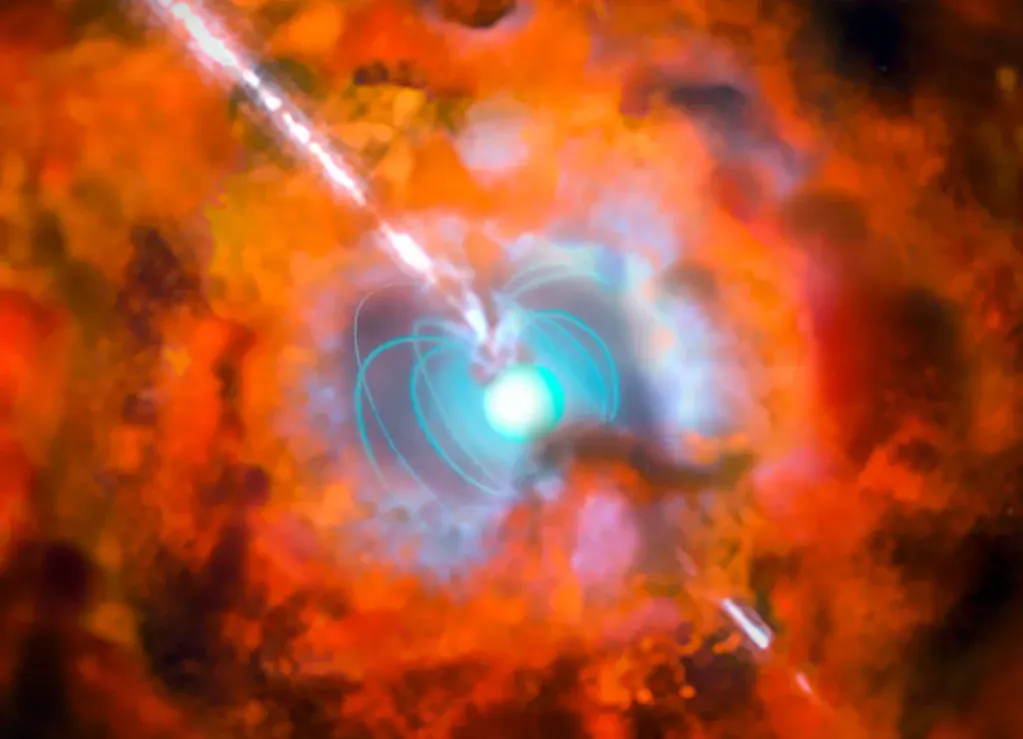
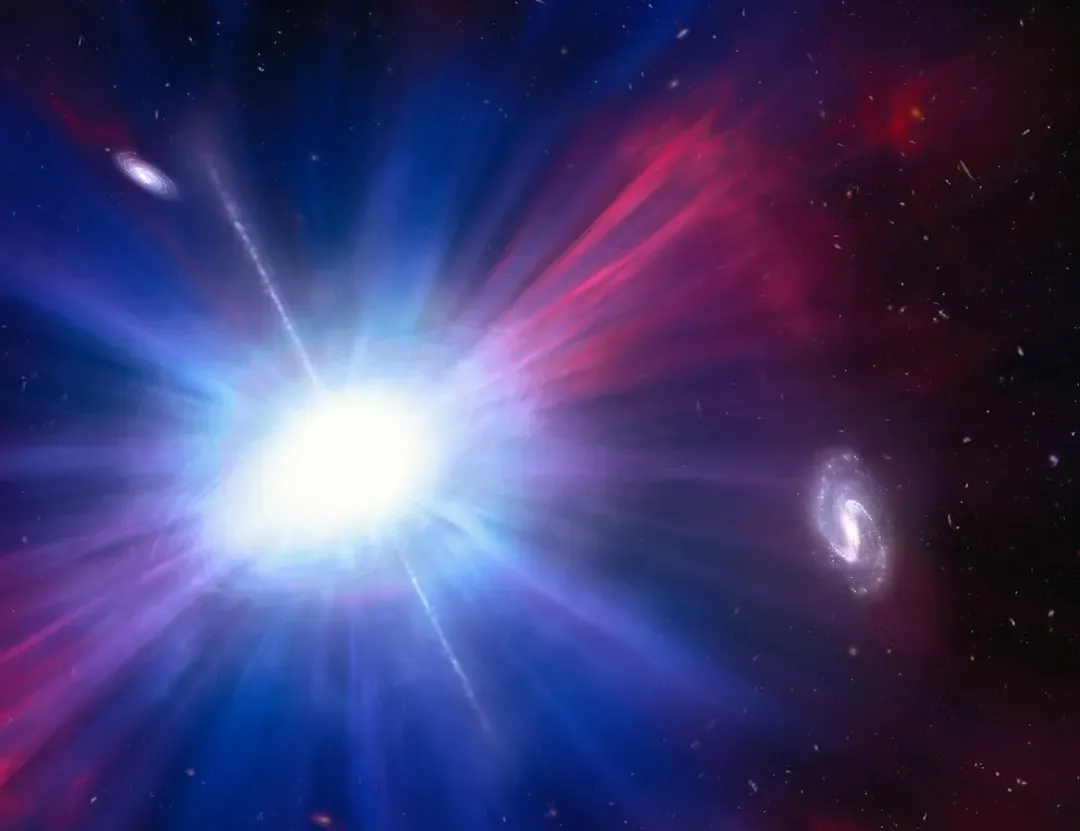
The first time astronomers saw a fast radio burst (FRB), it looked like a one‑off cosmic accident: a single, ultra‑brief flash of radio waves from far outside our galaxy. Then, against expectations, a few FRBs started repeating. Suddenly, the picture shifted from rare cataclysms to something more like a stuttering, unpredictable beacon in deep space. One source in particular, FRB 121102, has produced hundreds of bursts over the years.
Many repeaters are now linked to highly magnetized neutron stars, possibly young magnetars embedded in dense, turbulent environments like star‑forming regions or remnants of stellar explosions. What makes them so enigmatic is the variety: some repeat on loose cycles, some flare wildly and then go quiet for ages, and others twist their radio waves in ways that imply extremely tangled magnetic fields. Each new repeater feels like another piece of a puzzle that doesn’t quite form a single, simple picture yet.
Thorne–Żytkow Objects: Stars Hiding Neutron Cores Inside Giant Envelopes
Picture a Russian nesting doll, but made of stars: a neutron star tucked inside the swollen envelope of a red supergiant. That’s the wild concept behind Thorne–Żytkow Objects (TZOs), a theoretical type of star first proposed in the 1970s. They might form when a neutron star spirals into the core of a companion supergiant during a close gravitational dance, getting swallowed rather than ejected.
If TZOs exist, their interiors should be extreme nuclear laboratories, where fresh elements are forged in unusual ways and pushed up to the surface. Astronomers have identified a few red supergiant candidates with strange chemical fingerprints – odd ratios of certain heavy elements – that look suspiciously like what models predict for TZOs. Still, no candidate has been accepted beyond doubt, leaving these “star within a star” systems in a tantalizing limbo between theory and confirmed reality.
Black Widow Pulsars: Stellar Cannibals Slowly Eating Their Partners Alive
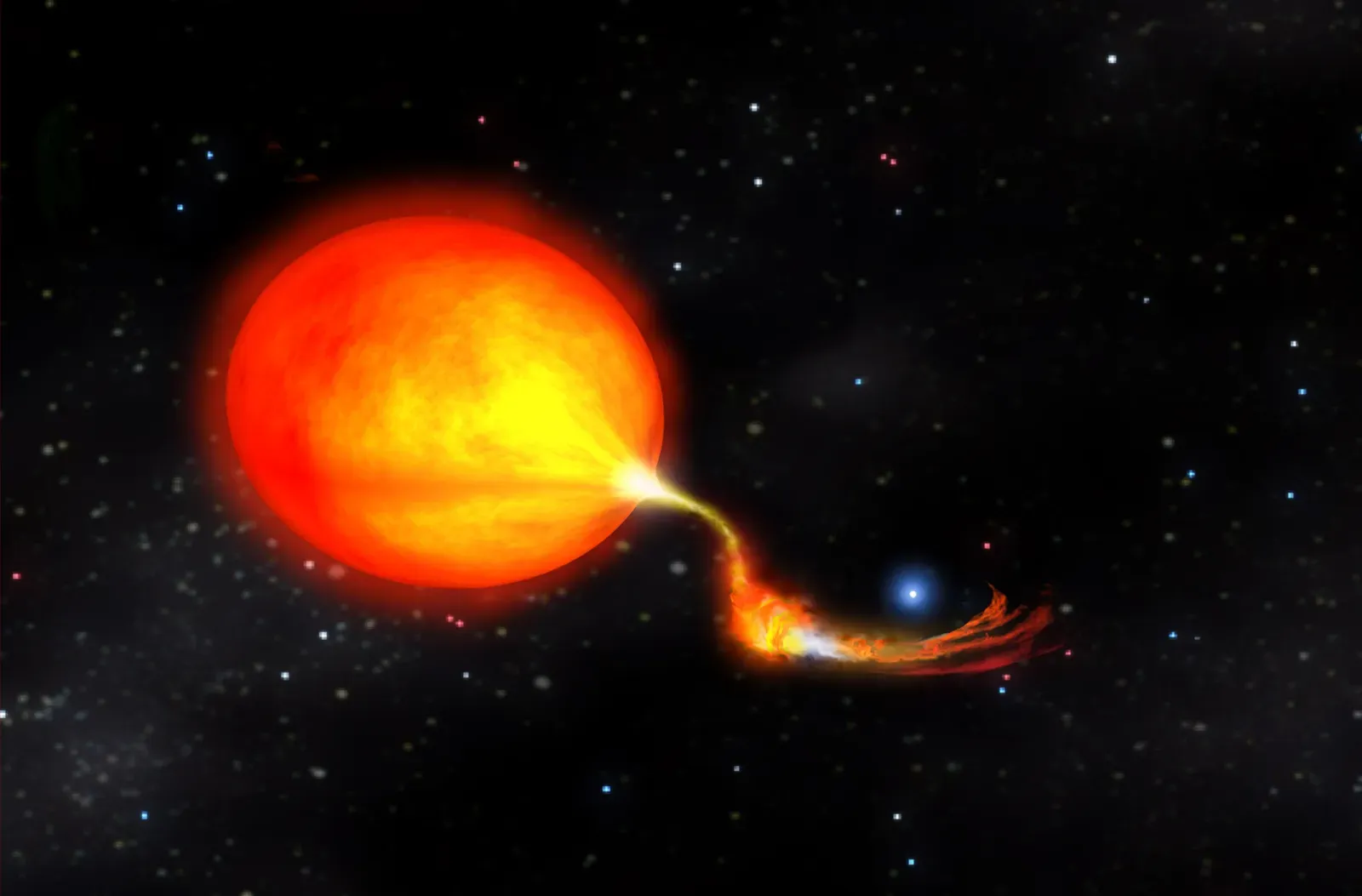
Most people imagine binary stars peacefully orbiting each other like dancing partners. Black widow pulsars are more like toxic relationships in space, where one partner gradually evaporates the other. In these systems, a millisecond pulsar – an ultra‑rapidly spinning neutron star – bombards a low‑mass companion with high‑energy particles and radiation, stripping gas off its surface over millions of years.
Radio observations show that the pulsar’s beams sometimes wink out when the system is viewed through the cloud of material blown off the companion. X‑ray and optical data reveal that the smaller star is often heated on one side, glowing much brighter toward the pulsar and dimmer on the far side, like a cosmic campfire scorching one face of a boulder. Some black widow systems are so efficient at their grim work that the companion’s mass dwindles to a tiny fraction of our Sun’s, raising the possibility that the pulsar could eventually end up alone, having completely devoured its partner.
Luminous Blue Variables: Stellar Drama Queens on the Edge of Explosion
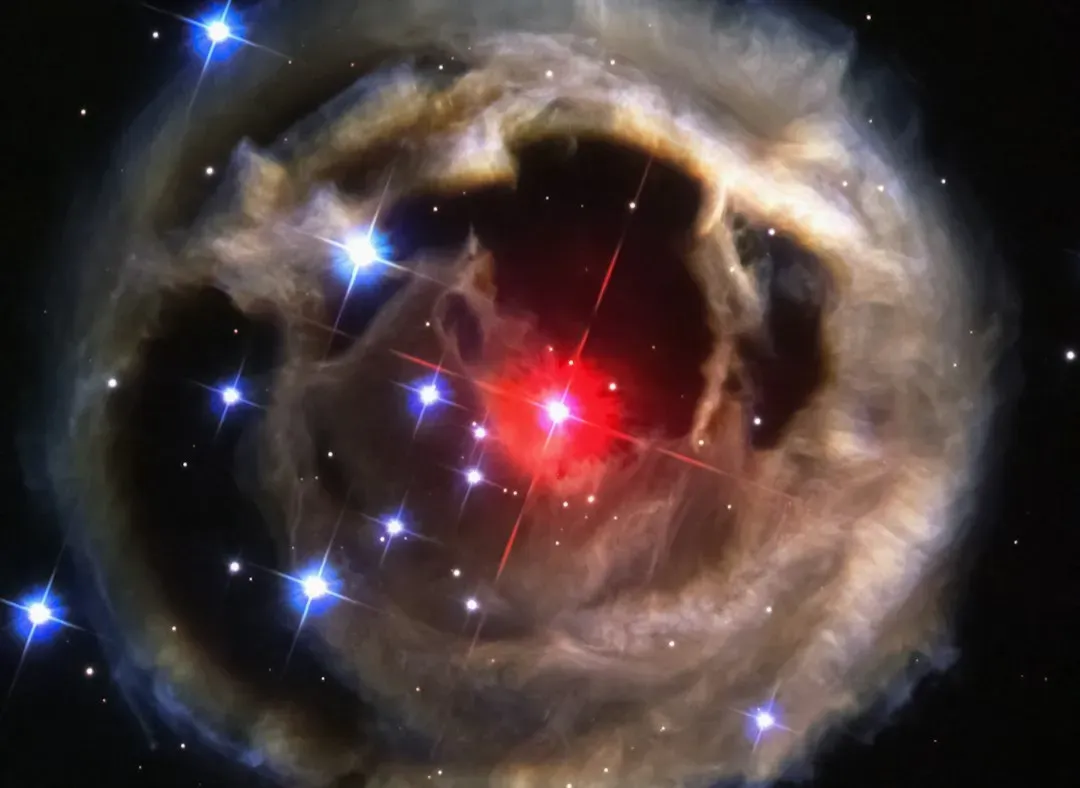
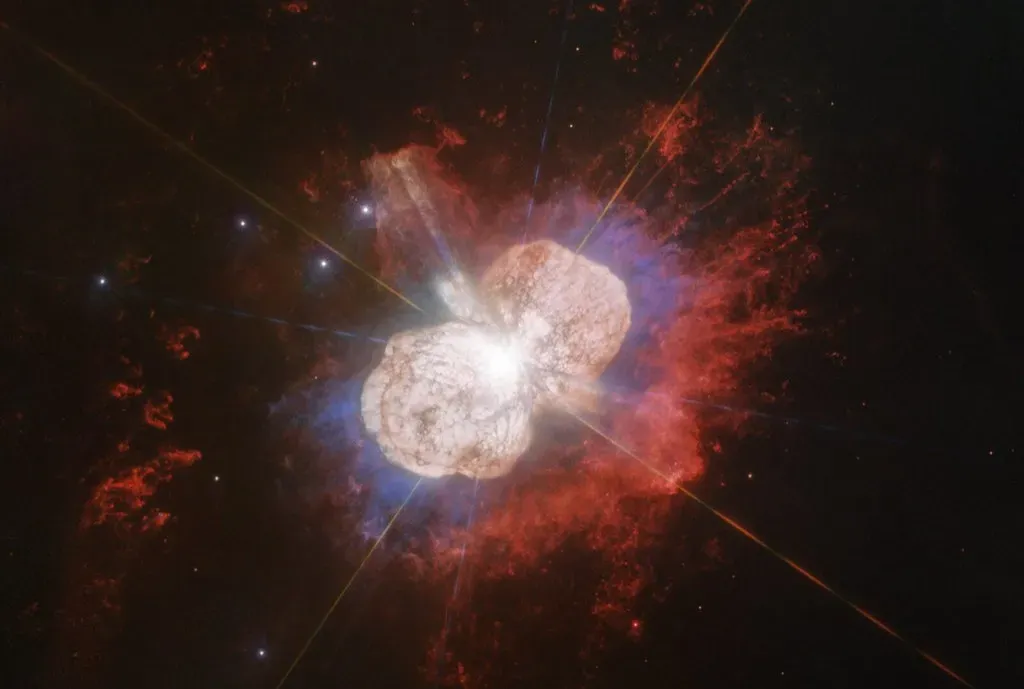
Luminous blue variables (LBVs) are some of the most massive and brightest stars known, burning through their fuel at a reckless pace. They live short, intense lives, characterized by dramatic mood swings: years of relative calm punctuated by sudden eruptions that spew out vast shells of gas and dust. One of the most famous examples, Eta Carinae, brightened so strongly in the nineteenth century that it briefly became the second brightest star in the night sky, then faded again.
LBVs are thought to be in an unstable transitional phase, teetering on the brink between a super‑massive main‑sequence star and a final, catastrophic supernova. During their outbursts, they can shed several times the mass of the Sun, reshaping their surroundings and sending shockwaves through nearby gas clouds. Yet the precise triggers for these eruptions remain murky: turbulent internal convection, opacity changes in their outer layers, rotation, and binary companions may all play a role. They’re like stellar pressure cookers, rattling ominously without warning about exactly when they’ll blow.
Blue Stragglers: Stars That Look Suspiciously Young in Ancient Clusters
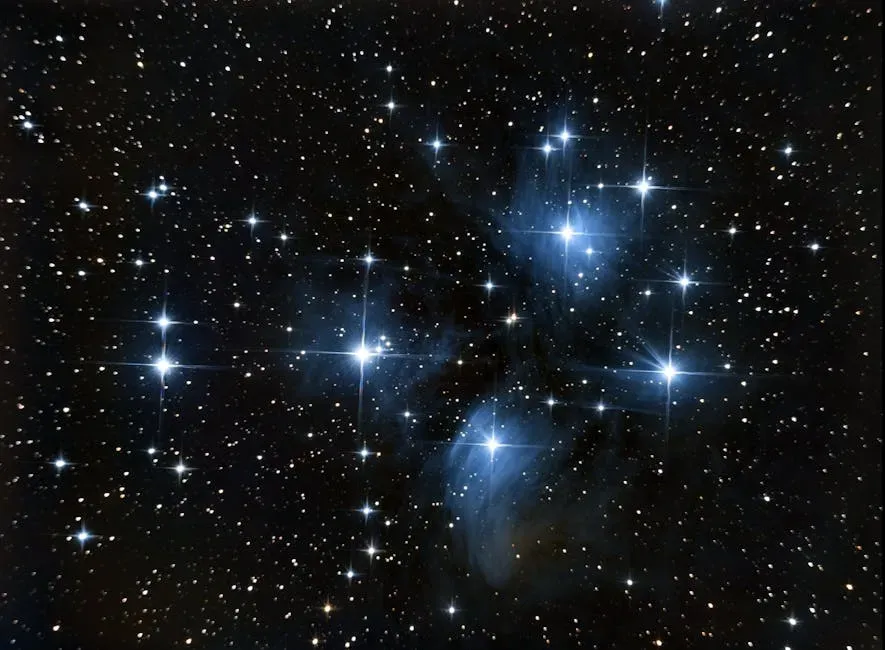
Star clusters are like cosmic classrooms: most of the stars form at roughly the same time, age together, and slowly evolve off the main sequence. That’s why blue stragglers are so unsettling. In old clusters where most massive, hot stars have already aged and cooled, blue stragglers stand out as unusually bright, blue, and seemingly youthful interlopers. They look like they refuse to follow the aging rules everyone else does.
The best explanation so far is that blue stragglers have gained extra fuel. Some likely form when two stars collide and merge, creating a more massive star that effectively resets its evolutionary clock. Others seem to grow at the expense of a close companion, sucking in hydrogen through mass transfer and rejuvenating themselves. Even with that broad picture, each cluster hosts its own quirky population, hinting that multiple formation channels are at work, all conspiring to keep a few stars looking unfairly young.
Hypervelocity Stars: Runaways Shot Out of the Galaxy at Mind‑Bending Speeds
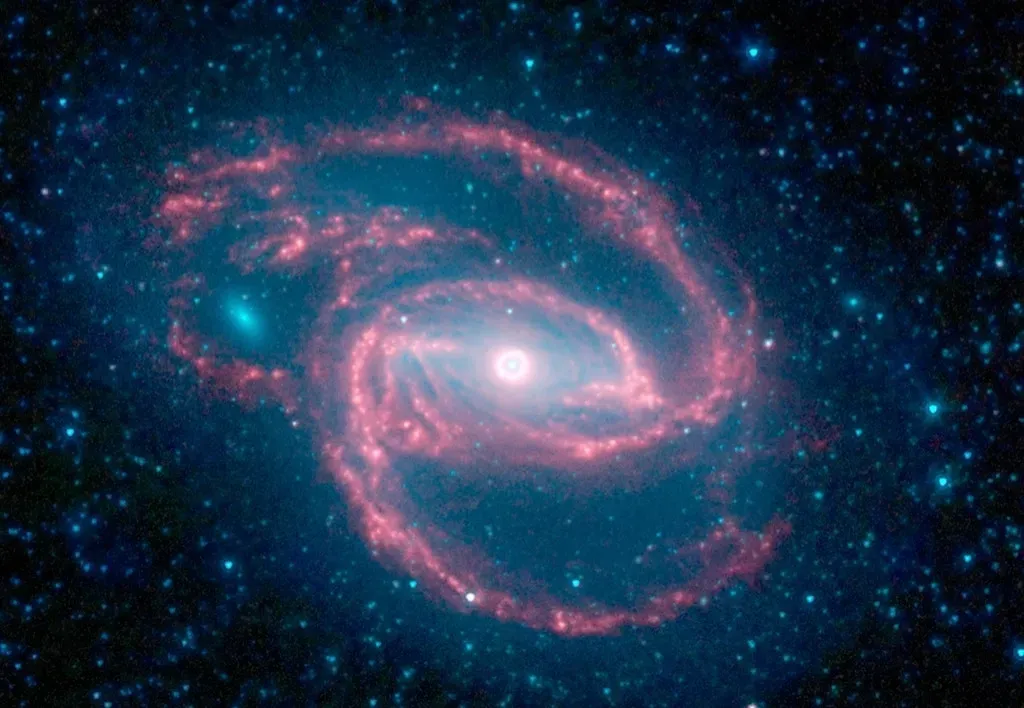
Hypervelocity stars are the cosmic equivalent of someone being flung from a spinning carnival ride – except here the ride is the gravitational field of the Milky Way, and the speeds are so high that the star may never come back. These stellar runaways are moving so fast that they can escape the galaxy’s gravitational pull entirely, racing into intergalactic space over billions of years. Some were likely accelerated by close interactions with the supermassive black hole at the center of the Milky Way.
In one popular scenario, a binary star system strays too near the central black hole. Gravitational forces tear the pair apart: one star gets captured into a tight orbit, while the other is slingshotted outward at jaw‑dropping speed. Hypervelocity stars provide a rare, direct probe of the galaxy’s deep gravitational well and the environment around its central black hole. By tracking their paths, astronomers can map the invisible distribution of dark matter and better understand how violent encounters shape the galaxy over time.
Zombie Stars: White Dwarfs That Explode, Survive, and Sometimes Explode Again
White dwarfs are often described as the quiet embers left after a Sun‑like star dies, but some of them stubbornly refuse to stay quiet. In certain binary systems, a white dwarf can pull material from a companion star, slowly piling it onto its own surface. When conditions are right, runaway nuclear reactions can trigger a thermonuclear explosion. These events were once thought to completely unbind the star, but evidence in the last decade suggests that some white dwarfs can partially survive the blast.
These so‑called “zombie stars” may undergo repeated outbursts, each one blasting away part of their outer layers but leaving a core behind to start the process again. A few unusual supernova remnants show chemical patterns and leftover compact objects that fit this picture: incomplete detonations that fail to fully destroy the white dwarf. They blur the line between classic nova eruptions and standard type Ia supernovae, hinting at a more diverse zoo of stellar deaths than the tidy categories used in older textbooks.