
The deep sea is the closest thing we have to an alien world on Earth. Down there, sunlight never reaches, pressure could crush a submarine, and life has twisted itself into shapes so bizarre they almost look imagined. Yet every one of these creatures is real, alive, and quietly going about its day in the darkness while we sit scrolling on our phones.
When I first saw footage of some of these animals, I honestly thought I was looking at special effects from a sci‑fi movie. Transparent heads, glowing lures, mouths full of glassy fangs that barely fit inside the skull – if a novelist made them up, we’d probably accuse them of overdoing it. Let’s dive into nine of the strangest deep-sea creatures that feel more like visitors from another planet than fellow Earthlings.
Anglerfish: The Living Lantern Of The Abyss
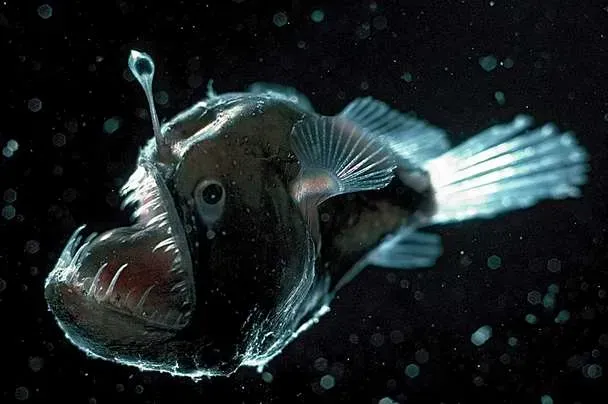
Imagine swimming through pitch-black water and seeing a tiny glowing light bobbing gently in front of you, like a firefly trapped underwater. That little light might be the last thing a smaller fish ever sees, because it belongs to the anglerfish, one of the deep sea’s most unsettling predators. Female anglerfish dangle a bioluminescent lure in front of their enormous mouths, tricking curious prey into swimming close enough to be swallowed in a split second.
What makes anglerfish feel truly alien isn’t just the glowing lure, but their entire lifestyle and body plan. Many deep-sea species have disproportionately huge heads, needle-like teeth that point inward, and bodies that look more like saggy leather than smooth skin. Even stranger, the males of some species are tiny compared to the females, and they actually fuse themselves to the female’s body, turning into living, parasitic sperm packets. It’s like something out of a body-horror space movie, except it’s just standard dating behavior in the deep.
Gulper Eel: The Floating Balloon With A Night-Light Tail
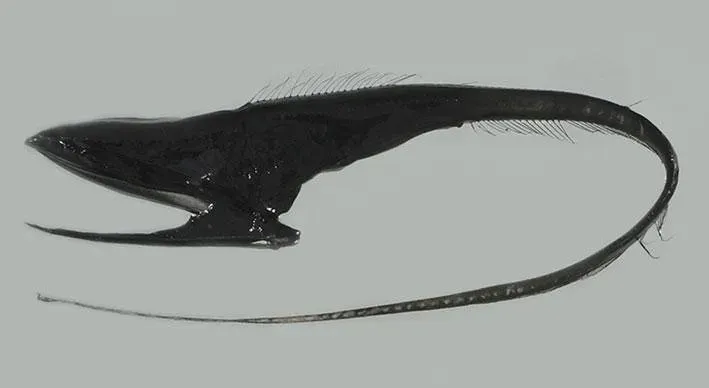
The gulper eel looks like somebody tried to draw a fish from memory and messed up the proportions completely. Its head is enormous compared to its skinny, whip-like body, and its jaw can open into a kind of absurd, balloon-like pouch. This huge mouth lets it swallow prey almost as big as itself, which is pretty useful in a place where meals are rare and you can’t be picky about portion size.
As if a cartoonishly oversized mouth wasn’t enough, the gulper eel often has a glowing organ at the tip of its tail, which it can wiggle like a neon worm. That shimmering tail acts like a baited trap, drawing in curious animals that swim close enough to be engulfed. Some footage shows the eel drifting along with its mouth open like a parachute bag, ready to scoop up whatever drifts inside. It’s a reminder that in the deep sea, looking ridiculous can actually be an evolutionary superpower.
Barreleye Fish: The Transparent-Headed Stargazer
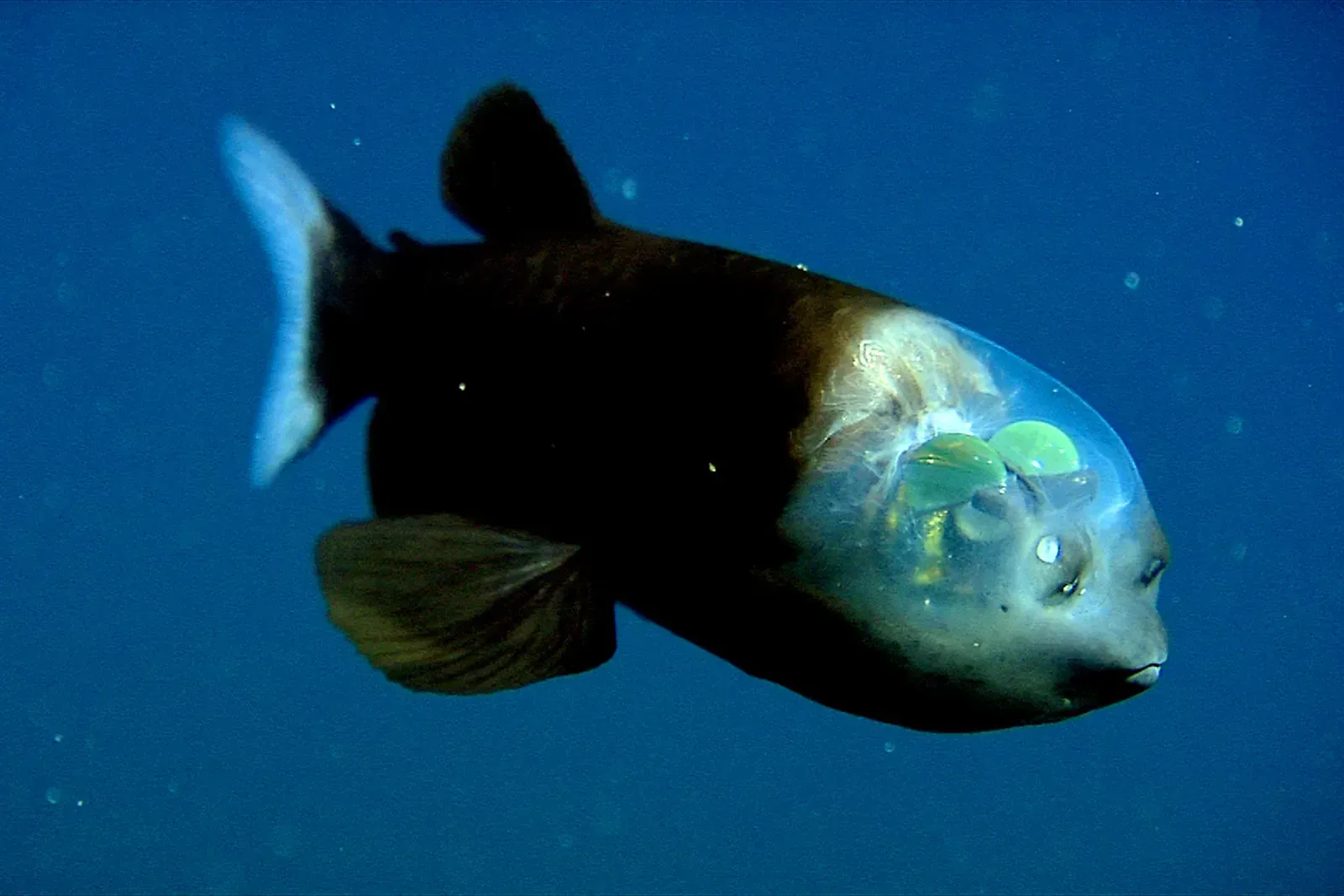
The first time I saw an image of the barreleye fish, I honestly thought it was a hoax. This fish has a clear, dome-shaped head like a glass cockpit, and inside that dome you can see its bright green, barrel-shaped eyes looking upward. Instead of pointing forward like ours, its eyes are mounted like tiny telescopes that can rotate to track the faintest silhouette of prey above it.
Because its head is transparent, scientists can literally see the internal structures glowing softly in the deep, giving the fish a surreal, sci‑fi glow. This setup allows the barreleye to steal food from jellyfish and siphonophores without getting too tangled in their stinging tentacles, watching them from below and carefully picking off scraps. The whole animal looks less like a typical fish and more like a small, robotic spacecraft with organic parts floating inside. If you showed someone this creature without context, they might guess it was concept art for an alien pilot in a space opera.
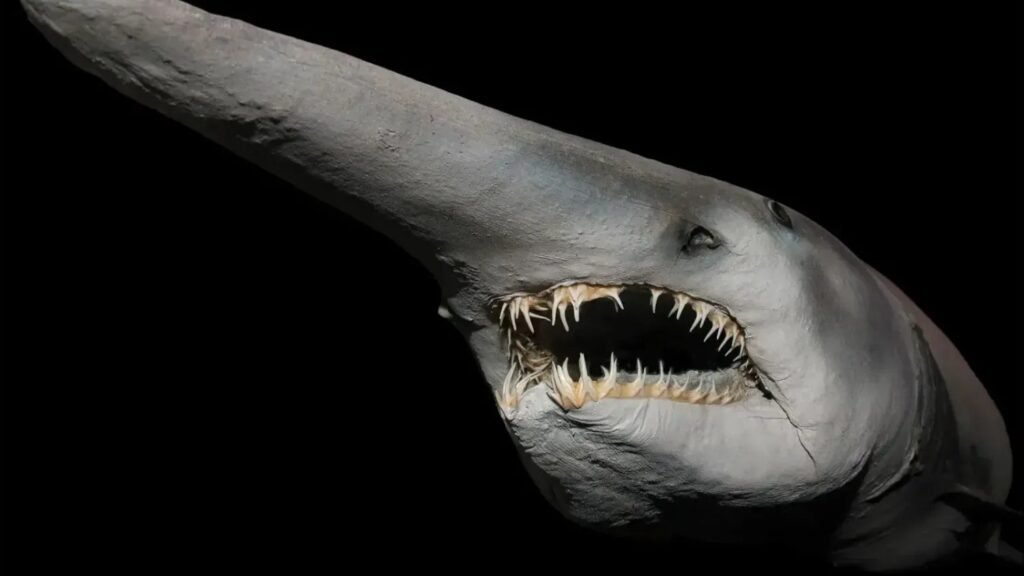
Goblin Shark: The Ancient Nightmare With A Spring-Loaded Jaw
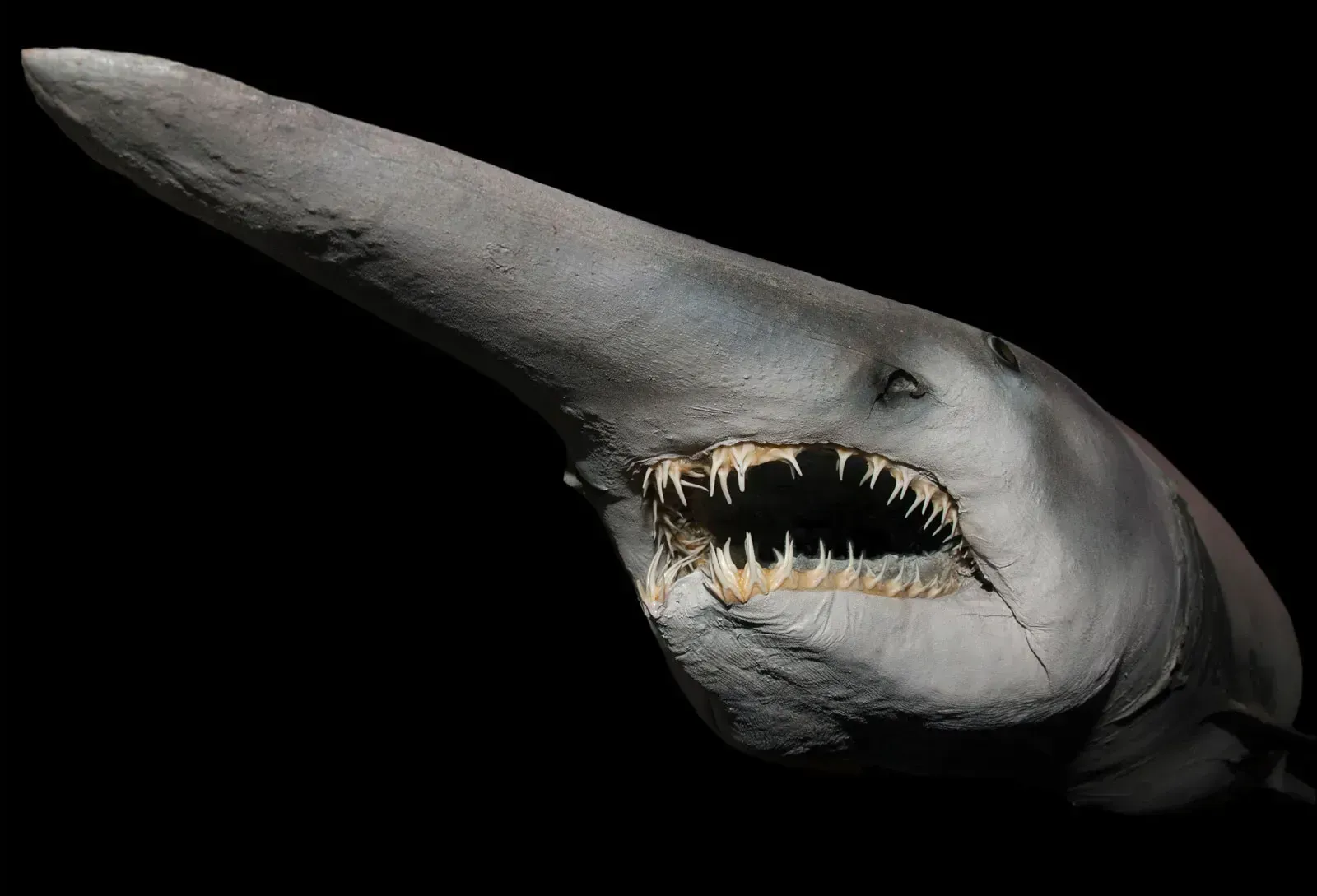
The goblin shark might be the closest thing we have to a living fossil that also looks like it escaped from a horror game. With its long, flattened snout and pale, almost pinkish skin, it already seems strange. But the real shock comes when it decides to eat: its jaw suddenly shoots forward out of its mouth in a snapping, mechanical-looking motion that feels disturbingly unnatural.
That spring-loaded jaw is packed with nail-like teeth, perfect for grabbing slippery squid and fish in the deep. Goblin sharks live at depths that humans rarely see directly, which is why most of us only encounter them in unsettling photos or grainy video clips. Their lineage extends back tens of millions of years, meaning they’re part of a very old branch of shark evolution that has outlived countless other species. Watching one feed in slow motion feels like watching an alien predator deploy a hidden weapon system.
Vampire Squid: The Cloaked Phantom Of The Dark Ocean
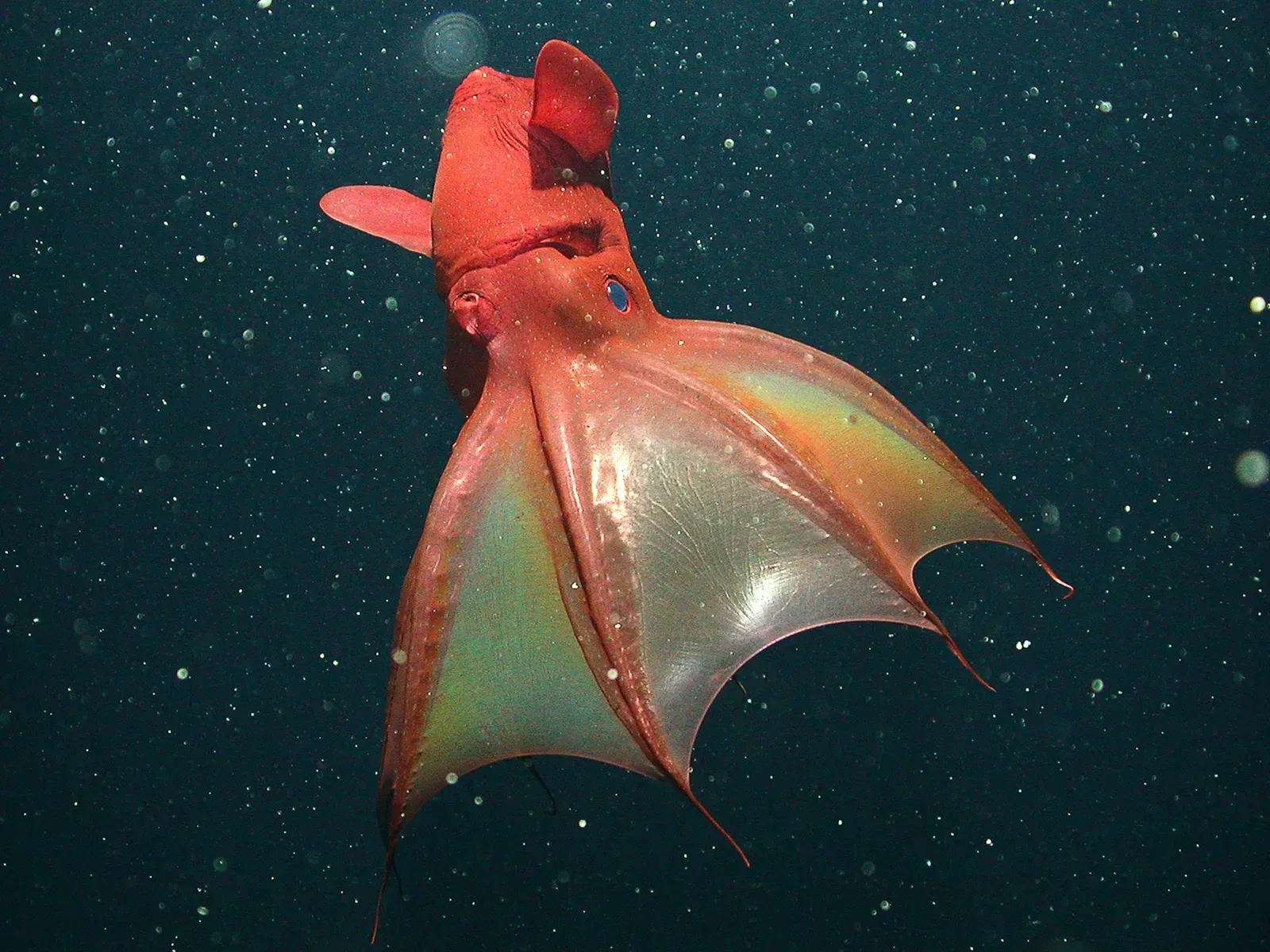
Despite its ominous name, the vampire squid doesn’t actually drink blood. Instead, it drifts slowly through the oxygen-poor depths, more like a patient ghost than an aggressive hunter. It has a deep red or blackish body, big reflective eyes, and webbing between its arms that stretches into a cape-like cloak, making it look like some kind of deep-sea sorcerer.
When threatened, the vampire squid can turn itself inside out, pulling its arms over its body and exposing rows of spiky projections, like an umbrella folding in reverse. It also produces a glowing, bioluminescent mucus cloud rather than ink, which hangs in the water as a confusion tactic. Instead of chasing prey, this animal mostly collects falling marine snow: tiny bits of organic debris, dead particles, and leftovers drifting down from the surface. It survives in a part of the ocean where oxygen levels are so low most animals would suffocate, which makes its quiet persistence feel almost supernatural.
Deep-Sea Angler “Footballfish”: A Spiky Orb With A Deadly Light
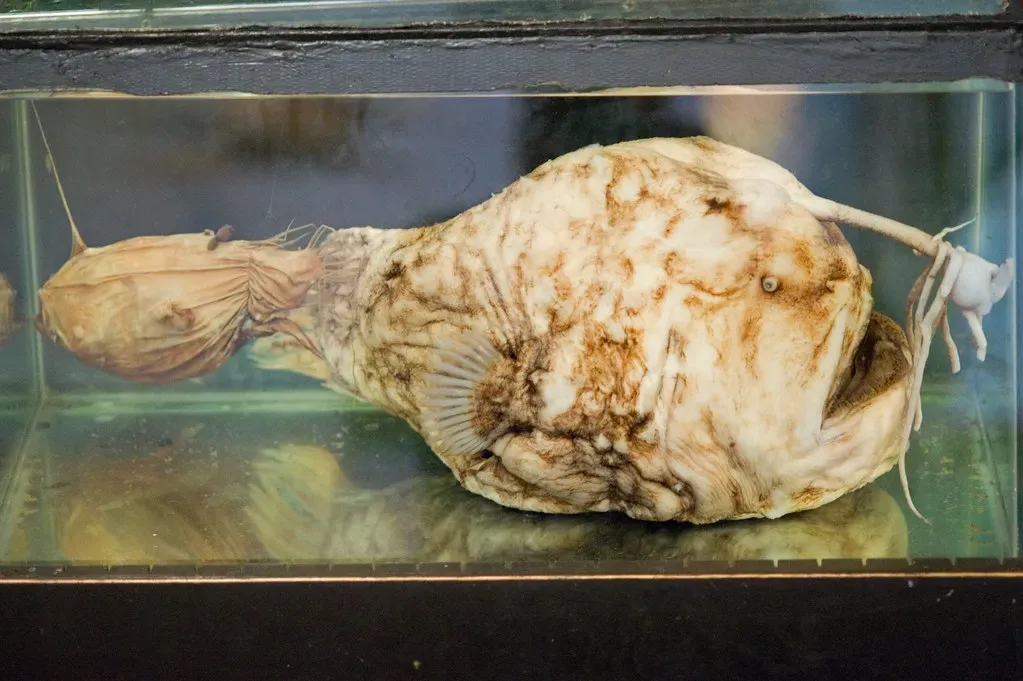
The footballfish is one of the more intimidating members of the anglerfish family, and it honestly looks like a weapon. Its body is globular, covered in small, spine-like structures, and it carries the signature bioluminescent lure dangling over a massive, tooth-lined mouth. The effect is like a floating, armored mine with a glowing fuse, just waiting in the dark for something unlucky to wander too close.
Females grow far larger than males and dominate the hunting duties in the deep sea, where food is scarce and energy has to be spent wisely. The light at the end of their lure is produced by bacteria living inside a special organ, a kind of built-in partnership that allows the fish to attract prey in total darkness. When scientists hauled one up near California in recent years, the photos went viral because it looked so unreal, like an animatronic prop washed up from a movie set. Seeing such a creature intact, fresh from thousands of meters down, is like staring straight into another world’s ecosystem.
Giant Isopod: The Deep-Sea “Cockroach” The Size Of A Cat
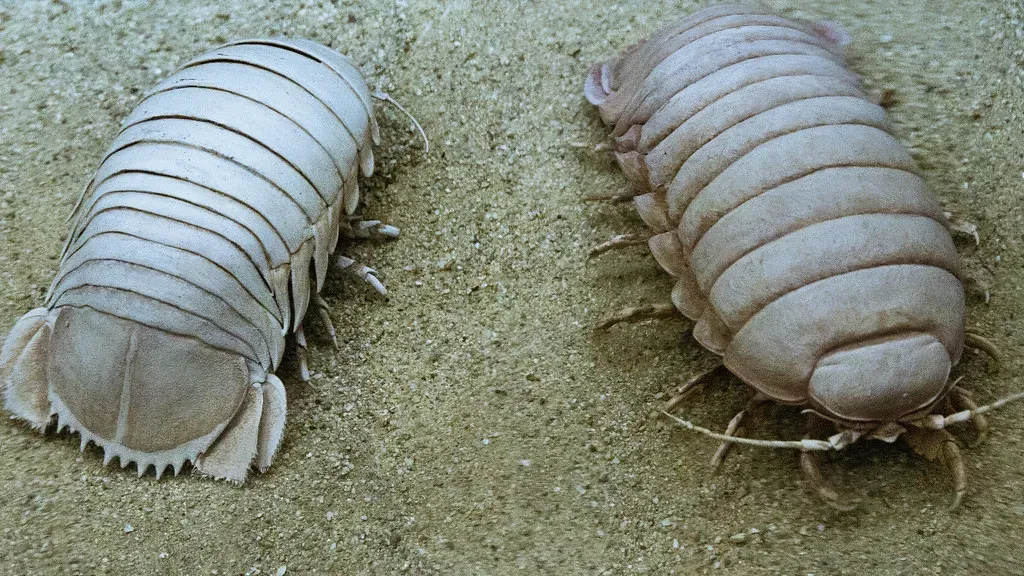
If you’ve ever seen a tiny pill bug or woodlouse roll up in your garden, imagine that same animal blown up to the size of a house cat. That’s roughly what a giant isopod looks like: an armored, segmented, bug-like creature with multiple legs and a face that feels strangely expressionless. It crawls slowly over the seafloor, scavenging whatever it can find, from dead whales to leftover scraps that sink down from above.
There’s something deeply unsettling about how familiar yet oversized it is, like someone hit the zoom button on a common household insect. Giant isopods can go for astonishingly long periods without food, sometimes months or even longer, thanks to a slow metabolism adapted to the deep sea’s scarcity. When food does arrive, they can gorge themselves until they look almost bloated and stiff. It’s easy to picture them as background creatures in an alien planet scene, quietly cleaning up the ecosystem while everyone focuses on the more dramatic monsters.
Frilled Shark: The Eel-Like Relic With A Ruffled Smile
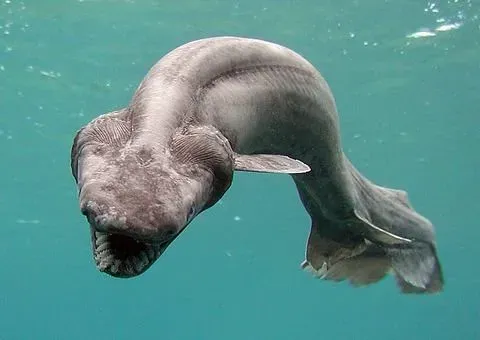
The frilled shark looks less like a modern shark and more like something that slipped through time from the age of dinosaurs. Its body is long and eel-like, with a blunt head and a mouth lined with many rows of thin, three-pointed teeth that hook inward. The “frilled” name comes from its gill slits, which are fringed and fold back along the body, giving it an oddly ruffled appearance.
This shark usually swims in deep, cold waters, moving with slow, serpentine motions that only add to its prehistoric vibe. Because it’s rarely seen alive, most encounters come from individuals accidentally caught in deep fishing gear and brought to the surface. That sudden shift to light and low pressure makes them look even more ghostly, with their dark eyes and slack jaws. Watching one undulate through the water feels more like observing an alien eel than the sleek, fast sharks we’re used to imagining.
Dragonfish: The Glow-In-The-Dark Predator With Invisible Light
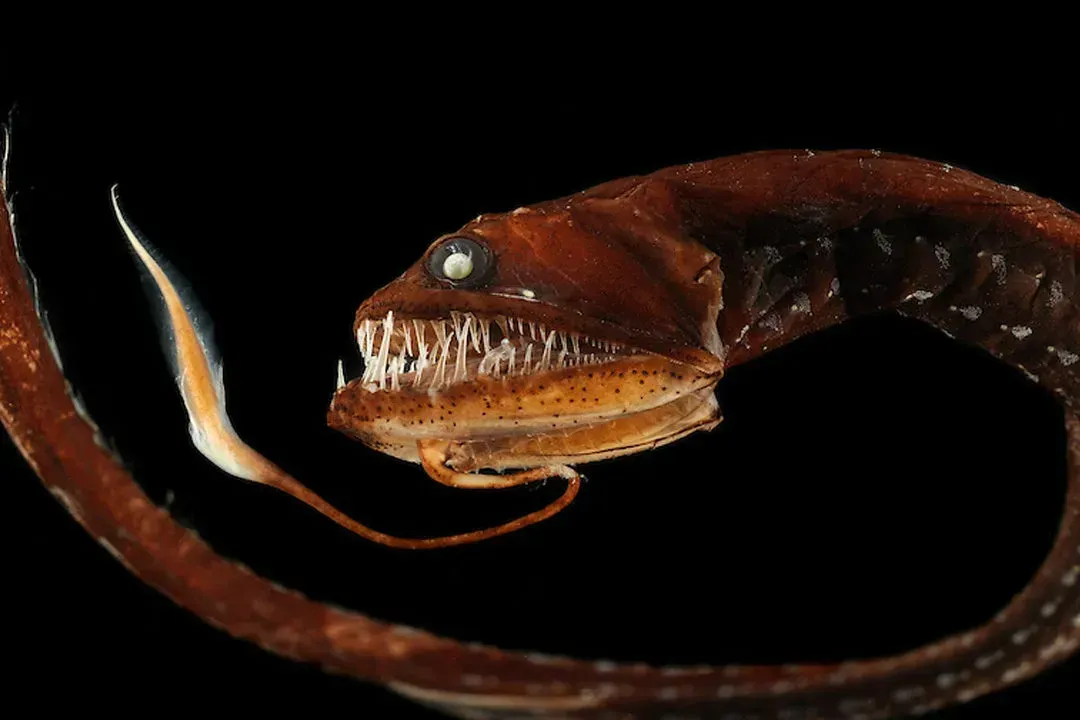
Deep-sea dragonfish look like they were designed specifically to haunt someone’s dreams. They are long and slender, with oversized heads, huge jaws, and fangs so long they sometimes can’t fully close their mouths. Many species carry barbel-like tendrils with glowing tips beneath their chins, which they wave like tiny lures to draw in potential prey.
What really pushes them into “other planet” territory is their ability to produce not just visible bioluminescence, but in some species, red light that most deep-sea animals can’t see. That means they can shine a kind of invisible flashlight to spot prey while staying effectively cloaked themselves. Their skin often absorbs light rather than reflecting it, making them appear almost completely black in the water. In the darkness a kilometer down, a dragonfish is like a stealth fighter jet with its own private night-vision system.
Conclusion: Our Own Alien Ocean
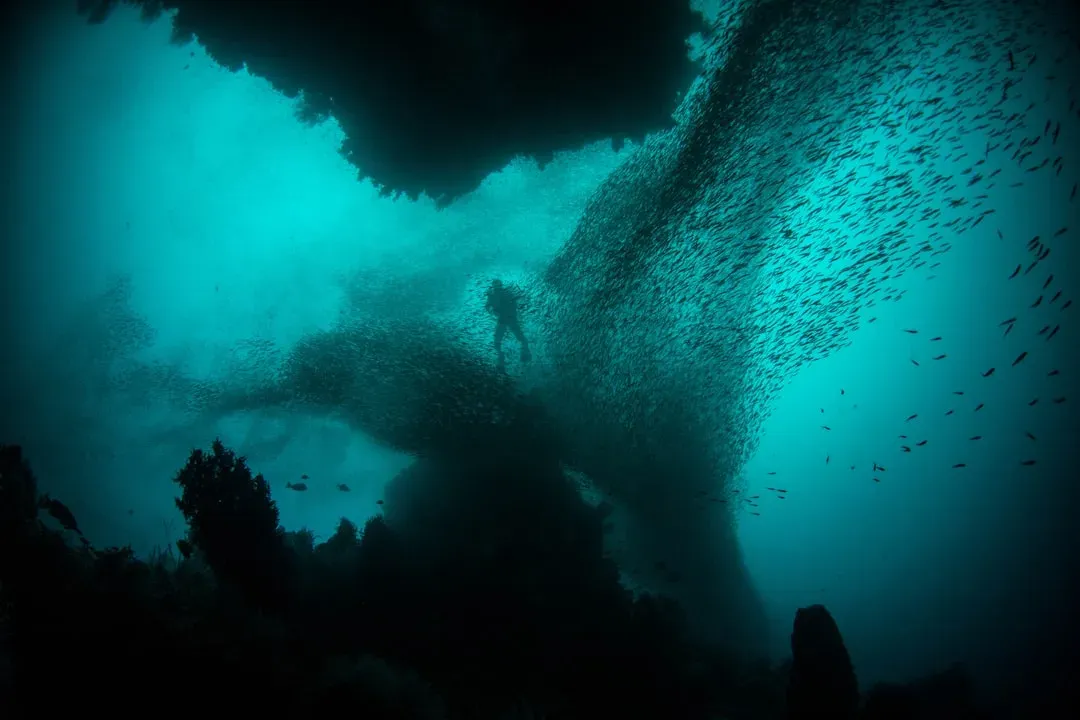
The more we learn about deep-sea life, the more it feels like we’ve barely cracked open the door to a hidden world on our own planet. These nine creatures are only a small sample of the bizarre designs evolution has produced in places humans almost never see directly. Transparent heads, parasitic mates, spring-loaded jaws, glowing lures – all of it sounds like wild science fiction, yet it is quietly playing out on Earth every day.
What sticks with me most is how normal these animals are in their own environment; to them, we would be the strange ones, stumbling around in bright light with our soft bodies and fragile lungs. As technology improves and deep-sea exploration expands, it’s very likely we’ll discover even stranger beings waiting in the dark. The real question is not whether alien-looking life exists, but how much more of it is hiding right under our feet, in the vast black water we still barely understand.